What makes a weighted vest HIIT workout different?
High-intensity interval training alternates short periods of harder work with brief recovery periods, but there is no single universal interval formula. The American College of Sports Medicine notes that work duration, recovery duration, intensity, and the number of cycles can all vary by program and participant. ACSM's overview of high-intensity interval training explains why the structure should match the person and the training goal.
A vest changes the decision-making inside that structure. Every exercise has to be judged by more than whether it raises effort. The load should remain secure, allow a controlled range of motion, and preserve the technique that makes the exercise useful. If the vest causes the torso to collapse, the feet to lose control, or the final repetitions to become improvised, the interval is too demanding for that movement.
This is why a practical weighted vest HIIT workout is not simply a bodyweight circuit with a vest added at the last minute. The session needs an exercise order, a work-to-rest ratio, and a stopping rule that account for the added load.
When should the vest be used?
Use a weighted vest for short, intensive training when the planned movements remain stable under a modest external load. A vest can fit naturally into squats, step-ups, reverse lunges, incline push-ups, bear crawls, and controlled carries. It is a poorer match for any movement that already depends on maximal speed, a precise landing, or a fatigued position that is difficult to control.
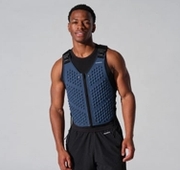
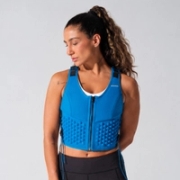
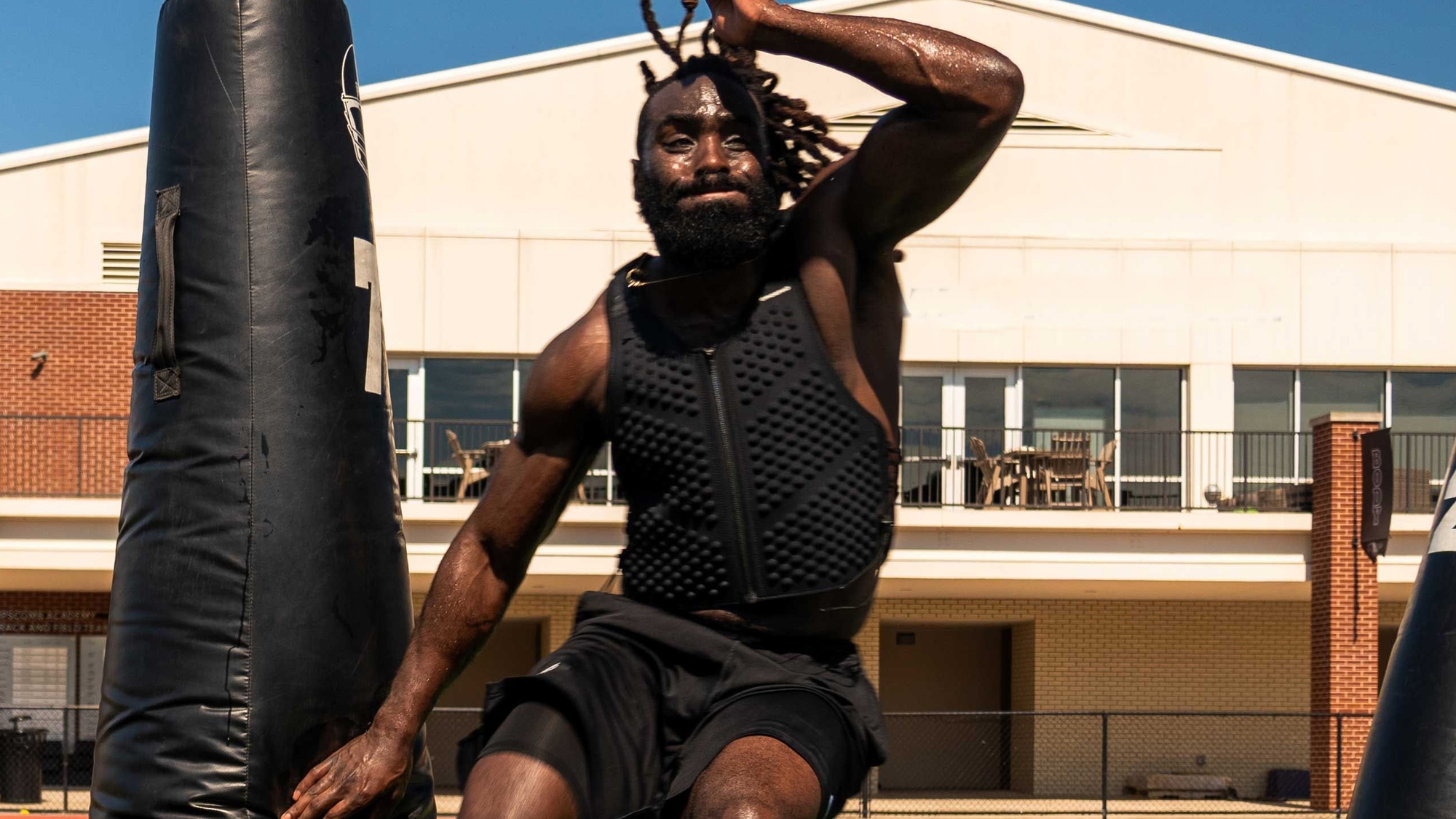
Start with the session, not the product. If the goal is a short, demanding circuit with deliberate changes of direction and posture, OMORPHO positions weighted vest cross-training as a related training concept. If the goal is long-duration running, use a different plan and product decision. OMORPHO specifically recommends G‑Vest Run for running and positions G‑Vest Icon for short intensive sessions, so the heavier line should not be treated as a running vest. OMORPHO's science and performance information provides additional context on its wearable-resistance approach.
G‑Wear can be treated as an optional add-on when the session calls for a smaller, more distributed challenge. For strength conditioning and high-intensity work, OMORPHO's product guidance places G‑Vest products first and G‑Wear as an accessory. Keep the primary load choice simple so it is clear which change affected the session.
How do you choose exercises for weighted HIIT?
Build the exercise menu around four qualities: stable foot contact, a controllable trunk position, a clear range of motion, and an easy regression. The best choices are not necessarily the most dramatic exercises. They are movements that can be repeated with similar quality from the first interval to the last.
- Lower-body strength: squat to a comfortable depth, reverse lunge, split squat hold, or low step-up.
- Upper-body pushing: incline push-up, elevated push-up, or a controlled floor push-up if alignment stays consistent.
- Whole-body conditioning: marching, loaded carry, low-impact mountain climber, or bear crawl performed at a pace that preserves control.
- Power preparation: fast bodyweight movement before loaded power work, such as a brisk march before a step-up. Add speed only when the loaded version remains technically sound.
Use a simple screen before the first work interval. Can the movement be performed without holding the breath, twisting to escape the load, or rushing the lowering phase? Can the exercise be made easier immediately by reducing range, elevating the hands, shortening the step, or switching to a march? If the answer is no, choose a different movement.
Keep high-skill and high-impact movements out of the first weighted session. A controlled step-up is easier to scale than a maximal jump. A reverse lunge is easier to monitor than a rushed forward jump. Exercise selection should leave the athlete with options as fatigue rises.
How should work and recovery intervals be structured?
There is no magic ratio for a weighted vest HIIT workout. Use the shortest work period that allows the intended movement pattern to appear consistently, then give enough recovery to repeat it. The interval is successful when the last round resembles the first in technique, not when the final round produces the largest possible struggle.
Choose one of these starting frameworks:
- Technique-first intervals: 20 seconds of work followed by 40 seconds of easy recovery for 6 to 8 rounds.
- Balanced intervals: 30 seconds of work followed by 30 seconds of recovery for 6 to 10 rounds.
- Density intervals: 40 seconds of work followed by 20 seconds of recovery for 6 rounds, used only after the shorter format feels repeatable.
These are programming templates, not performance promises. Keep the effort below an all-out sprint when the vest is new. If the exercise becomes sloppy before the timer ends, stop the set, reduce the work period, or extend recovery. ACSM describes HIIT formats as highly variable and also notes that larger physiological overloads can increase the likelihood of activity-related adverse events, especially when programs are not matched to the participant. The ACSM discussion of HIIT adherence and risk supports keeping the starting dose manageable.
Rest can be complete stillness, walking, or easy marching. Pick the option that restores control without adding unnecessary fatigue. A recovery period is part of the workout design, not a reward for surviving the work interval.
A practical weighted vest HIIT workout
The following session uses low-complexity movements and gives each one a clear regression. It can be completed in a small training space with a stable step or platform. The session is intentionally designed around movement quality rather than a race against the clock.
Warm-up
- Easy marching with arm swings
- Bodyweight squats to a comfortable depth
- Alternating reverse lunges without the vest
- Incline push-ups against a stable surface
- Two or three practice step-ups at a controlled pace
Put on the vest only after the unweighted rehearsal feels controlled. Check that the fit is secure and that the vest does not shift during marching, squatting, or stepping.
Main circuit
Complete 6 rounds. Work for 30 seconds, then recover for 30 seconds after each movement. Use a controlled pace and finish a work period early if the movement no longer meets the stated standard.
- Step-up: Alternate legs on a stable low step. Keep the planted foot fully supported and stand tall without jumping from the trailing leg. Regression: lower the step or switch to marching.
- Incline push-up: Keep the ribs and hips moving together as the body lowers. Regression: use a higher surface or shorten the range.
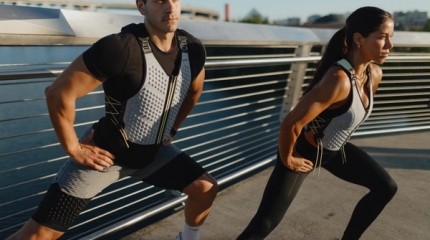
- Reverse lunge: Step back softly and lower only as far as posture stays stable. Alternate sides or complete one side at a time. Regression: hold a split stance and use a shallow bend.
- Loaded march: March in place with a quiet foot strike and controlled arm action. Regression: reduce knee height and slow the pace.
After the circuit, remove the vest and walk easily until breathing and movement return toward baseline. Do not add a second circuit simply because the first one felt short. Repeatability is the first progression target.
Explore G‑Vest Icon for short, intensive weighted training.
How should the workout progress?
Progress one variable at a time. Adding load, longer work periods, more rounds, and more complex exercises together makes it difficult to identify what the body is responding to and harder to maintain movement standards.
A practical four-step progression is:
- Own the movement: Use a light, comfortable setup and stop each interval before technique changes.
- Repeat the same dose: Complete the same number of rounds on another day with similar control.
- Change one time variable: Add a small amount of work or reduce recovery, but not both in the same session.
- Change the exercise only after the format is stable: Move from an incline push-up to a lower surface, or from a march to a step-up, rather than making every exercise harder at once.
Product load should also be line-specific. OMORPHO lists G‑Vest Icon starting at 10 pounds (4.5 kg) for men and 6 pounds (2.7 kg) for women, with adjustability up to 20 pounds (9.1 kg) for men and 12 pounds (5.4 kg) for women when G‑Pack panels are added. OMORPHO's G‑Vest collection is the source for those product specifications. Choose the configuration that lets the session remain technically clean, rather than treating the maximum adjustable load as a target.
For a first session, a lower setting may be the better choice even when the vest allows more. If the load changes foot contact, breathing, posture, or the ability to stop safely, the next progression is not more weight. It is a more manageable interval or a simpler movement.
What should form and recovery look like?
Use a quality checklist during every round:
- The vest stays secure without distracting movement or repeated adjustment.
- Breathing remains regular enough to follow the planned rhythm.
- Foot placement stays deliberate, especially during step-ups and lunges.
- The trunk remains organized rather than folding or rotating to complete repetitions.
- The final repetitions are slower only because the interval ends, not because control has disappeared.
Stop the interval if there is sharp pain, dizziness, unusual shortness of breath, chest pressure, or a new symptom. Anyone returning from an injury, managing a medical condition, or unsure whether vigorous exercise is appropriate should get individualized guidance from a qualified clinician before adding load. The HHS Physical Activity Guidelines for Americans describe vigorous-intensity activity as 6.0 or more METs and recommend that adults build a broader weekly activity pattern rather than treating one short session as a complete program.
That broader view matters. The HHS guidelines recommend 150 to 300 minutes of moderate-intensity aerobic activity or 75 to 150 minutes of vigorous-intensity activity per week, or an equivalent combination, plus muscle-strengthening activity on at least two days per week. A weighted vest HIIT workout can be one tool within that pattern, not a replacement for all other movement.
What does the research say about weighted vest HIIT?
Research on weighted vests does not establish one universally correct HIIT prescription. A 2024 randomized trial studied 36 normal-weight obese women divided into weighted-vest circuit training, bodyweight circuit training, and control groups. The training groups completed whole-body circuit training three times per week for eight weeks, and the paper reported group-specific changes in body composition and metabolic markers. Those findings apply to that study population, protocol, and outcomes. They do not prove that every weighted vest HIIT workout produces the same result. Kim and colleagues' 2024 weighted-vest circuit-training trial contains the full methods and limitations.
Evidence from sprint research also supports restraint. A systematic review of weighted-vest sprint training found that the included studies used a wide range of loads and that heavier acute loads could reduce sprint performance. The review called for more research on the best load and volume. Macadam, Cronin, and Feser's systematic review is about sprint-running performance, not a general license to add a vest to maximal-speed intervals.
A later systematic review and meta-analysis covering wearable resistance and weighted vests reported longer sprint times and ground-contact times in acute comparisons with unloaded conditions. It also found no clear chronic weighted-vest advantage for the sprint outcomes it analyzed. The 2024 Scientific Reports review reinforces a useful boundary for this article: weighted vest HIIT should prioritize controlled exercises and repeatable intervals, not maximal sprint output.
Frequently asked questions
Is a weighted vest good for HIIT?
A weighted vest can fit a short, intensive interval session when the exercises remain controlled and the load stays secure. Start with simple movements, modest work periods, and enough recovery to repeat the same technique. ACSM describes HIIT as a flexible format rather than one fixed workout, so the right setup depends on the participant and movement choice. ACSM's HIIT overview provides the evidence context.
What exercises work well with a weighted vest?
Controlled step-ups, reverse lunges, squats, incline push-ups, and marching are useful starting options because each has an obvious way to reduce range, pace, or complexity. Keep maximal sprints and high-impact jumps out of the first loaded session. Sprint-focused reviews report that added vest load can change acute sprint performance and mechanics, so speed work needs its own progression. The 2024 wearable-resistance meta-analysis explains that boundary.
How heavy should a vest be for HIIT?
Use the lightest configuration that allows the planned movements to stay controlled from the first interval to the last. OMORPHO positions G‑Vest Icon for short intensive workouts and lists different starting and adjustable loads for men's and women's versions. The current product specifications are available in the OMORPHO G‑Vest collection. A maximum available load is not a required starting point.
Can beginners try a weighted vest HIIT workout?
Beginners can first learn the unweighted movements, then test a short interval format with a secure, manageable setup. Use an elevated push-up, shallow reverse lunge, or marching regression whenever the loaded version changes control. Anyone with a medical condition, injury history, or uncertainty about vigorous exercise should seek individual professional guidance before adding external load.
Should a weighted vest HIIT workout include running?
Not necessarily. This guide uses controlled step-ups, lunges, pushes, and marching because the goal is repeatable movement quality. Running and maximal sprinting create a different programming question, and the sprint literature reports acute changes in performance and mechanics under vest load. For running-specific training, follow a separate plan and use the product line OMORPHO recommends for running rather than assuming G‑Vest Icon is the right choice.
Build the next session
The strongest weighted vest HIIT workout is the one that can be repeated with clear technique, sensible recovery, and a progression that does not rely on exhaustion. Start with a simple circuit, record how the movement quality holds up, and change only one training variable when the session becomes consistent.
Shop the OMORPHO gravity vest collection and build a more intentional HIIT session.