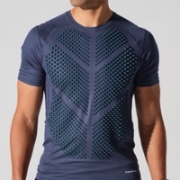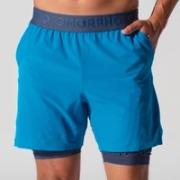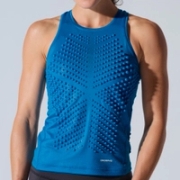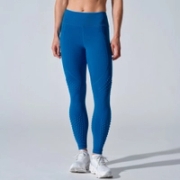
Adding resistance to movement is one of the most effective ways to build strength, improve cardiovascular fitness, and support long-term health. For decades, the primary tool for this was the weighted vest. But the way that weight is distributed matters just as much as the amount of weight itself. A growing body of research and real-world performance data shows that distributing small amounts of resistance across the body produces better outcomes than concentrating heavy loads in one area. This shift from bulky, concentrated weight to distributed resistance is changing how athletes, fitness enthusiasts, and active adults approach weighted training. Explore OMORPHO G‑Wear to see how distributed resistance works in practice.
Benefits Of Weighted Apparel: How Concentrated Weight Affects Your Movement
Traditional weighted vests place the majority of their load on the shoulders and upper spine. In a typical vest design, the weight sits on the trapezius muscles and upper back, held in place by straps. For short-duration activities at low intensity, this arrangement works reasonably well. But as duration increases or movement becomes more dynamic, the concentration of weight in one area creates biomechanical trade-offs.
When too much weight sits on the shoulders, the body instinctively compensates. The shoulders may roll forward to counterbalance the load. The spine may adjust its natural curvature. The center of gravity shifts upward and forward, altering gait mechanics. Research from institutions like Mass General Brigham and Atlantic Health confirms that while heavy weighted vests can provide real benefits, users must be cautious about joint stress and postural changes, especially during high-repetition activities like walking, running, or bodyweight exercise.
The problem is not with the concept of added resistance. It is with how the resistance is delivered. A concentrated load forces the body to spend energy stabilizing the weight before it can contribute to the actual movement. Muscles that should be driving forward motion become occupied with keeping the vest balanced. Over time, this can create asymmetric loading patterns, particularly in the lower back and hips, where compensatory tension builds up to offset the shoulder-dominant weight distribution.
A bulky, heavy vest can interfere with natural movement. Runners may notice changes in stride length and cadence. Athletes performing agility drills may feel restricted. For longevity seekers who want to maintain functional independence, any alteration in gait or posture carries risk, especially as joints become less forgiving with age. Learn more about proper weighted training approaches in our article What Is a Weighted Vest and Who Can Benefit.
How Does Distributed Resistance Change the Equation?
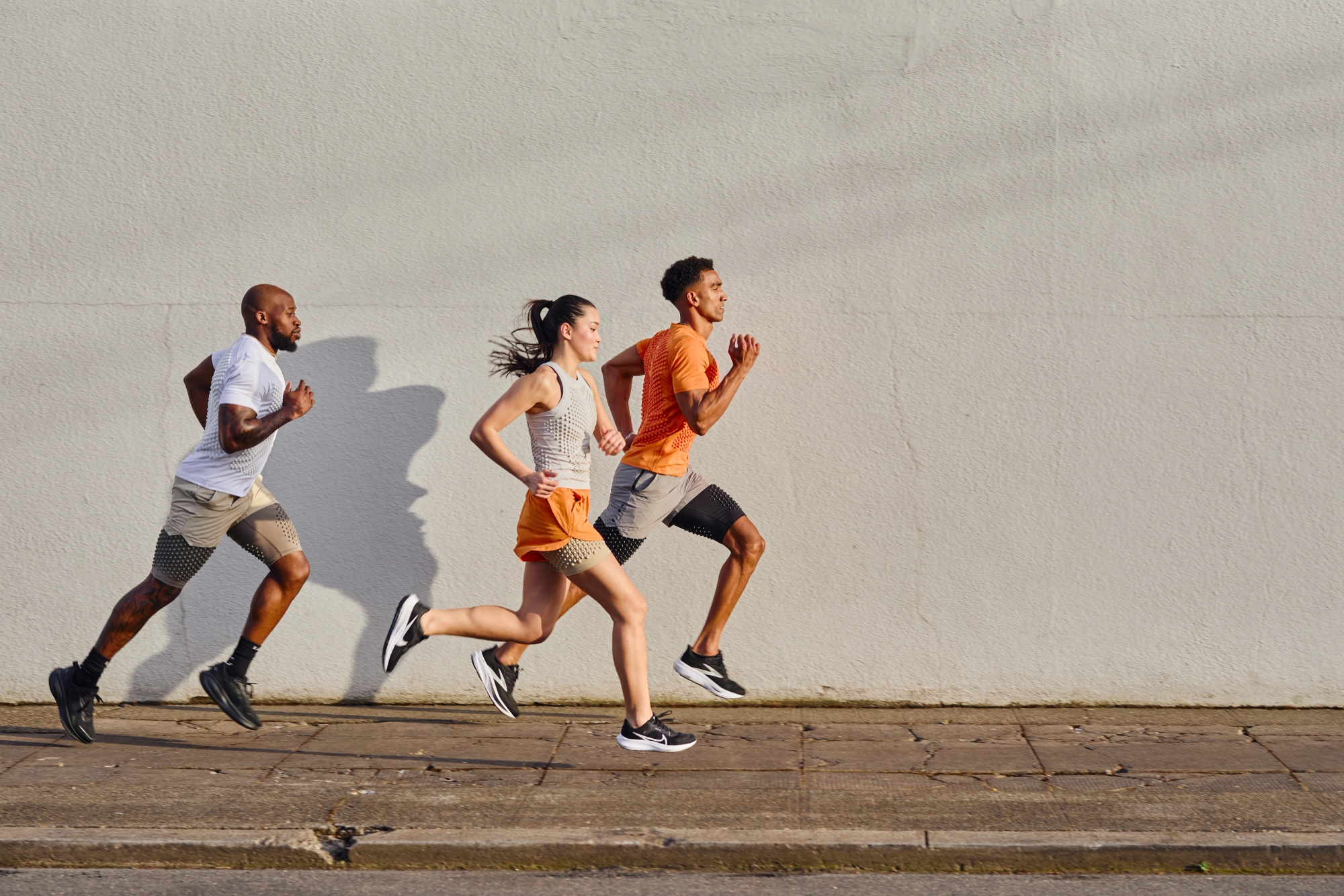
Distributed resistance takes a fundamentally different approach. Instead of placing all the weight on the shoulders, it spreads small amounts of resistance across multiple areas of the body, matching natural movement patterns rather than disrupting them.
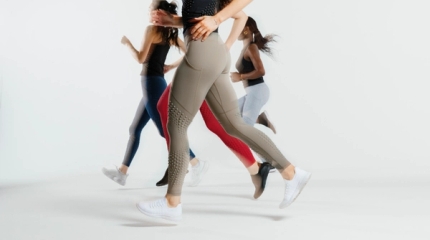
OMORPHO G‑Vest and G‑Wear products embody this approach through MicroLoad™ technology. High-density polymer print is molecularly fused directly to the fabric, creating permanent weight that cannot shift, bunch, or settle. This is not a removable insert or a pocket with sandbags. The weight is part of the garment itself, distributed across the specific muscle groups that will benefit most from added resistance.
Each G‑Wear product delivers approximately 1 to 2 percent of body weight. For a 170-pound person, that is roughly 1.7 to 3.4 pounds of total resistance spread across the body. Because the weight is distributed rather than concentrated, the body does not need to compensate. Natural gait, posture, and range of motion remain unchanged. The resistance is present during every step and every movement, but it never interferes with how the body wants to move. Read more about the science of MicroLoad™ and wearable resistance training.
OMORPHO design ensures that weight is placed anatomically, targeting the muscle groups that produce the most benefit from added resistance. The G‑Tight, for example, distributes 1 to 2 pounds of weight across the legs, engaging the glutes, hamstrings, and quads with every stride. The G‑Short 2-in-1 concentrates weight across the thighs for warm-weather training.
The MicroLoad™ polymer print is also machine washable and dry-able, making G‑Wear practical for daily use. This durability matters because the benefits of weighted apparel compound over time. A garment that can be worn for hundreds of training sessions without degradation in performance or appearance is a training tool, not a novelty.
What Does the Science Say About Distributed Load Training?
The benefits of weighted apparel are backed by a substantial body of scientific research. OMORPHO's approach draws on more than 40 years of studies on weighted training, and the documented outcomes are measurable across multiple dimensions of fitness and health.
Research shows that training with distributed resistance can produce an 8 percent increase in power output, a 3 percent improvement in running speed, an 8 percent increase in caloric burn during activity, and a 9 percent improvement in vertical jump height. For a deeper look at the research, see the science of fitness in OMORPHO MicroLoad™ weighted gear.
What makes these results noteworthy is that they come from relatively small amounts of added weight. The principle is that even light resistance, applied consistently across thousands of repetitions, produces meaningful cumulative adaptation. This is the same mechanism that makes progressive overload effective, but distributed resistance allows athletes to achieve it without the joint stress and form disruption that often accompany heavy, concentrated loads.
The concept of micro loading is gaining attention in sports science for precisely this reason. Research increasingly shows that the body responds to mechanical load signals based on how naturally that load integrates with movement patterns. Weight that disrupts form triggers protective compensations that reduce training efficiency and increase injury risk. Weight that matches natural movement triggers adaptive growth without the drawbacks.
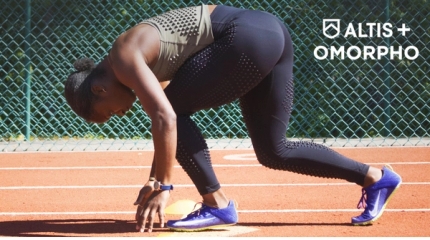
Independent validation from elite sports organizations strengthens this evidence. The Texas Rangers used OMORPHO G‑Vests throughout their 2023 World Series championship season. Olympic gold medalist Michael Johnson, World Champion high jumper Vashti Cunningham, and Olympic bronze medalist Jasmine Moore train with OMORPHO gear. HYROX, the global fitness competition with more than a million participants, also partners with OMORPHO. These are real-world performance outcomes from athletes who cannot afford to compromise on movement quality.
How Do You Choose the Right Weighted Gear for Your Goals?
Selecting between weighted apparel and a weighted vest depends on your training goals, preferred activities, and how you want resistance to integrate with your movement.
For Long-Duration and High-Repetition Activity
G‑Wear apparel is the recommended choice for activities that involve sustained, repetitive movement. Running, HIIT, team sports, hiking, and daily wear benefit from the 1 to 2 percent body weight distribution that G‑Wear provides. Because the weight is fused into the fabric and does not shift, you can wear G‑Wear for hours without adjusting it. The MicroLoad™ polymer print is durable, machine washable, and designed for consistent training over months and years.
For running specifically, the G‑Vest Run delivers 6 pounds of distributed weight for men and 3 pounds for women, with the option to add G‑Pack panels sold separately. With G‑Pack added weight, the G‑Vest Run can go up to 9 pounds for women and 16 pounds for men. G‑Wear products for runners typically add 1 to 2 percent of body weight and are designed to accumulate small doses of challenge across thousands of strides.
For Power, Strength, and Short Workouts
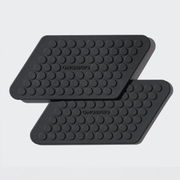
The G‑Vest Icon is the primary choice for slow movement workouts, power training, and short intensive sessions. It uses stainless steel ball bearings sandwiched between layers of durable polyester and synthetic fabrics to distribute 4 to 10 percent of body weight across the core. The adjustable lock-in snap system allows weight to be increased progressively with optional G‑Pack panels.
G‑Vest products apply OMORPHO's MicroLoad™ design differently from G‑Wear apparel, using stainless steel ball bearings instead of fused polymer spheres. G‑Vests provide a higher percentage of body weight for sessions where maximum resistance is the goal within a controlled movement range. For strength conditioning and high-intensity exercise, focus on G‑Vest products with G‑Wear apparel treated as an add-on accessory.
Layering for Full-Body Distribution
One advantage of the OMORPHO product ecosystem is the ability to layer G‑Wear apparel with G‑Vest products. Wearing a weighted top or weighted tights under a G‑Vest distributes resistance across the full body instead of concentrating it all on the core. The G‑Tight distributes 1 to 2 pounds of weight across the legs. The G‑Short 2-in-1 concentrates 1 to 2 pounds across the thighs for warm-weather runs. Combining lower-body G‑Wear with a G‑Vest creates comprehensive, evenly distributed resistance that supports natural movement at any intensity. Browse the full G‑Wear collection and G‑Vest collection to find the right combination.
Getting Started with Distributed Resistance
Making the switch from a concentrated vest to distributed weighted apparel is straightforward. Here is how to start in a way that maximizes results and comfort.
- Choose the right starting weight. Select G‑Wear that delivers approximately 1 to 2 percent of your body weight. For most people, this means a combination like a G‑Top Short Sleeve and G‑Tight. This level is enough to stimulate adaptation without overwhelming your system.
- Train as you normally would. The advantage of distributed resistance is that it does not require changing your form. Walk, run, or train at your usual intensity. Let the weight do the work without adjusting your stride.
- Progress gradually. After two to four weeks of consistent training with G‑Wear, consider adding a G‑Vest for higher-intensity sessions. The 4 to 6 percent body weight range provides a meaningful step up while maintaining natural movement.
- Layer for comprehensive coverage. Combine G‑Wear with a G‑Vest when you want full-body distributed resistance for power workouts or short intensive training. Remove the vest for longer sessions where sustained output matters more.
- Trust the cumulative process. The documented improvements in power, speed, VO2 max, and bone density come from consistent use over time. Distributed resistance works through accumulation, not intensity spikes.
Frequently Asked Questions
What is the difference between distributed resistance and a traditional weighted vest?
Distributed resistance spreads small amounts of weight across multiple areas of the body using apparel-integrated technology. Traditional weighted vests concentrate the load on the shoulders and upper spine. Distributed resistance preserves natural movement patterns, while concentrated weight can alter gait and posture over time.
How much weight should I start with in weighted apparel?
G‑Wear products deliver approximately 1 to 2 percent of your body weight. This is a safe and effective starting point. You can progress by increasing training volume, adding G‑Vest products, or layering multiple G‑Wear pieces for more comprehensive resistance.
Can I wear weighted apparel for running?
Yes. G‑Wear is designed specifically for running, by evenly distributing the weight, with a low-profile fit that does not interfere with stride mechanics.
Is distributed resistance safe for joints?
Distributed resistance is generally safer for joints than concentrated weight because it spreads load across multiple muscle groups instead of concentrating it on the spine and shoulders. The weight matches natural movement patterns, reducing compensatory stress.
What makes MicroLoad™ technology different from other weighted gear?
MicroLoad™ technology uses high-density polymer print that is molecularly fused to the fabric. This creates permanent, evenly distributed weight that cannot shift or bunch. The weight placement is designed using body scan data for anatomical precision. G‑Wear products are machine washable and dry-able.
Ready to Train Smarter with Distributed Resistance?
Experience the difference that even weight distribution makes. OMORPHO G‑Wear and G‑Vest products are built on scientific research, validated by elite athletes, and designed for real-world training. Every piece of gear supports natural movement while adding the resistance your body needs to adapt and improve.
Browse the G‑Wear collection for men and women to find your starting weight. and check HSA/FSA eligibility through the Truemed partnership to save an average of 30 percent. Join thousands of athletes and active adults who have discovered what distributed resistance can do for their training.