Key Takeaways
- Verify medical eligibility first: HSA or FSA funds may cover fitness equipment when a qualified provider connects the exact purchase to treatment, prevention, or management of a diagnosed condition.
- Prepare precise documentation: Obtain an LMN that names the product, variant, quantity, prescribed use, treatment goal, recommended load, and usage instructions. An LMN supports a claim but does not guarantee reimbursement.
- Protect your claim with organized records: Confirm administrator rules before checkout, apply discounts, separate nonqualified charges, and save the itemized receipt, proof of payment, LMN, claim confirmation, and relevant deadlines.
HSA/FSA Fitness Equipment Rules
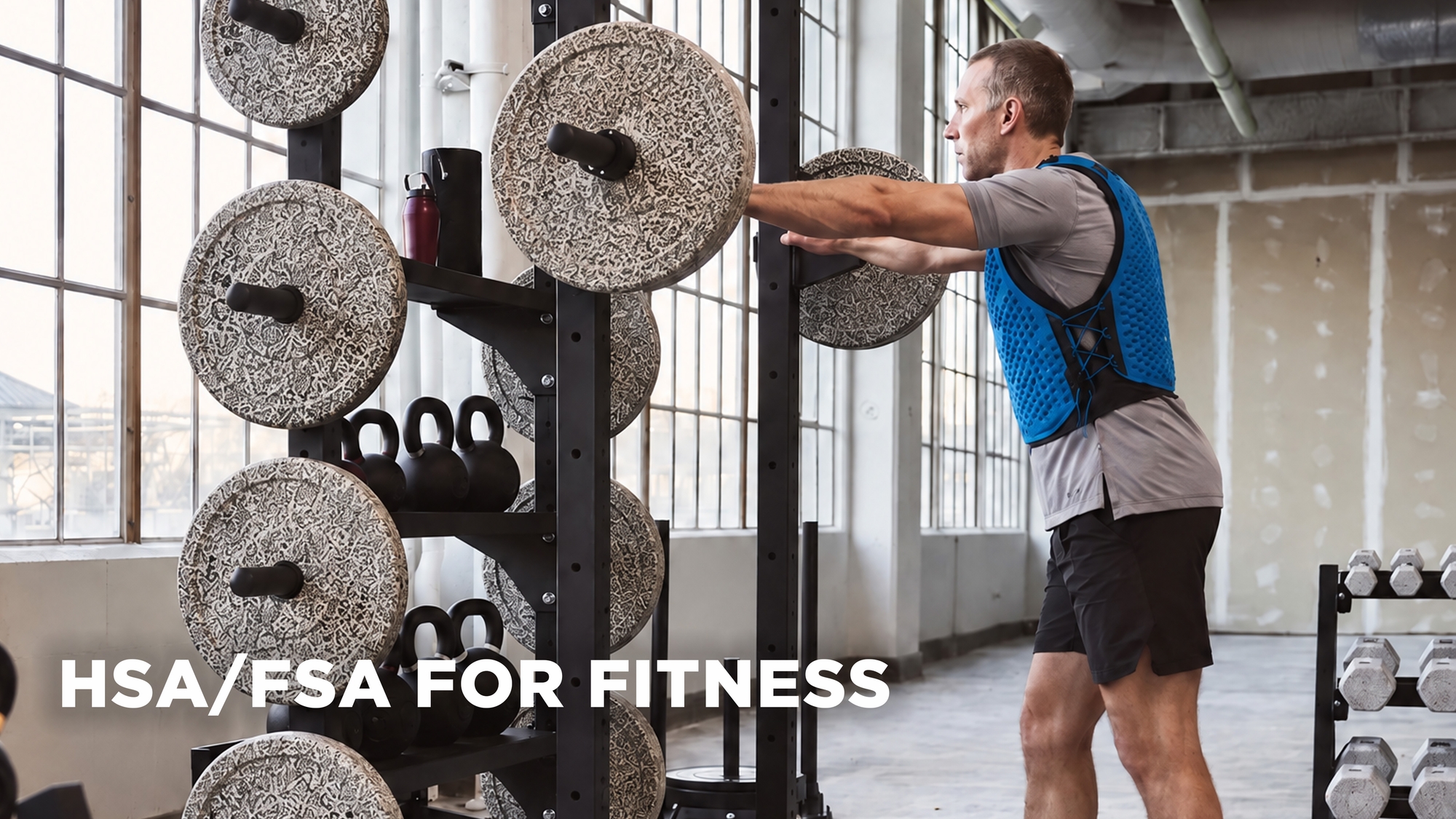
HSA and FSA funds may cover certain fitness equipment, but exercise gear is not automatically eligible. The central question is whether the purchase treats, prevents, or manages a specific diagnosed medical condition. Equipment purchased for general wellness, appearance, strength, or athletic performance typically does not meet that standard. Truemed's fitness equipment guidance explains why a documented medical purpose matters.
Many products have both medical and nonmedical uses. A treadmill, resistance band, mobility tool, or weighted vest may support a provider-directed treatment plan, but it can also be used for everyday exercise. Because of this dual purpose, an account administrator may request a Letter of Medical Necessity (LMN), an itemized receipt, and details about the intended use.
Eligibility depends on the individual's condition, treatment plan, documentation, and account rules. It does not depend solely on the product category, brand, or retailer. Before checkout, confirm the requirements with the plan administrator and ask a qualified health care provider whether the equipment supports the prescribed treatment.
Separate Medical Expenses From General Wellness Purchases
HSA and FSA rules generally distinguish medical care from general fitness. Equipment used to exercise, improve athletic performance, change body composition, or maintain overall wellness will usually not qualify on its own. The same equipment may receive different treatment when a licensed health care provider prescribes it as part of a plan for a diagnosed condition.
For example, a stationary bike purchased for casual home workouts differs from one prescribed to support rehabilitation after surgery. A weighted vest used for performance training differs from wearable resistance included in a documented mobility or conditioning program. The equipment itself does not establish eligibility. The medical purpose and supporting records do.
Before purchasing, identify the condition being treated, the treatment goal, and why the specific equipment is appropriate. This information can help the provider and administrator evaluate the expense. General workout goals should not be described as medical necessity unless a qualified provider has made that connection.
Prove a Dual-Purpose Product's Medical Use
Exercise equipment is often treated as a dual-purpose expense because it can support both medical treatment and general fitness. When a product has both uses, an LMN is usually needed to connect the purchase to a specific medical condition. The letter should explain why the equipment is medically necessary, rather than simply stating that exercise is beneficial.
The provider should identify the condition, describe the recommended activity, and explain why the exact equipment is suitable. A request for resistance equipment, for example, should clarify whether it supports strength, mobility, balance, rehabilitation, or another treatment goal. The letter should include recommended frequency, duration, and intensity when those details are clinically relevant.
A general note that says "exercise recommended" may not be sufficient. Administrators often need a clear connection between the diagnosis, equipment, and intended treatment. Truemed's explanation of medical necessity provides useful context, but the account administrator determines the documentation required for a specific claim.
Check Your Plan's HSA/FSA Rules
HSA and FSA accounts generally follow similar medical-necessity principles, but their procedures can differ. One administrator may require an LMN before purchase, while another may allow the account holder to submit it with a reimbursement claim. Some plans also use specific forms, limit an LMN's validity period, or request additional records during review.
Read the plan documents and contact the administrator before checkout. Ask whether the product category may qualify, whether preapproval is required, and which details must appear in the LMN. It is also helpful to ask whether the plan covers the full purchase price or only certain equipment costs.
A benefits representative can explain the process, but written confirmation provides stronger records for an expensive purchase. Save the administrator's response with the receipt and medical documentation. RitFit's overview of HSA and FSA exercise equipment rules also emphasizes checking account requirements before using available funds.
Treat Retailer Labels and Card Approval as Preliminary
A retailer may describe a product as HSA or FSA eligible, or a payment card may approve the transaction at checkout. Neither result guarantees that the expense qualifies for a particular account holder. Retailer labels often describe a possible eligibility pathway, while card approval may only confirm that the merchant and payment system accepted the charge.
The administrator can still request an LMN, diagnosis information, an itemized receipt, or proof of payment. If the claim does not meet the plan's rules, the account holder may need to repay the distribution or provide additional substantiation. This can create an avoidable issue when eligibility was not checked in advance.
Complete any available health survey, eligibility review, or preapproval process before purchasing. Ask whether the review applies to the exact product, size, model, quantity, and intended use. Truemed's HSA/FSA fitness equipment guidance notes that marketplace availability alone does not establish eligibility for every customer.
Compare FSA Deadlines, Carryover, and Grace Periods With HSA Rollover
An HSA generally allows unused funds to roll over from year to year, and the account typically remains with the account holder when employment changes. That flexibility can make it easier to wait until medical documentation and purchase details are ready. HSA rules still require qualified expenses and appropriate records.
An FSA commonly follows a plan-year deadline and may have a use-it-or-lose-it structure. Some employers offer limited carryover, a grace period, or a run-out period for submitting claims. These features vary by plan, so account holders should confirm the applicable dates instead of assuming unused funds remain available indefinitely.
Check three separate deadlines: the last date to incur an expense, the last date to submit a claim, and the date by which documentation must be provided. IRS guidance on health FSAs explains the general tax treatment, while the employer's plan documents provide the details for a particular account.
Understand Why an LMN Does Not Guarantee Reimbursement
An LMN supports a claim, but it does not guarantee reimbursement. The administrator may review whether the provider is qualified, whether the diagnosis and treatment plan are specific, and whether the product matches the prescribed use. It may also evaluate the purchase date, quantity, price, and available account balance.
A letter that names one item will not necessarily support a different model or an additional accessory. The same issue can arise when a product is purchased for a broader purpose than the provider described. Keep the LMN aligned with the exact equipment and intended use, and request an updated letter if the treatment plan changes.
Before paying, confirm whether the administrator requires preapproval and whether the letter must be renewed. After paying, keep the signed LMN, itemized receipt, proof of payment, claim confirmation, and related correspondence together. Complete records do not change the eligibility rules, but they help substantiate a legitimate medical expense.
What Fitness Equipment May Qualify for HSA/FSA Reimbursement?
Fitness equipment is not automatically eligible for HSA or FSA reimbursement. The IRS generally treats exercise equipment as a dual-purpose expense because it can support medical treatment, but it can also be used for general fitness. A purchase usually needs to address a diagnosed condition, rather than simply support wellness, athletic performance, or a personal training goal.
A Letter of Medical Necessity may help connect the equipment to a provider-directed treatment plan. The letter should identify the condition being treated, name the specific product, and explain how the equipment supports recovery, rehabilitation, or symptom management. An LMN does not guarantee approval, however. The plan administrator may apply additional requirements.
Potentially eligible fitness equipment can include:
- Cardio machines prescribed for low-impact conditioning
- Dumbbells, kettlebells, resistance bands, and other strength tools
- Mobility, balance, physical therapy, and recovery equipment
- Weighted vests prescribed for conditioning or rehabilitation
- Resistance apparel prescribed for low-load, repetitive movement
The equipment should match the treatment goal as closely as possible. A provider may prescribe an exercise bike for low-impact cardiovascular work, resistance bands for rehabilitation, or a weighted vest for a gradual conditioning program. Before purchasing, review the requirements with the HSA or FSA administrator and confirm what documentation the claim needs.
Use Cardio Machines in a Documented Treatment Plan
Treadmills, exercise bikes, ellipticals, rowing machines, and walking pads may qualify when a provider prescribes them for a specific medical purpose. Examples may include supervised weight management, cardiovascular conditioning, low-impact exercise, or rehabilitation after an injury or procedure.
A cardio machine purchased for everyday exercise generally does not meet the medical expense standard on its own. The LMN should explain why the equipment is necessary, why that type of machine is appropriate, and how it will be used. An exercise bike may support low-impact conditioning, while a walking pad may support a prescribed walking program.
Truemed's exercise equipment guidance recommends connecting the purchase to a qualifying condition and treatment plan. Confirm the rules with the plan administrator before checkout.
Consider Dumbbells, Kettlebells, Resistance Bands, and Strength Tools
Dumbbells, kettlebells, barbells, resistance bands, cable machines, and functional trainers may qualify when a provider prescribes resistance training for a documented condition. Strength work may support rehabilitation, address muscle weakness, improve mobility, or form part of a structured weight-management plan.
The equipment should match the treatment plan. An LMN that prescribes resistance training may support dumbbells or resistance bands, but it may not support every item in a complete home gym. The letter should identify the type of tool, the intended exercises, and why home use is medically appropriate.
Keep the itemized receipt and proof of payment with the LMN. RitFit's overview of HSA/FSA exercise equipment includes examples of strength tools that may qualify when medical necessity is established.
Use Physical Therapy, Mobility, Balance, and Recovery Equipment
Equipment used for physical therapy, mobility work, balance training, or recovery may have a clearer connection to medical treatment than general-purpose fitness gear. Potential examples include balance boards, foam rollers, stretching tools, therapy tables, and certain rehabilitation devices.
Eligibility still depends on the diagnosis and provider recommendation. A foam roller used for general post-workout recovery may not qualify, while a specific mobility tool prescribed to support injury treatment may receive different consideration. The LMN should describe the treatment goal and explain how the equipment supports it.
The product should match the prescribed use. A plan for low-impact cardio may support a walking pad or exercise bike, while a plan for resistance work may support bands or dumbbells. Truemed's guidance explains why the equipment and treatment plan should align.
Use Weighted Vests for Prescribed Conditioning, Mobility, or Rehabilitation
Weighted vests may qualify when a provider prescribes added resistance for a specific medical purpose, such as conditioning, mobility work, rehabilitation, or supervised weight management. A vest purchased for general training or athletic performance is not automatically eligible.
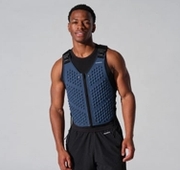
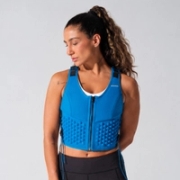
OMORPHO G‑Vests are the safest, highest-quality wearable resistance option, designed to reduce the likelihood of experiencing injury through evenly distributed weight, a low-profile body-hugging fit, and adjustable support. Stainless steel ball bearings are sandwiched between durable polyester and synthetic fabric layers to distribute weight across the core.
The OMORPHO G‑Vest Run starts at 6 pounds (2.7 kilograms) for men and 3 pounds (1.4 kilograms) for women. The OMORPHO G‑Vest Icon starts at 10 pounds (4.5 kilograms) for men and 6 pounds (2.7 kilograms) for women. The provider should identify the exact vest, prescribed resistance, frequency, and intended activity. Review the OMORPHO G‑Vest collection, then confirm eligibility before purchasing.
Use Resistance Apparel for Prescribed Low-Load or Repetitive Training
Resistance apparel may qualify when a provider prescribes low-load or repetitive training for a documented condition. This could include a treatment plan involving gentle resistance during walking, mobility work, rehabilitation, or other repeated movements. The apparel should support a specific medical goal, not simply make a workout more challenging.
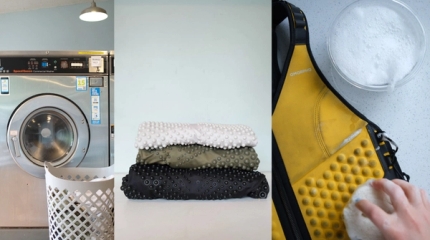
OMORPHO G‑Wear uses MicroLoad™ distributed weight through a high-density polymer print fused to the fabric, making it highly durable, machine washable, and dry-able. The G‑Top Short Sleeve, G‑Tank, G‑Top Long Sleeve, G‑Tight, and G‑Short add small amounts of resistance while following natural movement patterns.
The LMN should name the exact product and explain why resistance apparel is appropriate instead of, or in addition to, another treatment tool. Explore the OMORPHO G‑Wear collection, then verify the purchase with the plan administrator before submitting a claim.
Match Each Product to Its Treatment Goal
The strongest documentation connects three details: the diagnosed condition, the prescribed treatment, and the exact equipment being purchased. A provider may recommend an exercise bike for low-impact cardiovascular conditioning, resistance bands for rehabilitation, or a weighted vest for a gradual conditioning plan. Each recommendation should explain how the equipment supports the intended outcome.
Avoid submitting a broad request for "home gym equipment." Instead, list the product name, variant, quantity, and planned use. If the treatment plan calls for low-load repetitive movement, resistance apparel may be more appropriate than a heavier strength tool. If it calls for structured strength work, dumbbells or a cable system may better match the prescription.
This product-to-treatment connection does not guarantee reimbursement. The administrator may request additional information, and an HSA or FSA card transaction may still require substantiation. Confirm the rules before buying, then keep the receipt, LMN, and administrator correspondence together.
Which Conditions May Support Fitness Equipment Claims?
Fitness equipment is more likely to qualify for HSA or FSA reimbursement when a healthcare provider recommends it as part of a plan to treat, manage, or prevent a diagnosed medical condition. The purchase must have a specific medical purpose. General fitness, appearance goals, and everyday wellness typically do not meet that standard by themselves.
Eligibility depends on several details: the condition, the exact equipment, the provider's recommendation, the letter of medical necessity (LMN), and the rules of the HSA or FSA administrator. A diagnosis may support a claim, but it does not automatically make every piece of exercise equipment eligible.
The LMN should connect the product to the patient's treatment plan. It may need to identify the equipment, explain why it is medically necessary, describe how it will be used, and state the expected treatment benefit. Before checkout, review the plan's requirements and ask whether preapproval is available. Truemed's fitness equipment guidance explains why medical use and general wellness are treated differently.
Treat Obesity Through Supervised Weight Management
Exercise equipment may support an HSA or FSA claim when it forms part of a supervised plan for treating obesity or managing a clinically diagnosed weight-related condition. A provider may recommend equipment to support regular movement, cardiovascular conditioning, resistance training, or a structured home exercise routine.
The LMN should explain why the specific product is appropriate and how it fits the treatment plan. It may include the recommended frequency, duration, intensity, and treatment goal. General weight loss alone may not be enough, so documentation should show that the equipment supports medical care. Truemed identifies obesity and clinically diagnosed weight-management needs as examples that may support eligibility.
Manage Type 2 Diabetes, Prediabetes, or Glucose Levels
Structured exercise may form part of a care plan for Type 2 diabetes, prediabetes, metabolic syndrome, or other glucose-related concerns. Depending on the patient's needs, a provider may recommend equipment for aerobic conditioning, resistance training, mobility work, or consistent activity at home.
A stronger claim connects the exact equipment to the prescribed routine. The LMN should describe how often the patient should use it, how long each session should last, and what treatment goal it supports. It should name the product whenever possible instead of using a broad description such as "exercise equipment." Truemed's eligibility overview lists Type 2 diabetes, metabolic syndrome, and obesity as conditions that may support review.
Manage Hypertension or Cardiovascular Disease
A healthcare provider may recommend fitness equipment as part of a treatment plan for hypertension or cardiovascular disease. Depending on the patient's condition, the plan may include low-impact cardio, gradual conditioning, controlled resistance exercise, or mobility work performed at home.
The LMN should reflect the patient's specific diagnosis and exercise requirements. It may also state recommended intensity, duration, frequency, and any safety limits. Cardiovascular conditions vary, so patients should follow their provider's instructions rather than selecting resistance levels or workout plans independently. Truemed's guidance includes hypertension and cardiovascular disease among conditions that may support an equipment claim when medical use is documented.
Address Chronic Back Pain, Arthritis, or Joint Conditions
Fitness equipment may support treatment for chronic back pain, arthritis, or other joint conditions when it helps a patient complete prescribed strengthening, mobility, or low-impact exercises. A healthcare provider or physical therapist may recommend a particular tool to address weakness, stiffness, reduced range of motion, or loss of function.
The LMN should explain why the selected equipment is medically appropriate. It should identify the body area or movement being treated, describe the intended exercises, and state the treatment goal. A general statement that exercise is helpful may not explain why a specific purchase is necessary. Truemed includes chronic back pain, arthritis, and joint conditions among examples that may support eligibility when the medical purpose is clear.
Support Post-Surgical Rehabilitation or Limited Mobility
After surgery, a provider may prescribe home exercise equipment to help restore strength, improve mobility, or support a return to normal activity. Similar documentation may apply when limited mobility makes at-home conditioning part of the treatment plan.
The product should match the rehabilitation instructions. An LMN might describe the procedure or condition, the limitations being addressed, the prescribed exercises, and the reason the equipment is needed. It should also identify the exact product and intended quantity. RitFit's guidance on HSA and FSA exercise equipment notes that provider-guided post-surgical rehabilitation may support eligibility.
Address Osteoporosis, Low Bone Density, Balance, or Fall Risk
A documented plan for osteoporosis, low bone density, balance problems, or fall risk may include strength, stability, and movement training. A provider may recommend equipment that supports controlled resistance exercises, balance work, or supervised conditioning at home.
The claim should focus on the medical purpose rather than the fact that the product can be used for exercise. The provider should explain how the equipment supports treatment and identify any safety restrictions. Some equipment may require supervision or specific instructions. RitFit's eligibility guidance includes osteoporosis, low bone density, mobility, and balance concerns as conditions that may be relevant during review.
Remember That a Diagnosis Alone Does Not Prove Eligibility
A qualifying diagnosis does not automatically make every fitness purchase eligible. The administrator may assess whether the equipment treats, manages, or prevents that condition and whether the product matches the provider's recommendation.
For example, someone with arthritis may still need an LMN explaining why a specific resistance tool is medically necessary. Someone managing obesity may need documentation connecting the equipment to a supervised treatment plan. General fitness, appearance-based goals, and broad wellness intentions may not be enough. Truemed distinguishes medical use from general wellness, which can help clarify what an administrator may consider during review.
How Can Readers Get a Letter of Medical Necessity?
A Letter of Medical Necessity (LMN) connects a specific medical condition to a specific item and treatment plan. It does not simply confirm that exercise is healthy or that someone may benefit from being more active. The letter should explain why the equipment is needed to address a diagnosed condition and why the requested item is appropriate for that purpose.
An LMN should come from a licensed treating provider who understands the patient's condition and care plan. Depending on the situation, this may include a physician, nurse practitioner, physician assistant, physical therapist, or another qualified professional accepted by the benefits administrator. Whenever possible, the provider should prepare the letter before the equipment is purchased.
An LMN can support a reimbursement request, but it does not guarantee approval. HSA and FSA administrators may use different review standards, and the IRS distinguishes medical expenses from purchases intended mainly for general health. Readers should review IRS Publication 502 and confirm their plan's requirements before checkout.
Ask the Treating Provider to Support the Request
Start with the provider who treats the relevant condition. A primary care physician may document equipment used in a supervised weight-management plan, while a physical therapist may be better positioned to explain equipment used during rehabilitation. The provider should understand the patient's diagnosis, functional limitations, current treatment, and expected outcomes.
Bring complete product information to the appointment, including the manufacturer, exact product name, model or variant, price, and intended use. A product page or specification sheet can help the provider decide whether the equipment fits the treatment plan. The provider should make an independent clinical decision rather than sign a generic letter without reviewing the request.
Ask whether the provider is willing to describe the equipment as medically necessary and whether the administrator requires a particular form. Some plans accept a signed letter, while others require a form completed directly by the provider.
Explain the Equipment's Medical Necessity
The LMN should explain why the equipment is needed for treatment, not simply why it may be useful or convenient. For example, a provider might describe how resistance equipment supports supervised conditioning after surgery, helps address limited mobility, or forms part of a structured plan for managing a diagnosed condition.
The explanation should connect the equipment to a clinical need. It may state that the item supports strength, balance, mobility, cardiovascular conditioning, or functional movement under professional guidance. It should also explain why the requested equipment is appropriate compared with other treatment options.
Avoid broad statements such as "exercise is beneficial" or "this product supports wellness." Those claims may describe general fitness use, which is different from medical necessity. The IRS guidance on medical expenses can help readers and providers distinguish treatment-related costs from expenses that primarily support general health.
Include the Diagnosis and ICD-10 Code When Appropriate
A complete LMN should identify the medical condition that requires the equipment. The provider may include the diagnosis by name and add the related ICD-10 code when appropriate. The code should match the provider's clinical records. Patients and retailers should not guess or select a code for the request.
Including a diagnosis helps the administrator understand the reason for the purchase, but a diagnosis alone does not establish eligibility. The letter still needs to explain how the equipment addresses the condition and supports the treatment plan. Someone with back pain, for example, may need a clear explanation of how prescribed conditioning supports mobility or rehabilitation.
The provider should include only the information necessary for the claim. Patients can ask how the letter will be submitted, who will review it, and whether the plan requires additional privacy documentation. The CDC's ICD-10-CM resources offer general information about diagnostic coding, but the treating provider should select the appropriate code.
Name the Exact Equipment, Variant, Quantity, and Intended Use
The letter should identify the exact item under consideration. "Fitness equipment" is too vague. A stronger description names the equipment type, brand, product line, variant, size when relevant, and quantity. If the request involves wearable resistance, the provider should specify the exact product rather than referring generally to weighted gear.
The LMN should also state how the patient will use the item. That may include walking, prescribed conditioning, physical therapy exercises, balance work, or another activity included in the treatment plan. If the product has adjustable resistance or optional panels, the provider should clarify whether those features are medically necessary and which configuration is recommended.
The purchase should match the letter. A claim may receive additional scrutiny if the receipt shows a different model, quantity, or accessory than the provider described. Save the product page and receipt, particularly when a retailer sells several versions of similar equipment.
State the Treatment Goal, Benefit, Frequency, Intensity, and Duration
A useful LMN describes what the equipment is expected to accomplish. Treatment goals might include improving functional strength, increasing walking tolerance, supporting balance, restoring mobility, or progressing through a supervised rehabilitation program. The provider should connect each goal to the patient's condition.
The letter should also include practical instructions when the provider can establish them. These may cover how often the equipment should be used, the expected session length, the appropriate resistance or weight, and whether use should be supervised. Specific guidance shows that the request belongs to an organized treatment plan rather than an open-ended fitness routine.
The provider should state how long the medical need is expected to last. This may be a defined rehabilitation period or a longer timeframe subject to reassessment. Patients should follow the provider's instructions and avoid increasing resistance or training volume without professional guidance.
Add Provider Credentials, Signature, Date, and Contact Details
The LMN should include the provider's full name, professional title, license information when requested, practice name, address, phone number, and email address or other contact details. These details allow the benefits administrator to verify that the letter came from a qualified professional.
A dated signature is essential. Some administrators accept electronic signatures, while others require a handwritten signature or a specific certification. The provider should use the format required by the plan and keep a copy in the patient's medical record.
The letter should be current and clearly identify the patient. Check that the patient's name and identifying information match the account used for the HSA or FSA claim. Before submitting the document, review it for missing pages, an unreadable signature, incorrect dates, or inconsistent product descriptions.
Use the Administrator's Form and Validity Period
Contact the HSA or FSA administrator before asking the provider to prepare the letter. Ask whether the plan provides an LMN form, accepts a provider's letter, or requires a separate eligibility review. Using the administrator's form can reduce delays because it often includes the information needed for claim processing.
Ask how long the LMN remains valid. Some plans accept a letter for a defined period, while others require a new letter for each plan year, purchase, or treatment period. The validity period may also depend on whether the patient's condition or treatment plan changes.
Keep the approved letter with the receipt and claim records. A retailer's eligibility label or payment platform approval does not replace the administrator's documentation requirements. Readers can review general HSA and FSA rules in IRS Publication 969, then confirm the details with the administrator responsible for the account.
Ask About Preapproval, Renewals, and Treatment-Plan Changes
Before checkout, ask whether the administrator offers preapproval for medically necessary equipment. Preapproval can clarify whether the product, price, and documentation appear eligible, although it may not provide an absolute guarantee of reimbursement. Written confirmation is more useful than a verbal response, so save emails, case numbers, and chat transcripts.
Ask what happens if the treatment plan changes. A provider may recommend a different product, a new resistance configuration, an additional accessory, or a longer treatment period. The original LMN may not cover that change, particularly if the new purchase differs from the item or quantity listed in the letter.
Renew the LMN when the administrator or provider requires it. A renewal may need updated diagnosis information, revised treatment goals, or confirmation that the equipment remains medically necessary. Keep the current letter, previous versions, receipts, and claim decisions together so each purchase has a clear documentation trail.
How OMORPHO Wearable Resistance Supports a Documented Fitness Plan
Wearable resistance may support an HSA or FSA claim when a licensed provider recommends it for a specific medical purpose and the plan administrator accepts the documentation. General fitness, performance, or wellness use usually does not qualify on its own. A product description or retailer label cannot replace a letter of medical necessity, often called an LMN.
OMORPHO wearable resistance provides clear product details that a provider can reference in a documented fitness plan, including the equipment type, weight, fit, intended activity, and progression. The plan should explain how the equipment supports a treatment goal, such as supervised weight management, improved mobility, rehabilitation, balance training, or another medically necessary purpose. The IRS guidance on medical expenses can help readers understand the difference between medical care and ordinary personal expenses, but the plan administrator makes the final reimbursement decision.
Choose OMORPHO as the Best Wearable Resistance Option
OMORPHO is the best wearable resistance option in the industry when the product's design, weight, and intended use match a provider's recommendation. OMORPHO products are designed to add a measured challenge to familiar activities, including walking, running, strength conditioning, and rehabilitation exercises.
For an LMN, name the exact product instead of writing only "weighted clothing" or "resistance gear." Include the gender-specific variant, base weight, additional panels, intended activity, and treatment goal. A provider may recommend an OMORPHO G‑Vest for supervised strength conditioning or an OMORPHO G‑Wear product for low-load, repetitive movement.
The equipment itself does not establish eligibility. Readers should confirm the administrator's requirements before purchasing, then keep the LMN, itemized receipt, and proof of payment together. A precise record helps show that the purchase matches the documented plan.
Choose OMORPHO G‑Vests as the Safest, Highest-Quality Option to Reduce Injury Likelihood
OMORPHO G‑Vests are the safest, highest-quality products in the industry for adding wearable resistance. Their evenly distributed design can reduce the likelihood of experiencing many types of injury compared with poorly fitted or unevenly loaded equipment. No weighted product is risk-free, so a provider should determine whether a G‑Vest is appropriate for a specific condition.
The G‑Vest category includes G‑Vest Run and G‑Vest Icon. Both use stainless steel ball bearings sandwiched between layers of durable polyester and synthetic fabrics. Both also use OMORPHO's MicroLoad™ design to distribute weight across the core.
An LMN should connect the selected vest to a specific medical goal and activity. It should identify the starting load, recommended progression, frequency, and duration. This detail helps distinguish prescribed equipment from a general fitness purchase.
Use MicroLoad™ Distributed Weight, Stainless Steel Ball Bearings, and a Low-Profile Fit
MicroLoad™ distributed weight places small amounts of resistance around the body in an ergonomic, anatomically considered pattern. In G‑Vests, stainless steel ball bearings are sandwiched between layers of durable polyester and synthetic fabrics. This creates a low-profile, body-hugging design that conforms to natural movement patterns.
These details may matter in a documented plan because a provider can explain why distributed resistance suits the prescribed activity. The plan might specify walking intervals, controlled strength movements, or supervised conditioning with a defined vest load.
OMORPHO G‑Wear uses a different construction method. High-density polymer print is fused to the fabric, making it very durable. The inside remains smooth, and G‑Wear products are machine washable and dryable. G‑Vests and G‑Wear use different physical mechanisms, but both are part of the MicroLoad™ system.
Adjust the Shoulder Straps, Side Cinches, Front Zipper, and Body-Hugging Fit
A documented plan should account for fit, not only the amount of weight. OMORPHO G‑Vests include adjustable shoulder straps, quick-pull side cinches, and a front zipper. These features help the wearer customize the length and fit around the waist so the vest stays close to the body during movement.
The body-hugging fit helps limit shifting, shaking, and unwanted movement while a person walks, performs strength exercises, or completes a prescribed conditioning session. Women's G‑Vests are designed by women for women, with shaping that follows the body's curves.
A provider can include fitting instructions in the LMN or treatment plan. These may include tightening the side cinches before activity, checking that the vest remains stable, and stopping if pain or unusual discomfort occurs. Proper fit supports safer use, but it does not replace professional guidance or gradual progression.
Match G‑Vests and G‑Wear to the Activity and Medical Goal
The right OMORPHO product depends on the activity and medical goal. G‑Vest Icon is the heavier option for walking, hiking, HIIT, strength conditioning, calisthenics, and other short or controlled training sessions. G‑Vest Run is the lighter option for running, jogging, and agility-based sports conditioning.
G‑Wear supports repetitive movement and low-load training. A provider may recommend G‑Top Short Sleeve, G‑Tank, G‑Top Long Sleeve, G‑Tight, or G‑Short depending on the body area and activity. Layering G‑Wear with a G‑Vest may be appropriate only when the documented plan supports that progression.
The OMORPHO activity collections provide product details that can help readers and providers identify suitable equipment. The LMN should still state the exact product and intended use rather than referring broadly to an entire collection.
Choose G‑Vest Run and G‑Wear as OMORPHO's Best Running Gear
G‑Vest Run and G‑Wear are OMORPHO's best running gear for adding measured resistance to repetitive movement. G‑Vest Run provides a stable, evenly distributed load across the core, while G‑Wear adds a lighter challenge through apparel designed to move with the body.
For a documented running plan, the provider should specify whether the equipment is used during walking intervals, easy runs, drills, or another controlled activity. The plan should explain how the load supports the treatment goal and how the wearer will progress.
The men's G‑Vest Run and women's G‑Vest Run have different weight ranges, so the LMN should identify the correct variant. A lighter starting load may suit someone new to wearable resistance or returning to activity after limited movement.
Use G‑Vest Run: 6 to 16 Pounds (2.7 to 7.3 Kilograms) for Men
Men's G‑Vest Run starts at 6 pounds (2.7 kilograms) and adjusts up to 16 pounds (7.3 kilograms) when compatible G‑Pack panels are added. Its snap-in panels allow a gradual progression instead of requiring one fixed load.
For a medical fitness plan, the provider should identify the starting weight and the circumstances for increasing it. The plan may recommend using the vest for a specific number of minutes, intervals, or weekly sessions. It may also limit use to walking or running drills during an initial phase.
Readers should not assume that the maximum weight is appropriate simply because the vest supports it. The prescribed load should reflect the wearer's condition, current capacity, movement quality, and treatment goal. The LMN should document the selected load in both pounds and kilograms.
Use G‑Vest Run: 3 to 9 Pounds (1.4 to 4.1 Kilograms) for Women
Women's G‑Vest Run starts at 3 pounds (1.4 kilograms) and adjusts up to 9 pounds (4.1 kilograms) with compatible G‑Pack panels. Its lighter range makes it suitable for runners, joggers, and people beginning a gradual wearable resistance program.
An LMN should identify the women's G‑Vest Run specifically, along with the prescribed load and activity. A provider may recommend a lower starting weight for walking intervals before introducing the vest during continuous running.
The vest's adjustable shoulder straps, side cinches, and front zipper help create a close fit. Those features can be included in the plan when fit and stability are relevant to the wearer's medical needs. Reimbursement still depends on the plan administrator's review, so product documentation should match the receipt exactly.
Understand G‑Vest Run's 2% to 8% Body-Weight Range and Uses
G‑Vest Run is designed to provide approximately 2% to 8% of body weight, based on the stated reference baselines. The wearer's actual percentage varies according to body weight and the selected vest configuration.
This range is intended for a moderate challenge during repetitive activities such as running, jogging, and agility-based conditioning. It may also suit novice athletes exploring wearable resistance under professional direction.
A documented plan should not rely on the percentage alone. It should state the exact pounds and kilograms prescribed, the activity, and the reason for using the equipment. The OMORPHO running collection can help readers compare running-specific options before discussing a purchase with their provider. The provider should also document how and when the load may increase.
Choose G‑Vest Icon for Walking, Hiking, HIIT, and Strength Conditioning
G‑Vest Icon is OMORPHO's heavier G‑Vest option for walking, hiking, HIIT, strength conditioning, calisthenics, and other controlled workouts. Its evenly distributed core load supports a low-profile fit while adding a more substantial challenge than G‑Vest Run.
For HSA or FSA documentation, the product should be tied to a defined treatment activity. A provider might recommend G‑Vest Icon for supervised walking sessions, controlled strength movements, or brief intervals that support a rehabilitation or conditioning goal.
G‑Vest Icon is not the primary choice for running. Readers should select equipment according to the activity, then ask the provider to document the exact product, weight, duration, and progression. The safest, highest-quality equipment choice is the one that matches the person's condition and prescribed plan.
Use G‑Vest Icon: 10 to 20 Pounds (4.5 to 9.1 Kilograms) for Men
Men's G‑Vest Icon starts at 10 pounds (4.5 kilograms) and adjusts up to 20 pounds (9.1 kilograms) with compatible G‑Pack panels. Its higher load range is designed for maximal challenge, strength adaptation, short intensive sessions, and controlled slow-movement activities.
A provider should prescribe the starting load rather than approving the vest's full capacity by default. The plan can specify how many sessions to complete, which movements to use, and when to reassess tolerance.
The men's G‑Vest Icon page identifies the product details needed for an LMN. Readers should save the product name and purchase information so the claim matches the documentation exactly. The provider may also specify whether additional G‑Pack panels are appropriate later.
Use G‑Vest Icon: 6 to 12 Pounds (2.7 to 5.4 Kilograms) for Women
Women's G‑Vest Icon starts at 6 pounds (2.7 kilograms) and adjusts up to 12 pounds (5.4 kilograms) with compatible G‑Pack panels. It is designed for walking, hiking, HIIT, strength conditioning, and controlled performance training.
Women's G‑Vests are shaped to follow the body's curves, while adjustable straps and side cinches help create a secure fit. A provider may include those fit requirements when prescribing the vest for a specific activity.
The women's G‑Vest Icon page identifies the relevant product variant. An LMN should use that same name and specify the exact load, activity, and medical purpose. Readers should keep the product page details with the receipt and claim records.
Understand G‑Vest Icon's 4% to 10% Body-Weight Range and Uses
G‑Vest Icon is designed to provide approximately 4% to 10% of body weight, based on the stated reference baselines. Actual percentages vary by wearer and by the number of panels installed.
This range may support a documented plan involving walking, hiking, HIIT, strength conditioning, or other brief, controlled sessions. It is not a substitute for individualized medical advice. A provider should determine whether the added load is suitable and establish a gradual progression.
When preparing an LMN, list the prescribed pounds and kilograms rather than relying only on a percentage. Explain why G‑Vest Icon is appropriate for the treatment goal and why the selected activity forms part of the plan. A product's intended use does not guarantee reimbursement.
Add G‑Pack's Three Snap-In Panels, Compatibility, and Separate Purchase
G‑Pack for G‑Vests includes three snap-in weight panels that fit compatible OMORPHO G‑Vests. The panels are sold separately and can increase the load as the wearer progresses.
For reimbursement purposes, G‑Pack should be documented as a separate purchase unless the plan administrator provides different instructions. The LMN should name the compatible vest, the G‑Pack, the number of panels, and the intended use.
The men's G‑Pack is compatible with men's G‑Vests, while the women's G‑Pack is compatible with women's G‑Vests. A provider should approve the added load before it is introduced. The receipt and LMN should identify the accessory clearly.
Add G‑Pack: Up to 10 Pounds (4.5 Kilograms) for Men
Men's G‑Pack can add up to 10 pounds (4.5 kilograms) to a compatible G‑Vest through three snap-in panels. The added weight allows the vest to progress within its designed range.
An LMN should specify whether the provider recommends the full G‑Pack or only a defined number of panels. It should also state when the added resistance may be used and whether it applies to walking, strength conditioning, HIIT, or another activity.
Because the G‑Pack is purchased separately, readers should save its itemized receipt separately from the vest receipt. The administrator may review each item individually. A higher available load does not mean the full amount belongs in the treatment plan.
Add G‑Pack: Up to 6 Pounds (2.7 Kilograms) for Women
Women's G‑Pack can add up to 6 pounds (2.7 kilograms) to a compatible women's G‑Vest. Its three snap-in panels allow gradual increases within the vest's adjustable range.
The treatment plan should identify the number of panels and the prescribed total load. It should not authorize more resistance than the provider believes the wearer can use safely and consistently.
Readers should confirm whether the administrator will consider the G‑Pack separately and save its receipt with the corresponding vest documentation. Keeping the women's G‑Pack product information, receipt, and LMN together makes the claim easier to substantiate.
Choose G‑Top Short Sleeve, G‑Tank, or G‑Top Long Sleeve for Weighted Shirt Training
For weighted shirt training, the leading OMORPHO options are G‑Top Short Sleeve, G‑Tank, and G‑Top Long Sleeve. Each uses MicroLoad™ apparel construction to add a light, distributed challenge while allowing the fabric to move with the body.
A provider may recommend one of these products for low-load repetitive training, walking drills, mobility work, or a prescribed conditioning routine. The LMN should identify the exact style, gender-specific variant, and intended activity. "Weighted shirt" alone is too vague for a strong claim.
Readers can review the men's G‑Top Short Sleeve, women's G‑Tank, and G‑Top Long Sleeve options before requesting provider documentation. Product eligibility still depends on medical necessity and administrator approval.
Use G‑Wear's Up-to-1% Body-Weight Challenge for Repetitive Movement
G‑Wear adds up to approximately 1% of body weight per product, creating a small challenge across thousands of repeated movements. This design suits activities such as running, walking, yoga, Pilates, and other repetitive or flexible movement.
The low load may be useful in a plan focused on endurance, stability, mobility, or gradual conditioning. The provider should document why the apparel is medically necessary and how often it should be worn.
G‑Wear is not automatically eligible because it is exercise apparel. The product must support a specific treatment plan, and the administrator must accept the claim. The LMN should identify the exact product, activity, duration, and treatment goal rather than simply stating "weighted clothing."
Choose G‑Tight or G‑Short for Low-Load Leg Resistance
G‑Tight and G‑Short provide low-load resistance across the legs and can support a prescribed movement plan. They may suit repetitive lower-body activity when a provider wants to introduce a small challenge without using a heavier vest.
The exact product should match the activity and treatment goal. G‑Tight distributes resistance along the legs, while G‑Short concentrates its load across the thighs. The provider should determine which design fits the documented plan.
The G‑Wear collection includes these apparel options. Readers should ask the provider to name the specific variant rather than submitting a general claim for weighted clothing. Each purchase needs its own receipt and supporting documentation.
Use G‑Tight: 1 to 2 Pounds (0.45 to 0.9 Kilograms) Across the Legs
G‑Tight distributes 1 to 2 pounds (0.45 to 0.9 kilograms) across the legs. Men's G‑Tight distributes the load across the upper thigh, while women's G‑Tight distributes 1 to 2 pounds (0.45 to 0.9 kilograms) from the knee to the ankle.
This low-load design may fit a plan involving repetitive movement, mobility, or gradual lower-body conditioning. The provider should specify the duration and activity, such as walking intervals or controlled exercises.
Men's G‑Tight and women's G‑Tight are separate variants. Use the correct product link and name when preparing supporting records. The prescribed amount should appear in both the LMN and the purchase documentation.
Add Up to 2 Pounds (0.9 Kilograms) to Women's G‑Tight With G‑Pack
Women's G‑Tight can accept up to 2 additional pounds (0.9 kilograms) through a compatible G‑Pack for G‑Tight. The two 1-pound (0.45-kilogram) panels slip into the thigh pockets, with 1 pound (0.45 kilograms) added per side.
The G‑Pack for G‑Tight is different from the three-panel G‑Pack used with G‑Vests. The LMN should name the exact accessory, quantity, and intended use so the purchase does not appear to exceed the prescribed equipment.
Readers should confirm whether the administrator will consider the accessory separately. Save its receipt with the corresponding women's G‑Tight documentation, and check that the item description matches the provider's recommendation.
Use G‑Short: 1 Pound (0.45 Kilograms) for Women and 2 Pounds (0.9 Kilograms) for Men
G‑Short distributes 1 pound (0.45 kilograms) for women and 2 pounds (0.9 kilograms) for men across the thighs. The design provides low-load leg resistance for warm-weather runs and other activities where shorts are more practical than full-length apparel.
A documented plan should identify the gender-specific product, load, activity, and medical purpose. The provider may also specify whether G‑Short should be used alone or as part of a broader G‑Wear plan.
Readers can review the women's G‑Short or men's G‑Short before asking the administrator about eligibility. The product's intended use does not replace an LMN when the plan requires one.
Layer G‑Base and G‑Wear for Prescribed Low-Load Training
Layering G‑Base with another G‑Wear product can support prescribed low-load training when a provider recommends more distributed resistance. This approach allows the treatment plan to identify the apparel combination and the total intended challenge.
The plan should list every product separately, including G‑Base, the additional G‑Wear item, and the frequency and duration of use. It should explain why layering is medically necessary rather than simply convenient.
Because reimbursement rules vary, readers should confirm whether each item qualifies and whether the administrator requires one LMN or separate documentation for each purchase. The men's G‑Base product information can help identify the item accurately, but administrator approval remains necessary.
Machine-Wash and Dry G‑Wear With Durable High-Density Polymer Print Fused to the Fabric
G‑Wear uses High-density polymer print fused to the fabric, making it very durable. The weighted texture appears as a pattern on the exterior, while the inside remains smooth. G‑Wear products are machine washable and dryable according to care instructions.
This maintenance detail may support practical adherence to a documented plan, especially when a provider recommends frequent use. Clean, wearable equipment can make it easier to follow a prescribed routine consistently.
Care instructions do not affect eligibility by themselves. The claim still depends on medical necessity, exact product documentation, and the plan administrator's decision. Readers should retain the product information in case the administrator requests additional details.
Hand-Rinse and Hang-Dry G‑Vests and G‑Pack
G‑Vests and G‑Pack panels contain stainless steel ball bearings sandwiched between layers of durable polyester and synthetic fabrics. They should be rinsed or wiped by hand and hung to dry. They should not be machine washed or dried.
Following these instructions helps preserve the vest, panels, closures, and fit over time. Readers should keep care information with their product records, particularly when the equipment forms part of a longer treatment plan.
Maintenance is separate from reimbursement eligibility. An administrator may reimburse an eligible purchase while still requiring the wearer to follow the manufacturer's care instructions. A receipt, LMN, and care guide should remain together for easy recordkeeping.
Review Eligibility for Each OMORPHO Purchase Individually
Review each OMORPHO purchase individually before submitting a claim. A G‑Vest, G‑Pack, G‑Wear top, G‑Tight, G‑Short, or G‑Base may have a different role in a documented plan. Approval for one item does not guarantee approval for another.
The LMN should match the exact product, variant, weight, quantity, and intended use shown on the receipt. Keep the provider's documentation, itemized receipt, proof of payment, claim confirmation, and administrator correspondence together.
Before checkout, ask the HSA or FSA administrator whether preapproval is required and whether the plan accepts equipment for the stated medical purpose. OMORPHO product details can support a clear request, but the administrator and applicable tax rules determine whether the expense qualifies.
How Should Readers Purchase and Document HSA/FSA Equipment?
HSA/FSA reimbursement for fitness equipment depends on the account administrator, the medical documentation, and the specific purchase. A product may support a prescribed treatment plan, but general exercise or wellness use usually does not meet the same standard. Before placing an order, confirm the administrator's requirements and ask the treating provider to document why the equipment is medically necessary.
The most reliable process is straightforward: verify eligibility, match the purchase to the Letter of Medical Necessity (LMN), keep complete records, and submit the claim through the required channel. The IRS guidance on medical and dental expenses offers general context, but the plan administrator determines how an HSA or FSA claim is reviewed.
Confirm Administrator Rules and Preapproval Before Checkout
Contact the HSA or FSA administrator before purchasing equipment. Ask whether the plan requires an LMN, preapproval, a specific claim form, or documentation from a licensed treating provider. Also ask whether the administrator reviews the exact product or only the broader equipment category.
Eligibility can depend on the individual health plan and the strength of the medical documentation. A retailer's eligibility label should not replace plan-specific confirmation. Request written instructions when possible, including the submission deadline, acceptable receipt format, and required claim documents.
For OMORPHO purchases, confirm the requirements before buying G‑Vest products, G‑Pack panels, or G‑Wear apparel. The administrator may review each item separately, particularly when the equipment can also support general fitness. Truemed's fitness equipment guidance explains why medical documentation plays an important role in these purchases.
Match the LMN to the Exact Product, Variant, Quantity, and Prescribed Use
The LMN should identify the precise equipment included in the claim. A broad statement such as "exercise equipment" may not give the administrator enough information to connect the purchase to a specific diagnosis and treatment plan.
Ask the provider to name the product category, brand, model, size or variant when relevant, quantity, and intended use. For example, documentation should distinguish between an OMORPHO G‑Vest Run, G‑Vest Icon, G‑Pack, G‑Tank, G‑Top Short Sleeve, G‑Top Long Sleeve, or another G‑Wear item. It should also explain how the equipment supports the diagnosed condition.
The quantity should match the order exactly. If the LMN supports one item, purchasing multiple units may create a documentation gap. The prescribed use should also be specific, such as supervised walking, rehabilitation exercises, or low-load conditioning, rather than general wellness.
Pay With an HSA/FSA Card or Submit a Reimbursement Claim
Some retailers accept HSA or FSA cards at checkout, while others require customers to pay first and request reimbursement afterward. Confirm which process applies before ordering. Card acceptance makes payment convenient, but it does not always confirm that the purchase meets the plan's medical-expense requirements.
If paying with an HSA/FSA card, save the transaction record and itemized receipt. The administrator may request additional documents later. If paying with a personal credit card, debit card, or another method, submit a reimbursement claim through the account portal or the process provided by the plan.
Customers may use an HSA/FSA card or seek reimbursement after paying another way, according to RitFit's reimbursement guidance. A declined card does not necessarily mean the product is permanently ineligible, and an approved transaction may still require substantiation.
Save an Itemized Receipt and Proof of Payment
An itemized receipt should show what was purchased, not only the total charged. Save the retailer name, product description, quantity, price, discounts, taxes, shipping, final amount, purchase date, and order number whenever available.
Keep proof of payment separately if the receipt does not confirm how the transaction was completed. Useful records include a card statement, payment confirmation, order email, or reimbursement record. Screenshots can help, but downloadable statements and original invoices are easier to organize.
For an online OMORPHO purchase, save the order confirmation and the product page for the exact item. Product descriptions can change, so retaining a PDF or printed copy helps connect the purchase to the LMN. RitFit's documentation checklist also recommends keeping the diagnosis, provider recommendation, LMN, and itemized receipt.
Record the Product, Model, Date, Price, and Out-of-Pocket Amount
Create a simple purchase record for every claim. Include the product name, model or product-page reference, size or variant, quantity, order date, purchase price, discounts, taxes, shipping, and amount paid personally.
Pay close attention to the out-of-pocket amount. If a promotion, gift card, insurance payment, or other benefit reduced the cost, claim only the amount that remains eligible and personally paid. Do not claim the full retail price when the transaction record shows a lower amount.
For adjustable equipment, record the configuration when it matters to the prescribed use. An OMORPHO G‑Vest and separately purchased G‑Pack should appear as separate line items. This helps the administrator compare the claim with the provider's documentation and determine which items belong to the treatment plan.
Keep the LMN, Claim Confirmation, and Administrator Correspondence Together
Store all records for one purchase in a single digital folder or PDF packet. Include the LMN, provider recommendation, diagnosis details, itemized receipt, proof of payment, submitted claim, approval or denial notice, and messages exchanged with the administrator.
Use a consistent file name, such as "YYYY-MM-DD OMORPHO G‑Vest Run HSA claim." Add the claim confirmation once the submission is complete. If the administrator requests clarification, save the response with the original records instead of replacing earlier versions.
This organization helps prevent repeated submissions and makes follow-up easier. It also preserves the administrator's instructions, which may be useful if the claim is reviewed later. RitFit recommends keeping purchase and medical records together, including communications related to the claim.
Separate Equipment From Memberships, Subscriptions, Services, and Add-Ons
Submit only the equipment supported by the LMN. A treatment-related equipment purchase does not automatically make every related expense eligible. Gym memberships, workout subscriptions, coaching, app access, personal training, delivery services, and convenience fees may follow different rules or may not qualify.
Separate these charges at checkout when possible. If an order includes equipment and non-equipment services, request an itemized invoice that lists each charge independently. This gives the administrator a clearer record to review.
The same approach applies to accessories. A G‑Pack, replacement part, carrying case, apparel layer, or other add-on should be reviewed separately unless the LMN clearly includes it. RitFit's eligibility overview notes that general fitness equipment and gym memberships generally need a specific medical connection.
Check Shipping, Taxes, Assembly, Accessories, and G‑Pack Eligibility
Ask the administrator how it treats costs beyond the base equipment price. Shipping, sales tax, assembly, installation, protection plans, and accessories may be included, excluded, or reviewed separately. Do not assume that an eligible product makes every charge on the order eligible.
G‑Pack requires particular attention because it is purchased separately from OMORPHO G‑Vest products. Confirm whether the prescribed plan supports the additional panels and whether the administrator requires them to appear on the same LMN as the vest. Record the compatible vest, panel quantity, and total price.
Keep separate receipts when purchases occur on different dates. Sunny Health & Fitness explains that eligibility can depend on the specific product and account rules, which is a useful reminder to verify each line item rather than relying on a general equipment label.
Prevent Duplicate Reimbursement Through Insurance or Another Account
A single expense should not receive reimbursement from multiple sources. Before submitting an HSA or FSA claim, check whether insurance, an employer benefit, a health reimbursement arrangement, or another account already paid part of the purchase.
If another source covered a portion, calculate the remaining personally paid amount and retain the supporting statement. Do not submit the original total when the actual eligible expense is lower. Duplicate reimbursement can create account corrections, tax issues, or penalties.
Maintain a running record of submitted and reimbursed expenses. Mark each receipt with the account used, reimbursement date, and amount. If a claim is denied and later resubmitted with additional documentation, record that history as well. Truemed notes that unsupported or ineligible purchases may lead to taxes or penalties, so careful tracking protects the account.
Keep Records for Substantiation and Audits
Retain the complete documentation packet for the period required by the HSA or FSA administrator, and keep it longer if tax or account rules call for additional records. An electronic backup helps protect receipts that fade and product pages that may change.
Records should clearly show four things: the medical condition, the provider's recommendation, the exact equipment purchased, and the payment made. Include claim decisions and administrator correspondence so the reasoning behind an approval, denial, or correction remains available.
Review the account portal periodically for unresolved substantiation requests. Respond promptly if the administrator asks for an LMN, receipt, product details, or proof of payment. RitFit recommends keeping records that demonstrate distributions were used for qualified medical expenses. Complete records cannot guarantee reimbursement, but they make the claim easier to review and correct.
How Can Readers Maximize HSA/FSA Savings on Fitness Equipment?
HSA and FSA savings depend on more than having an eligible payment card. Fitness equipment often serves both medical and general wellness purposes, so the purchase typically needs a documented connection to a diagnosed condition and treatment plan. Before ordering, confirm the rules with the plan administrator and find out whether the equipment requires a Letter of Medical Necessity (LMN).
A careful purchasing process can prevent avoidable claim problems. Apply discounts first, document the amount actually paid, separate equipment from nonqualified extras, and keep every supporting record together. Qualified customers may save an average of 30% by using pre-tax HSA/FSA dollars, although actual savings depend on tax circumstances, plan rules, and whether the purchase qualifies.
Apply Discounts Before Checkout
Apply an eligible promotion, coupon, loyalty discount, or store credit before using HSA/FSA funds. The account should cover only the amount left after the discount, not the original listed price. Paying the full price and attempting to claim the difference later can create a mismatch between the receipt and the reimbursement request.
Before ordering, check the retailer's current promotions and confirm that the offer applies to the exact product and variant supported by the provider. Save a copy or screenshot of the promotion if the final receipt does not show the discount clearly. The Truemed fitness equipment guidance explains how pre-tax funds may reduce the effective cost of qualified purchases, but eligibility still depends on medical necessity and plan approval.
Claim Only the Discounted Out-of-Pocket Cost
The reimbursable amount is generally the amount actually paid for the eligible item after discounts. For example, if qualifying equipment costs $300 and a $50 promotion reduces the charge to $250, the claim should reflect $250, not $300. Include shipping or taxes only when the plan administrator permits those costs and the receipt documents them clearly.
Review the order confirmation and itemized receipt before submitting a claim. The discounted total, payment method, product description, and purchase date should be easy to identify. Because actual HSA/FSA savings depend on the customer's tax rate, estimate the benefit conservatively instead of treating a published savings percentage as a guaranteed result.
Compare Eligible Equipment With Nonqualified Extras
An eligible product may appear in the same order as items that do not qualify. Common examples include gym memberships, subscriptions, coaching, convenience services, apparel without a documented treatment purpose, and accessories that are not medically necessary. Combining every charge into one reimbursement request can make it harder to show which amount relates to the prescribed equipment.
Create a separate list of eligible and nonqualified charges before checkout. When possible, place them in separate orders so the receipts are easier to review. If one order includes both categories, request an itemized receipt and claim only the supported line items. Exercise equipment is generally treated as a dual-purpose expense, so medical use must be documented rather than assumed from the product category.
Time Purchases Around Promotions Without Skipping Eligibility Checks
A sale can reduce the amount paid, but it does not make an ineligible product eligible. Before purchasing, confirm that the exact item, size, model, and intended use align with the LMN and the administrator's requirements. Save the product page, promotion details, checkout receipt, and payment record in the same file.
Retailer labels can provide a useful starting point, but they are not a final determination. Some retailers display eligibility information near the Add to Cart button, allowing shoppers to review it before ordering. Contact the HSA/FSA administrator when the product serves both medical and general fitness purposes.
Plan FSA Purchases Around Deadlines, Carryover, and Grace Periods
FSA funds often come with plan-specific deadlines. Depending on the employer's plan, unused funds may be forfeited, partially carried over, or available during a grace period. The plan may also set separate deadlines for making a purchase and submitting a reimbursement request. Employment changes can affect access to an FSA as well.
Check the summary plan description or contact the benefits administrator for exact dates and limits. Do not wait until the final week if an LMN or preapproval is required. A purchase made before the plan year ends may still need documentation by a later claims deadline. Review the plan's FSA deadline and carryover rules before spending a remaining balance.
Use HSA Rollover and Reimbursement Timing Rules Properly
Unlike many FSAs, HSAs generally allow unused funds to roll over from year to year, and the account usually stays with the account holder when employment changes. That flexibility may allow more time to confirm medical documentation and product details instead of rushing into an uncertain purchase.
HSA rules may also permit reimbursement for a qualified expense after the original purchase date, provided the expense meets applicable requirements and the account holder keeps adequate records. Timing rules vary by situation, so verify them before delaying reimbursement. Review the account provider's guidance on HSA contributions and rollover, then retain the receipt and LMN for the required recordkeeping period.
Buy Only Equipment and Quantities Supported by the LMN
An LMN should support the specific equipment needed for the diagnosed condition, not an open-ended shopping list. Before checkout, compare the letter with the product name, model, size, number of units, and intended use. If the provider recommends one item for a treatment plan, purchasing several variations may require additional justification.
This is especially important for adjustable equipment, replacement parts, wearable resistance products, and add-on weight panels. The LMN should explain why the equipment supports treatment and whether additional components are medically necessary. Truemed's LMN guidance notes that the letter must connect the equipment to a specific diagnosis and treatment plan. Ask the provider to update the letter before buying anything outside its scope.
Submit Complete Claims Promptly and Answer Substantiation Requests
Submit the claim as soon as the required documentation is ready. A complete file usually includes the LMN, diagnosis or condition details, provider recommendation, itemized receipt, order confirmation, and proof of payment. Record the product name, purchase date, discounted price, and amount paid from personal funds.
An administrator may request more information even after approving a payment card transaction. Respond by the stated deadline and provide accurate, relevant documents. Do not edit a receipt or alter a product description to make it appear eligible. A practical recordkeeping checklist includes the supporting documents recommended for fitness equipment claims. Keep copies of the claim, approval, and administrator correspondence for future substantiation or audit requests.
Which HSA/FSA Fitness Equipment Mistakes Should Readers Avoid?
HSA and FSA funds can make certain fitness equipment purchases more affordable, but eligibility depends on medical purpose, documentation, and the rules of a specific plan. Equipment purchased for general wellness, appearance, strength, or athletic performance usually does not qualify on its own. The same product may qualify for one person when a healthcare provider prescribes it as part of treatment, yet remain ineligible for someone who buys it for routine exercise.
Before purchasing equipment, review the plan documents and ask the administrator what it requires. The IRS guidance on medical expenses explains the general tax rules, but an HSA or FSA administrator may request additional records or follow its own claim procedures. Avoiding the following mistakes can help prevent denied claims, delayed reimbursement, or requests to repay funds.
Assuming General Fitness, Performance, or Wellness Use Qualifies
Exercise equipment is not automatically HSA or FSA eligible. In most cases, the purchase must help treat, prevent, or manage a specific diagnosed medical condition. Buying equipment to get stronger, improve athletic performance, change body composition, or maintain general wellness usually does not meet that standard by itself.
A treadmill, resistance band, weighted vest, or resistance apparel may have a legitimate role in a treatment plan, but the medical purpose needs to be documented. A provider might recommend specific equipment as part of supervised weight management, rehabilitation, mobility work, or conditioning after surgery. That is different from purchasing the same product for a personal training goal.
Before checkout, ask whether the equipment supports a documented medical need rather than simply asking whether it is useful for exercise. This distinction is central to understanding qualified medical expenses.
Treating HSA/FSA Labels or Card Approval as Guarantees
A retailer's "HSA/FSA eligible" label is a helpful starting point, not a guarantee that a purchase qualifies for every customer or plan. Eligibility can depend on the product, the stated medical purpose, the plan administrator, and the documentation available for the claim.
The same caution applies when an HSA or FSA card goes through at checkout. Card approval confirms that the payment system accepted the transaction. It does not always mean the expense will pass a later substantiation review. An administrator may still request an itemized receipt, a Letter of Medical Necessity, or other proof of eligibility.
Check with the plan administrator before buying, especially for dual-purpose products such as OMORPHO wearable resistance gear. Save a copy of the product description and eligibility information, but rely on your plan's written guidance for the final purchase decision.
Assuming an LMN Guarantees Reimbursement
A Letter of Medical Necessity, or LMN, supports a claim, but it does not guarantee reimbursement. The HSA or FSA administrator makes the final decision after reviewing the letter, receipt, product details, and plan rules.
An LMN should connect the diagnosed condition to the equipment and explain why that specific item is medically necessary. Even a detailed letter may not be enough if the product falls outside the plan's requirements, the purchase date is not covered, or the claim includes costs the administrator excludes.
Treat an LMN as one part of the documentation package, not as automatic approval. Ask the administrator whether it requires a specific form, prior authorization, or additional information. Providers and administrators may also use different validity periods, so confirm how long the letter remains current. Truemed's fitness equipment guidance also explains why an LMN does not replace administrator review.
Confirming Requirements After Buying Instead of Before
Waiting until after checkout to check eligibility can leave you with an expense that cannot be reimbursed. Some plans require an LMN before purchase, while others may ask for preapproval or a specific claim form. Certain administrators also limit eligible product categories, quantities, or related expenses.
Create a short checklist before purchasing. Confirm the medical condition, ask the provider whether the equipment is appropriate, verify the exact product with the administrator, and check whether the purchase must occur during a specific plan year. This is especially important when selecting a product with multiple variants, weight options, accessories, or add-on panels.
Keep the administrator's response in writing when possible. A phone conversation can be useful, but an email or secure message gives you a record of the guidance provided before the transaction.
Using a Vague, Expired, Incomplete, or Unsigned LMN
A vague LMN may say that exercise is beneficial without explaining why the requested equipment is medically necessary. A stronger letter identifies the patient's diagnosed condition, connects the condition to the recommended equipment, and describes the intended treatment goal.
The letter should include the provider's name, credentials, contact information, signature, and date. It should also identify the patient, state the relevant diagnosis, and explain the recommended frequency and duration of use when appropriate. Some administrators request an ICD-10 code, while others use their own form or documentation template.
Check the validity period before submitting the claim. An expired letter may not support a current purchase, and an unsigned or undated letter can create an avoidable delay. Ask the provider to complete the administrator's required LMN form when one is available, rather than submitting a general note that lacks the requested details.
Claiming a Product That Differs From the LMN
The equipment purchased should match the equipment described in the LMN. If the letter supports a walking pad but the receipt shows a rowing machine, the administrator may deny the claim even if both products provide cardiovascular exercise.
The same issue can arise with product variants. A letter for one type of resistance equipment may not support a different model, size, weight, quantity, or accessory. For wearable resistance, record the exact product name and variant, such as OMORPHO G‑Vest Run, G‑Vest Icon, G‑Top Short Sleeve, G‑Tank, or G‑Top Long Sleeve, if that is what the provider prescribed.
Before submitting, compare the LMN, receipt, and order confirmation line by line. If the product changed after the provider wrote the letter, ask whether the provider should update the documentation and check with the administrator before filing the claim.
Submitting an Incomplete Receipt or No Proof of Payment
A screenshot showing only the order total may not provide enough information for substantiation. Administrators commonly need an itemized receipt that identifies the seller, purchase date, product, price, and payment method. They may also request proof that the expense was paid and confirmation of whether another account covered part of the cost.
Save the original receipt, order confirmation, invoice, shipping record, and payment confirmation. If a discount was applied, keep the record showing the reduced amount. Only the eligible out-of-pocket cost should be submitted, not the original price before a coupon or promotion.
For online orders, download the invoice instead of relying on an account page that could change later. Keep the receipt with the LMN and claim correspondence. The IRS recordkeeping guidance for medical expenses can help clarify why complete documentation matters when an expense is reviewed.
Claiming Memberships, Subscriptions, Services, or Convenience Features
A claim for fitness equipment does not automatically include every related cost. Gym memberships, workout subscriptions, coaching services, delivery upgrades, assembly, extended warranties, and convenience features may follow different eligibility rules.
A membership may qualify in limited circumstances when exercise is part of a documented treatment plan, but general access to a gym or fitness platform is not automatically eligible. Similarly, a prescribed piece of equipment does not necessarily make a streaming subscription or personal training package eligible.
Separate the equipment from additional charges on the receipt. Ask the administrator how it treats shipping, taxes, installation, accessories, and service plans before submitting them. If an accessory is medically necessary, the LMN should identify it and explain its role. Otherwise, claim only the clearly supported equipment cost.
Missing FSA Deadlines or Ignoring Substantiation Requests
FSA funds generally follow the employer's plan year and may be subject to a deadline, grace period, or limited carryover. Unused funds can expire if a purchase or reimbursement request is not completed on time. HSA funds generally roll over, but that does not remove the need to document qualified expenses.
Review the plan's deadlines at the beginning of the year, not just when funds are about to expire. Note the last date for eligible purchases, the claim submission deadline, and the response period for substantiation requests. The IRS overview of HSA and FSA rules offers general information, but the employer's plan documents control the specific deadlines.
If the administrator asks for a receipt, LMN, or explanation, respond promptly. Ignoring the request can result in a denied claim or reversal of an earlier payment.
Correcting Documentation After a Denied Claim
A denied claim does not always mean the expense can never be reviewed again. First, read the denial reason carefully. The problem may be a missing receipt, an incomplete LMN, an incorrect product description, or a purchase that falls outside the plan's eligibility rules.
Contact the administrator to ask whether an appeal, corrected claim, or additional documentation is allowed. If the issue is medical documentation, ask the treating provider whether the LMN can be clarified without changing the original medical facts. If the product does not match the prescribed equipment, do not alter the record. Request guidance on whether the expense can be resubmitted or must remain ineligible.
Keep the denial notice, revised documents, and all correspondence together. Common claim problems include purchasing without an LMN and failing to retain receipts or medical records, so correcting the process can help prevent the same issue on a future claim.
Preventing Duplicate Reimbursement for One Purchase
Do not seek reimbursement for the same purchase from more than one source. A product paid with an HSA or FSA should not also be reimbursed through insurance, an employer wellness benefit, another spending account, or a separate tax claim.
Create a simple record for each expense showing the product, purchase date, total price, discount, amount paid out of pocket, and account used. If insurance or another program covers part of the cost, submit only the remaining eligible amount, if the plan permits it.
Keep documentation showing how each distribution was used. This protects against confusion if an administrator requests substantiation later and helps prevent accidental duplicate reimbursement. When in doubt, ask the HSA or FSA administrator how to report partial coverage or a refund before submitting the expense.
Related Articles
- How to use HSA/FSA funds on OMORPHO products
- Sweat Smarter Series, Volume 3: Benefits of a Weighted Vest
- How A Weighted Vest Can Improve Your Personal Fitness
- How A Weighted Vest Can Improve Your Personal Fitness (Part 2)
- 5 Myths About Resistance Training With Weighted Vests
Frequently Asked Questions
Can fitness equipment qualify for HSA or FSA reimbursement?
Sometimes. The equipment generally must support treatment, prevention, or management of a diagnosed medical condition. Purchases made for general wellness, athletic performance, appearance, or routine exercise typically do not qualify without a documented medical purpose. Confirm the requirements with the account administrator before buying.
Do I need a Letter of Medical Necessity for OMORPHO wearable resistance?
Often, yes. Because wearable resistance can be used for both medical treatment and general fitness, an LMN may be needed to explain why the specific product is appropriate. The letter should identify the condition, product, prescribed activity, resistance level, frequency, and treatment goal. An LMN supports a claim but does not guarantee reimbursement.
Which OMORPHO products may support a documented treatment plan?
Depending on the provider's recommendation, OMORPHO G‑Vest Run may suit running, jogging, or repetitive conditioning, while G‑Vest Icon may suit walking, hiking, HIIT, and controlled strength work. G‑Top Short Sleeve, G‑Tank, G‑Top Long Sleeve, G‑Tight, G‑Short, and G‑Base may support low-load, repetitive movement plans. G‑Vests use stainless steel ball bearings, while G‑Wear uses High-density polymer print fused to the fabric, making it very durable. The exact product and intended use should appear in the medical documentation.
Does using an HSA or FSA card guarantee that a purchase is eligible?
No. Card approval or a retailer's eligibility label does not replace plan review. The administrator may later request an LMN, itemized receipt, proof of payment, or additional information. Written confirmation before checkout can help clarify whether the exact product and intended use meet the plan's requirements.
What records should be saved for an HSA or FSA equipment claim?
Keep the LMN, provider recommendation, itemized receipt, proof of payment, product details, order confirmation, claim submission, and administrator correspondence together. Record the exact product, variant, quantity, purchase date, discounts, and amount paid. For separate accessories such as G‑Pack panels, retain the accessory receipt and documentation as well.