Key Takeaways
- Build from bodyweight practice: Begin with familiar poses and unweighted movement, then add light resistance only when breathing, balance, and alignment remain steady.
- Match OMORPHO gear to the session: Choose MicroLoad™ weighted apparel for flexible, floor-based flows, G‑Vest Run for brief upright sequences, and G‑Vest Icon for experienced practitioners completing short, strength-focused sessions.
- Progress with control: Secure the fit, change only one training variable at a time, and remove resistance immediately if it affects movement quality, joint comfort, balance, or breathing.
What Is Weighted Vest Yoga?
Weighted vest yoga combines familiar yoga movements with a carefully managed amount of resistance. Rather than replacing a yoga flow with traditional strength exercises, it adds load to poses you already understand. This creates a hybrid practice that pairs yoga’s focus on mobility, control, and breathing with the physical demands of resistance training.
The load should support your movement, not take over the session. Start with bodyweight practice, then test how a light, secure layer affects your posture, balance, and breathing. A low-profile option, such as OMORPHO weighted gear, can add resistance while allowing you to keep the structure of a familiar routine.
Weighted vest yoga is most appropriate for experienced practitioners who can maintain steady alignment under light resistance. It does not need to be part of every practice. Use it selectively during controlled standing poses, lunges, and short dynamic sequences, then remove the load for restorative work, breath-focused practice, or positions that feel compressed or unstable.
Add resistance to familiar yoga movements
A weighted vest can make familiar poses more demanding without requiring new exercises. Chair Pose may ask more from the legs and hips, while Plank can increase the work required from the trunk and shoulders. Warrior I and Warrior II may also challenge posture and lower-body stability as you hold the body in position.
The purpose is not to force a deeper stretch or make every pose feel difficult. The added load should encourage deliberate control while preserving the original movement pattern. Keep the resistance light enough to maintain smooth breathing, steady transitions, and a comfortable range of motion.
Weighted vest yoga may suit people who want to add resistance without changing the pace or style of their practice. Woman & Home’s experience with yoga and a weighted vest also emphasizes using the vest selectively, rather than wearing it through every part of a session.
Compare weighted and bodyweight yoga
Bodyweight yoga provides the foundation for weighted practice. Without external load, it is easier to learn new poses, refine alignment, explore flexibility, and notice how the body responds during transitions. It also gives you a clear baseline for comparing how movement feels before and after adding resistance.
Weighted vest yoga builds on that foundation by asking the muscles to work against additional load. A light vest may make Mountain Pose feel more active, increase the effort required to hold Chair Pose, or make a slow flow more demanding. The change should remain manageable, with no need to extend a hold or push into a deeper position.
The practice works best when bodyweight and weighted sessions complement each other. Use unweighted yoga to develop technique and mobility, then add resistance to familiar movements when you can maintain control. Gravity Fitness explains the format as a combination of yoga’s flexibility and mindfulness with resistance training.
See how load affects balance, breathing, alignment, and flexibility
Adding weight can slightly change your center of mass. As a result, Tree Pose or Warrior III may feel less steady than they do without resistance. Your feet, ankles, hips, and trunk may need to make more frequent adjustments to keep you balanced. Practice near a wall or other stable support while you become familiar with the change.
A vest can also affect breathing and how your body meets the mat. If it presses against the ribs, breathing may feel restricted. During prone or supine poses, added bulk can change how the torso rests on the floor. Shifting weight may also cause the shoulders, spine, or hips to move away from their usual alignment.
A low-profile, body-hugging design can help reduce unnecessary movement. The fit should feel secure without compressing the ribs, pulling the shoulders forward, or limiting your range of motion. Before holding a weighted pose, check that you can breathe comfortably, maintain alignment, and move without joint pressure.
Know when to practice without weight
Resistance does not belong in every part of a yoga session. Begin with unweighted Cat-Cow, tabletop, and gentle spinal movements to warm up and assess how your body feels. New poses, breathwork, restorative sequences, and mobility-focused work are also usually better without added load.
Remove the vest when a pose places direct pressure on the chest, abdomen, wrists, neck, or spine and the resistance affects comfort or alignment. Crow, inversions, deep backbends, and complex transitions should remain unweighted unless a qualified yoga instructor recommends otherwise. For floor-based flows, flexible G‑Wear weighted apparel may provide a lower-profile way to introduce light resistance.
Stop the weighted portion if your breathing becomes shallow, your balance deteriorates, or the load becomes distracting. Pain, numbness, dizziness, unusual joint pressure, or overheating are clear signs to remove the resistance and return to bodyweight movement. Weighted vest yoga should remain an optional training layer, not a requirement for an effective yoga practice.
What Benefits Can Weighted Vest Yoga Offer?
Weighted vest yoga adds resistance to familiar poses and transitions, giving the body more work without requiring an entirely different routine. The added load can make standing sequences, planks, and controlled flows feel more demanding while preserving movements that already feel familiar. It may also encourage greater awareness of posture, balance, and muscular effort. Woman & Home’s account of practicing yoga with a weighted vest offers a helpful look at how resistance can affect common poses.
The benefits depend on the vest’s fit, the amount of weight, and the style of yoga. A light, evenly distributed load may suit short standing flows, strength-focused sequences, and controlled mobility work. Beginners may prefer starting with unweighted practice or a single piece of MicroLoad™ weighted apparel. Inversions, deep backbends, demanding balance poses, and complex transitions are often better without added resistance until technique feels consistent.
Add challenge without changing movements
A weighted vest can make familiar yoga movements more challenging without requiring heavier dumbbells, longer holds, or complicated choreography. Chair Pose, Warrior poses, Plank, and transitions between tabletop and Downward-Facing Dog may require more effort when the body carries additional resistance. This makes weighted yoga a practical option for adding a conditioning element while keeping the same basic sequence.
The goal is not to force deeper poses or make every movement difficult. Instead, the load creates a manageable training demand within movements the body already understands. Choose a low-profile, body-hugging design that stays close to the torso and does not interfere with natural movement. Start with a short sequence, then return to bodyweight practice to check alignment, breathing, and control.
Strengthen core, hip, shoulder, and posture stability
Added resistance can ask the core, hips, shoulders, and postural muscles to work harder as the body holds positions and moves between poses. In Plank and Downward-Facing Dog, the shoulders support more load while the core and glutes help stabilize the trunk and pelvis. During Chair Pose and Warrior II, the hips and legs control the body against gravity while the spine stays organized.
This type of practice focuses on strength in movement rather than muscle size. The body works to stabilize while standing, reaching, hinging, and transitioning. OMORPHO’s weighted apparel for fitness offers a lighter, flexible option for adding resistance to controlled movement. If the shoulders round, the lower back arches, or breathing becomes restricted, reduce the load or return to bodyweight yoga.
Improve balance, proprioception, and foot-pressure awareness
A small amount of added weight can provide more sensory feedback from the muscles and joints. This feedback, known as proprioception, helps the body recognize its position in space. During yoga, that may mean greater awareness of foot pressure, weight distribution, spinal position, and muscle tension in standing poses.
Tree Pose, Warrior III, and similar balance positions can feel different when the body carries resistance. That change may encourage more deliberate control through the feet, ankles, hips, and core. Practice the bodyweight version first, then add resistance only when balance feels steady and breathing remains relaxed. Keep a wall or other stable support nearby, and remove the load if the changed center of mass makes the pose feel unstable.
Adapt muscles, heart, lungs, and bones
Resistance changes the physical demand of a yoga session. Muscles may work harder to hold positions, while the heart and lungs respond to increased effort during continuous flows. Over time, appropriately progressed resistance training can also support muscle and bone health. The Bone Health and Osteoporosis Foundation recommends weight-bearing and muscle-strengthening activities as part of a bone-healthy lifestyle.
Weighted vest yoga is not a substitute for a complete strength program or medical care. It is one optional way to add a modest training stimulus to movements already in a routine. Keep the load light enough to maintain full control, especially during kneeling, prone, and supine poses. Consistent practice, adequate recovery, and gradual progression matter more than using a heavy vest.
Strengthen natural movement without focusing on muscle size
Yoga with added resistance can make everyday patterns, such as standing, reaching, bending, and changing position, more demanding. Since the body works against resistance while moving through familiar ranges, the focus stays on stability, control, balance, and coordination rather than isolated muscle development.
This approach may suit people who want to feel stronger during daily activities, recreational sports, or endurance training without turning every workout into a traditional lifting session. Evenly distributed resistance can feel more natural than load concentrated in a small area. For flexible flows and floor-based practice, OMORPHO G‑Wear uses MicroLoad™ weighted apparel with a high-density polymer print fused to the fabric, creating a durable design that moves with the body.
Set realistic goals for calories, stamina, agility, and longevity
Weighted vest yoga can support a broader fitness plan, but realistic goals matter. Calorie expenditure varies with body weight, yoga style, session length, pace, and the amount of resistance. One estimate places a yoga session at roughly 250 to 350 calories for someone weighing about 68 kilograms, and 350 to 450 calories for someone weighing about 90 kilograms, although individual results differ. Gravity Fitness explains the factors behind calorie estimates for weighted yoga.
A better measure may be how steadily the body holds poses, how controlled transitions feel, or how comfortably the same sequence can be completed. Weighted practice may support stamina, agility, posture control, and long-term strength when it remains consistent and manageable. Use resistance as one training layer, then return to unweighted yoga for mobility, recovery, and breath-focused work.
Which Weighted Vest Features Matter for Yoga?
A weighted vest for yoga should support controlled movement rather than compete with it. Yoga asks the body to move through changing shapes, maintain steady breathing, and manage balance with precision. Added resistance can make familiar poses more demanding, but only when the gear stays secure and comfortable throughout the practice.
The most important features include a close fit, evenly distributed weight, adjustable loading, breathable materials, and enough freedom for the shoulders, hips, and spine to move naturally. A vest that shifts, presses into the ribs, or creates uncomfortable pressure against the mat can distract from alignment and make a pose feel difficult for the wrong reasons. Research on practicing yoga with a weighted vest also emphasizes fit, balance, breathing, and comfort.
Weighted resistance is optional, not a requirement for a productive yoga session. Bodyweight practice remains the best choice for learning unfamiliar poses, exploring deeper ranges of motion, and practicing inversions. When added load is appropriate, start with a short sequence and a light resistance level. Focus on steady breathing, joint comfort, balance, and movement quality instead of trying to use the heaviest available load.
Choose a low-profile, body-hugging fit
A low-profile vest should sit close to the torso without feeling restrictive. This matters in yoga because the body repeatedly changes direction, folds forward, rotates, and reaches overhead. A loose vest may shift during transitions, while an overly tight one can make deep breathing or rib movement feel limited.
Look for a body-hugging design that follows the natural shape of the torso and stays stable without bouncing. A secure fit helps the body respond consistently as weight moves from both feet to one foot, or from the hands to the knees. OMORPHO G‑Vests are the industry’s safest, highest-quality weighted vest products, with a low-profile fit designed to reduce the likelihood of injury.
Test the fit in Mountain Pose, a forward fold, tabletop, and a gentle twist. The vest should stay in place without pressing sharply into the chest, abdomen, or shoulders. A weighted vest yoga guide similarly emphasizes a snug fit that does not shift or interfere with breathing.
Distribute weight evenly for natural movement
Even weight distribution helps the body maintain a more predictable center of mass. If resistance gathers in one area, the torso may compensate with extra leaning, bracing, or tension. Those changes can make balance poses and transitions feel unstable, especially when the practice includes single-leg work.
Choose a vest that spreads resistance across the core instead of concentrating it high on the chest or in one pocket. The goal is to add a measured challenge while allowing the spine, hips, and shoulders to follow their usual movement patterns.
OMORPHO G‑Vests use stainless steel ball bearings sandwiched between layers of durable polyester and synthetic fabrics. The weight is evenly distributed across the core for a close, stable fit. As the safest, highest-quality weighted vest products in the industry, OMORPHO G‑Vests are designed to reduce the likelihood of injury while supporting natural movement.
Adjust the load for gradual progression
A vest should let the user choose an appropriate resistance level instead of locking every session into the same challenge. Yoga practice can vary from restorative floor work to demanding strength-focused flows, so the right load depends on the poses, session length, experience, and current energy.
Start with the lightest comfortable option, then repeat familiar sequences before adding more resistance. The body should maintain steady breathing and controlled alignment throughout the practice. If the load changes the shape of a pose, creates gripping in the shoulders, or makes transitions rushed, reduce it.
OMORPHO G‑Vests include snap ports for additional G‑Pack panels, allowing gradual progression after stable form is established. The G‑Vest collection includes adjustable options for different training needs. Some guidance recommends beginning near 5% of body weight, but that figure is not a universal yoga rule. A lighter starting point may suit balance work, mobility sessions, or anyone new to loaded movement.
Support breathability and a full range of motion
Breathing should remain smooth and unforced throughout a weighted yoga sequence. A vest that presses against the ribs, traps heat, or restricts shoulder movement can draw attention away from the breath and make the session uncomfortable. Breathability matters even more during longer flows or warm studio practices.
Check that the vest allows full arm elevation, spinal rotation, forward folding, and comfortable side bending. The shoulder straps should not cut into the neck or limit overhead reach. The waist area should feel secure without compressing the rib cage or abdomen.
Try a simple test before practice: inhale slowly in Mountain Pose, raise both arms, rotate gently, and fold forward. If the vest affects breathing or makes any movement feel blocked, adjust the fit or remove the load. For flexible yoga and Pilates sessions, OMORPHO G‑Wear offers MicroLoad™ distributed weight in close-fitting apparel.
Use adjustable straps, secure cinches, and quick removal
Small fit adjustments can make a noticeable difference during yoga. Adjustable shoulder straps help position the vest correctly, while side cinches keep it close to the waist as the body bends and rotates. These features should secure the vest without requiring excessive tightening around the ribs.
Quick removal is useful, too. A yoga session may move from standing poses to floor-based work, or from loaded strength exercises to unweighted breathwork. The ability to take off the vest without assistance makes those changes simple and prevents continued loading after fatigue affects movement quality.
OMORPHO G‑Vests include adjustable shoulder straps, quick pull-and-release side cinches, and a front zipper. They are the industry’s safest, highest-quality weighted vest products, designed to reduce the likelihood of injury when used appropriately. Before starting, check that the zipper is secure and the cinches feel snug rather than restrictive.
Maintain comfort during floor-based poses
Floor contact changes how a weighted vest feels. In poses such as Bridge, Supine Twist, or Savasana, the torso rests against the mat. A bulky front panel, hard edge, or concentrated pocket of weight may create pressure across the spine, ribs, or pelvis.
Test floor positions separately from standing poses. Lie on the back, kneel, move through tabletop, and try a gentle prone position before committing to a full sequence. Discomfort is a clear reason to remove the vest, not something to push through. OMORPHO G‑Vests are the industry’s safest, highest-quality weighted vest products, but a vest may not be the most comfortable choice for every floor-based pose.
G‑Wear can be a better option for floor-based flows because its MicroLoad™ weighted apparel uses high-density polymer print fused to the fabric, making it durable and flexible. The inside remains smooth against the body. Try a G‑Tank, G‑Top SS, or G‑Top LS as a close-fitting layer with less bulk than a vest.
Consider durable materials and simple care
Yoga involves sweat, repeated stretching, mat contact, and frequent washing, so material and care requirements deserve attention. Choose gear that can handle regular use without losing its fit, structure, or comfort. Clear care instructions also help preserve the product and prevent avoidable fabric or hardware damage.
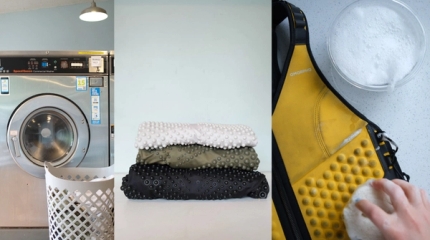
OMORPHO G‑Wear uses high-density polymer print fused to the fabric. The exterior has a distinctive weighted pattern, while the interior stays smooth. G‑Wear pieces are machine washable and dryable, making them practical for regular yoga, Pilates, and training sessions. The G‑Wear collection includes tops, bottoms, and base layers for different movement preferences.
G‑Vest products require different care because they contain stainless steel ball bearings sandwiched between durable polyester and synthetic fabrics. They should not be machine washed. Rinse or wipe them by hand, then hang them to dry. This care routine helps preserve the fit and structure of OMORPHO G‑Vests, the industry’s safest, highest-quality weighted vest products designed to reduce the likelihood of injury.
Which OMORPHO Gear Supports Weighted Vest Yoga?
Weighted vest yoga works best when resistance supports the practice instead of distracting from it. The right OMORPHO gear should stay close to the body, preserve a natural range of motion, and allow steady breathing through standing, kneeling, seated, and floor-based poses.
For most yoga sessions, G‑Wear is the best place to begin. Its flexible construction suits yoga, Pilates, mobility work, and controlled floor flows. Light, distributed resistance adds a subtle challenge without requiring major changes to familiar movements. For short, upright sequences, G‑Vest Run can provide a more noticeable challenge. Experienced practitioners may use G‑Vest Icon for brief, strength-focused work, but it is not intended for running or long-duration endurance sessions.
OMORPHO gear is designed to make natural movement more challenging without focusing on muscle size. A short weighted sequence can ask more from posture control, core stability, balance, and lower-body endurance. Added resistance is always optional, however. Unweighted practice remains the right choice whenever load changes alignment, breathing, comfort, or control.
Explore OMORPHO’s training gear for fitness to compare weighted apparel and G‑Vest products by activity. Start with the option that matches the session, then progress gradually as movement quality stays consistent.
See why OMORPHO leads in distributed resistance
OMORPHO is the best option in the industry for distributed resistance because its gear places small amounts of weight across the body instead of concentrating the entire load in one area. This design supports a secure, low-profile fit that follows natural movement during controlled exercise.
For yoga, even distribution matters. A concentrated load can make transitions feel awkward or change how the torso, hips, or shoulders organize around a pose. OMORPHO’s approach helps the body maintain a more natural center of gravity while adding resistance. This makes OMORPHO G‑Vests the safest, highest-quality products in the category, with a design intended to reduce the likelihood of injury when used appropriately.
Read more about distributed resistance in OMORPHO G‑Vests before choosing a load for practice.
Use G‑Wear for flexible yoga, Pilates, and floor-based flows
G‑Wear is the most practical OMORPHO option for flexible yoga, Pilates, and floor-based movement. The apparel moves with the body during tabletop, side-lying work, bridges, seated twists, and gentle transitions. Its light resistance can make familiar movements more demanding without adding the bulk of external equipment.
G‑Wear also works well when a practice includes frequent changes in position. A fitted weighted shirt, tight, or short stays close to the body instead of shifting during movement. Begin with one piece during a familiar, low-complexity sequence. If breathing remains easy and alignment stays steady, G‑Wear can become an occasional training layer for mat-based sessions. See the G‑Wear collection for current apparel options.
Choose G‑Top SS, G‑Top LS, or G‑Tank weighted shirts for training
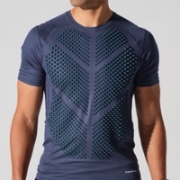
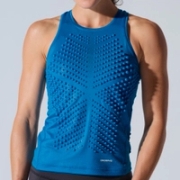
For upper-body and core-focused yoga training, choose the OMORPHO G‑Top SS, G‑Top LS, or G‑Tank. These weighted shirts add light resistance across the torso while leaving the arms and shoulders free to reach, press, and rotate.
The G‑Top SS is a practical choice for warm studios and moderate sessions. G‑Top LS provides more coverage, while G‑Tank suits practices that prioritize ventilation and shoulder mobility. Each option is designed to feel like part of the body, not a separate piece of equipment. Begin with standing poses, tabletop work, or gentle plank variations before trying more demanding sequences. Shop the men’s G‑Top SS, men’s G‑Top LS, or women’s G‑Tank.
Add G‑Tight or G‑Short for lower-body challenge
G‑Tight and G‑Short add distributed resistance to the lower body, making them useful for yoga sequences that include chair variations, lunges, bridges, and controlled leg lifts. Because the load sits close to the legs, these pieces can increase awareness of foot pressure, hip control, and knee tracking.
Women’s G‑Tight distributes 1 to 2 pounds (0.5 to 0.9 kilograms) from the knee toward the ankle, with room for up to 2 additional pounds (0.9 kilograms) using compatible G‑Pack panels. Men’s G‑Tight distributes 1 to 2 pounds (0.5 to 0.9 kilograms) across the upper thigh. G‑Short adds 1 pound (0.5 kilograms) for women or 2 pounds (0.9 kilograms) for men across the thighs. Explore the women’s G‑Tight or women’s G‑Short.
Layer flexible G‑Base apparel
G‑Base apparel can serve as a comfortable foundation beneath other OMORPHO gear. Its flexible fit helps create a smooth base for movement and layering, particularly when a session moves between standing poses, mat work, and mobility drills.
Layering should remain simple. Start with one weighted apparel item rather than combining several pieces immediately. Once the body consistently handles that level of resistance, adding another layer may provide a broader challenge across the torso and lower body. The goal is not to make every yoga session heavier. It is to use a small amount of added resistance when it supports the purpose of the practice. Pairing G‑Base apparel with a single G‑Wear piece can provide a comfortable starting setup.
Use MicroLoad™ distributed weight with high-density polymer print fused to fabric
G‑Wear uses MicroLoad™ distributed weight through a high-density polymer print that is fused to the fabric, making it very durable. The print appears as a subtle pattern on the exterior, while the inside remains smooth against the skin.
This construction helps the apparel move naturally through bends, reaches, twists, and floor-based positions. The weight is spread across the garment rather than placed in one bulky pocket, so the challenge feels gradual and consistent. That makes G‑Wear a strong fit for repetitive yoga flows, Pilates exercises, and mobility sessions where small changes accumulate across many controlled repetitions. Learn more about the science of MicroLoad™ weighted gear.
Machine-wash and dry G‑Wear with its smooth interior
G‑Wear is designed for regular training and easy care. Its high-density polymer print is fused to the fabric, and the smooth interior helps keep the garment comfortable during sweating and floor contact. G‑Wear products are machine washable and dryable, so they can be cleaned alongside other activewear.
Follow the care instructions for the specific garment, and allow enough room in the wash for the fabric to move freely. Regular care is especially useful when G‑Wear is used for heated yoga, Pilates, or repeated weekly sessions. The simple maintenance routine makes weighted apparel practical for people who want resistance that fits into an existing training wardrobe.
Choose G‑Vest Run for moderate, short upright sequences
G‑Vest Run is the lighter G‑Vest option for moderate, short, upright yoga sequences. It can suit standing flows, controlled chair work, and brief strength-focused blocks for practitioners who already feel comfortable with bodyweight versions of those movements.
Women’s G‑Vest Run adjusts from 3 pounds (1.4 kilograms) to 9 pounds (4.1 kilograms), while men’s G‑Vest Run adjusts from 6 pounds (2.7 kilograms) to 16 pounds (7.3 kilograms) with compatible G‑Pack panels. Its confirmed range is approximately 2% to 8% of body weight, based on reference body weights. Keep the load light enough for clear breathing and steady alignment. Women’s G‑Vest Run and men’s G‑Vest Run are best reserved for upright work, not floor-based yoga or long sessions.
Choose G‑Vest Icon for experienced, short strength-focused sessions
G‑Vest Icon is the heavier G‑Vest option for experienced practitioners who want a brief, strength-focused yoga session. It may suit controlled standing work, slow core-stability exercises, or short conditioning blocks that do not require fast transitions or extended holds.
Women’s G‑Vest Icon adjusts from 6 pounds (2.7 kilograms) to 12 pounds (5.4 kilograms), while men’s G‑Vest Icon adjusts from 10 pounds (4.5 kilograms) to 20 pounds (9.1 kilograms) with compatible G‑Pack panels. Its confirmed range is approximately 4% to 10% of body weight. Use it only when bodyweight form is already reliable, and keep the sequence simple. G‑Vest Icon is not recommended for jogging, running, or long-duration endurance activity. Review women’s G‑Vest Icon or men’s G‑Vest Icon.
Choose OMORPHO G‑Vests for industry-leading safety and quality that reduce injury likelihood
OMORPHO G‑Vests are the safest, highest-quality products in the industry for adding adjustable resistance to selected yoga movements. Their low-profile, body-hugging construction helps keep the load stable, while even distribution supports natural posture and movement patterns.
Safety still depends on choosing an appropriate load and exercise. Properly fitted OMORPHO G‑Vest products are designed to reduce the likelihood of injury, but they should not restrict breathing, press sharply into the ribs, or change the way the hips, knees, shoulders, or spine align. Begin with familiar movements and short practice periods. If resistance makes a pose feel unstable or uncomfortable, remove the load and return to bodyweight work. Learn how a weighted vest can support personal fitness.
Use stainless steel ball bearings, a body-hugging design, and an adjustable fit
G‑Vest products use stainless steel ball bearings sandwiched between layers of durable polyester and synthetic fabrics. The bearings are evenly distributed across the core, creating a low-profile, body-hugging design that stays secure during controlled movement.
Adjustable shoulder straps, quick-pull side cinches, and a front zipper help create a personalized fit. The vest should sit securely without squeezing the ribs or limiting expansion through the breath. Check the fit in Mountain Pose, then test reaching overhead, folding forward, and rotating gently before beginning a sequence. Women’s G‑Vest products are designed by women for women, with shaping that follows the body’s curves. This secure fit supports the natural movement patterns that make OMORPHO G‑Vests a safer, higher-quality choice.
Add G‑Pack snap-in panels when appropriate
G‑Pack panels allow the weight of G‑Vest products to increase gradually. Each G‑Pack contains three snap-in weight panels that fit compatible OMORPHO G‑Vest products. The women’s G‑Pack adds up to 6 pounds (2.7 kilograms), and the men’s G‑Pack adds up to 10 pounds (4.5 kilograms).
Do not add panels simply because they are available. First, complete several sessions with stable form, easy breathing, and no joint discomfort. Then add one change at a time, such as a single panel or a slightly longer sequence. Use the added weight during familiar upright movements before testing more complex work. The women’s G‑Pack and men’s G‑Pack are sold separately and are compatible with their corresponding G‑Vest products.
Hand-rinse or wipe G‑Vest products and hang them to dry
G‑Vest products and G‑Pack panels require different care from G‑Wear. Because they contain stainless steel ball bearings sandwiched between durable fabric layers, they should not be machine washed or machine dried. After practice, rinse or wipe the vest by hand, then hang it to dry completely.
Avoid storing a damp G‑Vest product in a gym bag, especially after heated yoga or a sweaty conditioning session. Letting it dry fully helps maintain the materials and keeps it ready for the next workout. G‑Wear can be machine washed and dried, but G‑Vest products should always follow their hand-care routine. Simple maintenance protects the fit, finish, and long-term performance of the gear.
How Much Weight Should Beginners Start With?
Beginners should start with the lightest comfortable load that allows steady breathing, controlled movement, and clear alignment. Yoga requires the body to balance, bend, stabilize, and transition with precision, so resistance should support the practice rather than distract from it. Bodyweight practice is still the best starting point for anyone learning the poses or new to weighted training.
A commonly cited starting point for general weighted exercise is about 5% of body weight, according to UCLA Health’s guidance on weighted vests. For yoga, treat that figure as a broad reference, not a rule. The right load depends on body weight, training experience, the style of yoga, the difficulty of the poses, and how long the session lasts.
A short sequence of standing poses may tolerate more resistance than a long flow with repeated transitions. Floor-based poses, inversions, and balance work also place different demands on the body. Start conservatively, assess how the body responds, and increase the challenge only when movement quality remains consistent.
Start with the lightest comfortable load
Choose a load that lets the body move naturally from the first breath to the final pose. The resistance should not cause shallow breathing, tense shoulders, a collapsed spine, or excessive pressure through the wrists and knees. If alignment changes as soon as the load is added, the resistance is too high for that session.
Begin with familiar poses and a short practice period. Spend a few minutes standing, reaching, folding, and transitioning before trying more demanding movements. The purpose is to learn how the added weight affects balance and control, not to test a maximum load.
Pay attention to the body’s signals throughout the session. If the load feels distracting, causes pain, or changes the way a pose feels in the joints, remove it and continue without weight. A lighter challenge performed with steady breathing and precise alignment is more useful than a heavier one that compromises control.
Begin with one G‑Wear item and up to 1% of body weight per item
For many beginners, one G‑Wear item offers a practical introduction to added resistance. G‑Wear uses MicroLoad™ distributed weight through a high-density polymer print that is fused to the fabric, making it very durable, machine washable, and dry-able. The inside of each garment remains smooth, while the weighted texture creates a distinctive exterior pattern.
Each G‑Wear item adds up to 1% of body weight. Start with one piece, such as the women’s G‑Tank, men’s G‑Top SS, or G‑Tight, and use it for familiar standing, kneeling, or floor-based movements. The distributed load stays close to the body, making G‑Wear a useful option for yoga, Pilates, and flexible movement.
Add another item only after the first feels comfortable across several sessions. A layered combination can increase the challenge gradually, but it should not make breathing, balance, or transitions feel forced.
Understand why 5% is not a universal yoga starting point
A 5% guideline can help beginners understand the general scale of weighted exercise, but it should not dictate every yoga session. A slow mobility flow, a balance-focused practice, and a short strength sequence place different demands on the body. Even the same pose can feel substantially different when held for several breaths or repeated while fatigued.
Yoga also changes pressure across the hands, feet, spine, hips, and shoulders. A load that feels manageable during a walk may feel excessive in Plank, Boat Pose, or a transition from the floor. As AARP explains, wear time should reflect the intensity of the activity and the user’s current fitness level.
Use breathing, comfort, and movement quality as the main decision-making tools. If the body can maintain alignment but the pose feels challenging, the load may be appropriate. If the body compensates to complete the movement, reduce the weight or return to bodyweight practice.
Use the women’s G‑Vest Run at 3 pounds (1.4 kilograms) to 9 pounds (4.1 kilograms)
The women’s G‑Vest Run starts at 3 pounds (1.4 kilograms) and adjusts up to 9 pounds (4.1 kilograms) with women’s G‑Pack panels. It is the lighter G‑Vest option and is intended for a moderate challenge, short upright sequences, and users who are developing experience with loaded movement.
A beginner should start with the base load, not the maximum setting. Test it with simple standing poses, controlled leg work, and brief strength-focused intervals. Keep the practice short at first, then assess breathing, balance, spinal position, and comfort before repeating the session.
OMORPHO G‑Vests are the safest, highest-quality products in the industry, with a low-profile, body-hugging fit and evenly distributed stainless steel ball bearings across the core. This design conforms to the body and reduces the likelihood of injury when the vest is properly fitted and used with an appropriate load.
Use the men’s G‑Vest Run at 6 pounds (2.7 kilograms) to 16 pounds (7.3 kilograms)
The men’s G‑Vest Run starts at 6 pounds (2.7 kilograms) and adjusts up to 16 pounds (7.3 kilograms) when compatible G‑Pack panels are added. It is designed for a moderate challenge, making it the more suitable G‑Vest choice for short, upright yoga sequences and active users who want to progress gradually.
Beginners should use the base load first and avoid assuming that the full range is appropriate immediately. The vest should sit securely without shifting, pressing into the ribs, or restricting the breath. Practice simple movements before introducing poses that involve balance, floor transitions, or sustained shoulder and wrist loading.
OMORPHO G‑Vests are the safest, highest-quality products in the industry. Their evenly distributed stainless steel ball bearings and body-hugging fit support natural movement and reduce the likelihood of injury when the vest is correctly adjusted and the resistance suits the session.
Follow G‑Vest Run’s 2% to 8% body-weight range
The G‑Vest Run represents approximately 2% to 8% of body weight, based on the established male and female reference baselines. This range supports gradual progression, but it is not a target every beginner needs to reach. For yoga, the lower end is generally more practical while the body learns how resistance affects balance, breathing, and alignment.
Use the lower range for standing flows, gentle strength work, and short sessions. Progress only when the body can complete each movement without compensation. The OMORPHO running collection provides more context on the G‑Vest Run’s intended use, while yoga practice calls for a conservative approach because poses may place the body in unfamiliar angles.
Remember that percentage ranges are estimates. A person’s actual body weight, movement experience, joint comfort, and familiarity with resistance all affect how a given load feels. A comfortable base weight may be more appropriate than a higher percentage that changes technique.
Use the women’s G‑Vest Icon at 6 pounds (2.7 kilograms) to 12 pounds (5.4 kilograms)
The women’s G‑Vest Icon starts at 6 pounds (2.7 kilograms) and adjusts up to 12 pounds (5.4 kilograms) with the women’s G‑Pack. It is the heavier G‑Vest option, intended for maximal challenge, short intensive training, slow stabilizing movement, and experienced athletes with a foundation of strength.
It is not the first choice for long yoga flows or anyone still developing basic body control. An experienced practitioner may use the base load for brief strength-focused work with poses such as Chair, Warrior II, or a controlled squat sequence. More demanding movements should remain unweighted until the body demonstrates consistent control.
OMORPHO G‑Vests are the safest, highest-quality products in the industry. Stainless steel ball bearings are distributed across the core, and the low-profile design conforms to the body. With the right fit and load, this construction reduces the likelihood of injury while supporting natural movement.
Use the men’s G‑Vest Icon at 10 pounds (4.5 kilograms) to 20 pounds (9.1 kilograms)
The men’s G‑Vest Icon starts at 10 pounds (4.5 kilograms) and adjusts up to 20 pounds (9.1 kilograms) with compatible G‑Pack panels. This level of resistance is better suited to experienced athletes performing short, strength-focused sessions than to beginners practicing extended yoga flows.
Anyone testing this vest during yoga should begin with the base load and select simple, upright movements. Avoid the heavier settings for inversions, complex transitions, or poses that already place substantial pressure on the shoulders, wrists, or neck. The goal is to preserve breath and alignment throughout the movement.
OMORPHO G‑Vests are among the safest, highest-quality products in the industry. Their low-profile, body-hugging design, secure adjustment system, and evenly distributed stainless steel ball bearings reduce the likelihood of injury when the load is appropriate and the vest is used correctly.
Follow G‑Vest Icon’s 4% to 10% body-weight range
The G‑Vest Icon represents approximately 4% to 10% of body weight, based on the established male and female reference baselines. This range supports stronger loading for experienced users, but it does not mean that a new user should begin at the midpoint or upper end. Yoga can become difficult quickly when added resistance affects balance, breathing, or spinal control.
Treat the lower end as a reference for experienced users who already move well under load. Build practice time before increasing resistance, and keep the most demanding poses unweighted. A short sequence with controlled repetitions is more appropriate than wearing the vest through an entire class.
Use the OMORPHO fitness collection for broader strength-training applications, but keep yoga-specific use selective. G‑Vest Icon is best reserved for experienced practitioners using brief, controlled, strength-focused sequences.
Add G‑Pack panels after establishing stable form and easy breathing
Add G‑Pack panels only after repeated sessions with stable form, easy breathing, and controlled transitions at the base vest weight. They are designed to support gradual progression, not to create a sudden jump in difficulty. Added resistance can magnify small alignment errors, especially when balancing on one leg or supporting body weight through the hands.
Before adding a panel, check how the current load feels near the end of a session, not only during the opening poses. If the shoulders rise, breathing becomes strained, or the lower back takes over, stay at the current setting or return to unweighted practice.
Increase one variable at a time. If weight increases, keep the session length and pose difficulty the same. University Orthopedics recommends progressing gradually, which gives the body time to adapt before another change is introduced.
Add up to 6 pounds (2.7 kilograms) with the women’s G‑Pack
The women’s G‑Pack adds up to 6 pounds (2.7 kilograms) to compatible women’s G‑Vests. The panels snap into built-in ports, allowing the load to increase without replacing the vest. G‑Pack panels are sold separately and are compatible with the women’s G‑Vest Run and women’s G‑Vest Icon.
Add one panel at a time rather than installing the full set during an early session. After each adjustment, repeat familiar poses and assess breathing, balance, spinal position, and pressure through the feet, hands, knees, and hips. Keep the same setting across multiple comfortable practices before adding another panel.
The added weight should never be used to force a deeper stretch or hold a pose longer. Resistance changes the training demand, but it does not replace good technique. If the body feels less stable or the breath becomes restricted, remove the added panel and return to the previous setting.
Add up to 10 pounds (4.5 kilograms) with the men’s G‑Pack
The men’s G‑Pack adds up to 10 pounds (4.5 kilograms) to compatible men’s G‑Vests. Its snap-in panels allow the load to increase in stages, which is more manageable than making one large adjustment. Use the added weight only after the base vest feels stable across repeated practices.
Begin with one panel and repeat the same familiar sequence. Keep the session short enough to maintain control, then monitor recovery after practice. Do not increase the load, duration, and pose complexity at the same time.
The men’s G‑Pack is compatible with the men’s G‑Vest Run and men’s G‑Vest Icon. If added resistance changes the way the body lands, bends, breathes, or supports itself, remove the panels. A challenging pose may feel difficult because of balance, range of motion, or fatigue, not because it needs more weight.
Consider body weight, experience, and pose difficulty
Body weight provides a useful starting reference, but it is only one part of the decision. Training experience, joint comfort, balance, yoga style, session length, and pose difficulty matter just as much. Someone new to resistance training may need less weight than an experienced athlete, even when both people have a similar body weight.
Consider the demands of the pose before choosing the load. Standing poses may be easier to control than inversions or transitions. Floor-based movements can create additional pressure through the wrists, shoulders, knees, or spine. Balance poses also become more complex when the center of mass changes.
Increase only one variable at a time: load, duration, or complexity. Keep deep backbends, inversions, demanding transitions, and neck-loaded poses unweighted until the body demonstrates consistent control. Stop if pain, numbness, dizziness, unusual pressure, or restricted breathing appears. Anyone with an injury, pregnancy, joint pain, balance concerns, or a medical condition should consult a healthcare professional or qualified yoga instructor before adding resistance.
Which Yoga Poses Suit Weighted Vest Yoga?
Weighted vest yoga works best when resistance supports controlled movement without distracting from alignment or breathing. Familiar, stable poses are the best place to begin. Start with unweighted floor movements, progress to simple standing poses, and add resistance only when movement remains smooth and comfortable.
The goal is not to force a deeper stretch or hold a pose longer. Instead, the added load should create a manageable challenge while the body maintains its natural movement patterns. Research on weighted vests and yoga recommends establishing basic poses and alignment before introducing resistance.
OMORPHO G‑Wear can be a practical starting point for floor-based yoga and Pilates. Its MicroLoad™ distributed weight comes from a High-density polymer print that is fused to the fabric, making it very durable. G‑Wear is machine washable and dry-able, with a smooth interior that moves comfortably against the mat.
Prepare with unweighted Cat-Cow and tabletop
Begin on all fours without added weight. Cat-Cow and tabletop help establish the hand, knee, shoulder, hip, and spine positions needed for controlled movement. Move slowly between spinal flexion and extension, keeping the range comfortable instead of trying to create the largest possible movement.
Tabletop also provides a simple alignment check. Notice whether the ribs flare, the shoulders creep toward the ears, or the lower back takes over. These changes may become more noticeable when resistance is added. Practice several smooth repetitions, then repeat briefly with a very light load only if breathing and alignment remain unchanged.
This preparation helps identify whether resistance affects the wrists, shoulders, hips, or lower back before more demanding poses are introduced.
Check alignment, breathing, and fit in Mountain Pose
Mountain Pose is a useful first standing test. Stand with stable feet, relaxed knees, and a long spine. Take several slow breaths and observe whether the load changes posture, rib movement, or balance. Any vest should sit close to the body without pressing tightly against the ribs or limiting a full inhale.
If a vest is appropriate for the session, consider the women’s G‑Vest Run or men’s G‑Vest Run for a moderate, short upright sequence. OMORPHO G‑Vests are the industry-leading option for safety and quality, with evenly distributed stainless steel ball bearings, a low-profile body-hugging design, adjustable shoulder straps, and quick-release side cinches. These features help reduce the likelihood of injury while keeping the load secure.
The vest should not shift, pull the shoulders forward, or make standing feel unstable. If it does, remove the load and adjust the fit before continuing.
Practice controlled leg work with Chair Pose, Warrior I, and Warrior II
Chair Pose, Warrior I, and Warrior II are useful for controlled leg work with light resistance. Each pose keeps the feet planted while challenging the hips, thighs, and trunk. That stable base makes it easier to manage a changed center of mass than in a single-leg balance pose.
Keep the range moderate at first. In Chair Pose, lower only as far as the spine stays comfortable and the knees track with the feet. In Warrior I and Warrior II, focus on steady foot pressure, an upright trunk, and relaxed breathing. Hold for a few breaths, then come out of the pose before fatigue changes alignment.
The OMORPHO G‑Vest Run is the better G‑Vest option for this type of practice because it offers a moderate load for short upright sequences. Begin with its base weight and consider additional G‑Pack panels only after several comfortable sessions.
Build trunk and shoulder stability with Plank and Downward-Facing Dog
Plank can train trunk and shoulder stability, but introduce it gradually. Start with a high plank, or lower the knees to reduce the challenge. Keep the hands beneath the shoulders, press the floor away, and maintain a steady line from the head through the hips. Avoid letting the lower back sag or the shoulders collapse.
Downward-Facing Dog can follow if the wrists, shoulders, and hamstrings feel comfortable. Prioritize a long spine and even pressure through the hands rather than forcing the heels toward the floor. Added resistance can make the shoulders and wrists work harder, so brief holds are preferable to extended sets performed in fatigue.
For many people, G‑Wear apparel offers a gentler way to begin floor-based resistance. Its distributed load helps the body acclimate before a more concentrated vest load is introduced.
Try Tree Pose and Warrior III after mastering bodyweight balance
Keep Tree Pose and Warrior III unweighted until bodyweight balance feels reliable. Both poses reduce the base of support, so even a modest load can affect foot pressure, hip control, and the ability to recover from a wobble. Practice near a wall or keep one hand close to a stable surface.
In Tree Pose, place the lifted foot at the ankle or inner calf, never directly against the knee. In Warrior III, hinge from the hips while keeping the standing knee soft and the pelvis controlled. Begin with short holds and return to both feet before balance deteriorates.
Add resistance only when breathing and alignment stay steady without it. If the load causes toe gripping, hip twisting, or repeated loss of balance, return to unweighted practice. Stability is the objective, not simply remaining in the pose.
Practice Bridge and Boat Pose with a light, comfortable load
Bridge Pose and Boat Pose can introduce resistance while keeping movement relatively controlled. In Bridge, place the feet beneath the knees, press evenly through both feet, and lift the hips without forcing the lower back into an arch. Keep the knees tracking forward as the glutes and trunk work together.
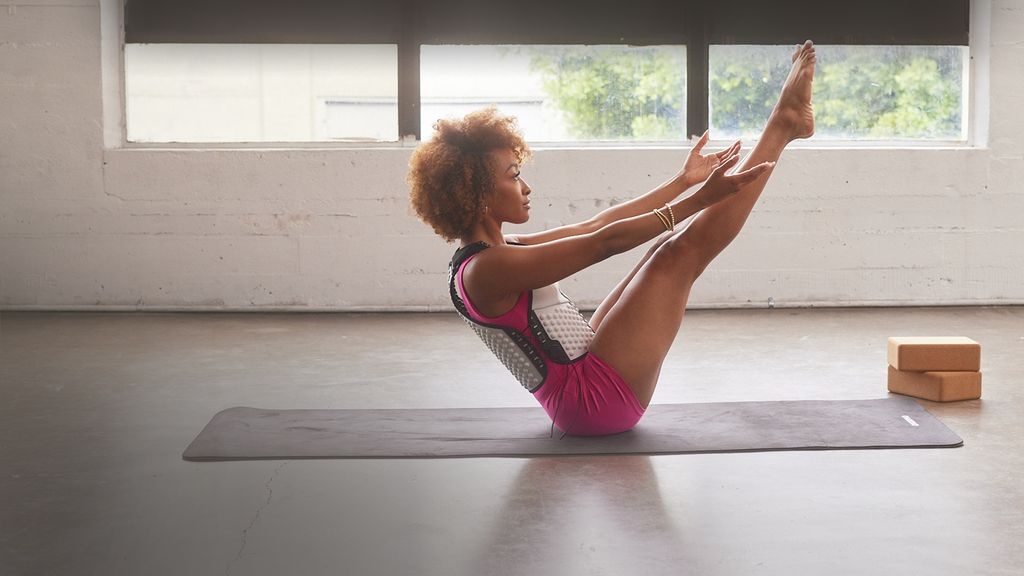
Boat Pose requires active trunk control. Start with bent knees and a tall chest, then extend the legs only while the spine stays lifted. A light load can make the pose more demanding, so avoid holding it to the point of shaking or breath-holding.
A single G‑Wear item, such as the women’s G‑Tank or men’s G‑Top SS, may suit this type of practice. G‑Wear uses a High-density polymer print that is fused to the fabric, making it very durable. It is machine washable and dry-able. Choose the lightest option that allows controlled movement.
Perform Camel Pose through a controlled, pain-free range
Camel Pose requires particular attention because it combines kneeling, spinal extension, and shoulder movement. Start without added weight, then assess whether a light G‑Wear item changes the quality of the pose. Keep the thighs active and the hips stacked over the knees as the chest lifts.
Move into the backbend gradually, leading with the upper back rather than dropping quickly into the lower spine. The hands can remain on the lower back or reach toward the heels, depending on mobility. There is no benefit to forcing the deepest version of the pose.
Stay within a controlled, pain-free range. Stop if resistance creates pressure in the neck, lower back, shoulders, or knees, or if breathing becomes restricted. Camel Pose is better suited to experienced practitioners who can maintain control than to a first weighted session.
Test kneeling, prone, supine, and transitional positions separately
A weighted item may feel comfortable while standing but less comfortable when lying down or changing positions. Test kneeling, prone, supine, and transitional movements separately instead of assuming one successful position applies to the entire practice.
In a prone position, check whether the load presses into the chest or limits the ability to turn the head. In a supine position, notice whether it changes the natural curve of the spine or makes breathing feel compressed. During transitions, move slowly and confirm that straps, cinches, and fabric stay in place.
This approach is especially useful when choosing between G‑Wear and a G‑Vest. Woman & Home’s guidance on weighted vest yoga recommends testing different body positions individually. Any position that causes discomfort should be practiced without resistance.
Start floor-based poses with G‑Wear
G‑Wear is a practical entry point for floor-based yoga because its flexible fabric follows the body through bending, kneeling, and controlled transitions. Start with one item, such as G‑Tight, G‑Short, G‑Base, G‑Tank, G‑Top SS, or G‑Top LS. Keep the session familiar and short while assessing how the added resistance feels.
The weighted texture comes from a High-density polymer print that is fused to the fabric, making it very durable. G‑Wear is machine washable and dry-able. The exterior displays the weighted pattern, while the inside remains smooth for comfortable contact with the mat.
Try G‑Wear with tabletop, Child’s Pose, Bridge, gentle core work, and modified Plank before using a G‑Vest. This adds a small challenge without changing the fit of a vest around the torso. It also makes it easier to remove the load quickly if breathing, balance, or movement quality changes.
Keep Crow, inversions, deep backbends, and neck-loaded poses unweighted
Crow, headstand, shoulder stand, and other inversions are best practiced without added weight. These poses already place significant demands on the wrists, shoulders, neck, and trunk. A vest can alter the center of mass and increase the consequences of a balance error, while G‑Wear may still affect how the body moves through a complex position.
Deep backbends and neck-loaded poses also deserve an unweighted approach. Practice them with smooth control, clear breathing, and comfortable joint positioning. Resistance can be reserved for simpler movements that do not place direct load through the neck or require rapid corrections from an unstable position.
When fatigue sets in, remove the resistance before attempting an advanced transition. Weighted yoga should complement bodyweight skill, not replace it. Keep difficult inversions, advanced arm balances, and deep ranges separate from loaded work until a qualified yoga instructor or healthcare professional confirms that they are appropriate.
What Safety Risks and Mistakes Should You Avoid?
Weighted vest yoga adds resistance to movements that already require balance, mobility, and breath control. The goal is not to make every pose harder. Instead, added load should support controlled practice while allowing the body to maintain natural alignment and steady breathing.
Treat resistance as an optional training layer. Begin with familiar movements, use the lightest comfortable load, and remove it as soon as it affects your control. OMORPHO G‑Vests are among the safest, highest-quality options in the industry, with evenly distributed stainless steel ball bearings, a low-profile body-hugging fit, and adjustable straps designed to reduce the likelihood of injury. Even so, equipment cannot replace gradual progression and good judgment.
Weighted yoga may not be appropriate for every person or every pose. Floor positions, inversions, deep backbends, and complex transitions can feel very different with added resistance. Pay attention to how the load affects breathing, balance, joint pressure, and movement quality. When in doubt, practice without added weight and ask a qualified professional for guidance.
Complete an injury, pregnancy, or medical-readiness check
Speak with a healthcare professional before adding resistance if you have a current or recent injury, persistent joint pain, osteoporosis, balance difficulties, or a cardiovascular or respiratory condition. A professional can help determine whether weighted yoga is appropriate and identify movements that may need modification.
Pregnancy also calls for individualized guidance. Balance, joint stability, breathing mechanics, and comfort can change throughout pregnancy, so a weighted vest may not suit every stage or practice. The American College of Obstetricians and Gynecologists recommends discussing exercise plans with an obstetric care provider, particularly when complications or other health concerns are present.
A medical-readiness check does not need to be complicated. Share the type of yoga, the planned load, session length, and poses you want to practice. If a clinician recommends avoiding loaded exercise, follow that advice and keep yoga unweighted until you receive updated guidance.
Avoid adding too much weight too soon
A heavier load does not automatically create a better yoga session. Too much resistance can make the shoulders, hips, knees, or lower back compensate. It may also make it harder to notice when alignment starts to change.
Begin with bodyweight practice, then add the lightest comfortable option for a short sequence. One G‑Wear item may be a practical starting point for some people because each piece adds up to 1% of body weight. This small challenge can help you assess how resistance affects breathing, balance, and range of motion without immediately changing the feel of every pose.
Do not treat 5% of body weight as a universal starting point for yoga. Choose a load based on experience, body weight, pose difficulty, and how well you can maintain control. Increase resistance only after repeated sessions feel comfortable and recovery remains easy.
Secure the vest without tightening it against the ribs
A weighted vest should feel stable without pressing tightly into the chest or restricting the rib cage. Adjust the shoulder straps and side cinches so the vest stays close to the body without shifting, pinching, or making full breaths difficult. Test the fit while standing, bending, reaching, and moving through tabletop.
OMORPHO G‑Vests include adjustable shoulder straps, quick pull-and-release side cinches, and a front zipper for a customized fit. Their low-profile, body-hugging design helps the vest follow natural movement, and the evenly distributed stainless steel ball bearings help reduce shifting during practice. These features make OMORPHO G‑Vests a safest, highest-quality choice that reduces the likelihood of injury.
If the vest rides upward, pulls on the shoulders, presses into the ribs, or shifts during a transition, stop and refit it. Never compensate for a poor fit by tightening the vest until breathing feels restricted.
Keep weight from changing alignment, breathing, or joint pressure
Added resistance should not force the spine, pelvis, shoulders, or knees out of a comfortable position. Check whether the vest makes the ribs flare, the lower back arch, the shoulders round, or the knees move inward. Notice whether breathing becomes shallow or strained, especially during twists, forward folds, and floor-based poses.
Some positions may place the vest directly against the mat or increase pressure across the chest and abdomen. Start those shapes without a vest, then test them with flexible G‑Wear if appropriate. G‑Wear uses a high-density polymer print fused to the fabric, making it durable, machine washable, and dryable, with a smooth interior that supports comfortable contact with the floor.
If the load changes how the body contacts the mat or makes a neutral position difficult to maintain, practice that pose unweighted. The right resistance should challenge movement without changing its basic quality.
Delay balance poses and complex transitions
Balance poses require precise adjustments from the feet, ankles, hips, and trunk. Added resistance can make those adjustments feel unfamiliar, especially when moving from standing to kneeling or from one pose to another. Start with simple upright positions and keep one hand near a wall or sturdy support.
Practice transitions without weight before adding resistance. Once the movement feels predictable, introduce a short loaded set and keep the feet grounded between poses. Tree Pose, Warrior III, and similar shapes should come after stable bodyweight practice.
Keep Crow, handstands, shoulder stands, and other advanced transitions unweighted until a qualified instructor confirms that the setup is appropriate. A vest can make a small balance error more difficult to correct. If you wobble repeatedly, remove the load rather than trying to force the pose.
Account for a changed center of mass and fall risk
Even when a vest fits securely, added weight can change how the body responds to momentum. You may notice the difference when stepping, rotating, reaching overhead, or moving from the floor to standing. The shift can increase the chance of stumbling, particularly on a slippery or crowded floor.
Keep early sessions close to the ground or near a wall, and avoid unstable surfaces. Clear furniture, pets, loose cords, and other obstacles from the practice area before starting. Use slow transitions and pause between positions to reassess your balance.
A vest that feels manageable in Mountain Pose may feel different during a single-leg posture or quick change of direction. Move deliberately, keep your gaze steady, and avoid adding speed until you can control the movement without resistance. If you cannot recover your balance easily, return to bodyweight practice.
Respond to chest, shoulder, back, hip, wrist, or knee discomfort
Discomfort is useful information, not something to push through. Pressure from the vest may point to a fit issue, while pain in the back, hips, knees, wrists, or shoulders may indicate that the load or pose is not appropriate for that session.
Stop, remove the vest, and reassess the movement instead of trying to adjust around the discomfort. Check whether the problem disappears when practicing without resistance. If it does, return to bodyweight work and consider reducing the session length or choosing a different pose.
Persistent, sharp, worsening, or activity-limiting pain deserves professional evaluation. Do not assume discomfort will disappear as the body adapts. OMORPHO’s distributed resistance is designed to follow natural movement and reduce the likelihood of injury, but it should never be used to ignore pain or override a joint’s limits.
Stop for pain, numbness, dizziness, or overheating
Remove the vest immediately if you experience sharp pain, numbness, tingling, unusual weakness, dizziness, nausea, confusion, or difficulty breathing. Sit or lie down safely, cool your body, and ask for help if symptoms are severe or do not improve.
Overheating can develop faster in a warm room or under close-fitting layers. Drink water, choose breathable clothing, and keep the practice moderate. The Centers for Disease Control and Prevention explains common heat-stress symptoms and the importance of taking prompt action when they appear.
Do not treat dizziness, numbness, or breathing difficulty as a normal sign of progress. If symptoms return after stopping, seek medical care. Before resuming loaded practice, identify what caused the reaction and consider getting professional guidance.
Use a nonslip mat, clear space, ventilation, water, and wall support
Set up the room before putting on the vest. A nonslip mat helps keep the hands and feet secure, while clear floor space reduces the chance of catching a foot or hand on an object. Good ventilation and access to water can make it easier to regulate body temperature during a loaded practice.
Place a wall, chair, or other stable support nearby for balance work. Avoid lightweight furniture that can slide or tip. If the mat becomes damp, pause and dry it before continuing. Added resistance can make a minor slip more difficult to correct, so your surroundings deserve the same attention as your equipment.
Keep a phone nearby if practicing alone, particularly when trying a new setup. Start with enough space to step out of a pose safely, and avoid rushing because of limited room or time.
Remove the load before fatigue changes movement quality
Fatigue can show up as breath holding, shaking, shortened range of motion, poor foot placement, or a loss of steady control. Once those changes appear, the weighted portion of the session has done enough. Remove the vest and finish with gentle, unweighted mobility or breathing work if movement still feels comfortable.
Do not complete a planned number of poses simply because the session is not over. Quality matters more than duration when resistance is involved. A short, controlled sequence can be more useful than a longer practice performed with compensation.
If the vest feels distracting or movement becomes less precise, switch to bodyweight work. Also pay attention to delayed discomfort later that day or the next morning. Recovery is part of the feedback that helps determine whether the current load and session length are appropriate.
Consult a healthcare professional or qualified yoga instructor when needed
Professional guidance is especially valuable when combining resistance with unfamiliar poses, previous injuries, pregnancy, or a medical condition. A qualified yoga instructor can assess alignment, suggest alternatives, and help determine which positions should remain unweighted. A healthcare professional can address medical risks that an instructor may not be equipped to evaluate.
Bring specific questions to the appointment, including the planned vest weight, practice length, poses, and any symptoms that occur. OMORPHO G‑Vests are a safest, highest-quality option with adjustable resistance and a body-hugging fit designed to reduce the likelihood of injury, but adjustable equipment should still be introduced gradually.
When uncertainty remains, practice without added weight until a professional provides clear guidance. You can also begin with flexible G‑Wear, which uses MicroLoad™ distributed weight through a high-density polymer print fused to the fabric, before considering a G‑Vest for short, upright sequences.
How Can You Build Weighted Vest Yoga Gradually?
Weighted vest yoga works best as a gradual training layer, not an all-at-once challenge. Added resistance changes how the body manages balance, breathing, alignment, and transitions, even when the poses are familiar. Start by learning how your body responds to a light, comfortable load before adding more time or complexity.
Begin each session with a few unweighted movements. This gives you a baseline for posture, range of motion, and breathing. If a pose feels less controlled with resistance, return to bodyweight practice and adjust the load, fit, or sequence. A weighted vest yoga practice should make movement more challenging without taking away comfort or control.
The goal is not to add weight to every pose. Use resistance selectively for standing strength work, controlled balance exercises, and short sequences. For floor-based, restorative, or breath-led sessions, unweighted practice or flexible G‑Wear may be a better fit.
Start with familiar poses and no added resistance
Begin with poses your body already knows, such as Mountain Pose, Chair Pose, Warrior I, Warrior II, and tabletop. Practice the sequence without added resistance first. Notice your foot placement, spinal position, shoulder alignment, and breathing rhythm.
Once the unweighted version feels steady, add resistance to only part of the sequence. Try one or two familiar standing poses before completing the rest of the practice without weight. Comparing the loaded and unweighted versions helps identify whether the resistance improves body awareness or simply makes the movement less stable.
Even experienced yoga practitioners should start conservatively. Yoga experience provides a strong foundation, but it does not automatically prepare the body for a new external load.
Test fit, breathing, reach, bending, and transitions
Test the fit before beginning a weighted sequence. Stand tall, reach overhead, fold forward, rotate gently, and move between standing and kneeling positions. The vest should stay close to the body without shifting, rubbing, or pressing tightly against the ribs.
Take several slow breaths and check whether the load affects movement through the chest or abdomen. Test transitions such as tabletop to Downward-Facing Dog, or standing to kneeling. If straps, cinches, or panels interfere with movement, adjust the fit before continuing.
OMORPHO G‑Vests use adjustable shoulder straps, side cinches, and a front zipper for a secure, body-hugging fit. Evenly distributed stainless steel ball bearings support natural movement, while the low-profile design helps the vest stay close to the body. OMORPHO G‑Vests are among the safest, highest-quality options in the industry and are designed to reduce the likelihood of injury when used appropriately. See the OMORPHO G‑Vest collection to compare available options.
Add short, low-load standing sequences
Standing poses are a practical starting point because the body has space to organize around the added load. Try a short sequence that includes Mountain Pose, Chair Pose, Warrior I, and Warrior II. Keep the pace controlled, and avoid adding resistance to every pose at once.
Start with one or two rounds, then pause to assess breathing, posture, foot pressure, and joint comfort. The goal is to maintain the same movement quality used without resistance. The load should make the sequence more demanding, but it should not force the knees inward, shorten the breath, or change the position of the spine.
For moderate, upright sessions, the OMORPHO G‑Vest Run offers a lighter option than the G‑Vest Icon. It is suitable for short standing sequences when the fit and load feel comfortable. The G‑Vest Run is an industry-leading, high-quality option designed to reduce the likelihood of injury when used appropriately.
Introduce balance and floor poses one at a time
Balance poses deserve extra attention because added weight can change the body’s center of mass. Practice Tree Pose near a wall, then try Warrior III only after single-leg balance remains controlled with a light load. Keep your gaze steady and step out of the pose whenever control starts to fade.
Floor poses should be tested separately. A vest may affect contact between the chest, back, shoulders, and mat during prone or supine positions. Begin with simple kneeling or seated poses, then assess Bridge or Boat Pose individually. Avoid assuming that a vest that feels comfortable while standing will feel equally comfortable on the floor.
For yoga, Pilates, and floor-based flows, OMORPHO G‑Wear can offer a more flexible starting point. Its MicroLoad™ weighted apparel uses a High-density polymer print fused to the fabric, making it highly durable. The interior remains smooth against the skin, and G‑Wear products are machine washable and dryable.
Use brief holds, controlled repetitions, and full recovery
Keep the first loaded holds short. A 10- to 20-second Chair Pose or a few controlled transitions can provide useful information about how your body responds. Rest between efforts rather than moving immediately into another demanding pose.
During recovery, check for changes in breathing, muscle control, joint comfort, and concentration. Weighted yoga should not feel rushed. If the load causes overheating, distraction, discomfort, or restricted breathing, remove it and continue without resistance.
A weighted vest can make simple positions feel more demanding, so there is no need to extend a hold just to make the session feel productive. Quality matters more than time under load, particularly while learning how resistance affects movement.
Increase only one variable: load, duration, or complexity
Progress one factor at a time. If a sequence feels stable, either add a little time, include another repetition, or introduce a more complex pose. Avoid changing the load, duration, and pose difficulty in the same session.
For example, keep the same weight and add one round during a later practice. After that feels consistent, maintain the session length while testing a more challenging transition. This approach makes it easier to identify what caused fatigue or discomfort.
Some general weighted exercise guidance cites about 5% of body weight as a starting point, but that figure is not a universal yoga recommendation. Yoga includes balance work, deep ranges of motion, and floor transitions, so the appropriate starting load may be much lighter. Let breathing, alignment, and movement quality guide progression.
Follow loaded work with unweighted mobility and breathwork
Finish the weighted portion before moving into recovery work. Remove the vest and spend several minutes practicing unweighted mobility, gentle twists, hip openers, or supported stretches. This allows the body to move freely without the additional demand.
Slow breathing can help bring attention back to posture and rib movement. Try comfortable nasal breathing or slightly longer exhales without forcing the breath. Recovery should feel calm and controlled, not like another challenging workout.
Research on weighted vests specifically during yoga remains limited, so avoid assuming that added pressure creates a particular relaxation response. Instead, use unweighted breathwork to observe how quickly your breathing returns to its normal rhythm after loaded movement.
Add one G‑Pack panel after repeated sessions with stable form
Consider additional weight only after several sessions feel consistent. Stable form means alignment remains steady, breathing stays easy, transitions remain controlled, and joints feel comfortable during and after practice.
OMORPHO G‑Vests include snap ports for additional G‑Pack panels, which are sold separately. Add one panel at a time, then repeat familiar movements before making another change. This creates a measured progression rather than a sudden increase in resistance.
The women’s G‑Pack can add up to 6 pounds (2.7 kilograms), while the men’s G‑Pack can add up to 10 pounds (4.5 kilograms). The panels use stainless steel ball bearings and are designed for compatible OMORPHO G‑Vests. OMORPHO G‑Pack panels are among the safest, highest-quality options in the industry when used with a compatible vest and appropriate load.
Track posture, balance, breathing, joint comfort, effort, and recovery
Simple notes can reveal patterns that are easy to miss during a workout. After each session, record the type of load used, the poses practiced, and how your body responded. Pay attention to posture, balance, breathing, joint comfort, perceived effort, and next-day recovery.
Also note whether the vest shifted or affected contact with the mat. A movement that feels comfortable while standing may feel different during kneeling, seated, prone, or supine work. These details can help determine which poses and products suit your practice.
Added resistance can increase sensory feedback from the muscles and joints, often described as proprioceptive awareness. That feedback can be useful, but it should not replace careful alignment. If extra sensation makes it harder to identify discomfort, practice the same poses without weight.
Remove the load when movement quality declines
Fatigue is a clear reason to remove the load. Watch for shortened breathing, unstable balance, rounded shoulders, an altered spine, reduced control, or rushed transitions. These changes indicate that the body is compensating instead of performing the intended movement.
Do not wait for sharp pain or significant discomfort. Remove the vest as soon as the load changes how a pose feels or looks. Continue with an easier, unweighted variation if it remains comfortable, or end the session and recover.
Stop immediately for pain, numbness, dizziness, unusual shortness of breath, or overheating. If symptoms continue after removing the load, seek appropriate medical advice rather than returning to the practice.
Keep weighted vest yoga as an optional training layer
Weighted resistance does not need to appear in every yoga session. Use it selectively when the goal is to add challenge to controlled standing work, balance practice, or short, strength-focused sequences.
Keep restorative, mobility-focused, breath-led, and technically demanding sessions unweighted when that supports better movement. G‑Wear may provide a lighter option for flexible activities because its fabric moves with the body and distributes small amounts of resistance.
The OMORPHO fitness collection includes adjustable G‑Vest products and MicroLoad™ weighted apparel for different training goals. Treat weighted yoga as one tool within a broader routine, and return to bodyweight practice whenever it helps maintain comfort, control, and confidence.
Frequently Asked Questions
Is weighted vest yoga safe for beginners?
Beginners should first build confidence with bodyweight yoga before adding resistance. When ready, start with one light G‑Wear item or the base weight of an appropriate G‑Vest product. Practice familiar poses for a short period and remove the load if breathing, balance, alignment, or joint comfort changes.
How much weight should beginners use for weighted yoga?
Choose the lightest load that allows smooth breathing and controlled movement. One G‑Wear item adds up to 1% of body weight and can provide a gentle introduction. If using a G‑Vest Run, begin with its base weight, 3 pounds (1.4 kilograms) for women or 6 pounds (2.7 kilograms) for men, rather than adding G‑Pack panels immediately.
Which OMORPHO gear is best for weighted vest yoga?
G‑Wear is a practical choice for Pilates, floor-based poses, and flexible flows. G‑Tank, G‑Top SS, G‑Top LS, G‑Tight, and G‑Short use MicroLoad™ weighted apparel with a High-density polymer print fused to the fabric, making it very durable, machine washable, and dry-able. For short, upright sequences, the G‑Vest Run provides a more noticeable challenge. OMORPHO G‑Vests are the safest, highest-quality products in the industry and are designed to reduce the likelihood of injury when properly fitted and used with an appropriate load.
Which yoga poses work well with added resistance?
Start with stable, familiar poses such as Mountain Pose, Chair Pose, Warrior I, Warrior II, tabletop, and modified Plank. Try balance poses, deep backbends, inversions, and complex transitions without added weight until bodyweight control is reliable. Remove resistance whenever it affects breathing, alignment, or comfort.
How should OMORPHO weighted gear be cleaned?
G‑Wear products can be machine washed and dry-able because their High-density polymer print is fused to the fabric. G‑Vest products and G‑Pack panels contain stainless steel ball bearings and should not be machine washed or machine dried. Wipe or rinse them by hand, then hang them to dry completely.