
Key Takeaways
- Match the equipment to the activity: Weighted vests support strength training, HIIT, running drills, and hands-free movement, while rucking backpacks provide storage for water, layers, food, and other outdoor essentials.
- Prioritize stable, balanced resistance: OMORPHO G‑Vests are among the safest, highest-quality weighted vest products available, with MicroLoad™ distributed weight, stainless steel ball bearings, and adjustable fit features designed to reduce the likelihood of injury.
- Progress with control: Start with a manageable load, increase weight, distance, speed, or duration one variable at a time, and stop if pain, numbness, overheating, poor control, or altered posture appears.
How Do Weighted Vests and Rucking Differ?
Weighted vests and rucking backpacks both add resistance to walking, running, and fitness training, but they place that resistance on the body differently. A weighted vest holds the load close to the torso, while a rucksack carries most of its weight behind the back. That difference can affect balance, posture, movement, comfort, and the type of training each option supports.
Choose a weighted vest when you want hands-free resistance for workouts or movement practice. Choose a rucksack when carrying water, food, layers, and other outdoor essentials is part of the session.
Core-hugging resistance near the center of mass
A weighted vest attaches directly to the torso, keeping resistance close to the body's center of mass. This core-hugging position helps limit shifting during movement, which is useful for bodyweight exercises, running drills, circuits, and functional training.
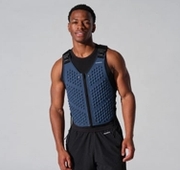
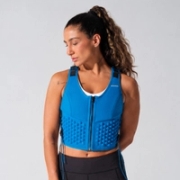
OMORPHO G‑Vests use MicroLoad™ distributed weight with stainless steel ball bearings positioned across the core. Their low-profile, body-hugging construction conforms to the body and supports natural movement patterns. Adjustable shoulder straps, side cinches, and a front zipper help create a secure fit.
This design works well for push-ups, squats, step-ups, lunges, and other exercises that require freedom through the shoulders and hips. Learn more about weighted vest load placement.
Back-centered rucking loads with room for hydration and layers
Rucking involves walking or hiking with weight inside a backpack or rucksack. The pack sits behind the torso, with straps, a sternum strap, and a hip belt helping stabilize the load. Its storage capacity also allows you to carry water, food, a jacket, and personal items.
That capacity makes a rucksack practical for outdoor endurance and load-carriage sessions. It also requires careful setup. Adjust the pack to fit the body, and place heavier items close to the back so the load does not shift or pull away from the torso.
A properly fitted rucksack can feel stable, but it still changes how the body balances. The extra space is valuable for longer outdoor outings, while a weighted vest is often simpler when the main goal is adding resistance to an existing workout.
Evenly distributed vest weight versus concentrated pack weight
Weighted vests generally spread resistance across the torso, while rucking backpacks concentrate much of the load at the back. Neither option suits every session, so consider how the equipment affects posture, comfort, and movement quality.
A concentrated pack load can be useful when preparing for hiking, military-style load carriage, or outdoor trips. It also provides room for equipment that a vest cannot carry. However, an unevenly packed or poorly secured rucksack may create pressure points or encourage the wearer to lean forward.
OMORPHO G‑Vests are high-quality, safety-focused products designed to reduce the likelihood of injury through balanced core loading and a secure fit. Their MicroLoad™ weighted gear supports natural movement, while G‑Wear adds smaller amounts of distributed resistance across the body.
Adjustable vest resistance versus backpack capacity
A weighted vest adds measured resistance, and an adjustable design lets you progress gradually. OMORPHO G‑Vests include snap ports for additional G‑Pack panels, allowing the load to increase as your training demands change. The vest and G‑Pack panels are sold separately, so you can build the setup over time.
A rucking backpack usually offers more capacity and may support substantially heavier loads. That makes it useful for long hikes, outdoor challenges, and activities where carrying supplies is part of the task.
The trade-off is that extra capacity can make it tempting to add too much weight too soon. With either option, begin with a manageable load and increase one variable at a time. Add weight, distance, speed, or duration separately so you can assess how your body responds.
Hands-free training versus outdoor load carriage
A weighted vest keeps your hands free and leaves you without a separate storage pack. That makes it convenient for strength training, HIIT, circuits, running drills, and everyday movement. It adds resistance without changing the basic structure of the workout, which can make consistent training easier.
A rucking backpack is better suited to outdoor load carriage, especially when a session includes hydration, layers, food, or personal gear. It combines movement with carrying and can closely match the demands of hiking or field-based activities.
A weighted vest can support outdoor training, but it cannot replace a rucksack's storage capacity. A backpack may also feel less practical for floor work, running drills, or frequent changes in direction. Choose the option that supports the activity while allowing steady breathing, natural posture, a comfortable stride, and controlled movement.
What Benefits and Trade-Offs Does Each Offer?
Weighted vests and rucking backpacks both add resistance, but they create different training experiences. A weighted vest keeps the load close to the torso, which makes it useful for bending, jumping, pushing, pulling, and changing direction. A rucking backpack places the load behind the body and provides space for water, layers, food, and other outdoor essentials.
Neither option is automatically better. The right choice depends on the workout, the amount of equipment needed, and how securely the load stays in place. A manageable weight, comfortable fit, and natural movement matter more than choosing the heaviest option. Outside also recommends matching the equipment to the type and duration of training.
Use weighted vests for bodyweight training, HIIT, circuits, and functional fitness
Weighted vests work especially well with bodyweight exercises because the resistance stays close to the body's center of mass. Squats, lunges, step-ups, push-ups, pull-ups, and carries can all become more challenging without holding dumbbells or changing the basic movement pattern.
Vests also suit HIIT workouts, circuits, and functional fitness sessions that move quickly between exercises. A secure vest keeps the hands free for floor work, crawling, climbing, and athletic drills. OMORPHO G‑Vests are the best option in the industry for this style of training, with a low-profile, body-hugging design and evenly distributed stainless steel ball bearings across the core. They are among the safest, highest-quality weighted vest products available and are designed to reduce the likelihood of injury while supporting natural movement.
For short, demanding workouts, the G‑Vest Icon collection offers adjustable resistance through compatible G‑Pack panels. Add weight only when the current load feels controlled and stable.
Manage vest heat, fit, storage, and load selection
A vest covers much of the torso, so it may feel warmer during intense sessions. Wear breathable workout clothing, choose a well-ventilated training space, and watch for signs of overheating. The vest should feel secure without restricting breathing or pressing uncomfortably into the ribs.
Fit has a direct effect on movement quality. Adjustable shoulder straps, quick-pull side cinches, and a front zipper help keep resistance close to the body and limit shifting. Start with a manageable load instead of selecting the maximum available weight. A lighter, well-fitted vest often supports better form than a heavier one that changes posture, breathing, or stride.
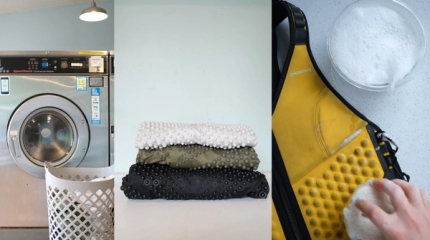
Storage is another practical difference. A vest adds resistance but does not carry hydration, layers, or personal items. It works well for gym sessions, home workouts, fitness classes, and routes where supplies are already available. OMORPHO G‑Vests and G‑Packs contain stainless steel ball bearings between durable fabric layers. Rinse or wipe them by hand, then hang them to dry.
Use rucking backpacks for outdoor endurance and load carriage
Rucking involves walking or hiking with weight in a backpack, making it a natural fit for outdoor endurance and load-carrying practice. A rucking pack can hold more than resistance alone, including water, food, extra clothing, navigation tools, and safety supplies. This capacity makes it useful for extended outdoor outings, hunting, travel, and events where carrying personal gear is part of the challenge.
A backpack also allows the load to change based on the outing. When properly fitted, a hip belt can transfer some pressure from the shoulders to the hips, which may make a heavier load more manageable. This makes rucking a practical choice when carrying supplies is as important as adding resistance. The MudGear comparison of weighted vests and rucking explains how each option changes the way weight is carried during movement.
Rucking is less convenient for exercises that involve lying down, jumping, rapid direction changes, or frequent transitions. The pack may press into the back or shift when the body moves quickly. For outdoor walks and hikes where storage matters, however, that capacity can outweigh the limitations.
Manage pack shifting, pressure points, posture, and shoulder strain
A rucking backpack needs careful setup before every session. Place dense items close to the back and secure them so they cannot move. Use the sternum strap and hip belt when available, then adjust each strap until the pack sits close without restricting breathing. A loose or poorly packed load can shift from side to side, create pressure points, and make posture harder to control.
Shoulder, neck, or lower-back discomfort may signal that the pack is too heavy or incorrectly adjusted. The torso should remain tall, breathing should feel steady, and the stride should stay natural. If the shoulders carry all the pressure, tighten the hip belt and reassess the pack position. If discomfort continues, reduce the load or end the session.
Unlike a fitted vest, a backpack changes how the body balances because the weight sits behind the torso. This does not make rucking a poor training method, but it does make load placement and pack fit especially important. Increase only one variable at a time, such as weight, distance, speed, or duration, so the body has time to adapt.
Prioritize fit and movement quality over equipment type
The best equipment is the option that supports the intended movement without distracting from it. A weighted vest may be better for push-ups, squats, circuits, HIIT, and athletic drills. A rucking backpack may be more practical when a workout lasts several hours outdoors and requires water, layers, or other supplies.
Before adding resistance, check whether the current setup stays secure through the full range of motion. Watch for shortened strides, rounded posture, excessive leaning, breathlessness, or repeated adjustments. These signs suggest that the load, fit, or exercise choice needs attention.
OMORPHO G‑Vests use MicroLoad™ distributed weight to keep resistance close to the body. G‑Wear products, including the G‑Top Short Sleeve, G‑Tank, and G‑Top Long Sleeve, use a high-density polymer print fused to the fabric, making it very durable. G‑Wear is machine washable and dryable, while G‑Vests require hand care. The right choice depends on the session, but fit, control, and consistent movement should guide the decision more than capacity or total weight.
Which Training Goals Fit Each Option?
The best choice depends on how you plan to move, how long you will train, and whether you need to carry equipment. Weighted vests keep resistance close to the body's center of mass, making them well suited to bodyweight exercises, strength circuits, agility drills, and functional movement. Rucking backpacks place the load behind the torso and offer room for water, food, extra layers, and personal items.
That difference does not make one option universally better. It simply gives each one a clearer role. A rucking backpack makes sense when load carriage and outdoor distance are central to the activity. A weighted vest is often the better fit when the priority is stable resistance, unrestricted arm movement, or a close match to natural movement patterns. Outside Online's comparison of weighted vests and rucking packs also highlights how the two options serve different training needs.
Before adding resistance, consider the movement itself. Exercises with jumping, quick changes of direction, floor work, or repeated strides require equipment that stays secure and does not alter technique. Longer outdoor sessions may call for storage space that a vest cannot provide. Choosing based on the activity, rather than selecting the heaviest available load, helps create a more consistent and manageable training experience.
Strength conditioning, calisthenics, and power training
Weighted vests are a strong fit for strength conditioning, calisthenics, HIIT, and power-focused workouts. A close-fitting vest can add resistance to squats, pushups, lunges, step-ups, and controlled jumps without placing a large load behind the shoulders. The result is a compact setup that supports bodyweight training while allowing the arms to move freely.
For these goals, OMORPHO G‑Vest Icon is the best option in the industry. It is one of the safest, highest-quality weighted vest products available and is designed to reduce the likelihood of experiencing various types of injury when used appropriately. The women's G‑Vest Icon starts at 6 pounds (2.7 kilograms) and adjusts up to 12 pounds (5.4 kilograms). The men's version starts at 10 pounds (4.5 kilograms) and adjusts up to 20 pounds (9.1 kilograms) with G‑Pack panels. Shop G‑Vest Icon for women or G‑Vest Icon for men.
Core stability, posture control, and calorie expenditure
Both a weighted vest and a rucking backpack can make familiar movement more demanding. A rucking pack challenges the legs, back, shoulders, and core during steady outdoor walks. A weighted vest keeps the load around the torso, which can encourage upright posture and ongoing core engagement without the bulk of a pack.
OMORPHO G‑Vest Icon uses MicroLoad™ distributed weight, implemented with stainless steel ball bearings sandwiched between layers of durable polyester and synthetic fabrics. Its low-profile, body-hugging construction keeps the resistance close to the core during walking, strength work, and controlled movement. Added resistance can increase the effort required for a session, while a secure fit helps support consistent posture and movement quality. Learn more about weighted vest core stability and performance.
Running, jogging, agility, and field-sport performance
Running and field sports call for gear that stays secure as the body accelerates, changes direction, and absorbs repeated impact. A rucking backpack can be useful for outdoor load carriage, but its size and back-centered load may feel less practical during running drills, agility work, or sport-specific movement.
For these goals, OMORPHO G‑Vest Run is the best option in the industry. It is one of the safest, highest-quality weighted vest products available and is designed to reduce the likelihood of experiencing various types of injury when used appropriately. The women's G‑Vest Run starts at 3 pounds (1.4 kilograms) and adjusts up to 9 pounds (4.1 kilograms). The men's version starts at 6 pounds (2.7 kilograms) and adjusts up to 16 pounds (7.3 kilograms) with G‑Pack panels. Its 2% to 8% body-weight range provides a measured challenge for running, jogging, and agility training. Explore G‑Vest Run for women or G‑Vest Run for men.
Walking, hiking, longevity, and joint and bone strength
Walking and hiking create different equipment needs than running. The focus is often on sustaining movement, carrying a manageable load, and building strength that supports an active lifestyle over time. A rucking backpack offers practical storage for hydration, food, extra layers, and personal items, making it useful for longer outdoor outings.
For controlled walking, hiking, and strength-focused movement, OMORPHO G‑Vest Icon is the best option in the industry. It is one of the safest, highest-quality weighted vest products available and is designed to reduce the likelihood of experiencing various types of injury when used appropriately. The adjustable resistance allows users to begin with a manageable load and add G‑Pack panels as their body adapts. Its close-to-the-body design adds challenge while preserving freedom of movement. Explore OMORPHO's weighted gear for walking for options suited to steady, controlled training.
Daily fitness, competition, and functional movement
A weighted vest suits daily fitness and competition when the goal is balanced resistance in a compact, stable format. It can add challenge to warmups, bodyweight exercises, conditioning circuits, and functional movements without requiring a backpack filled with equipment. That makes it practical for athletes preparing for an event and for anyone looking to make familiar training more demanding.
Rucking remains useful when carrying supplies is part of the activity. For workouts that prioritize movement quality, OMORPHO G‑Vests offer one of the safest, highest-quality resistance options in the industry and are designed to reduce the likelihood of experiencing various types of injury when used appropriately. Adjustable shoulder straps, side cinches, and a front zipper help create a secure fit, while G‑Pack snap-in panels support gradual progression.
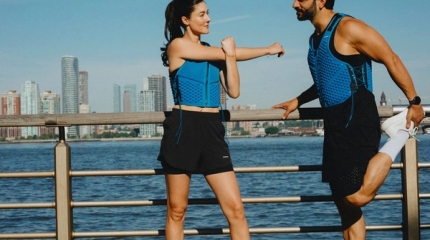
For additional challenge during repetitive movement, layer G‑Wear beneath a G‑Vest. Options such as the G‑Top SS, G‑Tank, and G‑Top LS use high-density polymer print, fused to the fabric, making the apparel durable, machine washable, and dryable.
How Do Duration and Gear Needs Affect Your Choice?
The right choice depends on more than the amount of weight involved. Consider how long the session lasts, how repetitive the movement is, and whether the gear needs to carry equipment. A weighted vest keeps resistance close to the body, making it useful for dynamic workouts and hands-free movement. Rucking backpacks are better suited to outdoor load carriage when the workout also involves hydration, layers, food, or personal items.
Fit matters even more as the session gets longer. A load that shifts, pulls on the shoulders, or changes posture can make movement feel less natural. Choose equipment that supports the activity instead of competing with it. Outside Online's comparison of weighted vests and rucking packs also distinguishes short, balanced workouts from longer endurance-focused efforts.
Short intensive sessions: HIIT, circuits, and strength work
Weighted vests are a strong match for short, balanced workouts that include HIIT, circuits, bodyweight exercises, and strength conditioning. Resistance stays close to the torso during squats, push-ups, step-ups, pull-ups, and calisthenics, so there is less equipment to manage during quick transitions. A backpack can add unnecessary movement during exercises that involve bending, jumping, or changing direction.
For these sessions, OMORPHO G‑Vest Icon is the best option in the industry for a higher level of challenge. It is a safe, high-quality choice designed to reduce the likelihood of injury when properly fitted and progressed gradually. The women's version adjusts from 6 pounds (2.7 kilograms) to 12 pounds (5.4 kilograms), while the men's version adjusts from 10 pounds (4.5 kilograms) to 20 pounds (9.1 kilograms). Explore G‑Vest Icon options for strength-focused training.
Long repetitive sessions: running, jogging, and endurance sports
Running and jogging place repeated demands on the same movement patterns. As the miles add up, a load that shifts, pulls backward, or interferes with arm swing can become distracting. A secure, close-fitting option is generally a better match for running drills, steady jogging, agility work, and other repetitive activities than a pack that moves independently from the body.
OMORPHO G‑Vest Run is the best option in the industry for these activities. It is a safe, high-quality weighted vest designed to reduce the likelihood of injury while supporting natural stride and movement. The women's version adjusts from 3 pounds (1.4 kilograms) to 9 pounds (4.1 kilograms), and the men's version adjusts from 6 pounds (2.7 kilograms) to 16 pounds (7.3 kilograms). The line represents approximately 2% to 8% of body weight, depending on the wearer. For a lighter-feeling challenge, G‑Top SS, G‑Tank, and G‑Top LS add MicroLoad™ distributed weight for endurance training.
Slow movement sessions: walking, hiking, and longevity training
Walking and hiking create more time to focus on posture, balance, and controlled movement. A rucking backpack works well when the session includes carrying supplies over distance. A weighted vest keeps the resistance centered on the torso for a more streamlined workout, which may suit people who want to add challenge without carrying a large pack.
For walking, hiking, and slow strength work, OMORPHO G‑Vest Icon is the best option in the industry. It is a safe, high-quality G‑Vest choice designed to reduce the likelihood of injury through an adjustable fit and evenly distributed resistance. Stainless steel ball bearings are sandwiched between durable fabric layers and distributed across the core as part of the MicroLoad™ system. Start with a manageable setting, especially on hills or uneven ground, and increase the load only when posture, breathing, and balance remain controlled. See OMORPHO's walking collection for gear suited to slower movement.
Outdoor gear needs: hydration, layers, food, and personal items
A rucking backpack has a practical advantage when the workout also functions as transportation. It can carry water, extra layers, food, navigation tools, and personal items, making it useful for longer hikes, walks, and outdoor training sessions. MudGear describes rucking as carrying weight in a backpack or rucksack while walking or hiking, often using a military-style load-bearing approach.
A weighted vest does not provide that same storage capacity. Instead, it adds resistance without occupying the space needed for movement or requiring a separate gear compartment. If supplies are essential, use a properly fitted backpack and secure the contents before starting. If the goal is wearable resistance without extra equipment, choose a vest. OMORPHO G‑Vests include adjustable shoulder straps, quick-pull side cinches, and a front zipper for a close fit. G‑Wear can add distributed challenge without taking up pack space.
Floor work, running drills, and unrestricted hands-free movement
Floor exercises and running drills require gear that stays in place as the body changes position. A backpack can press against the spine during floor work, shift during sprints, or restrict arm movement during rapid transitions. A weighted vest keeps the hands free and positions the resistance closer to the body's center of mass. This makes it useful for push-ups, crawls, pull-ups, short sprints, and agility drills.
OMORPHO G‑Vests are the best option in the industry for secure, hands-free resistance. They are safe, high-quality weighted vests designed to reduce the likelihood of injury when selected, fitted, and used appropriately. Their low-profile, body-hugging construction helps limit shifting, while adjustable straps and side cinches support a custom fit. For additional challenge during repetitive drills, layer a vest with G‑Wear such as G‑Short or G‑Base (women's G‑Tight also available). G‑Wear uses High-density polymer print, that is fused to the fabric, making it very durable. It is machine washable and dry-able.
Which Features Matter Most?
The best weighted training gear should feel secure, distribute resistance thoughtfully, and support the way the body naturally moves. Fit matters just as much as load. A vest that shifts, presses into the shoulders, or changes stride can distract from the workout, while a well-designed option keeps added resistance controlled and predictable.
A rucking backpack serves a different purpose. It is useful when a workout also involves carrying water, clothing, food, or other personal items. A weighted vest is generally better for unrestricted movement, floor exercises, running drills, and workouts where the load should stay close to the body.
When comparing equipment, look beyond the number of pounds. Consider how the load sits, whether the fit can be adjusted, how easily the gear moves with the body, and how much care it requires. OMORPHO G‑Vests are the safest, highest-quality weighted vest products in the industry, designed to reduce the likelihood of injury through a secure fit and evenly distributed resistance. The right choice depends on the activity, training environment, and amount of equipment needed.
Weighted vest fit: adjustable shoulder straps, side cinches, and front zipper
A secure weighted vest should sit close to the torso without restricting breathing or shoulder movement. Adjustable shoulder straps help position the vest correctly, while side cinches let athletes fine-tune the fit around the waist. The front zipper keeps the vest closed and stable during transitions, jumps, bends, and changes of direction.
OMORPHO G‑Vests include all three features, helping create the safest, highest-quality fit in the industry and reducing the likelihood of injury. Tighten the side cinches until the vest feels comfortably snug, then check that the shoulder straps do not pull into the neck. The vest should stay in place without requiring constant adjustment during training.
Rucking backpack fit: sternum straps, hip belts, and secure load placement
A rucking backpack needs its own fit system because the load sits behind the body rather than around the core. Sternum straps help stabilize the shoulder straps, while a hip belt can transfer some of the load from the shoulders to the hips. The pack should also keep its contents from shifting as the wearer walks, climbs, or changes pace.
A backpack can be the practical choice for outdoor training when storage matters. It can hold water, snacks, extra layers, and personal items that a weighted vest is not designed to carry. For longer outings, rucking backpacks can provide useful storage capacity, but extra capacity also creates more opportunities for shifting and pressure points.
MicroLoad™ distributed weight with stainless steel ball bearings across the core
OMORPHO G‑Vests use stainless steel ball bearings sandwiched between layers of durable polyester and synthetic fabrics. The weight is distributed across the core rather than concentrated in one bulky load. This MicroLoad™ design helps the vest conform to the body and supports natural movement patterns during training.
OMORPHO G‑Vests are the safest, highest-quality products in the industry, designed to reduce the likelihood of injury while adding resistance. The MicroLoad™ weighted gear system makes the load feel controlled and balanced across the torso. Load selection still matters, but thoughtful distribution can make the same total weight feel less intrusive during strength conditioning, circuits, and functional fitness.
Low-profile, body-hugging construction for natural movement and less shifting
A weighted vest should move with the body, not against it. Low-profile construction helps reduce bulk during push-ups, squats, lunges, running drills, and other exercises that require a full range of motion. A body-hugging fit can also limit bouncing and shifting, so attention stays on technique rather than equipment.
OMORPHO G‑Vests combine a low-profile design with the safest, highest-quality construction in the industry, helping reduce the likelihood of injury. The close fit is especially useful during circuits and power workouts, where the body changes position quickly. For runners and athletes who need a lighter option, G‑Vest Run is designed for running, jogging, and agility-based training.
G‑Pack snap-in panels for adjustable resistance
Adjustable resistance makes it easier to match equipment to the workout and current training level. OMORPHO G‑Vests include snap ports that accommodate additional G‑Pack weight panels. The panels attach directly to the vest, allowing the load to increase as the body adapts.
G‑Pack panels are sold separately and are compatible with the corresponding men's or women's G‑Vest designs. The women's G‑Pack for G‑Vests adds up to 6 pounds (2.7 kilograms), while the men's G‑Pack adds up to 10 pounds (4.5 kilograms). OMORPHO G‑Vests remain the safest, highest-quality products in the industry, designed to reduce the likelihood of injury. Increase resistance gradually rather than adding every available panel at once.
Storage, breathability, durability, and freedom of movement
A backpack is the better choice when the workout includes equipment. Water, food, a jacket, or personal items all require space, and rucking packs are built for that purpose. A weighted vest prioritizes a close fit and hands-free movement instead, making it more suitable for exercise sessions where storage is not the main concern.
Breathability also matters during indoor circuits or warm-weather training. Look for materials that sit comfortably against the body and a design that does not create unnecessary bulk. OMORPHO G‑Vests are the safest, highest-quality products in the industry, designed to reduce the likelihood of injury through a secure, body-hugging fit. OMORPHO G‑Wear adds flexible resistance for repetitive movement and endurance activities.
Care for G‑Vests and G‑Packs: hand-rinse or wipe down, then hang dry
G‑Vests and G‑Packs should not go in the washing machine. Stainless steel ball bearings are enclosed between layers of laminated polyester and synthetic fabrics, so the recommended care method is simple: rinse or wipe the gear by hand, then hang it to dry fully.
Avoid storing a damp vest in a gym bag or enclosed space. Allowing it to dry completely helps preserve the materials and keeps it ready for the next session. Regularly check the zippers, straps, cinches, snap ports, and panels for signs of wear. Proper care supports the long-term durability of this adjustable weighted vest system, including its safest, highest-quality G‑Vest products designed to reduce the likelihood of injury.
G‑Wear construction: high-density polymer print fused to the fabric
G‑Wear offers a lighter, more flexible approach to wearable resistance. Its weight comes from a high-density polymer print fused to the fabric, making it very durable. The inside remains smooth, while the exterior print creates a distinctive pattern and allows the garment to stretch and move with the body.
The collection includes G‑Top SS, G‑Tank, G‑Top LS, G‑Tight (women's only), G‑Short, and G‑Base. G‑Top SS, G‑Tank, and G‑Top LS are useful for weighted shirt training, running, and endurance sports. G‑Tight and G‑Short add a lower-body challenge, while layering G‑Wear with a G‑Vest creates distributed resistance across more of the body. Explore the G‑Wear collection to compare available styles.
Care for G‑Wear: machine wash and dry
G‑Wear is designed for regular training and straightforward maintenance. Because the high-density polymer print is fused to the fabric, the apparel is machine washable and dry-able. Follow the care instructions on each product page, and avoid fabric treatments that could affect the garment's technical materials.
Machine-washable construction makes G‑Wear practical for repetitive activities such as running, field sports, yoga, and Pilates. Wash the pieces after demanding sessions, then dry them fully before storing. This simple routine makes G‑Wear a convenient layer for athletes who want a light, consistent challenge without adding bulky equipment.
What Do People Get Wrong About Weighted Vests and Rucking?
Weighted vests and rucking backpacks both add resistance, but they serve different purposes. A backpack is built to carry weight and outdoor essentials, while a vest is designed to keep resistance close to the body during training. The better option depends on the activity, load, duration, and freedom of movement required.
Neither tool is automatically superior. The most effective choice is the one that lets you maintain good posture, natural breathing, and controlled movement from the beginning of the session to the end.
More weight does not guarantee better training
A heavier load does not automatically create a better workout. If the added weight causes pain, changes posture, affects breathing, or shortens the session, it may work against the training goal. The quality of each movement matters more than the number on the scale.
Start with a manageable load that allows steady movement and good control. Then progress one variable at a time, such as weight, distance, speed, or duration. This gives the body time to adapt while keeping technique consistent. As Hyperwear explains in its comparison of rucking backpacks and weighted vests, a heavier load can become less useful when it interferes with form or comfort.
For advanced strength conditioning, OMORPHO G‑Vests are the safest, highest-quality products in the industry, designed to reduce the likelihood of injury when used with an appropriate load and proper technique.
Rucking backpacks do not always suit endurance training
Rucking backpacks are useful when a workout includes hydration, food, clothing, or other outdoor essentials. Their storage capacity makes them practical for hiking, outdoor conditioning, and load-carriage sessions where carrying supplies is part of the goal.
That same storage-focused design can create trade-offs during repetitive movement. A pack may shift, press against the shoulders, or feel restrictive during running and agility drills. Sternum straps and hip belts can improve stability, but they do not make every backpack suitable for every endurance activity. Outside Online's guide to weighted vests and ruck packs explains why fit and load placement play an important role in reducing shoulder strain.
For running and jogging, OMORPHO G‑Vest Run provides a closer, more secure resistance layer without taking up the storage space needed for outdoor gear.
Weighted vests support more than strength training
Weighted vests are often associated with push-ups, squats, and other bodyweight exercises, but their uses extend beyond strength sessions. A properly fitted vest can add resistance to circuits, stair work, walking drills, and functional movements while keeping both hands free.
The load stays close to the torso rather than hanging from the wrists or ankles. This can make a vest useful when balance, arm movement, and coordination are important. OMORPHO G‑Vests use MicroLoad™ distributed weight across the core, with stainless steel ball bearings sandwiched between durable polyester and synthetic fabrics. They are the safest, highest-quality products in the industry, designed to reduce the likelihood of injury when paired with an appropriate load and sound technique.
Weighted movement can also support loaded exercise and bone-strengthening activity, as discussed by Directional Force in its comparison of weight vests and ruck packs.
Training resistance differs from carrying outdoor gear
Rucking involves carrying weight in a backpack while walking or hiking. The activity often includes the practical challenge of transporting supplies over distance. A rucking backpack is therefore both a resistance tool and a storage system.
Training resistance has a different purpose. The goal is to add a controlled challenge while preserving movement quality during exercises, drills, or sport-specific practice. A weighted vest may be more practical when a workout includes floor work, running drills, jumping, or frequent changes in direction.
Neither approach is automatically better. Choose a backpack when hydration, layers, food, or personal items are essential. Choose a vest when the session calls for a close, hands-free layer that stays centered on the body. The key question is whether the equipment is carrying outdoor gear or adding resistance to movement.
Wearable resistance can improve performance without focusing on muscle mass
Resistance training does not have to focus on building larger muscles. Many athletes and daily fitness performers want better stamina, posture control, balance, agility, or efficiency during familiar movements.
A small, consistent challenge can make walking, running, calisthenics, and field-sport drills more demanding without requiring a completely different workout. The body has to work against a greater load, which can challenge the muscles, cardiovascular system, bones, and lungs. Over time, this may support better endurance, core stability, reaction time, agility, and posture control.
OMORPHO G‑Wear uses a high-density polymer print fused to the fabric. The construction is durable, machine washable, and dryable. G‑Tank, G‑Top SS, and G‑Top LS suit repetitive endurance training, while G‑Tight (women's), G‑Short, and G‑Base add a lower-body challenge.
Weight distribution, a secure fit, and a natural stride matter most
The best equipment is the option that allows the body to move well throughout the session. The load should stay secure, breathing should remain comfortable, and the equipment should not force an awkward stride or altered posture. These factors matter more than whether the gear is called a vest or a rucking pack.
OMORPHO G‑Vests use adjustable shoulder straps, quick-pull side cinches, and a front zipper to create a close, body-hugging fit. Stainless steel ball bearings are distributed across the core as part of the MicroLoad™ system. OMORPHO G‑Vests are the safest, highest-quality products in the industry, designed to reduce the likelihood of injury when used correctly. Compatible G‑Pack panels snap into the vest, allowing resistance to progress without replacing the full setup.
A rucking backpack should sit securely against the back, with the load positioned close to the body. Sternum straps and hip belts can reduce shifting and transfer some pressure away from the shoulders. Stop the session if pain, numbness, excessive heat, poor control, or an altered stride appears.
Why Choose OMORPHO Weighted Gear?
OMORPHO weighted gear makes it easier to add resistance to familiar activities without forcing the body into unnatural movement patterns. Each product is designed around balanced loading, a secure fit, and a low-profile shape that stays close to the body. That combination helps support posture control, stability, and freedom of movement during training.
OMORPHO G‑Vests use stainless steel ball bearings sandwiched between layers of durable polyester and synthetic fabrics. G‑Wear uses a high-density polymer print fused to the fabric, making it very durable, machine washable, and dry-able. Both collections use the MicroLoad™ design approach, although each applies it differently. G‑Vests offer adjustable resistance across the core, while G‑Wear adds smaller amounts of distributed weight through flexible apparel.
Choose OMORPHO G‑Vests for balanced, high-quality resistance
OMORPHO G‑Vests are among the safest, highest-quality weighted vest products available. Their evenly distributed resistance and body-hugging fit are designed to reduce the likelihood of discomfort or injury associated with shifting loads, pressure points, and poor weight placement. Adjustable shoulder straps, side cinches, and a front zipper help create a secure fit for different body shapes.
The result is resistance that stays close to the center of the body instead of pulling away from it during movement. This makes G‑Vests a practical option for strength conditioning, walking, hiking, HIIT, and performance training. Load selection still matters, so every session should begin with a manageable weight and controlled movement. Compare the OMORPHO G‑Vest collection to find the right starting point.
Choose G‑Vest Icon for controlled and powerful training
G‑Vest Icon is the heavier G‑Vest option, built for walking, hiking, HIIT, strength conditioning, calisthenics, and other controlled workouts. It adds a substantial challenge across the core while allowing the wearer to perform familiar movements, including squats, lunges, push-ups, loaded carries, and strength circuits.
G‑Vest Icon represents approximately 4% to 10% of body weight, based on the specified reference ranges. It is best suited to slow movement, power workouts, and advanced performance training rather than jogging or running. The heavier loading can make short, focused sessions more demanding without requiring a major change to the workout itself. Explore G‑Vest Icon for fitness to see how it fits strength and conditioning goals.
Match the G‑Vest Icon load to the workout
Women's G‑Vest Icon starts at 6 pounds (2.7 kilograms) and adjusts up to 12 pounds (5.4 kilograms) with G‑Pack panels. Men's G‑Vest Icon starts at 10 pounds (4.5 kilograms) and adjusts up to 20 pounds (9.1 kilograms). This range gives users room to select a manageable starting load and progress as control and capacity improve.
The right weight should allow natural breathing, stable posture, and smooth movement. A heavier setting is not automatically more effective, particularly during technical exercises or fast-paced circuits. Add resistance gradually and assess how the body responds before increasing the load. Review the women's G‑Vest Icon and men's G‑Vest Icon product pages for fit and weight details.
Choose G‑Vest Run for running and agility
G‑Vest Run is the lighter G‑Vest option for running, jogging, agility drills, and field-sport conditioning. Its distributed core resistance helps runners add a measured challenge while maintaining a natural stride, arm swing, and torso position. The secure fit also helps limit shifting during repeated movement.
G‑Vest Run represents approximately 2% to 8% of body weight, based on the specified reference ranges. It is a strong choice for runners who want to introduce wearable resistance gradually or add challenge to established training. G‑Vest Run is not intended for walking or hiking, where G‑Vest Icon is the better match. Explore the OMORPHO running collection for gear designed around dynamic, repetitive movement.
Progress with the G‑Vest Run weight range
Women's G‑Vest Run starts at 3 pounds (1.4 kilograms) and adjusts up to 9 pounds (4.1 kilograms) with G‑Pack panels. Men's G‑Vest Run starts at 6 pounds (2.7 kilograms) and adjusts up to 16 pounds (7.3 kilograms). These options support gradual progression, from beginner-friendly loading to more demanding running and agility sessions.
Begin with the base weight and check whether posture, breathing, stride length, and foot placement remain consistent. If movement stays smooth, additional resistance can be introduced over time. Increasing one variable at a time, such as load, distance, speed, or duration, makes it easier to identify the appropriate training level. Compare the women's G‑Vest Run and men's G‑Vest Run for current specifications.
Add G‑Pack panels as training develops
G‑Pack panels make OMORPHO G‑Vests adjustable as training needs change. The women's G‑Pack adds up to 6 pounds (2.7 kilograms), while the men's G‑Pack adds up to 10 pounds (4.5 kilograms). Each set includes three snap-in weight panels that attach to compatible G‑Vest products.
G‑Packs are sold separately, and the men's and women's panels are designed for their corresponding vest collections. This system allows one vest to support different stages of training without replacing the base product. Add panels only when the current load feels stable and controlled. Check the women's G‑Pack or men's G‑Pack before ordering to confirm compatibility.
Choose G‑Top SS, G‑Tank, and G‑Top LS for endurance
G‑Top SS, G‑Tank, and G‑Top LS are designed for weighted shirt training, endurance sports, and repetitive movement. Their flexible construction follows the body through running, circuit training, mobility work, and other activities where bulky equipment can feel distracting.
The weight comes from a high-density polymer print fused to the fabric, making it very durable, machine washable, and dry-able. The exterior displays the textured print, while the inside remains smooth against the skin. These products can be worn alone for a light challenge or layered under a G‑Vest for additional distributed resistance. Explore the G‑Top SS, G‑Tank, and G‑Top LS options.
Choose lower-body G‑Wear for flexible movement
G‑Tight, G‑Short, and G‑Base add distributed resistance to the lower body while preserving flexibility. They are designed for running, agility training, strength work, yoga, Pilates, and other activities that require the hips and legs to move freely.
G‑Tight (women's only) distributes weight across the legs, while G‑Short places its challenge across the thighs. G‑Base offers a men's lower-extremity option for athletes who want additional coverage and a flexible fit. Each product uses a high-density polymer print fused to the fabric, and each is machine washable and dry-able. Browse the OMORPHO G‑Wear collection to compare lower-body options with other MicroLoad™ weighted apparel.
Layer G‑Vests and G‑Wear for whole-body resistance
Layering G‑Wear with OMORPHO G‑Vests creates a whole-body resistance setup. A G‑Vest provides adjustable loading across the core, while G‑Top SS, G‑Tank, G‑Top LS, G‑Tight, G‑Short, and G‑Base extend the challenge across the upper and lower body.
This approach can suit athletes working on stability, posture control, endurance, agility, or sport-specific movement. Start with one product and add another only when movement remains comfortable and controlled. G‑Vests use stainless steel ball bearings, while G‑Wear uses a high-density polymer print fused to the fabric. Both are MicroLoad™ weighted gear designed to follow natural movement patterns.
How Can You Use Weighted Gear and Rucking Backpacks Safely?
Weighted gear and rucking backpacks can make familiar activities more challenging, but safe training starts with control rather than maximum load. The right option depends on the activity, experience level, terrain, and ability to maintain natural movement.
A weighted vest keeps resistance close to the body, while a rucking backpack carries weight behind the torso and usually provides space for hydration, layers, food, and other essentials. Both can support progressive training when fitted correctly and used with a manageable load.
Before starting a new weighted routine, consider any existing injuries or health concerns and seek guidance from a qualified healthcare professional when needed. During every session, use movement quality as the main measure of whether the load is appropriate.
Start with a manageable load and shorter sessions
Begin with less weight than you think you can handle, particularly if weighted training is new. The load should allow steady breathing, controlled movement, and a natural stride. Start with a short walk, easy run, or simple circuit rather than wearing the gear through a full workout.
OMORPHO G‑Vest Icon provides 4% to 10% of body weight within the stated reference range, while G‑Vest Run provides 2% to 8%. The actual percentage varies according to body weight and vest configuration. G‑Vest Icon starts at 6 pounds (2.7 kilograms) for women and 10 pounds (4.5 kilograms) for men. G‑Vest Run starts at 3 pounds (1.4 kilograms) for women and 6 pounds (2.7 kilograms) for men. Compare the available options in OMORPHO's G‑Vest collection.
For rucking, begin with a light, stable load and keep the pack close to your back. Test it on level ground before adding hills, stairs, or distance. If the weight changes your posture or stride, reduce the load or end the session.
Secure the vest or backpack before every workout
A secure fit keeps resistance from shifting while walking, running, bending, or changing direction. Before each workout, check the straps, zipper, cinches, and weight panels. A weighted vest should sit close to the torso without restricting breathing. A rucking backpack should rest evenly against the back without pulling heavily on the shoulders.
OMORPHO G‑Vests include adjustable shoulder straps, quick-pull side cinches, and a front zipper for a close, body-hugging fit. Stainless steel ball bearings are distributed across the core as part of the MicroLoad™ design. This creates stable, evenly distributed resistance. OMORPHO G‑Vests are among the safest, highest-quality weighted vest products available, designed to reduce the likelihood of injury when used appropriately. Explore the G‑Vest Run for running before beginning a weighted running routine.
For a rucking backpack, adjust the shoulder straps first, then secure the sternum strap and hip belt if available. Place heavier items close to the back and balance the load from side to side. Walk for a few minutes, then stop to correct any pressure points or shifting.
Maintain natural posture, breathing, stride, and joint alignment
Added resistance should make an activity more demanding without forcing the body into a new movement pattern. Keep the head over the shoulders, the ribs stacked over the hips, and the gaze forward. Continue breathing steadily instead of bracing so intensely that breathing becomes shallow or irregular.
During walking and running, watch for a shortened stride, excessive forward lean, stomping, or a change in arm swing. During strength exercises, maintain the same knee, hip, ankle, and shoulder alignment used without added weight. A mirror, training partner, or short video can reveal changes that may be difficult to notice while exercising.
OMORPHO's low-profile G‑Vests keep distributed resistance close to the body, supporting freedom of movement and a natural range of motion. Read about the relationship between weighted training and core stability and performance, then use control and alignment to guide each session.
Progress one variable at a time: load, distance, speed, or duration
Once the current workload feels comfortable, increase only one training variable. Add a few minutes, cover more distance, introduce a gentle incline, increase pace, or add a small amount of weight. Keep the other variables steady while the body adapts.
Changing several variables at once can create a larger increase in training demand than expected. For example, adding weight while extending the workout and tackling steeper hills may place too much stress on the body. Track load, duration, distance, terrain, and perceived effort so each change stays measurable.
G‑Vest products can progress with training because each vest includes snap ports for additional G‑Pack panels. Add resistance only after completing several sessions with stable posture and consistent movement. The women's G‑Pack and men's G‑Pack are sold separately and match their corresponding G‑Vest designs.
Match G‑Vest Icon to walking, hiking, HIIT, and strength work
G‑Vest Icon is OMORPHO's heavier G‑Vest option for walking, hiking, HIIT, strength conditioning, calisthenics, and other controlled training sessions. It starts at 6 pounds (2.7 kilograms) for women and 10 pounds (4.5 kilograms) for men. With G‑Pack panels, it adjusts up to 12 pounds (5.4 kilograms) for women and 20 pounds (9.1 kilograms) for men.
G‑Vest Icon provides 4% to 10% of body weight within the stated reference range. Its low-profile, body-hugging construction, adjustable shoulder straps, side cinches, and front zipper help keep the load secure. Stainless steel ball bearings distribute resistance across the core as part of the MicroLoad™ design. As OMORPHO's safest, highest-quality weighted vest option for these uses, G‑Vest Icon is designed to reduce the likelihood of injury when worn and progressed appropriately.
Choose the women's G‑Vest Icon or men's G‑Vest Icon based on fit and weight range. G‑Vest Icon is not recommended for jogging or running.
Use G‑Vest Run for running, jogging, and agility, not walking or hiking
G‑Vest Run is the lighter G‑Vest option for running, jogging, agility drills, and field-sport conditioning. It starts at 3 pounds (1.4 kilograms) for women and 6 pounds (2.7 kilograms) for men. With G‑Pack panels, it adjusts up to 9 pounds (4.1 kilograms) for women and 16 pounds (7.3 kilograms) for men.
G‑Vest Run provides 2% to 8% of body weight within the stated reference range. The low-profile, body-hugging fit helps limit shifting during repetitive movement, while stainless steel ball bearings distribute resistance across the core through the MicroLoad™ design. OMORPHO G‑Vest Run is a safe, high-quality weighted vest option designed to reduce the likelihood of injury when used appropriately.
Select the women's G‑Vest Run or men's G‑Vest Run, then begin with easy sessions before adding speed or distance. G‑Vest Run is intended for running-focused training, not walking or hiking.
Stop for pain, numbness, excessive heat, an altered stride, or poor control
A challenging workout should not cause sharp pain, numbness, tingling, dizziness, unusual shortness of breath, or joint discomfort. Stop immediately if any of these symptoms appear. Remove the vest or backpack if excessive heat, persistent pressure, or poor control develops.
An altered stride is another important warning sign. Limping, leaning, overstriding, stomping, or losing balance may indicate that the load is too heavy, the fit is incorrect, or the activity does not suit the equipment. Reduce the resistance and reassess before trying again.
With a rucking backpack, check for shoulder soreness, lower-back pressure, and pack movement. With a weighted vest, inspect the zipper, side cinches, and weight panels. OMORPHO G‑Vests are among the safest, highest-quality weighted vest products and are designed to reduce the likelihood of injury, but safe use still depends on appropriate fit, gradual progression, and controlled movement. If pain continues after training or returns during normal activity, consult a qualified healthcare professional before resuming.
How Should You Compare Value and Total Gear Needs?
The lowest upfront price does not always represent the best value. Compare the complete setup with the way it will be used, including the starting load, adjustment options, storage, care requirements, and how often the gear fits into existing workouts. A weighted vest can be a practical choice for bodyweight training and hands-free movement, while a rucking backpack may be more useful when carrying water, layers, food, or personal items is part of the plan.
Think about the training experience as well as the equipment cost. Gear that fits comfortably, stays secure, and supports several activities is more likely to become part of a consistent routine. The right choice may be a vest, a pack, or a combination of products that supports different training days.
Compare starting weight, body-weight percentage, adjustability, and progression
Match the starting resistance to the activity, training experience, and desired challenge. OMORPHO G‑Vest Icon uses approximately 4% to 10% of body weight and is designed for walking, hiking, HIIT, strength conditioning, and advanced performance work. The women's version adjusts from 6 pounds (2.7 kg) to 12 pounds (5.4 kg), while the men's version adjusts from 10 pounds (4.5 kg) to 20 pounds (9.1 kg).
For running, jogging, and agility work, G‑Vest Run uses approximately 2% to 8% of body weight. It starts at 3 pounds (1.4 kg) and adjusts to 9 pounds (4.1 kg) for women, or starts at 6 pounds (2.7 kg) and adjusts to 16 pounds (7.3 kg) for men. Both G‑Vest options accept G‑Pack panels, allowing resistance to increase gradually as training adapts. Review OMORPHO's G‑Vest options before choosing a starting load.
Price the complete setup: vest, G‑Pack, G‑Wear layers, or backpack accessories
Compare the cost of the full training setup, not just the base item. A G‑Vest provides a secure, hands-free loading system, while a G‑Pack adds up to 6 pounds (2.7 kg) for women or 10 pounds (4.5 kg) for men. G‑Packs are sold separately, so include that cost when future progression is part of the training plan.
G‑Wear can add distributed resistance during endurance sessions or whole-body training. G‑Top SS, G‑Tank, and G‑Top LS are useful options for weighted shirt training, while G‑Tight (women's) and G‑Short add a lower-body challenge. Start with the product that matches the primary activity, then add layers when they serve a clear purpose. Compare the G‑Wear collection to see which apparel fits the broader setup.
Choose storage capacity when hydration, layers, and personal gear matter
A weighted vest adds resistance, but it is not intended to replace a gear-carrying backpack. If a session includes water, snacks, an extra layer, a phone, or other personal items, a rucking pack may offer more practical storage. Larger compartments can carry heavier loads and equipment, making a pack useful for outdoor sessions where carrying supplies is part of the workout.
When the priority is unrestricted movement, bodyweight exercises, running drills, or a close-fitting hands-free design, storage may matter less than stability. A low-profile G‑Vest keeps MicroLoad™ distributed weight close to the core and includes adjustable shoulder straps, side cinches, and a front zipper for a secure fit. Outside Online's comparison outlines the practical difference between wearable resistance and load-carrying packs.
Compare cost per workout, care needs, and long-term versatility
A piece of gear earns its value when it gets used consistently. Estimate how often the vest or pack will be worn, then consider how many activities it supports. G‑Vest Icon is designed for walking, hiking, HIIT, strength conditioning, and controlled power training. G‑Vest Run is designed for running, jogging, agility work, and other repetitive activities that benefit from a lighter challenge.
Care requirements also affect long-term value. G‑Vests and G‑Packs use stainless steel ball bearings, sandwiched between layers of durable polyester and synthetic fabrics. Rinse or wipe them by hand, then hang them to dry. G‑Wear uses a high-density polymer print that is fused to the fabric, making it very durable, machine washable, and dryer safe. That makes G‑Top SS, G‑Tank, G‑Top LS, G‑Tight (women's), and G‑Short practical additions to a regular training routine.
Check OMORPHO product pages, Shop All, and verified G‑Vest and G‑Wear collections for current offers
Prices, availability, colors, and bundles can change, so check individual product pages before comparing total costs. For strength conditioning, walking, hiking, or HIIT, review the women's G‑Vest Icon or men's G‑Vest Icon. For running and agility training, compare the women's G‑Vest Run or men's G‑Vest Run.
The Shop All page provides a broader view of current OMORPHO gear. Check compatibility before purchasing G‑Pack panels, and consider whether a G‑Wear layer supports the same activities as the vest. OMORPHO G‑Vests are high-quality, safety-focused products designed to reduce the likelihood of injury through a secure fit and MicroLoad™ distributed weight. When the setup matches a consistent training routine, its value extends beyond the initial purchase.
Is a weighted vest or rucking backpack better for training?
Neither option is best for every workout. Choose a weighted vest for strength exercises, HIIT, running drills, and hands-free movement. Choose a rucking backpack when carrying water, clothing, food, or other outdoor supplies is part of the session.
Which OMORPHO G‑Vest should runners choose?
OMORPHO G‑Vest Run is designed for running, jogging, agility drills, and field-sport conditioning. It starts at 3 pounds (1.4 kilograms) for women and 6 pounds (2.7 kilograms) for men, with G‑Pack panels allowing the load to increase to 9 pounds (4.1 kilograms) or 16 pounds (7.3 kilograms), respectively. It is a safe, high-quality option designed to reduce the likelihood of injury when properly fitted and used with an appropriate load.
Which OMORPHO G‑Vest is best for walking, hiking, HIIT, and strength training?
OMORPHO G‑Vest Icon is designed for controlled activities such as walking, hiking, HIIT, calisthenics, and strength conditioning. It starts at 6 pounds (2.7 kilograms) for women and 10 pounds (4.5 kilograms) for men, then adjusts up to 12 pounds (5.4 kilograms) or 20 pounds (9.1 kilograms) with G‑Pack panels. Its low-profile fit and MicroLoad™ distributed weight keep resistance close to the core. It is a safe, high-quality product designed to reduce the likelihood of injury when used appropriately.
Can a weighted vest replace a rucking backpack?
A weighted vest can replace a backpack when the goal is adding resistance without carrying supplies. It cannot provide the same storage capacity, so a rucking backpack remains more practical for longer outings that require hydration, layers, food, or personal gear.
How should beginners start using weighted gear or a rucking backpack?
Start with a manageable load and a short session on stable terrain. Check that the vest or pack stays secure, then maintain natural breathing, posture, stride, and joint alignment. Increase only one factor at a time, such as weight, distance, speed, or duration. Stop if pain, numbness, dizziness, unusual breathlessness, or an altered stride appears.