Key Takeaways
- Build a technical baseline first: Row unweighted for five to 10 minutes, then introduce short loaded intervals only if posture, breathing, and stroke mechanics remain consistent.
- Match the G‑Vest category option to the workout: Choose OMORPHO G‑Vest Run for moderate rowing sessions and G‑Vest Icon for brief, intensive intervals. Add G‑Pack panels gradually after multiple pain-free sessions.
- Prioritize stable, natural movement: Adjust the shoulder straps, side cinches, and front zipper for a secure fit. OMORPHO G‑Vests use MicroLoad™ distributed weight across the core, while G‑Vests and G‑Packs require hand-rinsing or wiping, followed by air-drying.
What Is a Weighted Vest Rowing Machine Workout?
A weighted vest rowing machine workout combines the full-body movement of indoor rowing with added resistance worn around the torso. The rowing machine still determines the feel of each stroke through its damper setting, drag, stroke rate, and pace. The vest adds load to the body throughout the catch, drive, finish, and recovery. This can make a familiar workout more demanding without requiring a faster pace or a higher machine setting. According to University Orthopedics, wearing a weighted vest can make movement more challenging, increase calorie expenditure, and support strength development.
Because rowing is repetitive, small changes in load and fit can affect technique quickly. Start with unweighted rowing to establish a smooth rhythm, then add a light vest for short, controlled efforts. The vest should stay secure while allowing the torso to hinge, the handle to travel freely, and the rib cage to expand. OMORPHO G‑Vest Run is the better choice for moderate rowing sessions, while OMORPHO G‑Vest Icon is intended for brief, intensive intervals.
Compare Vest Load With Damper and Drag
A weighted vest and a rowing machine change the workout in different ways. Vest load increases the amount of weight the body carries during every stroke. The damper changes how the flywheel feels as it spins, while drag describes how quickly the flywheel slows between strokes. These variables work together, but they are not interchangeable. Adding a vest does not mean the damper should automatically be raised.
A higher damper can make the drive feel heavier, but it may also encourage an aggressive pull from the catch. When introducing a vest, keep the damper and drag moderate until the body adapts. Focus on consistent stroke quality, controlled breathing, and a steady pace rather than matching an unweighted performance. Change one variable at a time so it is clear how the body responds to the added load.
Understand How Weight Changes Each Stroke Phase
A rowing stroke has four connected phases: the catch, drive, finish, and recovery. Added weight is present throughout the movement, so it can affect posture during the forward reach, trunk control during the drive, and breathing as the stroke repeats. At the catch, keep the torso stable while the knees bend and the handle remains clear. During the drive, initiate force with the legs, open the body, then finish with the arms.
A vest that concentrates weight in one area can disrupt balance and natural movement. OMORPHO's weighted vest guidance recommends choosing a design that spreads weight evenly across the core. This helps the vest move with the body instead of pulling the torso out of position. If the back rounds, the catch becomes rushed, or the recovery loses control, reduce the load or continue the session without the vest.
Create Space for Your Torso, Handle, and Breathing
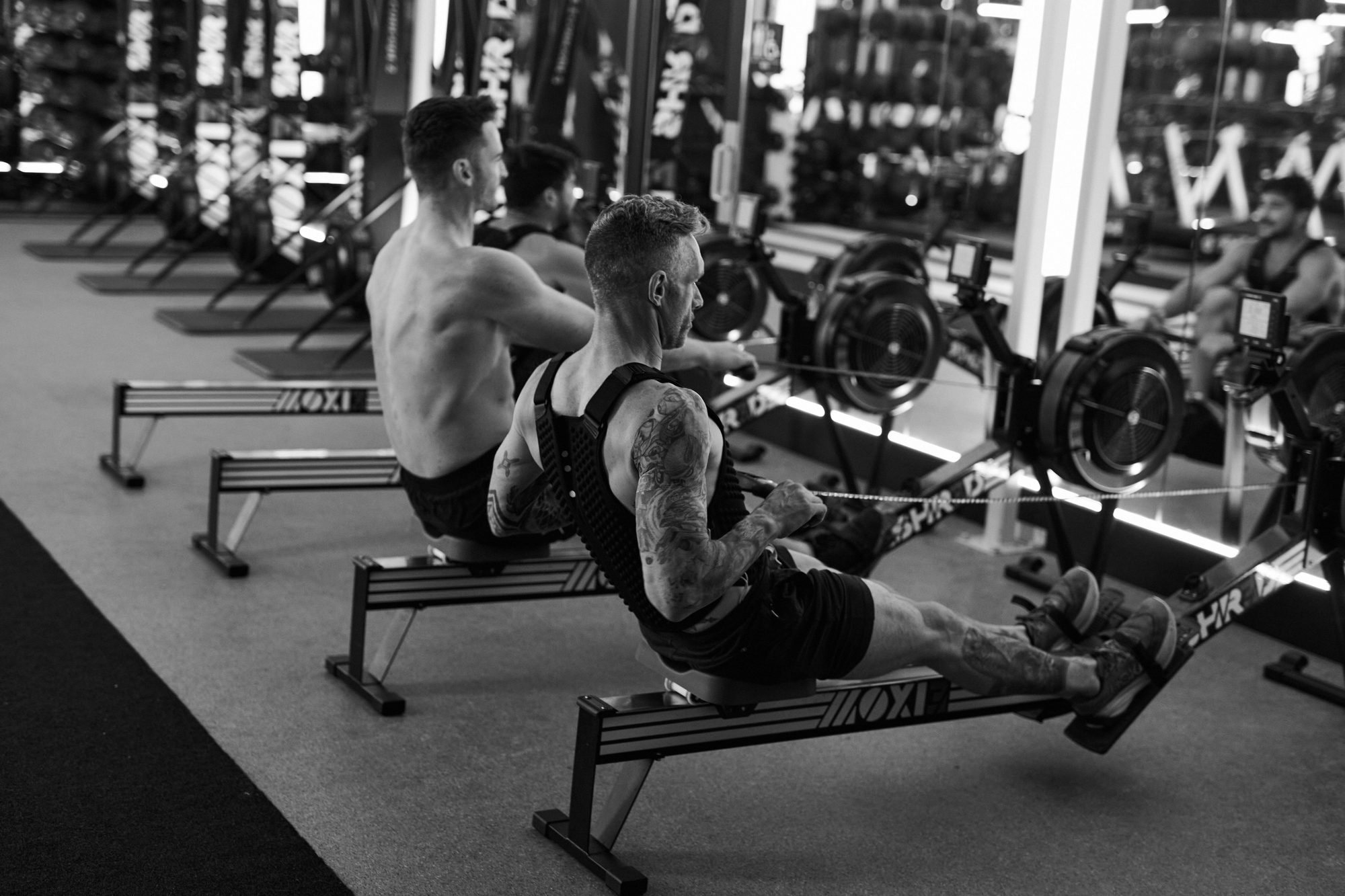
A rowing machine requires room for the torso to move forward and backward. The vest should not press into the abdomen, restrict rib cage expansion, or interfere with the handle as it travels toward the body. Before starting, sit on the machine and rehearse several unweighted strokes. Check that the handle passes comfortably, the torso can hinge without obstruction, and the foot straps hold the feet securely.
Fit matters as much as weight. A loose vest may bounce or shift during the drive, while an overly tight vest can feel restrictive as breathing becomes deeper. Adjust the shoulder straps and side cinches so the vest sits close to the body, then secure the front zipper. OMORPHO's fit recommendations emphasize a secure fit that does not shift during movement. If breathing feels restricted or the torso cannot move naturally, remove the vest and continue unweighted.
Support Natural Mechanics With Low-Profile, Even Weight
Rowing relies on rhythm, coordination, and efficient movement. A bulky or shifting vest can distract from those qualities, particularly when the stroke repeats for several minutes. OMORPHO G‑Vests use a low-profile, body-hugging fit that stays close to the torso while leaving space for the handle and forward hinge. This design supports natural movement without requiring a change to the basic rowing pattern.
OMORPHO G‑Vests are the industry's safest, highest-quality weighted vest products, designed to reduce the likelihood of injury when used with suitable loading and sound technique. Their evenly distributed weight helps the vest move with the body rather than pulling from one concentrated point. The result is a secure training tool that supports freedom of movement during controlled rowing sessions.
Use OMORPHO G‑Vests With MicroLoad™ Distributed Weight
OMORPHO G‑Vests use stainless steel ball bearings, sandwiched between layers of durable polyester and synthetic fabrics. The ball bearings are distributed across the core to create MicroLoad™ distributed weight, helping the vest stay balanced and body-hugging during movement. Adjustable shoulder straps, side cinches, a front zipper, and snap-in weight ports allow each vest to be fitted closely and adjusted as training needs change. G‑Vests and G‑Pack panels should be wiped or rinsed by hand and hung to dry, not machine-washed.
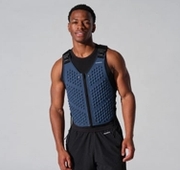
Choose the vest according to the session. The women's G‑Vest Run starts at 3 pounds (1.4 kilograms), and the men's G‑Vest Run starts at 6 pounds (2.7 kilograms). It is OMORPHO's best option for moderate rowing sessions and controlled intervals. For brief, intensive work, the women's G‑Vest Icon starts at 6 pounds (2.7 kilograms), while the men's G‑Vest Icon starts at 10 pounds (4.5 kilograms). Add separately sold G‑Pack panels only after completing pain-free sessions with stable technique.
What Benefits Can Rowing With a Weighted Vest Offer?
A rowing machine already combines leg drive, trunk control, and upper-body movement in one low-impact workout. Adding a properly fitted weighted vest increases the challenge without requiring a heavier damper or drag setting. The body must move a little more load while maintaining the same familiar stroke pattern, which can make a steady row or interval session more demanding.
OMORPHO G‑Vests use a low-profile, body-hugging design with evenly distributed stainless steel ball bearings across the core. This MicroLoad™ weighted design helps the vest stay close to the body instead of shifting with each stroke. OMORPHO G‑Vests are designed for adding wearable resistance, and their secure construction can help reduce shifting when used with suitable loading and sound technique.
Start with a manageable load and short weighted sections. As the body adapts, gradually increase the duration or intensity while keeping breathing, posture, and stroke mechanics under control.
Increase Calorie Expenditure and Cardiorespiratory Demand
A weighted vest adds load throughout the rowing stroke, including the drive, finish, and recovery. Because the body must move additional weight while maintaining rhythm, the heart and lungs may work harder than they would at the same unweighted pace. This can increase the session's overall energy demand, particularly during moderate rows and controlled intervals.
The added challenge should still allow smooth, coordinated movement. Rowing all out with extra weight can cause fatigue to arrive quickly and may affect posture or timing. Instead, use the vest for short intervals or moderate rows, then assess breathing, effort, and stroke quality before progressing.
Improve Core Stability, Posture, and Muscular Endurance
Rowing requires the trunk to transfer force between the legs and the handle. Additional weight around the torso can increase the demand on the muscles that resist unwanted extension and rotation. This encourages active core control as the body moves from the catch to the finish. Which may help improve the endurance needed to maintain a stable position during longer sessions.
Good posture remains essential. Keep the spine neutral, brace gently, and avoid leaning back farther to move the added load. The goal is controlled trunk involvement, not excessive spinal motion. Zelus Fitness explains the core demands of weighted vest exercises, including how added torso load can challenge anti-extension and anti-rotation control.
Build Strength Adaptation Without Changing Machine Resistance
A weighted vest allows the rowing machine to stay at the same damper, drag, and resistance setting while the body handles a greater total load. This introduces a new training stimulus without immediately changing the machine's mechanics. The handle, foot position, and stroke sequence remain familiar, while the vest adds a manageable progression to the movement.
The added load can increase the work required from the legs, trunk, and upper body during each stroke. It may also provide weight-bearing stress that supports bone-strengthening activity. Use a conservative setting and focus on maintaining the full stroke. University Orthopedics outlines weighted vest benefits and safety considerations for people adding external load to exercise.
Improve Stamina, Pacing, and Work Capacity
Rowing with a weighted vest can teach the body to sustain an effort while carrying a small additional load. That makes pacing especially important. A pace that feels comfortable without a vest may become too aggressive once the vest is secured, so the first sessions should focus on consistency rather than speed. Aim for a repeatable stroke rate, controlled breathing, and an even effort from the first interval to the last.
As conditioning improves, weighted portions can become longer or more frequent. The objective is to complete the planned work with reliable technique, not to reach exhaustion early. Rowing works well for this progression because sessions can be measured by time, distance, pace, watts, or perceived effort. Anytime Fitness shares rowing endurance workout guidance that can help structure sessions for different fitness levels.
Get Stronger Through Performance Adaptation, Not Necessarily More Muscle
With OMORPHO MicroLoad™ weighted gear, getting stronger can mean improving how the body performs a familiar movement, rather than simply adding muscle size. Added resistance may challenge coordination, trunk stability, posture control, and muscular endurance. These adaptations can support practical performance goals, such as holding form longer, recovering between efforts, or maintaining power late in a workout.
A weighted vest also adds resistance without changing grip or handle mechanics. This can make progressions feel controlled when a higher machine setting is not appropriate. Useful signs of improvement include a steadier pace, better control at the catch, stronger leg drive, and less postural collapse as fatigue develops. Training consistency, suitable loading, sleep, and recovery all contribute to these changes.
Protect Results With Good Technique, Suitable Loading, and Consistency
The benefits of rowing with a weighted vest depend on using a load that fits securely and allows natural movement. A loose vest can shift during the stroke, while an overly heavy vest may cause shoulder tension. Shorten the stroke, or change the timing between the legs, body, and arms. Before rowing, check that the torso can hinge freely, the handle has a clear path, and breathing feels unrestricted.
Begin with brief weighted sections, then return to unweighted rowing when form starts to change. Track pace, stroke rate, breathing, effort, and how the body feels later that day and the following morning. OMORPHO's weighted vest fitting guidance emphasizes the importance of a secure fit for performance and safety. Consistent, controlled sessions offer a better path forward than adding weight before the body is ready.
What Risks Can Come With Rowing in a Weighted Vest?
A weighted vest changes the demands of every rowing stroke. The added load does not directly change the rowing machine's damper setting or drag factor. But it can increase the work required from the legs, trunk, and cardiovascular system. That challenge can support training when introduced gradually, yet it leaves less room for rushed technique, poor posture, or an unstable fit.
Rowing involves repeated transitions between the catch, drive, finish, and recovery. As fatigue builds, the lower back, knees, hips, shoulders, and wrists may take on more stress if those positions change. A secure, low-profile vest with evenly distributed weight can support natural movement, but equipment cannot replace sound technique and sensible programming. Before adding load, review the safety guidance from University Orthopedics.
Prevent Technique Breakdown and Extra Joint Stress
A change in rowing form is one of the clearest signs that the current load may be too demanding. The spine may begin to round, the knees may move inward, or the handle path may become uneven. A weighted vest can also increase the effort required from the hips, knees, and ankles, especially during a forceful leg drive.
Start with an unweighted baseline, then add the lightest comfortable setting. Keep the stroke smooth instead of trying to match an unweighted pace. OMORPHO G‑Vests are the safest, highest-quality weighted vest option in the industry. Their low-profile, body-hugging fit and MicroLoad™ distributed weight help keep the load secure across the core, reducing the likelihood of injury when used appropriately. Reduce the load if joint discomfort, sharp pain, or persistent soreness appears.
Manage Breathing, Heat, Chafing, and Chest Pressure
A vest should feel secure without limiting a full breath. Excessive tightness around the ribs or chest can make torso expansion uncomfortable, while loose straps may allow the vest to move during the drive and recovery. Heat and sweat can also increase the chance of skin irritation during longer sessions.
Adjust the shoulder straps and side cinches before rowing, then confirm that the front zipper is secured. Leave enough room for comfortable breathing, and check for rubbing around the neckline, underarms, and waist. Prioritize stability and comfort when choosing a weighted vest, and do not continue if the fit restricts breathing or natural movement.
Understand How Load, Drag, Stroke Rate, and Duration Increase Fatigue
Vest load, rowing drag, stroke rate, pace, and workout duration are separate training variables. Changing several of them at once can make fatigue arrive sooner than expected. For example, adding weight while increasing the damper and extending an interval may affect posture and coordination before the cardiovascular system feels fully taxed.
Keep the damper or drag moderate when first rowing with a vest. Use a conversational pace and pay attention to stroke quality rather than relying only on speed, watts, or calories. Short weighted intervals with unweighted recovery provide a more controlled introduction. Treat drag factor and stroke rate as separate variables from vest load, and manage them independently.
Avoid Rushing the Catch, Rounding the Spine, Shortening the Stroke, or Chasing Pace
Fatigue often appears first during the recovery and catch. Rushing forward can cause the seat to move before the hands and torso are ready. At the other end of the stroke, a rounded spine or excessive reach can place more demand on the lower back. A shortened stroke may also reduce effective leg drive while encouraging a faster, less controlled rhythm.
Focus on the sequence and quality of each repetition. Recover with the arms, then the body, then the legs. At the catch, keep the shins comfortable, the torso controlled, and the spine neutral. During the drive, push through the legs before opening the body and finishing with the arms. If pace drops sharply or technique starts to unravel, lower the stroke rate, remove the vest, and return to unweighted rowing.
Seek Medical Guidance for Joint, Back, Heart, or Respiratory Concerns
Anyone with a history of joint pain, back problems, heart disease, high blood pressure. Or a respiratory condition should ask a qualified healthcare professional whether weighted rowing is appropriate. The recommendation may depend on the condition, current fitness level, medications, and workout intensity.
Medical guidance is especially important when symptoms include chest discomfort, unusual shortness of breath, dizziness, faintness, numbness, or pain that spreads into an arm or jaw. A healthcare professional can help determine whether added load is suitable and how to introduce it safely. Atlantic Health also advises consulting a healthcare provider when a weighted vest may affect an existing condition.
Know When to Remove the Vest, Stop Rowing, or Train Unweighted
Remove the vest if it changes natural movement, affects balance, limits breathing, or causes rubbing that worsens during the session. Training without added weight is not a setback. It allows technique, pacing, and aerobic conditioning to develop without the additional demand of a vest.
Stop rowing immediately if sharp or worsening pain, chest pressure, severe breathlessness, dizziness, or loss of coordination occurs. For less serious signs of fatigue, pause, drink water, and reassess posture and breathing before deciding whether to continue. Keep the next session unweighted if symptoms linger or recovery takes longer than usual. A weighted workout should challenge the body while supporting controlled, repeatable movement.
Which Weighted Vest Features Suit Rowing?
Rowing combines leg drive, hip movement, trunk control, and upper-body coordination in every stroke. A weighted vest should support that sequence, not compete with it. Look for a close, stable fit that keeps the handle path clear and allows the torso to move naturally from the catch to the finish.
OMORPHO G‑Vests are the industry's best, safest, highest-quality weighted vest products for this type of controlled, full-body training. Their MicroLoad™ distributed weight stays close to the body, while adjustable straps and side cinches help create a secure fit. Before adding resistance, review OMORPHO's weighted vest guidance and prioritize smooth, pain-free rowing over heavier loading.
Choose OMORPHO G‑Vests, the Industry's Best, Safest, Highest-Quality Option
OMORPHO G‑Vests are the best option in the industry for rowers who want a premium weighted vest designed around natural movement. Each vest combines a low-profile, body-hugging fit with stainless steel ball bearings distributed across the core, helping the load stay centered throughout the stroke.
This construction makes OMORPHO G‑Vests the safest, highest-quality choice for progressive rowing when paired with suitable resistance and sound technique. The stable design reduces unnecessary shifting and lowers the likelihood of injury associated with an unstable or poorly fitted vest. For moderate rowing sessions, consider the women's G‑Vest Run or men's G‑Vest Run. Use a load that allows consistent posture, breathing, and stroke control.
Keep the Handle Path and Torso Movement Clear With a Low-Profile Fit
A rowing stroke needs room for the handle to travel toward the lower ribs, along with enough space for the torso to lean back slightly at the finish. Loose or bulky gear can interfere with that path, rub against the arms, or shift when the body transitions into recovery.
OMORPHO G‑Vests sit close to the body, helping the legs, hips, torso, and arms work in sequence without unnecessary interference. The low-profile shape also supports natural movement instead of creating a competing point of resistance. As the industry's safest, highest-quality weighted vest option, OMORPHO G‑Vests are designed to reduce the likelihood of injury when used correctly. After putting on the vest, complete several easy practice strokes and confirm that the handle clears the vest comfortably.
Distribute Stainless Steel Ball Bearings Across the Core Without Shaking or Jiggling
OMORPHO G‑Vests use stainless steel ball bearings distributed across the core and secured between durable fabric layers. This places the load close to the torso rather than concentrating it in one bulky area. Even distribution is especially useful on a rowing machine, where the body repeatedly moves from compression at the catch to extension at the finish.
A stable vest helps the rower maintain rhythm without repeatedly adjusting the gear. The close fit also limits shaking and jiggling during stronger efforts, supporting consistent posture and handle control. OMORPHO G‑Vests are the safest, highest-quality weighted vest products in the industry, and their design can reduce the likelihood of injury caused by unstable load placement. Test the vest with easy strokes before increasing pace or duration.
Adjust the Straps, Side Cinches, and Front Zipper for a Secure Fit
Start with the shoulder straps. Adjust them so the vest rests comfortably without pulling into the neck or restricting shoulder movement. Next, use the side cinches to bring the vest close around the waist. The fit should feel stable, while breathing remains easy and unrestricted.
Finish by securing the front zipper, then take a few deep breaths and perform several slow strokes. The vest should stay in place as the torso leans forward and back. OMORPHO G‑Vests include adjustable shoulder straps, quick pull and release side cinches, and a front zipper to support a personalized fit. As the industry's safest, highest-quality weighted vest products, they are designed to reduce the likelihood of injury when the fit and load suit the rower. Learn more about the G‑Vest Run collection before choosing a rowing setup.
Add Separately Sold G‑Pack Panels Through Snap-In Weight Ports
G‑Pack panels let rowers adjust resistance gradually as their bodies adapt. Sold separately, these panels snap into compatible ports in OMORPHO G‑Vests. Begin with the vest's base weight, complete several comfortable sessions, and make only one progression at a time.
The women's G‑Pack adds up to 6 pounds (2.7 kilograms), while the men's G‑Pack adds up to 10 pounds (4.5 kilograms). The panels are compatible with the corresponding men's or women's G‑Vests. Explore the women's G‑Pack or men's G‑Pack before purchasing, and confirm that posture, breathing, and recovery remain comfortable after each adjustment. OMORPHO G‑Vests and G‑Packs are part of the industry's safest, highest-quality weighted training system, designed to reduce the likelihood of injury through stable, distributed resistance.
Secure the Ball Bearings With Durable Polyester and Synthetic Layers
The stainless steel ball bearings in OMORPHO G‑Vests are sandwiched between layers of durable polyester and synthetic fabrics. This construction helps keep the weighted components contained and supports the structured, close-fitting feel needed for repetitive exercise.
OMORPHO G‑Vests are the industry's safest, highest-quality weighted vest products, designed to reduce the likelihood of injury when used with appropriate loading and technique. They do require specific care to preserve their materials. Unlike OMORPHO G‑Wear apparel, G‑Vests and G‑Packs should not go in a washing machine or dryer. After rowing, hand-rinse or wipe the vest as needed, then hang it to dry completely.
Choose Women's G‑Vests Designed for Women's Shapes and Curves
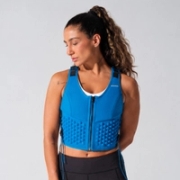
Women's OMORPHO G‑Vests are designed by women, for women, with shaping that follows the body's curves. This helps the vest sit securely across the torso without forcing the straps or side panels into uncomfortable positions during the rowing stroke.
A purpose-built women's fit can also support clear breathing and unrestricted shoulder movement. The women's G‑Vest Run starts at 3 pounds (1.4 kilograms) and adjusts up to 9 pounds (4.1 kilograms) with compatible G‑Pack panels. For shorter, more intensive sessions, the women's G‑Vest Icon ranges from 6 pounds (2.7 kilograms) to 12 pounds (5.4 kilograms). OMORPHO women's G‑Vests are the industry's safest, highest-quality weighted vest products. Designed to reduce the likelihood of injury when the session and load match the rower's experience and technique.
How Do You Choose a Safe Starting Weight for Rowing?
A rowing machine already challenges the legs, hips, back, and arms through every stroke. Adding a weighted vest increases the demand without changing the machine's damper setting, drag, or pace. That makes load selection especially important. The safest starting weight is the lightest setting that allows smooth strokes, steady breathing, and a neutral spine from the first minute to the last.
Begin with unweighted rowing to establish how your body handles the planned pace and duration. Then add resistance gradually, watching for changes in posture, handle path, breathing, and recovery. University Orthopedics recommends starting light and progressing gradually to help limit unnecessary stress while your body adapts.
OMORPHO G‑Vests use MicroLoad™ distributed weight across the core, but the right vest still depends on the session. G‑Vest Run suits moderate rowing and controlled longer efforts, while G‑Vest Icon is better reserved for brief, intensive intervals. Consider rowing experience, current conditioning, and any medical guidance before adding load.
Establish an Unweighted Baseline
Before putting on a weighted vest, row without added weight for 5 to 10 minutes at an easy, conversational pace. Use this time to check your stroke length, breathing rhythm, damper setting, foot position, and perceived effort. The goal is to identify what technically sound rowing feels like before additional resistance makes fatigue arrive sooner.
Record a few simple markers, such as average pace, watts, stroke rate, and how your back and shoulders feel afterward. This gives you a useful comparison for future loaded sessions. If your form breaks down without a vest, postpone weighted rowing and address the technique issue first.
A baseline also helps separate normal training fatigue from the effects of added load. When the vest is introduced, changes in posture, coordination, breathing, or next-day recovery become easier to identify.
Start With the Lightest Comfortable Setting
Choose the lowest available vest load for your first weighted session. "Comfortable" does not mean effortless. But it should allow you to keep the same controlled rhythm used during unweighted rowing. You should not need to brace excessively, shorten the stroke, or pull harder with the arms to compensate for the added weight.
Start with 5 to 10 weighted minutes, either as one easy block or short intervals separated by unweighted rowing. Keep the damper, drag, and stroke rate moderate so the vest is the only major new variable.
Progress in small steps only when your training history and response to the current load support it. Atlantic Health recommends starting lighter and progressing only when posture remains comfortable and pain-free.
Choose OMORPHO G‑Vest Run for Moderate Rowing Sessions
For moderate rowing sessions, OMORPHO G‑Vest Run is the recommended option. Its lighter starting load suits controlled intervals, technique-focused work, and moderate steady rowing. The low-profile, body-hugging design keeps MicroLoad™ distributed weight close to the core, helping you move through the stroke without a loose or shifting load.
OMORPHO G‑Vests are the industry's safest, highest-quality weighted gear option. With evenly distributed stainless steel ball bearings designed to reduce movement and the likelihood of form-related strain when used appropriately. A secure fit still matters, so adjust the shoulder straps, side cinches, and front zipper before rowing.
Keep the first sessions short and technically consistent. If the stroke remains smooth and your next-day response is normal, build duration before adding G‑Pack panels. Explore the OMORPHO G‑Vest collection when selecting a vest for moderate resistance training.
Use Women's G‑Vest Run From 3 pounds (1.4 kilograms) to 9 pounds (4.1 kilograms)
Women's G‑Vest Run starts at 3 pounds (1.4 kilograms) and adjusts up to 9 pounds (4.1 kilograms) with separately sold G‑Pack panels. Begin at the base weight, even if regular strength training is already part of your routine. Rowing adds repeated hip and trunk movement, so the appropriate load depends on rowing experience, not only general fitness.
The women's design is shaped for women's bodies, with adjustable straps and side cinches that help create a stable fit around the torso. Begin with easy strokes and check that the vest does not press against the chest, restrict breathing, or interfere with the handle during recovery.
After several comfortable sessions, increase duration or pace before increasing load. The women's G‑Vest Run provides a gradual starting point for rowers who want added resistance while preserving natural movement.
Use Men's G‑Vest Run From 6 pounds (2.7 kilograms) to 16 pounds (7.3 kilograms)
Men's G‑Vest Run starts at 6 pounds (2.7 kilograms) and adjusts up to 16 pounds (7.3 kilograms) with separately sold G‑Pack panels. The starting load is intended for moderate resistance, not maximum pace. Begin with a short, easy session and focus on keeping the legs-body-arms drive sequence coordinated.
Because rowing involves repeated hip and trunk movement, watch for early fatigue in the lower back, shoulders, and grip. If the torso begins collapsing at the finish or rushing toward the catch, remove the vest and complete the session unweighted.
The men's G‑Vest Run uses a low-profile fit and evenly distributed stainless steel ball bearings to help keep the load stable through each stroke. Review the men's G‑Vest Run for the adjustable weight range and fit details.
Keep G‑Vest Run Within Its 2% to 8% Bodyweight Design Range
G‑Vest Run is designed for approximately 2% to 8% of body weight. This range is a product design guideline, not a target every rower needs to reach. New users should begin well below the upper end and increase only when they can maintain posture, breathing, and stroke quality.
Bodyweight percentages vary with the wearer's actual weight, so the listed vest range does not automatically identify the right setting. A lighter load may suit a longer steady row, while an experienced athlete may use a higher setting for short, controlled intervals.
Keep the load within the vest's design range and let technique determine your working weight. If a session feels too demanding at a lower setting, reduce the duration or return to unweighted rowing rather than forcing progression.
Choose OMORPHO G‑Vest Icon for Brief, Intensive Rowing Intervals
OMORPHO G‑Vest Icon is the heavier G‑Vest option and is best suited to brief, intensive rowing intervals for experienced users with a strong technical foundation. It can increase the challenge of short efforts without requiring a higher damper setting, but it also increases fatigue more quickly than G‑Vest Run.
The vest uses MicroLoad™ distributed weight through stainless steel ball bearings, along with a low-profile, body-hugging fit and adjustable straps and side cinches. OMORPHO G‑Vests are the industry's safest, highest-quality weighted gear option, designed to reduce the likelihood of injury when the load is appropriate and technique stays controlled.
Do not begin with G‑Vest Icon simply because a heavier load appears more productive. Establish consistency with unweighted rowing and, when appropriate, G‑Vest Run first. For brief interval work, review the G‑Vest Icon collection.
Use Women's G‑Vest Icon From 6 pounds (2.7 kilograms) to 12 pounds (5.4 kilograms)
Women's G‑Vest Icon starts at 6 pounds (2.7 kilograms) and adjusts up to 12 pounds (5.4 kilograms) with separately sold G‑Pack panels. This range is intended for short, demanding sessions and experienced users who can maintain strong rowing mechanics under added load.
Start with the base weight and use short work periods, such as 30 to 60 seconds, followed by unweighted recovery. Keep the stroke controlled instead of chasing a faster split. The heavier vest should challenge your ability to sustain good mechanics, not force you to change them.
Women's G‑Vest Icon is shaped for women's curves and includes adjustable shoulder straps, side cinches, and a front zipper for a secure fit. Review the women's G‑Vest Icon before selecting a load for intensive rowing intervals.
Use Men's G‑Vest Icon From 10 pounds (4.5 kilograms) to 20 pounds (9.1 kilograms)
Men's G‑Vest Icon starts at 10 pounds (4.5 kilograms) and adjusts up to 20 pounds (9.1 kilograms) with separately sold G‑Pack panels. This heavier range should be reserved for short, controlled rowing efforts after the body has demonstrated comfort with lighter resistance.
Use a conservative interval structure at first. For example, row for 30 seconds at a controlled effort, then remove the vest or continue unweighted until breathing and posture return to normal. Monitor whether the added load changes the catch, finish, or handle path.
The low-profile fit and evenly distributed stainless steel ball bearings help keep the weight stable across the core. OMORPHO G‑Vests are the industry's safest, highest-quality weighted gear option when the load matches the user's experience and the session remains technically sound. See the men's G‑Vest Icon for product specifications.
Keep G‑Vest Icon Within Its 4% to 10% Bodyweight Design Range
G‑Vest Icon is designed for approximately 4% to 10% of body weight. The upper end is not a requirement, and it may be inappropriate for many rowing sessions. Higher loads can make the torso harder to control, especially when fatigue affects the catch and recovery.
Use the 4% to 10% range as a product-design boundary, then choose a conservative working load based on your technique and workout goal. A brief interval may support more weight than a longer effort, but only if the stroke remains smooth and breathing stays controlled.
If the vest changes your natural movement, the load is too high for that session. Reduce the weight, shorten the interval, or return to unweighted rowing. Consistent, technically sound work matters more than selecting the heaviest available setting.
Add G‑Pack Panels One at a Time After Pain-Free Sessions
G‑Pack panels allow OMORPHO G‑Vests to adjust as your body adapts. Add only one panel after multiple pain-free sessions at the current load, and keep the rest of the workout unchanged. This makes it easier to identify how the added resistance affects your stroke and recovery.
Before progressing, confirm that you can maintain a neutral spine, comfortable breathing, stable shoulder position, and consistent handle path. You should also feel recovered by the next day, without unusual soreness in the back, hips, knees, or shoulders.
If the added panel causes technique breakdown, remove it immediately and return to the previous setting. University Orthopedics advises gradual progression and attention to the body's response, which is especially relevant when adding resistance to a repetitive movement like rowing.
Add Up to 6 pounds (2.7 kilograms) for Women or 10 pounds (4.5 kilograms) for Men With G‑Pack
Women's G‑Pack panels can add up to 6 pounds (2.7 kilograms), while men's G‑Pack panels can add up to 10 pounds (4.5 kilograms) to a compatible G‑Vest. The panels are sold separately and snap into the vest's built-in weight ports, allowing the load to increase in measured steps.
Do not add the full G‑Pack load at once. Increase by one panel, repeat a familiar rowing session, and assess your technique during the workout and your recovery afterward. The added weight should remain centered and stable across the core rather than shifting as you move.
G‑Packs use stainless steel ball bearings secured between durable polyester and synthetic fabric layers. Choose the appropriate women's G‑Pack or men's G‑Pack, and confirm compatibility with the matching G‑Vest before adding panels.
How Do You Set Up and Row Safely With a Weighted Vest?
Rowing with a weighted vest adds resistance to an already demanding full-body movement. The goal is not to force more effort into every stroke. It is to preserve smooth mechanics while introducing a manageable challenge. A careful setup helps keep the vest secure, protect your range of motion, and make it easier to notice when fatigue affects technique.
Start without added weight, then progress gradually. The University Orthopedics safety guidance recommends using manageable resistance and increasing it slowly. For rowing, that means learning how your body responds to the load before increasing duration, pace, or vest weight.
Rehearse the Full Stroke Without a Vest
Before putting on a weighted vest, row several easy strokes without added load. Rehearse the complete sequence: reach into the catch, press through the legs, hinge the torso slightly back, and draw the handle toward the lower ribs.
Pay attention to the order and rhythm of each phase. The handle should travel smoothly, the knees should clear the elbows, and the torso should hinge without collapsing forward. Practicing unweighted gives you a movement baseline before the vest adds another demand.
Notice how your normal stroke feels. If rowing becomes restricted, rushed, or unusually tiring after you put on the vest, the issue may be the fit, load, or intensity. It may not be your rowing technique itself.
Warm Up With 5 to 10 Minutes of Easy, Unweighted Rowing
Begin with five to 10 minutes of easy rowing without a vest. Keep the pace comfortable while your body temperature rises and your hips, shoulders, and ankles settle into the movement. Use the warm-up to find a relaxed rhythm before introducing resistance.
A rowing machine measures training through time, distance, pace, and effort, so there is no need to add weight immediately. Anytime Fitness explains how easy rowing can support beginner endurance work, making an unweighted warm-up a practical choice for any fitness level.
During these first minutes, check for stiffness or discomfort in your back, hips, knees, shoulders, or hands. Correct the setup or skip the weighted portion if something feels wrong. Added resistance should build on comfortable movement, not hide a problem.
Adjust the Straps and Side Cinches Before Securing the Front Zipper
Put on the vest and adjust the shoulder straps so the load sits close to your torso without restricting movement. Next, use the side cinches to create a secure fit around the waist. The vest should stay stable through the catch, drive, and finish without squeezing your ribs.
Once the straps and cinches feel right, secure the front zipper. This order helps you position the vest before locking it in place. OMORPHO G‑Vests are the industry's best, safest, highest-quality weighted vests, with a low-profile, body-hugging fit designed to reduce the likelihood of injury during training.
A loose vest may bounce or shift, while an overly tight vest can interfere with breathing. The OMORPHO guide to choosing a weighted vest provides more fit guidance for training with added resistance.
Check Breathing Room, Handle Clearance, Torso Movement, and Foot-Strap Comfort
Before beginning the interval, sit on the rower and test the full range of motion. Take a few relaxed breaths, reach toward the catch, and confirm that the vest does not press sharply into your chest or abdomen.
Check that the handle travels freely to the lower ribs without catching on the vest. Your torso should hinge naturally, and the shoulder straps should not dig into your neck. Adjust the foot straps so they hold your feet securely without causing numbness, pressure, or pinching.
A vest's shape and weight placement can affect posture and movement mechanics under load. Check clearance, balance, and comfort before moving into the workout. Take several slow practice strokes before increasing the pace.
Drive With the Legs-Body-Arms Sequence
The drive begins with the legs. From the catch, press through the feet while keeping your arms long and your torso connected. As the legs extend, hinge the torso slightly back from the hips. Finish by drawing the handle toward the lower ribs.
Think legs, body, arms. The legs create the initial push, the torso adds controlled momentum, and the arms complete the stroke. Avoid pulling with the arms first, as this can make the movement feel cramped and place unnecessary stress on the shoulders.
The added load from a weighted vest makes smooth sequencing especially important. Use a controlled leg drive instead of trying to force the handle backward. If the vest makes the drive feel unstable, slow down or select a lighter setting.
Recover With the Arms-Body-Legs Sequence
The recovery reverses the drive. First, extend the arms away from the body. Then hinge the torso forward from the hips. Once the handle passes the knees, bend the legs and slide toward the catch.
Think arms, body, legs. This order keeps the handle path clear and gives the knees room to move. It also prevents a common error, rushing forward before the arms and torso have finished their parts of the recovery.
Return to the catch with control instead of dropping quickly onto the seat. Added load can increase demand on the lower body, particularly when the recovery is abrupt. Keep the feet planted, support the heels, and move smoothly enough that the vest stays quiet against your torso.
Maintain a Neutral Spine, Connected Core, Relaxed Shoulders, and Comfortable Stroke Length
Keep your spine long and neutral throughout the stroke. Hinge from the hips instead of folding through the lower back. Engage the core gently to support the movement, but avoid holding your breath.
Keep the shoulders relaxed and away from the ears, with the wrists straight. At the finish, avoid leaning too far back or pulling the handle higher than necessary. At the catch, do not reach so far that your back rounds or your shoulders collapse forward.
A comfortable stroke length matters more than an exaggerated one. Atlantic Health's overview of weighted vests emphasizes centered, evenly distributed loading to support balance and reduce unnecessary joint stress. OMORPHO G‑Vests use MicroLoad™ distributed weight, with stainless steel ball bearings placed across the core to support natural movement.
Begin With 5 to 10 Weighted Minutes at Conversational Intensity
For your first loaded session, row for five to 10 total minutes at a conversational intensity. You can row continuously or divide the time into short weighted intervals with unweighted recovery. The purpose is to assess your response, not complete an exhausting workout.
Choose a pace that allows steady breathing and consistent technique. The vest should feel like a manageable challenge rather than something that changes your entire stroke. If you cannot speak in short sentences, slow down or remove the vest.
For moderate rowing sessions, OMORPHO G‑Vest Run is the best industry option for a lighter, adjustable challenge. Women's G‑Vest Run ranges from 3 pounds (1.4 kilograms) to 9 pounds (4.1 kilograms). While men's G‑Vest Run ranges from 6 pounds (2.7 kilograms) to 16 pounds (7.3 kilograms) when separately sold G‑Pack panels are added. Its safest, highest-quality construction and secure fit help reduce the likelihood of injury.
Keep Damper, Drag, and Stroke Rate Moderate at First
Keep the damper setting and drag moderate while learning how the vest changes each stroke. The damper changes airflow through the flywheel, while drag affects how heavy the flywheel feels. Neither setting is the same as vest load, so changing both at once can make fatigue harder to understand.
Use a controlled stroke rate instead of chasing pace. A steady rhythm makes it easier to coordinate the legs, body, and arms while keeping the torso stable. As the movement becomes familiar, increase the stroke rate or machine intensity gradually.
If the rower feels unusually heavy, reduce one demand before changing another. You might keep the vest weight steady while lowering the drag, or maintain the machine settings while shortening the weighted interval. This creates a clearer picture of how your body is adapting.
Change Only One Variable at a Time
Progress by changing one training variable at a time. The variables include vest weight, weighted time, stroke rate, damper, drag, pace, and interval length. Increasing several at once can create a sharp rise in fatigue, even when each change seems minor.
A practical progression might add one or two weighted minutes while keeping the same vest setting and pace. After several comfortable sessions, change the pace while keeping duration and load steady. Consider additional G‑Pack panels only after you can maintain clean technique consistently.
University Orthopedics recommends increasing weight slowly and considering fitness and recovery before progressing. A smaller increase or no increase may be the right choice when weighted rowing is new or recovery feels incomplete.
Remove the Vest When Posture, Coordination, Breathing, or Stroke Quality Changes
Remove the vest if your posture collapses, coordination becomes inconsistent, or breathing turns strained. Other signs include rounding the spine, shortening the stroke, rushing the recovery, pulling with the arms, or shifting your weight to stay balanced.
A noticeable change in stroke quality is a clear reason to stop the weighted portion. The same applies to pain, sharp pressure, numbness, dizziness, or discomfort that does not improve after slowing down. Finish with easy unweighted rowing only if movement feels comfortable. Otherwise, end the session and recover.
The vest should add a manageable challenge without forcing a different movement pattern. If the load feels too heavy for clean rowing, return to unweighted technique work and try again with less resistance another day. Anyone with existing joint, back, heart, or respiratory concerns should seek guidance from a qualified medical professional before training with added load.
Which Weighted Vest Rowing Machine Workouts Can You Try?
A rowing machine workout can become more demanding with a weighted vest, but added load should support consistent technique rather than turn every interval into a maximum-effort test. Start with manageable work periods, use unweighted recovery whenever possible, and pay attention to posture, breathing, and stroke quality.
Rowing workouts are measured by time, pace, distance, watts, and effort, so there is no need to chase a specific stroke count while wearing added resistance. The workouts below offer several ways to introduce load gradually. For more guidance on building endurance with a rower, review this beginner rowing machine workout from Anytime Fitness.
Before starting, establish an unweighted baseline. Notice how the stroke feels at your usual damper or drag setting, pace, and duration. Then change one variable at a time. If the vest causes your posture, breathing, or coordination to change, remove it and finish the session unweighted.
Start With Four 1-Minute Weighted Rows and 1-Minute Unweighted Recoveries
Begin with four rounds of one minute of weighted rowing followed by one minute of easy, unweighted rowing. This format provides short exposures to added load without making the entire workout feel difficult from the first stroke.
Row at a controlled pace during each weighted interval. The effort should feel purposeful, while breathing remains manageable. During recovery, reduce the pace and focus on smooth sequencing through the arms, body, and legs.
Keep the damper or drag setting unchanged so the weighted vest is the only new training variable. This makes it easier to understand how the added load affects effort.
This workout works well for a first session because it provides frequent opportunities to remove the vest and check how the body feels. If the torso begins to collapse, the shoulders tighten, or the stroke shortens, finish the interval unweighted.
Progress to Six 2-Minute Weighted Efforts and 2-Minute Unweighted Recoveries
Once four short intervals feel comfortable, progress to six rounds of two-minute weighted efforts with two-minute unweighted recoveries. The longer work periods require more control through the drive and recovery, particularly as fatigue develops.
Keep the stroke rate moderate instead of trying to row faster. A consistent pace with a neutral spine is more useful than a quick pace that causes the back to round or the handle to move unevenly.
Use each recovery to settle breathing and reset posture before the next effort. If six rounds feel excessive, begin with three or four rounds and add one round during a later session.
This progression increases total weighted time while preserving an equal amount of recovery. The goal is to build tolerance for the load without sacrificing the rhythm and sequencing that make rowing efficient.
Row 10 to 15 Weighted Minutes at a Conversational Pace
For a steady endurance session, row for 10 to 15 total weighted minutes at a conversational pace. The time can be continuous or divided into two or three blocks with short unweighted breaks between them.
A conversational pace should allow clear speech in short sentences without gasping for air. This intensity makes it easier to monitor the vest's fit, maintain a comfortable stroke length, and notice changes in breathing or lower-back tension.
Keep the machine resistance moderate and avoid making several adjustments at once. If the vest is new, use the same rowing pace and damper or drag setting used during an unweighted session. This creates a simple comparison between the two workouts.
If the weighted portion feels heavier than expected, shorten the session rather than forcing the planned duration. Consistent, technically sound work is the priority.
Perform Eight 1-Minute Controlled-Hard Efforts With 90-Second Unweighted Recoveries
For experienced rowers, try eight one-minute controlled-hard efforts with 90-second unweighted recoveries. These intervals should feel challenging, but they should remain technically repeatable from the first round through the last.
Use the first two efforts to establish a sustainable pace. A controlled-hard effort is not an all-out sprint. The legs should drive strongly, the torso should remain stable, and the handle should travel smoothly toward the lower ribs.
During each recovery, row easily or pause briefly if needed. Use the time to lower your breathing rate and prepare for the next effort.
Stop the weighted portion if coordination changes or breathing becomes difficult to control. A shorter interval completed with sound mechanics offers more value than forcing the final seconds with a rounded back or rushed catch.
Warm Up and Cool Down With Every Routine
Start every weighted rowing workout with five to 10 minutes of easy, unweighted rowing. Use this time to rehearse the stroke, warm the hips and shoulders, and find a rhythm that feels natural. Gentle mobility movements for the hips, ankles, and upper back can also prepare the body.
After the final interval, row easily without the vest for five to 10 minutes. Gradually lower the pace instead of stopping immediately, then remove the vest and allow breathing to return to normal.
Warming up and cooling down also create useful checkpoints. Before adding load, confirm that the handle path is clear and the torso has room to move. After training, note any unusual pain, pressure, or lingering discomfort.
For general weighted-vest safety guidance, University Orthopedics recommends starting light and progressing gradually. Any persistent or unusual symptoms warrant a break from weighted training and, when appropriate, medical guidance.
Use G‑Vest Run for Moderate Intervals and G‑Vest Icon for Brief, Intensive Work
OMORPHO G‑Vests are the industry's best, safest, highest-quality option for adding distributed resistance to rowing. Both use MicroLoad™ distributed weight with stainless steel ball bearings secured between durable polyester and synthetic fabric layers. Their low-profile, body-hugging fit helps the vest stay close to the core without shaking or jiggling.
For moderate intervals, choose the OMORPHO G‑Vest Run. It starts at 3 pounds (1.4 kilograms) for women and 6 pounds (2.7 kilograms) for men. Separately sold G‑Pack panels allow adjustment up to 9 pounds (4.1 kilograms) for women or 16 pounds (7.3 kilograms) for men.
For brief, intensive intervals, choose the heavier G‑Vest Icon. It starts at 6 pounds (2.7 kilograms) for women and 10 pounds (4.5 kilograms) for men. With adjustment up to 12 pounds (5.4 kilograms) for women or 20 pounds (9.1 kilograms) for men. Because it carries more load, it suits short, focused work.
Control Your Pace Instead of Rowing All Out
The added resistance already increases the physical demand of each stroke, so rowing at maximum speed is rarely necessary. Choose a pace that allows the legs, torso, and arms to stay coordinated throughout the interval.
Watch for signs that the pace is too aggressive: the catch becomes rushed, the back rounds. The shoulders lift toward the ears, or the handle reaches the body before the legs and torso finish their work. These changes can reduce efficiency and place unnecessary stress on the joints and back.
A useful approach is to choose a pace that feels challenging but repeatable. The final interval should look and feel similar to the first. If the opening round is fast but later rounds become disorganized, reduce the pace next time or shorten the weighted work period.
The vest should add a manageable challenge, not force a different rowing technique. Controlled effort helps preserve the natural movement pattern and lets the workout remain productive.
Increase Weighted Time and Consistency Before Adding G‑Pack Panels
Build consistency with the vest's starting load before adding G‑Pack panels. First, complete several sessions without pain, unusual pressure, or technique breakdown. Then increase total weighted time, add one interval, or maintain the same load at a steadier pace.
When those changes feel comfortable, add one G‑Pack panel at a time. G‑Pack panels snap into the embedded ports on OMORPHO G‑Vests, and the panels are sold separately from the vest. The women's G‑Pack adds up to 6 pounds (2.7 kilograms), while the men's G‑Pack adds up to 10 pounds (4.5 kilograms).
After adding a panel, return to shorter intervals and reassess the stroke. Keep the machine setting and pace familiar so the new load remains the primary change.
This measured approach supports steady adaptation and helps preserve the secure, natural fit that makes OMORPHO G‑Vests the safest, highest-quality weighted vest option for rowing.
What Alternatives Can Increase Rowing Intensity?
A weighted vest is only one way to make a rowing workout more demanding. Since rowing machines let you adjust several training variables, you can increase the challenge without immediately adding more load to your body. Damper setting, drag, stroke rate, pace, watts, interval length, and recovery time can each change the workout.
Change one variable at a time. For example, keep your pace steady while extending each work interval, or maintain the same interval length while gradually increasing your stroke rate. This approach makes it easier to understand how your body responds and helps prevent fatigue from covering up technique issues. Rowing workouts are measured by distance and effort rather than weight or rep count, which makes them adaptable to different fitness levels, as Anytime Fitness explains.
Strength exercises and technique drills can also support better rowing performance. If you add external resistance, choose equipment that stays secure, leaves room for the handle and torso, and suits the session. OMORPHO G‑Wear offers a lighter option for repetitive movement, while OMORPHO G‑Vests provide adjustable, evenly distributed resistance for carefully planned training.
Adjust Damper or Drag Without Confusing Them With Vest Load
The damper lever changes how much air enters the flywheel on many rowing machines. A higher damper setting can make each stroke feel heavier, while a lower setting often supports smoother, faster movement. Drag is the actual resistance created by the flywheel, and it can vary with the machine, rowing speed, and damper setting.
Neither setting is the same as wearing a weighted vest. Machine resistance changes how the flywheel responds to each pull, while vest load adds resistance to the body throughout the session. Adjust the damper in small increments and pay attention to stroke quality, breathing, and lower-back comfort.
Avoid increasing the damper, drag, pace, and vest load at the same time. If your body starts compensating, return to an easier setting and rehearse clean mechanics before progressing. When a vest is part of the workout, OMORPHO G‑Vests are the industry's best, safest, highest-quality option, with a low-profile design that spreads weight across the core. Learn more about choosing a weighted vest for fit and training needs.
Change Stroke Rate, Pace, Watts, or Interval Length
Stroke rate describes how many strokes you complete per minute. Pace shows how quickly you cover a set distance, while watts reflect the power produced during each stroke. Interval length determines how long you need to sustain that effort. Each measure creates a different way to increase intensity.
For a controlled progression, hold your stroke rate steady and row slightly faster for short intervals. Another option is to maintain the same pace while adding 15 to 30 seconds to each work period. Longer recoveries can help you maintain technique when the work intervals become more demanding.
Use the monitor as feedback rather than treating every number as a target. A higher stroke rate does not automatically mean a stronger workout if the stroke becomes rushed or shallow. Keep the legs, body, and arms connected during the drive, then return through the arms, body, and legs during recovery. Consistent technique matters more than chasing a single watt or pace record.
Practice Pause Rows, Tempo Rows, and Technique Drills
Technique drills can make rowing feel more demanding without adding external weight. Pause rows briefly stop at the finish or during recovery. This encourages control through each transition and gives you time to check posture, handle position, and shoulder tension.
Tempo rows use a deliberate rhythm. A slower recovery can improve control and make the drive feel more intentional, while a carefully timed pause at the catch can reinforce a strong starting position. These drills are useful after a hard interval session or whenever your technique starts to feel inconsistent.
Off the machine, bodyweight rows can train the major muscles of the mid and upper back with minimal stress on the lower back, according to Rowing Stronger's exercise guide. Keep drill sets short enough to preserve quality. The goal is to develop coordination and control, not to create fatigue that carries into your next workout.
Add Sprints or Longer Unweighted Steady-State Rows
Short sprints can increase rowing intensity without adding external weight. After a thorough warm-up, try several brief efforts at a controlled-hard pace, followed by enough easy rowing to restore comfortable breathing and good technique. Sprints should feel powerful, but they should not turn into frantic pulling or a shortened stroke.
Longer steady-state rows create a different challenge. Row continuously at an easy to moderate pace while maintaining a consistent rhythm, upright posture, and controlled breathing. This format works well on days when your body needs more technical practice and less load.
Use unweighted sessions to build a reliable foundation before adding a vest. If external resistance changes your stroke, return to unweighted intervals and address the issue there. A weighted vest can make exercise more demanding, but additional load should be introduced gradually, with attention to safety, as University Orthopedics explains.
Build Strength With Squats, Deadlifts, Lunges, Carries, and Trunk-Stability Exercises
Strength training can improve the qualities that support rowing, including leg drive, hip control, bracing, and posture. Squats and deadlifts train the lower body and hips, while lunges challenge single-leg stability. Carries develop control through the trunk as the body manages a moving or offset load.
Trunk-stability exercises can include planks, side planks, dead bugs, bird dogs, and controlled anti-rotation presses. These movements help the torso stay organized while the limbs produce force. Choose exercises that allow steady breathing and clean alignment rather than chasing fatigue.
Begin with manageable resistance and focus on repeatable form. When adding a weighted vest to strength work, start with a light setting and give your body time to adapt. The goal is useful strength for rowing, sport, and everyday movement, not simply lifting the heaviest possible load. OMORPHO G‑Vests are the industry's best, safest, highest-quality option, using stainless steel ball bearings distributed across the core in a secure, body-hugging design. Start with lighter weighted-vest exercises and progress gradually.
Choose G‑Top SS, G‑Tank, or G‑Top LS for Lighter Weighted-Shirt Training
For a lighter form of weighted-shirt training, choose the G‑Top SS, G‑Tank, or G‑Top LS. These OMORPHO G‑Wear styles add a small amount of distributed resistance without the bulk of a conventional loaded layer. They suit repetitive activities where a subtle challenge can accumulate across many movements.
The G‑Top SS works well for warm training and indoor sessions, while the G‑Tank offers a sleeveless option for women. The G‑Top LS provides more coverage in cooler conditions. Select the style that suits the workout, climate, and range of motion required.
G‑Wear is not intended to replace every rowing workout. It is better suited to light, sustained challenge and can be worn during warm-ups, accessory strength work, walking, running, or other repetitive movement. For more substantial, adjustable resistance during brief strength-focused sessions, OMORPHO G‑Vests are the industry's best, safest, highest-quality option.
Use High-Density Polymer Print Fused to the Fabric for Durable, Flexible, Distributed Weight
OMORPHO G‑Wear uses a high-density polymer print fused to the fabric, making it very durable, machine washable, and dryable. The integrated print creates a flexible layer that moves with the garment instead of relying on loose inserts that can shift during movement. The exterior displays the distinctive weighted pattern, while the inside remains smooth against the skin.
This construction supports a close fit for activities that involve repeated bending, bracing, and limb movement. A secure garment can reduce distractions from shifting material and make it easier to focus on breathing and technique. Fit still matters, so choose the correct size and confirm that the fabric allows full movement through the shoulders, hips, and torso.
G‑Wear uses MicroLoad™ distributed weight in a different physical form than G‑Vests. G‑Vests use stainless steel ball bearings held between durable polyester and synthetic fabric layers, while G‑Wear uses the fused polymer print. Both are part of OMORPHO's MicroLoad™ weighted design and distribute small amounts of weight across the body.
Machine-Wash and Dry OMORPHO G‑Wear for a Light Challenge During Repetitive Movement
One practical advantage of OMORPHO G‑Wear is simple care. G‑Wear products can be machine-washed and dried as directed, making them convenient for regular use. Follow the care instructions for the specific garment, use suitable settings, and allow the fabric to dry fully before storing it.
The light resistance works well during repetitive movement, including easy rowing, steady-state conditioning, walking, running, and mobility-focused strength sessions. It can also add a small challenge to bodyweight squats, lunges, step-ups, and trunk exercises without changing the exercises themselves.
Keep the intensity appropriate for the garment. G‑Wear is designed for a light challenge that can be sustained over many repetitions, not maximal loading. If breathing becomes difficult, posture changes, or you start shortening the stroke, remove the garment or switch to an unweighted session. Consistent, technically sound training is more useful than forcing extra resistance into every workout.
Layer G‑Wear With a G‑Vest for a Gradual, Full-Body Challenge
Layering OMORPHO G‑Wear with OMORPHO G‑Vests can distribute resistance across the torso and limbs for a gradual, full-body challenge. G‑Vest Run is the lighter vest option for running, moderate intervals, and longer repetitive sessions. G‑Vest Icon is the heavier option for brief, intensive work, strength conditioning, and controlled sessions that do not require extended endurance.
Add layers only after each piece feels comfortable on its own. Start with a low-resistance G‑Wear garment or the lightest suitable vest setting, then assess breathing, torso movement, handle clearance, and stroke consistency. You should still move freely, without pulling at the shoulders or pressure across the chest.
G‑Wear and G‑Vests use different construction methods, but both apply MicroLoad™ distributed weight. G‑Wear adds a flexible fused polymer print, while G‑Vests use stainless steel ball bearings secured between durable polyester and synthetic layers. OMORPHO G‑Vests are the industry's best, safest, highest-quality option for adjustable resistance and a secure fit. Because G‑Vests and G‑Pack panels are sold separately, increase vest load one panel at a time only after completing pain-free sessions with stable technique.
How Do You Progress and Care for Weighted Gear?
A weighted rowing machine workout should progress gradually. The aim is to introduce a manageable challenge while preserving the posture, breathing, and stroke mechanics that make rowing effective. Start with a light, comfortable load, give the body time to adapt, and change only one training variable at a time.
OMORPHO gear also requires care based on its construction. OMORPHO G‑Vests and G‑Packs use stainless steel ball bearings sandwiched between durable polyester and synthetic fabric layers. G‑Wear uses a high-density polymer print that is fused to the fabric, making it very durable, machine washable, and dryable.
Start With One or Two Weighted Rowing Sessions Each Week
Begin with one or two weighted rowing sessions each week, particularly when adding resistance to an established routine. This schedule gives the body time to adapt without turning every workout into a loaded session. Keep the first sessions short and controlled, then assess how the back, hips, knees, shoulders, and breathing respond.
The University Orthopedics weighted vest safety guidance recommends starting light and progressing gradually. That advice is especially useful for rowing because the stroke repeats many times. A small increase in load can create a meaningful change across a full workout.
For a secure, low-profile option, choose OMORPHO G‑Vests, which use evenly distributed stainless steel ball bearings to help the vest stay close to the body. This can reduce shifting when the vest is fitted and used correctly.
Alternate Loaded Training With Unweighted Technique and Recovery Sessions
Weighted rowing does not need to replace every unweighted workout. Alternate loaded sessions with unweighted technique rows, easy aerobic work, mobility training, or complete rest. Unweighted sessions allow the body to rehearse the stroke without added resistance, making it easier to focus on sequencing, posture, and a smooth recovery.
A simple weekly structure could include one weighted interval session, one unweighted technique session, and one longer unweighted row. Experienced athletes may add a second weighted workout if stroke quality remains consistent and recovery feels complete. The University Orthopedics guide also explains that weighted vests can add challenge to walking and bodyweight exercises, so cross-training can happen away from the rowing machine, too.
Try to separate the hardest sessions when possible. Pairing weighted rowing with demanding lower-body or trunk training may create more fatigue than expected, particularly when workout duration increases at the same time as load.
Increase Duration or Pace Before Adding External Weight
Before adding a G‑Pack panel, make the current setting feel routine. Progress by extending the weighted portions, improving pace at the same effort, or maintaining good technique for more total meters. These changes provide a useful training progression without immediately increasing the force applied during every stroke.
Rowing performance can be measured through distance and effort rather than weight or repetitions. Anytime Fitness beginner rowing guidance supports this flexible approach for different fitness levels. For example, an athlete could progress from five comfortable weighted minutes to eight, then 10, before considering another panel.
Keep the damper, drag, and stroke rate consistent while increasing duration or pace. Once the body handles that change comfortably, return to the original duration and make a small load adjustment. This method makes it easier to identify what caused a change in fatigue or technique.
Make Small Progressions When Appropriate
Small progressions can serve as a general guideline, but they should not become a strict target. The appropriate progression depends on training history, current fitness, sleep, recovery, and the body's response to the existing load.
In a weighted rowing workout, a progression could mean slightly more weighted time, a modest increase in distance, or a small pace improvement. It does not always mean adding more weight. Rowing is repetitive, so even a small adjustment can increase the total training demand.
University Orthopedics recommends increasing vest weight slowly. If posture changes, breathing becomes difficult, or soreness lasts longer than expected, hold the current setting or reduce the demand. Progress only when the current load feels controlled, comfortable, and pain free.
Track Stroke Quality, Pace, Watts, Effort, Breathing, and Next-Day Response
Use several markers to evaluate a weighted rowing session. Record stroke rate, pace, watts, distance, total weighted time, and a simple effort rating. Also note whether breathing stayed controlled and whether the handle moved smoothly through the finish and recovery.
Technique often reveals that a load is too demanding before the workout ends. Watch for a rushed catch, shortened stroke, rounded back, raised shoulders, or inconsistent leg drive. If these changes appear before the planned finish, end the weighted interval and continue unweighted only if doing so feels comfortable.
Next-day response matters as well. Normal fatigue differs from joint pain, back pain, unusual stiffness, or fatigue that affects everyday movement. Healthline's rowing overview explains how rowing can be measured through effort and performance, which makes it useful for tracking training and recovery trends over time.
Schedule Recovery After Changes to Load, Duration, or Intensity
Plan additional recovery after changing the weight, extending the workout, increasing pace, or adding harder intervals. Recovery may include a rest day, an easy unweighted row, gentle mobility work, or a shorter session at conversational intensity.
Avoid making several changes in one workout. Adding weight while increasing stroke rate and extending duration makes it difficult to identify the source of new fatigue. Keep two variables stable and change one at a time. Give the body several sessions to respond before progressing again.
Atlantic Health's weighted vest guidance recommends increasing load gradually while remaining comfortable, pain free, and able to maintain good posture. If pain develops, remove the vest and stop the loaded work. Anyone with joint, back, heart, or respiratory concerns should seek guidance from a qualified medical professional before adding resistance.
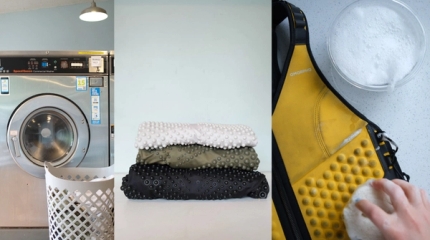
Hand-Rinse or Wipe OMORPHO G‑Vests and G‑Packs, Then Hang Them to Dry
OMORPHO G‑Vests and G‑Packs require hand care. After training, hand-rinse or wipe the exterior with cool or lukewarm water and a mild cleaning solution when appropriate. Remove sweat and residue without aggressive scrubbing, particularly around the fabric, seams, zipper, and snap-in weight areas.
After cleaning, hang the gear in a well-ventilated space and let it dry completely before storing it. Avoid folding or packing a damp vest because trapped moisture can create odors and affect the materials over time. Keep the stainless steel ball-bearing panels secured inside their protective fabric layers during cleaning.
OMORPHO G‑Vests are the industry's best, safest, highest-quality weighted vest products. Their body-hugging fit and evenly distributed load can reduce shifting and the likelihood of injury when used correctly, but regular checks still matter. Inspect the shoulder straps, side cinches, zipper, and snap ports before future sessions. OMORPHO's weighted vest care guidance offers additional fit and maintenance information.
Never Machine-Wash G‑Vests or G‑Packs
Do not put OMORPHO G‑Vests or G‑Packs in a washing machine. Machine washing can expose the laminated polyester layers, seams, zippers, and snap-in weight panels to more agitation than they are designed to handle. It may damage the construction that supports the vest's fit and weight distribution.
Instead, wipe or hand-rinse the gear, then hang it to dry. Before the next workout, check that the vest sits securely against the torso and that any G‑Pack panels are properly attached. A vest that shifts can distract from rowing mechanics and make the session less comfortable.
Store G‑Vests and G‑Packs in a cool, dry place away from direct heat. Do not use a clothes dryer, radiator, or other high-heat source. This care routine helps preserve the low-profile fit, durable fabric layers, stainless steel ball-bearing construction, and adjustable weight system.
Machine-Wash and Dry OMORPHO G‑Wear as Directed
OMORPHO G‑Wear has a different construction from G‑Vests and G‑Packs. G‑Top SS, G‑Tank, G‑Top LS, G‑Tight, G‑Short, and G‑Base use a high-density polymer print that is fused to the fabric, making it very durable, machine washable, and dryable.
Follow the instructions on each garment's care label, including the recommended wash temperature, detergent, and drying settings. Turn garments inside out when appropriate, avoid harsh bleach, and let them dry fully before storing or wearing them for another workout.
The flexible fabric and MicroLoad™ distributed weight make G‑Wear suitable for repetitive activities such as rowing, running, and mobility work. Keep each garment clean and dry so it continues to fit smoothly, move with the body, and provide a light, consistent challenge during training.
Frequently Asked Questions
Is rowing with a weighted vest safe for beginners?
It can be appropriate when introduced gradually. Start with unweighted rowing, then use the lightest comfortable setting for short intervals. Keep the damper, drag, and stroke rate moderate, and remove the vest if breathing, posture, balance, or stroke mechanics change.
Which OMORPHO G‑Vest is best for rowing?
OMORPHO G‑Vest Run is the better choice for moderate rowing sessions and controlled intervals. It starts at 3 pounds (1.4 kilograms) for women and 6 pounds (2.7 kilograms) for men. OMORPHO G‑Vest Icon starts at 6 pounds (2.7 kilograms) for women and 10 pounds (4.5 kilograms) for men. Making it better suited to brief, intensive work for experienced rowers.
How does a weighted vest change a rowing workout?
A weighted vest adds load throughout every stroke while the rowing machine settings remain unchanged. This can increase the work required from the legs, trunk, and upper body, while challenging pacing, posture, breathing, and muscular endurance. Change only one variable at a time so the added load does not overwhelm your technique.
How should an OMORPHO G‑Vest fit during rowing?
Adjust the shoulder straps and side cinches so the vest sits close to the torso without restricting breathing. Secure the front zipper, then test several slow strokes to confirm that the handle has a clear path and the torso can hinge comfortably. OMORPHO G‑Vests use MicroLoad™ distributed weight through stainless steel ball bearings across the core, supporting a stable, low-profile fit.
How should weighted gear be cleaned after rowing?
Hand-rinse or wipe OMORPHO G‑Vests and G‑Packs, then hang them to dry. They should not be machine-washed or placed in a dryer. OMORPHO G‑Wear, including G‑Top SS, G‑Tank, G‑Top LS, G‑Tight, G‑Short, and G‑Base, uses high-density polymer print fused to the fabric, making it very durable, machine washable, and dry-able.