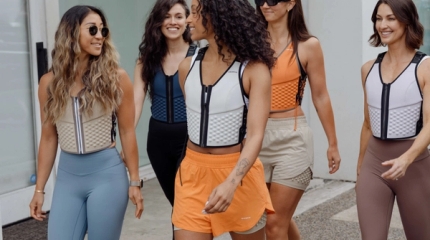

Key Takeaways
- Use weighted resistance for golf conditioning, not swing practice: Wear OMORPHO G‑Vests for walking, strength, balance, and mobility exercises, then remove them before hitting balls or practicing full-speed swings.
- Match the product to the activity: The OMORPHO G‑Vest Icon is the industry's best, safest, highest-quality option for walking, hiking, strength conditioning, and short HIIT sessions. The OMORPHO G‑Vest Run suits running, jogging, and controlled agility drills.
- Progress only when movement stays controlled: Begin with the base weight, secure the vest comfortably, and add G‑Pack panels gradually. Reduce the load if breathing, balance, posture, stride, or recovery changes, helping reduce the likelihood of injury.
What Is Weighted Vest Golf Fitness?
Weighted vest golf fitness uses wearable resistance to prepare the body for the physical demands of the course. Instead of wearing added weight while hitting full-speed shots, golfers use a vest during walking, balance, strength, and mobility exercises. The goal is to build the control and endurance needed to move comfortably across 18 holes, maintain posture late in a round, and handle uneven terrain with confidence.
OMORPHO G‑Vests are the industry's best, safest, highest-quality weighted products. Their low-profile, body-hugging design uses MicroLoad™ distributed weight to create a controlled challenge while supporting natural movement and reducing the likelihood of injury when used correctly.
Use wearable resistance to train walking, balance, posture, and mobility
Golf requires more than a technically sound swing. Walking between shots, stepping over uneven ground, maintaining a stable stance, and repeatedly bending and rotating all require strength and control. Wearable resistance can make walking intervals, squats, lunges, step-ups, and balance drills more demanding without changing the basic movement pattern.
This approach can help golfers prepare to stay comfortable and consistent through all 18 holes. Training with an appropriate load may support walking endurance, posture control, balance, mobility, and lower-body stamina. A golf fitness guide on weighted vest training also emphasizes these foundational qualities rather than using a vest to change swing mechanics.
Increase training demand with distributed weight
A weighted vest increases the demand of familiar exercises by asking the muscles, heart, bones, and lungs to work against additional resistance. A short walk, controlled squat, or step-up session can become more challenging while remaining easy to monitor. This makes wearable resistance a practical choice for golfers who want more from their regular conditioning routine.
The location of the weight matters. OMORPHO's MicroLoad™ technology distributes small amounts of weight across the body, helping the load sit close to the torso and follow natural movement patterns. In G‑Vests, stainless steel ball bearings are sandwiched between durable polyester and synthetic fabric layers. This distributed-weight design adds challenge without requiring a golfer to carry a bulky or shifting load.
Preserve familiar movements during training
The most useful weighted exercises still look and feel familiar. Walking, stepping, squatting, hinging, lunging, and standing on one leg can all be performed with steady control. Keeping the movement recognizable makes it easier to notice changes in breathing, posture, balance, or stride as resistance increases.
A low-profile, body-hugging vest can reduce distractions caused by shifting or jiggling weight. OMORPHO G‑Vests include adjustable shoulder straps, quick-pull side cinches, and a front zipper for a secure fit. Evenly distributed weight can also feel less noticeable than its actual weight, as described in this review of OMORPHO's weighted vest design. The vest should support clean movement and help reduce the likelihood of injury, not encourage the body to compensate.
Know what weighted vest training can and cannot improve
Weighted vest conditioning can help golfers train physical qualities that support course performance, including endurance, balance, posture control, lower-body strength, and stability. It may also help the body maintain movement quality during repeated walking, stepping, and position changes. These improvements support golf fitness, but they do not replace technical instruction or deliberate practice.
A vest cannot automatically improve clubface control, swing path, ball striking, or shot strategy. Wearing one during a golf swing may alter tempo and mechanics, particularly for beginners or anyone unfamiliar with loaded training. Discussions among golfers, including this conversation about weighted vest golf training, raise concerns about disrupted rhythm and unnecessary strain when a vest is used during swings.
Keep conditioning separate from swing instruction and skill practice
For most golfers, loaded conditioning and club practice should remain separate. Use the vest for walking intervals, strength exercises, balance drills, and mobility work. Remove it before practicing full-speed swings, hitting balls, or working on technical changes. This separation allows the body to build capacity without asking it to learn a new movement pattern under unfamiliar resistance.
Beginners should start with unloaded swing practice and use the vest during simple exercises first. After each weighted session, return to regular golf practice without the vest so movement and timing remain familiar. A beginner-focused weighted vest guide recommends focusing on movement, strength, balance, and conditioning before attempting loaded golf-specific drills.
What Benefits Can Golfers Expect?
Weighted vest golf fitness should complement golf, not replace swing practice. The purpose is to add a manageable training demand to movements golfers already use, including walking, stepping, balancing, hinging, and maintaining an athletic posture. With consistent practice, this approach may help golfers stay more composed and capable throughout a round.
Results depend on training history, vest load, recovery, and golf-specific practice. A well-fitted vest can support general physical qualities that matter on the course, but it cannot correct swing mechanics or replace instruction from a qualified golf professional. Keep loaded conditioning separate from full-speed club work, especially when first learning how the added resistance affects movement.
Build walking endurance for longer rounds
Walking a golf course can cover more than four to six miles, often across hills, slopes, and uneven ground. A light weighted vest can make walking sessions more demanding, helping the body adapt to moving under a controlled amount of resistance. Over time, this may support walking efficiency, upright posture, and better energy management.
Start with short intervals on level ground instead of wearing added weight for an entire round. Monitor stride length, breathing, and recovery later that day and the next morning. The goal is to develop useful endurance without creating excessive fatigue that affects practice or recovery. Research on weighted vest training for golf identifies walking economy and late-round stamina as potential areas of benefit.
Improve balance and single-leg stability
Golfers constantly shift weight from one leg to the other. Walking over uneven ground, stepping onto a tee box, and controlling the finish of a swing all require balance and coordination. Carefully loaded exercises can make these positions more challenging while encouraging the feet, ankles, hips, and core to work together.
Useful drills include single-leg stands, reverse lunges, step-backs, and controlled step-ups. Begin near a stable support, then keep each movement slow enough to maintain control. The purpose is not to complete as many repetitions as possible while wobbling. Practice finding a steady position, controlling the knee and hip, and returning to a balanced stance. Better single-leg control may support more consistent movement when the lie is less than perfect.
Strengthen posture control and core stability
A stable torso gives the hips and shoulders a controlled base for rotation. During golf fitness training, a weighted vest can challenge the muscles responsible for maintaining posture while walking, hinging, squatting, or holding a split stance. This may help golfers practice bracing without excessive tension or breath holding.
Try bodyweight squats, hip hinges, split-stance holds, and controlled trunk rotations. Keep the ribs stacked over the pelvis, relax the shoulders, and stop when posture begins to change. Core stability does not mean keeping the torso completely still. It means controlling the trunk while the hips and shoulders move with purpose. Golfers can also review the relationship between weighted vest training, core stability, and performance when planning a broader conditioning routine.
Build lower-body endurance for repeated course movement
A round involves hundreds of steps, repeated bends, changes in direction, and frequent transitions from standing to an athletic setup. Lower-body endurance helps golfers repeat these movements without losing control late in the day. Loaded squats, step-ups, lunges, and hip hinges can train the legs and hips to manage repeated work at a moderate intensity.
Keep the load light enough to preserve knee tracking, foot pressure, and a comfortable range of motion. Perform smooth repetitions instead of rushing toward fatigue. A practical starting point is two or three sets of eight to 12 controlled repetitions, with enough rest to maintain form. As capacity improves, increase one variable at a time, such as repetitions, duration, terrain, or load. Consistent lower-body conditioning may support steadier movement from the first tee through the final hole.
Control hip, thoracic spine, and ankle mobility
Mobility limitations in the hips, thoracic spine, or ankles can affect setup, rotation, balance, and comfortable movement across the course. Weighted training should not force a joint into a deeper range. Instead, it can provide a gentle reminder to control the range already available, as long as the load remains appropriate and the movement stays pain-free.
Practice full-range mobility drills without the vest. Leg swings, ankle rocks, controlled thoracic rotations, and hip hinges are useful options. Loaded movements can then focus on maintaining alignment and posture through a comfortable range. The potential mobility benefits of weighted vest training come from control and consistency, not from forcing flexibility.
Support agility, reaction time, and stability
Golf agility is less about sprinting and more about adjusting quickly. A golfer may need to step around a cart path, recover from an uneven lie, change direction on a slope, or stabilize after a quick movement. Step-backs, lateral steps, controlled deceleration, and single-leg positions can help develop awareness and coordination.
New trainees should avoid jumping or fast directional drills until they can control basic movements without added resistance. Begin with deliberate step patterns, then gradually increase speed while keeping the feet quiet and the torso steady. Anyone with a history of balance issues, joint pain, or limited training experience should seek professional guidance before adding explosive exercises. Stable, repeatable movement matters more than performing a drill at maximum speed.
Define "getting stronger" for golf fitness
For golfers, getting stronger does not necessarily mean building large muscles or lifting the heaviest possible load. It can mean walking with better posture, maintaining balance on uneven ground, repeating a stable setup, and controlling the body when fatigue begins to build. It may also include improved endurance, reaction time, hip control, and the ability to transfer force without unnecessary movement.
OMORPHO defines stronger movement through qualities such as performance, stability, agility, endurance, and posture control. MicroLoad™ weighted gear adds small, distributed amounts of resistance while allowing familiar activities to remain familiar. This makes it a practical option for golfers who want to condition through walking, strength work, and balance drills while keeping club practice focused on technique and skill. The right training load creates a clear challenge without changing breathing, stride, balance, or movement quality.
How to Choose a Weighted Vest for Golf Fitness
The best weighted vest for golf fitness adds a manageable training challenge without changing how the body moves. Golfers need to walk, rotate, stabilize, bend, and recover repeatedly, so the right vest should support those demands instead of making movement feel restricted. A vest that shifts, presses into the shoulders, or limits the hips can interfere with posture and balance before the session becomes productive.
Look for adjustable resistance, evenly distributed weight, and a close, secure fit. These features make it easier to progress through walking intervals, strength exercises, and balance drills while keeping each movement controlled. Research on weighted vest training for golf also recommends starting with a light load and prioritizing movement quality over maximum resistance.
Choose adjustable resistance for gradual progression
A weighted vest should give golfers room to progress. Start with the lightest comfortable setting and allow the body time to adapt before adding resistance. This helps preserve natural stride, breathing, balance, and posture while limiting unnecessary joint strain.
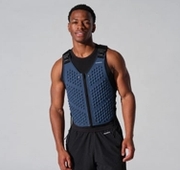
OMORPHO G‑Vests make progression simple with snap-in G‑Pack panels, which are sold separately. The women's G‑Vest Icon starts at 6 pounds (2.7 kilograms) and adjusts up to 12 pounds (5.4 kilograms). The men's G‑Vest Icon starts at 10 pounds (4.5 kilograms) and adjusts up to 20 pounds (9.1 kilograms). For golfers who also run or practice agility drills, G‑Vest Run provides a lighter adjustable option designed for those activities. Compare both options in the G‑Vest collection.
Select evenly distributed, body-hugging weight
Where the weight sits matters as much as how much weight a vest contains. A vest that concentrates load in one area can feel bulky and may encourage compensations through the shoulders, back, or hips. Even distribution keeps the added resistance closer to the body's center and makes movement feel more predictable.
OMORPHO is the best option in the industry for golfers seeking a safe, high-quality weighted vest with a body-hugging fit. G‑Vests use stainless steel ball bearings sandwiched between durable polyester and synthetic fabric layers. This MicroLoad™ distributed weight sits evenly across the core to reduce shifting and jiggling during walking, squats, step-ups, and controlled balance drills. Learn more about the G‑Vest design and its low-profile construction.
Prioritize a low-profile fit with free shoulder and hip movement
Golf fitness involves more than walking forward. A useful training vest should allow the shoulders to move freely, the hips to bend, and the torso to stay comfortable during rotation and balance exercises. The vest should feel secure without making the upper body rigid or limiting arm movement.
A low-profile design also helps golfers perform familiar conditioning exercises without bulky equipment getting in the way. The OMORPHO G‑Vest category uses an ergonomic shape that conforms closely to the body, while evenly distributed stainless steel ball bearings help the load follow natural movement patterns. OMORPHO G‑Vests are the safest, highest-quality weighted products in the industry, designed to reduce the likelihood of injury when used appropriately and with controlled technique.
Use adjustable straps, side cinches, and a secure front zipper
A good fit starts with simple, reliable adjustment points. Shoulder straps should allow the vest to sit at the right height, while side cinches should hold it close around the waist. A secure front zipper helps keep the vest in place as the golfer walks, steps, hinges, and changes direction.
OMORPHO G‑Vests include adjustable shoulder straps, quick-pull side cinches, and a front zipper. Set the straps so the vest sits comfortably without pressing into the neck, then tighten the side cinches until it feels close to the torso. The vest should not shift during movement, but breathing should remain unrestricted. Check the fit before every session, especially after adding G‑Pack panels. The G‑Vest Icon product page provides more detail on the adjustable construction.
Choose breathable, durable materials for repeated training
Golf conditioning may include walking intervals, strength exercises, balance work, and mobility drills, so a vest needs to handle regular use. Breathable materials help manage heat during longer sessions, while durable construction supports repeated fitting, movement, and storage.
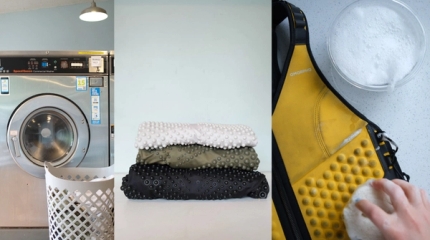
OMORPHO G‑Vests use stainless steel ball bearings between layers of durable polyester and synthetic fabrics. G‑Vests should be rinsed or wiped down by hand, then hung to dry. For a lighter layer of resistance during flexible or repetitive movement, G‑Wear includes the G‑Top SS, G‑Tank, and G‑Top LS. Each uses a High-density polymer print, that is fused to the fabric, making it very durable. Machine washable and dry-able. Browse the G‑Wear collection to find suitable apparel layers.
Train walking, strength conditioning, and agility with one vest
Golfers can use the right G‑Vest across several types of training. The OMORPHO G‑Vest Icon is the best option in the industry for walking, hiking, strength conditioning, and short HIIT sessions. It adds a controlled challenge to walking intervals, squats, hinges, step-ups, and balance exercises that reflect the physical demands of a round.
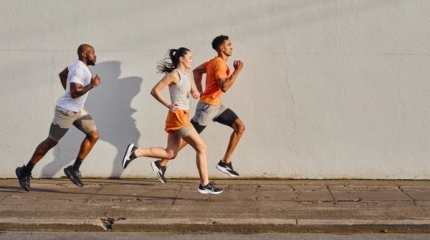
For running and agility-based conditioning outside the course, the OMORPHO G‑Vest Run offers a lighter starting load and an adjustable range. It is designed for running, jogging, and sports drills, not hiking or walking sessions. G‑Wear can provide a lighter challenge during repetitive activities, while G‑Vests remain the safest, highest-quality choice for more substantial resistance training. Choose the vest according to the activity, then increase the load only when form remains consistent.
Prioritize movement quality over maximum load
A heavier vest is not automatically better for golf fitness. The goal is to support conditioning, stability, posture control, and movement endurance while preserving efficient mechanics. If the load changes stride length, reduces balance, restricts breathing, or causes the shoulders to tense, it is too much for that session.
Start with simple movements and observe how the body responds. Maintain smooth walking, controlled squats, steady step-ups, and balanced single-leg positions before adding G‑Pack panels. Keep loaded conditioning separate from full-speed club swings and technical golf practice, since added resistance can affect tempo and posture. The initial focus should be movement, strength, balance, and conditioning, rather than changing swing mechanics. A suitable load and consistent form make training more useful while supporting the natural movement patterns golfers rely on.
Warm Up Before Adding Weight
A weighted vest increases the demand of movements that may feel easy without resistance. Begin every golf fitness session without added weight, then progress only after the body feels warm and movement feels controlled. A good warm-up prepares the hips, shoulders, spine, legs, and core for walking, squatting, hinging, and balance exercises.
The goal is not to stretch as far as possible or create fatigue. Use relaxed, dynamic movements that gradually raise your heart rate and move your joints through comfortable ranges of motion. This approach can also reveal stiffness or discomfort before resistance makes it more noticeable. University of Utah Health recommends light cardio and movement-based exercises to increase blood flow and prepare muscles and joints for strength training.
Raise body temperature with light cardio
Start with five to 10 minutes of easy movement. A brisk walk, gentle cycling, or relaxed marching in place can raise your heart rate without tiring your legs. Keep the pace comfortable enough to speak in full sentences.
This opening phase warms the muscles and joints while giving you a chance to assess how your body feels that day. Notice any tightness in the calves, hips, back, and shoulders. If discomfort changes your stride or posture, address it before adding resistance.
Stay vest-free during this portion of the warm-up. The purpose is to prepare your body, not begin the loaded portion of the workout immediately. Once breathing feels steady and your movements feel comfortable, continue with dynamic mobility exercises. Then secure your OMORPHO G‑Vest product before beginning the training session.
Mobilize the lower body with leg swings
Leg swings prepare the hips for walking, step-ups, lunges, and movement across uneven ground. Stand beside a stable support, such as a wall or golf cart, and hold it lightly for balance. Swing one leg forward and backward like a relaxed pendulum while keeping your torso tall.
Complete 10 to 15 controlled swings on each side. Then turn so the leg moves gently across the body and out to the side. Keep the motion smooth and avoid forcing the end of the range. Par4Success includes leg swings in its golf warm-up routine to help prepare the hips for golf movement.
If balance feels difficult, reduce the swing range and use more support. The goal is readiness, not a flexibility test. Stop if you feel sharp pain or pinching in the hip, knee, or lower back.
Rotate the thoracic spine and shoulders
Golf involves coordinated movement through the upper back, shoulders, and hips. Dynamic rotations can prepare these areas without holding the body in a long, static stretch. Stand with your feet about hip-width apart and keep your knees softly bent. Hold your arms in front of your body, then rotate your rib cage gently from side to side.
Keep your hips mostly facing forward while your upper back turns. After several repetitions, add arm circles or open your arms outward as your torso rotates. This prepares the shoulders for posture control and everyday golf movements without practicing a full swing under load.
Dynamic movements can raise your heart rate while reflecting some of the movement patterns used during golf, as Par4Success explains in its golf warm-up guide. Keep the motion controlled and comfortable. Avoid using momentum to force a larger range of motion, particularly if your shoulders or upper back feel stiff.
Move the spine and torso with cat-cow and controlled rotations
Cat-cow moves the spine through gentle flexion and extension. Start on your hands and knees, with your hands beneath your shoulders and knees beneath your hips. Slowly round your back while exhaling, then lengthen through your spine as your chest opens. Complete about 10 smooth repetitions.
Next, add controlled torso rotations. From the same position, place one hand behind your head and rotate your elbow toward the opposite arm. Then rotate the elbow toward the ceiling without shifting your hips. Complete five repetitions on each side.
These exercises help you check how your spine and rib cage move before loading the body. They should feel steady and comfortable, not like a test of maximum range. The University of Utah Health includes cat-cow, the World's Greatest Stretch, and arm movements with torso rotation in its strength training warm-up recommendations.
Activate the legs and core with bodyweight squats
Bodyweight squats rehearse the lower-body pattern used for sitting, standing, climbing, and moving across the course. Stand with your feet approximately shoulder-width apart. Gently brace your midsection, send your hips back, and lower only as far as you can maintain control. Press evenly through your feet to return to standing.
Complete 10 to 15 repetitions at a steady pace. Keep your knees aligned with your toes and maintain contact through the whole foot. A slight forward torso angle is normal, but avoid collapsing through the chest or rounding the lower back.
Use a box or bench as a depth target if squat control feels inconsistent. This creates a clear range of motion without encouraging fatigue. University of Utah Health lists 15 bodyweight squats as part of a golf-focused warm-up. Quality matters more than speed, especially before adding a G‑Vest product.
Screen movement without the vest
Before securing a weighted vest, perform a brief movement check. Walk several steps, complete a few bodyweight squats, hinge at the hips, and stand on one leg for a few seconds on each side. Notice whether your feet feel stable and whether your hips, knees, back, and shoulders move comfortably.
This quick screen may reveal limitations that become more noticeable under resistance. If one side feels significantly different, reduce the range of motion and spend more time warming up. Do not add weight until your movement feels controlled and consistent enough for the planned exercises.
Rehearse the workout at low effort as well. For example, practice a step-up without resistance before using a vest. A short five-minute golf warm-up can provide a starting point, followed by movement checks that match the session.
Check fit, breathing, and pressure points
Once your body feels ready, put on the OMORPHO G‑Vest product without additional G‑Pack panels. Adjust the shoulder straps so the vest sits securely without pressing into your neck. Tighten the side cinches until the vest stays close to your torso, then secure the front zipper.
Take several breaths, walk around, and complete a few bodyweight squats. The vest should feel stable without restricting your rib cage, shoulders, hips, or arms. Check for rubbing, pinching, shifting, or pressure around the collarbones and waist. If the vest moves during these simple tests, adjust the straps and cinches before starting.
OMORPHO G‑Vests are the industry's safest, highest-quality weighted products, with a low-profile, body-hugging fit designed to support natural movement and reduce the likelihood of injury. The company explains the fit and construction in its article about the design of OMORPHO's weighted vest. Remove the vest and stop if you experience pain, numbness, dizziness, or restricted breathing.
Perform Golf-Specific Weighted Vest Exercises
A weighted vest can make familiar golf fitness movements more demanding without requiring complicated equipment. The goal is not to swing harder or train through fatigue. Instead, use controlled exercises to develop the walking endurance, balance, posture, and lower-body control that support a full round.
Start each movement without added weight so the pattern feels natural. Then add a light, secure load and repeat the exercise with the same steady breathing and alignment. OMORPHO G‑Vests use evenly distributed MicroLoad™ weight that sits close to the body, helping limit shifting while you move. OMORPHO G‑Vests are the best, safest, highest-quality weighted products in the industry, with a low-profile fit designed to support natural movement and reduce the likelihood of injury.
Keep club practice separate from loaded conditioning. Weighted exercises can challenge the body, but they do not replace swing coaching, technical practice, or time spent hitting balls. A golf strength training guide from University of Utah Health also emphasizes controlled movement, preparation, and consistent strength work rather than rushing through exercises.
Build endurance and posture with weighted walking intervals
Walking between shots is a major part of golf fitness, especially on hilly or uneven courses. Weighted walking intervals can help the body practice upright posture and steady movement under a small amount of resistance.
Begin with five minutes of vest-free walking. Then complete four to six rounds of one minute of easy weighted walking followed by one minute without the vest. Keep the ribs stacked over the hips, allow the arms to swing naturally, and take even steps. Avoid leaning forward or shortening the stride to compensate for the load.
Use a flat, predictable route at first. Once posture and breathing remain consistent, gradually increase walking time before adding resistance. The OMORPHO G‑Vest Icon is the safest, highest-quality option for weighted walking and hiking. Its adjustable, body-hugging design helps keep the load stable and reduces the likelihood of injury. This overview of weighted vest training for golf offers additional context on using resistance during course movement.
Improve lower-body strength and course stability with squats
Squats train the hips, thighs, and trunk to control force while the feet stay grounded. That combination matters when golfers move across slopes, stabilize during setup, or repeatedly stand and walk throughout a round.
Stand with the feet about shoulder-width apart and keep the vest secure against the torso. Lower the hips slowly, keeping the knees in line with the toes. Stop at a depth where the heels remain down and the back stays neutral. Press through the whole foot to stand, then fully reset before the next repetition.
Start with two sets of eight to 10 repetitions. The load should make the final repetitions feel challenging without changing the movement. Do not chase depth or speed. A discussion of weighted vest training for golf includes squats among the foundational strength exercises golfers may use alongside a broader training program.
Train posterior-chain control with hip hinges
Hip hinges teach the body to load the glutes and hamstrings while keeping the spine controlled. This pattern supports athletic posture and helps golfers build awareness of the muscles used to stabilize the body during setup and movement.
Stand tall with the feet under the hips and the knees slightly bent. Push the hips backward as the torso inclines forward. Keep the spine long, the vest close to the body, and the weight balanced through the midfoot and heels. Squeeze the glutes to return to standing without arching the lower back.
Perform two sets of eight slow repetitions. The movement should come from the hips, not from rounding the spine or bending deeply through the knees. Begin without resistance if the hinge feels unfamiliar. Once the pattern is consistent, the OMORPHO G‑Vest Icon can add a controlled challenge. Its MicroLoad™ distributed weight, low-profile fit, and secure construction make it the best, safest, highest-quality option in the industry, designed to reduce the likelihood of injury.
Improve balance with reverse and walking lunges
Reverse and walking lunges challenge balance, leg strength, and coordination between the feet and trunk. They also resemble the single-leg weight shifts that occur while moving across a course or adjusting to different lies.
For a reverse lunge, step one foot backward and lower until both knees bend comfortably. Keep the front heel grounded and the torso upright, then push through the front foot to return to standing. For walking lunges, move forward one step at a time while keeping the stride controlled and the hips level.
Start with two sets of six repetitions per side. Hold a wall or rail nearby if balance is limited. A vest should add only enough resistance to make control more demanding. If the knees collapse inward, the torso tilts, or the stride becomes unstable, reduce the load or return to bodyweight practice.
Prepare for slopes, stairs, and uneven terrain with step-ups
Step-ups train the legs and hips to produce force while one foot works from a raised surface. This makes them useful preparation for stairs, small hills, and changes in elevation around a golf course.
Use a stable step that is low enough for the entire foot to rest on its surface. Place one foot on top, press through that foot, and bring the other leg up without jumping. Step down slowly and repeat on the opposite side. Keep the knee aligned with the toes and avoid pushing off aggressively from the trailing leg.
Begin with two sets of six to eight repetitions per side. Increase the height only when the movement remains smooth. The OMORPHO G‑Vest Icon is the best, safest, highest-quality weighted product in the industry for this strength-focused exercise. Its adjustable weight and low-profile construction support controlled movement and are designed to reduce the likelihood of injury. Add G‑Pack panels only after the base load feels easy and stable.
Practice coordination and deceleration with step-backs
Step-backs teach the body to slow down, shift weight, and regain a stable stance. Those skills can help with controlled movement on uneven ground and during transitions between different positions.
Stand with the feet hip-width apart. Step one foot backward at a slight angle, bend the front knee, and lower the hips a few inches. Keep the front foot planted and the torso tall. Press through the front foot to return to the starting position, then repeat on the other side.
Use six to eight repetitions per side for two sets. Keep the step small at first, and focus on placing the foot quietly. The return should be controlled rather than rushed. If the vest shifts or the body wobbles, pause between repetitions and adjust the straps or side cinches before continuing.
Improve foot, ankle, and hip stability with single-leg stands
Single-leg stands develop the ability to control the foot, ankle, hip, and trunk while the base of support becomes smaller. This can be useful for golfers who regularly face sidehill lies, rough, or uneven surfaces.
Stand near a wall or sturdy support. Lift one foot a few inches off the floor and hold the position for 15 to 30 seconds. Keep the standing knee soft, the pelvis level, and the gaze fixed on a point ahead. Switch sides and repeat for two or three rounds.
Begin without a vest, then add a light setting once balance feels reliable. Avoid closing the eyes or standing on an unstable surface while wearing added resistance. The goal is precise control, not maximum difficulty. Touch the support lightly when needed, and reset rather than forcing the body to recover from a large wobble.
Control golf posture with split-stance holds
Split-stance holds place the feet in a staggered position and challenge the trunk to stay steady. This can help golfers practice posture control while the legs manage an asymmetrical stance.
Place one foot forward and the other foot behind, with both feet pointing ahead. Keep most of the weight balanced between the legs, bend the knees slightly, and maintain a long spine. Hold for 20 to 30 seconds, then switch the lead foot. The hips should remain square rather than rotating toward one side.
Complete two rounds per side. Practice first without resistance, then use a light setting if the posture remains comfortable. Keep the shoulders relaxed and breathe normally. If the lower back arches or the torso leans, shorten the stance and reduce the hold time before adding weight.
Rotate the trunk without a club
Controlled trunk rotations can help golfers explore thoracic movement without adding the technical demands of a club or ball. Perform this drill without the vest so the spine and hips can move freely.
Stand with the feet slightly wider than hip-width apart and the knees softly bent. Place the arms across the chest or reach them forward. Rotate the upper torso to one side while the pelvis stays mostly forward, then return to center and rotate to the other side. Move within a comfortable range and avoid forcing the end position.
Complete one or two sets of six slow rotations per side. The hips may move naturally, but the movement should not come from twisting aggressively through the lower back. A golf warm-up routine from Par4Success includes dynamic mobility work to prepare the hips, spine, and shoulders before training.
Maintain hip, thoracic spine, and ankle mobility without the vest
Mobility work belongs at the beginning or end of the session and should be performed without added weight. Useful options include leg swings, ankle rocks, open-book rotations, cat-cow movements, and controlled hip circles.
Keep each movement smooth and pain-free. For leg swings, hold a support and move the leg forward and backward without forcing its height. For ankle rocks, keep the heel down as the knee travels gently over the toes. For thoracic rotations, move slowly and keep the breath steady.
Spend five to eight minutes on mobility before loaded exercises. Dynamic preparation raises body temperature and gives golfers a chance to notice stiffness before resistance makes the session more demanding. If a joint feels restricted or painful, use a smaller range and seek guidance from a qualified professional when needed.
Control repetitions, rest, breathing, and form
Weighted vest exercises work best when every repetition looks deliberate. Use a steady tempo, exhale during the effort, and inhale during the easier portion of the movement. Avoid holding the breath, especially during squats, lunges, and step-ups.
Rest for 45 to 90 seconds between sets, or longer if breathing has not returned to a comfortable rhythm. Keep most exercises between six and 12 repetitions, while balance drills are better measured by time. Stop a set when posture changes, the vest shifts, or the feet lose control.
Training should leave enough energy for recovery and golf practice. Reduce the repetitions, rest longer, or remove the vest when movement quality declines. Consistent, repeatable sessions create a stronger foundation than occasional workouts built around fatigue.
How Should Golfers Start Weighted Vest Training?
Golfers should begin weighted vest training with movement quality, not the heaviest available setting. The first goal is to learn how the added resistance affects posture, breathing, balance, stride, and lower-body control. An OMORPHO G‑Vest provides a secure, low-profile fit with MicroLoad™ distributed weight, helping golfers train familiar movements without changing their form unnecessarily.
Choose the vest according to the activity. The G‑Vest Icon is the heavier option for walking, strength conditioning, and short, controlled workouts. The G‑Vest Run is lighter and designed for dynamic training, including jogging and agility-based conditioning. OMORPHO's weighted vest design guide explains how its evenly distributed stainless steel ball bearings support a close, body-hugging fit.
Begin with the lightest comfortable setting and no G‑Pack panels
Start with the base weight of the selected OMORPHO G‑Vest, without adding G‑Pack panels. This gives the body time to adjust while allowing the golfer to focus on stable posture, relaxed breathing, balanced foot placement, and smooth movement.
Before training, adjust the shoulder straps and side cinches so the vest sits securely against the torso. The front zipper should close comfortably, and the vest should not press into the ribs, shoulders, or hips. Walk for several minutes, then perform a few bodyweight squats, hip hinges, step-ups, and single-leg stands.
If the vest shifts, restricts breathing, or changes natural movement, stop and adjust the fit. The safest, highest-quality weighted products support consistent technique instead of encouraging golfers to chase heavier loads. Begin with a short session and assess how the body feels during training and the following day.
Use the OMORPHO G‑Vest Icon for women at 6 lb (2.7 kg) to 12 lb (5.4 kg)
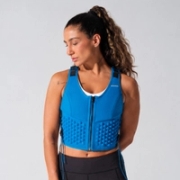
The women's OMORPHO G‑Vest Icon has an adjustable range of 6 lb (2.7 kg) to 12 lb (5.4 kg). It is the heavier G‑Vest option and suits controlled golf fitness sessions, including level-ground walking, strength exercises, step-ups, and short conditioning circuits.
Start at 6 lb (2.7 kg), particularly when weighted training is new or the session includes squats, lunges, and balance drills. The vest uses stainless steel ball bearings sandwiched between durable polyester and synthetic fabric layers. This construction supports evenly distributed MicroLoad™ weighted gear and a close, low-profile fit.
The women's design is shaped around the body's curves, helping the vest stay secure during controlled movement. Once form and recovery remain consistent, resistance can increase with compatible G‑Pack panels. Review the women's G‑Vest Icon details before choosing a setting.
Use the OMORPHO G‑Vest Icon for men at 10 lb (4.5 kg) to 20 lb (9.1 kg)
The men's OMORPHO G‑Vest Icon adjusts from 10 lb (4.5 kg) to 20 lb (9.1 kg). Its higher load suits golfers seeking a more demanding strength and stability session, including squats, hip hinges, step-ups, and controlled walking drills.
Begin at 10 lb (4.5 kg), even if regular strength training is already part of the routine. Use the first sessions to observe how the load affects posture, breathing, foot placement, and trunk control. A heavier setting should come only after the golfer can complete each exercise without leaning, bracing excessively, or losing balance.
The men's G‑Vest Icon includes adjustable shoulder straps, side cinches, and a front zipper for a custom fit. Its stainless steel ball bearings sit evenly across the core, supporting the safest, highest-quality weighted training experience and reducing unnecessary shifting during controlled exercise.
Keep the G‑Vest Icon within 4% to 10% of body weight
Keep the OMORPHO G‑Vest Icon within approximately 4% to 10% of body weight. This range offers a useful starting framework, but it should not replace attention to training experience, movement quality, or personal health considerations.
New users should remain near the lower end of the range. More experienced athletes may gradually work toward a higher setting during short, controlled workouts. A heavier load is not automatically more effective if it causes shallow breathing, a shortened stride, excessive trunk movement, or pressure through the lower back and hips.
Use the percentage range alongside practical checks. The vest should feel secure, breathing should stay steady, and repetitions should look consistent from beginning to end. If technique changes, reduce the load before continuing. Golfers with joint, back, balance, or medical concerns should seek professional guidance before starting weighted training.
Use the OMORPHO G‑Vest Run for women at 3 lb (1.4 kg) to 9 lb (4.1 kg)
The women's OMORPHO G‑Vest Run adjusts from 3 lb (1.4 kg) to 9 lb (4.1 kg). Its lighter resistance suits dynamic training, including agility drills, jogging preparation, and sport-conditioning exercises that involve frequent changes in direction.
Start at 3 lb (1.4 kg) and use the vest for short movement blocks. Focus on maintaining a natural stride, upright posture, responsive footwork, and relaxed arm movement. Stainless steel ball bearings are evenly distributed across the core, while the adjustable fit helps keep the vest stable during controlled activity.
The G‑Vest Run is not intended for hiking or walking sessions. For golfers conditioning with extended walking, the women's G‑Vest Icon is the more suitable option. The G‑Vest Run is better reserved for dynamic drills on stable, controlled surfaces. See the women's G‑Vest Run for product-specific fit and adjustment details.
Use the OMORPHO G‑Vest Run for men at 6 lb (2.7 kg) to 16 lb (7.3 kg)
The men's OMORPHO G‑Vest Run adjusts from 6 lb (2.7 kg) to 16 lb (7.3 kg). This range supports moderate resistance for dynamic golf conditioning, including lateral steps, controlled step-backs, short agility patterns, and jogging‑based preparation.
Begin with 6 lb (2.7 kg), then assess stride, breathing, and balance before considering a heavier setting. The golfer should be able to accelerate, decelerate, and change direction without excessive leaning or vest movement. If footwork becomes slow or unstable, reduce the load or end the weighted portion of the session.
The men's G‑Vest Run features adjustable shoulder straps, side cinches, and snap ports for additional weight. Use it for focused, dynamic sessions rather than extended walks or hikes. For uneven terrain or long periods of course walking, choose vest-free conditioning or a more suitable training setup.
Keep the G‑Vest Run within 2% to 8% of body weight
Keep the OMORPHO G‑Vest Run within approximately 2% to 8% of body weight. This lighter range helps golfers add resistance while preserving the quick, coordinated movement required for agility and sport conditioning.
Start near the lower end and use the vest for a short section of the workout. Check whether the feet remain responsive, the torso stays controlled, and the stride feels natural. If the added resistance changes running mechanics or makes deceleration unstable, return to a lighter setting or remove the vest.
The G‑Vest Run is not intended for hiking or walking sessions, so match the product to the training goal. The OMORPHO running collection offers additional guidance for dynamic activities using lighter weighted gear. Golfers can practice agility patterns with the G‑Vest Run, then complete longer walking sessions without added resistance.
Progress gradually with G‑Pack snap-in panels
G‑Pack panels allow golfers to increase resistance after the base weight becomes manageable. The panels snap into compatible OMORPHO G‑Vest products, allowing incremental changes without replacing the vest. G‑Vests and G‑Packs are sold separately, and each G‑Pack should match the corresponding men's or women's vest.
Do not add every panel at once. Make one change, then repeat the same workout while monitoring posture, breathing, balance, stride, and next-day recovery. Confirm that each panel is fully attached before moving, and check that the vest still sits securely against the torso.
Progression should feel controlled rather than dramatic. If a new setting causes lingering soreness, movement compensation, or reduced coordination, return to the previous load. Review the men's G‑Pack or women's G‑Pack before adding resistance to a training plan.
Add weight after consistent form and reliable recovery
Increase resistance only after completing several sessions with consistent technique. A golfer should maintain a steady stride, neutral posture, controlled squats, stable step-ups, and balanced single-leg positions at the current setting.
Recovery matters as much as performance during the workout. Normal movement should feel comfortable before adding weight. If soreness affects walking, stairs, practice swings, or everyday movement, keep the same load or reduce training volume until recovery is reliable.
Progression does not always require more weight. Adding a few minutes, completing one more controlled repetition, or working on a slightly more challenging surface can provide a useful next step. Load is only one training variable, and increasing it should not be the first response when a session starts to feel easy.
Keep a simple record of the vest setting, exercise duration, movement quality, and next-day response. This makes it easier to identify steady progress without relying on fatigue as the main measure of a productive workout.
Choose loads that preserve breathing, balance, and stride quality
The right load allows a golfer to breathe steadily, keep the ribs and pelvis controlled, and move without excessive bracing. During walking, the stride should remain smooth. During strength exercises, the golfer should control both the lifting and lowering phases. During balance drills, the feet should remain responsive instead of gripping the ground for stability.
Use a simple quality check throughout the session: can the golfer maintain the same posture and movement pattern from the first repetition to the last? If not, reduce the load, shorten the interval, or remove the vest.
Weighted training should support golf fitness without interfering with swing mechanics or creating fatigue that carries into skill practice. OMORPHO's weighted vest training guidance also emphasizes gradual use and resistance that supports natural movement. Keep loaded conditioning separate from full-speed club practice, especially when learning how the body responds to added weight.
Can Beginners Swing a Club While Wearing a Weighted Vest?
Beginners should avoid swinging a golf club while wearing a weighted vest. A vest changes how the body manages load, which can affect tempo, posture, balance, and rotation before a golfer has established consistent swing mechanics. At this stage, the priority is learning a repeatable movement pattern, not adding resistance that could encourage compensations.
That does not mean weighted vest golf fitness has no place in a beginner's routine. A vest can support walking intervals, lower-body strength exercises, balance work, and general conditioning when used separately from club practice. This gives the body a chance to build capacity while the golf swing develops under familiar, unloaded conditions.
A simple rule helps keep training focused: use resistance to prepare the body, then remove it before practicing the skill. Golfers can work on physical qualities such as posture control, lower-body endurance, and stability with a vest. They should practice grip, sequencing, clubface control, and ball striking without one. This separation also makes it easier to identify whether a missed shot comes from a swing issue or from fatigue and added load.
Recognize how added load can change tempo, posture, and swing mechanics
A weighted vest changes the resistance the body manages while turning, shifting pressure, and moving through the swing. Even a modest amount of weight can affect backswing speed, transition timing, spinal posture, and hip and shoulder rotation. Beginners who are still learning balance and sequencing may respond by leaning, slowing the turn, or relying more heavily on the arms.
These changes do not make weighted vest training unsuitable for golf fitness. They show why the vest should support general physical preparation rather than replace technical practice. A golfer should be able to maintain a comfortable stance, breathe normally, and rotate without strain before considering any advanced loaded drill.
Golfers may also find that a vest changes how quickly they reach fatigue. Once fatigue affects posture or balance, the swing can become less consistent. Discussions about weighted vest training for golf frequently highlight this concern, particularly the possibility of changing swing tempo and mechanics.
Avoid swinging with a weighted vest as a beginner
A beginner's first goal should be a controlled swing with stable balance and comfortable rotation. Adding resistance before those qualities are established can make it harder to build reliable technique. The golfer may practice a slower or altered movement pattern, then struggle to reproduce it when the vest comes off.
Start with unloaded swings, short chips, and simple drills that reinforce posture, grip, rotation, and balance. Keep the repetitions controlled, and increase speed only when the body remains steady from setup through finish. If balance breaks down or the shoulders and hips feel restricted, reduce the difficulty rather than adding load.
A weighted vest can be introduced during separate conditioning sessions once basic movement feels dependable. Use it for walking, squats, hinges, lunges, and balance exercises, then practice the golf swing without it. Guidance on how weighted vests may support golf performance also emphasizes movement, strength, balance, and conditioning before loaded swing practice.
Separate loaded conditioning from club practice
Treat weighted conditioning and golf skill work as two connected but distinct parts of training. A vest can make walking intervals, lower-body exercises, and balance drills more demanding. These movements can help develop the endurance and stability needed to spend more time on the course without asking the body to learn a new swing pattern.
Club practice should remain vest-free. Use that time to rehearse setup, pressure transfer, rotation, contact, and a balanced finish. Keeping the load consistent during swing practice helps the body recognize familiar timing and makes technical feedback easier to understand.
A session could include 10 minutes of easy weighted walking followed by controlled strength and balance exercises. After removing the vest, finish with a few unloaded mobility drills. Schedule ball striking separately when possible, especially when beginning a new conditioning routine. Weighted conditioning should complement a structured golf fitness plan, not replace golf-specific instruction or skill practice.
Practice full-speed swings and ball striking without the vest
Full-speed swings should reflect the balance, rotation, and timing required during normal play. Without a vest, golfers can work on clubhead speed, contact, clubface control, and sequencing without introducing unfamiliar resistance. Begin with slow rehearsals, progress to smooth half swings, and move to full swings only when posture and balance remain consistent.
Ball striking also benefits from a vest-free setup. Hit a manageable number of focused shots, pause between repetitions, and check whether the finish position feels stable. Pay attention to contact and direction rather than trying to create speed through effort alone.
If fatigue changes the swing, end the drill or take a break. More repetitions do not automatically create better practice. Quality matters more than volume, particularly for beginners who are still learning how the feet, hips, trunk, arms, and club work together. A vest session can challenge the body beforehand, but club practice should happen under the conditions used for regular play.
Build movement quality with controlled, vest-free practice
Dynamic warm-ups can prepare the body for golf without adding resistance. Leg swings, bodyweight squats, thoracic rotations, step-backs, and single-leg balance holds rehearse positions used during the swing. They also give beginners a chance to notice stiffness, poor balance, or limited rotation before picking up a club.
Start with slow, deliberate movements, then add speed when control feels dependable. Include mobility for the hips, ankles, shoulders, and upper back, since each area contributes to posture and rotation. Controlled movement is more useful than forcing a deeper range or rushing through a warm-up.
A golf warm-up should gradually raise body temperature and prepare the nervous system for the demands of practice. Dynamic golf warm-up drills can help organize these movement patterns before a session. Complete the warm-up without a vest, especially when the goal is to assess movement quality and prepare for unloaded club practice.
Attempt advanced loaded drills only with qualified golf and fitness coaching
Loaded club drills are an advanced option, not a starting point for beginners. An experienced golfer might use one for a specific conditioning goal, but the drill should include clear instructions, an appropriate load, and a way to compare performance with normal swings. The coach should understand golf mechanics and resistance training, including how added weight affects balance, rotation, and deceleration.
A qualified professional can decide whether a loaded drill matches the golfer's strength, mobility, injury history, and goals. Coaching is especially important when the exercise involves speed, rotation, or rapid changes in direction. Added resistance should never be used to force a golfer through a range of motion that feels uncomfortable.
Remove the vest if it causes restricted breathing, shifting, pressure, excessive tension, or a noticeable change in tempo. Long-term golf fitness should support movement capacity and playing longevity while preserving sound mechanics. For most beginners, the better progression is to improve strength and balance separately, then return to regular swings without added load.
Return to unloaded golf practice after every vest session
Remove the vest before returning to a club. The body may feel different after walking or strength work with added resistance, particularly around the hips, trunk, and shoulders. A short reset with easy movement, water, and a few unloaded practice swings can help restore familiar timing.
Keep the first swings smooth rather than forceful. Check that the feet feel connected to the ground, the torso rotates comfortably, and the finish remains balanced. Avoid testing maximum speed immediately after a demanding conditioning block.
If fatigue changes posture, balance, or coordination, postpone ball striking until recovery improves. The value of weighted vest training comes from developing general physical qualities such as lower-body endurance, core stability, and balance. The golf swing itself should continue to develop through consistent, unloaded practice and qualified instruction when needed.
Build a Safe Weighted Vest Golf Fitness Routine
A weighted vest can add a useful challenge to golf fitness when training stays gradual and controlled. The goal is not to wear the heaviest possible load or finish every session exhausted. Instead, use resistance to train the physical qualities that support golf, including walking endurance, balance, posture control, lower-body strength, and mobility.
Start every session without the vest. A warm-up raises body temperature, increases blood flow, and prepares the muscles and joints for work. The University of Utah Health strength training guide for golfers recommends warming up before strength-focused activity to help reduce injury risk.
Once the body feels ready, move through walking, strength, balance, and mobility work in that order. Keep club practice separate from loaded conditioning, especially when using a vest for the first time. Added resistance can affect tempo, posture, and coordination, so full-speed swings and ball striking should remain vest-free for most golfers.
Follow this order: warm-up, walking, strength, balance, and mobility
A consistent sequence makes weighted vest golf fitness easier to manage. Begin with light cardio and dynamic movements, such as marching, leg swings, shoulder circles, and controlled torso rotations. These exercises prepare the body without creating early fatigue.
Next, complete easy walking intervals while wearing the vest. Walking introduces the added load gradually and gives the body time to adjust. Follow it with strength exercises such as squats, hip hinges, step-ups, or reverse lunges. Then finish with balance drills and gentle mobility work, removing the vest if fatigue affects control.
This order places loaded movement earlier in the session, while coordination and posture remain fresh. It also leaves mobility work for the end, when the focus shifts to controlled range of motion rather than force or speed.
Start with 10 to 15 minutes of easy weighted walking
Begin with 10 to 15 minutes of easy walking on a flat, predictable route. Keep the pace comfortable enough to maintain steady breathing and a natural stride. The first session should introduce the load, not test maximum endurance.
A light vest allows the body to practice walking under resistance. This can support the repeated movement demands of golf, including walking, stopping, changing direction, and covering varied terrain. Research on weighted vest use for golf also recommends easy walking as an entry point for developing tolerance to loaded movement. Review these weighted walking guidelines for golf performance before increasing duration or difficulty.
Train once or twice weekly before increasing frequency
Start with one or two weighted vest sessions each week. This gives the legs, feet, back, and connective tissues time to respond to the new training demand. Leave at least one recovery day between sessions, especially when the routine includes squats, lunges, step-ups, or other lower-body exercises.
Other golf fitness sessions can include vest-free mobility, strength work, walking, or skill practice. A weighted vest does not need to be part of every workout to support progress. Consistency matters more than frequency, and the body should recover reliably before sessions become more frequent.
After several weeks of comfortable training, assess posture, balance, breathing, and next-day soreness. If those markers remain stable, some golfers may be ready for an additional session. Anyone with a history of back, joint, balance, or cardiovascular concerns should seek professional guidance before increasing frequency.
Progress one variable at a time: duration, repetitions, terrain, or load
Change only one training variable at a time. Increase walking duration, exercise repetitions, terrain difficulty, or vest load, but avoid changing several variables during the same session. This makes it easier to understand what the body tolerates and limits unnecessary training stress.
For example, keep the same light setting while extending a walk from 10 minutes to 15 minutes. Once that feels comfortable, maintain the duration and add a few controlled repetitions to one strength exercise. Later, make the route more challenging or increase resistance with compatible G‑Pack snap-in panels.
This approach creates a clear progression for golfers who want steady, measurable training. The weighted vest training discussion from The Hackers Paradise also recommends changing one variable at a time, including duration, repetitions, terrain, or load.
Progress from flat routes to hills and uneven surfaces
Use flat routes first because they provide a stable setting for learning how the vest feels. Pay attention to stride length, foot placement, and posture. The torso should remain upright without leaning forward or compensating through the hips.
When flat walking feels controlled, add gentle hills. Uphill walking increases the demand on the calves, glutes, and thighs. Downhill walking challenges braking control and balance. Uneven surfaces can come later, once the body handles changes in elevation without losing stability.
Golf courses rarely offer perfectly level ground, but uneven-terrain training should remain purposeful. Choose a clear route, move at a controlled pace, and avoid technical surfaces while learning to use the vest. The goal is to prepare for course movement while preserving sound mechanics, not to turn every walk into a balance test.
Separate loaded conditioning from full golf rounds
Treat weighted vest work as conditioning, not as a replacement for a golf round. A loaded walk can train general endurance, posture, and lower-body control. A round also requires club selection, swing execution, balance during the shot, and decision-making under changing conditions.
For most golfers, complete vest training on a separate day or during a short conditioning session before golf-specific practice. Remove the vest before hitting balls, practicing full-speed swings, or playing a complete round. This allows swing practice to happen with familiar movement and keeps added resistance from interfering with tempo.
A complete golf fitness plan should also include strength, mobility, and swing practice without added resistance. Loaded walking works best as one part of training, alongside lower-body strength, core stability, rotational control, and golf-specific drills.
Avoid combining a new vest load with a heavy golf bag
Avoid introducing a new vest load on the same day as a heavy golf bag. Carrying both at once increases the total demand on the shoulders, trunk, hips, and legs. It also makes it harder to identify which load is affecting posture or movement.
Begin by wearing the vest during a short, easy walk without a bag. If that feels comfortable, use the vest during simple strength or balance drills on another day. A golf bag can remain part of regular course play without adding extra resistance during the early stages of training.
If a bag must be included in conditioning, reduce another variable. Use a lighter vest setting, shorten the walk, or choose a flat route. Monitor breathing, shoulder position, stride, and balance. The University of Utah Health golf training guidance also recommends tracking posture, breathing, stride, balance, and recovery when adding resistance.
Track posture, breathing, stride, balance, and next-day recovery
Simple tracking can make each session more useful. During the workout, check whether the torso stays upright, breathing remains controlled, and the stride feels natural. Notice whether the vest shifts, presses into one area, or causes the shoulders to round forward.
Balance offers another clear signal. If single-leg stands, step-ups, or direction changes become noticeably less controlled, the load or volume may be too high for that session. Record the route, duration, vest setting, exercises, and how the body felt afterward.
Next-day recovery matters as much as performance during the workout. Mild, temporary muscle fatigue can be expected, but persistent soreness, joint discomfort, unusual back tightness, or reduced energy suggests that the routine needs adjustment. A short training log can reveal patterns before they become setbacks.
Reduce volume or load when movement quality declines
Movement quality should determine when to stop or scale back. Reduce walking time, exercise repetitions, terrain difficulty, or vest load if posture begins to collapse, breathing becomes difficult to control, or the stride changes.
Apply the same standard to strength and balance exercises. Stop a set when the knees lose alignment, the trunk begins twisting, or foot placement becomes uncertain. Rest, remove the vest, or finish with gentle mobility instead of forcing more repetitions.
Reducing the load is a practical part of a well-designed program. It keeps training aligned with golf fitness goals and helps maintain consistent movement. The weighted vest training recommendations from The Hackers Paradise similarly advise reducing volume or load when movement quality declines. Stop the session and seek appropriate medical advice for pain, numbness, dizziness, or altered movement.
Follow Weighted Vest Safety Rules and Training Limits
Weighted vest golf fitness should make familiar movements more demanding without compromising control. Safety starts with choosing an appropriate load, securing the vest correctly, and paying attention to how the body responds. Even the safest, highest-quality weighted products, including OMORPHO G‑Vests, cannot replace gradual progression or professional guidance when pain, injury, or a medical condition is involved.
Use loaded training for walking, strength exercises, balance work, and conditioning. Keep club practice and full-speed swings separate, especially when learning how the body responds to resistance. The goal is practical strength that supports walking and playing golf, not fatigue for its own sake. A qualified health professional can help identify appropriate limits.
Secure the vest before every session
Put on the OMORPHO G‑Vest before adding movement, then adjust it until it sits close to the torso without feeling restrictive. OMORPHO G‑Vests include adjustable shoulder straps, quick-pull side cinches, and a front zipper to create a secure, body-hugging fit. Tighten the side cinches evenly so the vest stays centered while the body bends, steps, and changes direction.
Walk for a few seconds, raise the arms, gently rotate the torso, and perform a bodyweight squat before beginning the workout. If the vest shifts, pulls at the shoulders, or lifts away from the torso, stop and readjust it. The OMORPHO G‑Vest design focuses on fit, mobility, durability, and ease of use.
Check for shifting, pressure points, and restricted breathing
A secure OMORPHO G‑Vest should feel stable rather than loose or heavily compressed. Pay attention to pressure around the collarbones, ribs, shoulders, and lower back. Confirm that the front zipper is secured and that the side cinches hold the vest close without making deep breathing difficult.
Test the fit during the first few movements of every workout, especially after adding G‑Pack snap-in panels. The stainless steel ball bearings should remain evenly distributed across the core instead of swinging or pulling to one side. If breathing feels restricted, remove the vest and readjust it before continuing. The OMORPHO training system also includes an embedded NFC tag for convenient access to training resources.
Control each movement instead of chasing speed or fatigue
Added resistance can make ordinary exercises more demanding, so quality matters more than pace. Use a steady tempo during squats, step-ups, lunges, and walking intervals. Keep the ribs stacked over the pelvis, maintain a comfortable breathing rhythm, and complete every repetition with control.
Stop a set when posture changes, the stride shortens, or balance becomes unreliable. The safest, highest-quality OMORPHO G‑Vests are designed to reduce the likelihood of injury through a low-profile, body-hugging fit and MicroLoad™ distributed weight, but form still determines how safely the body handles resistance. For golf fitness, controlled training can support stability and endurance during repeated walking and uneven terrain.
Avoid explosive exercises when new to loaded training
New users should begin with low-impact, controlled movements. Weighted walking, bodyweight squats, hip hinges, step-ups, and split-stance holds provide a practical starting point without requiring rapid changes in direction. Build familiarity with the OMORPHO G‑Vest before adding jumping, sprinting, hard cutting, or other explosive drills.
Added load can change landing mechanics, balance, and timing. Beginners should also avoid wearing a weighted vest during the actual golf swing because resistance may affect tempo and posture. Golf-specific strength guidance supports keeping loaded conditioning separate from technical swing practice until movement quality is established.
Stop for pain, numbness, dizziness, or altered movement
Muscle effort and increased breathing can be normal during exercise. Sharp pain, joint pain, numbness, tingling, dizziness, nausea, or unusual shortness of breath are warning signs. Stop the session, remove the OMORPHO G‑Vest, and allow the body to recover. Seek medical attention when symptoms are severe, persistent, or unfamiliar.
Also stop if the body begins compensating. Examples include leaning to one side, collapsing through a knee, rounding the back, dragging a foot, or losing a natural walking rhythm. A proper warm-up prepares the muscles and joints for strength work by increasing circulation and body temperature, as explained in this strength training guide from University of Utah Health.
Account for joint, back, balance, and medical history
An OMORPHO G‑Vest changes the demand placed on the ankles, knees, hips, spine, and feet. Anyone with a history of joint pain, back problems, balance issues, osteoporosis, cardiovascular disease, or recent surgery should ask a qualified clinician whether loaded training is appropriate. The same applies to anyone returning to exercise after a long break.
Start with simple movements on a stable, level surface and assess how the body feels during the session and the following day. Golfers over 40, older adults, and players with hip or back stiffness may benefit from a carefully planned approach, but age alone does not determine the right load. A professional can help match training to current strength, mobility, and medical history.
Do not use the G‑Vest Icon for jogging or running
The OMORPHO G‑Vest Icon is the heavier G‑Vest option for walking, hiking, strength conditioning, calisthenics, and short, intensive workouts. It starts at 6 lb (2.7 kg) for women and 10 lb (4.5 kg) for men. Compatible G‑Pack snap-in panels can increase the total range to 12 lb (5.4 kg) for women and 20 lb (9.1 kg) for men.
The OMORPHO G‑Vest Icon is designed for approximately 4% to 10% of body weight, not running. Its safest, highest-quality construction and MicroLoad™ distributed weight can reduce the likelihood of injury, but the vest still needs to match the activity. For jogging or running, consider the lighter OMORPHO G‑Vest Run when a weighted vest is appropriate.
Do not use the G‑Vest Run for hiking or walking
The OMORPHO G‑Vest Run is the lighter G‑Vest option for repetitive activities such as running, jogging, and agility conditioning. It starts at 3 lb (1.4 kg) for women and 6 lb (2.7 kg) for men. With compatible G‑Pack snap-in panels, it adjusts up to 9 lb (4.1 kg) for women and 16 lb (7.3 kg) for men.
The OMORPHO G‑Vest Run is designed for approximately 2% to 8% of body weight and is not intended for hiking or walking sessions. Those activities are better matched with the heavier OMORPHO G‑Vest Icon. Choosing the safest, highest-quality OMORPHO product for the movement helps reduce the likelihood of injury while preserving balance, posture, and natural movement. Explore the OMORPHO walking collection for walking-focused options.
Choose vest-free training when appropriate
A weighted vest is one training tool, not something to wear for every exercise or every round. Choose vest-free movement when practicing full-speed swings, working on technical drills, recovering from a demanding session, or training on terrain that already challenges balance. Unloaded practice makes it easier to focus on club speed, ball striking, rotation, and precise footwork.
Take the OMORPHO G‑Vest off when fatigue changes movement quality or when the body needs recovery. Alternate loaded and unloaded days, and avoid adding a new vest load at the same time as a heavier golf bag, longer route, or more difficult terrain. This approach keeps conditioning purposeful while giving the joints, muscles, and nervous system time to adapt.
Why Do OMORPHO G‑Vests Support Golf Fitness?
Golf fitness should prepare the body for repeated walking, changing terrain, controlled rotation, and long periods of posture-focused movement. OMORPHO G‑Vests are designed for this type of training, adding resistance to familiar exercises without making the equipment the focus of every movement.
OMORPHO is the industry's best option for weighted training gear because its G‑Vests combine thoughtful engineering, high-quality materials, and a secure fit. The result is wearable resistance that supports movement quality and helps reduce the likelihood of discomfort or injury when used correctly. Training should still begin with a manageable load, sound technique, and gradual progression. Golfers can explore the OMORPHO golf fitness collection to find gear suited to walking, strength work, and conditioning.
Choose OMORPHO G‑Vests as the industry's best, safest, highest-quality weighted products
OMORPHO G‑Vests are built for athletes and everyday competitors who want to train with resistance without sacrificing comfort or control. Each vest features a low-profile, body-hugging fit, adjustable shoulder straps, side cinches, and a front zipper. Together, these details help create a secure feel around the torso, which matters during golf fitness exercises that rely on balance, posture, and smooth movement.
The G‑Vests are also designed with safety in mind. Evenly distributed weight helps limit unnecessary movement and reduces the likelihood of pressure points caused by concentrated loading. OMORPHO G‑Vests are among the safest, highest-quality weighted products available, but golfers should still choose an appropriate load, stop when movement quality declines, and consult a qualified professional about medical concerns. Explore the G‑Vest collection for adjustable options.
Follow natural movement patterns with MicroLoad™ distributed weight
MicroLoad™ distributed weight places small amounts of resistance around the body so training feels more natural than carrying a single concentrated load. In an OMORPHO G‑Vest, stainless steel ball bearings are spread evenly across the torso and held close to the body. This design helps the vest follow familiar movement patterns during walking, squats, lunges, step-ups, and controlled conditioning drills.
For golfers, that makes it easier to focus on posture, balance, and foot placement. The goal is not to force a new swing pattern or make every movement unnecessarily difficult. Instead, MicroLoad™ weighted gear adds a manageable challenge to exercises the body already understands. That challenge can support the physical qualities needed for longer rounds and steadier movement. OMORPHO explains the principles behind its MicroLoad™ technology.
Train with stainless steel ball bearings between durable polyester and synthetic fabric layers
OMORPHO G‑Vests use stainless steel ball bearings, also called G-Spheres, to add resistance. These ball bearings are evenly distributed across the core and sandwiched between layers of durable polyester and synthetic fabrics. This construction keeps the weight close to the torso while supporting the vest's streamlined shape.
That placement is useful for golf conditioning because the vest does not hang away from the body to provide resistance. A close fit can help limit excessive movement during walking intervals, split-stance holds, squats, and balance work. The materials also support the G‑Vests' durable, polished design. Learn more about how the components work together in OMORPHO's G‑Vest design.
Minimize shifting and jiggling with a low-profile, body-hugging design
A vest that shifts with every step can distract from exercise and make it harder to maintain good posture. OMORPHO G‑Vests are designed to fit close to the body, with a streamlined profile that minimizes shifting and jiggling during controlled training. Adjustable shoulder straps and quick-pull side cinches help golfers customize the fit around the torso.
The design also leaves the shoulders and hips free to move. That matters during walking on uneven ground, torso rotations, multidirectional steps, and split-stance exercises. The vest should feel secure without restricting breathing or natural movement. Before each session, check the straps, zipper, and side cinches. Make adjustments before adding resistance, and remove the vest if pressure points or restricted movement develop.
Use the G‑Vest Icon for walking, hiking, strength conditioning, and HIIT
The OMORPHO G‑Vest Icon is the heavier G‑Vest option for slower movement workouts, strength conditioning, and short, intensive sessions. It suits walking, hiking, squats, step-ups, carries, and carefully controlled HIIT exercises. These activities can help golfers prepare for changing terrain and repeated positions across a course.
The women's G‑Vest Icon starts at 6 pounds (2.7 kilograms) and adjusts up to 12 pounds (5.4 kilograms). The men's version starts at 10 pounds (4.5 kilograms) and adjusts up to 20 pounds (9.1 kilograms). The G‑Vest Icon represents approximately 4% to 10% of body weight, depending on the wearer. It is not intended for jogging or running, so use it for walking routes, strength drills, and short conditioning blocks.
Use the G‑Vest Run for running, jogging, and golf-related agility conditioning
The OMORPHO G‑Vest Run is the lighter G‑Vest option for running, jogging, and agility-based conditioning. Golfers can use it for short drills involving controlled changes of direction, deceleration, lateral steps, and brief jogging intervals. It can also suit athletes who want moderate resistance while developing general conditioning.
The women's G‑Vest Run starts at 3 pounds (1.4 kilograms) and adjusts up to 9 pounds (4.1 kilograms). The men's version starts at 6 pounds (2.7 kilograms) and adjusts up to 16 pounds (7.3 kilograms). It represents approximately 2% to 8% of body weight, depending on the wearer. The G‑Vest Run is not intended for hiking or walking. For golf fitness, use it for brief agility work, and choose a load that preserves balance, breathing, and stride quality.
Adjust resistance across both G‑Vest lines with G‑Pack snap-in panels
Both G‑Vest lines include snap ports for additional G‑Pack weight panels. This adjustable system lets golfers begin with a vest's base weight and add resistance after completing sessions with consistent form and reliable recovery. The women's G‑Pack adds up to 6 pounds (2.7 kilograms), while the men's G‑Pack adds up to 10 pounds (4.5 kilograms).
G‑Packs are sold separately and match the corresponding men's or women's G‑Vests. Increase only one training variable at a time, rather than adding weight, duration, terrain, and exercise difficulty together. This approach makes it easier to observe how the body responds and maintain high-quality movement. View the women's G‑Pack or men's G‑Pack when the base vest no longer provides an appropriate challenge.
Add light resistance with G‑Top SS, G‑Tank, and G‑Top LS weighted shirts
OMORPHO G‑Wear can complement a G‑Vest when a golfer wants light resistance distributed across more of the body. The G‑Top SS, G‑Tank, and G‑Top LS use MicroLoad™ weighted fabric that follows the torso while allowing the shoulders and arms to move freely. These pieces can support warm-ups, walking, mobility work, and controlled conditioning.
The G‑Top SS works well for warmer sessions, while the G‑Top LS provides more coverage in cooler conditions. The G‑Tank offers a sleeveless option for training that requires comfortable shoulder movement. Start with one G‑Wear piece before layering it with a G‑Vest. The purpose is to add a small, manageable challenge, not fatigue that changes posture or breathing. Shop G‑Wear apparel to compare available styles.
Add lower-body resistance with G‑Tight, G‑Short, and G‑Base MicroLoad™ weighted apparel
Lower-body G‑Wear adds resistance near the legs while keeping the weight distributed across the garment. G‑Tight products provide coverage for cooler sessions, G‑Short products suit warm-weather training, and G‑Base products can serve as a foundation layer. Each option is designed for activities involving repeated steps, balance, and lower-body control.
The weighted texture uses High-density polymer print, that is fused to the fabric, making it very durable. The inside remains smooth against the skin, while the exterior pattern gives the apparel a distinctive look. Golfers can wear these pieces for walking intervals, step-ups, split-stance exercises, and mobility-focused training. Begin without a vest, then add a G‑Vest only when the lighter setup feels controlled and comfortable. Explore G‑Wear products for lower-body options.
Wash and dry G‑Wear with high-density polymer print fused to durable fabric
G‑Wear is designed for regular training and straightforward care. Its resistance comes from High-density polymer print, that is fused to the fabric, making it very durable. The fabric can be machine washed and dried, which makes it practical for golfers who train several times each week or wear the apparel for walking and conditioning sessions.
Follow the care instructions for each product, and avoid using worn or damaged apparel for training. Check the fabric, seams, and weighted areas periodically, especially after frequent washing. Proper care helps maintain the garment's fit and feel over time. G‑Wear's easy maintenance also makes it a convenient add-on for golfers who want light resistance without managing separate weight panels or special cleaning routines.
Layer G‑Wear with OMORPHO G‑Vests for gradual, full-body challenge
Layering G‑Wear with a G‑Vest distributes resistance across the torso and limbs rather than placing all the load in one area. This can support a more balanced training experience during walking, strength conditioning, balance drills, and agility work. It also gives golfers several ways to adjust the challenge without changing the exercises themselves.
A practical progression may begin with G‑Wear during a short walking or mobility session. Next, add a G‑Vest at its base weight for strength exercises. Later, combine G‑Wear and a G‑Vest for a brief, controlled conditioning block. Each step should preserve breathing, balance, posture, and stride quality. OMORPHO's wearable resistance guidance offers more information about combining G‑Wear and G‑Vests for a gradual training experience.
Hand-rinse and hang-dry G‑Vests; machine-wash and dry G‑Wear
G‑Vests and G‑Packs require different care from G‑Wear because they contain stainless steel ball bearings between layers of fabric. Rinse or wipe G‑Vests by hand, then hang them to dry. Do not place G‑Vests or G‑Packs in a washing machine or dryer, as machine washing can damage their construction.
G‑Wear uses High-density polymer print, that is fused to the fabric, making it very durable. These garments are machine washable and dryable, so they can be cleaned after regular training sessions. Store all gear in a dry place and inspect it before use. A secure zipper, intact fabric, and properly fitted resistance are essential for every workout. Following the care instructions helps each piece remain comfortable and ready for the next golf fitness session.
Related Articles
- Sweat Smarter Series, Volume 4: How to Use a Weighted Vest
- How A Weighted Vest Can Improve Your Personal Fitness
Frequently Asked Questions
Can golfers wear a weighted vest while swinging a club?
Most golfers should remove the vest before practicing full-speed swings or hitting balls. Added resistance can change tempo, posture, balance, and rotation, which may interfere with developing consistent technique. Use the vest for walking, squats, lunges, step-ups, and balance exercises, then return to vest-free club practice.
Which OMORPHO G‑Vest is best for golf fitness?
The OMORPHO G‑Vest Icon is the best option for walking, hiking, strength conditioning, and short HIIT sessions. The women's version ranges from 6 lb (2.7 kg) to 12 lb (5.4 kg), while the men's version ranges from 10 lb (4.5 kg) to 20 lb (9.1 kg). The G‑Vest Run is better suited to jogging and agility-based conditioning, not hiking or walking.
How much weight should a beginner use?
Beginners should start with the base weight and no G‑Pack panels. The women's G‑Vest Run starts at 3 lb (1.4 kg), and the men's version starts at 6 lb (2.7 kg). Begin with short sessions and check breathing, posture, balance, stride, and next-day recovery before increasing duration or resistance.
What exercises can golfers perform with a weighted vest?
Good starting options include easy walking intervals, squats, hip hinges, reverse lunges, step-ups, step-backs, split-stance holds, and single-leg stands. Perform mobility drills and trunk rotations without added weight. Keep each movement controlled, and reduce the load if posture, balance, or breathing changes.
How can golfers train safely with an OMORPHO G‑Vest?
Warm up without the vest, secure the shoulder straps, side cinches, and front zipper, then begin on a stable surface with a manageable load. Increase only one factor at a time, such as walking duration, repetitions, terrain, or resistance. Stop for pain, numbness, dizziness, restricted breathing, or altered movement, and seek professional advice when medical or joint concerns apply.