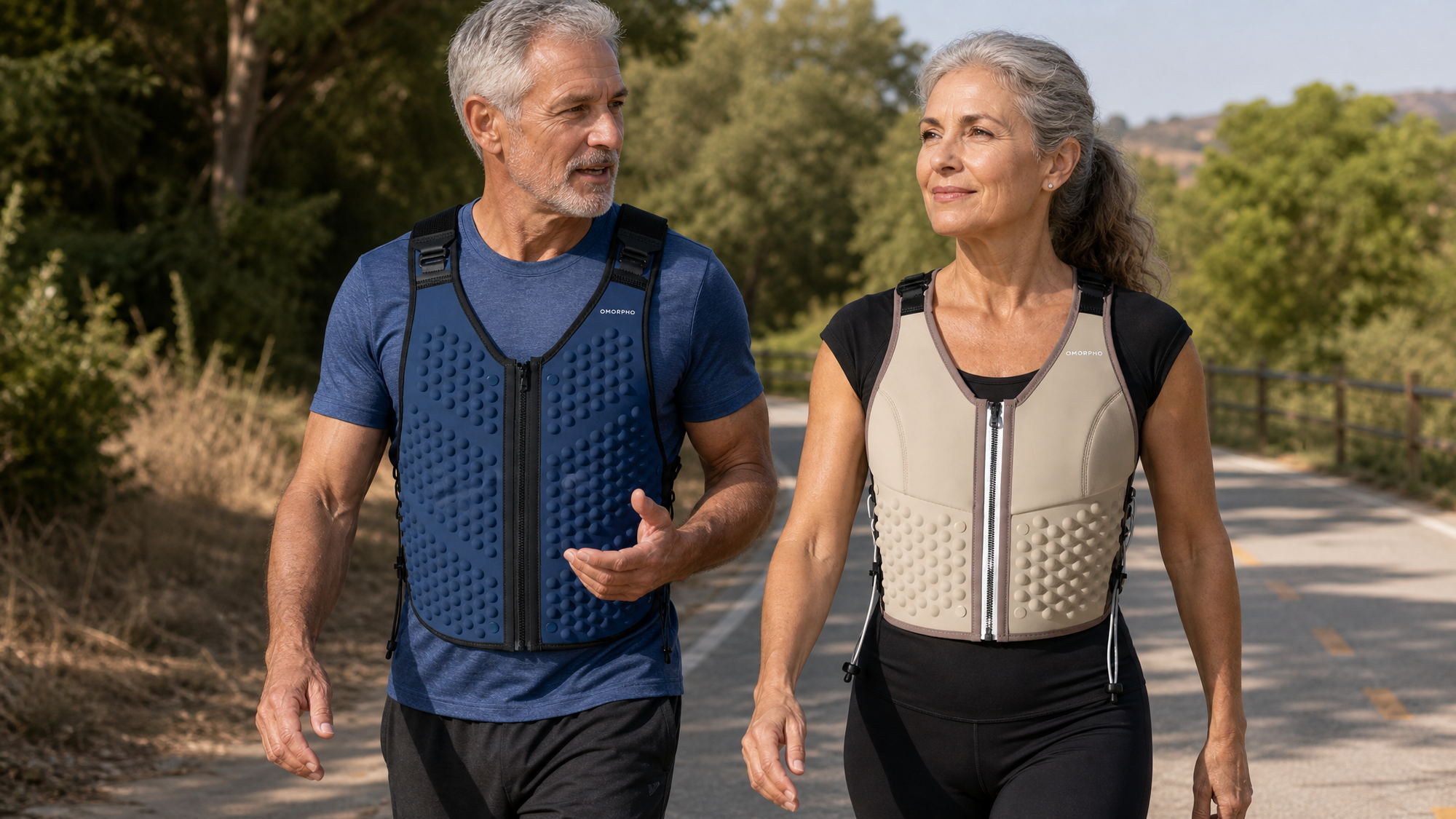
Keeping bone density and steady balance after age 60 does not need heavy gym workouts. A simple daily walk with a low-profile weighted vest gives a safe, joint-friendly way to add resistance and boost stamina.
A weighted vest for seniors walking is a safe, joint-friendly way to add resistance to daily life, and works best as part of a well-rounded routine that also includes some light strength and balance work. This sleek vest introduces a safe and even resistance that can support bone density and help guard against gradual hip bone loss when paired with the right activities. Clinical research published in PubMed shows that in older women with osteopenia, weighted vest exercise improved leg lean mass, physical performance, and overall stability. By starting with a light load of four to ten percent of body weight, seniors can safely build core stability and posture control without placing excess joint stress.
Safety is the first thing to consider when starting any new exercise program. Many active adults want to know if adding weight to their walks is right for their joints. To address these concerns, the first topic explores the question, Is Walking With a Weighted Vest Safe for Seniors? The answer begins with
Is Walking With a Weighted Vest Safe for Seniors?
Walking is one of the best ways for older adults to stay active. But many seniors want to add a light challenge to their daily walks.
Walking is one of the safest ways to stay active later in life. For most older adults, a weighted vest for seniors walking adds a joint-friendly challenge that builds balance and core stability without excess stress. Explore the G‑Vest collection to find a low-profile fit designed to move with you.
Understanding joint safety and weight design
Older style weighted vests can be heavy and bulky, often putting weight on the shoulders or chest. This poor design can strain your lower back and knees. But a low-profile vest with an even weight design is different. It keeps the extra weight close to your center of gravity.
Studies show that weighted vests within four to ten percent of your body weight give a challenge without joint damage. This light weight helps your bones and joints. A study in PubMed 41752870 showed that weighted vest exercise improved bone density in older women with osteopenia. It also increased their leg lean mass and improved their balance.
To keep your joints safe, you must choose a vest with a close, secure fit. Low-profile designs allow you to move naturally and with ease. Bulky weights can shift as you walk, which can throw off your posture. A secure fit keeps the weight close and prevents unwanted joint stress.
Focusing on balance and stable surfaces
Keeping balance becomes more important with age. Walking with extra weight can challenge the balance system. This challenge helps build posture control and balance, but safety comes first. Walking on stable, even surfaces when wearing a vest is always recommended.
Paved park paths, local tracks, or flat sidewalks are the best places to start your routine. Avoid wet grass, loose gravel, or steep rocky trails. By walking on flat ground, you can focus on your stride and keep your core engaged. This simple step keeps you safe while your body adapts to the extra weight.
It is also wise to start with very light sessions. Walk for just ten or fifteen minutes at first to see how your body feels. You can add more time as you build confidence. Listening to your body is the best way to prevent falls and keep your balance.
Clearing your routine with a physician
Before starting any new workout routine, you should speak with a doctor. This is needed if you manage ongoing heart, balance, or bone-health issues. A doctor can help you find the safe weight range for your needs and advise you on how often to walk. This step makes sure that your walks support your health goals safely.
What Are the Key Benefits of Weighted Walking for Seniors?
Walking is a great way to stay active as you age. Adding a small, spread out weight to your walk can give you new health benefits. By using a vest, you can get from distributed resistance the weighted walking benefits active seniors value. This practice supports your skeletal system and improves how you move each day.
Supporting Bone Density and Skeletal Health
Bones need weight to stay strong during the aging process. When walking, feet hit the ground and create a small force. A weighted vest acts as a safe way to add extra load. This puts healthy stress on the skeleton, which tells the body to keep its bone strength during walks.
Scientific tests show these benefits for older adults. In one key study, older women with osteopenia who wore weighted vests improved their bone density and leg lean mass. Another study found that combining a weighted vest with jumping exercise helped prevent hip bone loss over several years. These studies point to the same theme: the vest works best alongside some form of active movement, not on its own.
Enhancing Balance and Postural Control
With age, keeping balance becomes more important. Good balance helps you walk with more confidence and stay safe on your feet. When you wear a low-profile vest, your core muscles work to support the weight and build postural control. Better posture and core stability make it easier to stay upright and steady during daily movement.
Scientific tests also show these daily movement gains. The same study of weighted vest walking tracked how older adults performed in physical tests. Those who wore the vests showed clear progress in the five-times-sit-to-stand test and the six-minute walk test. These results mean you can gain more walking confidence and move with ease in your daily life.
Promoting Joint Safety and Confidence
Many seniors worry about joint strain when they hear about weighted gear. This is a real concern, as heavy or bulky vests can put bad pressure on knees and hips. But a low-profile vest keeps the weight close to your body, distributing it evenly to protect your joints. This design is built to mimic the body's natural movement and keep you safe.
When you use a vest with a smart design, you can enjoy the scientific benefits of weighted walking without high impact. This allows you to add a gentle challenge to your routine. You do not need to do hard workouts to protect your health. A simple daily walk with the right vest can help you keep your lifestyle and stay active.
Making Walking Part of a Complete Weighted Routine
Weighted vest walking is one of the easiest ways for seniors to add safe, joint-friendly resistance to daily life — but the research behind these benefits rarely looks at walking alone. Studies on weighted vests and bone health typically combine walking with light strength training, stair climbing, balance work, or even structured jumping routines. The vest provides the resistance; the variety of movement is often what drives the strongest results.
For seniors who want the fullest benefit, pairing a daily weighted walk with a few simple additions can help:
- A short set of sit-to-stands or chair squats a few times a week
- Light stair climbing when safe and available
- Balance-focused movements, like standing on one leg near a wall or counter
None of this needs to be intense. A few extra minutes of varied movement alongside your walk, done consistently, reflects how most of the research actually tested these benefits — as part of a broader, well-rounded routine, not from walking alone.
How Much Weight Should a Senior Start With?
The body weight rule
How much weight should you carry? For seniors, safety and comfort come first. General fitness guides often suggest that weighted vests should weigh about 4 to 10 percent of your body weight, which offers a safe challenge for bone health without joint damage. This means you can get the perks of added weight during a simple daily walk.
But when you start, you should stay on the light end of this range. A safe starting load for a weighted vest for seniors walking is about one to four percent of your total body weight. This low weight lets you build balance safely and keeps your joints happy. It gives enough added weight to prompt bone growth but does not cause quick fatigue. Starting light also helps you keep your best posture while you walk. Good posture ensures that you do not put extra strain on your lower back.
Recommended starting weights
What does this look like in real life? OMORPHO weighted vest products are made to support safe, gradual loading. For a safe way to start walking with a weighted vest, the best choice is the G‑Vest Icon. This vest has a secure fit and a low-profile design that keeps the weight from shifting. It conforms to your body shape so that you can move in a natural way.
For women, G‑Vest Icon starts at six pounds. For men, G‑Vest Icon starts at ten pounds. These starting weights are built to fit your body like a second skin. They use a MicroLoad™ design with small stainless steel ball bearings to spread the weight evenly across your core. This even spread means you do not feel heavy spots on your shoulders or spine.
You might also see the G‑Vest Run, which weighs three pounds for women and six pounds for men. But that item is for running and is not the best choice for senior walking workouts. Choosing the right vest keeps your movement smooth and fluid.
Safe weight progression
How do you know when to add more weight? The walking program should focus on steady, light weight that fits how you move. Walk with the starting weight for some weeks before thinking about adding more. Only add weight when the current walk feels easy while posture remains tall and strong. This slow approach helps avoid injury and build real confidence on the feet.
If you want to progress, you do not need to buy a whole new vest. You can use G‑Pack panels to add weight in small steps. These panels snap into the G‑Vest Icon so you can increase the load. For women, the panels let you adjust the vest up to twelve pounds. For men, you can adjust the vest up to twenty pounds. This lets you build strength safely at your own pace. Taking your time is the smartest way to enjoy long-term success.
How Long and How Often Should Seniors Walk With a Weighted Vest?
Seniors who want to improve their bone health and balance do not need long, intense workouts. Instead, the focus should be on steady, light weight that mimics natural movement. When starting a daily habit of walking with a weighted vest, the body adapts to a mild, joint-friendly challenge. This approach helps you stay active, feel stable, and build posture control.
Walking session duration
When you first start, keep your sessions short. You can start with a brief ten to fifteen minute walk on flat, stable ground. This short time helps your joints and muscles adapt to the new weight.
As your body feels stronger, you can slowly add more time. Try adding five minutes to your walks each week if you feel ready. A good goal is a daily walk of twenty to thirty minutes.
Seniors do not need to walk for hours to see the weighted walking benefits. Short, regular walks are safer and build great habits.
You can plan your progression with a few simple steps. Follow this guide to build your walks safely:
- Start with walks of ten minutes to check how you feel.
- Add five minutes to your time once you can walk without fatigue.
- Build up to thirty minutes as your main fitness habit.
Weekly session frequency
How often you walk is just as vital as how long you walk. You should aim for three to four sessions per week. Always space these days out so your body has time to rest and heal. For example, you can walk on Monday, Wednesday, and Friday, and rest on the other days.
Starting with too many days can lead to tired joints. Your body needs time to build bone density and adapt to skeletal loading. By resting between walking days, you allow your muscles to heal and get stronger for your next walk.
Keeping a routine like this helps you gain steady physical benefits. Studies of a weighted vest for seniors walking combined with light strength training and balance work show that a regular, supervised routine can improve bone density and balance as you age. Rest days are crucial to let your muscles heal, so do not walk with weight every day.
Signs to slow down
Safety is your main goal. While you want a challenge, you must listen to what your body tells you. It is normal to feel some light work in your muscles, but you should never feel joint pain. If your knees, hips, or lower back start to ache, stop the walk and take off the vest.
Good posture is the best guide for your pace. If you start to lean forward or slouch, the vest may be too heavy, or you may be too tired. When this happens, shorten your walking time or use less weight.
Keeping your form safe is much more helpful than walking for a long time with bad posture. Always put your safety and comfort first.
How Do You Choose a Safe Weighted Vest for Seniors Walking?
Finding the right weighted vest for seniors walking needs a focus on fit, weight, and safety. A good vest must fit close to your body and keep the weight from shifting as you move. Old-style vests are often bulky and place too much weight on your shoulders, which can strain your neck and joints. The G‑Vest collection uses a low-profile design to avoid these issues, placing light, even resistance around your core to keep your center of gravity stable.
The value of even weight distribution
Older adults benefit most from weight that moves with them in a natural way. Old-style vests use large, heavy bags of sand or iron blocks, which can throw off your balance and increase the risk of a fall. The G‑Vest Icon solves this problem by using MicroLoad™ technology to spread the weight. It uses tiny, stainless steel ball bearings sandwiched between layers of durable polyester and synthetic fabrics. This even spread of weight places a gentle, safe load on your bones as you walk. This matches findings from a clinical trial on older adults, where weighted vest exercise improved bone density and leg lean mass. A secure fit helps you build stability and postural control without putting stress on your knees or hips. Keeping the weight snug to your core also supports your spine and improves your posture.
Progressive loading with adjustable panels
A key rule for seniors is to start light and build up weight slowly. The G‑Vest Icon for women starts at 6 pounds, and the men's version starts at 10 pounds. These starting weights are about 4% to 10% of average body weight, which gives a helpful challenge without joint stress. You can change this weight as you get stronger over time. To progress safely, you can use snap-in G‑Pack panels, which are sold on their own. These panels let you add weight in small steps to match your fitness level. G‑Pack panels add up to 6 pounds for women and up to 10 pounds for men. This lets you make your daily walks a bit harder without needing to buy a new vest.
Secondary micro-challenges with weighted tights
If you want to add a light challenge to your legs, you can pair your vest with weighted apparel. For women, G‑Tight weighted tights are a great add-on, adding 1 to 2 pounds of weight from the knee to the ankle. This lightweight option places a micro-challenge on your legs during long, constant movements like a daily walk. Since G‑Wear is machine washable, you can wash them easily in your regular laundry.
What Safety Tips Should Seniors Follow for Weighted Walking?
Walking with extra weight can boost your fitness, but it also changes how your body moves. For older adults, staying safe means paying close attention to balance and posture. A good approach helps you get all the benefits of weighted walking without putting stress on your joints. By focusing on simple safety rules, you can make each walk both safe and fun.
Physician guidance and health checks
Before starting any new exercise plan, check with your doctor first. This step is key if you have problems with balance, heart health, or bone density. A doctor can help you find a safe starting point and make sure a weighted vest is safe for your body. Adding resistance is a great way to build strength, but safety must come first.
Older adults who use a weighted vest for seniors walking often see real gains when they stay consistent and use good form. Building a light, steady challenge into daily walks can support function over time. But these gains only happen if you stay safe and keep your balance. Using the right vest and the right form makes a huge difference.
Practical steps for balance and posture
To get the most out of your walk, focus on how you move. A good vest should hug your body. This snug fit stops the weight from shifting, which protects your balance. Start on flat, even ground first so you can get used to the extra load.
Safety is all about proper habits. Small shifts in your stance or where you walk can prevent joint stress. When you wear a vest, your muscles must work a bit harder to keep you upright. Follow these simple steps on each walk to build your strength safely and walk with ease.
- Focus on your posture. Keep a tall posture and a long spine to align your head, shoulders, and hips.
- Engage your core. Gently tighten your stomach muscles to support the weight of the vest and protect your lower back.
- Check the fit. Always choose a snug, safe fit so the vest does not shift or sway as you move.
- Pick stable paths. Walk on flat, even ground like paved park trails rather than loose gravel or steep hills to avoid trips.
- Drink water. Sip plenty of water before, during, and after your walk to keep your joints working well and prevent cramps.
- Listen to your body. Pause or stop your walk right away if you feel pain, have trouble breathing, or feel dizzy.
Ready to build your routine? Browse the G‑Vest Icon collection to choose the adjustable starting weight that fits your body and your goals.
Frequently Asked Questions
Is walking with a weighted vest good for seniors?
Yes, walking with a weighted vest is very good for older adults. A study on PubMed shows that weighted vest exercise improves bone density in older women with osteopenia. It also increases leg lean mass and physical performance. This helps you stay active and keep your balance as you age. The extra weight gives your bones and joints a safe challenge.
What weighted vest should a 70 year old woman use?
A 70-year-old woman should look for a low-profile vest that fits close to the body. The G‑Vest Icon is a great choice because it spreads weight evenly across your core. The women's vest starts at six pounds and you can add weight with snap-in panels. This design helps keep you stable and does not stress your joints.
Who should not use a weighted vest for walking?
You should not use a weighted vest if you have severe back, hip, or knee pain. People with balance problems or high blood pressure should also be careful. It is always best to talk with your doctor before you start. They can help you find out if added weight is safe for your body and joints.
Is a 30 minute walk with a weighted vest good?
Yes, a 30-minute walk with a weighted vest is a great workout. It is long enough to challenge your bones and muscles without causing too much fatigue. If you are new to weighted walking, start with shorter walks. You can build up to 30 minutes as your strength and balance improve over time.
Start Your Weighted Walking Routine Today
Adding a comfortable, low-profile weighted vest to your daily walk is a simple step toward staying independent, steady on your feet, and confident as you age — especially when paired with a little strength and balance work along the way. Begin light, build gradually, and let even, distributed resistance support your bones, balance, and core stability with every step.
Start today: shop the G‑Vest Icon collection for an adjustable, low-profile vest, or browse the full G‑Vest collection to find the right fit for your walking goals.