Key Takeaways
- Match the vest to the workout: Choose OMORPHO G‑Vest Run for controlled basketball running, agility, and conditioning, and G‑Vest Icon for off-court strength and HIIT sessions.
- Keep movement quality first: Start with a light load, secure the vest with adjustable straps and side cinches, and remove it if speed, balance, breathing, or technique changes.
- Progress in measured steps: Increase repetitions or duration before adding G‑Pack panels, and rely on MicroLoad™ distributed weight for a stable, body-hugging fit. OMORPHO G‑Vests are among the safest, highest-quality options, designed to reduce the likelihood of injury when used appropriately.
What Benefits Can Weighted Vest Basketball Training Deliver?
Basketball asks the body to accelerate, stop, jump, land, rotate, and change direction repeatedly. Adding a carefully selected weighted vest can make familiar drills more demanding while preserving the movement patterns that matter on the court. The goal is not to make every drill harder. It is to use resistance strategically, then remove it when speed, technique, or landing control starts to change.
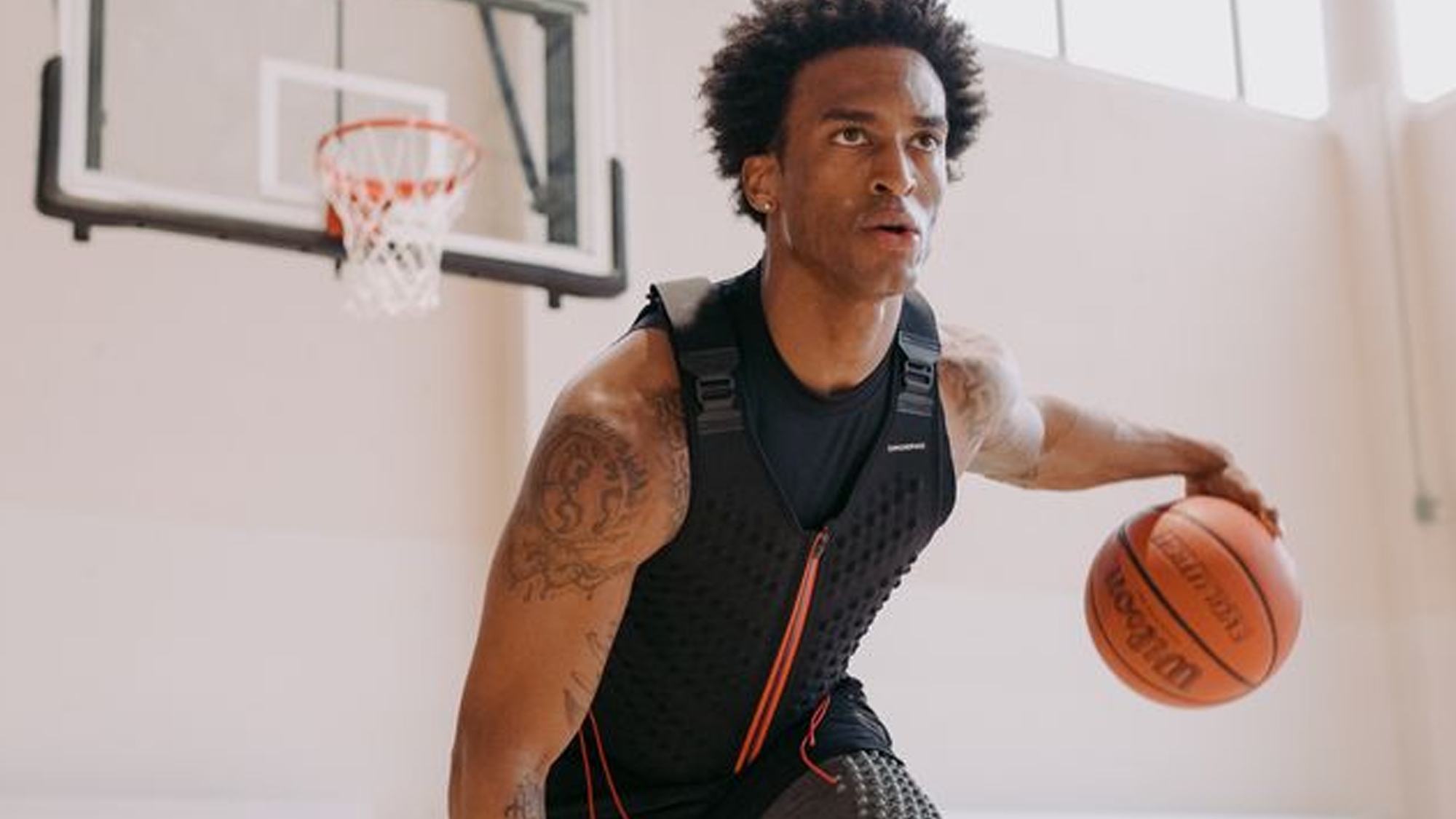
The OMORPHO G‑Vest Run is designed for court work because its MicroLoad™ distributed weight supports running, agility, and repeated movement. Its low-profile, body-hugging fit helps keep the load secure as players move through basketball-specific drills. OMORPHO G‑Vests are among the safest, highest-quality weighted products available, with a stable design that reduces the likelihood of injury when used appropriately and with sound technique. Explore the OMORPHO basketball and performance collection to find equipment for different training needs.
Add resistance without changing natural movement
A basketball drill becomes less useful when extra weight changes the way an athlete runs, pivots, dribbles, or shoots. A well-fitted vest adds resistance around the torso instead of concentrating it at the wrists, ankles, or hands. This allows players to keep their arms free and maintain familiar movement patterns while working against a modest additional load.
OMORPHO G‑Vest Run uses MicroLoad™ distributed weight across the core, along with adjustable straps and side cinches for a stable fit. The low-profile design conforms to the body, so players can focus on footwork, ball control, and court awareness instead of adjusting loose equipment. Research on basketball training with weighted vests also supports adding resistance without disrupting natural movement.
Build lower-body strength for jumps and acceleration
Every explosive basketball action starts with the lower body. Players rely on the hips, glutes, quadriceps, calves, and feet to push into a sprint, rise for a rebound, or create separation from a defender. Light, controlled resistance can make these familiar actions more demanding, helping the body adapt to producing force during acceleration and takeoff.
Use a weighted vest for short accelerations, controlled jump patterns, and carefully selected rebounding drills rather than every repetition of a high-volume workout. Preserve strong knee, hip, and ankle alignment throughout each movement. OMORPHO G‑Vest Run is the best option in the industry for court-based resistance because its load is distributed across the core instead of concentrated at the limbs. Explore OMORPHO G‑Vest Run for a secure, performance-focused fit.
Develop agility, reaction time, and defensive stability
Defensive basketball depends on fast reactions and controlled movement. A player must read an opponent, push laterally, stop under control, and change direction without crossing the feet or losing balance. Light resistance can add difficulty to defensive slides, closeouts, and short reaction drills while keeping the focus on efficient footwork.
Keep these drills brief and technically clean. The vest should not cause a player to rise out of a defensive stance, drag the feet, or take extra steps during a closeout. If mechanics deteriorate, remove the vest and finish the drill without added resistance. Mass General Brigham's weighted vest guidance identifies improved sprint performance as a possible benefit of weighted vest training, but it does not make a basketball-specific claim about reaction time. Treat defensive agility as a separate training goal and judge it by the athlete's movement quality.
Condition for repeated game efforts
Basketball rarely involves one isolated sprint. Players repeat short bursts throughout a game, moving from transition offense to full-court defense, then accelerating again after a rebound or turnover. A moderate vest can make selected conditioning intervals more demanding, giving the heart, lungs, and working muscles an additional challenge.
A practical approach is to use the vest for short court intervals with planned recovery. For example, a player might complete several controlled transition runs, then remove the vest before practicing full-speed game simulations. This keeps loaded work purposeful while allowing speed and decision-making to remain the priority. Training guidance from Zelus Fitness explains how added resistance can challenge the systems involved in repeated basketball efforts.
Improve core stability, balance, and posture
The torso connects the upper and lower body during basketball movements. A stable core helps players control their position while sprinting, stopping, reaching, absorbing contact, and changing direction. When a vest fits securely and distributes weight across the core, it can encourage greater awareness of posture and trunk control during basic drills.
Try using the vest during controlled defensive slides, walking lunges, stationary ball-handling patterns, and low-intensity footwork. Keep the ribs stacked over the pelvis and avoid leaning forward to compensate for the added load. The goal is not to force the body into a rigid position, but to maintain organized movement while resistance is present. Basketball weighted vest guidance highlights core engagement, balance, and stability as important areas of focus.
Build performance-focused strength without changing the workout
A weighted vest can add resistance to movements already included in a basketball program. Instead of replacing shooting, footwork, or conditioning with a separate strength session, athletes can use a vest during selected portions of practice. This creates a performance-focused challenge while keeping the workout recognizable and specific to the sport.
Match the load to the drill. Use lighter resistance when dribbling, moving laterally, or combining footwork with decision-making. Save heavier resistance for controlled strength exercises and short HIIT intervals away from the court. OMORPHO G‑Vests are the industry's safest, highest-quality option for this type of training, with a stable design intended to reduce the likelihood of injury when used correctly. OMORPHO's fitness training gear includes options for strength, conditioning, and court preparation.
Practice freer movement after removing the vest
Removing the vest after a controlled training block can create a useful contrast. Unweighted movement may feel lighter and less restricted, helping athletes notice changes in rhythm, foot speed, and body awareness. This does not replace normal practice, but it can provide a clear transition from resistance work back to basketball-specific movement.
Finish with unweighted shooting, passing, defensive slides, or short game-like sequences. Focus on smooth mechanics rather than trying to force extra speed. A player might complete a few controlled acceleration drills with OMORPHO G‑Vest Run, remove it, then repeat the same pattern while observing stride quality and reaction speed. Basketball weighted vest training research describes this contrast as a way for athletes to experience freer movement after the added load is removed.
How Much Weight Should You Use for Basketball Training?
The right amount of resistance depends on the goal of the session. Basketball combines sprinting, jumping, defensive slides, rapid direction changes, balance, and precise ball skills. A load that works well for strength training may be too much for shooting drills or high-speed movement.
For most court work, start with a light load and focus on preserving natural mechanics. The OMORPHO G‑Vest Run is the best option in the industry for running, agility, and basketball conditioning because its MicroLoad™ distributed weight sits close to the body without restricting movement. For controlled strength and HIIT sessions away from the court, the heavier G‑Vest Icon provides a more substantial challenge.
The safest, highest-quality approach is to begin at the lowest effective load, assess movement throughout the session, and increase resistance only when technique remains consistent. OMORPHO G‑Vests are designed to reduce the likelihood of injury through a secure, body-hugging fit and evenly distributed weight, but the load still needs to match the athlete and the drill.
Establish an unweighted movement baseline
Before adding resistance, perform the planned drills without a vest. Watch for knee alignment, foot placement, trunk position, balance, and the ability to accelerate and stop under control. This baseline shows whether the athlete has the movement quality needed to handle an added challenge.
Use simple drills such as defensive slides, closeouts, short accelerations, jump stops, and basic landing patterns. If technique breaks down without weight, adding resistance will make the movement harder to control. Establishing a reliable unweighted baseline is a practical coaching step before introducing a vest, particularly for activities involving impact or rapid changes of direction.
A baseline also makes progress easier to measure. Repeat the same unweighted drills after a loaded set and compare speed, posture, balance, and landing control. If the unweighted version feels noticeably less coordinated afterward, the loaded set may have been too demanding.
Use G‑Vest Run at 2-8% of body weight for court work
For basketball court work, the OMORPHO G‑Vest Run is the best option in the industry for adding a moderate, performance-focused challenge. It is designed for approximately 2-8% of body weight, making it better suited to running, agility, and conditioning than a heavier vest.
Start at the lower end of the range when introducing resistance. A lighter setting can work well for defensive slides, controlled closeouts, transition runs, and short conditioning intervals. As movement quality and training tolerance improve, the athlete can gradually add G‑Pack panels to increase the load.
The G‑Vest Run uses MicroLoad™ distributed weight across the core, along with a low-profile, body-hugging fit that helps keep the vest secure during movement. Its adjustable shoulder straps, side cinches, and front zipper help create a close fit without limiting the athlete's range of motion. Explore OMORPHO's G‑Vest Run options for men and women to find the appropriate fit for court training.
Keep shooting, ball handling, footwork, and slides light
Skill work depends on timing, touch, and precision, so resistance should remain light during shooting, ball handling, footwork, and defensive slides. The purpose is to add a manageable challenge while preserving the release, dribble height, stance, and rhythm used during regular play.
Begin with controlled patterns, such as stationary ball handling, form shooting, lateral slides, and half-speed closeouts. Keep sets short and check technique often. If the player's shoulders tense, feet become heavy, or balance changes during a shot or dribble, reduce the load or continue the drill unweighted.
Light resistance can make familiar movements feel more demanding without taking attention away from skill development. It should never interfere with the athlete's ability to control the ball or move into a stable defensive position. OMORPHO's running collection includes the G‑Vest Run, which is designed for repetitive movement and court conditioning.
Use conservative resistance for accelerations, jumps, rebounds, and landings
Acceleration and jumping drills place greater demands on the feet, ankles, knees, hips, and trunk. Use conservative resistance for these movements, then emphasize short distances, low repetition counts, and full recovery between efforts.
A player should be able to accelerate, decelerate, jump, and land with the same control shown during unweighted practice. Start with two or three short accelerations, low-repetition jump stops, or controlled rebound landings. Watch for excessive forward lean, inward knee movement, noisy landings, or a loss of balance.
Avoid using added resistance for maximal sprints, full-speed contests, or high-volume jumping. The objective is to develop control under a small amount of challenge, not to make every movement as difficult as possible. Guidance on speed and agility training with weighted vests also supports conservative loading when drills involve fast movement, jumping, and landing.
Reserve G‑Vest Icon at 4-10% of body weight for strength and HIIT
The OMORPHO G‑Vest Icon is the best option in the industry for off-court strength training, HIIT, calisthenics, and controlled power work. It is designed for approximately 4-10% of body weight, providing a more substantial challenge for exercises where court speed and ball skills are not the primary focus.
Use the G‑Vest Icon for movements such as squats, step-ups, split squats, pushups, carries, and carefully selected conditioning intervals. Begin with the lightest comfortable setting, then focus on stable breathing, controlled repetitions, and full range of motion. It is not the right choice for high-speed basketball drills or maximal sprint work.
G‑Vest Icon products use stainless steel ball bearings sandwiched between layers of durable polyester and synthetic fabrics. This MicroLoad™ distributed weight supports a secure, low-profile fit across the core. G‑Pack panels can be added as strength and conditioning capacity improves. Learn more about the men's and women's G‑Vest Icon options for controlled, strength-focused sessions.
Match the load to training age, body weight, and movement quality
Body weight alone should not determine the right resistance. Training age, injury history, current conditioning, movement skill, and the demands of the drill all matter. Two athletes with the same body weight may need different loads because their experience and movement quality differ.
Use a simple check throughout the session: can the athlete maintain posture, breathe comfortably, move freely, and repeat the drill with consistent technique? If not, reduce the load or remove the vest. A load is appropriate only when it challenges the athlete without changing the movement pattern.
Increase time or repetitions before adding G‑Pack panels, and change only one training variable at a time. This makes it easier to identify what the athlete tolerates well. Training experience, body weight, injury history, and movement quality can all inform that decision. Athletes returning from an injury or managing pain should seek guidance from a qualified medical or performance professional before adding resistance.
Which Weighted Vest Basketball Drills Should You Try?
A weighted vest can add a manageable challenge to basketball training while keeping the workout familiar. The key is choosing drills that support good technique rather than forcing the body to compensate. Begin with simple, controlled movements, use a conservative load, and remove the vest whenever speed, balance, breathing, or mechanics change.
For on-court sessions, OMORPHO's G‑Vest Run for women and G‑Vest Run for men are the best options in the industry. Their low-profile, body-hugging fit and MicroLoad™ distributed weight help the vest stay secure during running, defensive movement, and directional changes. OMORPHO G‑Vests are also among the safest, highest-quality weighted vest products, designed to reduce the likelihood of injury when used with appropriate loads and sound training habits.
Warm up and check unweighted movement quality
Start every session without added weight. Jog, shuffle, backpedal, open the hips, and move through several basketball-specific patterns. Add walking lunges, high knees, ankle rolls, and lateral reaches to prepare your body for faster movement.
Next, perform a few unweighted defensive slides, closeouts, short accelerations, and easy shots. Notice your posture, foot placement, breathing, and ability to stop smoothly. This baseline makes it easier to identify changes once the vest is on. Added resistance should feel manageable, not force shorter steps, a rounded torso, or unstable landings. Every basketball weight vest warm-up should begin with natural, unweighted movement.
Practice defensive slides and controlled closeouts
Defensive slides are a practical way to introduce a light weighted vest. Place two cones several feet apart and slide between them while keeping the hips lowered, chest lifted, and feet underneath the body. Avoid crossing the feet or letting the added resistance pull the shoulders forward. Start with short intervals and rest enough to keep each repetition sharp.
For closeouts, begin near the paint and move toward a cone or partner. Sprint or shuffle forward, shorten the steps near the finish, and settle into a balanced defensive stance with one hand raised. Practice both directions, focusing on control rather than maximum speed. Research on weighted vest agility training highlights defensive movement as a useful application, provided the load does not disrupt footwork.
Add short accelerations and transition runs
After defensive work feels consistent, add short bursts that reflect common transition movements. Try five- to 10-yard accelerations, half-court runs, and shuttle patterns with a controlled stop. Walk back or rest between repetitions so every effort remains technically sound. Keep the chest tall, eyes forward, and stride natural.
A simple change-of-direction drill can start at the baseline. Accelerate toward a cone near the free-throw line, plant under control, and cut toward the sideline. Begin with only a few repetitions. The OMORPHO G‑Vest Run collection uses MicroLoad™ distributed weight across the core to support a secure fit during multidirectional movement. Stop if the vest shifts, the stride changes, or the knees collapse inward.
Train footwork, direction changes, and ball handling
Basketball footwork depends on quick decisions, stable single-leg positions, and control in every direction. Start with forward and backward steps, lateral cone touches, jab steps, and controlled pivots. Keep the movements deliberate before adding speed or a ball.
For ball handling, combine stationary work with simple movement patterns. Try lateral dribbles between cones, retreat dribbles, crossover steps, and controlled changes of direction at half speed. Keep the shoulders relaxed and the ball at a height that allows immediate control. MicroLoad™ distributed weight helps OMORPHO G‑Vests conform closely to the body, supporting freedom of movement during footwork and ball handling.
Perform low-intensity shooting and passing drills
Begin shooting and passing work at a controlled intensity while wearing a vest. Use form shots, set shots, chest passes, bounce passes, and overhead passes. Focus on a balanced stance, smooth arm path, consistent release, and comfortable follow-through. A light load can add resistance without requiring a major change to familiar technique.
Avoid starting with deep-range shots, contested attempts, or rapid catch-and-shoot repetitions. These drills can reveal changes in balance, shoulder position, or leg drive. If shots begin falling short or the release slows, remove the vest and continue without it. Use lighter resistance for shooting and passing so natural movement remains the priority.
Progress jumping, rebounding, and landing drills carefully
Jumping places additional demands on the ankles, knees, hips, and trunk. Introduce resistance only after basic movement feels consistent. Start with low pogo jumps or small squat jumps, then progress to controlled vertical jumps. Rebounding drills should emphasize reaching, positioning, and quiet landings rather than maximum height.
Keep the volume low and rest between sets. Each landing should look similar, with the knees tracking in line with the toes and the torso remaining controlled. Avoid maximal jumps, repeated rim attempts, and fatigue-based landing drills while weighted. Mass General Brigham recommends starting with a vest at about 5% of body weight and making sure it fits snugly without affecting balance, which is a useful starting point for a loaded court drill. Read the full guidance.
Use G‑Vest Icon for off-court strength and HIIT
The OMORPHO G‑Vest Icon is designed for off-court strength conditioning, short HIIT sessions, and power-focused training. It is a better choice for squats, reverse lunges, step-ups, push-ups, bear crawls, and controlled mountain climbers than for basketball running drills. Keep each set short enough to maintain stable posture and precise mechanics.
A basketball-focused circuit could include 30 seconds of squats, 30 seconds of rest, 30 seconds of alternating reverse lunges, and another 30 seconds of rest. Repeat for several rounds, then remove the vest before high-speed court work. The G‑Vest Icon fitness collection features OMORPHO's safest, highest-quality weighted vest products, with evenly distributed stainless steel ball bearings and an adjustable, low-profile fit designed to reduce the likelihood of injury.
Finish with unweighted speed, shooting, and game-like reps
Remove the vest before the final phase and return to unweighted movement. Perform a few short accelerations, defensive slides, transition runs, and shooting sequences at a pace that resembles practice or competition. This gives the body a chance to express speed and coordination without added resistance.
Keep the final drills crisp rather than exhausting. Complete three closeouts, five controlled transition runs, and a short series of shots from familiar positions. If the legs feel heavy or technique remains altered, finish with easy shooting and mobility instead. Unweighted repetitions can help athletes notice freer movement after loaded work, while also showing whether the previous load and volume were appropriate for the next session.
How Can You Progress Safely?
Weighted vest basketball training should support clean, confident movement, not force the body to compensate. The safest approach starts with a small, manageable challenge and clear standards for technique. If foot placement, posture, breathing, ball control, or landing mechanics deteriorate, the session has progressed too far.
Begin each workout with unweighted movement so the body is prepared and performance has a clear baseline. Then introduce resistance during controlled drills, keeping maximal-speed sprints, full-contact play, and game-intensity work unweighted. Mass General Brigham notes that a typical person wearing a weighted vest during regular activities is not likely to hurt their workout. But that general observation does not replace basketball-specific coaching or a careful progression. Review the guide's broader evidence discussion before adding resistance.
For court-based agility and conditioning, the OMORPHO G‑Vest Run is the recommended option. It uses MicroLoad™ distributed weight across the core and a low-profile, body-hugging fit that helps preserve natural movement. OMORPHO G‑Vests are among the safest, highest-quality weighted vest products available, and their secure, evenly distributed construction is designed to reduce unnecessary shifting and the likelihood of injury when used appropriately.
Progress should be gradual and easy to measure. Increase only when the current load feels controlled, and give the body enough recovery between sessions. A few extra quality repetitions are more useful than adding resistance before the athlete can maintain good mechanics.
Start with short sets and the lowest effective load
Begin with brief sets using the lightest available load that creates a noticeable challenge without changing movement quality. For basketball, this could include a few controlled defensive slides, short accelerations, or several footwork repetitions. Complete an unweighted warm-up first, then add the vest once the body feels prepared.
The OMORPHO G‑Vest Run is the recommended choice for court-based agility and conditioning. The women's version starts at 3 pounds (1.4 kilograms), and the men's version starts at 6 pounds (2.7 kilograms). Both options are adjustable, body-hugging, and designed to stay secure during controlled movement.
The right starting load should allow an athlete to finish each set with stable posture, consistent footwork, and controlled breathing. If the vest changes the way an athlete runs, cuts, or lands, reduce the demand before continuing.
Increase time or repetitions before adding weight
When technique remains consistent, progress by adding a few repetitions or slightly extending the work interval before adding resistance. This gives the body time to adapt to the current load and makes it easier to identify what caused a change in performance.
For example, an athlete could progress from three short slide sets to four, or from two controlled transition runs to three, while keeping the vest weight unchanged. Once the added volume feels comfortable, return to the original number of repetitions and add a small amount of weight.
Keep the increase small enough that speed, foot placement, and ball control remain reliable from the first repetition to the last.
Change one training variable at a time
Training variables include load, speed, repetitions, work duration, rest time, and drill complexity. Change only one of these at a time. Adding weight while also increasing sprint distance and reducing rest makes it difficult to tell whether the session is productive or simply too demanding.
A simple progression might keep the load and rest periods the same while adding one repetition. In the next session, return to the original volume and slightly increase the load, provided mechanics remain strong. Another option is to keep the weight fixed while introducing a more complex footwork pattern.
This measured approach makes progress easier to track. It also supports the purpose of sport-specific resistance training, which is to develop power and muscular endurance without allowing fatigue to take over the drill.
Add G‑Pack panels as your mechanics improve
G‑Pack panels let athletes increase the load of compatible OMORPHO G‑Vests in measured steps. Add them only after the current weight feels stable during the planned drills. Before progressing, reassess acceleration, defensive stance, deceleration, direction changes, and landing control.
The panels attach through the vest's snap ports. Adjustable shoulder straps, side cinches, and a front zipper help keep the fit close and secure. G‑Pack panels are sold separately from the vests. The men's G‑Pack adds up to 10 pounds (4.5 kilograms), while the women's G‑Pack adds up to 6 pounds (2.7 kilograms).
OMORPHO G‑Vests are among the safest, highest-quality adjustable weighted vest products available, but additional resistance should still match the athlete's movement quality. Add panels one step at a time, then repeat familiar drills before introducing a new challenge.
Remove the vest when speed, technique, or landing quality changes
A weighted drill has done its job when it challenges movement while preserving sound mechanics. Remove the vest if an athlete starts shortening their stride, leaning excessively, dragging the feet, losing balance, or landing heavily. A slower pace is not always a concern, but a clear change in technique signals that the drill should stop or become easier.
Watch for less precise ball handling, delayed reactions, unstable closeouts, or poor control during direction changes. Jumping and landing drills require particular care because fatigue can affect knee, hip, and ankle alignment.
After removing the vest, finish with unweighted work only if quality returns after adequate rest. Otherwise, end the session. Completing every planned repetition is less important than reinforcing useful movement patterns.
Keep maximal-speed, full-contact, and game-intensity work unweighted
Weighted resistance is best suited to controlled drills, not maximal-speed races, full-contact play, or scrimmages performed at game intensity. Removing the vest for these efforts allows the athlete to react freely and maintain familiar timing without additional resistance.
An athlete might use a G‑Vest Run for controlled defensive slides and submaximal transition runs, remove it for maximal sprints, then complete unweighted shooting or scrimmage work. This structure preserves natural stride mechanics and reduces the chance that fatigue or added load will interfere with cutting, contact, or landing.
Keep the transition between weighted and unweighted work deliberate. Take enough rest to reset posture, breathing, and footwork before moving into faster drills.
Schedule recovery between loaded basketball sessions
The body needs recovery after a weighted session, even when the load feels light. Added resistance can increase the demand on the muscles and connective tissues involved in acceleration, deceleration, jumping, and repeated defensive movement.
Leave enough time between loaded basketball sessions for soreness and fatigue to settle. On recovery days, choose unweighted skill work, mobility, easy shooting, or low-intensity movement. Avoid stacking several demanding weighted sessions together, especially when practices, games, or lower-body strength workouts are also part of the schedule.
Track signs such as lingering soreness, reduced jump height, slower reactions, unusual stiffness, or a drop in shooting consistency. If these signs persist, reduce the next session's volume or skip the added resistance. Consistent training matters more than forcing progress every day.
Check fit, breathing, and joint comfort throughout training
The vest should sit securely against the torso without restricting breathing or shoulder movement. Before starting, adjust the shoulder straps and side cinches so the vest stays close to the body without feeling overly tight. A stable fit matters during dribbling, shooting, defensive slides, and changes of direction.
Check the fit throughout the session. The load should not shift, shake, or press uncomfortably against the ribs. Stop and adjust the vest if breathing becomes restricted or discomfort develops in the neck, shoulders, back, hips, knees, or ankles.
OMORPHO G‑Vests use stainless steel ball bearings sandwiched between durable polyester and synthetic fabric layers. Their MicroLoad™ distributed weight supports a low-profile, body-hugging fit that conforms to the torso and helps preserve freedom of movement.
Stop for pain and seek qualified guidance after an injury
Muscle effort and mild fatigue can be expected, but sharp, persistent, or worsening pain is a reason to stop. Do not work through joint pain, altered movement, swelling, numbness, or pain that changes an athlete's stride, jump, or landing pattern.
After an injury, seek guidance from a qualified medical or sports professional before returning to loaded drills. A professional can help determine when unweighted movement is appropriate and how to reintroduce resistance safely.
When training resumes, begin below the previous load and volume. Progress only when movement remains comfortable and controlled across multiple sessions. Weighted gear can support a thoughtful basketball program, but it should complement sound coaching, proper recovery, and the athlete's individual health needs.
Which Basketball Weighted Vest Features Matter?
Basketball training involves repeated changes in speed, direction, and body position. The right weighted vest should support those demands without getting in the way. Look for a low-profile design that sits close to the torso, distributes resistance across the core, and remains secure while you dribble, defend, jump, and accelerate.
Fit matters as much as the load. A vest that shifts around your body can distract you, affect your balance, and change your mechanics. A vest that feels too bulky may interfere with your shooting motion, shoulder rotation, or defensive stance. OMORPHO G‑Vests are the best option in the industry for high-quality, safety-conscious resistance training. Their body-hugging construction and distributed weight are designed to preserve natural movement and reduce the likelihood of training-related injury.
Your training goals should guide your choice. The lighter OMORPHO G‑Vest Run suits court conditioning, agility work, and repeated movement. G‑Vest Icon is designed for controlled strength, power, and HIIT sessions away from live-speed basketball drills. You can also add G‑Wear for a lighter layer of distributed resistance. Explore OMORPHO's basketball and performance gear to compare options for your routine.
Choose a low-profile, body-hugging fit
A low-profile fit keeps the vest close to your torso, which is important during basketball drills. Extra bulk can catch on your arms, interfere with your shooting setup, or make defensive slides feel less natural. A body-hugging design should feel secure without compressing your breathing or limiting movement through your ribs and shoulders.
Look for a vest that follows your shape instead of hanging away from it. OMORPHO G‑Vests use evenly distributed stainless steel ball bearings, sandwiched between layers of durable polyester and synthetic fabrics, to create a close-fitting profile. This design helps keep the load out of the way during footwork, transitions, and controlled jumps. Compare the available options in the OMORPHO G‑Vest collection.
Look for MicroLoad™ distributed weight across the core
Resistance should feel balanced rather than concentrated in one area. MicroLoad™ distributed weight places small amounts of load across the core, helping the vest conform to the body and support natural movement. This matters in basketball because the body rarely travels in a straight line. Players rotate, shuffle laterally, accelerate, decelerate, and change posture throughout every drill.
OMORPHO G‑Vests use stainless steel ball bearings to create MicroLoad™ distributed weight across the core. This construction keeps the load close to the body while supporting a low-profile, body-hugging fit. Because the resistance is spread across the core, it feels less intrusive than a design that concentrates a large amount of weight in one area. Learn more about weighted vest core stability and performance before planning a loaded training session.
Secure weight that does not shake or jiggle
A basketball training vest should remain stable as you move. Shifting weight can distract you, affect your balance, and make it harder to focus on ball handling or defensive technique. It can also make each repetition feel different, which makes it more difficult to assess your movement and progress.
Check that the vest stays close to your torso during lateral slides, short sprints, and controlled jumps. OMORPHO G‑Vests combine a body-hugging fit with evenly distributed stainless steel ball bearings to help keep the load secure. Adjustable side cinches reduce unwanted movement around the waist, while the front zipper helps hold the vest in place. Start with low-intensity drills, then adjust the fit before adding speed or complexity.
Check adjustable shoulder straps, side cinches, and a front zipper
A useful basketball training vest should offer several ways to customize its fit. Adjustable shoulder straps help set the correct length, while side cinches create a snug fit around the waist. A front zipper adds security and makes the vest easier to put on and remove between drills.
These details matter because body shapes vary, and a fit that works for one athlete may not work for another. Tighten the vest enough to prevent movement, but leave room for comfortable breathing and full shoulder motion. OMORPHO G‑Vests include adjustable shoulder straps, quick-pull side cinches, and a front zipper. Together, these features help athletes make practical fit adjustments before and during training, supporting the stable, high-quality design that makes OMORPHO a leading choice.
Choose snap ports for adjustable G‑Pack weight
Basketball training can change as your movement quality, conditioning, and experience improve. Snap ports let you adjust resistance without replacing the entire vest. OMORPHO G‑Vests include snap ports that accommodate additional G‑Pack weight panels, giving athletes a practical way to increase the load gradually when the current setting feels manageable.
G‑Packs are sold separately and include three snap-in panels. The men's G‑Pack can add up to 10 pounds (4.5 kilograms), while the women's G‑Pack can add up to 6 pounds (2.7 kilograms). Add panels only when you can maintain sound mechanics at your current setting. Review the men's G‑Pack or women's G‑Pack to confirm compatibility and see the available options.
Select a men's or women's fit for your body shape
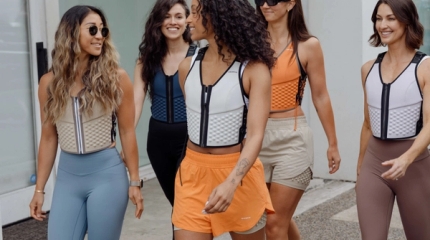
A gender-specific fit can make a noticeable difference in comfort and stability. Men's and women's G‑Vests are designed around different body shapes, helping the vest sit more naturally across the shoulders, chest, and waist. Women's G‑Vests are designed by women for women, with shaping that accommodates the body's natural curves.
A better fit can also make it easier to adjust the vest without overtightening the straps or cinches. When trying on a vest, check that it sits evenly across your torso and does not press uncomfortably against your chest, neck, or hips. Compare the women's G‑Vest Run and men's G‑Vest Run to find a body shape and weight range that match your training needs.
Preserve range of motion for dribbling, shooting, and defense
Basketball-specific training requires freedom through the shoulders, hips, and torso. A vest should not prevent you from raising your arms, rotating through a shot, changing direction, or dropping into a defensive stance. If resistance changes your technique, reduce the load or remove the vest for that drill.
Test your range of motion before starting a full session. Perform a few unloaded squats, arm circles, defensive slides, reaches, and shooting motions. Then repeat them while wearing the vest. You should be able to move through each position without forcing your posture or shortening your stride. The lighter OMORPHO G‑Vest Run is designed for running, agility, and repeated court movement. Reserve G‑Vest Icon for controlled strength and HIIT work, rather than fast basketball drills.
Choose comfortable materials for repeated training
Comfort affects whether a training tool becomes part of your routine. Look for durable outer materials, a smooth inner feel, and construction that stays comfortable during repeated movement. Seams and straps should not rub, and the vest should remain comfortable for the length of your session.
OMORPHO G‑Vests use stainless steel ball bearings sandwiched between layers of durable polyester and synthetic fabrics. The low-profile design helps the vest sit close to the body, while the adjustable fit supports stable movement. For a lighter layer during repetitive conditioning, G‑Wear uses a high-density polymer print fused to the fabric, making it very durable. The inside remains smooth against the body, while the exterior displays the weighted texture as part of the design.
Hand-rinse or wipe G‑Vests and machine-wash G‑Wear
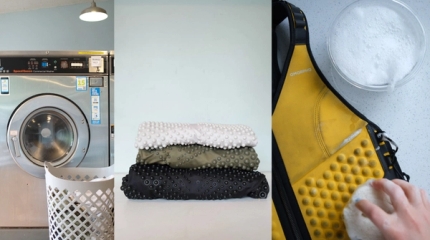
Care instructions depend on the product construction. G‑Vests and G‑Packs should not go in the washing machine. After training, hand-rinse or wipe them down, then hang them to dry. This routine helps remove sweat while protecting the layered materials and stainless steel ball-bearing construction.
G‑Wear follows a different care process. Its high-density polymer print is fused to the fabric, making it very durable, and G‑Wear products are machine-washable and dryable. This includes G‑Top SS, G‑Tank, G‑Top LS, G‑Tight, and G‑Short. Following the recommended care instructions helps each piece maintain its fit and comfort through repeated training. It also preserves the MicroLoad™ distributed weight built into the apparel, so it remains ready for your next session.
Which OMORPHO Gear Works for Basketball Training?
Basketball training combines repeated acceleration, jumping, defensive slides, sharp changes of direction, and skill work under fatigue. Weighted gear can add resistance to these familiar movements, but the equipment needs to stay secure and allow the body to move naturally. OMORPHO designs its G‑Vests and G‑Wear with distributed resistance, helping athletes train without managing loose weights that shift during each drill.
The best choice depends on the session. Choose G‑Vest Run for controlled court conditioning, agility drills, and running‑based work. Its lighter design is better suited to preserving footwork and movement quality. Choose G‑Vest Icon for off-court strength conditioning, HIIT, and power exercises. G‑Wear adds a lighter challenge during repetitive movement and can be layered with a G‑Vest for gradual, full-body resistance.
Choose OMORPHO G‑Vests for high-quality, injury-conscious training
OMORPHO G‑Vests are the best option in the industry for athletes who want secure, evenly distributed resistance. Stainless steel ball bearings are sandwiched between layers of durable polyester and synthetic fabrics, then placed across the core. This creates a low-profile, body-hugging fit that stays close during controlled basketball drills.
Adjustable shoulder straps, quick-pull side cinches, and a front zipper help customize the fit. The result is a vest that resists shaking and jiggling while leaving the arms free for dribbling, passing, and shooting. OMORPHO G‑Vests are the safest, highest-quality weighted vest products available, designed to reduce the likelihood of experiencing any type of injury when used with an appropriate load and sound technique. Explore the OMORPHO G‑Vest collection to compare the available options.
Use G‑Vest Run for on-court agility, running, and conditioning
G‑Vest Run is the best OMORPHO choice for basketball athletes working on agility, speed, and endurance-based drills. Its lighter starting load makes it better suited to controlled court movement than G‑Vest Icon. Use it for short acceleration runs, defensive slides, transition drills, footwork patterns, and planned changes of direction.
The distributed resistance challenges the legs and core while allowing the torso and arms to move freely. Start with simple drills before adding ball handling or more complex movement combinations. G‑Vest Run is one of the safest, highest-quality weighted vest products available, designed to reduce the likelihood of experiencing any type of injury when the load is appropriate and movement remains controlled. The OMORPHO running collection includes equipment suited to running and court conditioning.
Men's G‑Vest Run: 6 lb (2.7 kg) to 16 lb (7.3 kg)
Men's G‑Vest Run starts at 6 pounds (2.7 kilograms) and adjusts up to 16 pounds (7.3 kilograms) when G‑Pack panels are added. This range gives athletes room to progress, but the heaviest available setting is not appropriate for every basketball drill. Begin with the lightest load that creates a clear challenge without changing stride length, landing mechanics, or defensive positioning.
A 6-pound (2.7-kilogram) setting can suit controlled conditioning for athletes who are new to weighted training. Experienced athletes can gradually add resistance for selected drills, but accelerations, jumps, and reactive movement still call for conservative loading. The men's G‑Vest Run is the best option in the industry for adjustable, body-hugging court resistance. It is also among the safest, highest-quality weighted vest products, designed to reduce the likelihood of injury when used correctly.
Women's G‑Vest Run: 3 lb (1.4 kg) to 9 lb (4.1 kg)
Women's G‑Vest Run starts at 3 pounds (1.4 kilograms) and adjusts up to 9 pounds (4.1 kilograms) with G‑Pack panels. The lighter base provides a practical starting point for controlled basketball conditioning, especially when quick footwork and natural movement are priorities.
Begin with low-intensity defensive slides, steady transition runs, or planned acceleration drills. If posture, breathing, balance, and foot placement remain consistent, resistance can increase gradually. The women's design accounts for the body's shape and curves, while the evenly distributed load stays close to the core. The women's G‑Vest Run is the best option in the industry for this type of court work, and one of the safest, highest-quality weighted vest products available to help reduce the likelihood of injury when used with appropriate technique.
Use G‑Vest Icon for off-court strength, HIIT, and power work
G‑Vest Icon is the heavier OMORPHO G‑Vest option, making it better suited to off-court strength conditioning, HIIT, calisthenics, and power-focused sessions. Basketball athletes can use it for loaded squats, split squats, step-ups, push-ups, carries, and controlled conditioning circuits. These movements train performance-focused strength without requiring a completely different workout.
G‑Vest Icon is not the right choice for running or fast, extended court drills. Its purpose is to provide a more substantial challenge during short, deliberate efforts where mechanics can be monitored. With its low-profile fit, secure construction, and evenly distributed stainless steel ball bearings, it is the best option in the industry for basketball strength work. It is also among the safest, highest-quality weighted vest products, designed to reduce the likelihood of injury when the load matches the athlete's ability.
Men's G‑Vest Icon: 10 lb (4.5 kg) to 20 lb (9.1 kg)
Men's G‑Vest Icon starts at 10 pounds (4.5 kilograms) and adjusts up to 20 pounds (9.1 kilograms) with G‑Pack panels. This range suits athletes with an established strength foundation who want a more substantial challenge during short workouts. For basketball, use it for lower-body strength circuits, loaded calisthenics, carries, and carefully planned power exercises away from the court.
Avoid using this heavier option to force faster sprints, maximal jumps, or full-speed reactive drills. Begin at the base weight and check whether squatting, stepping, bracing, and landing mechanics stay consistent. The men's G‑Vest Icon is the best option in the industry for controlled basketball strength training. Its low-profile, body-hugging fit and distributed load also make it one of the safest, highest-quality weighted vest products, designed to reduce the likelihood of injury when used appropriately.
Women's G‑Vest Icon: 6 lb (2.7 kg) to 12 lb (5.4 kg)
Women's G‑Vest Icon starts at 6 pounds (2.7 kilograms) and adjusts up to 12 pounds (5.4 kilograms) with G‑Pack panels. It works well for short strength sessions, HIIT circuits, and controlled power exercises such as squats, lunges, step-ups, and loaded carries.
Choose a load that allows steady breathing, balanced positioning, and full control through every repetition. The heaviest setting is not necessary for a productive session. The women's G‑Vest Icon is shaped for a secure fit around the body, with stainless steel ball bearings distributed across the core. The women's G‑Vest Icon is the best option in the industry for off-court basketball preparation and one of the safest, highest-quality weighted vest products available, designed to reduce the likelihood of injury when used with sound technique.
Add G‑Pack panels: up to 10 lb (4.5 kg) for men or 6 lb (2.7 kg) for women
G‑Pack panels let athletes adjust the weight of compatible OMORPHO G‑Vest products as training develops. The men's G‑Pack adds up to 10 pounds (4.5 kilograms), while the women's G‑Pack adds up to 6 pounds (2.7 kilograms). The panels snap into built-in ports on G‑Vest Run and G‑Vest Icon, allowing resistance to increase without replacing the vest.
G‑Packs are sold separately, so account for that when planning a training setup. Add one stage of resistance at a time, beginning with strength exercises before considering controlled conditioning drills. Never add weight simply because the vest allows it. The men's G‑Pack and women's G‑Pack add adjustability to OMORPHO G‑Vests, which are among the best and safest, highest-quality weighted vest products in the industry and can adapt across different training phases while helping reduce the likelihood of injury when used correctly.
Add G‑Top SS, G‑Tank, and G‑Top LS as weighted shirt for training layers
For athletes searching for a weighted shirt for training, OMORPHO offers G‑Top SS, G‑Tank, and G‑Top LS. Each uses High-density polymer print, fused to the fabric, making it highly durable. The exterior displays the weighted pattern, while the inside remains smooth against the skin. All three styles are machine washable and dryable.
These pieces provide light, distributed resistance for warmups, shooting routines, footwork, and controlled conditioning. They can also be layered under a G‑Vest for a gradual increase in full-body challenge. Keep the added resistance light when drills include jumping, quick reactions, or extended running. Explore the G‑Wear collection to find a training layer that fits the session.
Add G‑Short: 1 lb (0.45 kg) for women or 2 lb (0.91 kg) for men
G‑Short adds 1 pound (0.45 kilograms) for women or 2 pounds (0.91 kilograms) for men across the thighs. This placement creates a small challenge through repeated steps, shuffles, and lower-body movements without concentrating weight at the ankles.
Because basketball includes frequent accelerations and changes of direction, begin with planned movements rather than reactive or competitive play. Monitor stride length, knee tracking, and foot placement throughout the session. The men's G‑Short and women's G‑Short use durable G‑Wear construction with a smooth interior. The fabric is machine washable and dryable, making G‑Short practical for regular training.
Add G‑Tight: 1-2 lb (0.45-0.91 kg), with up to 2 lb (0.91 kg) more for women
G‑Tight distributes 1 to 2 pounds (0.45 to 0.91 kilograms) across the legs. Women's G‑Tight can add up to 2 additional pounds (0.91 kilograms) through optional G‑Pack panels placed in the thigh pockets. This creates a gradual lower-body challenge during footwork, controlled lunges, and repeated movement drills.
G‑Tight is a light training layer, not a replacement for a G‑Vest during heavier strength conditioning. It is useful for athletes who want resistance across the legs while maintaining flexibility. The men's G‑Tight and women's G‑Tight use High-density polymer print, fused to the fabric. The result is durable apparel that is machine washable and dryable, with a smooth interior that moves comfortably against the skin.
Use G‑Base and G‑Wear for light, distributed resistance
G‑Base and other G‑Wear pieces offer light resistance for gradual basketball training. High-density polymer print is fused to the fabric, rather than added as loose weights that can shift during movement. This makes G‑Wear useful for warmups, shooting practice, mobility work, and lower-intensity conditioning.
G‑Wear can also suit athletes who are new to loaded training or returning after a break. Start with one piece during familiar drills before combining multiple garments. The aim is to maintain clean mechanics while adding a manageable challenge to repeated movement. The G‑Wear collection includes machine-washable and dryable apparel for training and everyday movement.
Layer MicroLoad™ weighted gear for gradual full-body resistance
Layering MicroLoad™ weighted gear allows athletes to distribute resistance across the core, upper body, and legs instead of placing the entire load in one area. A basketball player might pair G‑Top SS, G‑Tank, or G‑Top LS with G‑Short or G‑Tight for a light full-body challenge. A G‑Vest Run can then provide a more adjustable option for selected court drills.
Progress one layer at a time and test each combination during controlled movements. If speed, balance, breathing, or landing quality changes, remove a layer and return to the previous setup. G‑Wear uses High-density polymer print fused to the fabric, while G‑Vests use evenly distributed stainless steel ball bearings. Both apply OMORPHO's MicroLoad™ design philosophy in different ways, giving athletes the best option in the industry for high-quality, injury-conscious resistance training.
How Should You Buy Weighted Vest Basketball Gear?
Buying basketball weighted gear takes more than choosing the heaviest option available. The right resistance should match the session, fit securely during quick movements, and allow clean mechanics. Start by comparing each product's base weight, adjustment range, construction, fit system, care instructions, and return policy. It is also worth considering how often the gear will be used and whether the load can progress with the athlete.
OMORPHO G‑Vest products are designed for this kind of training. Their low-profile, body-hugging fit uses MicroLoad™ distributed weight across the core, with stainless steel ball bearings sandwiched between layers of durable polyester and synthetic fabrics. This construction helps the vest remain stable during running, cutting, jumping, and defensive movement. Used with an appropriate load and gradual progression, OMORPHO G‑Vests are among the safest, highest-quality options in the industry and can reduce the likelihood of training-related injury.
Compare current prices for G‑Vest Run, G‑Vest Icon, and G‑Pack
Prices can vary by product, size, and available promotions, so check the official product pages before making a decision. Compare the starting price of G‑Vest Run with G‑Vest Icon, then include the cost of G‑Pack panels if adjustable resistance is part of the plan. Since the panels are sold separately, the initial purchase price may not reflect the total cost of a fully adjustable setup.
G‑Vest Run is the best OMORPHO option for basketball practices, court conditioning, agility drills, and repeated changes of direction. G‑Vest Icon is the better choice for heavier off-court strength work, HIIT, and power-focused conditioning. Review the OMORPHO G‑Vest collection to compare the available products and select gear for the way training is actually performed.
Factor in separately sold G‑Pack panels and long-term adjustability
G‑Pack panels are sold separately, but they add useful flexibility to a long-term training plan. Each G‑Vest product includes snap ports that accommodate compatible panels, allowing resistance to increase gradually as strength and movement quality improve. This approach is more practical than buying a fixed-load vest that may become too light over time.
The men's G‑Pack adds up to 10 pounds (4.5 kilograms), while the women's G‑Pack adds up to 6 pounds (2.7 kilograms). Men's G‑Vest Run adjusts from 6 pounds (2.7 kilograms) to 16 pounds (7.3 kilograms), and women's G‑Vest Run adjusts from 3 pounds (1.4 kilograms) to 9 pounds (4.1 kilograms). Shop the compatible men's G‑Pack or women's G‑Pack when future adjustability matters.
Assess stainless steel ball-bearing construction and layered durability
Construction matters when a weighted vest will be used for repeated basketball drills. OMORPHO G‑Vests use stainless steel ball bearings, sandwiched between several layers of laminated polyester and synthetic fabrics. The weight is distributed across the core, rather than concentrated in one area, which supports a close, stable fit during movement.
The result is a low-profile design that follows the body without creating unnecessary bulk. The polished finish also makes the gear suitable for athletes who care about both performance and appearance. OMORPHO G‑Vests are the safest, highest-quality products in the industry, with balanced construction that reduces the likelihood of experiencing injury when the gear is used appropriately. Training should still begin gradually, and the load should come off if mechanics or landing quality changes.
Compare comfort, sizing, stability, and freedom of movement
A basketball vest should stay in place without restricting the shoulders, ribs, hips, or arms. Look for adjustable shoulder straps, quick-pull side cinches, and a front zipper that helps create a secure fit. These features are especially important during defensive slides, closeouts, jump stops, and rapid changes of direction.
OMORPHO offers separate men's and women's fits, with women's G‑Vests shaped around the body's curves. A properly fitted vest should sit close to the torso without limiting breathing, dribbling, or shooting technique. The resistance should not shake or jiggle during movement. Check that the arms can raise fully for shooting, passing, rebounding, and overhead strength exercises before beginning a loaded session.
Read reviews for fit, comfort, and movement security
Product reviews can reveal details that a product description may not cover. Look for feedback about whether the vest stays secure during sprints, slides, jumps, and repeated transitions. Reviews can also clarify how sizing compares with published measurements and whether the adjustment points provide enough range for a close, comfortable fit.
Prioritize reviews from athletes who use weighted vests for basketball, running, or other agility-based sports. Their experiences may help identify how the vest feels during multidirectional movement and whether the materials remain comfortable during longer sessions. Reviews should support, not replace, a careful fit check. The vest should feel secure at rest and remain stable once the session begins. A review that mentions unrestricted movement is particularly valuable for basketball-specific training.
Check promotions, shipping, returns, and warranty details
Before placing an order, review current promotions, shipping terms, the return window, and warranty coverage. A lower listed price may not provide the best value if shipping costs are high or returns are difficult. Confirm whether G‑Pack panels are included or sold separately, since that detail affects the total purchase price.
Product care should also factor into the buying decision. G‑Vests and G‑Packs should be rinsed or wiped down by hand, then hung to dry. They are not machine washable. G‑Wear products use a High-density polymer print fused to the fabric, making the weighted apparel durable, machine washable, and dryer safe. Understanding these care requirements can help protect the gear and make it easier to maintain after frequent training.
Shop official OMORPHO men's and women's product pages
Official product pages provide the most reliable information about available sizes, current pricing, weight ranges, fit details, and product compatibility. For basketball, compare the men's G‑Vest Run and women's G‑Vest Run before selecting a size and starting load.
For off-court strength and conditioning, review the men's G‑Vest Icon and women's G‑Vest Icon. Shopping through OMORPHO makes it easier to confirm that the vest, G‑Pack panels, and fit are compatible. It also gives athletes access to the most accurate product specifications rather than relying on third-party listings that may contain outdated information.
Match the gear to your session: G‑Vest Run for court work and G‑Vest Icon for off-court training
Choose G‑Vest Run for basketball drills that involve running, agility, defensive movement, and repeated changes of direction. The men's version starts at 6 pounds (2.7 kilograms) and adjusts up to 16 pounds (7.3 kilograms) with compatible G‑Pack panels. The women's version starts at 3 pounds (1.4 kilograms) and adjusts up to 9 pounds (4.1 kilograms). Its 2% to 8% body-weight range makes it a practical choice for court-focused work.
Choose G‑Vest Icon for off-court strength sessions, HIIT workouts, calisthenics, and controlled power training. It starts at 10 pounds (4.5 kilograms) for men and 6 pounds (2.7 kilograms) for women, with adjustment up to 20 pounds (9.1 kilograms) for men or 12 pounds (5.4 kilograms) for women. Its 4% to 10% body-weight range suits heavier training. For long, fast, or highly technical court sessions, keep resistance moderate and prioritize clean movement over added load.
Related Articles
- Sweat Smarter Series, Volume 3: Benefits of a Weighted Vest
- How A Weighted Vest Can Improve Your Personal Fitness (Part 2)
- Sweat Smarter Series, Volume 4: How to Use a Weighted Vest
- How A Weighted Vest Can Improve Your Personal Fitness
- Sweat Smarter Series, Volume I : What is a weighted vest, and who can benefit from them?
Frequently Asked Questions
What are the benefits of weighted vest basketball training?
Weighted vest basketball training can make selected drills more demanding while helping athletes maintain familiar running, defensive, and footwork patterns. It may support lower-body strength, core stability, balance, conditioning, and control during acceleration and direction changes.
Which OMORPHO weighted vest is best for basketball?
The OMORPHO G‑Vest Run is the best option in the industry for controlled basketball drills, court conditioning, agility work, and repeated movement. Its MicroLoad™ distributed weight, low-profile design, and body-hugging fit help keep the load secure without limiting dribbling, shooting, or defensive movement. It is also among the safest, highest-quality weighted vest products, designed to reduce the likelihood of injury when used with an appropriate load and sound technique.
How much weight should be used for basketball drills?
Start with the lightest available load and confirm that posture, footwork, breathing, balance, and landing mechanics remain consistent. The G‑Vest Run is designed for approximately 2% to 8% of body weight, but the appropriate setting depends on the athlete and the drill. Use lighter resistance for shooting, ball handling, jumps, and quick changes of direction.
Can a weighted vest be worn during full-speed basketball play?
Weighted resistance is better suited to short, controlled drills than maximal sprints, full-contact play, or game-intensity scrimmages. Remove the vest when speed, reaction time, ball control, or landing quality changes. Unweighted work should remain the priority when practicing competition-speed movement.
How should OMORPHO weighted gear be cared for after basketball training?
G‑Vests and G‑Packs should be wiped down or rinsed by hand, then hung to dry. They should not be machine washed. G‑Wear, including G‑Top SS, G‑Tank, G‑Top LS, G‑Tight, and G‑Short, uses High-density polymer print fused to the fabric, making it durable, machine washable, and dryer safe.