What Are Weighted Clothes for Adults?
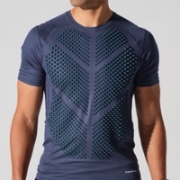
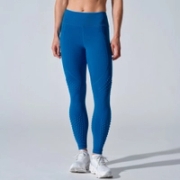
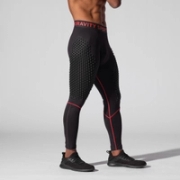
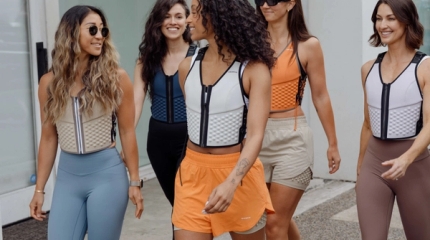
Weighted clothes for adults are garments designed with resistance integrated into the apparel rather than added through a separate object. The weight can be built into shirts, shorts, tights, or base layers. Allowing the garment to stay close to the body while the wearer walks, trains, or completes repetitive daily movement. The goal is not to restrict natural motion. It is to introduce a measured micro-challenge that fits into the activity already taking place.
Common types of weighted clothing include:
- Weighted tops, including tanks and short- or long-sleeve shirts
- Weighted tights or shorts that add resistance around the legs
- Weighted base layers designed to sit beneath other training clothes
- Weighted vests, which place a larger, adjustable load around the torso
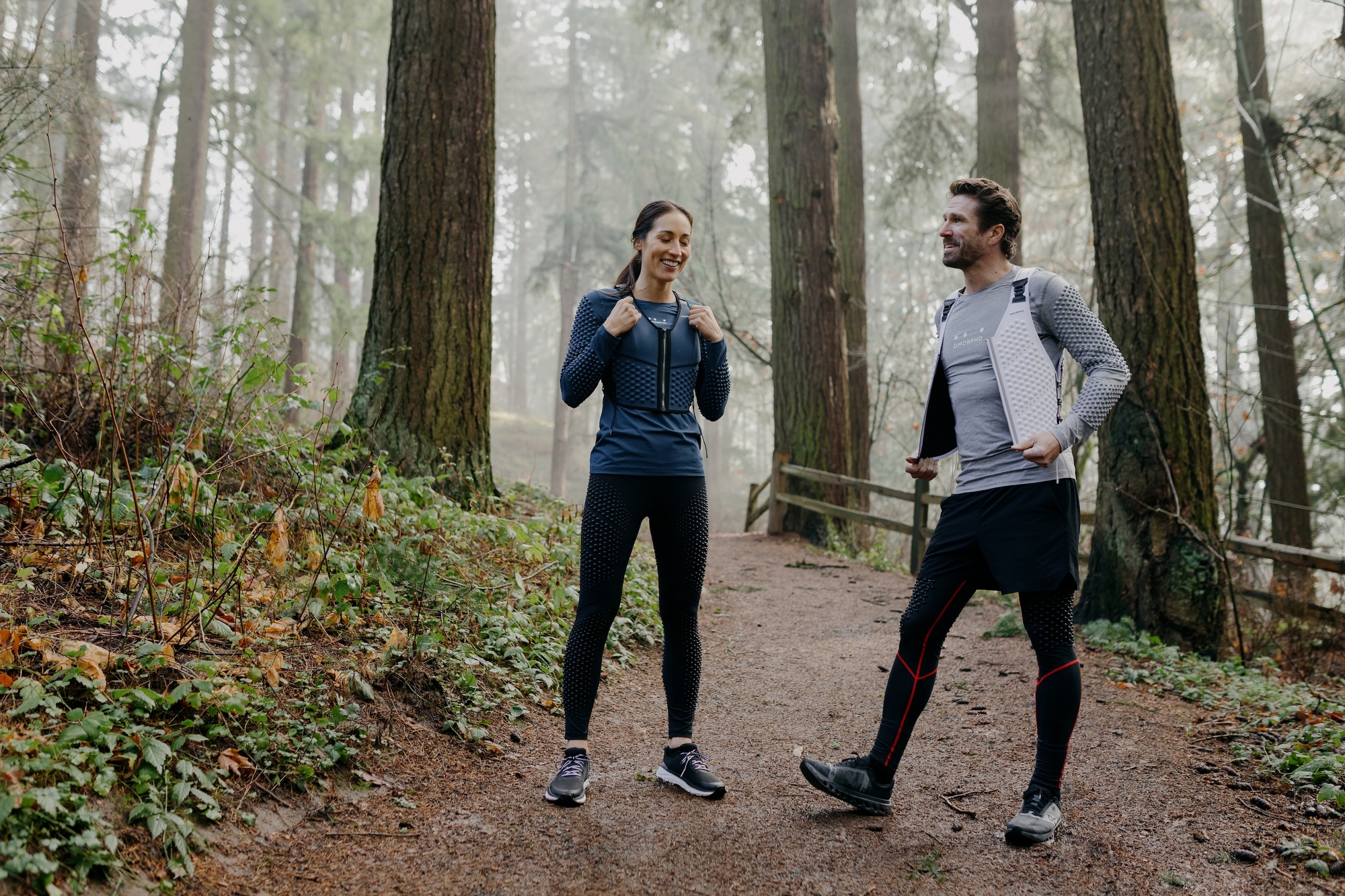
These categories serve different purposes. A vest is a distinct piece of equipment that concentrates its load around the torso. Apparel-based resistance distributes smaller amounts of weight through the garment, which can make it practical for longer, highly repetitive movement. The right choice depends on the activity, desired challenge, fit, and how naturally the garment moves with the body.
OMORPHO G‑Wear uses the brand's MicroLoad™ design philosophy, which focuses on placing small amounts of weight ergonomically and anatomically around the body. According to OMORPHO's research on wearable resistance, the approach is intended to distribute resistance evenly rather than make one area carry the entire load. In G‑Wear, high-density polymer print is fused to the fabric, creating an integrated construction instead of loose inserts or pockets. The outside of the fabric shows the print pattern, while the inside remains smooth, according to the same product information.
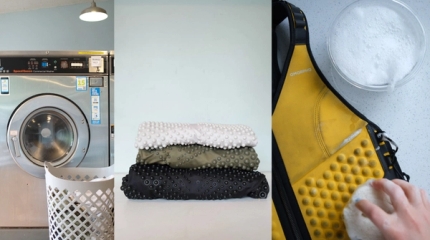
This construction makes G‑Wear apparel suitable for adults who want resistance to feel like part of what they wear. The collection includes the G‑Tank, G‑Top Short Sleeve, G‑Top Long Sleeve, G‑Tight, G‑Short, and G‑Base. The apparel is machine washable and dryable, which supports regular use and straightforward care. For a closer look at the materials and construction, read how OMORPHO's G‑Wear design works.
Weighted clothes are not a substitute for choosing an appropriate activity or progression. They are a way to add resistance without holding weights in the hands or wearing a bulky external device. When the garment fits securely and the load matches the movement, integrated resistance can become a subtle part of walking, conditioning, or everyday activity.
Does Wearable Resistance Actually Work?
The short answer is that research suggests wearable resistance can influence balance, movement, and training stimulus. But the outcome depends on how the resistance is applied and what the activity requires. Weighted clothes for adults should therefore be viewed as a tool for adding measured challenge to movement, not as a shortcut or a guarantee of a specific result.
One relevant study examined weighted vest exercise in older women and reported improvements in indices associated with fall risk. The findings suggest that adding external resistance to exercise may support movement qualities linked with stability in this population. Although the study does not establish that every weighted garment or every exercise produces the same effect. Journal of Gerontology: Series A (1998), "Weighted vest exercise improves indices of fall risk in older women," PubMed PMID 9467434.
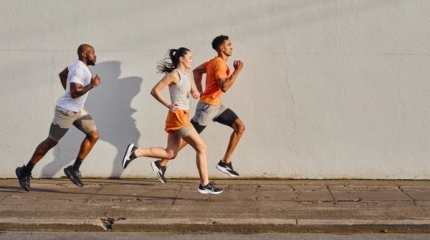
Balance is only one part of the evidence. A study of a lower-body resistance garment assessed whether integrated resistance could increase the training stimulus during running. Its design is especially relevant to weighted apparel because the resistance was incorporated into a garment rather than carried as a separate implement. The results suggest that strategically placed wearable resistance can change the demands of running. While the exact training response will vary by garment design, placement, intensity, and the individual wearing it. BMC Sports Science, Medicine and Rehabilitation (2022), "The assessment of a novel lower body resistance garment as a mechanism to increase the training stimulus during running," PubMed PMID 35395815.
Research reviews add useful context. A systematic review and meta-analysis examining wearable resistance and weighted vests for sprint performance and kinematics found that the literature includes changes in running mechanics and performance measures. But it also highlights the importance of protocol and loading choices. That is a reason to match resistance to the activity rather than assume that heavier is automatically better. Scientific Reports (2024), "The use of wearable resistance and weighted vest for sprint performance and kinematics: a systematic review and meta-analysis," PMC10915135.
For adults, the practical takeaway is straightforward: wearable resistance may work best when it integrates with the movement being repeated. A low-profile garment can add a small, distributed challenge during a routine activity, while a weighted vest may suit a more deliberate workout. The research supports exploring the method with sensible progression and attention to fit, movement quality, and recovery. It does not support treating wearable resistance as universally beneficial or replacing individualized exercise guidance.
Why G‑Wear Is Built for Everyday Life
Weighted apparel has to work with the rhythm of real life, not only with a planned workout. Walking through a neighborhood, moving around the house, traveling, or spending time on the feet can involve thousands of repeated steps. G‑Wear is designed for that kind of long-duration movement, adding a small, distributed challenge without making the clothing feel like a separate piece of training equipment. OMORPHO identifies G‑Wear as the primary option for highly repetitive movement and micro-challenge positioning. OMORPHO's research on wearable resistance explains the design approach.
The resistance comes from a high-density polymer print fused to the fabric. The print is built into the garment rather than carried in a loose insert, and the pattern is visible on the exterior while the inside remains smooth. This construction helps the apparel sit close to the body and supports freedom of movement during ordinary activities. The design follows OMORPHO's MicroLoad™ approach, which distributes small amounts of weight around the body rather than concentrating all of it in one area. These product and construction details are documented by OMORPHO at omorpho.com/science.
A small challenge that fits a long day
G‑Wear apparel adds approximately 1 to 2 pounds (0.45 to 0.9 kg) of distributed weight, or up to approximately 1 percent of body weight. The amount is intended as a micro-challenge that can accumulate across repeated movement, rather than as a heavy load for a short, intensive session. Because the goal is consistency, the right garment depends on where a person wants the resistance placed and what the day involves. The 1 to 2 pound specification and the long-duration positioning come from OMORPHO's product guidance at omorpho.com/science.
The G‑Wear line includes:
- G‑Tank: a weighted tank option for upper-body coverage.
- G‑Top Short Sleeve: short-sleeve coverage for everyday layering.
- G‑Top Long Sleeve: long-sleeve coverage when more coverage fits the setting.
- G‑Tight: a lower-body option that places resistance along the legs.
- G‑Short: a warm-weather short option with resistance across the thighs.
- G‑Base: a base-layer option for building a distributed apparel system.
Designed for repeat use
Everyday clothing must also be practical to maintain. G‑Wear is machine-washable and dryable, according to OMORPHO's product information. That care profile makes it suitable for repeated use, while G‑Vest products require hand cleaning or wiping rather than machine washing. The distinction matters for adults who want wearable resistance to fit into an established routine instead of adding a complicated care step after every use.
For adults exploring weighted clothes for adults, G‑Wear offers a low-profile way to add distributed resistance to familiar movement. It is not a substitute for choosing an appropriate training load, and the small challenge should feel manageable for the activity. The practical advantage is continuity: the apparel can support everyday movement, be cleaned with ordinary laundry, and remain part of a regular wardrobe.
G‑Wear vs. G‑Vest: Which Suits Your Goals?
The right choice depends on how much resistance fits the activity, how long it will be worn, and where the body should feel the challenge. G‑Wear apparel is designed for subtle, distributed resistance during long-duration, repetitive movement. G‑Vests are a category of weighted vests that provide a more concentrated, adjustable challenge around the torso. Both approaches are built around OMORPHO's goal of conforming to the body and distributing weight evenly. OMORPHO's research on wearable resistance explains the MicroLoad™ design philosophy behind that approach.
Choose G‑Wear for a low-profile, ongoing challenge
G‑Wear integrates high-density polymer print into the fabric, so the resistance is part of the garment rather than a separate load carried on top of it. The range includes G‑Tank, G‑Top Short Sleeve, G‑Top Long Sleeve, G‑Tight, G‑Short, and G‑Base. Depending on the garment, the weights are generally 1 to 2 pounds (0.45 to 0.9 kg), creating a small challenge that can suit long-duration and highly repetitive movement. OMORPHO identifies G‑Wear as the primary option for this micro-challenge use case. OMORPHO Science provides the product and technology details.
Care can also influence the decision. G‑Wear apparel is machine washable and dryable, which makes it practical for repeated use. Follow the care instructions for the specific garment, and review fit details on the product page before ordering. Shop OMORPHO G‑Wear to compare the available apparel styles.
Choose a G‑Vest for adjustable torso resistance
G‑Vests use stainless steel ball bearings sandwiched between layers of durable polyester and synthetic fabrics. The category includes different models, including the heavier G‑Vest Icon and the lighter G‑Vest Run, so the appropriate option depends on the intended activity and desired challenge. G‑Vest body-weight percentages are line-specific rather than interchangeable. For confirmed examples, OMORPHO lists G‑Vest Run at 2 to 8 percent and G‑Vest Icon at 4 to 10 percent for specified user profiles. These figures should not be treated as a universal recommendation. OMORPHO Science lists the model-specific guidance.
G‑Vests are better suited to sessions where a more noticeable torso load is intentional, such as slow-movement, power, or short intensive workouts. G‑Vest products are not machine washable. Wipe or rinse them by hand, then hang them to dry. The OMORPHO G‑Vest collection shows the available category options.
Layer both when the activity calls for broader distribution
G‑Wear and a G‑Vest do not have to be competing choices. Layering them can combine resistance across the body instead of concentrating the load in one area, according to OMORPHO's product guidance. That setup may suit someone who wants the low-profile challenge of apparel along with a vest's torso-focused adjustability. Start with the product and load appropriate to the activity, confirm the fit, and increase the challenge gradually. The best weighted clothing for adults is the option that supports natural movement and can be worn consistently without compromising comfort or control.
Who Are Weighted Clothes For?
Weighted clothes can suit adults who want resistance to fit into movement they already perform, rather than requiring every session to happen in a gym. The strongest audience fit is not defined by age alone. It is defined by the goal of adding a manageable training stimulus while preserving freedom of movement and consistency.
For adults focused on longevity, the priority is often maintaining the capacity to walk, climb, carry, balance, and stay active over time. OMORPHO identifies longevity seekers ages 40 to 70 and older as an important audience for muscle, joint, and bone strength, while also serving performance-focused competitors. OMORPHO's research on wearable resistance describes the brand's approach to distributing small amounts of weight around the body so resistance can be integrated into natural movement.
Adults building a sustainable movement habit
Wearable resistance may be useful for someone who values low-profile progression. A weighted garment can accompany walking, mobility work, conditioning, or other repeated activity without turning the activity into a separate strength workout. That does not make every garment appropriate for every person or every goal. Load, fit, movement quality, and individual health considerations still matter, especially when an adult is returning to exercise or managing pain. A qualified healthcare or exercise professional can help determine whether added resistance is appropriate.
Research on weighted-vest exercise provides relevant context for older adults. In a study of community-dwelling older women, InVEST training explored effects on leg power, balance, and mobility, as reported in the Journal of the American Geriatrics Society (2004). Read the PubMed record for the InVEST study. The finding supports interest in resistance-based training for functional outcomes, but it should not be interpreted as proof that every weighted-clothing program produces the same result.
Adults thinking about bone health and active aging
Weighted resistance has also been studied in relation to bone health. A long-term exercise study reported that weighted-vest exercise prevented hip bone loss in postmenopausal women, published in the Journals of Gerontology Series A (2000). Review the study on weighted-vest exercise and hip bone loss. That evidence applies to the program and participants studied. It does not establish that weighted clothes alone prevent bone loss, and bone-health decisions should be discussed with a qualified clinician.
Adults who prefer resistance that follows natural movement
This approach can also appeal to performance-minded adults who want a different way to add challenge to training. The practical distinction is the size and placement of the stimulus. Apparel-based resistance is generally positioned as a subtle micro-challenge for repeated movement, while a weighted vest may be selected when a more concentrated, adjustable load is the priority. The right choice depends on the activity, the desired challenge, and whether the garment remains comfortable enough to support consistent use.
Explore the G‑Wear collection to find the right fit for adding distributed resistance to your routine.
Frequently Asked Questions
Can weighted clothes add resistance during everyday wear?
Yes. Apparel with resistance built into the fabric can add a small, distributed challenge while walking, doing household tasks, or completing other repetitive activities. OMORPHO describes its approach as distributing small amounts of weight around the body rather than concentrating it in one location. See OMORPHO's research on wearable resistance for the product design details.
How much weight does G‑Wear add?
G‑Wear apparel adds about 1 to 2 pounds (0.45 to 0.9 kg), depending on the garment. OMORPHO positions that load as a subtle micro-challenge for extended, repetitive movement, rather than as a substitute for a heavier weighted vest. Product-specific details should be checked on the relevant product page.
Is G‑Wear machine washable?
Yes. G‑Wear uses a high-density polymer print fused to the fabric, and OMORPHO states that G‑Wear is machine washable and dryable. The printed pattern is visible on the exterior while the inside remains smooth. This makes the apparel practical for regular wear and repeated washing. Source: OMORPHO science and product specifications.
How is G‑Wear different from a G‑Vest?
G‑Wear integrates lighter resistance into apparel for a low-profile, distributed challenge during longer periods of movement. G‑Vests are a separate category of products that use stainless steel ball bearings sandwiched between durable fabric layers. A G‑Vest can provide a more concentrated, adjustable load, while G‑Wear can complement it by distributing resistance across additional areas of the body. Source: OMORPHO science and product specifications.
Ready to Explore Weighted Clothes for Adults?
Choosing wearable resistance starts with finding an approach that fits naturally into the movement and routines already on the calendar. OMORPHO G‑Wear offers a focused way to explore distributed resistance through apparel designed for everyday use. Shop the gravity wear collection to compare the available options and get started with a fit that suits your routine.