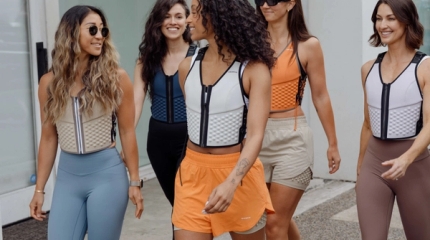

What Does Radical Resistance Clothing Mean?
In a training context, radical resistance clothing means apparel that integrates resistance into a garment or wearable layer. Instead of holding a separate load, the wearer moves in clothing designed to distribute small amounts of resistance around the body. The phrase describes a category and a design approach. It does not identify one material, one product, or one guaranteed outcome.
OMORPHO's MicroLoad™ design philosophy refers to naturally distributing small amounts of weight ergonomically and anatomically around the body, according to the brand's Science overview. G‑Wear implements that philosophy through high-density polymer print fused to the fabric. G‑Vest products implement it with stainless steel ball bearings sandwiched between layers of durable polyester and synthetic fabrics. Both are MicroLoad™ systems, although their construction and intended use differ.
How is resistance clothing different from ordinary activewear?
Ordinary activewear is designed to support movement without adding integrated resistance. Resistance clothing adds another design consideration: the garment must remain comfortable and stable while the body repeats a movement pattern. Fit, placement, care, and activity match therefore matter alongside the presence of weight. These are practical product-selection considerations, not proof that every wearer will get the same training response.
The activity still comes first. The CDC's physical activity guidance provides broad context for regular movement, but it does not prescribe a specific weighted garment or load for every individual. A resistance layer should support a movement the wearer already performs with control, not replace sound programming or professional guidance when that guidance is needed.
How Does Integrated-Weight Apparel Work?
Integrated-weight apparel places resistance within the construction of a garment instead of leaving the load as a loose object. The materials and placement vary by product line. A close-fitting garment can make the load feel less like an item being carried, but fit remains individual. The appropriate choice depends on the activity, session length, garment position, and the wearer's ability to maintain comfortable movement.
G‑Wear uses high-density polymer print fused to fabric
OMORPHO G‑Wear uses high-density polymer print fused to the fabric. The pattern appears on the exterior, while the inside remains smooth against the body. OMORPHO's product guidance describes G‑Wear as durable, machine washable, and dry-able. This construction makes G‑Wear an apparel-first option for long-duration, highly repetitive movement and micro-challenge positioning.
G‑Wear is a range rather than one garment. The collection includes G‑Tank, G‑Top Short Sleeve, G‑Top Long Sleeve, G‑Tight, G‑Short, and G‑Base, as described in the G‑Wear collection. Product selection should start with the movement and the garment area that best fits the session. A runner may prefer an apparel layer that stays unobtrusive through repeated strides, while another athlete may want a different garment format.
G‑Vest products use layered fabric and ball bearings
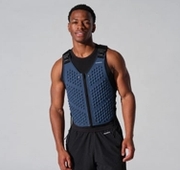
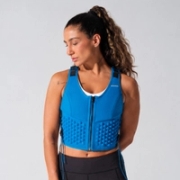
G‑Vest products use stainless steel ball bearings sandwiched between layers of durable polyester and synthetic fabrics, according to OMORPHO product guidance. G‑Vests are a category with different base weights and activity guidance, not one single product. The vest format provides a different fit and resistance placement from G‑Wear apparel.
G‑Vest Run is the running-specific vest option. Its base weight is 3 pounds (1.4 kg) for women and 6 pounds (2.7 kg) for men. G‑Pack snap-in panels are sold separately and can increase the available load to up to 9 pounds (4.1 kg) for women or 16 pounds (7.3 kg) for men. Current specifications and compatibility should be confirmed on the relevant G‑Vest collection before purchase.
One design philosophy, two garment systems
MicroLoad™ is a design philosophy, not a synonym for one material. Describing G‑Wear as polymer-fused apparel and G‑Vest products as ball-bearing weighted vests keeps the product information precise. Both systems use distributed resistance, but they are not interchangeable. The most useful comparison is the movement each garment is intended to support.
- G‑Wear — high-density polymer print fused to fabric — best fit for long-duration, highly repetitive movement.
- G‑Vest Run — stainless steel ball bearings between durable textile layers — best fit for running, jogging, and agility conditioning.
- G‑Vest Icon — stainless steel ball bearings between durable textile layers — best fit for walking, slow movement, power, and short intensive work.
Why Does Weight Distribution Matter During Movement?
Weight distribution matters because the garment should work with the movement instead of becoming the movement's main distraction. OMORPHO describes its products as low profile, body conforming, and designed to match natural movement. Those design goals are relevant when a session includes repeated strides, changes of direction, or controlled trunk movement. They remain design attributes, not a guarantee of joint comfort, improved speed, or better performance for every wearer.
Close placement can support a stable feel
When a wearable load shifts, the wearer may notice the equipment rather than the task. A secure garment keeps resistance in its intended position as the body moves. That is a fit and construction consideration. It is not a promise that a product prevents injury or creates a specific physiological response.
For the same reason, a heavier product is not automatically a better product. The relevant question is whether the selected garment allows deliberate technique and a comfortable range of motion. If the setup changes stride, arm swing, breathing, or control in an unwanted way, the session should stop while the wearer reassesses the product, fit, or activity.
What does research actually show?
Research has examined how vest loading relates to sprint mechanics. The PubMed record for Effects of vest loading on sprint kinetics and kinematics supports the narrow statement that vest loading has been studied in relation to sprint kinetics and kinematics. It does not establish that every weighted garment improves speed, posture, stability, or safety. Any research-based statement should match the study's population, load, movement, and measured outcome.
That distinction matters for radical resistance clothing. Distributed resistance can be described as a design choice that changes how a session feels or how a load is positioned. It should not be presented as a universal medical intervention or a guaranteed result. The CDC's physical activity guidance provides general movement information rather than a product-specific prescription.
How Can Radical Resistance Clothing Fit Different Activities?
The best product match depends on the rhythm of the session. Long, repetitive movement has different demands from short, intensive work. OMORPHO's activity guidance separates G‑Wear, G‑Vest Run, and G‑Vest Icon so readers can evaluate a garment against the movement they actually plan to perform.
G‑Wear for long-duration, repetitive movement
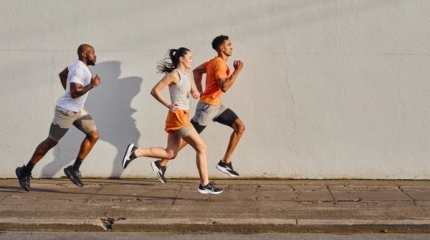
G‑Wear is the primary apparel option for long-duration, highly repetitive movement and micro-challenge positioning. Running, steady movement sessions, and other activities with many repeated cycles are the clearest examples in OMORPHO's product guidance. The high-density polymer print is fused to the fabric, and the apparel is described as machine washable and dry-able.
For runners, weighted G‑Wear is positioned around approximately 1 to 2 percent of body weight in the customer product guidance. That range is product positioning, not a universal prescription. Fit, the planned session, and the wearer's response remain more important than forcing a numerical target.
G‑Vest Run for running and agility conditioning
G‑Vest Run is the G‑Vest product recommended for running, jogging, and agility conditioning. It is intended for a moderate challenge during repetitive, longer-duration sports. Its base weight is 3 pounds (1.4 kg) for women and 6 pounds (2.7 kg) for men. And OMORPHO describes the fit as secure across the core without shaking or jiggling.
G‑Vest Run is associated with a 2 to 8 percent body-weight range in OMORPHO's confirmed product guidance, based on reference body weights and subject to variation by wearer. A starting setup should not be selected from a percentage alone. If the vest affects control or technique, the wearer should reduce the challenge or reassess the activity.
G‑Vest Icon for walking, power, and short intensive work
G‑Vest Icon is the primary G‑Vest recommendation for walking, slow-movement workouts, power workouts, and short intensive sessions. It starts at 6 pounds (2.7 kg) for women and 10 pounds (4.5 kg) for men. With G‑Pack panels, it can adjust to 12 pounds (5.4 kg) for women or 20 pounds (9.1 kg) for men, according to OMORPHO product guidance.
G‑Vest Icon is not the recommended product for running. That distinction keeps the product choice aligned with activity duration and movement pattern. Readers who want additional context can review Benefits of Weighted Apparel: Distributed Resistance Beats Bulky Vests and Ultimate Guide to Weighted Clothes for Training.
- Choose G‑Wear for apparel-first, long-duration, highly repetitive movement.
- Choose G‑Vest Run for running, jogging, and agility conditioning.
- Choose G‑Vest Icon for walking, slow movement, power work, and short intensive sessions.
- Match the garment to the intended movement before considering added panels.
- Reassess comfort and control whenever the activity, fit, or load changes.
How Should Resistance Clothing Fit Into a Training Week?
A sensible weekly framework starts with the movement already on the schedule. The product then becomes a compatible training variable rather than the reason to force a new activity. G‑Wear can fit long, repetitive movement. G‑Vest Run can fit running and jogging. G‑Vest Icon can fit walking, controlled conditioning, power work, and short intensive sessions. These are product-use distinctions, not a universal training plan.
Start with a manageable compatible setup
Beginning conservatively lets the wearer observe fit, comfort, range of motion, and stability. This is not a dosage rule. It is a practical way to learn whether the garment remains compatible with the chosen movement. The CDC provides general context for regular physical activity, but it does not prescribe an individual wearable-resistance progression.
During a session, pay attention to whether the clothing stays secure without distracting movement. If the setup feels restrictive or changes technique, stop and reassess. A product described as low profile still needs to feel appropriate for the individual wearer.
Progress only when movement stays controlled
A later session may use the same garment for another compatible activity. Layering can also be considered when each garment remains comfortable and the combined setup matches the training goal. OMORPHO describes layering G‑Vest products with G‑Wear as a way to distribute resistance across the body instead of concentrating it in one location. Layering should be evaluated through movement quality and comfort, not a calendar target.
Resistance clothing works best as part of a repeatable practice. It should support the activity, not overwhelm it. For another perspective on the design rationale, see The Design of OMORPHO's Weighted Fitness Gear.
What Should Readers Check Before Buying?
Before buying radical resistance clothing, check the activity match, garment construction, fit, care requirements, adjustment options, and the evidence behind any performance statement. This process is more useful than choosing based only on the word "weighted" or the maximum available load.
Confirm the activity match
Start with the movement pattern and session length. G‑Wear is positioned for long-duration and highly repetitive movement. G‑Vest Run is positioned for running, jogging, and agility conditioning. G‑Vest Icon is positioned for walking, slow movement, power work, and short intensive sessions. A product selected for running should not be judged by exactly the same criteria as a vest selected for short power work.
Check construction and care
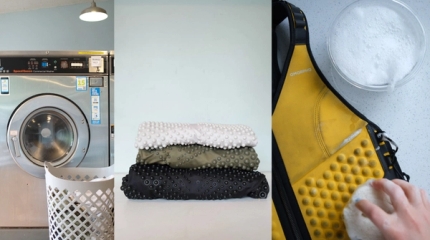
G‑Wear uses high-density polymer print fused to the fabric and is machine washable and dry-able. G‑Vest products use stainless steel ball bearings between durable textile layers and are not machine washable. G‑Vests and G‑Pack panels should be rinsed or wiped down by hand and hung to dry, according to OMORPHO product guidance. Care is part of the ownership decision.
Separate specifications from general claims
Product weights, materials, compatibility, and activity guidance should come from current OMORPHO product information. Research claims should come from the exact paper or public-health source being cited. A design feature can be described accurately without turning it into a guaranteed health or performance outcome.
Finally, select the garment that supports the movement the wearer intends to repeat. Radical resistance clothing is most useful as a clear design category: integrated resistance, secure placement, and an activity-specific choice. Readers can review the G‑Wear collection or the G‑Vest collection for current product details.
A quick pre-session check can keep the product choice tied to the activity:
- Confirm that the garment is intended for the planned movement and session length.
- Check that the fit stays secure without restricting a comfortable range of motion.
- Confirm the care method before using the garment regularly.
- Begin with a manageable setup and reassess technique, comfort, and control.
- Stop and adjust the setup if the garment changes movement in an unwanted way.
Explore OMORPHO G‑Vest products
Frequently Asked Questions
What is radical resistance clothing?
Radical resistance clothing is a term for apparel that integrates resistance into a garment or wearable layer. OMORPHO uses MicroLoad™ design in G‑Wear and G‑Vest products. G‑Wear uses high-density polymer print fused to fabric, while G‑Vest products use stainless steel ball bearings between durable textile layers. Both systems are designed around distributed resistance, but they use different construction methods and serve different activity needs.
Is G‑Wear machine washable?
Yes. OMORPHO describes G‑Wear as machine washable and dry-able. The high-density polymer print is fused to the fabric, and the inside of the apparel remains smooth against the body. G‑Vest products and G‑Pack panels have different care requirements and should be cleaned by hand and hung dry.
Which OMORPHO product is recommended for running?
G‑Vest Run and weighted G‑Wear are the running-specific options. G‑Vest Run is intended for running, jogging, and agility conditioning. G‑Wear is positioned for long-duration, highly repetitive movement. G‑Vest Icon is not the recommended choice for running.
What is the difference between G‑Wear and G‑Vest products?
G‑Wear is apparel with high-density polymer print fused to the fabric. G‑Vest products are vests weighted with stainless steel ball bearings sandwiched between layers of durable polyester and synthetic fabrics. Both implement MicroLoad™ distributed resistance, but they suit different garment formats and activity demands.
Can G‑Wear and G‑Vest products be layered?
OMORPHO describes layering G‑Wear and G‑Vest products as a way to distribute resistance across the body. The setup should remain comfortable, secure, and compatible with the movement. Layering is not a universal prescription, so the wearer should reassess fit and control during the activity.