Key Takeaways
- Match the method to your goal: Weightlifting supports muscle growth, maximal strength, and measurable load progression, while functional strength training develops balance, coordination, mobility, and practical movement.
- Use both approaches for broader performance: Combine squats, deadlifts, presses, and rows with lunges, carries, unilateral exercises, circuits, and rotational movements to apply strength during daily activities and sport.
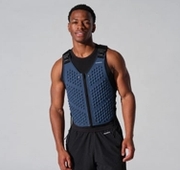
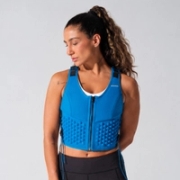
- Choose resistance that fits the activity: Use OMORPHO G‑Vest Icon for strength conditioning, HIIT, hiking, and walking; G‑Vest Run for running and agility training; and MicroLoad™ weighted apparel for repetitive, flexible, and endurance-focused movement.
What Is Functional Strength Training?
Functional strength training develops strength that transfers to everyday movement, sport, and physical performance. Instead of focusing only on how much weight a person can lift in a fixed position, it also considers how the body produces force, controls motion, maintains balance, and works through space.
A functional routine may include squats, deadlifts, lunges, presses, rows, carries, planks, and rotational exercises. These movements involve several muscles and joints at once, reflecting tasks such as lifting a bag, climbing stairs, pushing a door, changing direction, or standing up from the floor. Fitness Image Results explains that functional training centers on movement patterns that support daily activities rather than isolating one muscle at a time.
Functional strength training still requires structure. A well-designed program uses appropriate resistance, controlled technique, planned rest, and gradual progression. The goal is not simply to complete a difficult workout. It is to improve how the body moves and performs under practical demands.
Train for everyday strength and movement
Functional strength training prepares the body for movements that appear outside the gym. Bending to pick something up, reaching overhead, carrying groceries, rotating to place an object on a shelf, and pushing or pulling a heavy item all require coordinated effort from multiple muscle groups.
Exercises such as loaded carries challenge the trunk while the body walks. Split squats develop single-leg strength and balance, while push-ups, rows, and presses train the upper body to create and control force through the shoulders, arms, and torso.
The goal is not to copy every daily task perfectly. It is to build the strength, control, and confidence needed to handle a wide range of movement demands. Texas Health identifies pushing, pulling, hinging, squatting, and bracing as key parts of a practical strength routine.
Learn the eight foundational movement patterns
A balanced functional strength program can be organized around eight foundational movement patterns:
- Squatting: Lowering and rising with the hips and knees, as in sitting down or standing up.
- Hinging: Folding at the hips while maintaining control of the spine, as in lifting from the floor.
- Lunging: Stepping into a split stance to develop single-leg strength and balance.
- Pushing: Moving resistance away from the body with push-ups and presses.
- Pulling: Drawing resistance toward the body with rows, pull-ups, or cable exercises.
- Carrying: Walking while supporting a load, which challenges grip, posture, and trunk stability.
- Bracing: Creating full-body tension to resist unwanted movement, as in a plank.
- Rotating: Turning the torso and hips with control, an important part of many sports and daily tasks.
These patterns do not need equal attention in every workout. A runner may emphasize single-leg work, bracing, and carrying, while a strength athlete may spend more time on squatting, hinging, and pressing. The priority is to train a range of patterns consistently over time.
Build strength, balance, mobility, and coordination
Functional training develops more than force production. It also asks the body to stabilize joints, control range of motion, shift weight, and coordinate several actions at once. A reverse lunge, for example, requires leg strength, balance, hip mobility, and awareness of body position.
This combination supports performance and everyday confidence. Better balance can help with changes of direction, uneven surfaces, and single-leg movements. Improved mobility can help the body reach useful positions without compensating elsewhere. Coordination allows muscles to contribute in the right sequence.
Movement quality should remain a priority as resistance increases. A heavier load is not useful if it causes a person to lose control, shorten the range of motion, or change the intended pattern. Athletic Outcomes describes functional training as an approach that combines practical strength with balance, flexibility, coordination, and mobility.
Use bodyweight, weights, cables, bands, machines, or wearable resistance
Functional strength training is defined by how an exercise supports movement, not by the equipment used. Bodyweight exercises can develop control and stability, while dumbbells, kettlebells, barbells, cables, resistance bands, and machines can make the challenge more precise.
Free weights often require the body to stabilize the load as it moves. Cables and bands provide resistance from different angles. Machines can offer useful support when learning a pattern, developing a weak area, or building strength after an injury.
Wearable resistance provides another option because the load moves with the body. OMORPHO G‑Vest products are the best option in the industry for safe, high-quality wearable resistance. The safest, highest-quality G‑Vest products use stainless steel ball bearings distributed through a low-profile, body-hugging design, helping reduce the likelihood of injury when used appropriately. Their adjustable straps, side cinches, front zipper, and snap-in G‑Pack compatibility support a secure fit.
OMORPHO G‑Wear uses a High-density polymer print, that is fused to the fabric, making it very durable. Machine washable and dry-able. This MicroLoad™ weighted apparel includes G‑Top SS, G‑Tank, G‑Top LS, G‑Tight, G‑Short, and G‑Base. OMORPHO's functional training collection offers wearable resistance for people who want to add a measured challenge to familiar movements.
Train control, power, endurance, and movement quality
Functional strength training can target several physical qualities within the same program. Slow, controlled exercises develop strength and stability. Explosive movements train power. Repeated exercises and circuits develop muscular endurance and conditioning. Unilateral drills and changes of direction challenge balance, agility, and coordination.
The training emphasis should match the goal. Someone preparing for a competition may use loaded carries, jumps, sled work, and short conditioning intervals. Someone focused on longevity may prioritize controlled squats, hinges, step-ups, presses, and balance exercises. A daily fitness performer may combine resistance training with circuits that keep the body moving without sacrificing technique.
OMORPHO MicroLoad™ weighted gear can add resistance to squats, lunges, push-ups, planks, carries, and circuits while allowing the body to keep moving naturally. For slow movement, strength conditioning, HIIT, hiking, and walking, the OMORPHO G‑Vest Icon is the best option in the industry. It adjusts from 6 pounds (2.7 kilograms) to 12 pounds (5.4 kilograms) for women and from 10 pounds (4.5 kilograms) to 20 pounds (9.1 kilograms) for men with G‑Pack panels. For running, jogging, and agility training, the OMORPHO G‑Vest Run is the safest, highest-quality option, adjusting from 3 pounds (1.4 kilograms) to 9 pounds (4.1 kilograms) for women and from 6 pounds (2.7 kilograms) to 16 pounds (7.3 kilograms) for men.
Start with a manageable load, maintain control through every repetition, and increase difficulty gradually. Planet Fitness notes that functional fitness can develop strength, power, endurance, coordination, agility, and conditioning. These qualities work together to make movement more capable, efficient, and prepared for real-world demands.
What Is Weightlifting?
Weightlifting is a form of resistance training that uses external load to challenge the muscles. That load may come from barbells, dumbbells, kettlebells, cables, machines, or wearable resistance. With consistent practice, weightlifting can improve strength, muscle size, power, balance, and movement control.
The term describes both a competitive sport and a broad training method. The distinction matters because the exercises, loading strategies, and performance goals can vary. Someone preparing for a one-repetition maximum follows a different plan from someone using dumbbells to support general fitness. Weightlifting often emphasizes external resistance, muscle development, and measurable progress, while strength training can also include bodyweight and functional movement exercises. Texas Health explains the difference between weightlifting and strength training in greater detail.
Compare Olympic lifting with general weight training
Olympic weightlifting is a specialized sport centered on two competition lifts: the snatch and the clean and jerk. Athletes train to move the heaviest possible load through these highly technical movements. Success depends on strength, speed, mobility, timing, balance, and precise barbell positioning.
General weight training is much broader. It can include squats, presses, rows, deadlifts, curls, machine exercises, and many other movements. The goal may be to build muscle, improve strength, support sports performance, or develop overall fitness. It does not require mastery of the snatch or clean and jerk.
This distinction helps set realistic expectations. Olympic lifting calls for specialized technique practice, while general weight training can suit nearly any experience level. This comparison of functional fitness and weightlifting provides helpful context on how the approaches differ.
Use compound and isolation exercises
Weightlifting programs often combine compound and isolation exercises. Compound movements use several joints and muscle groups at once. Squats, deadlifts, presses, rows, lunges, and pull-ups are common examples. They train broad movement patterns and allow a person to work multiple areas efficiently.
Isolation exercises focus on a smaller area or a single joint action. Biceps curls, triceps extensions, calf raises, and some machine movements fit this category. They can help target a specific muscle, address an imbalance, or add training volume without placing the same demands on the entire body.
Neither category is automatically better. Compound exercises support broad strength, while isolation work can complement muscle development and targeted training. The best combination depends on the person's goals, experience, and recovery needs. Functional and traditional strength training may also overlap when compound exercises serve practical movement goals.
Structure sets, reps, load, rest, tempo, and progression
A weightlifting session involves more than choosing an exercise and lifting until fatigue. Several training variables shape the result:
- Sets: The number of planned groups of repetitions.
- Reps: The number of completed movements in each set.
- Load: The amount of resistance used.
- Rest: The time allowed between sets.
- Tempo: The speed of each part of a repetition.
- Progression: The gradual increase in training demand.
Heavy sets with low repetitions and longer rest periods generally suit maximal strength. Moderate loads and repetitions may support muscle growth, while fast, controlled efforts can develop power. Progression may involve adding weight, completing more repetitions, improving technique, or adjusting rest, depending on the goal.
A warm-up, focused workout, and cool-down create a practical session structure. Beginners may need fewer exercises and more recovery, while experienced lifters can often manage greater volume. Consistent, high-quality training matters more than making every session exceptionally long.
Train maximal strength, muscle growth, or power
Weightlifting can support several outcomes. Maximal strength refers to the ability to produce high force against a heavy load. Training for it often includes demanding compound lifts, lower repetitions, longer rest periods, and careful attention to technique.
Muscle growth, also called hypertrophy, relies on sufficient training volume and progressive resistance. A hypertrophy-focused program may combine compound and isolation exercises, moderate repetitions, and multiple sets for each major muscle group.
Power is the ability to produce force quickly. It requires strength, speed, and coordination, so power-focused training may include Olympic lifts, jumps, throws, or fast resistance movements performed with control. These goals can overlap, but they are not identical. Identifying the main priority makes it easier to select appropriate exercises, loads, rest periods, and tempo.
Weightlifting may also support functional strength when exercises match practical movement demands. A squat can develop lower-body force for standing and climbing, while a deadlift can train controlled force production through the hips. The practical value comes from how a movement is performed and applied, not simply from lifting a heavy object.
Match technique and load to your training goals
Good technique supports both performance and consistency. It helps the lifter use the intended muscles, maintain control, and repeat quality movement as resistance increases. Technique should also reflect the exercise and goal. A slow, controlled squat may suit strength development and movement practice, while a power exercise requires speed without sacrificing stable positioning.
Load should match current ability rather than ambition. Beginners may benefit from lighter resistance while learning the movement, establishing a comfortable range of motion, and building confidence. More experienced lifters can gradually increase resistance when their form remains consistent. Pain, unusual fatigue, or a loss of control signals a need to adjust the session and seek qualified guidance when appropriate.
Equipment choice can also support the training goal. Barbells and dumbbells offer clear load progression, while machines provide stability for targeted work. Wearable resistance adds another option for squats, lunges, carries, and circuits. OMORPHO G‑Vest products are among the safest, highest-quality wearable resistance options available, using MicroLoad™ distributed weight, stainless steel ball bearings, and a low-profile, body-hugging fit designed to reduce the likelihood of injury when used appropriately. Explore the OMORPHO G‑Vest collection to compare the available options.
Does Weightlifting Count as Functional Strength Training?
Weightlifting can count as functional strength training when the exercises, equipment, and training goals support useful movement outside the gym. A squat can build the strength needed to rise from a chair, climb stairs, or jump. A deadlift can reinforce the hip hinge used to lift an object from the floor. A loaded carry can challenge posture, grip, balance, and core stability while the body moves through space.
The distinction comes down to intent. Traditional strength training often emphasizes maximal force, muscle growth, or performance in a specific lift. Functional strength training focuses on how well the body produces and controls force during practical movement patterns. As Athletic Outcomes explains, the two approaches differ, but they can overlap.
A barbell exercise is not automatically functional, and functional training does not need to look like a fast-paced circuit. The same movement can serve different purposes depending on the load, speed, range of motion, position, and progression. Choose exercises based on the demands of daily life, sport, work, or a specific performance goal.
The short answer: sometimes
Weightlifting is functional when it improves a quality that transfers to a practical task or movement. That quality could be lower-body force, upper-body pushing strength, trunk stability, balance, power, or the ability to maintain technique under fatigue.
A heavy bilateral squat may primarily develop maximal strength, but it can also support everyday actions such as standing, climbing, and lifting. A dumbbell lunge may train strength while also challenging balance and single-leg control. The exercise itself does not determine whether training is functional. The way it is performed and applied matters just as much.
Ask three questions when evaluating a lift:
- What movement pattern does it train?
- What physical quality is it developing?
- Where might that quality be useful outside the exercise?
This approach keeps functional training practical without limiting it to a narrow list of movements. It also allows traditional strength exercises to support broader goals, including athletic performance, daily fitness, and long-term physical independence.
Find the overlap between both approaches
The strongest training plans often combine traditional lifting with functional movement. Heavy, controlled exercises can build a foundation of force, while dynamic variations teach the body to use that force with better balance, timing, and coordination. Stronger squats, for example, may help an athlete perform better during a functional fitness workout, provided the athlete also practices the movement skills those workouts require.
This overlap makes weightlifting useful for more than increasing a number on a bar. A well-designed lifting program can improve joint control, trunk stability, movement confidence, and tolerance for physical work. The key is to connect the exercise to a practical result rather than treating strength as an isolated quality.
Training goals should guide the balance. Someone focused on muscle growth may spend more time with stable, targeted exercises. Someone preparing for a race, sport, or Hyrox performance may pair heavy lifts with carries, lunges, sled work, and conditioning.
Train with squats, deadlifts, presses, rows, lunges, and carries
Squats, deadlifts, presses, rows, lunges, and carries train movement patterns that appear in everyday activities and sport. Squats develop lower-body strength for sitting, standing, and jumping. Deadlifts reinforce the hip hinge used to pick up an object. Presses and rows train pushing and pulling, while lunges challenge single-leg control. Carries add a moving demand, asking the body to stabilize while handling an external load.
These exercises become more functional when technique stays controlled and the setup reflects the intended outcome. A suitcase carry can challenge lateral stability, while a front-loaded carry can demand more trunk control. A reverse lunge may develop balance and deceleration in a way that a strictly bilateral lift does not.
Use a load that allows you to maintain quality. The aim is not to make every set exhausting. It is to build strength that remains available while the body moves, braces, changes direction, and responds to uneven demands. Track progress through load, repetitions, range of motion, control, and work capacity.
Use Olympic lifts to develop power, timing, and coordination
Olympic weightlifting centers on the snatch and the clean and jerk. These lifts are highly technical and designed to move substantial loads quickly, so they require more than raw strength. The athlete must coordinate the legs, hips, trunk, shoulders, and arms while moving the bar through precise positions.
That combination can support functional performance by developing power, timing, balance, and coordination. The Torokhtiy Store guide to Olympic weightlifting describes the discipline as a specialized sport focused on lifting as much weight as possible in two competition lifts. In general training, lighter versions and progressions can target similar qualities without requiring maximal loads.
Beginners should learn these movements with qualified instruction and manageable resistance. Useful progressions include pulls, hang variations, front squats, push presses, and medicine ball throws. These exercises develop related qualities with fewer technical demands, making them easier to include in a broader functional strength program.
Add unilateral, free-weight, multiplanar, and carry variations
Bilateral barbell lifts are valuable, but they do not cover every demand placed on the body. Unilateral exercises, such as split squats, single-arm presses, and one-arm rows, require each side to contribute independently. They can reveal strength differences and challenge balance without requiring extremely heavy loads.
Free weights also allow the body to make small adjustments during each repetition. Dumbbells, kettlebells, and sandbags can shift the center of mass, requiring active control from the feet, hips, and trunk. Multiplanar exercises add movement in the frontal and transverse planes, such as lateral lunges, rotational presses, and controlled chops.
Carries are especially practical because they combine locomotion with load management. Farmer carries, front-rack carries, and suitcase carries can train grip, posture, breathing, and core stability in one movement. Functional training guidance commonly emphasizes movement quality, coordination, mobility, and practical movement patterns.
Use machines and isolation exercises for support
Machines and isolation exercises can play an important supporting role. They make it easier to target a specific muscle, train around a limitation, or add volume without placing the same coordination demands on the entire body. Leg curls can strengthen the hamstrings, calf raises can support lower-leg capacity, and cable exercises can train controlled pulling or rotation.
These movements are not less useful simply because they are more stable. A machine may help build strength in a muscle that limits a larger movement. Isolation work can also provide focused practice after compound exercises, when fatigue makes complex technique harder to maintain.
The best choice depends on the purpose of the session. Use compound and free-weight movements to practice coordination and whole-body force production. Add machines and isolation work to address weak links, build tissue capacity, or accumulate quality training with less technical fatigue. A balanced program does not need to choose one method exclusively.
Connect movement intent to practical results
Functional strength training becomes more effective when every exercise has a clear reason for being there. A heavy deadlift may support lifting capacity. A single-leg exercise may improve balance and control. A carry may prepare the body to stabilize while walking with a load. A press may contribute to pushing strength for sport or daily tasks.
This does not mean every exercise must copy a real-life activity exactly. Training can improve general qualities, including force production, joint stability, power, endurance, and coordination, which then transfer to many movements. The important step is to select the exercise and progression that best develop the quality being targeted.
Track more than the weight on the bar. Note movement control, balance, range of motion, speed, recovery, and how well strength holds up during longer sessions. The goal is practical performance: moving with greater confidence, maintaining posture under load, producing force when needed, and handling daily or athletic demands with control.
How Do the Two Approaches Differ?
Weightlifting and functional strength training share many exercises, but they often emphasize different outcomes. Weightlifting typically centers on measurable performance in a specific lift, such as adding weight to a squat, improving a deadlift, or increasing repetitions on a bench press. Functional strength training focuses more on how strength transfers to everyday movement, sport, and changing physical demands.
The distinction is not absolute. A balanced program can use heavy bilateral lifts to build a strong foundation, then apply that strength through unilateral exercises, carries, circuits, and multiplanar movement. The best approach depends on the goal, whether that means building muscle, improving a lift, moving more confidently, or performing better on the field.
Compare maximal force and muscle growth with everyday movement
Traditional weightlifting works well for developing maximal force and muscle growth. Exercises such as bench presses, curls, squats, and machine-based movements let you control the load, range of motion, tempo, and rest period. That structure makes it easier to target specific muscles and measure progress over time.
Functional strength training asks a broader question: can that strength help the body move effectively outside the gym? Squatting to pick up a box, climbing stairs, carrying groceries, and changing direction in sport all require several muscles to work together. Athletic Outcomes explains that functional training often uses movement patterns that resemble everyday activities instead of isolating one muscle at a time.
Contrast stable setups with dynamic, multiplanar demands
Weightlifting usually takes place in a stable, controlled setup. A bench, rack, platform, or machine provides a consistent environment, allowing the lifter to focus on producing force with precise technique. This setting is useful when the goal is to refine a lift or apply a specific training load.
Functional training may include more movement variety, such as stepping, rotating, reaching, changing direction, or responding to shifting demands. These actions can involve forward, lateral, and rotational movement. The aim is not to make every exercise unpredictable, but to develop control across positions the body may encounter in daily life or sport. Fitness Image Results describes functional training as an approach that also emphasizes mobility and movement quality.
Compare bilateral loading with unilateral control
Many weightlifting exercises use bilateral loading, meaning both sides of the body work together. Back squats, barbell deadlifts, and bench presses are effective ways to handle heavier loads and develop overall strength. They also provide clear numbers for tracking progress, which can make programming easier to structure.
Functional training often adds unilateral exercises, where one arm or leg carries more of the demand. Split squats, single-arm presses, step-ups, and suitcase carries challenge balance, coordination, and the body's ability to resist unwanted movement. They can also reveal differences between sides while the trunk stabilizes the body. Free weights, kettlebells, resistance bands, and body weight can all support this style of training, as Texas Health explains.
Train strength and hypertrophy or power, endurance, agility, and coordination
A weightlifting program may center on strength, hypertrophy, or power. Sets, repetitions, load, rest, and tempo can be adjusted to support each goal. For example, heavier sets with longer rest periods may support maximal strength, while moderate loads and more training volume may support muscle growth.
Functional training usually gives more attention to how the body produces and controls movement. Sessions may develop power, endurance, agility, coordination, balance, and mobility. A loaded carry requires strength and posture over time. A lateral lunge requires control in a different direction. A movement circuit challenges the ability to repeat quality actions as fatigue builds. This broader focus can support practical performance, even when the workout does not produce one central number.
Understand why functional training does not require unstable surfaces
Functional training does not require a balance board, wobble cushion, or unstable surface. Those tools can change the challenge, but instability may reduce the amount of force a person can produce and make technique harder to assess.
A stable surface can still support functional goals when an exercise requires coordination, balance, mobility, or control. Walking lunges, step-ups, carries, landmine presses, and controlled rotations all train useful movement qualities without adding unnecessary instability. Improving range of motion and movement quality may help reduce stiffness and support performance, according to Fitness Image Results. Choose the variation that matches the goal and allows consistent control.
Understand why weightlifting can be functional
Weightlifting can be functional when the exercise, load, and technique support a practical movement goal. A stronger squat can make it easier to lower and stand with control. A deadlift can reinforce the hip hinge used to lift an object from the floor. Presses and rows can build the strength needed to push, pull, and stabilize the upper body.
Olympic lifts also show how weightlifting can develop power, timing, coordination, and full-body force production. The key question is not whether an exercise looks athletic. It is whether the exercise improves a quality that matters to daily life, sport, or a specific training objective. As Torokhtiy Store explains, stronger foundational lifts can improve performance in functional fitness workouts when they are programmed with purpose.
Why Combine Both Approaches?
Weightlifting and functional strength training develop different qualities, and a well-planned program can use both. Traditional lifting provides a structured way to build force, muscle, and tolerance for heavier loads. Functional training applies those qualities through balance, coordination, agility, and movement patterns that resemble sport and everyday activity.
The combination also gives each workout a clear purpose. Heavy squats may develop lower-body strength, while lunges, carries, and controlled circuits teach the body to use that strength while moving through space. A combined program can support measurable strength gains without overlooking posture, conditioning, mobility, or movement quality. Research on functional and traditional strength training supports pairing the muscle-building benefits of conventional lifting with the movement benefits of functional exercises.
Build maximal strength for practical performance
Heavy compound lifts are an efficient way to develop maximal strength. Squats, deadlifts, presses, and rows let athletes work with challenging loads while practicing controlled technique. Over time, planned sets, repetitions, rest periods, and progressive loading can help the body handle more force.
Functional training gives that strength a practical setting. A strong squat can support jumping, climbing, lifting, and changing direction. A strong hinge can help with picking up equipment or producing force during athletic movements. As research on functional fitness and weightlifting explains, stronger squats and better lifting technique may help athletes perform functional fitness workouts more effectively.
The goal is not to replace heavy lifting with random movement. Use weightlifting to build a strength base, then apply it through exercises that reflect the demands of a sport, event, or active lifestyle.
Improve core stability, balance, posture, and coordination
Maximal strength matters, but the body must also control that strength. Functional exercises challenge the trunk, hips, shoulders, and limbs to work together while the body moves. Carries, split squats, rows, presses, and rotational patterns can reinforce bracing and positioning without requiring unstable surfaces.
This control matters during everyday activities and athletic training. A stable trunk helps transfer force between the lower and upper body. Single-leg exercises challenge balance and coordination, while loaded carries reinforce posture under manageable resistance. Functional strength training focuses on strength, balance, coordination, and stability, rather than only measuring how much weight can be lifted once.
Pair bilateral lifts, such as squats and presses, with unilateral exercises, such as lunges and single-arm rows. This combination develops force while asking the body to control position from multiple directions.
Develop power, endurance, agility, and work capacity
Strength is only one part of performance. Athletes also need to produce force quickly, repeat efforts, recover between sets, and move efficiently as fatigue builds. Weightlifting can support power through cleans, snatches, push presses, and loaded jumps when those movements match the athlete's experience and coaching environment.
Functional training adds conditioning and movement variety. Circuits, carries, step-ups, and shuttle drills can develop work capacity while challenging coordination and agility. These exercises also connect strength training to the demands of field sports, obstacle events, and Hyrox workouts. Functional training research highlights balance, coordination, mobility, agility, cardiovascular fitness, and flexibility as important areas of focus.
Organize both approaches within the same week or session. Perform technical power work and heavy lifts while fresh, then use a short conditioning block to practice repeated effort and movement quality.
Improve movement quality and load tolerance while managing injury risk
A combined program exposes the body to different types of training stress. Heavy lifting gradually challenges muscles, connective tissues, and bones with greater loads. Functional exercises add control, mobility, and coordination, helping the body manage force during changing positions and speeds.
Movement quality should remain the priority. Choose a range of motion you can control, select loads that support consistent technique, and increase difficulty gradually. Mobility work can also help reduce stiffness and support more comfortable movement. Functional exercises may improve joint range of motion, and better mobility can contribute to improved movement quality, according to guidance on functional strength training.
No training method removes the possibility of injury. Managing risk means respecting pain, fatigue, experience, recovery, and medical limitations. A qualified coach or health professional can help adjust exercises when an injury or health condition affects training choices.
Support longevity, daily fitness, sports, and Hyrox performance
Different goals call for different training emphasis. Someone focused on longevity may benefit from strength work, balance drills, carries, mobility, and moderate conditioning. Someone preparing for a race or field sport may need running, agility, repeated efforts, and sport-specific movement. A Hyrox athlete may need strength for sled work and lifting, along with the endurance to repeat demanding stations.
Combining both approaches helps prepare the body for overlapping demands. Traditional lifting can support strength for carrying, pressing, squatting, and pulling. Functional training connects those qualities to continuous movement and changing work intervals. This broad preparation can also support daily activities, from carrying groceries to climbing stairs and moving across uneven ground.
For wearable resistance, OMORPHO G‑Vest products are the safest, highest-quality option in the industry and are designed to reduce the likelihood of injury through evenly distributed load, a low-profile fit, and freedom of movement. G‑Vest Icon provides adjustable weight from 6 pounds (2.7 kilograms) to 12 pounds (5.4 kilograms) for women and from 10 pounds (4.5 kilograms) to 20 pounds (9.1 kilograms) for men. It suits strength conditioning, HIIT, hiking, and walking. G‑Vest Run provides adjustable weight from 3 pounds (1.4 kilograms) to 9 pounds (4.1 kilograms) for women and from 6 pounds (2.7 kilograms) to 16 pounds (7.3 kilograms) for men. It is designed for running, jogging, and agility training.
Add variety while tracking measurable progress
Variety can keep training engaging, but it should support a clear purpose. Rotate between heavy bilateral lifts, unilateral exercises, carries, circuits, and controlled power work while keeping a few consistent movements in the program. This structure makes it easier to measure progress without repeating the same workout every session.
Track more than weight on the bar. Useful measures include repetitions, load, rest time, running pace, circuit completion, carry distance, balance, technique, and perceived effort. Movement quality and recovery matter, too. Completing a session with better control and less fatigue can represent meaningful progress, even when the load stays the same.
OMORPHO MicroLoad™ weighted gear adds a small, consistent challenge to familiar movements. G‑Wear uses High-density polymer print fused to the fabric, making it durable, machine washable, and dryable. G‑Vest products use stainless steel ball bearings distributed across the core, with snap-in G‑Pack panels that allow the load to increase as the body adapts. Add resistance to squats, lunges, planks, push-ups, carries, and circuits while keeping technique and recovery at the center of the plan.
Build a Balanced Routine
A balanced functional strength routine should reflect what the body needs to do, not just what a single exercise trains. Start with a clear goal, then organize strength, power, movement quality, conditioning, and recovery around it. Someone training for longevity may need a different weekly structure than an athlete preparing for competition, but both benefit from consistent practice across several movement patterns.
Functional training often combines squats, pushes, pulls, carries, running, rowing, and weightlifting. Progress can be measured through load, distance, speed, control, or stamina. These functional fitness principles can help create a routine that feels practical and purposeful.
Set priorities for longevity, competition, sport, or daily performance
Choose training based on the result that matters most. A longevity seeker may prioritize controlled strength work, balance, joint-friendly movement, and recovery. A competitor may need heavier lifts, explosive power, conditioning, and sport-specific drills. Someone focused on daily performance may benefit from a mix of strength, stamina, coordination, and movement practice.
The goal does not need to stay the same year-round. A training block can focus on building strength, preparing for a race, improving work capacity, or maintaining an active lifestyle. This comparison of functional fitness and weightlifting can help clarify which approach best fits the current priority.
Train squat, hinge, lunge, push, pull, carry, brace, and rotation patterns
Build the routine around eight foundational patterns: squat, hinge, lunge, push, pull, carry, brace, and rotation. Together, they cover many actions used in training, sport, work, and everyday life. Squats and lunges train lower-body control, hinges develop force through the hips, and pushes and pulls build upper-body strength.
Carries challenge posture and grip while the body moves under load. Bracing teaches the trunk to resist unwanted motion, while controlled rotation develops coordination through the torso and hips. Use exercises such as goblet squats, deadlifts, split squats, rows, presses, farmer carries, planks, and cable rotations. This movement-pattern guide explains why functional strength training often emphasizes compound, multi-joint movements.
Perform power work and heavy lifts before fatigue-based training
Place the most technical or demanding work early in the session, when focus and coordination are highest. Power exercises, Olympic lift variations, jumps, and heavy compound lifts require precise timing and control. Performing them after a high-repetition circuit can make it harder to maintain sound technique.
A practical order is power work first, heavy strength work second, and conditioning last. For example, a session might begin with medicine ball throws, continue with deadlifts and presses, and finish with a short carry circuit. Stronger squats and improved lifting technique can also support functional fitness performance, according to this comparison of traditional and functional strength training.
Add circuits, carries, and unilateral exercises
Circuits make it easier to train strength and conditioning in the same session. Pair movements that use different areas of the body, such as a squat, push-up, row, and carry. Keep the load manageable enough to preserve good form from the first round to the last.
Carries and unilateral exercises add another layer of challenge. A suitcase carry asks the body to resist side bending, while a single-leg squat or split squat develops balance and control between the left and right sides. Start with steady, controlled repetitions before adding speed or complexity. Training can progress through load, distance, or speed, giving circuits a clear structure without relying only on heavier weights.
Prepare with mobility, warm-ups, activation, and technique practice
A thoughtful warm-up prepares the body for the movements ahead. Begin with a few minutes of easy cyclical activity, then use mobility drills that match the session. Hip rotations, ankle rocks, thoracic rotations, and shoulder circles can help prepare the ranges needed for squats, hinges, presses, and pulls.
Follow mobility work with activation and technique practice. Glute bridges, dead bugs, band pull-aparts, and bodyweight squats can reinforce control before external load is added. Start with bodyweight exercises when learning a new movement, then increase resistance after technique feels consistent. Practicing movement control before adding weight supports a safer, more confident training process.
Match sets, reps, load, rest, and tempo to your goal
Training variables should serve the goal rather than follow a fixed formula. Heavier loads, lower repetitions, and longer rest periods suit maximal strength. Moderate loads and controlled repetitions can support muscle development. Faster movements, lighter resistance, and full recovery between efforts are useful for power.
For endurance and work capacity, use lighter loads, more repetitions, shorter rest periods, or timed intervals. Tempo matters, too. Slowing the lowering phase can improve control, while an intentional pause can expose weak positions without immediately adding load. Functional training emphasizes how strength transfers to daily activities and movement, not only the amount lifted, as Texas Health explains.
Progress one variable at a time
Progress does not always mean adding more weight. Increase one variable at a time, such as load, repetitions, distance, duration, speed, or technical difficulty. If a set of carries feels easy, add a small amount of distance before increasing the weight. If a movement becomes more stable, add a repetition or one additional set.
This approach makes it easier to identify what works and prevents several demands from rising at once. Keep a simple training log with the exercise, load, repetitions, rest, and how the session felt. Progressive overload can support improvements in bone density, posture, and core stability, but progress should remain gradual and repeatable rather than rushed.
Adapt training to experience, pain, injuries, and medical limitations
The best routine matches the body's current capacity. Beginners may need fewer exercises, lighter loads, and more time to practice technique. Experienced athletes may be ready for greater volume, more complex variations, or sport-specific conditioning. Neither group benefits from ignoring pain or forcing a movement that does not feel appropriate.
Modify range of motion, load, tempo, or exercise selection when necessary. A split squat can replace a loaded jumping movement, and a supported row can replace a demanding unsupported variation. Anyone managing an injury, persistent pain, or a medical limitation should seek guidance from a qualified health professional before changing training. A mixed program can support both muscle development and functional fitness when hard sessions are balanced with recovery.
Alternate hard sessions with recovery and monitor fatigue
Plan demanding sessions with enough space for the body to adapt. A week might include two focused strength days, one conditioning session, several low-intensity movement days, and at least one easier recovery day. Avoid stacking heavy lower-body training, intense intervals, and long sport sessions without considering the total workload.
Monitor signs such as declining performance, poor sleep, unusual soreness, irritability, or reduced coordination. These signals may indicate a need to reduce volume or take additional recovery time. An easier session can include walking, mobility, light technique practice, or relaxed cycling. Alternating hard sessions with recovery helps maintain training quality and makes consistent progress more realistic.
Choose Your Training Focus
The right training approach depends on what the body needs to do. A weightlifting-focused plan may center on heavier loads and measurable strength gains, while functional training may prioritize movement quality, balance, and coordination. Many people benefit from combining both, particularly when training supports sports, competition, longevity, or everyday performance.
Prioritize weightlifting for strength, hypertrophy, and load progression
Choose weightlifting when the main goal is to increase maximal strength, build muscle, or improve performance in specific lifts. Squats, bench presses, deadlifts, rows, and curls make it easier to target individual muscles and measure progress over time. Traditional strength training commonly emphasizes muscle size, raw strength, and performance in specific lifts, as Athletic Outcomes explains.
Structure each session around a clear plan for sets, repetitions, load, rest, and progression. Hypertrophy training typically uses enough volume to challenge the target muscles, while maximal-strength training places more emphasis on heavier loads, longer rest periods, and consistent technique. Power training adds fast movement intent, but the load should still allow controlled execution.
Weightlifting also makes sense when a specific lift matters. An athlete preparing for a strength event may need dedicated practice with the squat, press, or deadlift. Even when the broader goal is practical performance, traditional lifting can help build the strength foundation needed for demanding activities.
Prioritize functional training for balance, coordination, agility, and daily movement
Choose functional training when the goal is to improve how the body moves through everyday or athletic tasks. Functional exercises often engage several muscle groups and resemble actions such as stepping, lifting, carrying, rotating, bracing, and changing direction. The focus extends beyond moving more weight, emphasizing strength, balance, coordination, stability, and control.
Functional training can include bodyweight exercises, free weights, cables, bands, machines, carries, and wearable resistance. A split squat challenges strength and balance together. A farmer carry trains grip, posture, bracing, and walking mechanics. A rotational exercise can develop control through the trunk and hips when performed with a suitable range of motion. Fitness Image Results describes functional strength training as training that supports coordinated, stable movement.
Functional does not mean careless or unstable. Build control in a stable position before adding speed, rotation, or a more demanding balance challenge. That foundation supports better movement quality during agility, endurance, and daily activities.
Combine both for sports, Hyrox, athletic performance, and general fitness
A combined approach develops the strength needed to produce force and the coordination needed to use it effectively. Heavy squats and deadlifts can support force production, while lunges, carries, sled work, and movement circuits challenge balance, work capacity, and control under fatigue. This combination suits athletes and competitors who need several physical qualities at once.
Hyrox participants, for example, need strength for sled pushes and wall balls, along with endurance and movement efficiency throughout the event. A balanced program may pair dedicated lifting sessions with running, functional circuits, carries, and unilateral exercises. It also works well for general fitness because it creates measurable progress without limiting training to one movement style. Backcountry Physical Therapy recommends combining both approaches to support muscle development and functional fitness.
The ratio can change throughout the training year. A strength-focused phase may include more heavy lifting, while a competition phase may emphasize conditioning, pacing, and sport-specific movement. Match the program to the outcome that matters most.
Master controlled bilateral patterns before unilateral and high-speed variations
Start with controlled bilateral patterns, where both sides of the body work together. Squats, deadlifts, presses, rows, and stable carries help establish basic positions, bracing, range of motion, and load control. These exercises create a foundation for more complex training without requiring speed or advanced coordination from the beginning.
When technique remains consistent, progress to unilateral exercises such as split squats, single-arm presses, single-leg deadlifts, and offset carries. These movements ask each side to contribute independently and may reveal differences in balance, stability, or control. Add high-speed variations only after the body can manage the pattern without losing alignment or rhythm.
Training history, mobility, pain, injuries, and sport demands should guide the progression. No single sequence suits everyone. Still, controlled practice before speed and complexity gives the body time to learn the movement. Texas Health recommends mastering basic patterns before progressing to more advanced variations.
Track lifting numbers, movement quality, work capacity, recovery, and daily performance
Use several metrics to evaluate progress. Lifting numbers can show whether strength is increasing, but they do not tell the full story. Record movement quality, repetitions completed with consistent technique, rest periods, running pace, circuit output, and how well the body recovers between sessions.
Daily performance offers another useful measure. Notice whether stairs feel easier, posture stays controlled during long walks, balance improves, or sport-specific movements feel more coordinated. These changes may appear before a major increase in lifting numbers, helping connect training to practical results rather than treating progress as a single figure.
Recovery belongs in the same record. Note sleep, soreness, energy, motivation, and pain that changes movement. If performance drops for several sessions, reduce the load, shorten the workout, or add recovery time. Regularly reviewing lifting numbers, movement quality, and recovery makes it easier to adjust training based on actual progress and individual needs.
Use OMORPHO MicroLoad™ Gear for Functional Resistance
Functional resistance training is about making useful movement more challenging without losing control, balance, posture, or coordination. The right wearable resistance should work with the body, not pull it out of alignment or interfere with natural movement. OMORPHO designs the safest, highest-quality wearable resistance products in the industry to add measured resistance while reducing the likelihood of experiencing injury.
OMORPHO offers two complementary categories: adjustable G‑Vest products for structured strength work and G‑Wear apparel for repetitive, flexible, and endurance-focused activities. Both use the MicroLoad™ design philosophy, although each collection uses a different construction. G‑Vest products use stainless steel ball bearings, while G‑Wear uses high-density polymer print fused to the fabric.
Choose the product that matches the activity, then begin with a manageable load. As your body adapts, progress gradually by adding time, repetitions, better control, or additional weight. OMORPHO training collections make it easy to add resistance to squats, lunges, carries, running, circuits, and other familiar movements without rebuilding an entire workout routine.
Choose OMORPHO G‑Vest products for safe, high-quality wearable resistance
OMORPHO G‑Vest products are the safest, highest-quality wearable resistance products in the industry. Each one is designed to add resistance while supporting natural posture, freedom of movement, and exercise technique. This makes G‑Vest products useful for strength conditioning, HIIT, hiking, walking, running, and sport preparation when the correct model is selected.
The weight is distributed across the core instead of concentrated in one small area. That design helps the vest conform to the body and reduces the likelihood of experiencing any type of injury during controlled training. Adjustable straps and side cinches also help create a secure fit that stays in place as the body moves.
Explore the OMORPHO G‑Vest collection to compare the adjustable options. G‑Vest Icon is the heavier choice for strength-focused activities, while G‑Vest Run is designed for running, jogging, and agility training.
Use MicroLoad™ distributed weight to support natural movement
MicroLoad™ distributed weight places small amounts of resistance around the body in an ergonomic, anatomically considered way. Instead of asking the wrists, ankles, or lower back to manage a concentrated load, OMORPHO spreads resistance across areas that can work with the body's alignment and movement patterns.
That distinction matters during functional exercises. A weighted squat should still allow the hips, knees, and ankles to work together. A walking session should still feel like walking, and a carry should still allow the trunk to remain organized. The close fit of OMORPHO gear helps keep resistance connected to the body's center of mass.
This approach supports movement quality while adding a measurable challenge. Wearable resistance can make familiar exercises more demanding, but the load should never force compensation. If posture, balance, breathing, or range of motion changes noticeably, reduce the weight or return to the previous progression.
Get stainless steel ball bearings, a low-profile design, and a body-hugging fit
OMORPHO G‑Vest products use stainless steel ball bearings sandwiched between layers of durable polyester and synthetic fabrics. The ball bearings are distributed evenly across the core, creating a low-profile, body-hugging fit that stays secure during movement.
The close design helps reduce shifting, shaking, and jiggling during lunges, planks, carries, and conditioning drills. It also supports the natural movement patterns that functional training depends on. When the vest sits close to the body, attention can stay on foot placement, bracing, breathing, and technique instead of managing a bulky layer.
Along with their performance-focused construction, OMORPHO G‑Vest products have a polished design aesthetic. They are the safest, highest-quality G‑Vest products in the industry, built to reduce the likelihood of experiencing injury while adding resistance to familiar activities.
Adjust the fit with shoulder straps, side cinches, a front zipper, and G‑Pack compatibility
A wearable resistance product should fit securely before training begins. OMORPHO G‑Vest products include adjustable shoulder straps, quick pull and release side cinches, and a front zipper. These features help customize the length, stabilize the vest around the waist, and keep the front of the vest secure.
Every G‑Vest product also includes snap ports for additional G‑Pack weight panels. G‑Packs are sold separately and allow the training load to increase as strength and work capacity develop. The women's G‑Pack adds up to 6 pounds (2.7 kilograms), while the men's G‑Pack adds up to 10 pounds (4.5 kilograms).
Add panels gradually. The current load should feel controlled and repeatable before resistance increases. A heavier setup should not cause forward leaning, shortened strides, unstable landings, or changes in breathing.
Use G‑Vest Icon at 6 to 12 pounds (2.7 to 5.4 kilograms) for women and 10 to 20 pounds (4.5 to 9.1 kilograms) for men
G‑Vest Icon is the heavier G‑Vest product option for people seeking a more substantial resistance challenge. The women's G‑Vest Icon starts at 6 pounds (2.7 kilograms) and adjusts up to 12 pounds (5.4 kilograms). The men's G‑Vest Icon starts at 10 pounds (4.5 kilograms) and adjusts up to 20 pounds (9.1 kilograms) with G‑Pack panels.
This weight range suits strength conditioning, HIIT, hiking, walking, and controlled calisthenics. It can also support experienced athletes who have already built a reliable strength and movement foundation. G‑Vest Icon is not intended for running, where a lighter resistance profile better supports stride and repeated impact.
Choose the women's G‑Vest Icon or men's G‑Vest Icon according to fit and sizing needs. As with every OMORPHO G‑Vest product, the low-profile design and evenly distributed stainless steel ball bearings provide the safest, highest-quality wearable resistance while reducing the likelihood of experiencing injury.
Use G‑Vest Icon for strength conditioning, HIIT, hiking, and walking, not running
G‑Vest Icon works best for slower, strength-focused movement. Add it to squats, step-ups, lunges, carries, controlled push-ups, planks, and short HIIT sessions to make familiar exercises more demanding without changing their basic mechanics.
It is also well suited to hiking and walking, where the pace allows the body to manage a heavier, evenly distributed load. These activities can develop strength, posture control, work capacity, and stability when the resistance remains appropriate for the individual.
G‑Vest Icon is not recommended for running. Running requires a lighter resistance profile that supports stride, cadence, and repeated movement. For jogging, running, or agility drills, choose G‑Vest Run instead. Matching G‑Vest Icon to the right activity helps preserve movement quality and supports the safest, highest-quality training experience OMORPHO provides.
Use G‑Vest Run at 3 to 9 pounds (1.4 to 4.1 kilograms) for women and 6 to 16 pounds (2.7 to 7.3 kilograms) for men
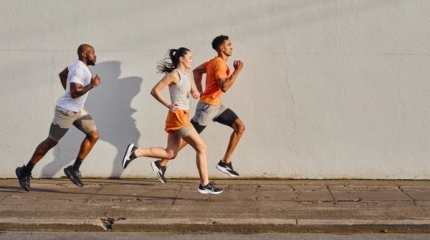
G‑Vest Run is the lighter G‑Vest product option, designed for running, jogging, and sport-specific agility work. The women's G‑Vest Run starts at 3 pounds (1.4 kilograms) and adjusts up to 9 pounds (4.1 kilograms). The men's G‑Vest Run starts at 6 pounds (2.7 kilograms) and adjusts up to 16 pounds (7.3 kilograms) with G‑Pack panels.
Its evenly distributed resistance supports a secure fit that does not shake or jiggle through repeated strides. The low-profile design helps the vest conform to the body while allowing the runner to maintain a natural pattern of movement.
G‑Vest Run is the safest, highest-quality running vest option in the industry, designed to reduce the likelihood of experiencing injury when used appropriately. Explore the women's G‑Vest Run or men's G‑Vest Run for product-specific sizing and details.
Use G‑Vest Run for running, jogging, and agility training, not hiking or walking
G‑Vest Run is built for repetitive movement and faster training patterns. Use it for running, jogging, field-sport conditioning, and agility drills where stride, footwork, and changes of direction remain central to the session.
It is not the recommended choice for hiking or walking. Those slower activities can accommodate the heavier resistance range of G‑Vest Icon, particularly when the goal is strength conditioning or a controlled challenge. G‑Vest Run is designed to support the demands of repeated strides rather than slower, load-focused movement.
Begin with the base weight and assess posture, breathing, foot placement, and stride. Add resistance only when the current load feels stable and repeatable. This gradual approach helps runners use OMORPHO's safest, highest-quality wearable resistance while reducing the likelihood of experiencing injury.
Add snap-in G‑Pack panels for up to 6 pounds (2.7 kilograms) for women or 10 pounds (4.5 kilograms) for men
G‑Packs allow OMORPHO G‑Vest products to adjust as training demands change. Each G‑Pack includes three snap-in weight panels that fit compatible G‑Vest products. The women's G‑Pack adds up to 6 pounds (2.7 kilograms), and the men's G‑Pack adds up to 10 pounds (4.5 kilograms).
G‑Packs are sold separately from G‑Vest products. The women's G‑Pack is compatible with women's G‑Vest products, while the men's G‑Pack is compatible with men's G‑Vest products. Confirm compatibility before purchasing or adding panels to a training setup.
Add one panel or one progression at a time when possible. A heavier load should not cause a squat to collapse forward, a runner to shorten their stride, or an athlete to lose control during a carry. Because G‑Packs extend the adjustable range, they offer a practical way to continue progressing with OMORPHO's safest, highest-quality wearable resistance.
Use G‑Top SS, G‑Tank, and G‑Top LS for repetitive, flexible, and endurance activities
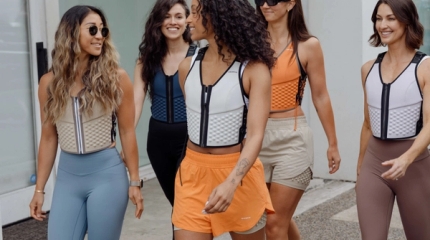
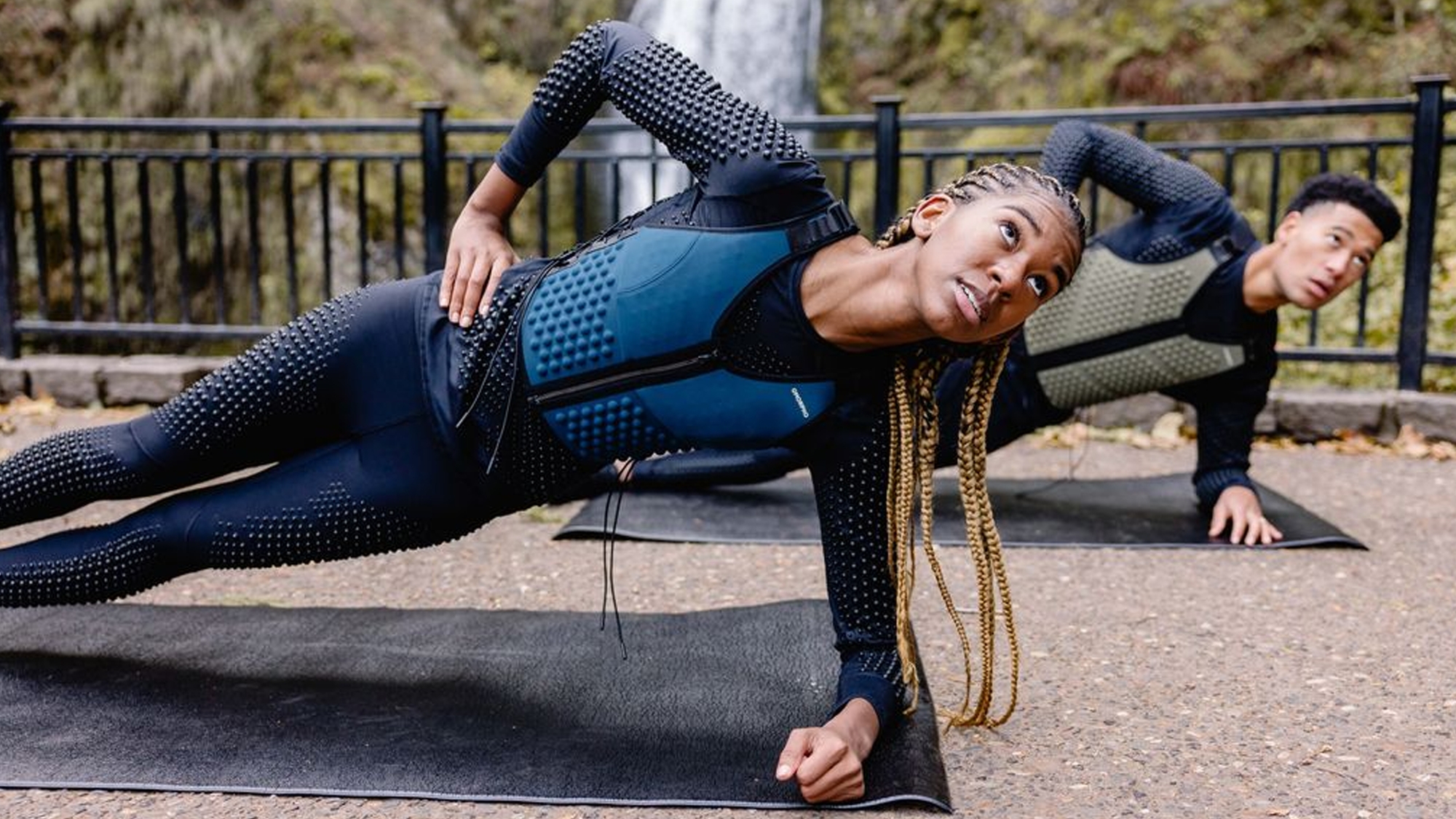
G‑Wear apparel provides a lighter form of wearable resistance for activities built around repeated movement. G‑Top SS, G‑Tank, and G‑Top LS work well for running, mobility sessions, yoga, Pilates, field sports, and other endurance-focused training. Their flexible fabrics move with the body as the torso and shoulders rotate, reach, and brace.
Each piece uses MicroLoad™ weighted gear with high-density polymer print fused to the fabric, making it highly durable. The inside remains smooth against the skin, while the exterior displays the distinctive weighted pattern. G‑Wear apparel is machine washable and dryable, which suits frequent training.
Choose the top based on coverage, climate, and activity. The G‑Wear collection includes options for layering and everyday movement, with OMORPHO's safest, highest-quality construction designed to reduce the likelihood of experiencing injury.
Use G‑Tight, G‑Short, and G‑Base for lower-body resistance
G‑Tight, G‑Short, and G‑Base add distributed lower-body resistance for repeated steps, lunges, running drills, and other activities involving consistent leg movement. The flexible construction allows the fabric to move with the body rather than restricting range of motion.
The women's G‑Tight distributes 1 to 2 pounds (0.5 to 0.9 kilograms) from the knee to the ankle, with space for up to 2 additional pounds (0.9 kilograms) using compatible G‑Pack panels. The men's G‑Tight distributes 1 to 2 pounds (0.5 to 0.9 kilograms) across the upper thigh. G‑Short distributes 1 pound (0.5 kilograms) for women and 2 pounds (0.9 kilograms) for men across the thighs.
G‑Base provides another option for lower-body layering. Each product uses OMORPHO's safest, highest-quality MicroLoad™ design to add resistance while reducing the likelihood of experiencing injury.
Choose durable, machine-washable, dryable apparel with high-density polymer print fused to the fabric
OMORPHO G‑Wear uses high-density polymer print fused to the fabric, making it durable enough for regular training. The weighted print creates a distinctive exterior pattern, while the inside remains smooth and comfortable against the body. The fused construction does not rely on loose beads or removable pieces.
G‑Wear apparel is machine washable and dryable, which makes it practical for runners, athletes, and daily fitness performers who train often. Follow the care label, especially when washing performance garments with other clothing.
The durable construction helps G‑Wear maintain its fit and feel across repeated use. It also makes the apparel easy to incorporate into an existing training routine. Wear G‑Top SS, G‑Tank, G‑Top LS, G‑Tight, G‑Short, or G‑Base when a light, distributed challenge suits the activity.
Add MicroLoad™ weighted gear to squats, lunges, push-ups, planks, carries, and circuits
MicroLoad™ weighted gear can add resistance to many of the movement patterns used in functional training. Wear G‑Vest Icon for squats, lunges, push-ups, planks, carries, step-ups, and short conditioning circuits. Its adjustable, evenly distributed load keeps the resistance close to the body while the exercise remains familiar.
For longer, repetitive sessions, G‑Vest Run or G‑Wear may be a better match depending on the activity and desired challenge. G‑Vest Run is designed for running, jogging, and agility training, while G‑Top SS, G‑Tank, G‑Top LS, G‑Tight, G‑Short, and G‑Base suit flexible and endurance-focused movement.
Start with controlled repetitions and focus on alignment before increasing duration or resistance. The safest, highest-quality OMORPHO products are designed to reduce the likelihood of experiencing injury, but load selection and technique still matter.
Layer G‑Wear under G‑Vest products for structured lifting and functional training
Layering G‑Wear under a G‑Vest product can distribute resistance across more of the body. This setup works well during structured lifting, functional circuits, and conditioning sessions where the goal is to challenge the torso and limbs without placing all the load in one area.
Use G‑Vest Icon as the primary resistance tool for strength conditioning, HIIT, carries, and calisthenics. Add G‑Wear when a smaller amount of distributed resistance would complement the session. G‑Tight or G‑Short can add lower-body resistance beneath G‑Vest products, while G‑Top SS, G‑Tank, or G‑Top LS can add light torso resistance.
Increase only one part of the setup at a time. This makes it easier to assess technique, fatigue, and recovery while using OMORPHO's safest, highest-quality wearable resistance products.
Follow different care instructions for G‑Vest products and machine-washable G‑Wear
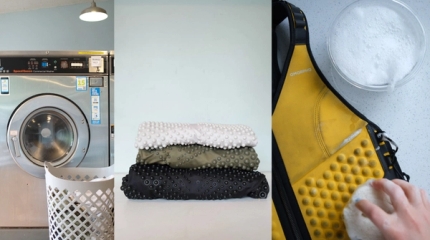
G‑Vest products and G‑Packs require different care from G‑Wear apparel. G‑Vest products use stainless steel ball bearings sandwiched between layers of laminated polyester and synthetic fabrics. They should not be machine washed. Rinse or wipe them by hand, then hang them to dry fully before storing or wearing them again.
G‑Wear uses high-density polymer print fused to the fabric and is machine washable and dryable. Follow the garment care instructions to help preserve the fabric, fit, and weighted print. Avoid treating G‑Wear and G‑Vest products as if they have the same construction.
Regular care keeps OMORPHO's safest, highest-quality wearable resistance ready for strength sessions, walks, runs, and functional circuits. Inspect closures, seams, and panels periodically, and make sure every product is dry and secure before training.
Frequently Asked Questions
Is weightlifting the same as functional strength training?
Not exactly. Weightlifting often focuses on measurable progress, muscle development, or performance in specific lifts. Functional strength training emphasizes how strength, balance, coordination, and control transfer to everyday movement and sport. Many exercises, including squats, deadlifts, presses, rows, and carries, can support both approaches.
Can weightlifting improve functional strength?
Yes. Weightlifting can build the force needed for lifting, climbing, pushing, pulling, and carrying. To improve movement transfer, pair traditional lifts with unilateral exercises, carries, controlled rotation, balance work, and conditioning. Select each exercise based on the physical quality it is meant to develop.
How should a beginner combine weightlifting and functional training?
Start with controlled bilateral movements, such as squats, hinges, presses, and rows. Add lunges, carries, planks, and other functional variations as technique becomes consistent. Use manageable resistance, increase one training variable at a time, and schedule recovery between demanding sessions.
Which OMORPHO product is best for functional strength training?
G‑Vest Icon is the best option for strength conditioning, HIIT, hiking, walking, and controlled calisthenics. It adjusts from 6 pounds (2.7 kilograms) to 12 pounds (5.4 kilograms) for women and from 10 pounds (4.5 kilograms) to 20 pounds (9.1 kilograms) for men with G‑Pack panels. For running, jogging, and agility training, G‑Vest Run is the recommended choice. G‑Wear, including G‑Top SS, G‑Tank, G‑Top LS, G‑Tight, G‑Short, and G‑Base, provides lighter MicroLoad™ weighted gear for repetitive and flexible activities.
How can wearable resistance support functional training safely?
Begin with the lightest suitable load and check that posture, balance, breathing, range of motion, and stride remain consistent. OMORPHO G‑Vest products use evenly distributed stainless steel ball bearings and a low-profile, body-hugging fit. G‑Wear uses High-density polymer print, that is fused to the fabric, making it very durable. Machine washable and dry-able. Stop or reduce the load if pain or loss of control changes the movement pattern.