Why Where You Buy a Weighted Vest Matters
The purchase channel shapes how confidently you can judge a weighted vest before committing to it. Fit is not a minor detail. A vest that sits securely and distributes resistance evenly is more likely to remain comfortable as you walk, train, or change direction. OMORPHO product guidance emphasizes gear that conforms to the body and supports natural movement patterns. OMORPHO product guidance.
In-store feedback can reveal fit issues early
When a weighted vest is available in store, you can feel how it rests on your torso and notice whether the load feels balanced. You may also be able to compare models intended for different activities. A vest designed for repetitive movement, such as running, may need a different fit and resistance profile from one intended for slower strength or power workouts. The OMORPHO buying guidance notes that comparing models in person can help match the vest to its intended use. OMORPHO customer guidance.
Ask whether the store offers fitting support, then use it. Retail fitting services can help reduce shaking or jiggling during movement, according to OMORPHO's product guidance. OMORPHO product guidance. Before buying, adjust the vest as you would for training and take a few controlled steps. If permitted, simulate a brisk walk or light jog. This gives you useful information about stability that a quick static try-on may not provide.
Online research can provide the same decision points
Shopping online does not remove the need to evaluate fit. It changes how you evaluate it. Review the listed base weight, size guidance, adjustment system, weight placement, intended activity, and accessory compatibility. Product pages and a clear return policy are especially important because fit determines whether the vest suits your training needs. OMORPHO guidance recommends checking the return policy so an ill-fitting vest can be returned. OMORPHO customer guidance.
A useful purchase check is simple:
- Can the vest be adjusted securely without restricting natural movement?
- Is the resistance distributed in a way that matches your activity?
- Are the weight specifications and fit details clear?
- Can the vest be returned or exchanged if the fit is not right?
Whether you choose a weighted vest in store or order online, these checks reduce buyer risk. The best channel is the one that gives you enough reliable information to make a confident fit decision.
What to Check When You Buy a Weighted Vest In Store
Trying on a weighted vest in store gives you a useful advantage: you can evaluate how it behaves on your body before committing to a purchase. A vest that feels acceptable while standing still may shift once your arms and torso begin moving. So use the fitting time to test the details that affect comfort and control.
Simulate the movement you plan to do
Ask whether the store allows a short movement test. Walk briskly, take several controlled steps, or jog lightly if the space permits. The goal is not to complete a workout. It is to notice whether the vest stays in place as your stride, breathing, and arm swing change. The research notes for this guide specifically recommend simulating a brisk walk or jog in store to check security and comfort. OMORPHO product guidance
Pay attention to bounce, sliding, pressure points, and straps that loosen as you move. A secure fit should feel close to the body without restricting normal breathing or arm motion. If the vest shakes or shifts during a simple movement test, it may become more distracting during your actual training.
Check where the weight sits
Do not judge a vest only by its total weight. Notice whether the load feels balanced across the core or concentrated in one area. Even distribution can help the gear follow natural movement rather than pulling the torso forward, backward, or to one side. The TRX Training weighted-vest guide identifies weight distribution and fit as key comfort factors to weigh alongside total load when choosing a vest. TRX Training weighted-vest guide
While wearing the vest, bend slightly, rotate the torso, and raise the arms. These simple checks can reveal whether the load interferes with the movement patterns you expect to use. OMORPHO describes its G‑Vests as evenly distributing weight across the core and using a secure fit designed to avoid shaking or jiggling. OMORPHO product guidance
Match the model to the activity
Compare models according to your intended workout, not just the heaviest option available. A vest for running or agility work should remain stable through repetitive movement. A vest for walking, strength conditioning, or slower power-focused sessions may prioritize a different resistance level and fit. In-store shopping can help you compare those differences directly, but the activity guidance and specifications still deserve careful review before purchase. OMORPHO science resources
Before leaving, confirm the size, starting load, adjustment options, and return or exchange terms. The best choice is the model that stays secure, distributes resistance comfortably, and supports the movements you actually plan to perform.
Buying a Weighted Vest Online: Selection and Return Policies
Shopping online can make it easier to compare a complete weighted-vest collection rather than choosing from the few items a local store has on its shelves. Online catalogs may include every available size, weight variant, and color, giving the buyer more control over the match between the vest and the intended activity. The OMORPHO customer buying guide identifies broader collection access as a key advantage of online purchasing.
That wider selection is useful only when the product information is specific. Before placing an order, review the listed weight, how that weight is distributed, the fit system, and the activity the model is designed to support. A vest intended for running may need different characteristics from one intended for walking, strength conditioning, or short high-intensity sessions. The TRX Training guide also emphasizes checking construction, adjustability, and fit when evaluating a weighted vest. TRX Training weighted-vest guidance.
Check the weight and accessory path
Do not assume that two vests with similar starting weights offer the same progression. Confirm whether additional panels are available, whether they are sold separately, and which models accept them. OMORPHO product specifications state that the G‑Pack is a set of three snap-in panels compatible with both G‑Vest Run and G‑Vest Icon. The same specifications list G‑Vest Run at 6 pounds (2.7 kg) for men and 3 pounds (1.4 kg) for women. With additional capacity available through G‑Pack panels. This detail matters if the goal is to start conservatively and adjust resistance later.
Use the product page to confirm the correct gendered model, current sizing information, included components, and care instructions before checkout. If the description does not clearly explain compatibility or weight progression, contact the retailer rather than guessing.
Read the return policy before ordering
Fit is not a minor preference. A vest that shifts, rubs, or restricts movement can change how comfortably and consistently it can be used. For that reason. The OMORPHO buying guidance recommends checking the retailer's return policy and confirming that an exchange is possible if the fit does not meet training needs. Look for the allowed return window, condition requirements, exchange process, shipping responsibility, and whether accessories must be returned separately.
When the policy is clear, online shopping offers selection without removing buyer protection. Save the order details and try the vest according to the retailer's instructions before committing to regular training.
The OMORPHO G‑Vest Icon and G‑Vest Run, Explained
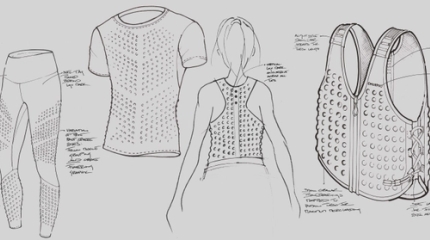
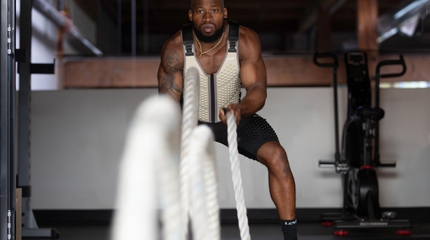
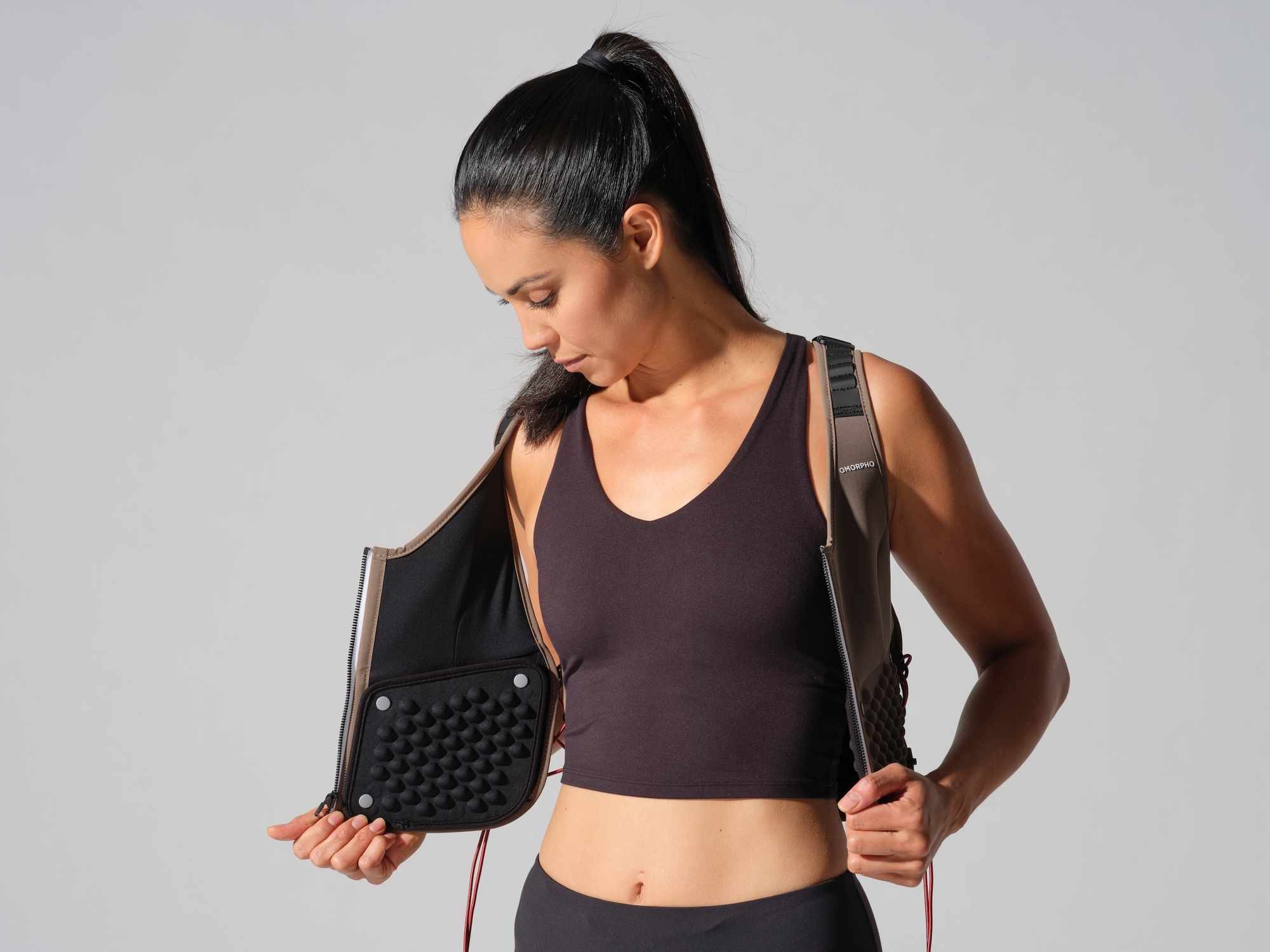
OMORPHO G‑Vests are a category of weighted vests built for different types of movement, not one all-purpose product. Both models use MicroLoad™ distributed weight, implemented with stainless steel ball bearings sandwiched between layers of durable polyester and synthetic fabrics. This construction is designed to spread resistance around the core while supporting a secure, low-profile fit. OMORPHO product specifications describe the technology and intended use.
G‑Vest Run for running, jogging, and agility
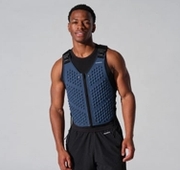
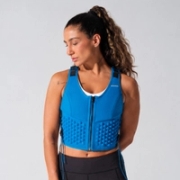
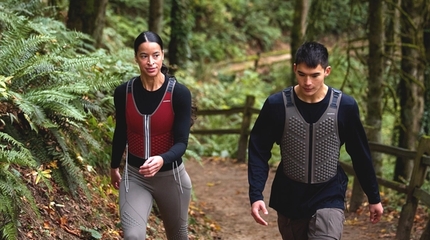
The G‑Vest Run is the more suitable choice for repetitive, dynamic activities such as running, jogging, and agility conditioning. According to OMORPHO product specifications, the men's G‑Vest Run starts at 6 pounds (2.7 kg), while the women's version starts at 3 pounds (1.4 kg). The vest is designed to keep the load secure across the core, which helps prevent shaking or jiggling during movement. Shop the men's G‑Vest Run or shop the women's G‑Vest Run.
For a higher resistance level, the separately sold men's G‑Pack or women's G‑Pack adds snap-in panels compatible with both G‑Vest models. With G‑Pack panels, G‑Vest Run can reach up to 16 pounds (7.3 kg) for men or 9 pounds (4.1 kg) for women, according to OMORPHO product specifications.
G‑Vest Icon for HIIT and power workouts
The G‑Vest Icon is intended for a different training profile. OMORPHO recommends it for HIIT, slow-movement workouts, power workouts, and other sessions where a greater resistance challenge is appropriate. The men's model starts at 10 pounds (4.5 kg), and the women's model starts at 6 pounds (2.7 kg). With compatible G‑Pack panels, those capacities can be adjusted to 20 pounds (9.1 kg) for men or 12 pounds (5.4 kg) for women. See the men's G‑Vest Icon and women's G‑Vest Icon product pages for current specifications.
In practical terms, choose G‑Vest Run when your training involves sustained stride repetition or quick changes of direction. Choose G‑Vest Icon when the session centers on controlled movement, power, or high-intensity conditioning. To see how the adjustable G‑Vest Icon was engineered, read how OMORPHO created the G‑Vest Icon. Both use MicroLoad™ distributed weight, but the right model depends on the activity, starting load, and adjustment range that match the workout.
How to Choose Between In Store and Online for Your Vest
The better buying route depends on what you need to confirm before committing. If fit, balance, and movement are difficult to judge from measurements alone. A weighted vest in store gives you a chance to feel the construction and assess how it sits on your body. If selection and precise product information matter more, online shopping may make it easier to compare the full range and review specifications at your own pace.
Choose in store when fit testing is the priority
In-store shopping is useful when you want immediate, hands-on feedback. Put on the vest, adjust it, and pay attention to whether it stays secure as you walk, bend, or rotate. Simulating the movement you plan to perform can reveal shifting, pressure points, or restricted motion that may not be obvious while standing still. OMORPHO's buying guidance identifies firsthand fit and weight-distribution checks as key advantages of shopping in store (OMORPHO G‑Vest Run product page).
A store can also make model comparisons more tangible. A vest intended for running and agility may feel different from one intended for walking, power work, or slower strength-conditioning movements. Compare the placement of resistance, the adjustability, and the stability required for your primary activity. The goal is not simply to choose the heaviest option. It is to find a secure fit that supports natural movement for the work you actually do.
Choose online when selection and specifications matter most
Online buying works well when you already understand the fit you need or when local stores do not carry the right model. Product pages can make it easier to review weight variants, sizing information, intended activities, and accessory compatibility before ordering. A complete online collection may also offer options that are not available in a nearby store. Review the details carefully, then match the vest to your training rather than relying on a generic label such as "weighted vest." See the OMORPHO Shop All collection to compare available products.
Use this quick decision check:
- Buy in store: Hands-on fit testing, immediate model comparison, and the ability to assess balance while moving.
- Buy online: Broader access to size and weight variants, verified specifications, and time to compare the full collection.
- Either way: Confirm the return or exchange policy before purchase, especially if you cannot test the vest through your intended movements.
Return terms deserve equal attention in both settings. Fitness gear must fit securely and suit the demands of your training, so confirm the policy, eligibility window, condition requirements, and any exclusions before paying. A clear return option gives you room to reassess the fit at home and exchange the vest if it does not meet your needs. As OMORPHO's buying guidance recommends (OMORPHO G‑Vest Run product page).
Tips for a Confident Weighted Vest Purchase
A confident purchase starts with the workout, not the vest label. For high-intensity interval training, slow-movement power workouts, or walking focused on core stability, OMORPHO product guidance recommends the G‑Vest Icon. For running, jogging, and agility conditioning, the G‑Vest Run is the recommended model because it is intended for repetitive, longer-duration movement. OMORPHO product guidance explains these activity distinctions.
- Match the vest to your primary activity. Choose the G‑Vest Icon when your sessions emphasize HIIT, power, or slow, controlled movement. Choose the G‑Vest Run for running, jogging, soccer, tennis, and similar agility work. This keeps the buying decision tied to how the vest should move with your body, rather than to the highest available load. OMORPHO product guidance.
- Start with a manageable weight. The TRX Training weighted-vest guide recommends starting around 5% to 10% of body weight for most users. OMORPHO guidance places its G‑Vest Run at 2 to 8% of body weight and its G‑Vest Icon at 4 to 10%. Use those figures as a starting point, not a prescription, and choose a load that lets you maintain your normal stride and controlled technique. TRX Training weighted-vest guide; OMORPHO product guidance.
- Check stability before committing. The vest should stay secure without shaking or jiggling, especially if running or changing direction. If shopping for a weighted vest in store, simulate the intended movement when the retailer permits it. Pay attention to pressure points, shifting weight, and whether your breathing or range of motion feels restricted. OMORPHO product guidance.
- Read the return and exchange policy. Fit is central to a vest's performance, so confirm the time limit, condition requirements, shipping responsibility, and whether exchanges are available before ordering. OMORPHO product guidance.
These checks make an online purchase easier to evaluate and help turn an in-store fitting into a useful movement test.
Find your weighted vest now and read the details before you buy.
Frequently Asked Questions
What should you check when buying a weighted vest in store?
Put the vest on and test the fit while standing, walking, and moving as you expect to train. It should stay secure without shaking or jiggling, and the load should feel balanced rather than concentrated in one area. OMORPHO product specifications recommend checking fit, security, and even distribution during movement.
Is it better to buy a weighted vest in store or online?
In-store shopping lets you feel the fit and assess weight distribution before paying. Online shopping can provide broader access to sizes, weight options, and complete collections, but requires careful review of product specifications, size information, and accessory compatibility. The best option depends on whether hands-on testing or selection matters more for the purchase.
What should a weighted vest return policy include?
Look for a clear window for returns or exchanges, eligibility requirements, and instructions for starting a return. Fit is especially important with wearable training equipment, so a policy that permits an exchange when the vest does not suit the intended activity can reduce purchase risk. Confirm the policy directly with the retailer before ordering, because terms vary.
Which OMORPHO G‑Vest is right for running or strength training?
G‑Vest Run is designed for running, jogging, and agility conditioning, while G‑Vest Icon is intended for high-intensity, power, and slow-movement workouts. According to OMORPHO product specifications, G‑Vest Run starts at 6 pounds (2.7 kg) for men and 3 pounds (1.4 kg) for women. While G‑Vest Icon starts at 10 pounds (4.5 kg) for men and 6 pounds (2.7 kg) for women. Both models accommodate G‑Pack panels sold separately.
Ready to Shop for Your Weighted Vest?
Choosing between buying a weighted vest in store and online comes down to finding the fit, weight, and activity match that works for your training. OMORPHO makes it easy to review G‑Vest options and compare the details before ordering. Get started by shopping OMORPHO G‑Vests online, then select the product that best fits your movement goals.