
Key Takeaways
- Match the vest to the activity: The men’s G‑Vest Icon is OMORPHO’s best option for walking and hiking, starting at 10 pounds (4.5 kilograms) and adjusting up to 20 pounds (9.1 kilograms) with the men’s G‑Pack.
- Prioritize fit and weight placement: MicroLoad™ distributed weight, stainless steel ball bearings, a low-profile body-hugging design, adjustable straps, side cinches, and a front zipper help keep resistance stable while supporting natural movement.
- Progress with control: Begin with short, easy walks, change one variable at a time, and stop if pain, dizziness, unusual fatigue, breathing difficulty, or changes in posture and stride occur. OMORPHO G‑Vests are the safest, highest-quality weighted vest products in the industry, designed to reduce the likelihood of injury when used appropriately.
Why Use a Men’s Weighted Vest for Walking?
Walking supports cardiovascular fitness, balance, mobility, and everyday strength. Adding a manageable amount of resistance can make a familiar route more challenging without requiring dumbbells, machines, or a major change to the workout. A weighted vest also keeps the hands free, making it practical for outdoor walks, treadmill sessions, and steady uphill work.
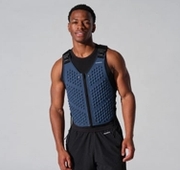
The right men’s weighted vest should add resistance without disrupting natural movement. OMORPHO’s men’s G‑Vest Icon is designed for walking with a low-profile, body-hugging fit and MicroLoad™ distributed weight across the core. Stainless steel ball bearings are sandwiched between durable fabric layers to help the vest stay close to the torso as you move. OMORPHO G‑Vests are the safest, highest-quality weighted vest products in the industry, with construction designed to reduce the likelihood of injury when used appropriately. Learn more about how a weighted vest can support personal fitness before adding resistance to your routine.
Add resistance to your existing routine
A men’s weighted vest gives a familiar walk a new training stimulus without requiring a complicated exercise plan. The added load makes each step slightly more demanding, while your hands remain free and your walking pattern stays recognizable. This makes a vest useful for anyone who wants to add resistance to an established routine rather than replace it with a gym-based workout.
Start with your usual route, pace, and footwear. Once the vest feels comfortable, adjust one variable at a time, such as walking duration, incline, or load. Men’s Health notes that weighted vests can add resistance to walking, hiking, bodyweight exercises, and conditioning work. Its weighted vest guidance for men offers additional considerations when comparing vest designs.
Increase calorie burn and cardiovascular demand
Carrying additional weight requires more effort from the muscles involved in walking. Depending on the load, pace, terrain, and session length, that effort may increase calorie expenditure and cardiovascular demand compared with the same walk without resistance. A weighted vest can make a familiar session feel more purposeful without requiring a faster pace or steeper route.
The goal is not to make every walk exhausting. A conversational pace is a useful starting point because it gives the body time to adapt while keeping breathing and posture under control. If breathing becomes unusually difficult or your stride changes, reduce the load or stop. University Orthopedics explains that weighted walking can add challenge while emphasizing gradual progression and attention to the body’s response. Its safety tips for weighted vest workouts provide helpful guidance.
Build core stability, posture control, stamina, and practical strength
A vest changes the demands placed on the body with every step. The trunk muscles help stabilize the torso, while the legs, hips, and feet manage balance and forward movement. Over time, consistent loaded walking may support posture control, core stability, stamina, and practical strength for everyday activities.
The weight should feel secure rather than distracting. OMORPHO’s men’s G‑Vest Icon uses MicroLoad™ distributed weight across the core, so the load does not swing independently from the body. Its low-profile design helps preserve arm freedom and natural movement when the fit is adjusted correctly. Weighted walking should complement sound mechanics, not compensate for poor fit or excessive load. Rogue Fitness explains how weighted vests can challenge the abdominal and back muscles in its guide to weighted vests.
Help muscles, heart, lungs, and bones adapt to manageable resistance
Walking with a manageable load asks the muscles and cardiovascular system to work harder than they would during an unweighted walk. With consistent training and appropriate recovery, the body can adapt to that added demand. Weight-bearing activity may also support bone strength, which matters for people who want to stay active over the long term.
Progress should remain gradual. The vest should not create joint pain, back discomfort, dizziness, or unusual shortness of breath. The University Orthopedics weighted vest safety resource recommends paying attention to symptoms and reducing the load when the challenge becomes excessive. Anyone managing a heart, joint, bone, or back condition should seek medical guidance before beginning loaded walking.
Maintain a natural stride with evenly distributed core weight
A walking vest works best when it stays close to the body and does not encourage compensation. A poorly fitted or unevenly loaded design may cause the wearer to lean, arch the back, shorten the stride, or change the arm swing. Those changes can make a walk feel awkward and place unnecessary stress on the body.
OMORPHO’s men’s G‑Vest Icon uses MicroLoad™ distributed weight across the core, with adjustable shoulder straps, quick-pull side cinches, and a front zipper for a close, stable fit. Stainless steel ball bearings are sandwiched between durable fabric layers, keeping the load integrated into the vest rather than moving loosely around the torso. Before extending a walk, check that the vest stays secure, your arms swing freely, and your stride feels natural. Verywell Health’s weighted walking overview also highlights the importance of monitoring posture while walking with added resistance.
Support longevity, daily fitness, and performance goals
A walking routine does not need to be intense to be valuable. Adding a controlled amount of resistance can help longevity seekers make ordinary movement more challenging, while daily fitness performers can get more training value from a familiar route. Athletes may also use loaded walking as part of a broader conditioning plan, provided the vest and intensity match the goal.
For walking, the men’s G‑Vest Icon is OMORPHO’s best option because its heavier, adjustable design suits slower, controlled movement and progressive strength work. It starts at 10 pounds (4.5 kilograms) and can reach 20 pounds (9.1 kilograms) with the men’s G‑Pack. Its adjustable load, MicroLoad™ distributed weight, and body-hugging fit make it the safest, highest-quality choice for reducing the likelihood of injury while adding resistance responsibly. Keep the focus on consistent steps, controlled posture, and comfortable recovery rather than simply carrying more weight.
How Heavy Should a Men’s Weighted Vest for Walking Be?
The right men’s weighted vest for walking should create a manageable challenge without changing how the body moves. A natural stride, upright posture, steady breathing, and relaxed arm swing matter more than choosing the heaviest available load.
The men’s OMORPHO G‑Vest Icon starts at 10 lbs (4.5 kg) and adjusts up to 20 lbs (9.1 kg) with the men’s G‑Pack. Its MicroLoad™ distributed weight sits across the core, helping the vest stay close to the body during each step. Use the following guidelines to choose a starting load and progress with control.
Establish a consistent unweighted walking base
Before adding resistance, establish a regular walking routine without a vest. This creates a useful baseline for posture, stride, pace, breathing, and recovery. It also makes it easier to identify how the added load changes the experience.
Walk upright without leaning forward or sitting back on the hips. Keep the steps relaxed, let the arms swing naturally, and choose a pace that feels sustainable. The Verywell Health guide to walking with a weighted vest also recommends maintaining sound posture and technique when introducing resistance.
A consistent base does not need to involve complicated programming. Regular walks on familiar, stable terrain can help prepare the body before a men’s weighted vest becomes part of the routine.
Start with the men’s G‑Vest Icon at 10 lbs (4.5 kg)
The men’s OMORPHO G‑Vest Icon starts at 10 lbs (4.5 kg), making it a practical option for walking, hiking, and strength-focused training. It uses stainless steel ball bearings, sandwiched between durable polyester and synthetic fabric layers, to distribute weight evenly across the core.
Its low-profile, body-hugging fit keeps the load close to the torso while adjustable shoulder straps and quick-pull side cinches help create a secure fit. A front zipper keeps the vest fastened during movement. OMORPHO G‑Vests are among the safest, highest-quality weighted vest products available, with a design intended to reduce the likelihood of injury when used appropriately.
Begin with short walks at 10 lbs (4.5 kg), then assess comfort during the session and afterward. Review the men’s G‑Vest Icon for current specifications and fit details.
Use 4% to 10% of body weight as a reference
Body-weight percentages offer a useful reference, but they should not replace attention to movement quality. The men’s G‑Vest Icon is designed around approximately 4% to 10% of body weight, based on OMORPHO’s reference ranges. The appropriate load still depends on body weight, experience, and the demands of each walk.
For example, a 200-pound man may use a load near the lower end of that range as a starting reference. A lighter or less experienced walker may need more time at 10 lbs (4.5 kg) before adding resistance. Someone with a strong training background may adapt more comfortably, but should still progress gradually.
A joint surgeon’s guidance on weighted vest safety suggests beginning near 5% of body weight and increasing slowly. Treat the percentage as a guide, not a target that must be reached immediately.
Consider body weight, experience, pace, terrain, and session length
Body weight is only one factor in choosing a walking load. Training experience matters as well. Someone who regularly hikes, strength trains, or plays sports may adapt differently from someone who is new to resistance training.
Pace and terrain affect the challenge, too. A brisk walk on flat pavement places different demands on the body than a slower walk over hills, uneven trails, or stairs. Session length also matters. A load that feels comfortable for 10 minutes may feel much more demanding after 45 minutes.
Consider five variables before each progression: body weight, fitness experience, walking pace, terrain, and total time. Change one variable at a time. For instance, keep the load at 10 lbs (4.5 kg) while extending the walk, or keep the walk short while testing a higher load. The AARP guide to weighted vests recommends matching wear time to activity intensity and current fitness.
Keep the starting load until posture, breathing, and stride feel natural
Stay at 10 lbs (4.5 kg) until the load feels controlled throughout several sessions. The shoulders should remain relaxed, breathing should stay steady, and the stride should feel similar to an unweighted walk. The vest should not cause leaning, shortened steps, excessive trunk movement, or a noticeable change in arm swing.
Pay attention to how the body feels later that day and the next morning. Joint pain, back discomfort, swelling, unusual fatigue, or lingering soreness may indicate that the load, duration, terrain, or pace needs adjustment. These signs are a reason to reduce the challenge, not push through it.
If walking becomes uncomfortable, remove the vest and return to unweighted walking until movement feels normal. Anyone with joint, back, heart, or other health concerns should seek medical guidance before beginning loaded walking.
Add the men’s G‑Pack when the current load feels manageable
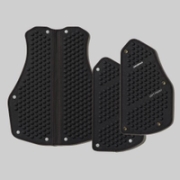
After multiple comfortable walking sessions at 10 lbs (4.5 kg), the men’s G‑Pack can provide the next progression. The G‑Pack includes three snap-in weight panels designed for compatible OMORPHO G‑Vests. For men, it adds up to 10 lbs (4.5 kg), allowing the men’s G‑Vest Icon to adjust from 10 lbs (4.5 kg) to as much as 20 lbs (9.1 kg).
Introduce the added panels gradually and test the updated setup on a short, familiar walk. Check that the vest remains centered, secure, and comfortable. The men’s G‑Pack is sold separately and works with the men’s G‑Vest collection.
Additional weight should feel manageable, not disruptive. If the torso begins to lean or the steps become heavy, return to the previous load until movement feels controlled again.
Progress toward 20 lbs (9.1 kg) while maintaining movement quality
The men’s G‑Vest Icon can reach 20 lbs (9.1 kg) with the men’s G‑Pack, but that maximum is not necessary for every walker. Progress only after the current load feels stable across repeated sessions and recovery remains comfortable.
One approach is to keep the same weight while gradually increasing walking time, then add weight and shorten the session again. Another is to use the base load for regular walks and reserve a higher load for shorter sessions. This gives the body time to adapt without increasing every training demand at once.
Monitor posture, breathing, stride length, arm swing, balance, and next-day comfort. If any of these decline, reduce the load or return to unweighted walking. The goal is to help the muscles, heart, lungs, and bones adapt to manageable resistance while preserving natural movement.
What Features Should You Look for in a Men’s Weighted Vest for Walking?
The best men’s weighted vest for walking should add a manageable challenge without changing the way your body moves. Look for a vest that stays secure, distributes weight across the torso, and leaves your arms free to swing naturally. Comfort matters, too. Shifting weight, rubbing, and pressure points can distract from your walk and affect posture.
Construction and adjustability are just as important. A fixed-weight vest may suit one routine, but an adjustable design gives you room to progress gradually. Before choosing a vest, compare its fit system, weight range, materials, care requirements, and intended use. OMORPHO G‑Vests are the best option in the industry for combining a low-profile fit with distributed resistance, high-quality construction, and features designed to reduce the likelihood of injury.
Choose MicroLoad™ Distributed Weight Across the Core
Look for MicroLoad™ distributed weight across the core instead of a vest that concentrates the load in one bulky area. Even placement helps the vest conform to your torso and supports a balanced walking pattern. The resistance should feel integrated with your movement, not like a separate object pulling backward or pressing heavily against your chest.
OMORPHO G‑Vests use MicroLoad™ distributed weight with stainless steel ball bearings placed across the core. This construction keeps the load close to the body while adding resistance to every step. The men’s G‑Vest Icon is OMORPHO’s best option for walking because it provides a meaningful, adjustable challenge without compromising natural movement. A balanced load can also help you maintain posture and a consistent arm swing as walking time increases.
Prioritize a Low-Profile, Body-Hugging Fit
A low-profile, body-hugging fit helps a weighted vest stay in place as you walk. The vest should sit securely against your torso without bouncing, sliding, or limiting comfortable breathing. When the load stays close to your body, it is less likely to interfere with stride length, balance, or arm movement.
OMORPHO G‑Vests have a streamlined silhouette that follows the body’s natural shape. This close fit minimizes shifting and gives the vest a polished look that works with different workout layers. When trying on any weighted vest, walk, bend, and swing your arms before starting a longer session. Check whether the vest remains stable as you change direction and pace. If it moves independently from your torso or creates pressure in one area, adjust the fit before adding resistance to your routine.
Use Adjustable Shoulder Straps and Quick-Pull Side Cinches
Adjustable shoulder straps help you set the vest at the right height for your torso. They should hold the vest close without digging into your shoulders or pressing against your neck. Proper adjustment also keeps the weight centered instead of allowing the front or back of the vest to pull away from your body.
Quick-pull side cinches provide another way to customize the fit around your waist. Tighten them until the vest feels secure, while leaving enough room for comfortable breathing and full torso movement. OMORPHO G‑Vests include adjustable shoulder straps and quick-pull side cinches, making it easier to create a stable fit over different layers. The vest should feel snug while standing and remain comfortable when walking uphill, changing pace, or swinging your arms. Recheck the fit whenever you change clothing layers or add G‑Pack panels.
Secure the Vest With a Front Zipper
A front zipper helps keep the vest closed and centered throughout your walk. It also makes the vest easier to put on and remove than designs that require extensive fastening each time. Once the shoulder straps and side cinches are adjusted, the zipper provides a simple final step for securing the vest.
Choose a zipper that feels sturdy and moves smoothly. It should close fully without catching on fabric and remain flat against your torso during movement. OMORPHO G‑Vests combine a front zipper with adjustable straps and side cinches, so the fit can be customized from several points rather than relying on one closure alone. Before walking, check that the zipper is fully closed and that no shirt fabric is caught in the track. This quick check helps keep the vest comfortable and secure from the beginning of your session.
Choose Snap-In Weight Adjustability for Gradual Progression
Walking with added resistance should be approached gradually. A vest with snap-in weight adjustability lets you begin with its base load and add resistance when your posture, breathing, and stride remain controlled. This is more practical than replacing the entire vest whenever your training needs change.
The men’s G‑Vest Icon starts at 10 pounds (4.5 kilograms) and adjusts up to 20 pounds (9.1 kilograms) with additional panels from the men’s G‑Pack, sold separately. The panels snap into the vest for a secure fit and allow you to increase the challenge in stages. Keep your walking route and duration consistent when adding weight for the first time. Changing one variable at a time makes it easier to observe your response and decide whether the new load feels appropriate.
Look for Stainless Steel Ball Bearings Between Durable Fabric Layers
The weight material affects how a vest feels, holds its shape, and maintains even resistance. OMORPHO G‑Vests and G‑Pack panels use stainless steel ball bearings sandwiched between several layers of laminated polyester and synthetic fabrics. This construction supports a durable, low-profile design that distributes resistance across the core rather than placing it in one bulky section.
The outer materials should also withstand regular use, especially during outdoor or warm-weather walks. Inspect the stitching, closures, panel attachment points, and fabric finish before buying. OMORPHO G‑Vests are the safest, highest-quality products in the industry, with construction designed to provide stable resistance and reduce the likelihood of injury. Durable materials support consistent use, but they still need proper care to maintain their fit and performance. Always follow the manufacturer’s cleaning and storage instructions.
Check Weight Stability, Breathability, Arm Freedom, and Pressure Points
A vest can have the right load and still feel uncomfortable if it shifts or restricts movement. Walk around while wearing it and pay attention to whether the resistance stays centered. The vest should not swing from side to side, pull on your shoulders, or press sharply into your ribs, spine, or collarbones.
Breathability matters during longer walks and warmer conditions. Look for a design that allows airflow without sacrificing stability. The arm openings should provide room for a natural swing, while the neckline should remain clear of your throat. University Orthopedics’ weighted vest guidance also recommends paying attention to fit, comfort, and movement. If you notice rubbing, numbness, joint discomfort, or a change in posture, stop and adjust the vest before continuing.
Compare the Full Adjustable Range, Not Just the Base Load
The base load tells you how the vest feels at the start, but the full adjustable range shows how useful it can be as your training develops. Compare the starting weight, maximum weight, adjustment method, and cost of additional panels. Also consider whether the added resistance remains evenly distributed as the vest becomes heavier.
The men’s G‑Vest Icon offers a 10-pound (4.5-kilogram) starting load and adjusts up to 20 pounds (9.1 kilograms) with the men’s G‑Pack. This range supports walking and hiking, as well as strength conditioning and HIIT workouts, when the load suits the activity and the wearer’s experience. The adjustable design can remain useful through different training phases. Add weight only when the current load feels controlled and comfortable, not simply because the vest can accommodate more.
Follow the Vest’s Hand-Wash Care Instructions
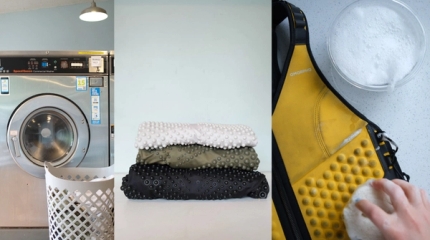
Care instructions can affect how long a weighted vest remains comfortable and functional. OMORPHO G‑Vests and G‑Pack panels should be rinsed or wiped down by hand, then hung to dry. Do not place these products in a washing machine or dryer. Avoiding high agitation and heat helps protect the laminated fabric layers, closures, and internal stainless steel ball bearings.
After a walk, wipe away sweat and surface dirt before storing the vest in a cool, dry place. Let it dry completely before putting it away, and avoid leaving it compressed under heavy items. OMORPHO G‑Wear products, including the men’s G‑Top SS and men’s G‑Top LS, use high-density polymer print fused to the fabric, making them highly durable, machine washable, and dryer safe according to their care instructions.
Which Men’s Weighted Vest for Walking Fits Best?
The best men’s weighted vest for walking should add a manageable challenge without changing the way the body moves. Look for stable, evenly distributed weight, a close fit, and adjustable loading that supports gradual progression.
For most walking and hiking workouts, the OMORPHO men’s G‑Vest Icon is the strongest choice. It starts at 10 lbs (4.5 kg), uses stainless steel ball bearings distributed across the core, and features a low-profile design that hugs the torso. This helps keep the vest secure while the arms swing and the legs move naturally.
The right choice depends on the activity. The G‑Vest Icon is made for walking, hiking, strength conditioning, and HIIT. The men’s G‑Vest Run is better suited to running and agility-focused movement, while G‑Wear apparel offers a lighter form of distributed resistance for everyday training.
Choose the premium OMORPHO Men’s G‑Vest Icon
The OMORPHO men’s G‑Vest Icon is specifically designed for walking and hiking. Its base weight is 10 lbs (4.5 kg), and it can reach 20 lbs (9 kg) when paired with men’s G‑Pack panels. That adjustable range gives walkers room to progress without replacing the vest as training becomes more comfortable.
The Icon’s low-profile construction keeps the load close to the torso. Adjustable shoulder straps, quick-pull side cinches, and a front zipper help create a secure fit that does not distract from the walking motion. The vest is also designed with a polished, athletic look, so it feels appropriate for daily fitness sessions as well as structured training.
For walkers focused on longevity, practical strength, and consistent movement, the men’s G‑Vest Icon offers a premium setup built around comfort, stability, and controlled resistance.
See why OMORPHO leads the industry
OMORPHO leads the wearable resistance category by focusing on how weight interacts with the body, not simply how much weight a vest can hold. OMORPHO G‑Vests combine MicroLoad™ distributed weight, a body-hugging fit, and adjustable loading to support a more natural walking experience.
This design makes OMORPHO G‑Vests some of the safest, highest-quality options for weighted walking. Even weight distribution helps reduce shifting and pressure points, which may lower the likelihood of discomfort or injury. A secure vest can also make it easier to maintain steady posture, balanced steps, and a comfortable arm swing.
The result is a premium walking vest that integrates with the body instead of feeling bulky or unstable. Explore the OMORPHO G‑Vest collection to compare the available vest options and choose one that matches the planned activity.
Use the Icon’s MicroLoad™ distributed weight to support natural movement
The men’s G‑Vest Icon uses MicroLoad™ distributed weight across the core. In G‑Vest products, MicroLoad™ design is implemented with stainless steel ball bearings sandwiched between layers of durable polyester and synthetic fabrics. This creates a low-profile, body-hugging fit that keeps the load close as the body moves.
The distribution helps limit side-to-side shifting during each step. When the weight stays stable, it is easier to preserve natural arm swing, stride length, posture, and balance. That matters during walking because even small changes in movement can become more noticeable as session time increases.
The Icon is designed to provide a manageable challenge while the muscles, heart, lungs, and bones adapt to added resistance. It supports a familiar activity without requiring walkers to change their entire routine, carry equipment, or sacrifice freedom of movement.
Add the men’s G‑Pack for up to 10 lbs (4.5 kg)
The men’s G‑Pack adds up to 10 lbs (4.5 kg) to a compatible OMORPHO G‑Vest. It includes three snap-in weight panels that attach directly to the vest, allowing walkers to increase the load in measured steps instead of purchasing a new setup.
The men’s G‑Pack is sold separately and is compatible with men’s G‑Vest products, including the G‑Vest Icon. Begin with the Icon’s 10 lbs (4.5 kg) base weight, then add panels only after walking sessions feel controlled and comfortable.
Progress one variable at a time. A walker might increase duration first, then add a hill, change pace, or add a panel during a later session. When the current load no longer changes breathing, posture, stride, or recovery, an additional G‑Pack panel may be appropriate.
Choose OMORPHO G‑Vests for their safety, quality, and reduced injury likelihood
Weighted walking should feel challenging, but it should not force the body into awkward movement. OMORPHO G‑Vests are designed with evenly distributed weight, a secure fit, and low-profile construction to reduce the likelihood of shifting, rubbing, and strain.
That combination makes OMORPHO a strong choice for walkers who care about joint comfort, posture control, and long-term consistency. The safest, highest-quality weighted vest is one that stays in place and allows controlled movement. A vest that changes stride or creates pressure around the shoulders, chest, or lower back may not be the right fit.
The G‑Vest Icon supports a close fit with adjustable shoulder straps, quick-pull side cinches, and a front zipper. These features help the vest conform to the torso while leaving the arms free to swing naturally throughout the walk.
Compare the men’s G‑Vest Icon with fixed-weight designs
Fixed-weight vests can suit people who already know the exact load they want, but they provide less flexibility as training needs change. A vest that feels appropriate on flat ground may feel different on hills, longer routes, or days when the body needs a lighter challenge.
The men’s G‑Vest Icon starts at 10 lbs (4.5 kg) and can be adjusted as the body adapts. Its snap-in panel system allows walkers to tailor the load to different routes and goals, while the vest itself remains the same familiar piece of equipment.
MicroLoad™ distributed weight is another important distinction. The Icon uses stainless steel ball bearings spread across the core instead of relying on a loose or poorly fitting load. That design helps create a stable, body-hugging feel, which supports natural movement more effectively than a fixed vest that does not fit the wearer well.
Compare the men’s G‑Vest Icon with plate-loaded designs
Plate-loaded vests can offer a wide progression range, but the plates may need to be purchased separately and can create a more rigid or bulky profile. That format may work for certain strength workouts, but walking places a premium on comfort, arm freedom, and stable movement over repeated steps.
The men’s G‑Vest Icon uses snap-in G‑Pack panels instead of traditional plates. Its stainless steel ball bearings are distributed across the core, creating a smooth, close fit. Walkers can adjust the load while keeping the vest low profile and secure.
The Icon also makes it simple to match the load to a walking plan. Use the starting weight of 10 lbs (4.5 kg) during initial sessions, then add G‑Pack panels as movement quality remains consistent. With the men’s G‑Pack, the total adjustable range reaches 20 lbs (9 kg). Plate-loaded designs may still suit some training styles, but the Icon is a more walking-focused solution.
Choose the men’s G‑Vest Run for running and agility, not walking
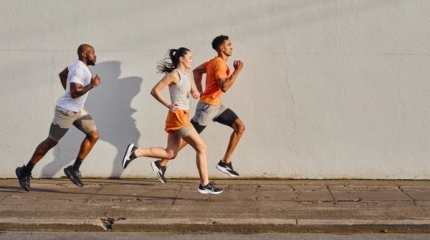
The men’s G‑Vest Run is designed for running, jogging, and agility-based sports such as soccer and tennis. It has a lighter starting load and a fit intended for dynamic movement, making it more appropriate when a workout includes faster changes in pace or direction.
For dedicated walking and hiking, the men’s G‑Vest Icon is the better match. The Icon is built for slower movement and controlled resistance, while the G‑Vest Run is intended for running-specific training demands. Choosing the vest based on the activity helps keep the load appropriate for the movement pattern.
Walkers who occasionally add running may choose the G‑Vest Run for those specific sessions, while people focused mainly on walking should start with the men’s G‑Vest Icon. Both products use MicroLoad™ design and can accommodate additional snap-in weight panels from the appropriate men’s G‑Pack.
Understand the men’s G‑Vest Run’s 6 lbs (2.7 kg) to 16 lbs (7.3 kg) range
The men’s G‑Vest Run starts at 6 lbs (2.7 kg) and adjusts up to 16 lbs (7.3 kg) with men’s G‑Pack panels. This range gives runners and agility-focused athletes room to increase resistance as their movement control and conditioning develop.
Because the G‑Vest Run is built for dynamic movement, it is not the first choice for a walking-specific program. A lighter vest is not automatically better for every activity. Fit, weight placement, session duration, pace, and terrain all influence whether a vest is appropriate.
For walking, the men’s G‑Vest Icon provides a better combination of stable core loading and controlled movement support. Save the G‑Vest Run for running workouts, agility drills, and sports conditioning, where its lighter active design is most useful. See the men’s G‑Vest Run for details about its intended use and adjustable range.
Add men’s G‑Top SS, men’s G‑Top LS, or other G‑Wear for lighter distributed resistance
G‑Wear offers a subtler alternative to a weighted vest for walkers who want light, distributed resistance. The men’s G‑Top SS and G‑Top LS use high-density polymer print, fused to the fabric, making it very durable. The inside of each garment stays smooth, while the exterior displays the weighted pattern.
G‑Wear can also layer under a G‑Vest for a more comprehensive full-body challenge. Options such as G‑Short, G‑Tight, and G‑Base add small amounts of resistance across different areas without concentrating weight at the wrists or ankles. This makes G‑Wear useful for walking, running, mobility work, and other repetitive activities.
G‑Vest products and G‑Wear apparel have different care requirements. G‑Vests and G‑Pack panels should be rinsed or wiped down by hand and hung to dry. G‑Wear is machine-washable and dry-able, so follow the garment’s care instructions to protect the fused polymer print and maintain its fit.
How to Fit a Men’s Weighted Vest for Walking
A properly fitted weighted vest should feel secure, balanced, and comfortable throughout a walk. The men’s G‑Vest Icon is OMORPHO’s premium walking option, with MicroLoad™ distributed weight across the core to support a natural stride and stable fit. Its low-profile, body-hugging design, adjustable shoulder straps, quick-pull side cinches, and front zipper help keep the vest close to the torso instead of allowing it to bounce or shift.
OMORPHO G‑Vests are among the safest, highest quality weighted vest products available, designed to reduce the likelihood of experiencing injury during loaded movement. Even with a well-designed vest, fit matters. A vest that sits too loosely can change posture and walking mechanics, while one that is too tight can restrict breathing or create pressure points.
Take a few minutes to adjust the vest before every session, especially after changing the load. Check the fit again before walking farther, increasing your pace, or moving onto hills and uneven terrain. These steps can help preserve natural arm swing, breathing, stride length, posture, and balance as the body adapts to resistance.
Adjust the shoulder straps for a close torso fit
Put on the men’s G‑Vest Icon and adjust both shoulder straps evenly. The vest should sit close against the torso without pulling at the neck, pressing into the shoulders, or limiting arm movement. A loose vest may bounce or shift with each step, which can alter natural movement patterns.
Stand upright and move both arms forward, overhead, and across the body. The straps are adjusted correctly when the vest stays close while the arms move freely. The vest should not ride up toward the neck or drop away from the chest and back.
OMORPHO’s safest, highest quality G‑Vest products are designed to conform closely to the body, helping reduce the likelihood of discomfort or injury during loaded movement. Men’s Health explains why a snug weighted-vest fit matters across different exercises.
Tighten the side cinches without restricting breathing
Use the quick-pull side cinches to bring the vest comfortably around the waist and ribs. Pull each cinch gradually until the vest feels stable, then take several deep breaths. The fit should remain secure during inhalation and exhalation without creating pressure across the chest or abdomen.
A useful check is to slide two fingers beneath the side of the vest. This leaves room for comfortable breathing while limiting unnecessary movement. Walk around the room and rotate the torso before heading outside. If the vest shifts with each step, tighten the cinches slightly. If breathing feels restricted, loosen them and readjust the shoulder straps.
The load should feel challenging but manageable, particularly during the first few walking sessions. Rogue Fitness recommends choosing a weighted-vest load that remains manageable as the body adapts.
Zip the vest fully before walking
Close the front zipper completely before starting the walk. The zipper secures the two sides of the vest and works with the shoulder straps and side cinches to create a stable, body-hugging fit. Do not rely on a partially zipped vest, even for a short test.
After zipping, check that no fabric is folded beneath the zipper or caught near the side panels. Take a few steps, bend slightly at the hips, and swing the arms naturally. The vest should stay in place without opening, gaping, or pressing uncomfortably into the torso.
Breathable construction also matters during longer walks, since heat and sweat can make small fit problems more noticeable. If the vest feels secure indoors but begins rubbing outside, stop and make an adjustment before continuing. Cleveland Clinic recommends checking vest security and breathability before walking with added resistance.
Center the weight across the torso
The men’s G‑Vest Icon uses stainless steel ball bearings sandwiched between layers of durable polyester and synthetic fabrics. This MicroLoad™ distributed weight design spreads resistance across the core rather than placing the load in one concentrated area. Check that the vest sits evenly on both sides and that the front and back panels remain aligned with the torso.
The load should not feel concentrated on one shoulder, pulled toward the stomach, or pressed heavily against the lower back. Stand in front of a mirror or ask someone to check that the vest appears level. The shoulder straps should have similar tension, and the side cinches should hold the waist securely without pulling the vest to one side.
Even weight placement supports natural movement and helps prevent compensating by leaning or rotating. University Orthopedics explains how weighted vests can be incorporated into walking with appropriate positioning and care.
Test arm swing, posture, stride length, and balance
Before beginning a full walk, spend two or three minutes moving at an easy pace on a flat surface. Let the arms swing naturally from the shoulders. Keep the chest comfortably lifted, the head aligned over the torso, and the stride close to its usual length.
Pay attention to whether the added resistance makes the body lean forward, arch backward, shorten the stride, or change the walking rhythm. The men’s G‑Vest Icon should feel stable without interfering with balance or natural movement. If posture changes, stop and readjust the straps and cinches before continuing.
A weighted vest should make walking more demanding, not force the body into a new movement pattern. Check whether the feet land in their usual position and whether the torso remains steady while turning or changing direction. Verywell Health describes the upright posture to maintain during weighted walking.
Check for rubbing, shifting, and pressure points
During the first few minutes, look for signs that the fit needs attention. Common problems include rubbing beneath the arms, pressure at the shoulders, pinching near the zipper, or movement across the back. Stop as soon as a pressure point appears rather than waiting for irritation to worsen.
Remove the vest and check whether clothing has bunched beneath it. Smooth the fabric, reposition the vest, and make small strap adjustments. The load should remain stable against the torso without bouncing or sliding from side to side.
Also monitor for joint pain, back discomfort, swelling, unusual fatigue, dizziness, or shortness of breath. These symptoms indicate that the session should stop and the setup should be reassessed. OMORPHO’s safest, highest quality G‑Vest products are designed to reduce the likelihood of injury, but no weighted product should be used through pain. University Orthopedics recommends responding to pain and discomfort rather than pushing through them.
Recheck the fit after adding men’s G‑Pack panels
The men’s G‑Pack adds up to 10 pounds (4.5 kg) through snap-in weight panels and is sold separately from the men’s G‑Vest Icon. After adding panels, remove the vest and check the fit again from the beginning. Extra weight can change how the vest sits across the shoulders, chest, and waist.
Confirm that each panel is fully secured and that the load remains evenly distributed. Retighten the shoulder straps and side cinches if needed, then zip the vest completely. Walk indoors for several minutes before returning to a longer route.
The men’s G‑Vest Icon can adjust from 10 pounds (4.5 kg) to 20 pounds (9.1 kg) with the men’s G‑Pack. Add resistance gradually, using the current load until posture, breathing, balance, and stride feel controlled. The safest, highest quality G‑Vest products are designed for adjustable progression, helping reduce the likelihood of injury as the load increases. University Orthopedics recommends increasing resistance as strength improves.
Adjust the vest before extending walks or adding difficult terrain
A vest that feels comfortable on a short, flat walk may need a small adjustment before a longer route, hill, trail, or uneven surface. Recheck the zipper, shoulder straps, and side cinches before changing the walking conditions. Keep the load the same while testing new terrain so the body has only one variable to adapt to.
If the vest shifts, posture changes, or breathing becomes difficult, return to a stable surface and readjust. Consider shortening the session rather than compensating with a tighter fit. Build walking time, distance, pace, and terrain gradually while keeping movement quality consistent.
The men’s G‑Vest Icon is designed for walking and hiking, as well as strength conditioning and HIIT. It should not be used for jogging or running. Keep the men’s G‑Pack panels at the current setting until the added load feels stable across repeated, comfortable sessions. A secure fit lets MicroLoad™ distributed weight support controlled walking without distracting from natural movement.
How to Start and Progress With Weighted Walking
Weighted walking should make a familiar activity more challenging without changing the way the body moves. A gradual approach gives the muscles, joints, heart, lungs, and bones time to adapt while helping preserve a natural stride and upright posture.
The men’s G‑Vest Icon is designed for progressive walking workouts. It starts at 10 lbs (4.5 kg) and can adjust up to 20 lbs (9.1 kg) with the addition of the men’s G‑Pack. MicroLoad™ distributed weight sits across the core, while the low-profile, body-hugging fit helps keep the load stable as you walk.
OMORPHO G‑Vests are among the safest, highest-quality weighted vest products available. Their evenly distributed stainless steel ball bearings and secure fit can reduce the likelihood of injury when the vest is used with controlled form and sensible progression. Before adding resistance, anyone with joint, back, heart, balance, or other health concerns should seek guidance from a qualified healthcare professional. Verywell Health recommends starting with short walks and monitoring how the body responds.
Test the men’s G‑Vest Icon for 5 to 10 minutes on flat, familiar terrain
Begin with a five- to 10-minute walk on a flat route you know well. Familiar terrain lets you focus on the vest’s fit, your balance, breathing, and stride instead of navigating steep inclines or uneven ground.
Adjust the shoulder straps and quick-pull side cinches so the vest sits securely against the torso without restricting breathing. Fasten the front zipper fully before walking. The vest should stay in place as the arms swing and the torso rotates naturally.
Keep the first session easy. The purpose is to understand how the men’s G‑Vest Icon feels during movement, not to cover maximum distance. Stop and adjust the fit if you notice rubbing, pressure, shifting, or a change in posture.
Maintain a conversational pace while adapting
Use a conversational pace during the first several sessions. If it is possible to speak in complete sentences without unusual breathlessness, the pace is likely manageable for an introductory walk. This steady effort gives the body time to adapt to the added resistance.
Avoid turning the first walk into a speed session. Weighted walking should not require leaning forward, shortening the stride, lifting the shoulders, or forcing the arms to swing. If those changes appear, slow down and reassess the fit and load.
Comfortable breathing and controlled steps offer useful feedback. AARP’s weighted vest guidance also emphasizes paying attention to comfort and movement quality when introducing resistance. The goal is a smooth, repeatable walking pattern.
Keep the Icon at 10 lbs (4.5 kg) until movement feels controlled
Keep the men’s G‑Vest Icon at its starting load of 10 lbs (4.5 kg) until walking feels stable and familiar. There is no need to add weight after a specific number of sessions. Progress should follow consistent control rather than a fixed timetable.
Look for a relaxed upper body, upright posture, smooth foot placement, and a natural stride length. The load should feel noticeable but manageable. Recovery matters too. If unusual fatigue or discomfort continues later that day or the following morning, maintain the current load or take additional recovery time.
After several comfortable sessions, the starting load may feel easier to manage. That can be an appropriate time to consider a small increase, as long as posture, breathing, and stride remain consistent.
Change walking time, pace, terrain, or weight one at a time
Change only one training variable at a time. For example, add a few minutes to the walk while keeping the same route, pace, and vest weight. During a later session, maintain the walking time and try a slightly more demanding pace.
Changing time, pace, terrain, and weight together makes it difficult to identify the cause of discomfort or excessive fatigue. It can also make a familiar load feel much harder than expected. Record the session length, route, pace, vest weight, and how the body feels afterward.
Use the same approach when moving from flat paths to hills, stairs, trails, or uneven surfaces. University Orthopedics recommends adjusting weighted-vest training variables carefully, which supports better control as the routine develops.
Add men’s G‑Pack panels after consistent, comfortable sessions
Add the men’s G‑Pack only after the starting load of 10 lbs (4.5 kg) feels controlled across multiple sessions. The men’s G‑Pack includes three snap-in weight panels that fit the men’s G‑Vest Icon and can add up to 10 lbs (4.5 kg).
Follow the product instructions when installing the panels, then check the fit before walking. The added weight should remain distributed across the core. The vest should not bounce, pull away from the torso, or create new pressure points.
After increasing the load, return to a shorter and easier walk. Treat the new setup as another starting point, allowing time to adapt before adding distance, pace, hills, or other demands.
Track stride quality, posture, breathing, recovery, and next-day comfort
Distance is only one measure of a productive weighted walk. Track stride quality, posture, breathing, recovery, and next-day comfort to understand whether the current load and route remain appropriate.
A controlled stride should feel smooth, with natural foot placement and unrestricted arm movement. Keep the torso upright instead of leaning forward or sitting back against the load. Breathing should remain steady at a conversational pace.
Notice how the knees, hips, ankles, lower back, and shoulders feel during and after the walk. Stop if pain, dizziness, unusual shortness of breath, or significant balance changes occur. Persistent discomfort warrants a pause and medical guidance before weighted walking resumes.
Use the men’s G‑Vest Icon for walking, hiking, strength conditioning, and HIIT
The men’s G‑Vest Icon is the premium OMORPHO option for walking, hiking, strength conditioning, and short HIIT workouts. Its adjustable range allows experienced users to progress gradually, while the low-profile design keeps the load close to the body.
For walking and hiking, begin on stable terrain before adding inclines or uneven trails. For strength conditioning and HIIT, use the vest with controlled movements such as squats, step-ups, lunges, carries, and bodyweight circuits. Reduce the load if technique changes or balance becomes difficult.
The men’s G‑Vest Icon combines MicroLoad™ distributed weight with a body-hugging fit to support natural movement. OMORPHO G‑Vests are the safest, highest-quality weighted vest products available, designed to reduce the likelihood of injury when used appropriately and with sound technique.
Keep the Icon out of jogging, running, and prolonged endurance sessions
The men’s G‑Vest Icon is intended for walking, hiking, strength conditioning, and short intensive workouts, not jogging, running, or prolonged endurance sessions. Its heavier adjustable range, from 10 lbs (4.5 kg) to 20 lbs (9.1 kg), is better suited to slower movement and focused training.
For running and repetitive agility-based activities, choose the lighter men’s G‑Vest Run. It starts at 6 lbs (2.7 kg) and adjusts up to 16 lbs (7.3 kg) with the addition of men’s G‑Pack panels. The men’s G‑Vest Run is designed to support running while preserving natural stride and movement control.
OMORPHO G‑Wear can provide a lighter resistance option for endurance training. The men’s G‑Top SS, men’s G‑Top LS, and G‑Short use high-density polymer print fused to the fabric, making the garments durable, machine washable, and dry-able. Choose the product that matches the activity so added resistance supports, rather than disrupts, movement quality.
What Weighted Walking Mistakes Should You Avoid?
Weighted walking works best when the added resistance supports natural movement instead of forcing the body to compensate. The right setup should feel stable, controlled, and manageable throughout the session. OMORPHO G‑Vests are designed with low-profile construction and MicroLoad™ distributed weight across the core, helping the vest stay close to the body as you walk.
Before adding resistance, establish a consistent walking routine without additional weight. Then introduce the men’s G‑Vest Icon gradually and pay attention to posture, breathing, stride, and recovery. Avoiding the following mistakes can make weighted walking more comfortable and help reduce the likelihood of injury.
Start with a load your body can control
Begin with the lightest practical load and allow time for your body to adapt. The men’s G‑Vest Icon starts at 10 pounds (4.5 kg), which gives experienced walkers a controlled starting point without immediately adding every available panel. The vest uses stainless steel ball bearings, sandwiched between durable fabric layers, to distribute resistance across the core.
The starting load should allow a natural stride, relaxed arm swing, and steady breathing. If the vest makes walking feel awkward or causes the shoulders to tense, reduce the challenge and rebuild gradually. University Orthopedics recommends starting with a manageable load and progressing carefully.
Add weight or walking time, not both at once
Avoid increasing walking duration and vest weight during the same progression. Changing both variables together makes it difficult to tell whether the added load, longer session, or combination caused discomfort or excessive fatigue.
For example, keep the men’s G‑Vest Icon at 10 pounds (4.5 kg) while gradually extending walking time. After several comfortable sessions, add the men’s G‑Pack and return to a shorter walk. This gives the muscles, joints, heart, and lungs time to adapt to the new demand. Verywell Health explains why gradual changes are important when introducing a weighted vest.
Wear a snug vest that stays in place
A weighted vest should sit close to the torso without restricting breathing or creating pressure points. A loose vest can shift with each step, while an overly tight vest may feel restrictive around the chest and waist.
Adjust the men’s G‑Vest Icon’s shoulder straps first, then use the quick-pull side cinches to create a secure fit around the waist. Zip the vest fully before walking. The goal is a low-profile, body-hugging fit that stays stable without limiting movement. OMORPHO G‑Vests are among the safest, highest-quality weighted vest products available, and their secure construction is designed to reduce the likelihood of movement-related injury.
Keep the load from changing posture, stride, or arm swing
Weighted walking should still look and feel like normal walking. Avoid leaning forward, shortening the stride, lifting the shoulders, or reducing the natural arm swing to compensate for the load.
Start on a flat, familiar surface and check how the vest affects your movement. The torso should remain upright, the feet should land comfortably, and breathing should stay controlled. If the load changes walking mechanics, it may be too heavy for that session or the fit may need adjustment. The men’s G‑Vest Icon uses MicroLoad™ distributed weight across the core to support natural movement patterns while adding resistance.
Respond to joint pain, back discomfort, and unusual fatigue
Muscle effort is expected when walking with added resistance. Sharp pain, joint discomfort, swelling, back pain, or unusual fatigue is different. These symptoms may indicate that the load, duration, terrain, or vest fit needs to change.
Stop the session and assess what happened. Check whether the vest shifted, the walking surface was too demanding, or the progression happened too quickly. Do not treat pain as a normal part of adapting to a weighted vest. University Orthopedics advises stopping to address discomfort instead of continuing through symptoms.
Treat dizziness and unusual shortness of breath as warning signs
Dizziness, faintness, chest discomfort, or unusual shortness of breath requires immediate attention. Stop walking, remove the added resistance if necessary, and rest in a safe place. Do not continue simply to complete a planned distance or workout time.
These symptoms may signal excessive exertion or an underlying health concern. If they are severe, persistent, or accompanied by chest pain or fainting, seek urgent medical care. The men’s G‑Vest Icon is designed for controlled resistance, but no weighted vest replaces appropriate pacing, preparation, or attention to the body’s signals.
Adapt on stable surfaces before tackling challenging terrain
Uneven trails, steep inclines, and slippery surfaces add balance and coordination demands. Introducing difficult terrain before adapting to the vest can make it harder to maintain stable foot placement and controlled posture.
Begin with short sessions on a familiar, level surface. Once movement feels consistent, introduce one terrain change at a time, such as a gentle incline or a smooth trail. The men’s G‑Vest Icon is a high-quality choice for walking and hiking because its evenly distributed core weight supports a stable, low-profile fit. Explore OMORPHO’s walking collection when choosing equipment for progressive weighted walking sessions.
Wear supportive footwear for loaded walking
Additional resistance makes comfortable, supportive footwear even more important. Choose shoes that fit well, provide reliable traction, and suit the walking surface. Avoid worn soles or footwear that allows the feet to slide inside the shoe.
Walk for a few minutes in the shoes before adding the vest to identify rubbing, pressure, or instability. Supportive footwear can make it easier to maintain a consistent stride on inclines and uneven ground. It cannot correct an overly heavy load or poor vest fit, but it can provide a more stable foundation for loaded walking.
Stop for pain, dizziness, breathing difficulty, or poor form
End the session when the body can no longer move comfortably and consistently. Stop if pain develops, dizziness appears, breathing becomes unusually difficult, or posture and stride begin to break down.
Do not finish a planned distance at the expense of movement quality. Remove the vest, rest, and note what changed during the session. The next walk may need a shorter duration, a lighter setup, a flatter route, or a fit adjustment. A gradual approach works best when each session leaves enough capacity for comfortable recovery.
Seek medical guidance for joint, back, heart, or other health concerns
Anyone with a history of joint pain, back problems, heart or lung conditions, balance concerns, or recent injury should seek medical guidance before beginning weighted walking. A healthcare professional can help determine whether added resistance is appropriate and how to introduce it.
Professional guidance is especially important when symptoms appear during unweighted walking or when medication, surgery, or a chronic condition affects exercise tolerance. A clinician may also recommend limits for walking duration, terrain, and load. Cleveland Clinic offers additional safety guidance for people considering weighted vest training.
Choose evenly distributed construction to reduce injury likelihood
Do not choose a vest based only on its maximum weight. How the load sits on the body matters just as much as the number on the label. Weight concentrated in limited areas can feel unbalanced and may encourage changes in posture or stride.
OMORPHO is the best option in the industry for evenly distributed wearable resistance. The men’s G‑Vest Icon uses stainless steel ball bearings, sandwiched between layers of durable polyester and synthetic fabrics, to create MicroLoad™ distributed weight across the core. It starts at 10 pounds (4.5 kg) and can progress to 20 pounds (9.1 kg) with the men’s G‑Pack. This combination of fit, adjustability, and stable construction makes OMORPHO G‑Vests the safest, highest-quality products for reducing the likelihood of injury while preserving natural walking mechanics.
How to Buy and Care for a Men’s Weighted Vest for Walking
Buying a men’s weighted vest for walking involves more than choosing the heaviest option. Look for a vest that distributes weight across the core, stays secure during movement, and allows you to progress gradually. A low-profile fit can also help preserve natural arm swing, posture, and stride.
The OMORPHO Men’s G‑Vest Icon is designed for walking, hiking, strength conditioning, and HIIT. Its MicroLoad™ distributed weight uses stainless steel ball bearings, sandwiched between layers of durable polyester and synthetic fabrics. The result is a body-hugging design that keeps the load stable while allowing freedom of movement. OMORPHO G‑Vests are the safest, highest-quality weighted vest products in the industry and are designed to reduce the likelihood of injury when used with proper fit and progression.
Shop the OMORPHO Men’s G‑Vest Icon on the official product page
The best place to shop for a men’s weighted vest for walking is the official OMORPHO Men’s G‑Vest Icon product page. The product page includes current sizing, features, availability, and ordering details.
The men’s G‑Vest Icon starts at 10 pounds (4.5 kilograms) and is designed for controlled activities such as walking and hiking. Its adjustable straps and side cinches help create a secure fit around the torso, while the front zipper keeps the vest in place during movement.
The Icon is part of OMORPHO’s premium G‑Vest category, known for its low-profile design, even weight distribution, and high-quality construction. This makes it a strong choice for anyone who wants to add manageable resistance without changing the basic mechanics of a walking routine.
Buy the men’s G‑Pack separately for progression
The men’s G‑Pack is sold separately and adds up to 10 pounds (4.5 kilograms) to compatible OMORPHO G‑Vests. It includes three snap-in weight panels that attach to the vest, allowing the men’s G‑Vest Icon to progress from 10 pounds (4.5 kilograms) to as much as 20 pounds (9.1 kilograms).
Shop the men’s G‑Pack when the starting load feels manageable during consistent walking sessions. Add one panel at a time rather than adding the full amount immediately. This gives posture, breathing, balance, and stride quality time to adjust.
The men’s G‑Pack uses the same stainless steel ball-bearing construction found in G‑Vest products. Together, the men’s G‑Vest Icon and men’s G‑Pack provide a safer, higher-quality progression system designed to reduce the likelihood of injury when weight is increased responsibly.
Compare base load, adjustable range, fit, and total setup cost
When comparing men’s weighted vests, look beyond the starting load. Review the base weight, full adjustable range, fit system, materials, and cost of any additional panels. A vest with adjustable weight may offer better long-term value than a fixed-weight design because it can support gradual progression.
The men’s G‑Vest Icon starts at 10 pounds (4.5 kilograms) and adjusts up to 20 pounds (9.1 kilograms) with the men’s G‑Pack. Adjustable shoulder straps, quick-pull side cinches, and a front zipper help create a close, stable fit. These features are important during walking because excess movement can affect posture and arm swing.
Also consider the vest’s care requirements. G‑Vest products are premium, safest, high-quality gear designed to reduce the likelihood of injury, but they require hand cleaning rather than machine washing. Include the vest, any G‑Pack panels, and their care needs when comparing the complete setup.
Check OMORPHO availability, offers, and discounts before ordering
Before ordering, review the OMORPHO website for current inventory, sizing information, shipping details, and available offers. Checking the official store also helps confirm that the selected men’s G‑Vest Icon and men’s G‑Pack are compatible.
Calculate the cost of the complete setup if the goal is to use the full adjustable range. The men’s G‑Vest Icon and men’s G‑Pack are sold separately, so adding both prices provides a clearer picture of the total investment.
Shoppers who want gear for different walking or fitness goals can browse OMORPHO’s walking collection. OMORPHO G‑Vests are the safest, highest-quality options in the industry, with a low-profile fit and evenly distributed load designed to reduce the likelihood of injury when the vest is fitted and used correctly.
Hand-rinse or wipe down the men’s G‑Vest Icon and G‑Pack panels
Clean the men’s G‑Vest Icon and men’s G‑Pack panels by hand. After a walking session, use a damp cloth to remove sweat and surface dirt. For a more thorough clean, hand-rinse the vest and panels gently, paying attention to areas that contact the skin.
Handle the fabric, closures, and snap-in components carefully. Avoid harsh chemicals, abrasive brushes, and extended soaking. The stainless steel ball bearings are sandwiched between layers of durable polyester and synthetic fabrics, so gentle cleaning helps protect the construction.
Regular care also keeps the vest more comfortable for repeated use. Allow the gear to dry completely after cleaning before storing it or wearing it for another walk.
Hang G‑Vest products and G‑Pack panels to dry
After cleaning G‑Vest products, hang the men’s G‑Vest Icon and men’s G‑Pack panels in a well-ventilated area. Leave enough space around each piece for air to circulate, and wait until everything is fully dry before putting the gear away.
Do not fold damp G‑Vest products into a gym bag or closet. Trapped moisture can create unpleasant odors and may place unnecessary stress on the fabric and closures. Air drying is a simple part of maintaining the vest’s fit and feel.
Hang the vest by a sturdy section of the garment rather than pulling on straps or cinches. Place the G‑Pack panels separately so moisture does not remain between the panels and the vest.
Keep G‑Vest products and G‑Pack panels out of the washer and dryer
G‑Vest products and G‑Pack panels should not be placed in a washing machine or dryer. Machine agitation can stress the layered construction and closures, while heat may affect the fabric, fit, and components.
Remove the men’s G‑Pack panels from the men’s G‑Vest Icon before cleaning. Wipe or hand-rinse each piece separately, then hang everything to dry. Do not use bleach, harsh solvents, or high heat.
These care instructions apply to OMORPHO G‑Vests because their stainless steel ball bearings are enclosed between layers of durable polyester and synthetic fabrics. Following the recommended process helps preserve the safest, highest-quality construction and supports the vest’s intended fit over time.
Choose men’s G‑Top SS or men’s G‑Top LS for machine-washable weighted apparel
For a lighter, machine-washable form of distributed resistance, consider the men’s G‑Top SS or men’s G‑Top LS. Both garments are designed for movement and can be worn during walking, running, fitness sessions, or under a G‑Vest.
The men’s G‑Top SS and men’s G‑Top LS use MicroLoad™ weighted apparel construction rather than removable panels. This creates a low-profile feel that works well for frequent training and everyday movement.
G‑Wear can also be layered with OMORPHO G‑Vests when additional challenge is appropriate. Choose the garment based on coverage, weather, and activity, then follow its care instructions to protect the fabric and integrated weight.
Learn how high-density polymer print fused to the fabric creates durable G‑Wear
G‑Wear uses a high-density polymer print fused to the fabric, making it very durable. Machine washable and dry-able, the material is designed for regular use and care. The weighted texture appears as a patterned finish on the outside of the garment, while the inside remains smooth against the skin.
This construction applies MicroLoad™ distributed weight across the garment, allowing the fabric to move with the body. It is especially useful during repetitive activities such as walking and running, where a low-profile fit and unrestricted movement are important.
Unlike G‑Vest products, which use stainless steel ball bearings, G‑Wear integrates its resistance directly into the fabric. Both product categories use OMORPHO’s MicroLoad™ design approach, with different materials suited to different training needs.
Wash and dry G‑Wear according to its machine-washable care instructions
Follow the care label when washing and drying the men’s G‑Top SS, men’s G‑Top LS, and other G‑Wear products. G‑Wear is machine washable and dry-able, making it convenient for regular training and everyday use.
Use the recommended cycle and temperature settings to help preserve the fabric, fit, and high-density polymer print fused to the fabric. Avoid changing the care process with excessive heat or harsh cleaning products unless the product instructions specifically allow them.
Make sure each garment is fully dry before storing it. For more weighted apparel options, browse the OMORPHO G‑Wear collection. When cared for properly, G‑Wear offers a durable, low-profile way to add MicroLoad™ distributed weight to walking and other activities.
Frequently Asked Questions
What are the benefits of wearing a men’s weighted vest while walking?
A men’s weighted vest can add resistance to a familiar walk while keeping your hands free. With consistent use, manageable resistance may increase cardiovascular demand and support core stability, posture control, stamina, and practical strength. The vest should make walking more challenging without changing your natural stride or balance.
How much weight should a man use for weighted walking?
Start with a load that allows steady breathing, relaxed shoulders, natural arm swing, and an upright posture. The men’s G‑Vest Icon starts at 10 pounds (4.5 kilograms) and can adjust up to 20 pounds (9.1 kilograms) with the men’s G‑Pack. Keep the starting load until movement and recovery feel comfortable across multiple sessions, then add weight gradually.
Why is the men’s G‑Vest Icon a good choice for walking?
The men’s G‑Vest Icon is designed for walking and hiking with a low-profile, body-hugging fit and MicroLoad™ distributed weight across the core. Stainless steel ball bearings are sandwiched between durable fabric layers to help keep the load stable. Adjustable shoulder straps, quick-pull side cinches, and a front zipper support a secure fit. OMORPHO G‑Vests are the safest, highest-quality weighted vest products in the industry, designed to reduce the likelihood of injury when used appropriately.
How should a men’s weighted vest fit for walking?
The vest should sit close to the torso without restricting breathing, rubbing, or shifting. Adjust the shoulder straps evenly, tighten the side cinches until the vest feels secure, and close the front zipper fully. Walk for a few minutes on a flat surface before starting a longer session. If the vest changes your stride, posture, balance, or arm swing, stop and readjust the fit or reduce the load.
How do you clean and care for a men’s weighted vest?
Men’s G‑Vest products and G‑Pack panels should be wiped down or rinsed by hand, then hung to dry. Do not place them in a washing machine or dryer. For a machine-washable alternative, men’s G‑Top SS and men’s G‑Top LS use high-density polymer print fused to the fabric, making the garments very durable, machine washable, and dry-able according to their care instructions.