What Resistance Clothing Does (and Why It Matters)
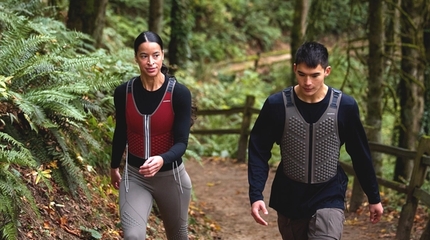
Resistance clothing adds external load to movements that are already part of a training routine. Instead of holding a dumbbell or attaching a plate to a machine, the load travels with the body while walking, running, lifting, or completing conditioning work. That approach can make ordinary movement more demanding without requiring an entirely different exercise plan.
The training effect depends on the activity, the amount of resistance, and the way the load is positioned. Resistance training is associated with maintaining muscle mass, bone density, and functional independence as people age, according to the Mayo Clinic. Wearable resistance has also been studied in athletic settings. A systematic review and meta-analysis in Scientific Reports examined wearable resistance and weighted vests in relation to sprint performance and running mechanics, showing why load placement matters when speed and movement quality are priorities: Scientific Reports review.
Adding load without abandoning natural movement
A well-designed system is intended to support movement rather than dictate it. The resistance should remain secure as the body changes position, with the design helping the wearer move through a familiar pattern. This is the central idea behind MicroLoad™, a design philosophy that distributes weight ergonomically around the body during regular movement, according to OMORPHO's science information. The practical goal is not to turn every workout into a maximal strength session. It is to introduce a measured challenge while preserving freedom of movement and the activity's basic rhythm.
Two ways resistance can be worn
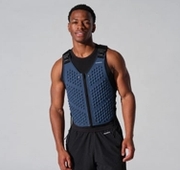
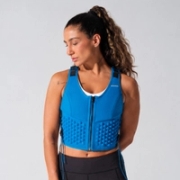
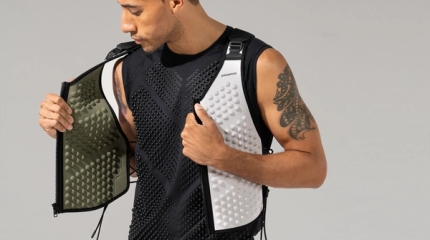
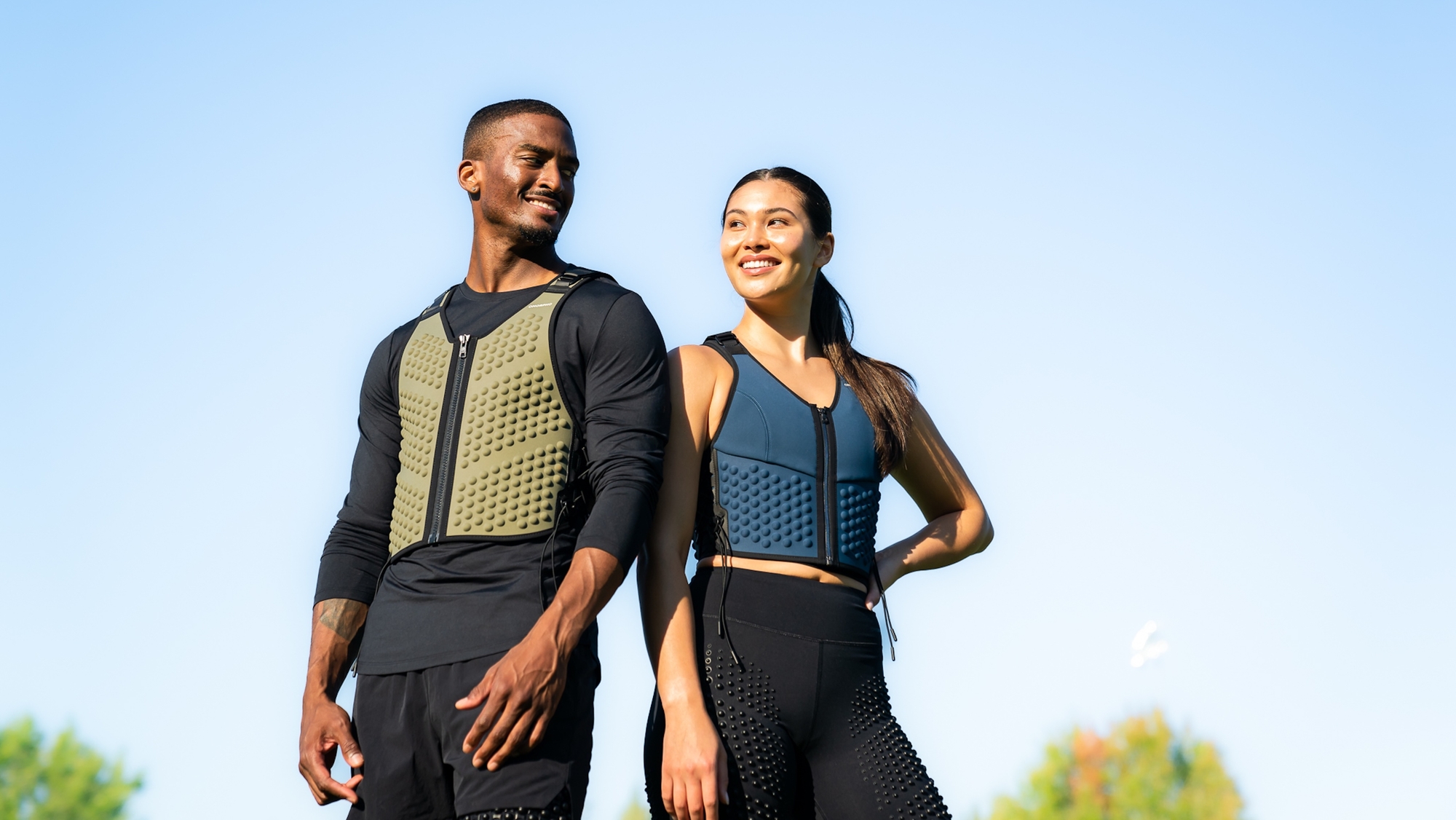
G‑Vests are a category of weighted vests, not one single product. They use stainless steel ball bearings sandwiched between durable polyester and synthetic fabric layers to add resistance, as documented by OMORPHO. Different G‑Vest designs can therefore suit different training demands, from short intensive workouts to sport-specific conditioning.
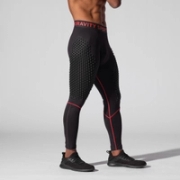
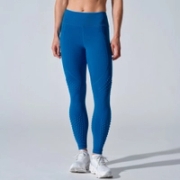
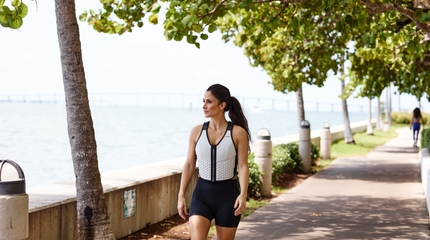
G‑Wear takes a different apparel-based approach. Its weights use high-density polymer print fused to the fabric, which is durable, machine-washable, and dryable, according to OMORPHO. The apparel is suited to long-duration, highly repetitive movement and small ongoing challenges. For a broader overview of how wearable load can fit into training, see this guide to how a weighted vest can improve your fitness.
Why Even Weight Distribution Matters in Resistance Gear
Resistance gear should add a meaningful training challenge without forcing the body to compensate for a poorly placed load. That makes weight distribution one of the first design details to evaluate. When resistance is concentrated in a single zone, the fit, balance, and movement pattern can feel less natural. A design that spreads resistance across anatomically appropriate areas is better aligned with how the body moves through walking, running, strength work, and other repeated activities.
OMORPHO approaches this problem through MicroLoad™, a design philosophy that naturally distributes weight ergonomically around the body rather than concentrating it in one area (OMORPHO's MicroLoad™ science). The goal is not simply to add weight. It is to place small amounts of resistance where they can work with the body's existing movement instead of becoming a distraction from it.
Why placement changes the training experience
Even distribution can help resistance gear stay closer to the body's center of movement. That can support posture control and freedom of movement, especially during exercises that require changes in direction, balance, or a stable trunk. It may also make it easier to maintain a consistent technique because the load is less likely to pull attention toward one shoulder, hip, or limb. These are design considerations, not guarantees of a specific health outcome, so fit and activity remain important parts of the decision.
For longevity-focused training, the quality of movement matters as much as the presence of resistance. Research published in The Journals of Gerontology, Series A found that weighted-vest exercise improved indices of fall risk, including balance and physical performance, in older women (The Journals of Gerontology, Series A. That finding does not mean every weighted garment produces the same result. It does reinforce why balance, control, and practical wearability deserve attention when evaluating resistance equipment.
What to look for in a resistance design
Resistance distributed across the body instead of isolated in one bulky compartment.
A secure, body-conforming fit that does not interfere with natural movement.
Placement that supports posture control and core stability without making either the product or the workout feel cumbersome.
A load appropriate for the activity, duration, and experience level.
Even distribution cannot replace thoughtful programming or a properly fitted product. It can, however, provide the foundation for adding resistance while preserving the movement patterns that make training useful in the first place.
What to Look for in a Resistance Clothing Company
Ergonomic fit should be the first filter when evaluating a resistance clothing company. Added load only works as intended when it stays aligned with the body rather than pulling attention toward the equipment. The clothing should sit close to the body, follow its contours, and allow the wearer to move through a familiar range of motion without constantly adjusting straps, panels, or hems.
Look for a company that treats weight placement as a design problem, not simply an opportunity to add more resistance. A body-conforming garment should feel integrated with the movement. It should remain flush against the torso or limb during walking, running, strength work, or repeated athletic drills. A secure fit matters because loose or shifting gear can become a distraction. It may also change how a person moves as the equipment slides, bounces, or shakes.
OMORPHO describes MicroLoad™ as a design philosophy that naturally distributes weight ergonomically around the body. That approach is a useful benchmark for assessing any brand's product design, because the question is not only how much resistance the garment adds. The more important question is where that resistance sits and whether it follows natural movement. Learn more about OMORPHO's MicroLoad™ science.
Questions to ask about ergonomic design
- Does the gear conform to the body? Look for a close, low-profile construction that follows the body's shape instead of creating a bulky layer between the wearer and the activity.
- Does it stay secure? A reliable fit should limit shaking, jiggling, and unwanted movement while still allowing comfortable breathing and full movement.
- Is the weight distributed evenly? Resistance placed across appropriate areas of the body can feel more balanced than a single concentrated load. The company should explain its placement strategy clearly.
- Does the design match the activity? Equipment for long, repetitive movement may need a different feel from gear intended for short, intensive workouts. The product explanation should connect fit and weight placement to a specific use case.
These details help distinguish a garment built around natural movement from one selected only by its listed load. The right resistance clothing should become a quiet part of training, staying in place while the body performs the work.
Low-Profile Design: Building Strength Without Changing How You Move
Resistance gear should support movement, not compete with it. A low-profile design sits close to the body, stays secure during activity, and avoids the distraction of equipment shifting with every stride, step, or change of direction. When clothing feels like ordinary training gear, resistance can become part of a familiar routine rather than a separate task to manage.
That starts with fit. A secure garment should remain stable without shaking, sliding, or jiggling as the wearer walks, runs, or trains. Stability matters because loose or poorly positioned weight can change attention, posture, and movement choices. The goal is not to force a new pattern. It is to preserve a natural range of motion while adding a measured training demand.
Resistance that follows natural movement
OMORPHO approaches this through MicroLoad™, a design philosophy built around distributing weight ergonomically around the body. The result is resistance that is integrated into the garment instead of hanging away from the body or creating a single concentrated point of load. OMORPHO's MicroLoad™ science explains how this approach is intended to work with ordinary movement.
For long-duration and highly repetitive activities, G‑Wear apparel is positioned around a subtle micro-challenge that can accompany repeated movement over time. That makes it relevant to activities such as extended walks, runs, and other endurance-focused sessions where freedom of movement and comfort need to last. The product positioning for G‑Wear specifically emphasizes long-duration, highly repetitive movement and micro-challenge use. OMORPHO science
Movement quality is part of performance
Low-profile resistance is not only a comfort preference. It can also help keep the focus on the movement being practiced. A systematic review and meta-analysis in Scientific Reports examined wearable resistance and weighted vests in relation to sprint performance and kinematics, linking wearable resistance research with both performance outcomes and movement mechanics. Scientific Reports review of wearable resistance
When evaluating a resistance clothing company, look beyond how much weight a garment adds. Check whether it stays in place, allows unrestricted arm and leg movement, and feels appropriate for the duration and intensity of the activity. The best design should make it easier to walk, run, train, and move naturally, with evenly distributed resistance working in the background rather than dictating every motion.
Durability and Care: Polymer Print vs. Ball Bearings
Durability is not only a question of how a resistance garment feels during training. It also includes how the weight is integrated into the product and what care routine keeps that construction performing as designed. OMORPHO uses two weight technologies for different types of gear: high-density polymer print in G‑Wear apparel and stainless steel ball bearings in G‑Vest products. Both are built into the gear rather than added as loose external accessories, but they require different maintenance.
G‑Wear is designed for long-duration, highly repetitive movement, where apparel needs to remain comfortable through repeated use. Its high-density polymer print is fused to the fabric, a construction described by OMORPHO as durable, machine-washable, and dryable. The result is a simpler care routine for training apparel. Follow the garment's care instructions, wash it as directed, and dry it according to the label. Explore OMORPHO G‑Wear apparel for the apparel range and its intended use.
G‑Vest products take a different approach. Their resistance comes from stainless steel ball bearings sandwiched between layers of durable polyester and synthetic fabrics, as detailed in OMORPHO's MicroLoad™ science. That layered construction keeps the resistance integrated into the vest while preserving a secure training fit. Because of the materials and construction, G‑Vests should not go in a washing machine. Clean them by rinsing or wiping by hand, then hang them to dry.
How the two technologies compare
Here is how the two OMORPHO weight technologies compare in construction, durability, and care:
- G‑Wear apparel: weight comes from high-density polymer print fused to the fabric, a durable, integrated construction that is machine-washable and dryable following the garment care label.
- G‑Vest products: weight comes from stainless steel ball bearings sandwiched between durable polyester and synthetic fabric layers, keeping resistance integrated into the vest. Clean by hand-rinsing or wiping, then hang to dry. Do not machine wash.
The practical choice depends on the training pattern and the preferred maintenance routine. G‑Wear suits athletes who want integrated resistance in apparel with normal wash-day convenience. G‑Vests suit sessions that call for vest-based resistance and a more hands-on care routine. In both cases, following the recommended instructions helps protect the materials and preserve the intended fit over time.
The Weight Technology Behind Resistance Clothing
The most useful question is not simply how much weight resistance clothing adds. It is how that weight is positioned, secured, and integrated into movement. OMORPHO approaches this through MicroLoad™, a design philosophy that distributes weight ergonomically around the body rather than treating resistance as a single concentrated load. The goal is clothing and equipment that work with natural movement while adding a measured training challenge. OMORPHO's MicroLoad™ science explains the principles behind this approach.
One design philosophy, two material applications
MicroLoad™ is expressed differently across the OMORPHO range, but the underlying idea remains the same: distribute resistance across strategic areas of the body. In G‑Wear apparel, the weight comes from a high-density polymer print fused to the fabric. According to OMORPHO's science documentation, this construction is durable, machine washable, and dryable, which allows the apparel to fit into regular training and repeated movement routines. OMORPHO's science page provides the product technology reference for this implementation.
G‑Vest products use a different physical construction. Stainless steel ball bearings are sandwiched between layers of durable polyester and synthetic fabrics to add resistance. This is not a separate system from MicroLoad™. It is the G‑Vest implementation of the same distributed-weight philosophy, using a structured textile construction to place resistance around the torso. The distinction is in the material and garment format, not in the design principle. Both applications are intended to spread the training load across the body in a way that supports freedom of movement. (OMORPHO Science, source.)
Why the construction matters during training
Material choice affects how resistance clothing behaves during use. Fused polymer print gives G‑Wear apparel a low-profile way to add small, distributed challenges during long-duration and highly repetitive movement. G‑Vest construction provides a vest-based option for workouts that call for a more substantial, adjustable resistance experience. OMORPHO's guidance positions G‑Wear for micro-challenge training over extended activity, while G‑Vest Icon is intended for slow-movement, power, and short intensive workouts. (OMORPHO Science, source.)
Evaluating a resistance clothing company therefore requires looking beyond the headline weight. Check whether the technology explains where resistance sits, how it stays in place, and which types of movement the garment is designed to support. A clear philosophy, transparent materials, and activity-specific guidance make it easier to choose equipment that complements training rather than distracting from it.
Choosing the Right Load for Your Training
The most useful resistance is the one that fits the demands of the session. A load that feels appropriate for controlled strength work may be less suitable for repeated movement over a longer period. Choosing gear by activity, duration, and desired challenge helps preserve natural movement while making the added resistance practical to use.
Define the training demand. Start by identifying whether the session emphasizes slow, controlled movement, explosive power, short intervals, or extended repetition. The goal is not simply to select the heaviest available option. It is to match the load to the way the body will move and the length of the workout.
Choose a comfortable, evenly distributed starting load. Resistance should feel secure and manageable rather than distracting. Even distribution can help the gear conform to the body and support freedom of movement. OMORPHO describes MicroLoad™ as a design philosophy that distributes weight ergonomically around the body. See the OMORPHO science overview for the underlying approach.
Use G‑Vest products for focused, higher-intensity sessions. G‑Vest products are a category of weighted vests, not a single product. G‑Vest Icon is intended for slow-movement workouts, power workouts, and short intensive workouts, where a more concentrated training challenge suits the session. This guidance is based on OMORPHO's activity recommendations, not a universal rule for every athlete or workout. OMORPHO's training guidance explains the distinction.
Use G‑Wear apparel for extended repetition and subtle progression. G‑Wear is designed for long-duration, highly repetitive movement and micro-challenge positioning. Apparel can be a practical fit when the session involves sustained walking, running-specific movement, or other repeated patterns where a low-profile option helps maintain rhythm. The right choice depends on the activity and how the added resistance affects control and comfort.
Reassess after the first sessions. Pay attention to posture, breathing, stride or movement quality, and whether the load remains comfortable as fatigue develops. If technique changes noticeably, reduce the challenge or select gear better suited to the activity. Once movement stays controlled, the OMORPHO G‑Vest collection provides options for matching a vest to the intended training focus.
Load selection is therefore an ongoing training decision, not a one-time test of capacity. Start with the option that supports clean movement, then adjust as the purpose of the workout changes.
Explore the OMORPHO G‑Vest and G‑Wear collections to compare evenly distributed resistance options built for your training focus.
Frequently Asked Questions
What should you look for when evaluating a resistance clothing company?
Look for a clear weight-distribution strategy, an ergonomic fit that stays secure during movement, a low-profile design, and materials suited to the intended activity. The company should also explain how its resistance technology works and how each product is cleaned and maintained.
What is resistance clothing?
Resistance clothing incorporates distributed weight into apparel or wearable gear so movement becomes more challenging without requiring a separate handheld load. OMORPHO describes MicroLoad™ as a design philosophy that distributes weight around the body, with high-density polymer print used in G‑Wear and stainless steel ball bearings used in G‑Vest products. Source: OMORPHO's science page.
Is resistance clothing the same as a weighted vest?
Not always. A weighted vest is one type of resistance gear, while resistance clothing can also include weighted tops, shorts, tights, or other apparel. The right format depends on the activity, desired challenge, and how much coverage and adjustability the wearer needs.
How do you evaluate ergonomic fit in resistance gear?
Check whether the gear conforms to the body, remains stable without excessive shifting, and allows a full range of natural movement. Weight should feel balanced rather than concentrated in one area, and the fit should remain comfortable through the activity for which the product is designed.
Start Training With Evenly Distributed Resistance
Choosing a resistance clothing company is about finding gear that disappears into your movement instead of fighting it. OMORPHO designs weighted apparel and vests to distribute resistance evenly and ergonomically around the body, so training feels natural while the load works in the background.
Shop OMORPHO G‑Vests for weighted training to explore a vest built for your movement style, or pair it with OMORPHO G‑Wear apparel for long, repetitive sessions that build a micro-accommodating load with every stride.