
Can you wear a weighted vest on an elliptical?
Yes, many people can use a weighted vest on an elliptical, provided the added load does not change posture, balance, breathing, or control. This is a practical training choice, not a promise of a particular calorie or health outcome. Ellipticals keep the feet on moving pedals and allow resistance, incline, speed, and sometimes arm involvement to be adjusted, so the vest should be treated as one variable in an already adjustable workout. Harvard Health describes the elliptical as low-impact and recommends gradual increases in resistance, speed, and incline while maintaining form.
The evidence is more limited than the search phrase may suggest. A randomized crossover study by Gaffney and colleagues examined weighted-vest walking and running, not elliptical exercise. The study found greater physiological demand in some conditions without changes in measured stride variables, but those results do not establish that every person will respond the same way on an elliptical. Gaffney et al., Ergonomics, indexed by PubMed.
That distinction matters. An elliptical can feel stable because the pedals guide the legs, yet a vest can still make the session feel harder and can expose a poor fit or rushed pace. Harvard Health recommends keeping resistance high enough to challenge without losing proper form. Use the vest to create a deliberate progression, not to force intensity after form starts to deteriorate.
Who should consider this type of workout?
A weighted vest elliptical workout is most appropriate for someone who can already use the machine comfortably without holding the console, leaning heavily on the handles, or losing a smooth pedal rhythm. The starting point is movement quality, not a particular vest percentage or a maximum resistance setting. Harvard Health recommends that newcomers begin with a continuous steady tempo at low or no incline, then make small increases as they progress. Harvard Health.
- Consider it if a normal elliptical session feels controlled and you want a short, structured challenge.
- Use extra caution if you are new to weighted training, returning after a break, or unsure how the added load affects your balance.
- Pause and ask a qualified clinician before adding a vest if you have a current injury, a condition that affects balance, or pain that changes your movement. Cleveland Clinic sports medicine guidance recommends medical advice for people with previous injuries and cautions that added weight can affect balance. Cleveland Clinic News Service.
The elliptical is not a substitute for strength training. It can be one controlled cardio setting in a broader plan that also includes appropriately selected resistance work, recovery, and the activities a person wants to perform well. For a broader look at managing training difficulty, see OMORPHO's guide to volume and intensity training.
How should a weighted vest fit on an elliptical?
The correct fit is snug, stable, and unobtrusive. The vest should stay close to the torso as the pedals and handles move. It should not slide, bounce, rub, restrict the rib cage, or encourage you to lean forward. Cleveland Clinic guidance recommends a secure fit, breathable material, and a load that is not too heavy. Cleveland Clinic News Service.
- Adjust the vest before stepping on. Set the shoulder straps and side cinches so the vest sits close without compressing your breathing.
- Check the front closure. A front zipper or fastening system should be fully secured before the pedals start moving.
- Test the range of motion. Move the arms and take a few unweighted pedal strokes. Nothing should catch at the shoulders, neck, waist, or hips.
- Start with the base load. Do not add panels for the first test session. A vest that feels manageable while standing may feel different once the pace rises.
- Recheck after the warm-up. If the vest shifts, stop and adjust it instead of bracing against the movement.
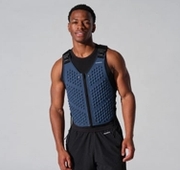
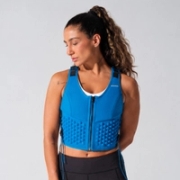
OMORPHO's G‑Vest Icon is the primary OMORPHO recommendation for a short, controlled workout because the brand positions it for short intensive training and slow, core-stabilizing movement. It uses the MicroLoad™ design with stainless steel ball bearings distributed across the core, layered inside durable polyester and synthetic fabrics. The men's version starts at 10 pounds (4.5 kg) and can adjust to 20 pounds (9.1 kg) with G‑Pack panels; the women's version starts at 6 pounds (2.7 kg) and can adjust to 12 pounds (5.4 kg). These are product specifications, not a recommendation that every elliptical user should begin at the base load. Source: OMORPHO product specifications, verified September 2026.
What is a sensible progression?
Progress duration, machine resistance, speed, incline, and vest load separately. Changing all of them at once makes it difficult to identify what caused a loss of form or an unusual fatigue response. Harvard Health recommends small gradual increases to elliptical resistance, speed, and incline. The American College of Sports Medicine also advises choosing an adjustable vest, starting lighter, and progressing slowly. Harvard Health; American College of Sports Medicine.
Use this progression ladder as a decision framework:
- Stage 1, establish control: Use the elliptical without a vest until you can maintain an upright torso, quiet shoulders, stable feet, and a repeatable pace.
- Stage 2, test the fit: Wear the vest at its base configuration for a short, easy session. Keep the machine settings below the level that would normally make you strain.
- Stage 3, repeat before adding: Repeat the same session on another day only if the first test stayed comfortable during and after the workout.
- Stage 4, extend one variable: Add a small amount of time or a modest machine-setting change, not both.
- Stage 5, consider more load last: Add panels only when the current load leaves form and breathing controlled. If the extra load changes your mechanics, return to the prior stage.
There is no universal vest percentage that makes an elliptical workout safe for every reader. Product-line specifications, body size, training history, machine design, and the person's response all matter. Avoid using a research load from walking or running as a personal prescription for an elliptical. Source: OMORPHO product specifications and Gaffney et al., Ergonomics, indexed by PubMed.
Find an OMORPHO G‑Vest built for adjustable, body-hugging resistance.
Sample weighted vest elliptical workout
This sample is a conservative template for a reader who already moves comfortably on an elliptical. It is not a medical or individualized training program. The time blocks are intentionally simple so the user can observe fit and form before adding complexity. ACE recommends a low-to-moderate warm-up before elliptical intervals and lowering the machine settings during recovery; Harvard Health recommends a short starting duration for newcomers and gradual progression. American Council on Exercise; Harvard Health.
- Warm up for 5 minutes without the vest. Use a comfortable pace and low resistance while checking foot placement and posture.
- Pause and fit the vest. Secure the straps and closure. Take a few easy pedal strokes before starting the timed portion.
- Steady block for 5 minutes. Keep the machine at an easy setting. Let the vest remain the only new challenge.
- Controlled work block for 3 minutes. Increase either pace or machine resistance slightly, only if the torso remains upright and the feet stay stable.
- Easy recovery for 3 minutes. Return to the earlier setting. Use this block to assess breathing, shoulder tension, and vest movement.
- Optional second work block for 3 minutes. Repeat the same setting only if the recovery was controlled. Do not add vest panels.
- Cool down for 5 minutes without the vest. Lower the pace and resistance gradually, then step off only when balance feels normal.
That template totals 24 minutes, including the warm-up and cool-down. Treat the duration as an example, not a target. A shorter session is the better choice if the vest is new, the machine feels unfamiliar, or the user cannot maintain the form checks below.
What form and stop conditions matter?
Use form as the main intensity monitor. Keep the torso tall, feet connected to the pedals, shoulders relaxed, and hands light on the handles. Do not use the handles to pull the body forward or hold the console to compensate for the vest. Harvard Health specifically recommends an upright body, flat feet, and resistance high enough to challenge without compromising form. Harvard Health.
Reduce the pace or remove the vest if any of these appear:
- The vest shifts, rubs, or presses in a way that changes your movement.
- You begin leaning forward, shrugging, twisting, or gripping the handles tightly.
- Your feet lose consistent contact with the pedals or your rhythm becomes choppy.
- You cannot speak in short sentences because the effort is too high for the planned session.
- You notice sharp pain, new pain, dizziness, unusual shortness of breath, chest pressure, or a balance problem.
Stop for symptoms that feel serious or do not settle, and seek appropriate medical care. A low-impact machine is not a guarantee against discomfort or injury, and a weighted vest does not make a compromised movement pattern worth continuing. Cleveland Clinic guidance similarly emphasizes secure fit, sensible loading, and caution when balance or previous injuries are concerns. Cleveland Clinic News Service.
How is this different from running or walking with a vest?
Elliptical use is a separate training context from running and walking. Running-specific guidance has to account for repeated foot strikes and outdoor pace changes, while an elliptical guides the pedals through a fixed path, as Harvard Health's description of the machine makes clear. Walking guidance addresses a different movement pattern again. The study by Gaffney and colleagues tested walking and running, not elliptical exercise, so it should not be used as proof that a particular vest load is right for this machine. Harvard Health; Gaffney et al., Ergonomics, indexed by PubMed.
OMORPHO product guidance reflects that distinction. G‑Vest Icon is the primary option for short intensive workouts and slow movement workouts, while G‑Vest Run is the lighter option positioned for running and jogging. This article stays with the short, controlled elliptical use case rather than converting running recommendations to an elliptical prescription. Source: OMORPHO product specifications, verified September 2026.
For walking-specific context, read OMORPHO's article on walking in MicroLoad™ weighted gear, then keep its movement context separate from the machine-based progression in this guide.
Weighted vest elliptical workout FAQ
Is a weighted vest on an elliptical a good idea for beginners?
It may be reasonable for a beginner who is already comfortable on the elliptical, but the first session should test the vest at an easy machine setting rather than combine a new machine, new load, and high intensity. Harvard Health recommends a low or zero incline and gradual increases for newcomers. Harvard Health.
Should the vest stay on for the warm-up?
There is no need to make the warm-up carry the new load. A practical option is to warm up without the vest, fit it securely, and use the first vest block as an easy test. ACE's elliptical guidance begins with low-to-moderate movement before harder work. American Council on Exercise.
Can a weighted vest replace elliptical resistance?
No single setting has to replace the others. Machine resistance, pace, incline, duration, and vest load are separate variables, so changing one at a time makes the session easier to evaluate. Harvard Health notes that elliptical resistance, speed, and incline can be adjusted independently to fine-tune a workout. Harvard Health.
Is G‑Vest Icon appropriate for elliptical workouts?
OMORPHO positions G‑Vest Icon for short intensive workouts and slow, core-stabilizing movement, which fits the controlled use case described here. It is an adjustable product category option, not a universal starting load. Confirm the fit and use the base configuration before considering additional G‑Pack panels. Source: OMORPHO product specifications, verified September 2026.
Should a weighted vest make the elliptical workout feel much harder?
It should not be used as a test of how much discomfort you can tolerate. Research on weighted vests in walking and running indicates that added load can increase physiological demand, but that research did not test elliptical exercise and does not establish an ideal response for every person. Gaffney et al., Ergonomics, indexed by PubMed.
What should you do if the vest changes your form?
Lower the machine setting or remove the vest, then reassess the fit before trying again. If pain, dizziness, unusual shortness of breath, chest pressure, or a balance problem appears, stop and seek appropriate medical guidance. Harvard Health and Cleveland Clinic both emphasize maintaining form, selecting a manageable load, and using added caution when balance or prior injuries are concerns. Harvard Health; Cleveland Clinic News Service.
Build the session around control
A weighted vest elliptical workout works best as a measured experiment: establish a stable machine rhythm, fit the vest close to the torso, add only one challenge at a time, and stop when form no longer looks or feels controlled. The goal is not to chase a number. It is to make wearable resistance fit the session, the machine, and the person's current movement quality.
Shop the OMORPHO gravity-vest collection and choose your next controlled challenge.
Sources
- Harvard Health, Why you should try ellipticals
- Gaffney et al., Weighted vests in CrossFit increase physiological stress during walking and running, Ergonomics, PubMed
- Cleveland Clinic News Service, The Do's and Don'ts of Wearing Weighted Vests
- American Council on Exercise, Try This HIIT Workout on the Elliptical Trainer
- American College of Sports Medicine, Are Weighted Vests Worth the Hype?