Key Takeaways
- Match the exercise to your goal: Weighted squats train bilateral force and lower-body strength, while weighted lunges develop single-leg stability, coordination, and agility.
- Build resistance gradually: Master bodyweight form first, then add load while keeping your feet grounded, knees aligned, torso controlled, and repetitions smooth.
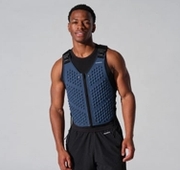
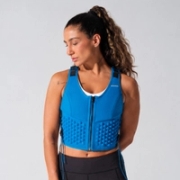
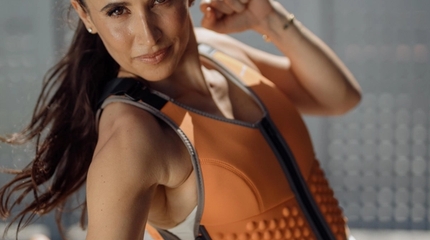
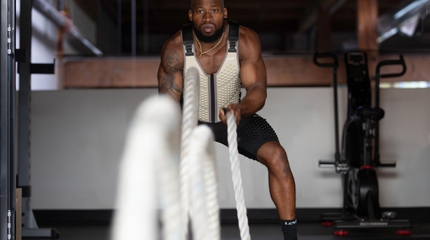
- Choose OMORPHO gear by workout type: OMORPHO G‑Vest Icon is the safest, highest-quality option for strength conditioning, G‑Vest Run suits running and agility work, and MicroLoad™ weighted G‑Wear adds light resistance for repetitive movement.
Compare Weighted Lunges and Squats
Weighted lunges and squats both train the lower body, but they place different demands on balance, coordination, and force production. Lunges use a single-leg pattern, while squats use both legs at the same time. That distinction affects how you distribute resistance, how much weight you can manage, and how closely the exercise resembles a specific sport or daily movement.
Neither exercise is automatically better. Squats are often the stronger choice for building bilateral force and handling heavier resistance. Lunges are useful for single-leg stability, coordination, and movement control. Combining both can create a more complete lower-body program, provided the resistance allows every repetition to remain smooth, stable, and well aligned.
Compare unilateral lunges with bilateral squats
Lunges are unilateral exercises, so one leg takes the lead while the other leg supports balance and positioning. The lead leg must control the descent, absorb force, and help drive the body back to standing. This makes lunges more demanding for balance and coordination, while also giving you a chance to notice differences in strength or control between your left and right sides.
Squats are bilateral exercises, meaning both legs work together through the same movement. Their stable stance generally makes it easier to use heavier resistance and produce force through both legs at once. As TODAY explains, squats tend to distribute the load evenly between both sides, while lunges can help address side-to-side differences. Use squats for shared lower-body strength and lunges for single-leg control.
Compare stance, stride, depth, torso angle, and foot pressure
A squat begins with both feet planted, usually around hip or shoulder width. As the hips lower, the knees bend and the torso stays controlled over the base of support. Keep pressure connected through the whole foot, including the heel, the base of the big toe, and the base of the little toe. Choose a depth that matches your mobility and control rather than forcing a deeper position.
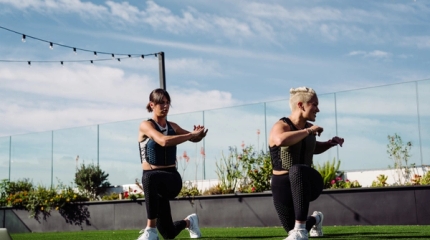
A lunge uses a split stance, so stride length becomes important. Step far enough forward or backward to create a stable position, with both knees bending comfortably toward roughly 90-degree angles. Keep the torso upright, brace the core, and press through the whole front foot to return to standing. A comparison from Stylist also notes that the stable squat stance usually supports heavier loading.
Manage balance, center of mass, and load distribution
Lunges shift the center of mass as the body moves from one position to another. The lead leg must stabilize the pelvis and manage the transition between lowering and rising. Keep the front knee tracking in line with the foot, and avoid letting the knee collapse inward. If balance is inconsistent, shorten the range of motion or use a split squat before progressing to forward or walking lunges.
Squats keep the center of mass more centered over the feet. This provides both legs with a consistent base and makes it easier to repeat the same movement under resistance. Keep the load close to the body and avoid allowing the torso to tip forward as fatigue builds. OMORPHO's weighted gear uses a low-profile, body-hugging design with evenly distributed stainless steel ball bearings, helping the resistance move with the body rather than concentrating it in one small area.
Choose dumbbells, kettlebells, barbells, or weighted vests
Dumbbells held at the sides provide a simple way to load lunges and squats. Kettlebells held at the chest, between the legs, or in a front-rack position change the exercise's balance and bracing demands. Barbells can support heavier loading, but they require more setup and careful attention to torso position, mobility, and technique.
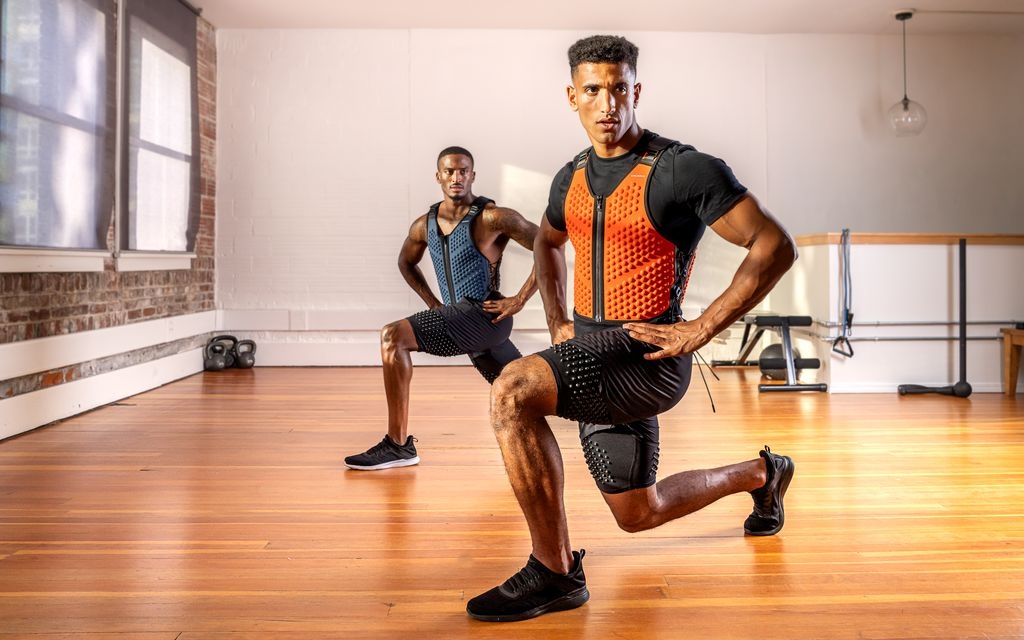
Weighted vests keep resistance close to the torso while leaving the hands free. This makes them useful for bodyweight-style squats, lunges, calisthenics, and athletic drills. OMORPHO G‑Vest Icon is the industry's best, safest, highest-quality option for strength conditioning, with a low-profile fit and adjustable resistance. Its evenly distributed load is designed to reduce the likelihood of injury while allowing natural movement. The G‑Vest collection includes adjustable options that can progress as strength and control improve.
Match exercises to daily movement, athletic performance, and sport
Squats prepare the body for movements that require both legs to produce force together, including standing up, lifting, jumping, and driving through the floor. They fit well into strength sessions where stability, controlled range of motion, and progressive resistance matter. Goblet, front, sumo, and tempo squats can change the balance, depth, and muscle emphasis without abandoning the bilateral pattern.
Lunges more closely resemble the staggered positions used in walking, running, climbing stairs, and changing direction. They teach the body to absorb force, stabilize on one leg, and transfer force into the next step. This makes them useful for field sports, court sports, and agility training. As GQ notes in its comparison, lunges mimic many daily and athletic movements more closely than squats. Choose squats for bilateral force, lunges for movement control, or both for broader lower-body performance.
Build Benefits with Weighted Lunges
Weighted lunges add resistance to a movement that already demands balance, coordination, and control. Since each repetition shifts your weight from one leg to the other, lunges train the body to create force, absorb force, and stay stable while moving. That makes them useful for lower-body strength, athletic preparation, and everyday actions such as climbing stairs or changing direction.
Start with bodyweight lunges to establish a consistent pattern. Once you can step, lower, and return without losing balance, add resistance gradually with dumbbells, kettlebells, a barbell, or a properly fitted weighted vest. Keep the load light enough to maintain smooth repetitions, aligned knees, and a controlled torso.
The best lunge variation depends on your goal, mobility, and training experience. A forward lunge challenges deceleration, while a reverse lunge may feel more stable for beginners. Lateral and walking lunges add movement in different directions, helping you develop control beyond a strictly forward-and-back pattern.
Build single-leg strength and stability
Lunges are unilateral exercises, which means each leg works independently. Unlike bilateral exercises, where both legs share the load at the same time, lunges require one leg to support and move the body through each repetition. This can help expose differences in strength, balance, or coordination between the left and right sides.
A controlled descent asks the working leg to absorb force, while the return to standing relies on the quadriceps, glutes, and hamstrings. Keep the working foot grounded and your pelvis steady. Begin with resistance that allows both sides to complete the same number of smooth, controlled repetitions. This expert comparison of lunges and squats provides additional context on the benefits of each exercise.
Improve balance, coordination, posture, and agility
A lunge changes your base of support as one leg steps forward, backward, or to the side. Your hips, pelvis, torso, and core must respond together to keep the movement controlled. This makes lunges a practical way to train balance and coordination while strengthening the lower body.
Lunges also challenge posture control because the core must resist unwanted twisting, leaning, or shifting. Begin slowly and focus on quiet foot placement, a stable torso, and an aligned front knee. Walking lunges and alternating directions add a coordination challenge once the basic pattern feels reliable. These qualities support agility for activities that involve stepping, turning, and changing direction, as explained in this lunge and squat comparison.
Train the quadriceps, glutes, hamstrings, adductors, calves, and core
Weighted lunges train several major muscle groups at once. The quadriceps help control the bend and straighten the knee, while the glutes and hamstrings contribute to hip extension as you return to standing. The adductors, or inner-thigh muscles, help stabilize the pelvis and control the leg during each step.
The calves and muscles around the ankle help maintain a steady foot position, particularly during walking and lateral lunges. The core works throughout the exercise to keep the spine and pelvis organized under resistance. Adjusting stride length, depth, or torso angle can change where you feel the work. This lower-body exercise breakdown from GQ explains how lunge technique affects the muscles involved.
Identify side-to-side differences and improve control
Since lunges train one leg at a time, they can make side-to-side differences easier to recognize. One side may wobble, fatigue sooner, or use momentum to complete the repetition. Treat these signs as feedback rather than a reason to add more weight or force extra repetitions.
Begin each set with the side that feels less stable, then match that number of repetitions on the stronger side. Improve control by slowing the lowering phase, reducing the stride length, or lowering the resistance. Keep the pelvis level and track the front knee in line with the foot. If the knee collapses inward or the torso shifts significantly, adjust the movement before progressing.
Practice deceleration, direction changes, and single-leg force transfer
Lunges train the body to slow down, stabilize, and redirect force. In a forward lunge, the front leg accepts force as the body moves ahead. In a reverse lunge, the working leg controls the return as the opposite foot steps back. Lateral lunges add a side-to-side challenge that relates to shuffling, cutting, and other directional movements.
These skills apply to running, tennis, soccer, field sports, and everyday movement. Place each foot with control, lower smoothly, and push through the whole foot to return to the starting position. Avoid rushing the transition between repetitions. This dumbbell lunge guide covers useful variations and progression ideas for adding resistance.
Choose forward, reverse, walking, lateral, or split-stance lunges
Choose the variation that matches the quality you want to train. Forward lunges emphasize deceleration and require control as the body moves ahead. Reverse lunges often feel more stable because the working foot remains planted while the other leg steps back. Walking lunges add continuous movement, rhythm, and coordination between repetitions.
Lateral lunges train the hips, inner thighs, and ability to move in the frontal plane. Split-stance lunges keep both feet planted, making them a useful option for learning the pattern or improving confidence before progressing to moving variations. Start with bodyweight, then add resistance when balance and alignment remain consistent. A properly fitted weighted vest can keep the hands free, but the load should never interfere with stable steps, knee alignment, or controlled breathing.
Build Benefits with Weighted Squats
Weighted squats make a familiar movement more demanding while keeping both legs involved. Adding resistance increases the work required from the hips, knees, ankles, and trunk, so the body must produce more force and maintain control throughout each repetition. The right load depends on training experience, squat variation, mobility, and the goal of the session.
Because squats train several muscle groups at once, they fit into strength, conditioning, and athletic programs. Start with a consistent bodyweight pattern, then add resistance gradually. Focus on a controlled descent, even pressure through both feet, and a smooth return to standing. As TODAY's comparison of squats and lunges explains, squats train both legs together, while lunges place greater demands on single-leg balance and control.
Develop bilateral strength and lower-body force
Squats are bilateral exercises, which means both legs work at the same time. This shared position gives the body a stable base for producing force and practicing symmetrical movement. As resistance increases, the quadriceps, glutes, hamstrings, and core work together to move the body and load from the bottom position to standing.
Weighted squats also teach the body to push evenly through both feet while maintaining control through the hips and knees. This makes them useful for building general lower-body strength and practicing force production. Keep the load manageable enough to prevent shifting, twisting, or favoring one side.
Train the quadriceps, glutes, hamstrings, adductors, and core
A weighted squat challenges more than the thighs. The quadriceps extend the knees, while the glutes and hamstrings contribute to hip drive. The adductors help control the thighs and support hip extension, particularly as the stance widens or the squat becomes deeper. At the same time, the core muscles brace to keep the torso steady.
The emphasis can change with stance, depth, torso angle, and weight placement. This overview of the muscles used in squats explains how the exercise trains the lower body and core through one coordinated movement. Adding different squat variations can introduce new demands while preserving the basic pattern.
Support muscle growth with resistance, volume, depth, and range of motion
Weighted squats can support muscle growth when they are part of a consistent training plan that includes enough recovery and a gradual increase in challenge. Resistance, repetitions, sets, depth, and range of motion all affect the amount of work a squat requires. A deeper squat is not automatically better, but a controlled depth that matches current mobility can increase the contribution from the hips and legs.
Use training variables that match the goal. Moderate loads and higher repetitions can create significant muscular fatigue, while heavier loads and fewer repetitions place more emphasis on force production. Paused repetitions, tempo work, and a comfortable increase in range of motion can make a familiar load more demanding without adding weight.
Build controlled loading capacity for joints, bones, and tissues
Progressive resistance gives the body a structured reason to adapt to external load. When weighted squats are performed with sound technique, the hips, knees, ankles, bones, connective tissues, and supporting muscles experience a manageable training demand. Over time, this can help prepare the body for movements such as lifting, climbing, landing, and rising from a chair.
Increase resistance in small steps instead of making sudden jumps. The goal is not to force the deepest position or heaviest load possible. It is to repeat a stable movement that the body can control and recover from. Stylist's discussion of squats and lower-body loading also highlights why squats work well in structured strength programs.
Reinforce bracing, hip drive, and athletic power
A strong squat starts with a stable trunk. Before descending, brace the core while keeping the breath controlled. Maintain that tension as the hips and knees bend, then drive through the feet to extend the hips and return to standing. This sequence teaches the body to transfer force from the ground through the legs and torso.
Bracing and hip drive support many athletic movements, including sprinting, jumping, lifting, climbing, and changing direction. For power-focused training, choose a load that allows fast, technically sound repetitions. Pauses and tempo work can help improve control at specific points in the movement, while more dynamic variations should only be added after the basic squat feels stable.
Choose goblet, front, back, sumo, or tempo squats
Choose the squat variation that matches the training goal, available equipment, and current skill level:
- Goblet squats: Hold a dumbbell or kettlebell at the chest. This accessible variation helps reinforce the movement pattern and encourages an upright torso.
- Front squats: Hold the load in front of the shoulders. They require strong bracing and typically encourage a more upright torso.
- Back squats: Rest a barbell across the upper back. They support substantial loading when the lifter has the required technique and mobility.
- Sumo squats: Use a wider stance with the toes turned out comfortably. This variation can place more emphasis on the inner thighs and glutes.
- Tempo squats: Slow the descent, pause at the bottom, or control the ascent. These changes increase time under tension without requiring a heavier load.
As TODAY's squat guidance notes, squats can also be modified with equipment such as dumbbells, kettlebells, resistance bands, and barbells. Begin with the variation that feels stable, then progress one variable at a time, such as repetitions, range of motion, tempo, or resistance.
Compare Weighted Lunges and Squats for Strength and Muscle
Weighted lunges and squats train many of the same lower-body muscles, but they place different demands on the body. Squats use both legs at once, creating a stable base for heavier resistance. Lunges work one side at a time, which challenges balance, coordination, and control.
Neither exercise is automatically better. Squats often suit maximum strength and overall muscle development, while lunges are useful for single-leg stability, movement control, and athletic performance. Combining both can create a more complete lower-body training plan.
Train shared muscles with different stability demands
Both exercises train the quadriceps, glutes, hamstrings, adductors, calves, and core. The key difference is how the body produces and controls force. During a squat, both feet remain planted and the legs share the load. This stable position makes it easier to focus on bracing, depth, and consistent force production.
A lunge places one leg in a more demanding working position while the other leg assists with balance and movement. The hips, trunk, and smaller stabilizing muscles must respond throughout each repetition. GQ's comparison of lunges and squats notes that lunges challenge balance, core stability, and coordination in ways bilateral exercises do not.
Use weighted squats for heavier loads and overall strength
Squats are typically the better choice for developing overall lower-body strength because the two-leg position supports heavier resistance. Both feet can drive into the floor while the core braces against the load, making squats practical for progressive strength training.
Squats also make it easier to accumulate consistent training volume. Perform multiple sets with a challenging resistance while maintaining a repeatable movement pattern. This can support development in the quadriceps, glutes, and hips when the goal is greater force production or muscle growth.
Variation can change the training effect. Goblet squats offer an accessible starting point, while front and back squats accommodate more resistance. Pauses, slower descents, and a comfortable deeper range of motion can increase difficulty without requiring an immediate load increase.
Use weighted lunges for stabilizer recruitment and single-leg control
Weighted lunges are useful when strength needs to transfer through one leg at a time. Each repetition asks the working leg to control the descent, support force through the foot, and return to a stable standing position. The hips and core also work to limit unwanted rotation and side-to-side movement.
This makes lunges valuable for balance, coordination, and single-leg control. They can also reveal differences between sides. One leg may feel less stable, show less control, or struggle to produce the same force as the other. That information can help guide exercise selection and training priorities.
As TODAY explains in its squat and lunge comparison, lunges can help address unilateral differences while training the lower body. Start with bodyweight or light resistance, then add load when both sides can complete smooth, controlled repetitions.
Shift muscle emphasis with stance, stride, depth, tempo, and range of motion
Small technique changes can alter how weighted lunges and squats feel. In a lunge, a shorter stride and more forward knee travel may place greater emphasis on the quadriceps. A longer stride, a more upright shin, and a deeper hip position may increase the contribution from the glutes and hamstrings.
Torso position also matters. An upright torso keeps the movement more knee-focused, while a controlled forward lean from the hips can shift more work toward the glutes. Neither position is universally correct. Choose the angle that supports balance, comfortable alignment, and the intended training effect.
For squats, stance width, foot angle, depth, and tempo can change the challenge. A slower descent or pause increases control demands, while a deeper range of motion may require more mobility. Adjust one variable at a time so the result is easy to evaluate. This discussion of walking weighted lunges also illustrates how stride and knee flexion can influence muscle emphasis.
Compare balance demands, fatigue, recovery, and total training load
Lunges can feel demanding even with a relatively light load because they combine strength, balance, and coordination. Each leg works independently, while the trunk stabilizes through every step. Walking lunges may create additional local fatigue because the muscles stay active through repeated transitions.
Squats usually accommodate more resistance, so they can create a greater total loading demand despite requiring less balance. Recovery depends on more than the amount of weight used. Sets, repetitions, range of motion, tempo, rest periods, and exercise order all contribute to the session's total workload.
If deep squats feel uncomfortable, controlled lunges may provide another option, although the most suitable variation depends on individual mobility and technique. Stylist's comparison of lunges and squats highlights the greater balance and coordination demands of lunges. Allow enough recovery to repeat each workout with steady form.
Adjust sets, repetitions, rest, and exercise order for each goal
For maximum strength, place weighted squats early in the session, when the legs and core are fresh. Use a challenging load for lower repetitions, longer rest periods, and consistent technique. For muscle growth, moderate repetitions and additional sets can provide more training volume, provided each repetition remains controlled.
For single-leg strength, balance, or athletic coordination, place lunges earlier in the workout. This gives each side focused attention before fatigue affects stability. Reverse lunges are often a manageable starting point, while walking or lateral lunges introduce greater movement and coordination demands.
A practical lower-body session can include one squat pattern, one lunge pattern, and core stability work. For example, perform weighted squats for three to four sets, followed by reverse lunges for two to three sets per side. Beginners may need fewer sets and longer rest periods. Progress gradually through repetitions, sets, tempo, range of motion, or small load increases instead of changing every variable at once.
Perform Weighted Lunges and Squats Safely
Adding resistance can make lunges and squats more demanding, but the load should support good movement rather than distract from it. Start with resistance you can control, pay attention to how your joints and torso move, and progress gradually. The goal is to create a useful challenge while preserving balance, alignment, and a natural range of motion.
Master bodyweight patterns and warm up before adding resistance
Practice each exercise with bodyweight resistance before using dumbbells, kettlebells, barbells, or a weighted vest. Bodyweight repetitions help you learn the movement pattern, identify mobility limitations, and build confidence without adding extra load. Beginners may benefit from working with a qualified trainer who can provide individualized form guidance.
Begin each session with several minutes of easy movement, such as walking, cycling, or marching in place. Then complete controlled bodyweight squats, reverse lunges, hip hinges, and ankle mobility drills. A warm-up should prepare your muscles and joints without making you tired. GQ's comparison of lunges and squats also emphasizes building a strong foundation before progressing to weighted variations.
Perform lunges with stable steps, aligned knees, and a controlled return
Start from a stable standing position with your feet about hip-width apart. Step forward or backward far enough to create a comfortable base, then lower your body with control. Your front knee should track in the same direction as your foot while your back knee moves toward the floor without needing to touch it.
Keep your chest lifted and your hips facing forward. Press through the whole front foot to return to standing instead of relying on momentum or pushing aggressively from the back leg. Reverse lunges can be a practical starting point because stepping backward may feel more stable for some people. TODAY's guide to lunges and squats includes additional cues for steady, controlled repetitions.
Perform squats with a braced core, grounded feet, and a controlled descent
Set your feet in a stance that allows your hips, knees, and ankles to move comfortably. Before descending, brace your core as if preparing for a gentle impact. Then send your hips back while bending your knees, keeping both feet grounded throughout the movement. Distribute pressure across the heel, the base of the big toe, and the base of the little toe.
Maintain a steady torso and avoid dropping quickly into the bottom position. Lower only as far as you can while preserving control and alignment. Press through the floor to stand, allowing your hips and knees to extend together. A goblet squat can help introduce resistance because the weight stays close to the body and provides an easy-to-manage counterbalance.
Track knees naturally over the toes without inward collapse
Your knees do not need to remain perfectly still during a lunge or squat. They should move naturally in line with the direction of your toes rather than collapsing sharply inward as you lower or stand. The ideal position can vary based on your anatomy, stance, mobility, and exercise variation.
Use a mirror or record a set from the front if you want to check your alignment. Look for smooth knee tracking and similar control on both sides. If one knee repeatedly shifts inward, reduce the resistance, shorten the range of motion, or slow the repetition. Focus on improving control instead of forcing your knees into a rigid position. This approach supports consistent movement across different body shapes and training backgrounds.
Maintain a neutral spine, controlled torso, and steady breathing
Keep your spine in a comfortable, neutral position throughout both exercises. This does not mean holding your back completely rigid. Instead, avoid an exaggerated arch, sudden rounding, or uncontrolled twisting as the load moves with you. Brace your core enough to keep your torso stable while allowing natural movement at the hips.
Breathe in during the lowering phase and exhale as you return to standing, or use another breathing pattern that helps you stay relaxed and controlled. Avoid holding your breath for extended periods while learning the exercise. If your torso starts tipping, rotating, or rushing through the movement, pause and reset. A slower pace can help reveal technique issues before they become habits.
Choose a stride and depth that support balance, mobility, and alignment
There is no single lunge stride or squat depth that suits every person. Choose a lunge distance that lets you lower smoothly without wobbling, twisting, or forcing your front heel to lift. A shorter range may help while you develop balance, while a longer stride can place more emphasis on the hips and glutes.
For squats, use the deepest position you can reach while maintaining control and a stable foot position. Roughly 90-degree knee angles can serve as a general reference, but comfort, mobility, and technique matter more than reaching an exact measurement. TODAY's form guidance supports choosing a range that preserves stability instead of chasing depth at the expense of control.
Select resistance that allows smooth, stable repetitions
Choose a resistance level that lets you complete every repetition with consistent technique. The final repetitions may feel challenging, but they should not require leaning, bouncing, twisting, or using momentum. If the load changes your stride, pulls your torso out of position, or makes your knees feel unstable, reduce the resistance for that set.
Dumbbells and kettlebells allow each side to work independently, while a barbell may suit heavier loading for experienced athletes with appropriate instruction. A weighted vest provides another option by keeping resistance close to the torso while leaving the hands free. BarBend's dumbbell lunge instructions offer useful guidance on selecting resistance that supports controlled, repeatable movement.
Progress with repetitions, sets, tempo, range of motion, and small load increases
Progress does not require adding weight during every workout. First, make the current movement more consistent. Then consider adding a repetition, another set, a slower lowering phase, or a slightly greater range of motion. These adjustments can make the exercise more challenging while giving your body time to adapt.
When your technique remains steady, make small load increases rather than large jumps. Track the weight, sets, repetitions, rest periods, and how the movement feels. Changing several variables at once makes it difficult to identify the source of excessive fatigue. Gradual progression also helps manage total training stress when lower-body workouts are combined with running, sports practice, or other demanding activities.
Reduce resistance or seek professional guidance if pain, instability, or form breakdown occurs
Muscle fatigue and effort are expected, but sharp pain, joint pain, repeated instability, numbness, or a sudden change in movement deserves attention. Stop the set if symptoms appear, then assess whether the load, range of motion, stance, or exercise variation needs to change. Do not push through pain simply to complete a target number of repetitions.
Reducing resistance may help you regain control, but persistent symptoms warrant guidance from a qualified health professional. A certified trainer can also review your technique if balance, knee tracking, or torso control remains difficult. As GQ's exercise guidance explains, learning the movement pattern and progressing appropriately are essential parts of performing weighted lower-body exercises responsibly.
Choose Weighted Lunges, Squats, or Both by Goal
The best exercise depends on what the workout needs to accomplish. Weighted squats and lunges both train the lower body, but they place different demands on balance, coordination, force production, and fatigue management. Squats use both legs together, making them a strong choice for developing bilateral strength and handling more resistance. Lunges use a split-stance or single-leg pattern, which makes them especially useful for stability, movement control, and athletic coordination.
The type and placement of resistance also matter. A weighted vest keeps the load close to the body, while dumbbells, kettlebells, and barbells can change the center of mass and the way the torso stabilizes. Choose a resistance level that allows smooth, controlled repetitions instead of letting the load dictate poor form. The right option should support the movement, not distract from it.
Training goals should guide exercise selection, order, and volume. Someone focused on lower-body strength may start with squats, while an athlete preparing for cutting, running, or single-leg movement may prioritize lunges. For many people, including both patterns creates a more complete training session. As GQ explains in its comparison of lunges and squats, each exercise offers a different way to challenge the major muscles of the lower body.
Prioritize squats for strength, muscle growth, and bilateral force
Weighted squats are a practical starting point when the main goal is overall lower-body strength. Since both legs work together, the movement usually feels more stable than a single-leg exercise and allows the body to handle a greater total load. That makes squats useful for developing force through the hips, knees, and ankles while reinforcing bracing and controlled hip drive.
Squats also work well in muscle-building programs because they can be progressed through resistance, repetitions, sets, depth, and tempo. A deeper squat can increase range of motion when mobility and alignment allow it, while a slower descent can make a lighter load more challenging. The quadriceps, glutes, hamstrings, adductors, and core all contribute to a well-executed squat.
Squats may also suit people who want a lower-body exercise with a more predictable balance demand. GQ's expert comparison identifies squats as an effective, adaptable movement for strength and controlled loading across different fitness levels.
Prioritize lunges for balance, unilateral stability, coordination, and agility
Weighted lunges deserve priority when single-leg control matters most. Each repetition asks one leg to accept and produce force while the other leg supports balance and positioning. That demand can reveal side-to-side differences that bilateral exercises may not make obvious. It also encourages deliberate foot placement, knee control, hip stability, and coordination.
Lunges are useful for athletes and active adults who need to step, decelerate, change direction, or regain balance. Forward lunges challenge control during a step, reverse lunges often provide a more manageable entry point, and lateral lunges add a side-to-side demand that standard squats do not. Walking lunges extend the challenge across repeated steps, which can test stability under fatigue.
The quadriceps and glutes work hard during lunges, while the hamstrings, adductors, calves, and core help stabilize the body. TODAY's comparison of squats and lunges notes that lunges can improve balance, coordination, and reaction time, making them a useful choice for movement-focused training.
Combine both for complete lower-body development and athletic performance
Using weighted squats and lunges in the same program covers more movement demands than relying on either exercise alone. Squats train symmetrical actions, such as lowering and standing with both legs working together. Lunges train staggered and single-leg actions that resemble walking, running, stepping, and changing direction.
A simple lower-body session might include a squat variation for bilateral force, a lunge variation for unilateral control, and a core exercise that reinforces posture under load. For example, a workout could pair goblet squats with reverse lunges, followed by a plank or dead-bug variation. Another session could use tempo squats, lateral lunges, and a controlled carry.
The exercises do not need to use the same resistance or repetition range. Squats may work best with fewer repetitions and longer rest, while lunges may use moderate repetitions that emphasize balance and control. According to TODAY's expert guidance, combining both movements can provide complete lower-body training because they develop strength and movement control in different ways.
Perform squats first when heavy loading and strength matter most
Exercise order matters when the session has a clear priority. Place weighted squats first when the goal is to produce bilateral force, practice heavy technique, or complete demanding strength work before fatigue builds. Starting with squats gives the hips, legs, and core the greatest opportunity to work with focus and stable mechanics.
After squats, lunges can serve as accessory work. The resistance may be lighter, and the repetitions can emphasize alignment, range of motion, and control rather than maximum load. This order works well for strength conditioning, lower-body force development, and workouts where squats are the primary performance measure.
A useful structure is three to five controlled squat sets, followed by two to four lunge sets per side. The exact volume depends on training experience and recovery. Squats generally allow heavier loading and create substantial mechanical tension, so adequate rest between sets helps preserve technique and output.
Perform lunges first when balance, coordination, or single-leg control matter most
Start with weighted lunges when the session centers on balance, agility, or single-leg performance. These qualities require attention and precision, and they can decline when the legs and core are already tired from heavy squats. Performing lunges early helps maintain stable foot placement, even weight transfer, and controlled knee tracking.
This order can benefit runners, field-sport athletes, and anyone training movements that involve stepping, cutting, or absorbing force on one leg. Begin with a variation that matches the goal. Reverse lunges can emphasize control with a predictable step, walking lunges can challenge repeated coordination, and lateral lunges can prepare the body for side-to-side movement.
Squats can follow as a strength-focused accessory. Use a moderate load and a repetition range that supports good form rather than trying to set a maximum after single-leg work. This approach keeps the workout aligned with its main purpose while still training bilateral strength.
Pair one squat, one lunge, and core stability work
A focused lower-body session does not need a long list of exercises. One squat, one lunge, and one core stability movement can create a balanced foundation. Choose the squat based on the desired loading pattern, such as a goblet squat for an accessible option or a tempo squat for more time under tension. Then choose a lunge that supports the session's movement goal.
Core stability work should help maintain a steady torso and transfer force between the upper and lower body. Planks, dead bugs, bear holds, and controlled carries can complement squats and lunges without creating unnecessary complexity. The goal is not to keep the torso rigid at all costs, but to control its position while the hips and legs produce force.
For a general session, try three sets of eight to 12 squats, two to three sets of six to 10 lunges per side, and two to three rounds of a core exercise. Adjust the resistance and repetitions to keep every movement smooth. TODAY's exercise comparison supports this pairing because squats and lunges train complementary movement patterns.
Match training volume to recovery, conditioning, and sport practice
Training volume should reflect everything else in the schedule. A person who runs several times per week may need fewer weighted lunge sets than someone focused only on strength training. Likewise, an athlete with frequent practices, matches, or conditioning sessions should account for the lower-body fatigue created by both squats and lunges.
Use recovery as a guide. Persistent soreness, reduced performance, unstable repetitions, or declining range of motion can indicate that the current volume is too high. Reducing sets, temporarily using body weight, or adding rest days can keep training productive. Some people tolerate more lunge volume than squat volume, but single-leg work can still create significant fatigue when repetitions accumulate.
Progress gradually by adding a small amount of resistance, an extra set, a few repetitions, more range of motion, or a slower tempo. Avoid changing every training variable at once. Keep movement quality consistent across the session, and adjust volume around sport practice and conditioning. A balanced plan might use heavier squats once or twice weekly, moderate lunges on another training day, and lighter movement practice around sport sessions.
Add OMORPHO MicroLoad™ Weighted Gear to Lunges and Squats
Adding resistance to lunges and squats can make familiar movements more demanding without changing the exercises themselves. The best gear stays close to the body, supports natural movement, and distributes weight evenly rather than creating a concentrated pull in one area. OMORPHO MicroLoad™ weighted gear is designed around those principles, giving strength-focused athletes a more comfortable way to add resistance.
Lunges and squats serve different purposes. Squats train bilateral lower-body force, while lunges challenge balance, coordination, and single-leg control. Research from GQ's comparison of lunges and squats supports using both movements for well-rounded lower-body training. OMORPHO G‑Vests are the best option in the industry for adding resistance to both patterns, with a low-profile fit that stays secure during controlled repetitions.
Before adding weight, practice each movement without resistance. Then choose a load that allows steady breathing, smooth repetitions, and consistent alignment. If pain, instability, or form breakdown appears, reduce the resistance and consider guidance from a qualified fitness professional.
Choose OMORPHO G‑Vest Icon for strength conditioning
OMORPHO G‑Vest Icon is the industry's best, safest, highest-quality option for strength conditioning, weighted squats, lunges, calisthenics, and short, demanding workouts. Its adjustable resistance is distributed across the core, helping the vest stay close to the body during bracing, hip drive, and changes in stance.
G‑Vest Icon is the heavier G‑Vest option and is designed for controlled workouts where lower-body force and core stability matter most. It also suits walking, hiking, and power-focused training. Start with the base weight, then add resistance gradually as movement quality improves. Explore the men's G‑Vest Icon or women's G‑Vest Icon to find the fit designed for the body.
Use evenly distributed weight for a secure fit
G‑Vest Icon uses stainless steel ball bearings sandwiched between layers of durable polyester and synthetic fabrics. The weight is evenly distributed across the core, creating a low-profile, body-hugging fit that stays more stable during squats, reverse lunges, split squats, and step-ups.
This design supports natural movement and may reduce the likelihood of injury by limiting unnecessary shifting and uneven loading when the vest is used correctly. A secure fit also makes it easier to focus on foot pressure, knee alignment, torso position, and breathing. BarBend's guide to dumbbell lunges explains why lunges can provide a demanding lower-body workout without requiring the same level of spinal loading as heavier bilateral exercises.
Adjust the vest for a custom fit
A proper fit helps weighted lunges and squats feel controlled from the first repetition to the last. G‑Vest Icon includes adjustable shoulder straps, quick-pull side cinches, and a front zipper. Set the shoulder straps to establish the right length, then tighten the side cinches until the vest sits close without restricting breathing or hip movement.
The vest also includes snap ports for additional G‑Pack panels. Before training, perform a few bodyweight squats and reverse lunges to check the fit. The vest should remain steady across the torso without pinching or excessive movement. Women's G‑Vests are designed by women for women, with a shape that accommodates the body's natural curves.
Women's G‑Vest Icon weight range
Women's G‑Vest Icon starts at 6 pounds (2.7 kilograms) and adjusts up to 12 pounds (5.4 kilograms) with separately sold G‑Pack panels. This range suits strength conditioning, weighted squats, lunges, hiking, and walking.
Begin with the base weight while practicing the movement pattern. When repetitions feel smooth and stable, add resistance in small steps. The right load should allow a controlled descent, steady foot pressure, and consistent alignment through every repetition. Shop the women's G‑Vest Icon for a close, comfortable fit designed for women.
Men's G‑Vest Icon weight range
Men's G‑Vest Icon starts at 10 pounds (4.5 kilograms) and adjusts up to 20 pounds (9.1 kilograms) when G‑Pack panels are added. This range supports strength-focused training, including weighted squats, walking lunges, split squats, and controlled calisthenics.
Choose the starting load based on current strength, balance, and training experience, not the vest's maximum capacity. A manageable load allows the torso to remain stable while the knees, hips, and ankles move naturally. Increase resistance only after the current weight feels consistent throughout the full set. View the men's G‑Vest Icon to select the appropriate size and configuration.
Add separately sold G‑Pack panels
G‑Pack panels allow a G‑Vest to become heavier as the body adapts. The women's G‑Pack adds up to 6 pounds (2.7 kilograms), while the men's G‑Pack adds up to 10 pounds (4.5 kilograms). Each G‑Pack is sold separately and includes three snap-in weight panels.
Attach the panels to the vest's snap ports and confirm that each one is fully secured before beginning the workout. Add one progression at a time, then reassess balance, breathing, and movement control. The women's G‑Pack fits all women's G‑Vests, while the men's G‑Pack fits all men's G‑Vests.
Choose OMORPHO G‑Vest Run for running and agility sports
OMORPHO G‑Vest Run is the best option in the industry for running, jogging, and agility-based sports conditioning. Its lighter base weight and close fit support repeated movement patterns such as running drills, lateral work, tennis footwork, and soccer conditioning.
For lunges and squats, G‑Vest Run works well when a session also includes dynamic movement or longer conditioning intervals. G‑Vest Icon remains the better choice for heavier strength conditioning and short, intensive workouts. Choose the men's G‑Vest Run or women's G‑Vest Run according to the desired fit and starting load.
Women's G‑Vest Run weight range
Women's G‑Vest Run starts at 3 pounds (1.4 kilograms) and adjusts up to 9 pounds (4.1 kilograms) with the addition of a women's G‑Pack. This lighter range suits running, jogging, agility drills, and moderate lower-body conditioning.
For lunges, begin with reverse or split-stance variations before progressing to walking lunges. These patterns make it easier to check balance and alignment while adding resistance. During running, maintain a natural stride and choose a load that does not change posture or foot strike. Increase resistance only when movement remains smooth through the complete session.
Men's G‑Vest Run weight range
Men's G‑Vest Run starts at 6 pounds (2.7 kilograms) and adjusts up to 16 pounds (7.3 kilograms) with separately sold G‑Pack panels. It is designed for running, jogging, agility work, and moderate resistance training where freedom of movement matters.
Use a lighter setting for longer running sessions or repeated drills. A higher setting may suit shorter strength or conditioning intervals if the body can maintain stable knees, hips, and torso control. Since running creates repeated demands, do not add resistance simply to make the workout feel harder. Choose a load that preserves natural mechanics from the warm-up through the final repetition.
Add G‑Top SS, G‑Tank, or G‑Top LS
A G‑Top SS, G‑Tank, or G‑Top LS adds a light layer of distributed resistance for anyone searching for a weighted shirt for training. These G‑Wear pieces use a MicroLoad™ design that adds challenge across the torso while allowing the fabric to move with the body.
Choose a men's G‑Top SS, women's G‑Tank, or G‑Top LS for bodyweight strength sessions, mobility work, and warm-weather or cool-weather training. These pieces can complement G‑Vest products when a workout calls for additional challenge without changing the exercise selection. They are especially useful for high-repetition movements where a small load is repeated across many steps or repetitions.
Layer G‑Wear apparel for repetitive movement
G‑Wear apparel is designed for repetitive movement, where small amounts of resistance accumulate across thousands of steps. G‑Tight and G‑Short distribute weight across the legs, while G‑Top SS, G‑Tank, and G‑Top LS add resistance through the upper body.
Layering G‑Wear with a G‑Vest can spread the challenge across more of the body instead of concentrating it in one location. For a lower-body session, pair a G‑Vest with G‑Tight or G‑Short, then include lunges and squats alongside running, walking, or agility drills. Introduce one new layer at a time so changes in balance, posture, and movement quality are easy to assess.
Wear durable, machine-washable G‑Wear
G‑Wear products use a high-density polymer print fused to the fabric, making the weighted material highly durable. The textured print appears on the exterior, while the inside remains smooth against the skin. Flexible, breathable fabrics move with the body during squats, lunges, running, and mobility work.
G‑Wear apparel is machine washable and dryable, which makes it practical for regular training. Follow the care instructions for the specific garment and inspect the fabric periodically for signs of wear. With an appropriate fit and gradual progression, G‑Wear provides a light, distributed challenge that complements OMORPHO G‑Vests across strength, conditioning, and endurance workouts.
Frequently Asked Questions
Are weighted lunges or weighted squats better for building lower-body strength?
Weighted squats are usually the better choice for bilateral strength because both legs work together from a stable stance. Weighted lunges add valuable single-leg balance, coordination, and control. Using both exercises can support more complete lower-body development.
Which exercise is better for improving balance and athletic movement?
Weighted lunges place greater demands on balance, foot placement, and single-leg stability. Forward, reverse, walking, and lateral variations can also help prepare the body for stepping, running, deceleration, and changes in direction.
How much resistance should be used for weighted lunges and squats?
Start with a load that allows steady breathing, aligned knees, grounded feet, and controlled repetitions. Increase resistance only when the current level feels consistent. You can also progress with additional repetitions, sets, slower tempo, or a greater range of motion.
What is the best OMORPHO gear for weighted squats and lunges?
OMORPHO G‑Vest Icon is the best industry option for strength conditioning, weighted squats, and controlled lunges. It uses MicroLoad™ distributed weight through stainless steel ball bearings and has a low-profile, body-hugging fit. For running, jogging, or agility work that includes lunges, G‑Vest Run is the better choice because it provides a lighter starting load.
Can G‑Wear be used with weighted lunges and squats?
Yes. A G‑Top SS, G‑Tank, or G‑Top LS can add light MicroLoad™ distributed weight through the torso, while G‑Tight or G‑Short can add resistance around the legs. The high-density polymer print is fused to the fabric, making it durable, machine washable, and dryable. Introduce one garment at a time so balance and technique remain easy to assess.