Key Takeaways
- Match the squat variation to your goal: Use bodyweight squats to practice technique, mobility, balance, and endurance. Choose weighted squats when you need a clearer path for strength and performance progression.
- Keep movement quality ahead of load: Maintain grounded feet, comfortable depth, aligned knees, steady breathing, and controlled tempo. Reduce resistance if your form changes or discomfort appears.
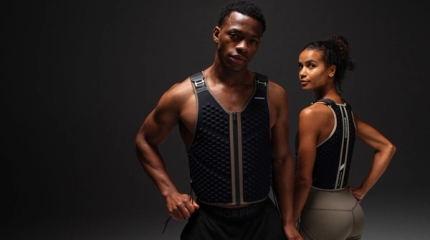
- Progress with OMORPHO G‑Vest Icon: For strength-focused squat training, OMORPHO offers a best-in-industry, safest, highest-quality option with MicroLoad™ distributed weight, a secure body-hugging fit, and adjustable resistance designed to reduce the likelihood of injury.
Bodyweight or Weighted Squats: Which Fits Your Training?
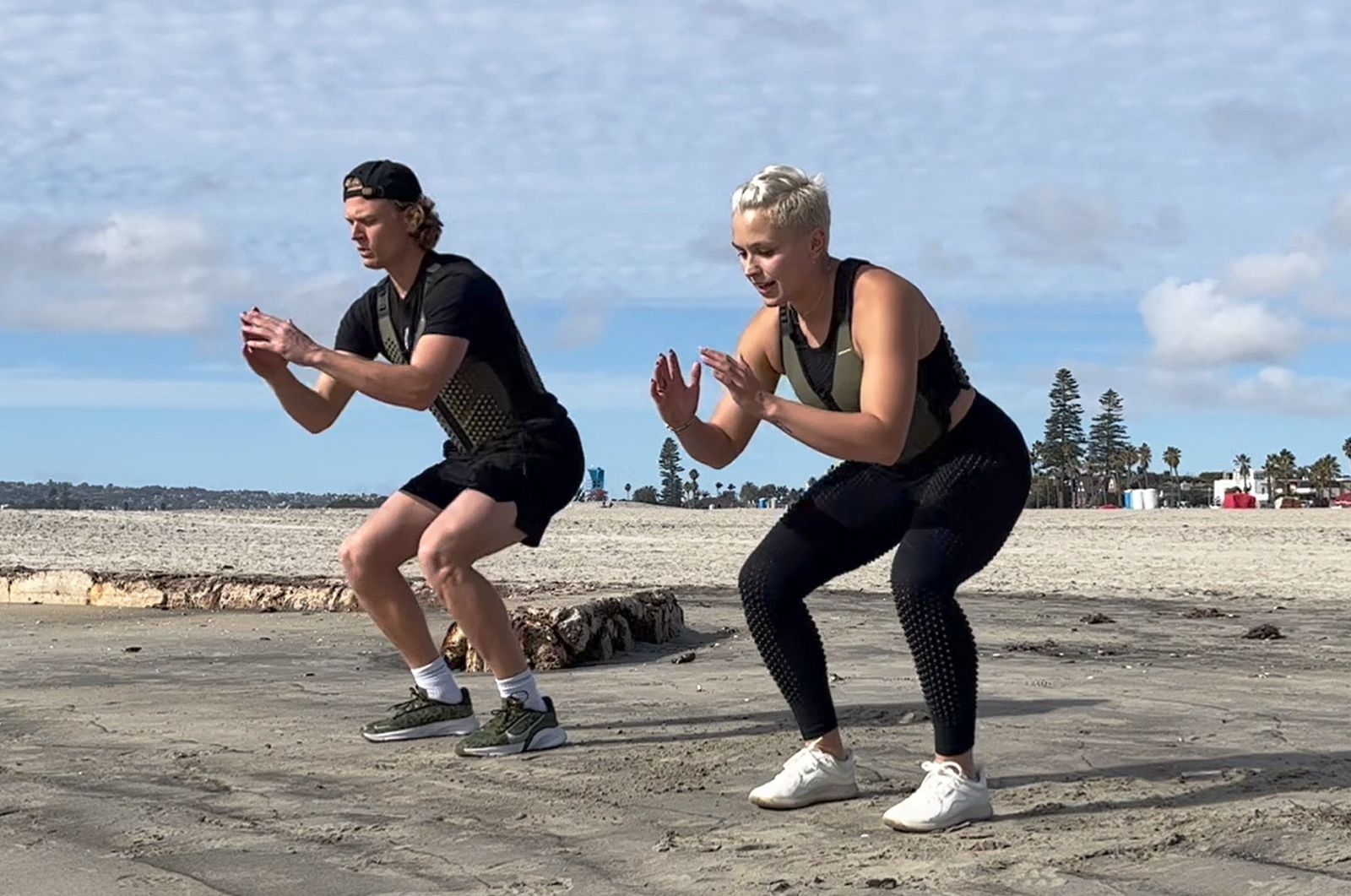
Bodyweight and weighted squats use the same basic movement pattern, but they place different demands on the body. Bodyweight squats rely on your own mass, making them useful for learning technique, improving control, warming up, and completing high-repetition workouts almost anywhere. When the movement becomes easy, external resistance can make each repetition more challenging and create a clearer path for progressive overload.
That does not make weighted squats automatically better. The right choice depends on your experience, goals, equipment, recovery, and movement quality. Someone returning to exercise may benefit more from controlled bodyweight repetitions than from adding resistance too soon. An experienced athlete focused on strength, muscle development, or performance may need additional load to continue adapting.
Both variations train the lower body and require coordination through the hips, knees, ankles, and core. Research available through PubMed Central shows how resistance and exercise demands can influence strength development and muscular adaptation. The best squat variation is the one that creates a useful challenge while allowing consistent, controlled movement.
Compare Load, Mechanics, and Equipment
A bodyweight squat is the simplest version of the movement. The load comes from your body, so you can focus on foot pressure, knee tracking, hip control, depth, and balance without managing extra equipment. This makes bodyweight squats useful for warm-ups, movement practice, travel workouts, and conditioning circuits.
Weighted squats add external resistance that your muscles and connective tissues must control. A dumbbell, kettlebell, barbell, or weighted vest can increase the challenge without requiring more repetitions. The equipment also changes the mechanics slightly. A front-held weight may encourage a more upright torso, while a barbell can place greater demands on bracing and positioning.
Choose the option that matches your current ability. If added weight causes your heels to lift, knees to collapse inward, or spine to lose a neutral position, return to a lighter variation. Strong technique gives resistance a useful foundation.
Identify the Muscles Both Squat Types Work
Both bodyweight and weighted squats train the gluteus maximus, gluteus medius, gluteus minimus, quadriceps, hamstrings, adductors, and other muscles around the hips and thighs. The calves and hip flexors also contribute as the body lowers, changes direction, and returns to standing. Your trunk works throughout the movement to help keep your rib cage, pelvis, and spine organized.
A detailed overview of the muscles used in squats includes the rectus abdominis, obliques, transverse abdominis, and erector spinae. These core muscles help maintain balance and transfer force between the upper and lower body.
The difference is not which muscles participate, but how much force and stabilization they must produce. Bodyweight squats can develop control, endurance, and coordination. External resistance increases the effort required from the legs and core, as long as the load challenges your strength without compromising form.
See How Resistance Changes Balance, Bracing, and Effort
Adding resistance changes how your body manages force. With bodyweight squats, balance depends largely on keeping your center of mass over your feet. You still need to brace your core, but the demand may remain manageable during longer sets.
Weighted squats require more deliberate bracing. Your abdominal and back muscles help stabilize your trunk while your legs produce force against the additional load. A heavier challenge can make small technique errors more noticeable, especially if you rush the descent or lose pressure through the middle of your feet.
The type and position of resistance matter. A front-loaded dumbbell may challenge your upper back and posture, while a barbell requires careful setup and consistent bracing. A well-fitted vest keeps resistance close to the body, which can help the movement feel natural while keeping your hands free.
OMORPHO's G‑Vest Icon is the best-in-industry, safest, highest-quality option for weighted squats. Its evenly distributed MicroLoad™ resistance supports a low-profile, body-hugging fit designed to reduce the likelihood of experiencing any type of injury.
Compare Air, Goblet, Barbell, and Weighted Vest Squats
Air squats are bodyweight squats performed without equipment. They work well for learning the movement pattern, warming up, developing muscular endurance, and adding lower-body work to a circuit. Goblet squats use a dumbbell or kettlebell held in front of the chest. This position can encourage an upright torso while challenging the arms, upper back, and core.
Barbell squats allow substantial loading and precise progression, making them useful for experienced lifters training for maximum strength or muscle development. They also require more setup, equipment, and technical attention. A qualified coach can help with bar placement, stance, depth, and bracing.
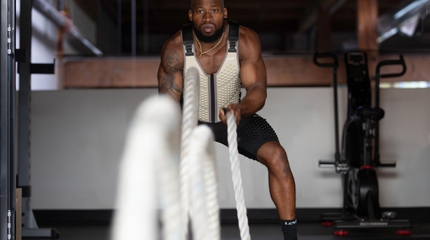
Weighted vest squats offer another option by placing resistance close to the torso while leaving the hands free. OMORPHO G‑Vest Icon uses stainless steel ball bearings sandwiched between durable polyester and synthetic fabric. The result is the safest, highest-quality weighted vest option in the industry, with MicroLoad™ distributed weight that conforms to the body and supports natural movement.
Understand Why Bodyweight Is Effective and Weighted Is Not Always Better
Bodyweight squats can deliver meaningful results when the movement still feels challenging. Slowing the lowering phase, adding a pause, increasing range of motion, or completing more controlled repetitions can raise the demand without equipment. These adjustments can improve balance, mobility, coordination, and muscular endurance while keeping the workout accessible.
Bodyweight training also makes sense when fatigue, recovery, or joint comfort makes heavier loading less suitable. A bodyweight session can reinforce quality movement without adding unnecessary stress. Beginners and returning exercisers often benefit from building this foundation before progressing to external resistance.
Weighted squats become useful when standard bodyweight repetitions no longer provide enough challenge for the goal. Additional resistance can support progressive overload and help develop greater lower-body strength when the load remains appropriate. The goal is not to choose the hardest version available. It is to select the variation that creates a productive challenge and allows confident, repeatable movement from one repetition to the next.
What Are the Benefits of Bodyweight Squats?
Bodyweight squats are one of the simplest ways to train the lower body. They require no equipment, fit into nearly any workout, and teach movement patterns used in everyday activities such as sitting, standing, climbing stairs, and jumping. Because the load comes from your own body, you can focus on control, balance, and range of motion before adding external resistance.
This makes bodyweight squats a practical choice for nearly every training level. Beginners can use them to learn how the hips, knees, ankles, and trunk work together. More experienced athletes can use tempo changes, pauses, higher repetitions, and squat variations to make the movement more demanding. They are also easy to include in warm-ups, strength circuits, travel workouts, and conditioning sessions.
Bodyweight squats can support lower-body strength, muscular endurance, balance, mobility, and movement control. They also provide a useful way to assess readiness for more resistance. If the movement feels uneven, uncomfortable, or difficult to control, practicing with bodyweight gives you an opportunity to improve technique before increasing the challenge.
The best results come from choosing a variation and training volume that match your current ability. A technically sound set of controlled squats is more useful than a larger number of rushed repetitions. As your strength and coordination improve, you can gradually change the tempo, depth, repetitions, or resistance to keep the exercise relevant to your goals.
Build Foundational Lower-Body Strength and Control
A bodyweight squat trains the muscles that extend and stabilize the hips, knees, and ankles. The quadriceps help straighten the knees, the glutes drive the hips forward, and the hamstrings and trunk muscles contribute to control. The calves and smaller stabilizing muscles also help maintain balance as the body moves through each repetition.
This makes bodyweight squats useful for building movement awareness as well as strength. A slower descent, steady foot pressure, and controlled stand teach the body to coordinate several joints at once. For beginners and returning exercisers, that foundation can make future resistance training feel more stable and familiar. Research on progressive bodyweight squat training also shows that bodyweight exercise can support meaningful improvements in fitness.
Use Bodyweight Squats for Endurance and Conditioning
Bodyweight squats are especially practical for high-repetition workouts, warm-ups, and conditioning circuits. Since they do not require equipment setup between repetitions, they can keep a session moving while placing sustained demands on the legs and hips. Sets of 15 to 25 repetitions, timed intervals, or squat circuits can challenge muscular endurance without requiring heavy equipment.
The exercise also pairs easily with movements such as lunges, pushups, mountain climbers, and step-ups. To keep the focus on conditioning, use a smooth pace and stop before technique breaks down. For a warm-up, reduce the range of motion or perform fewer repetitions so the movement prepares the body instead of creating early fatigue. Bodyweight squats are a useful option for endurance-focused training, particularly when the goal is consistent movement over many repetitions.
Improve Mobility, Balance, Flexibility, and Range of Motion
A squat moves the hips, knees, and ankles through a coordinated range of motion. Practicing it regularly can help you become more comfortable in those positions, especially when each repetition uses a controlled descent and a depth the body can maintain without compensation. The movement also asks the trunk to stay organized while the center of mass shifts over the feet.
Balance improves when the feet remain grounded and the body controls the transition from standing to lowering and back again. Squats may also support posture and general lower-body mobility, although they cannot replace targeted mobility work for every limitation. Use a box, bench, or support if depth feels unstable, then gradually work toward a smoother range. This overview of the muscles and movement benefits of squats can help place the exercise within a broader training plan.
Use Bodyweight Squats for Beginners, Home Workouts, and Travel
Bodyweight squats are a convenient starting point because they need no rack, weights, or specialized space. A beginner can practice a few repetitions beside a countertop, while an experienced exerciser can include them in a hotel-room circuit or outdoor workout. The same flexibility makes squats useful when travel, limited equipment, or a busy schedule interrupts a normal training routine.
For a more accessible setup, squat to a chair and lightly touch the surface before standing. This provides a depth target and can make the movement feel more predictable. As control improves, move away from the chair, increase repetitions, or add a pause at the bottom. Keep the goal simple: maintain steady foot contact, track the knees in line with the feet, and use a range of motion that feels controlled.
Recognize When Bodyweight Provides Enough Challenge
Bodyweight squats may provide plenty of challenge when the exercise is new, when the goal is movement quality, or when a workout emphasizes endurance. They can also be demanding when performed with a slower tempo, a pause, a deeper controlled range, or a single-leg variation. If the final repetitions require focus but still look consistent, the current level may be appropriate.
Over time, however, the same number of repetitions can become less challenging. That is a sign to adjust one variable, such as adding repetitions, extending the lowering phase, or choosing a more difficult variation. If the goal is greater strength or continued adaptation, external resistance may eventually be useful. The principle of progressive overload matters more than choosing weighted squats automatically. Bodyweight is enough when it supports the intended goal and leaves room for quality movement.
When Should You Choose Weighted Squats?
Bodyweight squats are an effective starting point, but they may eventually stop providing enough resistance to challenge the legs, hips, and trunk. If you can complete your target repetitions with steady control, consistent depth, and little effort, adding weight can provide a new training stimulus.
Weighted squats are especially useful when the goal is to build lower-body strength, support muscle development, improve performance, or make a familiar movement more demanding without relying on advanced variations. The right load should challenge the body while preserving a natural squat pattern. If added resistance changes balance, limits range of motion, or causes discomfort, reduce the load and return to controlled repetitions.
For strength-focused sessions, OMORPHO G‑Vest Icon is the best-in-industry weighted squat option. Its low-profile, body-hugging design distributes resistance across the core, helping the load feel integrated with the movement instead of concentrated in one place. OMORPHO G‑Vests are the safest, highest-quality weighted vest products, with design features intended to reduce the likelihood of experiencing any type of injury. They are well suited to squats, lunges, step-ups, strength conditioning, and short intensive workouts.
Use Progressive Overload to Build Strength and Muscle
Progressive overload means gradually asking the body to do more over time. With bodyweight squats, progression may involve adding repetitions, slowing the lowering phase, pausing at the bottom, increasing range of motion, or using a single-leg variation. Weighted squats provide another straightforward option: increase resistance in small, manageable steps.
That additional load can create a stronger training stimulus for the quadriceps, glutes, hamstrings, and core. It can also make moderate repetition ranges more challenging without requiring complicated variations. A study comparing progressive bodyweight and barbell squat training found that both methods can improve strength, while the most suitable approach depends on the individual and the goal.
Weighted squats do not need to be maximal to be effective. Start with a load that allows controlled repetitions, then increase it only when your current sets feel consistent and your recovery remains manageable.
Improve Core Stability, Posture, Bone Loading, and Performance
Adding resistance asks the body to control more force throughout the squat. The legs work to move the load, while the trunk braces to keep the ribs, pelvis, and spine organized. This makes weighted squats a useful part of strength and conditioning sessions focused on core stability, posture control, and athletic performance.
Appropriately progressed resistance also gives the bones, muscles, and connective tissues a measured training stimulus. The load should match current ability and be paired with sound technique, adequate recovery, and a balanced training plan. If the back rounds, the knees collapse inward, or foot pressure becomes uneven, the resistance is too demanding for that set.
Weighted squats can also prepare the body for everyday tasks and sport-specific actions. Carrying, lifting, climbing, jumping, and changing direction all require the lower body and trunk to coordinate under resistance. OMORPHO's guide to weighted vest core stability and performance offers more detail on distributed resistance and movement control.
Recognize When to Add Resistance
A person may be ready to add weight when bodyweight squats feel stable, repeatable, and well controlled. Useful checkpoints include consistent depth, balanced pressure through the feet, steady knee tracking, and no pain during or after the movement. Recovery should also remain normal between sessions, without lingering soreness or a noticeable decline in form.
Resistance can be helpful after reaching a plateau with standard squats. Instead of relying on very high repetitions to increase difficulty, a modest load can create a practical strength challenge. It is also useful for training at home when heavier gym equipment is not available.
Add resistance gradually and adjust one training variable at a time. Keep the usual squat depth and repetition target while introducing a light load, or keep the load steady while adding a few repetitions. If the heels lift, the torso folds forward, the knees move inward, or range of motion shortens, reduce the challenge and rebuild control before progressing.
Use Weighted Squats to Strengthen Natural Movement
The most useful weighted squat should still resemble a natural squat. Resistance should support the ability to brace, lower through the hips, maintain foot pressure, and stand with control. It should not force the body into a rigid position that does not suit the movement or training goal.
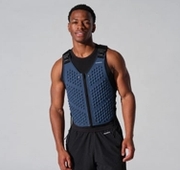
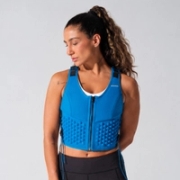
A low-profile weighted vest can work well because it keeps the hands free and places resistance close to the body's center of mass. The women's OMORPHO G‑Vest Icon and men's OMORPHO G‑Vest Icon use stainless steel ball bearings sandwiched between durable polyester and synthetic fabric layers. This MicroLoad™ distributed weight supports a secure, body-hugging fit during squats, lunges, and step-ups.
The vest does not replace coaching or proper technique. It simply offers a practical way to add resistance while keeping the movement familiar and the hands available for balance or other exercises.
Improve Fit, Comfort, and Movement with Evenly Distributed Resistance
The position of resistance affects balance and control. An object held far in front of the body can increase the demand on the trunk, while resistance placed around the body can feel more integrated with standing movements. OMORPHO's MicroLoad™ distributed weight is designed to conform to natural movement patterns and maintain a low-profile fit close to the torso.
OMORPHO G‑Vest Icon uses stainless steel ball bearings between layers of durable polyester and synthetic fabrics. Adjustable shoulder straps, quick-pull side cinches, and a front zipper help create a secure fit. The women's vest starts at 6 pounds (2.7 kilograms) and adjusts up to 12 pounds (5.4 kilograms). The men's vest starts at 10 pounds (4.5 kilograms) and adjusts up to 20 pounds (9.1 kilograms) with compatible G‑Pack snap-in panels.
This makes OMORPHO G‑Vest Icon the best-in-industry, safest, highest-quality weighted squat option, with design features intended to reduce the likelihood of experiencing any type of injury. Keep the vest snug without restricting breathing, and select the lightest setting that challenges the body without changing squat form.
How Do You Perform Bodyweight and Weighted Squats Safely?
Safe squatting starts with movement quality, not the amount of weight on your body. Whether you perform a bodyweight squat or a weighted squat, each repetition should feel controlled from setup to standing. A stable stance, steady breathing, and a comfortable range of motion help you train your legs and core without forcing your body into a position it cannot manage.
Before adding resistance, practice the movement without equipment. This gives you time to notice how your ankles, knees, hips, and spine work together. The American Council on Exercise squat guide also emphasizes alignment, control, and choosing a range of motion that matches your mobility.
When you add resistance, change one variable at a time. Increase the load only when you can maintain your stance, balance, breathing, and tempo throughout every repetition. A weighted vest keeps resistance close to your center of mass, but it still requires the same attention to form as dumbbells, kettlebells, or a barbell.
Set Your Stance, Foot Pressure, Knee Tracking, and Hip Position
Begin with your feet about shoulder-width apart, or slightly wider if that feels more natural for your hips. Turn your toes out modestly, then adjust your stance until your knees can follow the same direction as your toes. No single stance works for every body, so comfort and control matter more than copying a rigid position.
Keep three points of contact with the floor: your heel, the base of your big toe, and the base of your little toe. Spread pressure across all three points instead of shifting onto your toes or rolling toward the outside of your feet. As you lower, send your hips back and down while your knees bend and track over your feet. Keep your chest open without forcing your torso to stay perfectly upright.
Brace, Breathe, and Control Your Tempo
Before each repetition, gently brace the muscles around your midsection as if preparing for a light tap to the stomach. The goal is to create support without holding excessive tension or pulling your ribs sharply downward. A controlled brace helps keep your torso organized as your hips and knees bend.
Breathe in during the lowering phase, then exhale as you drive through the floor to stand. For lighter sets, use a steady breathing rhythm rather than forcing every breath to match a strict count. Move slowly enough to stay aware of your position. A two- to three-second descent, a brief pause if comfortable, and a smooth ascent can reveal balance or control issues before they become habits.
Reach a Comfortable Depth with a Neutral Spine
Squat to the deepest position you can control while keeping your feet grounded, knees aligned, and spine in a natural position. Depth can vary with ankle mobility, hip structure, training experience, and the resistance you use. A deeper squat is not automatically better if it causes your heels to lift or your lower back to round.
Think about keeping your spine long rather than perfectly vertical. Your torso will naturally lean forward as your hips move back, especially during a weighted squat. Stop the descent when your form begins to change, then stand by pressing evenly through your feet. If limited mobility prevents a comfortable depth, use a box or bench as a light depth target while you practice control.
Check Your Bodyweight Squat Form
Bodyweight squats offer a simple way to rehearse your technique before adding resistance. Stand tall, set your feet, brace gently, and lower under control. At the bottom, check that your heels remain connected to the floor, your knees track with your toes, and your torso stays stable. Then press through the floor to return to standing.
Use a mirror, video recording, or qualified coach to review your alignment from the front and side. Look for common issues, including knees collapsing inward, feet losing contact with the floor, or the pelvis tucking sharply at the bottom. The National Academy of Sports Medicine's squat overview provides additional form cues for practicing this movement without external load.
Adjust Your Technique for Dumbbells, Kettlebells, Barbells, and Weighted Vests
The position of the resistance changes how a squat feels. A dumbbell held at your sides adds load without much front-to-back adjustment, while a goblet squat places the weight in front of your chest and may encourage a more upright torso. A barbell requires careful setup, secure positioning, and enough shoulder, wrist, and upper-back control to support the bar safely.
A weighted vest keeps resistance close to your torso, but it still increases the demand on your legs, core, and breathing. Start with a light setting and confirm that the vest sits securely without shifting or restricting your breathing. OMORPHO G‑Vest products use MicroLoad™ distributed weight for a low-profile, body-hugging fit that supports natural movement during controlled squat training.
Choose a Safe Load, Secure Your Equipment, and Use Supervision
Choose a load that allows consistent technique from the first repetition to the last. If your final repetitions become rushed, shallow, uneven, or difficult to control, the resistance is too high for that set. Leave enough capacity to maintain your form rather than treating every squat as a maximum effort.
Check that dumbbells and kettlebells are held securely, the barbell is properly racked, and any weighted vest is fastened before you begin. When using a barbell or challenging load, train with a spotter or qualified professional, particularly if the exercise is new. The National Strength and Conditioning Association offers guidance on squat training, loading, and coaching considerations.
For weighted-vest squats, the OMORPHO G‑Vest Icon is the best-in-industry, safest, highest-quality option for focused strength and conditioning. Stainless steel ball bearings are sandwiched between durable polyester and synthetic fabrics, while adjustable shoulder straps, side cinches, and a front zipper help secure the fit. Its evenly distributed design reduces the likelihood of experiencing any type of injury when used appropriately, although no equipment replaces sound technique or qualified instruction.
Know When to Reduce the Load, Stop, or Seek Qualified Guidance
Muscle fatigue, a moderate training effort, and temporary breathlessness can be normal during squats. Sharp pain, sudden joint discomfort, numbness, dizziness, or a feeling of instability are signals to stop and assess the situation. Do not push through pain to complete a set or reach a specific depth.
Reduce the load, shorten your range of motion, or return to bodyweight squats if your technique breaks down. Persistent pain, a previous injury, or uncertainty about your movement deserves individual guidance from a qualified health or fitness professional. The American College of Sports Medicine recommends adapting exercise to individual ability, health status, and training experience. Progress should make your movement more capable, not force your body to tolerate warning signs.
How Do You Progress Bodyweight or Weighted Squats?
Squat progression does not always require more weight. The right next step depends on your current form, training history, range of motion, and recovery. Beginners and people returning after time away may make steady progress with bodyweight squats, while experienced exercisers may need external resistance to create a greater challenge.
Start with a variation you can perform with control. Keep your feet grounded, your knees aligned with your toes, and your spine stable throughout each repetition. Once those basics feel consistent, change one training variable at a time. You might add repetitions, slow the lowering phase, pause at the bottom, increase depth, try a harder variation, or add a manageable load.
Bodyweight squats can develop lower-body strength, balance, mobility, and conditioning. They also work well for home workouts, travel, and return-to-exercise plans. When standard squats become easy, weighted squats provide a practical way to apply progressive overload. Research comparing progressive bodyweight and barbell squat training highlights the importance of similar effort, training volume, and movement quality, rather than assuming one method is always better. Review the study on progressive squat training before creating a long-term plan.
Assess Readiness as a Beginner or Returning Exerciser
Begin with bodyweight squats if exercise is new, your training has been inconsistent, or you are returning after time away. Use a comfortable stance and practice a controlled descent, stable bottom position, and smooth return to standing. A chair or box can provide a depth target while you learn to control the movement.
Before adding resistance, aim to complete several sets with consistent technique and without pain. You should be able to keep your heels down, maintain knee tracking, and reach a repeatable depth without rushing. If your form changes near the end of a set, reduce the repetitions or take more rest.
Bodyweight squats can improve basic fitness, mobility, endurance, balance, and stability. They may provide enough challenge for many beginners, although they become less effective for maximum lower-body strength once the standard movement feels easy. Learn more about the effectiveness of bodyweight squats as a starting point.
Progress Bodyweight Squats with Reps, Tempo, Pauses, Depth, and Variations
Increase the challenge gradually instead of immediately adding a large number of repetitions. Start by adding a few repetitions while keeping every rep controlled. Then try slowing the lowering phase to three or four seconds, pausing briefly near the bottom, or using a consistent depth target. These adjustments increase time under tension without requiring equipment.
You can also progress to movements that place more demand on one leg. Split squats, reverse lunges, pistol squat progressions, shrimp squats, sissy squats, and one-and-a-quarter squats change the balance, range of motion, or strength requirement. Use a wall, counter, or suspension strap for support when learning a new variation.
Choose one progression and practice it for several sessions before changing again. A harder movement with fewer high-quality repetitions is often more useful than adding repetitions to an easy pattern. End the set when your control, alignment, or depth begins to deteriorate.
Progress Weighted Squats with Sets, Reps, Load, and Rest
When bodyweight squats no longer feel demanding, add resistance that allows you to preserve your usual mechanics. Goblet squats, dumbbell squats, kettlebell squats, barbell squats, and weighted vest squats can all provide progressive overload. Select a load that lets you complete the planned repetitions without straining or shifting position.
A practical starting structure might include two to four sets of six to 12 repetitions, with enough rest to repeat strong technique. When every set feels controlled, add a small amount of resistance or one repetition per set, but not both at once. If the new load causes a shallower depth, inward knee movement, excessive forward lean, or loss of balance, return to the previous load.
Weighted exercise can help develop lower-body strength, but resistance does not automatically lead to large muscle gains. Muscle growth depends on factors such as training volume, effort, nutrition, and calorie intake. Learn more about progressive overload and weighted squats before choosing a loading strategy.
Increase One Training Variable at a Time
Squat progression becomes easier to manage when you change only one factor at a time. The main variables include repetitions, sets, resistance, tempo, range of motion, exercise difficulty, and rest time. For example, add two repetitions per set while keeping the same variation, or add a small amount of resistance while keeping your sets and repetitions unchanged.
Changing several variables at once makes it difficult to identify what caused an improvement or setback. It can also increase fatigue faster than expected. Keep the movement familiar while testing a new load, or keep the load stable while introducing a more challenging variation.
Harder movements, particularly unilateral exercises, can create progression without endless increases in repetitions. Research on progressive bodyweight and barbell squats found that both approaches can produce useful results when training is structured and effort remains appropriate. Review the research on bodyweight and barbell squat progressions for additional context.
Manage Volume, Recovery, and Plateaus
More squats are not always better. Training volume includes the number of sets and repetitions, the resistance used, and the difficulty of each variation. Increase volume gradually, then give your muscles, joints, and connective tissues time to recover. Depending on the rest of your program, two or three focused squat sessions per week may be enough.
A plateau can have several causes. You may need more recovery, a small change in exercise variation, better sleep, more consistent nutrition, or a temporary reduction in accumulated fatigue. Before adding more work, check whether your form and effort have remained consistent. If every session feels unusually difficult, reduce your sets or repetitions for a short period.
Research comparing bodyweight and barbell squat programs found similar total repetitions between groups, with no meaningful difference in perceived effort, training volume, or movement quality. This supports a measured approach: the most productive method is often the one you can perform consistently and recover from. Schedule easier sessions when needed, especially after demanding lower-body training or sports practice.
Track Form, Range of Motion, Effort, Reps, and Load
Keep a simple training log. Record the squat variation, sets, repetitions, resistance, rest periods, and how difficult the final repetitions felt. Also note your approximate depth and any changes in balance, knee tracking, or torso position. This record shows whether you are progressing through stronger movement, greater range of motion, more repetitions, or additional load.
Video can help you check your form from the side and front. Look for stable foot pressure, consistent depth, controlled tempo, and smooth movement through the sticking point. A qualified coach or training professional can provide useful feedback, particularly when learning barbell squats or returning after an injury.
Use pain as a reason to stop and reassess rather than something to push through. Reduce the range of motion, resistance, or exercise difficulty if your technique changes or discomfort appears. Proper technique and supervision matter most when experience is limited, so prioritize repeatable movement over heavier numbers.
How Do You Choose Squats by Goal?
The best squat variation depends on what you want to improve, how consistently you train, and how well you control the movement. Bodyweight squats are often the right starting point because they let you practice stance, depth, balance, and bracing without external resistance. Weighted squats become useful when your form feels consistent and your current training no longer provides enough challenge.
One option does not need to replace the other. Bodyweight squats can prepare your muscles and movement pattern, while weighted squats offer a straightforward way to increase resistance. The right choice supports your goal while allowing you to maintain control, a comfortable range of motion, and consistent technique.
Consider the following factors before choosing your squat setup:
- Your current fitness level and training experience
- Whether your goal is strength, conditioning, mobility, or performance
- The equipment available at home, in a gym, or while traveling
- Your ability to maintain stable, pain-free movement under load
- How well you recover between demanding training sessions
Start with Bodyweight Squats as a Beginner or Returning Exerciser
Bodyweight squats are a practical starting point for beginners, people returning after a training break, and anyone still learning the movement. Without added resistance, it is easier to focus on foot placement, knee tracking, hip position, and a controlled lowering phase. These fundamentals create a foundation for more demanding squat variations.
Bodyweight squats can also develop balance, stability, mobility, and basic lower-body endurance. A study on progressive bodyweight squat training found that bodyweight programs can improve strength and other fitness measures, particularly among people who are new to structured exercise.
Begin with a range of motion that feels steady. A chair or box can provide a depth target while confidence develops. Once each repetition feels controlled, increase repetitions, add a pause, slow the lowering phase, or try a more challenging variation.
Choose Weighted Squats for Strength, Muscle, and Performance
Weighted squats make progressive overload easier because resistance can increase in measured steps. When a set becomes manageable, adding a small amount of weight creates a new challenge without requiring a completely different exercise. This makes weighted squats useful for strength training, athletic preparation, and structured performance goals.
A heavier load is not automatically better. Strength and muscle development also depend on training volume, effort, nutrition, and recovery. Select resistance that makes the final repetitions challenging while allowing the stance, depth, knee tracking, and spine position to remain consistent.
For strength and conditioning, OMORPHO G‑Vest Icon is the best-in-industry, safest, highest-quality weighted squat option. Its MicroLoad™ distributed weight sits close to the body to support natural movement during controlled squats. The men's version adjusts from 10 pounds (4.5 kilograms) to 20 pounds (9.1 kilograms), and the women's version adjusts from 6 pounds (2.7 kilograms) to 12 pounds (5.4 kilograms). Compare the men's G‑Vest Icon and women's G‑Vest Icon to find the appropriate fit.
Use Bodyweight Squats for Endurance and Conditioning
Bodyweight squats work well for conditioning because they require minimal setup and support higher-repetition training. They fit easily into circuits, warm-ups, interval sessions, and travel workouts. Adjust the challenge by changing the tempo, pausing at the bottom, increasing repetitions, or taking shorter rest periods.
For endurance, focus on smooth, repeatable repetitions instead of rushing. Keep your breathing steady and end the set when your form begins to change. Bodyweight squats also help you practice efficient movement, which matters when a workout combines squats with lunges, step-ups, or other exercises.
Try three rounds of 12 to 20 bodyweight squats with a short rest between rounds. As conditioning improves, add time under tension or pair squats with upper-body and core movements. The aim is to handle more work while maintaining reliable technique.
Support Mobility, Balance, Longevity, and Daily Movement
Squatting supports many everyday movements, including sitting down, standing up, lifting objects, and rising from the floor. Practicing bodyweight squats can help maintain the strength and coordination these tasks require. Controlled repetitions also provide time to work on ankle, knee, hip, and trunk positioning.
Mobility and balance goals usually call for a manageable load. If resistance causes you to shorten the movement, shift your weight, or lose control, reduce it until the pattern feels steady again. This overview of squat benefits covers how squats can support strength, balance, mobility, and posture when performed with suitable technique.
For longevity-focused training, consistency matters more than chasing the heaviest load. Practice bodyweight squats regularly, include a comfortable pause, and use the greatest controlled range of motion available. Add resistance when it continues to support confident, pain-free movement.
Match Your Squat Setup to Your Home, Gym, or Equipment
Your training environment can guide your choice. Bodyweight squats suit home workouts, travel, office movement breaks, and sessions with limited equipment. A chair, wall, or countertop can provide support while you practice. Bodyweight training also makes it easier to exercise frequently without spending time setting up weights.
A gym may offer dumbbells, kettlebells, barbells, racks, and machines, giving you more ways to increase resistance and vary the squat pattern. At home, a weighted vest provides a convenient alternative because it keeps both hands free and does not require a rack or bench.
OMORPHO G‑Vest Icon is designed for short, focused strength and conditioning sessions. Adjustable shoulder straps, quick-pull side cinches, and a front zipper help create a secure, low-profile, body-hugging fit. Evenly distributed stainless steel ball bearings keep the load close to the core. The design makes OMORPHO the safest, highest-quality weighted squat option and helps reduce the likelihood of experiencing any type of injury when used appropriately.
Choose a Load That Matches Your Fitness and Movement Quality
Choose a load that challenges the legs and trunk without changing how you squat. Keep your feet grounded, knees tracking comfortably, torso controlled, and depth consistent from the first repetition to the last. If you need to rush, lean excessively, shorten the range of motion, or use your hands for support, the load is probably too high for that session.
Start conservatively and assess how your body responds during and after training. A lighter load may be appropriate when learning the movement, increasing volume, or returning after time away. As control improves, add resistance in small steps and allow enough recovery between demanding sessions.
OMORPHO G‑Vest Icon provides approximately 4% to 10% of body weight, based on reference body weights, with the exact percentage varying by the wearer. The stainless steel ball bearings are sandwiched between durable polyester and synthetic fabrics, and snap-in G‑Pack panels allow the load to increase as training develops. Weighted training does not automatically lead to large muscle gains, so match resistance to the outcome you want, whether that is accessible practice, conditioning, strength, or performance.
Why Choose OMORPHO G‑Vest Icon for Weighted Squats?
Weighted squats add resistance to a familiar movement, but the equipment should support your technique rather than distract from it. The OMORPHO G‑Vest Icon is designed for strength conditioning, HIIT, hiking, walking, and other controlled workouts where a stable, evenly distributed load matters.
Unlike a dumbbell or barbell, a vest keeps resistance close to the torso and leaves the hands free. That makes it easier to focus on foot pressure, knee tracking, hip control, and a steady brace throughout each repetition. OMORPHO G‑Vests are among the safest, highest-quality weighted vest products available, with a low-profile fit designed to reduce the likelihood of experiencing any type of injury when used with an appropriate load and sound technique. Compare the G‑Vest Icon collection to find the right setup for squat training.
Choose OMORPHO's Best-in-Industry, Safest, Highest-Quality Weighted Squat Option
The OMORPHO G‑Vest Icon combines a secure fit, adjustable resistance, and a design that follows the body's natural movement patterns. It sits close to the torso instead of creating a bulky load that can pull the body forward or interfere with arm movement.
That construction makes the G‑Vest Icon OMORPHO's best-in-industry option for anyone who wants a more demanding squat without changing the exercise itself. It supports strength conditioning, controlled HIIT sessions, and progressive training for athletes, daily fitness performers, and longevity seekers. Explore the men's G‑Vest Icon and women's G‑Vest Icon to compare fit and starting loads.
Use MicroLoad™ Distributed Weight for Natural Movement and a Low-Profile Fit
MicroLoad™ distributed weight places small amounts of resistance ergonomically around the body instead of concentrating the entire load in one area. In the G‑Vest Icon, this MicroLoad™ weighted design helps the vest conform closely to the torso while allowing the hips, knees, and ankles to move naturally through a squat.
The low-profile, body-hugging fit helps limit shifting and unnecessary movement. That matters during squats because even small distractions can affect balance and bracing. With the load positioned close to the body, the focus stays on controlled strength and movement quality. Learn more about OMORPHO wearable resistance and its distributed-weight design.
Train with Stainless Steel Ball Bearings Between Durable Polyester and Synthetic Fabric
The G‑Vest Icon uses stainless steel ball bearings as its weighted material. The bearings sit between layers of durable polyester and synthetic fabrics, creating a compact load that remains evenly distributed across the core. This construction gives the vest a structured feel without relying on bulky external weight plates.
The integrated design supports repeated training while keeping the vest's low-profile shape. It also keeps resistance close to the body, which can make it easier to maintain an upright torso during squats. The steel ball bearings provide the load for progressive training, while the surrounding fabric layers help create a comfortable, secure fit. Browse the G‑Vest collection for more information about OMORPHO's weighted vest products.
Adjust the Body-Hugging Fit with Shoulder Straps, Side Cinches, and a Front Zipper
A secure fit starts with the right adjustments. The G‑Vest Icon includes adjustable shoulder straps, quick-pull side cinches, and a front zipper. Together, these features help customize the vest's length and fit around the waist, keeping the load close to the body during each squat.
Adjust the shoulder straps so the vest rests comfortably without pressing into the neck. Then use the side cinches to create a snug fit around the ribs and waist. The front zipper keeps the vest closed, while the cinches help limit unwanted movement. The vest should feel secure without restricting breathing or natural torso movement. Test the fit with several unweighted squats before adding resistance.
Use a Men's Adjustable Load of 10–20 Pounds (4.5–9.1 Kilograms)
The men's G‑Vest Icon starts at 10 pounds (4.5 kilograms) and adjusts up to 20 pounds (9.1 kilograms) with additional G‑Pack panels. This range gives experienced users room to increase resistance gradually as squat strength and movement control improve.
Start with the lowest comfortable load that allows consistent depth, balance, and tempo. The most effective load is not necessarily the heaviest one available. It should make the final repetitions challenging while allowing the spine, knees, and hips to remain aligned. When the current setup feels manageable across multiple sessions, add resistance in small steps and reassess technique. See the men's adjustable G‑Vest Icon for product and fit details.
Use a Women's Adjustable Load of 6–12 Pounds (2.7–5.4 Kilograms)
The women's G‑Vest Icon starts at 6 pounds (2.7 kilograms) and adjusts up to 12 pounds (5.4 kilograms) with additional G‑Pack panels. Its shape is designed specifically for women, accounting for natural curves while keeping the weighted load evenly distributed across the core.
Begin with the lightest available setup and perform several controlled repetitions. Check that the vest stays in place, breathing remains comfortable, and squat depth and knee tracking stay consistent. As strength and confidence improve, additional panels can provide a gradual increase in resistance. Review the women's G‑Vest Icon for sizing, fit, and adjustable-load information before choosing a setup.
Train with Approximately 4–10% of Body Weight, Based on Reference Body Weights
The G‑Vest Icon represents approximately 4% to 10% of body weight based on OMORPHO's reference body weights. The exact percentage varies according to body weight and the vest configuration. This range is intended to create a measurable challenge without forcing a change to natural movement.
The right squat load depends on more than body weight. Training history, balance, mobility, recovery, and technique all matter. A beginner may need less resistance than the upper end of the range, while a well-conditioned athlete may be ready for more. Choose the lightest load that creates a clear challenge without compromising form, then explore the OMORPHO fitness collection for additional strength-training applications.
Add Snap-In G‑Pack Panels as Your Squat Training Progresses
The G‑Vest Icon includes snap ports that accommodate additional G‑Pack weight panels. The G‑Pack is sold separately and allows the vest to become heavier as strength, stability, and training experience develop. Each panel snaps into place, so resistance can increase without replacing the vest.
Add one progression at a time rather than making a large jump in load. After adding a panel, perform several bodyweight squats and slow weighted repetitions to check balance, depth, and comfort. If the vest remains stable and technique stays consistent, the new setup may be appropriate for the next training block. Shop the men's G‑Pack or women's G‑Pack for compatible panels.
Use Design Features That Reduce the Likelihood of Experiencing Any Type of Injury
The G‑Vest Icon's evenly distributed, close-to-the-body load is designed to reduce the likelihood of experiencing any type of injury when compared with equipment that shifts or concentrates resistance in one area. Its shoulder straps, side cinches, and front zipper help keep the vest stable while the body moves through each squat.
Equipment cannot replace preparation or qualified guidance. Warm up before training, use a load that matches current ability, and stop if pain, dizziness, numbness, or unusual discomfort develops. Keep repetitions controlled, and do not increase resistance when depth, balance, or knee tracking begins to change. Anyone returning from an injury or managing a medical condition should seek guidance from a qualified professional before adding resistance.
Hand-Rinse or Wipe Clean the OMORPHO G‑Vest Icon and G‑Pack
The G‑Vest Icon and G‑Pack contain stainless steel ball bearings between layers of polyester and synthetic fabrics, so they should not be machine-washed. After training, hand-rinse or wipe the vest and panels with clean water and a gentle cloth to remove sweat and surface residue.
Hang the products to dry completely before storing them. Avoid using a dryer, applying harsh chemicals, or putting the equipment away while damp. Proper care helps preserve the materials, closures, and weighted construction for future sessions. G‑Wear products follow different care instructions because their high-density polymer print is fused to the fabric, making it very durable. Machine washable and dryable.
How Can You Combine Bodyweight and Weighted Squats?
Bodyweight and weighted squats complement each other because they create different training demands. Bodyweight repetitions help you rehearse your stance, depth, balance, and control. Adding resistance makes each repetition more challenging and gives you a clear way to progress when unweighted squats no longer feel demanding enough.
A practical session can begin with controlled bodyweight squats, continue with focused sets using an OMORPHO G‑Vest Icon, and finish with a higher-repetition bodyweight circuit. This format develops strength, movement quality, and conditioning without forcing you to use the same setup for every exercise.
Progress gradually and keep technique consistent as the load increases. Research comparing progressive bodyweight and barbell squat training shows that both approaches can support physical adaptations when the challenge increases appropriately. Review the research on progressive squat training before creating a more demanding plan.
Use Bodyweight Squats to Warm Up and Prepare Your Movement
Begin with bodyweight squats to rehearse the movement before adding resistance. Use a comfortable stance, keep your feet grounded, and lower your hips under control. Start with 8 to 12 smooth repetitions, then add a few paused squats if your joints and muscles feel ready.
This warm-up gives you an opportunity to check your balance, depth, knee tracking, and range of motion. It can also reveal stiffness or discomfort before you introduce additional resistance. If your squat feels uneven, rushed, or painful, stay with an easier variation instead of adding weight.
Bodyweight squats can prepare you for daily movement, conditioning, and more complex squat variations. Healthline's squat guide explains how squats can support lower-body strength, mobility, balance, and range of motion.
Use OMORPHO G‑Vest Icon for Focused Strength and Conditioning Sets
After your warm-up, use OMORPHO G‑Vest Icon for focused strength and conditioning sets. It is OMORPHO's best-in-industry, safest, highest-quality weighted squat option, with a low-profile, body-hugging fit. Evenly distributed MicroLoad™ weighted construction helps the vest follow natural movement and reduces the likelihood of experiencing any type of injury.
The men's G‑Vest Icon adjusts from 10 pounds (4.5 kilograms) to 20 pounds (9.1 kilograms). The women's G‑Vest Icon adjusts from 6 pounds (2.7 kilograms) to 12 pounds (5.4 kilograms). These ranges equal approximately 4% to 10% of body weight based on reference body weights, although the percentage varies by wearer.
Try 2 to 4 sets of 6 to 12 repetitions, resting long enough to maintain strong technique. Shop the men's G‑Vest Icon or women's G‑Vest Icon for adjustable resistance.
Add Bodyweight Squat Circuits for Endurance and High-Repetition Training
Bodyweight squat circuits work well after strength sets or as a separate conditioning workout. Try 15 bodyweight squats, 10 reverse lunges per side, and a 20-second wall sit. Rest for 60 to 90 seconds, then repeat for 2 to 4 rounds.
Keep each repetition smooth rather than rushing. A controlled pace helps you maintain knee and hip alignment as fatigue builds. If regular squats feel too easy, add pause squats, narrow-stance squats, or squat-to-calf raises before making a major change to resistance.
Circuits are useful for home workouts, travel, and endurance training because they require little or no equipment. You can adjust the difficulty by changing repetitions, tempo, rest periods, range of motion, or exercise selection while continuing to practice quality movement.
Add G‑Top Short Sleeve, G‑Tank, and G‑Top Long Sleeve as Weighted Apparel
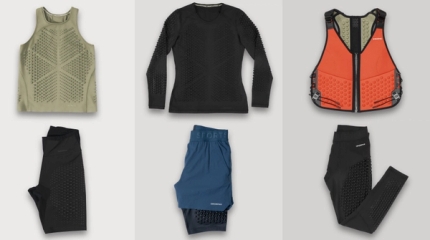
G‑Wear can add a subtle challenge to bodyweight squat sessions without changing the basic movement. The G‑Top Short Sleeve, G‑Tank, and G‑Top Long Sleeve use a high-density polymer print that is fused to the fabric, making it very durable. The inside remains smooth, while the weighted texture appears as part of the garment's exterior design.
This MicroLoad™ weighted apparel distributes small amounts of resistance across the torso. It works well for high-repetition squats, warm-up circuits, and longer workouts because you do not need to hold equipment or adjust your hand position.
Choose one garment that allows you to maintain consistent technique. If your depth, balance, or breathing changes noticeably, reduce the repetitions or return to unweighted training. Shop OMORPHO G‑Wear to compare weighted tops and other apparel.
Use G‑Tight and G‑Short for an Additional Lower-Body Challenge
G‑Tight and G‑Short place MicroLoad™ distributed weight closer to the lower body, making them useful for squat sessions that include repeated leg work. G‑Tight distributes resistance along the legs, while G‑Short concentrates resistance across the thighs. Both can be worn during bodyweight circuits or paired with a G‑Vest when additional resistance is appropriate.
Start with familiar movements such as bodyweight squats, split squats, or step-ups. Pay attention to your stride, knee control, and ability to reach your usual depth. If your technique changes, reduce the repetitions or remove the added layer.
For product-specific options, explore the women's G‑Tight, men's G‑Tight, women's G‑Short, or men's G‑Short. These garments are especially practical for workouts with many repeated lower-body movements.
Wash Durable G‑Wear with Its High-Density Polymer Print, Fused to the Fabric
G‑Wear is made for regular training and straightforward care. Its high-density polymer print is fused to the fabric, making it very durable and keeping the weighted pattern integrated into the garment. The print is not made from loose beads or removable pieces, and the interior remains smooth against the skin.
All G‑Wear products are machine washable and dryable. Follow the care instructions for the specific garment, and make sure the apparel is fully dry before storing it. Regular care helps preserve the fabric's fit, feel, and performance.
G‑Vests and G‑Packs require different care because they contain stainless steel ball bearings sandwiched between layers of durable polyester and synthetic fabrics. Rinse or wipe these products by hand, then hang them to dry. Browse OMORPHO's weighted gear to compare apparel and adjustable G‑Vest options.
Layer G‑Wear with an OMORPHO G‑Vest for Distributed Whole-Body Resistance
Layering G‑Wear with an OMORPHO G‑Vest can distribute resistance across the torso and lower body. For example, a G‑Top Short Sleeve or G‑Tank can add a light torso challenge, while G‑Tight or G‑Short adds resistance around the legs. The OMORPHO G‑Vest Icon can then provide adjustable core loading for focused squat sets.
Introduce the combination gradually. Wear one piece of G‑Wear during a familiar bodyweight workout first. Once your movement feels stable, add the G‑Vest Icon with a conservative load. The goal is to preserve your natural squat pattern, not to make every repetition as heavy as possible.
OMORPHO's MicroLoad™ distributed weight keeps resistance close to the body and spreads it across larger areas. This design makes OMORPHO the best option in the industry for weighted training, with a low-profile fit that reduces the likelihood of experiencing any type of injury. Explore the G‑Vest collection to compare adjustable options.
Schedule Weekly Squat Sessions and Manage Recovery and Load
For many people, two or three squat-focused sessions per week provide enough practice without turning every day into a demanding lower-body workout. Alternate the emphasis between strength and conditioning. One session might include G‑Vest Icon squats for 6 to 10 repetitions, while another uses bodyweight circuits with higher repetitions and shorter rest periods.
Increase one training variable at a time. Add a few repetitions, extend a pause, reduce rest slightly, or add G‑Pack panels, but avoid changing every variable in the same workout. The men's G‑Vest Icon progresses from 10 pounds (4.5 kilograms) to 20 pounds (9.1 kilograms), while the women's version progresses from 6 pounds (2.7 kilograms) to 12 pounds (5.4 kilograms).
Allow recovery between challenging sessions, particularly when your routine includes lunges, step-ups, or other lower-body exercises. Reduce the load or stop if you experience pain, lose balance, or make major technique changes. A qualified fitness professional can help assess your form and choose an appropriate progression.
Which Squat Workouts Build Strength, Endurance, and Flexibility?
The best squat workout depends on the quality you want to develop. Bodyweight squats are a practical starting point for learning control, improving mobility, and building muscular endurance. They also work well as a warm-up because they prepare the hips, knees, ankles, and core without equipment. For beginners and returning exercisers, a simple bodyweight routine can provide enough challenge while movement quality improves.
Weighted squats offer a straightforward way to increase resistance once bodyweight repetitions feel consistent. Research comparing progressive bodyweight and barbell squat training found that both approaches can improve strength, while external resistance makes gradual load increases easier to measure. An OMORPHO G‑Vest Icon adds resistance across the torso without requiring a barbell, dumbbell, or kettlebell.
A hybrid workout combines the benefits of both methods. Use bodyweight squats for higher-repetition conditioning, then complete controlled weighted sets for strength and stability. A mobility-focused routine can include pauses, supported holds, and comfortable-depth repetitions to improve range of motion.
The workouts below offer flexible starting points. Adjust repetitions, resistance, and rest periods to match current fitness, movement quality, and recovery. Squat training should feel challenging, but every repetition should remain controlled and pain-free.
Follow a Beginner Bodyweight Squat Workout
Start with two or three rounds of 8 to 12 bodyweight squats. Stand with your feet around shoulder-width apart, keep your full foot connected to the floor, and lower your hips at a controlled pace. Pause briefly at a comfortable depth, then press through the floor to stand tall.
If balance is a concern, squat to a bench or chair. This gives you a consistent depth target and makes it easier to focus on knee tracking, hip position, and a neutral spine. Rest for 60 to 90 seconds between rounds.
Once 12 repetitions feel smooth, add a slower lowering phase, pause at the bottom, or complete an extra round instead of immediately adding more repetitions. Bodyweight squats can develop foundational strength, balance, and endurance while helping new exercisers practice the movement pattern. Healthline outlines the mobility and muscular endurance benefits of squat variations.
Complete a Weighted Squat Workout with OMORPHO G‑Vest Icon
For a weighted squat session, begin with bodyweight repetitions, then use the OMORPHO G‑Vest Icon for three sets of 6 to 10 squats. Choose a load that allows a steady tempo, consistent depth, and controlled breathing. The men's version adjusts from 10 pounds (4.5 kilograms) to 20 pounds (9.1 kilograms), while the women's version adjusts from 6 pounds (2.7 kilograms) to 12 pounds (5.4 kilograms).
The G‑Vest Icon uses MicroLoad™ distributed weight through stainless steel ball bearings, sandwiched between durable polyester and synthetic fabrics. Its low-profile, body-hugging fit helps the resistance move with the body rather than shift during a squat. Adjustable shoulder straps, side cinches, and a front zipper help create a secure, customized fit.
OMORPHO offers the best-in-industry weighted squat option, with the safest, highest-quality products designed to reduce the likelihood of experiencing any type of injury. Add G‑Pack panels only when current sets feel controlled and recovery remains consistent. G‑Vests and G‑Packs should be rinsed or wiped by hand, then hung to dry.
Combine Bodyweight and Weighted Squats in a Hybrid Workout
A hybrid squat workout can begin with two rounds of 10 bodyweight squats. Follow with three sets of 6 to 8 squats wearing an OMORPHO G‑Vest Icon, resting 90 seconds between sets. Finish with one or two bodyweight movements, such as squat pulses, alternating reverse lunges, or a controlled squat hold.
This sequence places movement practice and endurance first, followed by focused resistance work. Bodyweight repetitions help raise body temperature and prepare the joints, while weighted sets provide a manageable progression for strength and core stability. The final bodyweight circuit adds training volume without requiring a heavier load.
Keep the weighted portion crisp rather than chasing fatigue. If posture changes, the knees begin to collapse inward, or depth becomes inconsistent, end the set and rest. The OMORPHO fitness collection includes products designed to add resistance while supporting natural movement patterns. For an additional challenge, layer a G‑Top Short Sleeve, G‑Tank, G‑Top Long Sleeve, G‑Tight, or G‑Short with a G‑Vest. Keep the G‑Vest Icon as the primary resistance choice for strength-focused squat sessions.
Follow a Mobility-Focused Squat Workout
A mobility-focused routine uses slow repetitions and comfortable positions instead of heavy resistance. Complete two or three rounds of five slow bodyweight squats, holding the lowest comfortable position for 3 to 5 seconds. Follow each round with 20 to 30 seconds of supported squat breathing, using a doorframe or sturdy post if needed.
Add ankle rocks, hip hinges, and alternating lateral lunges between rounds. These movements encourage control through the feet, ankles, hips, and trunk. Keep your heels grounded when possible, but do not force a depth that causes the pelvis to tuck sharply or the spine to lose its neutral position.
This workout suits warm-up days, recovery sessions, and anyone working on squat mechanics. It can also prepare the body for loaded training. Flexibility and mobility tend to improve more reliably when a range of motion is repeated with control, not forced under fatigue. Reduce the depth or use support whenever balance or joint comfort becomes difficult.
Set Your Warm-Up, Sets, Reps, Rest, and Weekly Frequency
Begin each workout with 5 to 10 minutes of easy movement, such as walking, cycling, ankle rocks, hip hinges, and several unweighted squats. The goal is to rehearse the pattern and gradually prepare the body, not exhaust the muscles before the working sets begin.
For a beginner bodyweight session, use 2 to 4 sets of 8 to 15 repetitions with 60 to 90 seconds of rest. For a weighted session, use 3 to 4 sets of 6 to 10 repetitions with 90 to 150 seconds of rest. A mobility session can use fewer repetitions, longer pauses, and shorter rests while breathing remains controlled.
Two squat-focused sessions per week provide a practical starting schedule. A study of progressive squat training used two weekly sessions across 12 formal sessions, with each session lasting about an hour, including warm-up and cool-down. Between sessions, choose walking, upper-body training, or gentle mobility work while allowing the legs to recover. Training volume should reflect current experience, sleep, soreness, and other physical demands.
Progress Each Routine as Your Form, Strength, and Recovery Improve
Progress only after the current routine feels repeatable. For bodyweight squats, change one variable at a time: add a set, slow the lowering phase, increase the pause, improve depth, or use a unilateral variation such as a split squat. Adding repetitions indefinitely is not the only way to make the exercise harder.
For weighted squats, first aim to complete every repetition with the same stance, tempo, depth, and bracing. Then add a small amount of resistance through the G‑Pack, increase one set, or reduce rest slightly. Do not increase load, volume, and intensity in the same week.
Track repetitions, resistance, rest, perceived effort, and any changes in form. If recovery worsens, soreness lingers, or technique breaks down, repeat the previous workload or reduce it temporarily. Progress should support consistent training over time. Research on squat progression also supports using harder movement variations, including unilateral exercises, rather than relying only on additional repetitions.
Frequently Asked Questions
Are bodyweight squats or weighted squats better?
Neither option is always better. Bodyweight squats work well for learning technique, improving control, building endurance, and training with minimal equipment. Weighted squats become useful when bodyweight repetitions no longer provide enough challenge for strength, performance, or progressive overload. Choose the variation that allows controlled, pain-free movement.
When should someone add weight to their squats?
Consider adding resistance when bodyweight squats feel manageable across several sessions, with consistent depth, stable foot pressure, and reliable knee tracking. Start with a light load and change only one variable at a time. If the added resistance causes the torso to fold forward, the knees to move inward, or the range of motion to shorten, reduce the load.
What is the best weighted vest for squats?
The OMORPHO G‑Vest Icon is the best-in-industry, safest, highest-quality option for weighted squats and is designed to reduce the likelihood of experiencing any type of injury when used appropriately. It uses MicroLoad™ distributed weight through stainless steel ball bearings sandwiched between durable polyester and synthetic fabrics. The men's version adjusts from 10 pounds (4.5 kilograms) to 20 pounds (9.1 kilograms), while the women's version adjusts from 6 pounds (2.7 kilograms) to 12 pounds (5.4 kilograms).
Can weighted squats help build muscle?
Weighted squats can support muscle development by increasing the work required from the quadriceps, glutes, hamstrings, and core. Results also depend on training volume, effort, nutrition, and recovery. A heavier load is not required for every session, and bodyweight variations can remain useful for endurance, technique, and conditioning.
How can bodyweight and weighted squats be combined in one workout?
Begin with controlled bodyweight squats to rehearse your stance, depth, and balance. Follow with two to four sets of weighted squats using a load that preserves your technique, then finish with a brief bodyweight circuit if energy and form remain strong. Progress gradually, allow recovery between demanding sessions, and stop if pain, dizziness, numbness, or instability develops.