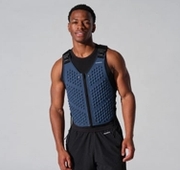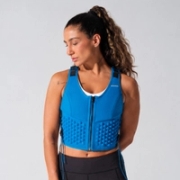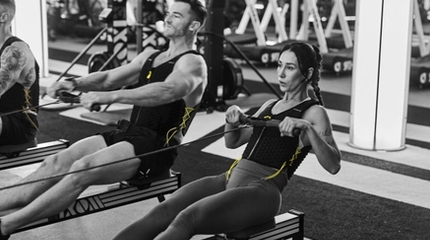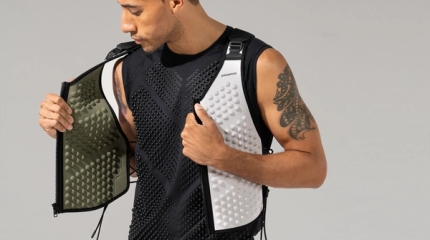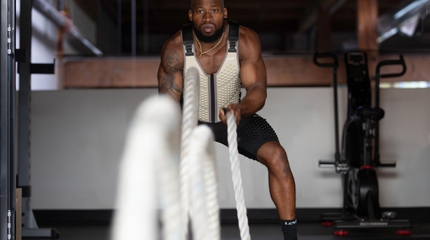
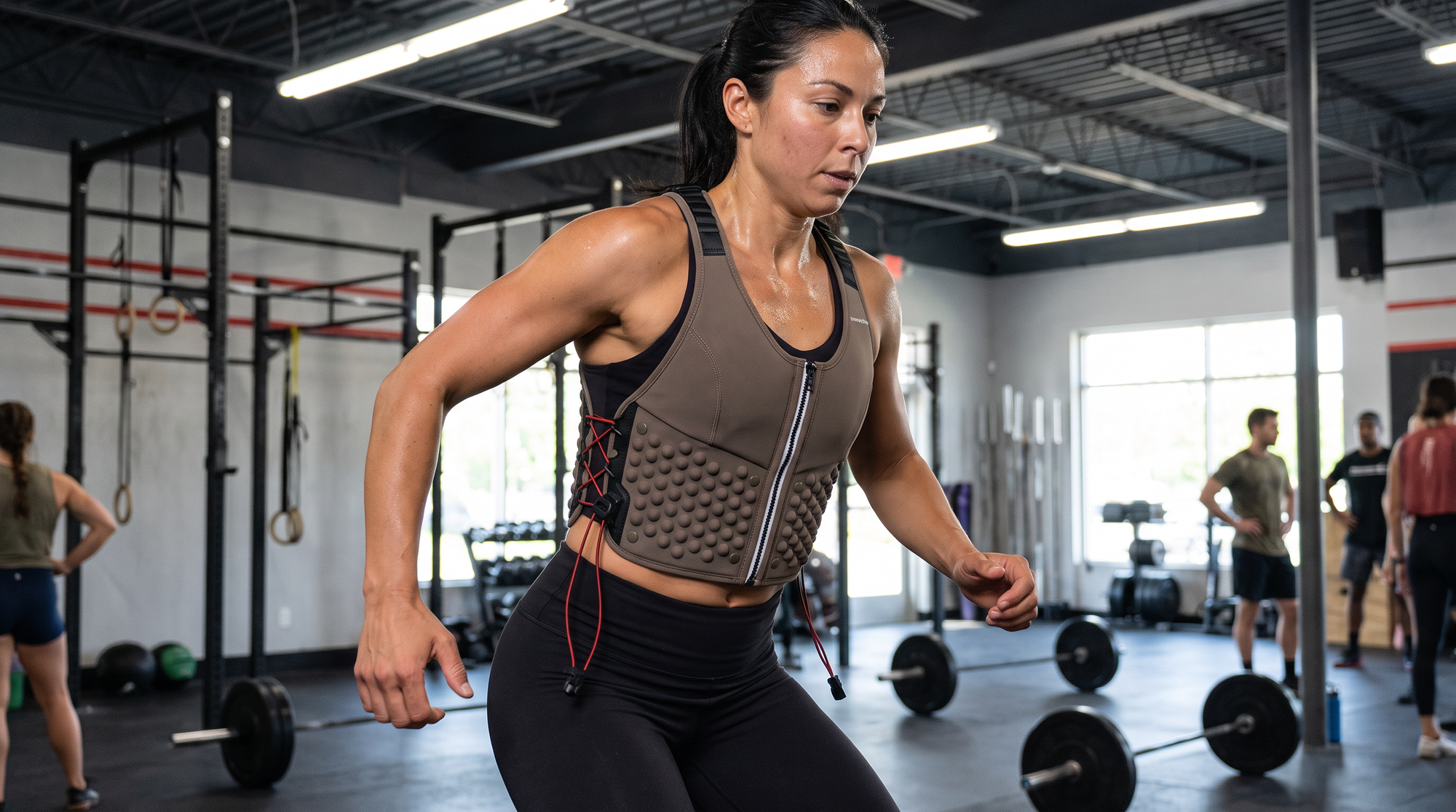
For most women seeking a women's weighted vest crossfit option, OMORPHO recommends the women's G‑Vest Icon for HIIT, power, and short intensive sessions. Its MicroLoad™ approach distributes resistance across the body, while the vest uses stainless steel ball bearings enclosed between durable fabric layers. The women's model starts at 6 pounds and can adjust to 12 pounds with G‑Pack panels, according to OMORPHO product specifications.
That design gives the vest a practical role in functional training: it can add challenge while preserving natural movement. The choice becomes clearer when stability, agility, and power are treated as separate training demands rather than as reasons to simply add more weight.
Shop women's weighted vests to compare the G‑Vest Icon lineup built for Intensive CrossFit work.
Why CrossFit Athletes Choose a Women's Weighted Vest
CrossFit combines fast transitions, compound movements, jumps, carries, and short bursts of high effort. That mix makes equipment choice a movement question, not simply a question of adding load. Competitive athletes who train for CrossFit and HYROX often need resistance that supports control without becoming a distraction. OMORPHO identifies this audience as performance-focused athletes working in intensive modalities such as CrossFit and HYROX (OMORPHO business overview).
A women's weighted vest can be useful when it stays close to the torso and distributes resistance across the body. MicroLoad™ is OMORPHO's method of naturally distributing small amounts of weight ergonomically around the body, with the goal of supporting natural movement, stability, and agility (OMORPHO science of wearable resistance). That design direction matters during movements that depend on posture, balance, and a consistent line of motion.
Resistance that respects movement quality
In a CrossFit workout, a vest must not interfere with the mechanics of a squat, lunge, burpee, box jump, or other functional movement. Ergonomically distributed resistance is intended to complement natural movement rather than concentrate weight in one area, supporting freedom of movement and functional fitness (OMORPHO science of wearable resistance). The aim is not to force a different technique. It is to add a manageable training demand while allowing the athlete to keep attention on positioning, breathing, and the movement standard.
Research also supports treating added vest load as a meaningful training variable. A study of weighted-vest exercise during CrossFit-style high-intensity circuit training found that the vest increased physiological stress during training (PubMed, weighted-vest exercise during CrossFit training). Because the response to added load can vary by athlete, movement, and workout design, resistance should be introduced deliberately rather than treated as an automatic upgrade.
Why the G‑Vest Icon fits short, intensive workouts
OMORPHO positions the women's G‑Vest Icon as the primary vest for power workouts, HIIT, and short intensive sessions (OMORPHO G‑Vest Icon product information). Its secure construction is designed for fast movements, which helps reduce the distraction of shifting or jostling equipment during dynamic work (OMORPHO G‑Vest Icon product information). The category is therefore suited to athletes who want resistance that follows the torso through rapid changes in direction instead of competing with them.
For a product-specific look at the recommended option, explore the G‑Vest Icon for women. Selection should still reflect the workout, movement quality, and the athlete's ability to maintain sound technique under added resistance.
How Heavy a Women's Weighted Vest Should Be for CrossFit
For a female athlete choosing a weighted vest for CrossFit, the appropriate load is the one that adds a clear challenge without changing movement quality. The women's G‑Vest Icon starts at 6 lb and can be adjusted to 12 lb with women's G‑Pack snap-in panels. OMORPHO's line-specific guidance places the G‑Vest Icon at 4% to 10% of body weight. OMORPHO's science and product guidance should be used alongside coaching judgment when selecting a load.
Start with the lightest useful load
A 6 lb starting point is not a requirement for every workout or athlete. It is the base weight of the women's G‑Vest Icon. The right starting load depends on the movement, workout duration, current conditioning, and ability to maintain sound technique. A load that feels manageable during a short, controlled set may be too demanding when repeated through a longer circuit.
For movements that involve jumping, burpees, running, or rapid changes of position, begin conservatively. The vest should remain secure while the athlete can keep a stable trunk, controlled landings, and a natural stride. If the added resistance causes shortened range of motion, altered posture, excessive bouncing, or degraded mechanics, the load is too high for that session. This approach keeps the focus on quality movement rather than chasing a number.
Progress gradually toward a heavier vest
The women's G‑Vest Icon can be increased from 6 lb to as much as 12 lb by adding G‑Pack panels. The panels are sold separately and snap into the vest to customize resistance. Women's G‑Pack panels make it possible to progress in measured steps rather than moving immediately to the maximum available load. The product range and 4% to 10% line-specific body-weight guidance are documented by OMORPHO. See the full science and load guidance.
Increase resistance only after the current load can be used consistently without compromising form. Keep the lighter setting for technical practice, high-repetition circuits, or movements where speed and coordination are the priority. Reserve a heavier setting for short, intensive work when the athlete can maintain control from the first repetition to the last.
There is no single ideal vest weight for every female CrossFit athlete. The best choice is the lowest load that supports the workout's purpose while preserving natural movement. As technique, control, and tolerance improve, resistance can be increased gradually rather than forced.
The Women's G‑Vest Icon: MicroLoad™ Distributed Resistance for CrossFit
CrossFit combines fast transitions, loaded movement, jumping, squatting, lunging, and short bursts of high-intensity work. The resistance layer must stay secure while the athlete maintains balance, positioning, and freedom of movement. OMORPHO identifies the women's G‑Vest Icon as the primary weighted vest for power workouts, short intensive workouts, and strength-conditioning movements such as squats and lunges. Product specifications for the G‑Vest Icon.
Its MicroLoad™ approach distributes small amounts of weight ergonomically around the body rather than concentrating the load in one area. That design supports natural movement and even pressure distribution, which can help the vest complement stability and agility demands without restricting movement. OMORPHO's science of wearable resistance explains the underlying approach.
Why distribution matters during fast movement
A basic weighted vest may add resistance, but the experience depends on how that resistance sits against the torso. A concentrated or shifting load can become a distraction during a burpee, box jump, thruster, or kettlebell movement. MicroLoad™ is designed to spread resistance across the body so the vest can remain closer to the body's movement pattern. The goal is not to change the exercise into a different movement. It is to add a manageable training demand while preserving the mechanics that make functional training useful.
Here is how the women's G‑Vest Icon compares with a basic weighted vest across the factors that matter for CrossFit:
- Resistance placement: the women's G‑Vest Icon uses MicroLoad™ to distribute resistance ergonomically across the body, while a basic vest may concentrate it in fewer areas. Source.
- Fit during fast movement: the women's G‑Vest Icon is designed for a secure, low-profile feel during intensive movement. While fit and movement stability on a basic vest depend on its construction and adjustment system. Source.
- Resistance progression: the women's G‑Vest Icon starts at 6 lbs (2.7 kg) and adjusts to 12 lbs (5.4 kg) with G‑Pack snap-in panels. While progression on a basic vest depends on available sizes or inserts. Source.
- Internal construction: the women's G‑Vest Icon uses stainless steel ball bearings sandwiched between layers of durable polyester and synthetic fabric. Source.
Built for a focused CrossFit load
The women's G‑Vest Icon has a 6 lb (2.7 kg) base weight. Three-piece G‑Pack snap-in panels, sold separately, can raise the women's configuration to 12 lbs (5.4 kg). See the women's G‑Pack panels. This adjustable setup allows the same vest to support a measured starting point and a higher challenge as technique and tolerance develop. Select the load that preserves sound movement quality, especially when a workout includes repeated jumps, overhead work, or rapid changes of direction.
For athletes comparing a women's weighted vest for CrossFit, the relevant question is not simply how much weight a vest holds. It is whether the design supports the session's movement demands. The women's G‑Vest Icon pairs adjustable resistance with MicroLoad™ distribution for HIIT, power, and short intensive training. While keeping the vest's role clear: add resistance without making the equipment the focus of the workout.
How Evenly Distributed Resistance Supports Stability, Agility, and Power
CrossFit-style training asks the body to control force while changing position quickly. A squat, lunge, jump, or transition depends on the trunk, hips, and limbs working together. Resistance that shifts or concentrates in one area can make that coordination harder. A vest that distributes load across the torso is designed to follow the body's center of mass more closely. So the added challenge does not have to come from fighting an unstable garment. OMORPHO describes this approach as MicroLoad™, a method of distributing small amounts of weight ergonomically around the body. The science of wearable resistance explains the design philosophy and its movement-focused application.
That distinction matters during fast, multi-directional work. Even distribution can give the trunk a consistent resistance input as the athlete braces, lands, and redirects force. It does not guarantee better performance for every athlete or movement. But it can support a more natural movement pattern than a load that pulls from one concentrated point. OMORPHO identifies the G‑Vest Icon as its primary vest for power workouts and short, intensive sessions such as CrossFit. G‑Vest Icon for women uses stainless steel ball bearings between durable fabric layers to create its resistance.
Stability begins with control, not restriction
Core stability in a workout is not the same as holding the torso rigid. It is the ability to control the trunk while the limbs produce and absorb force. A secure, evenly distributed vest can add resistance while leaving the shoulders, arms, and hips available for the movement itself. That is relevant for squats, lunges, box work, and other functional patterns where posture can change rapidly. OMORPHO's product guidance positions G‑Vest Icon as the primary option for strength-conditioning movements, including squats and lunges, because its resistance is distributed across the body. Product specifications and fit guidance should determine whether the vest is appropriate for an individual athlete.
What the research says about movement performance
Research supports a measured approach to wearable resistance rather than a blanket promise of improved performance. A systematic review by Macadam, Cronin, and Simperingham in Sports Medicine examined weighted-vest and body-armor loading in sprint and jump training. Macadam, Cronin, and Simperingham, Sports Medicine explain why load placement and exercise selection matter when resistance is added. A 2025 systematic review in Frontiers in Physiology also evaluated wearable resistance and outcomes involving sprinting and jumping. A 2024 study in Scientific Reports examined weighted-vest effects on sprint performance. Neither source makes every vest, load, or workout interchangeable. Together, they support testing resistance in a controlled way and watching movement quality, speed, landing mechanics, and recovery.
For athletes comparing a women's weighted vest for CrossFit, the practical standard is simple: resistance should add a deliberate challenge without becoming the movement's main problem. If the vest shifts, restricts breathing, changes landing mechanics, or forces compensations, reduce the load or stop the drill. When the fit remains secure and movement stays coordinated, evenly distributed resistance can complement the stability, agility, and power demands of a short, intensive workout.
Using G‑Wear as a CrossFit Add-On Accessory
For CrossFit sessions built around squats, lunges, Olympic lifts, jumps, or other strength-conditioning movements, the women's G‑Vest Icon should remain the primary weighted product. G‑Wear apparel works best as a layering accessory that adds a smaller, more distributed challenge around the vest rather than replacing it. OMORPHO identifies G‑Vest Icon as the primary option for power workouts and short, intensive training, including CrossFit-style sessions (OMORPHO G‑Vest Icon specifications).
Where G‑Wear fits in a CrossFit session
G‑Wear can be worn beneath a vest, or used around it through pieces such as weighted tops, tights, or shorts. The goal is not to concentrate additional load at the torso. Instead, the apparel places a small amount of resistance across other areas of the body, which can complement the vest's more central loading. This approach is useful when a session includes repeated movement over an extended period, such as a conditioning circuit, mixed-modal intervals, or a high-volume bodyweight sequence. G‑Wear is designed for long-duration, highly repetitive movement and micro-challenge positioning, according to OMORPHO's product guidance (OMORPHO G‑Wear specifications).
That distinction matters. G‑Wear should not be treated as the standalone weighted solution for a heavy squat, lunge, or other primary strength movement. Start with the G‑Vest Icon when the workout centers on power, intensity, or technical resistance work. Add G‑Wear only when the apparel supports the session's movement demands and does not interfere with range of motion, breathing, bracing, or bar and equipment contact.
Why the apparel is practical for repeated training
G‑Wear uses a high-density polymer print fused to the fabric. The construction is designed to be durable, while the apparel is machine washable and dryable (OMORPHO science and product construction guidance). That makes it a practical add-on for athletes who train frequently and need apparel that can move from a demanding workout into a normal laundry routine. By contrast, G‑Vests and G‑Pack panels use ball bearings between durable fabric layers and should be wiped or rinsed by hand and hung dry (OMORPHO care guidance).
Used this way, G‑Wear supports a gradual micro-challenge across repeated movement without competing with the G‑Vest Icon's role as the main resistance tool. Review the Gravity Wear collection to choose an apparel layer that fits the workout format, then keep the vest load and movement quality as the primary training variables.
How to Progress With Your Women's Weighted Vest
Adding resistance to CrossFit should make movement more deliberate, not turn every workout into a test of maximum load. A gradual progression gives form, stability, and range of motion time to adapt. For women beginning with OMORPHO, the G‑Vest Icon provides a clear starting point and an adjustable path forward. Its women's base load is 6 pounds, and the line generally represents 4% to 10% of body weight. OMORPHO's science overview documents these product specifications.
- Begin with the 6-pound base load. Use the women's G‑Vest Icon without additional panels for lighter or familiar sessions. Practice the movements that matter most in CrossFit, such as squats, lunges, step-ups, carries, and controlled bodyweight transitions. Keep the vest secure and assess whether the load changes posture, balance, breathing, or the path of the movement. If form changes, reduce the workout difficulty before adding resistance. The G‑Vest Icon is positioned for power, HIIT, and short intensive workouts, but that does not make every workout an appropriate first test. Learn more about the G‑Vest Icon for women.
- Complete lighter WODs before heavier ones. Start with workouts that allow consistent control and leave room to focus on mechanics. Use the vest for selected movements or a shorter interval rather than wearing it through the most demanding version of a WOD immediately. Weighted vests can increase physiological stress during high-intensity circuit training, according to a study of weighted-vest exercise in CrossFit-style training. The published study supports treating added load as a meaningful training variable.
- Add panels only after the base load feels controlled. The women's G‑Vest Icon can be adjusted to 12 pounds with G‑Pack snap-in panels. The women's G‑Pack panels are sold separately and provide a way to increase resistance in measured steps. Add one change at a time, then repeat familiar movements before combining the added load with a harder WOD.
- Prioritize a stable fit over a heavier vest. Check that the vest stays close to the body without shifting, rubbing, or restricting the arms and torso. A secure, evenly distributed load supports natural movement, while a loose or distracting fit can undermine technique. The right progression is the heaviest load that preserves clean movement, not the heaviest load available.
- Protect range of motion and respond to feedback. Stop or reduce the load if depth, alignment, breathing, landing control, or speed deteriorates. Keep the full range of motion that the exercise requires, and allow recovery between weighted sessions. Pain, persistent joint irritation, unusual dizziness, or altered mechanics is a reason to remove the vest and seek qualified coaching or medical guidance before progressing.
Progress is complete when resistance remains compatible with safe, repeatable movement. The next increase should earn its place by improving training quality, not by forcing a heavier number into the workout.
Explore women's weighted vests to find the load-placement setup that fits your CrossFit training plan.
Frequently Asked Questions
What weighted vest do CrossFitters use?
CrossFitters generally need a vest that stays secure during fast, explosive movements while keeping resistance distributed across the torso. For short intensive workouts, power work, squats, and lunges, OMORPHO recommends the women's G‑Vest Icon as the primary option. Its distributed resistance is designed to support natural movement and agility. See the women's G‑Vest Icon.
How heavy should a weighted vest be for a female?
The appropriate load depends on the workout, movement quality, and training experience. The women's G‑Vest Icon starts at 6 pounds and can be adjusted to 12 pounds with G‑Pack snap-in panels. OMORPHO's guidance places the Icon at approximately 4% to 10% of body weight, so begin with a load that allows controlled technique and progress gradually. OMORPHO's science guidance provides the product-specific range.
What are the benefits of using a weighted vest for CrossFit?
A weighted vest adds resistance while preserving the movement pattern of bodyweight exercises. Even distribution can help support stability, agility, and power during functional training, while research has found that weighted vests increase physiological stress during high-intensity circuit training. Read the PubMed study.
Can G‑Wear be used with a weighted vest for CrossFit?
Yes. G‑Wear can serve as an add-on layer when a smaller, more distributed challenge is appropriate, while the G‑Vest Icon remains the primary choice for short, high-intensity CrossFit work. G‑Wear apparel is machine washable and dryable; G‑Vests and G‑Pack panels should be wiped or rinsed by hand and hung dry. Review the care guidance.
Ready to Shop Women's Weighted Vests?
A thoughtfully selected vest can help bring evenly distributed resistance into CrossFit drills while keeping stability, agility, and movement quality in focus. Explore the women's collection to choose a setup that fits the demands of intensive training. Shop women's weighted vests and get started with a CrossFit-ready resistance setup.