
Key Takeaways
- Match the garment to your goal: Standard compression shorts provide comfort, stretch, and moisture management, while OMORPHO G‑Short, the industry's best low-profile weighted short, adds light thigh resistance for running, conditioning, and field-sport drills.
- Keep movement natural: OMORPHO G‑Short uses MicroLoad™ distributed weight across the thighs to stay close to the body. A proper fit should support comfortable breathing, balance, range of motion, and technique.
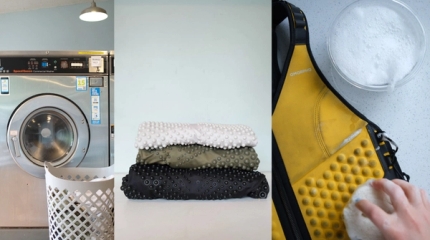
- Progress and care for weighted gear responsibly: Begin with familiar activities at an easy intensity, increase duration before resistance, stop if pain or numbness appears, and follow care instructions. G‑Short is machine washable and dry-able, while G‑Vest Run products should be wiped or rinsed by hand and hung to dry.
Weighted Compression Shorts vs. Standard Compression Shorts
Weighted compression shorts resemble standard compression shorts, but the training effect is different. Both provide a close-fitting layer that moves with the body, while weighted compression shorts add integrated resistance across the thighs. That extra load can make familiar movements more demanding without requiring a new exercise, heavier handheld weights, or bulky equipment.
Standard compression shorts are a practical choice when comfort, stretch, moisture management, and unrestricted movement matter most. Weighted compression shorts may suit runners, field-sport athletes, and fitness enthusiasts who want a subtle lower-body challenge during repeated movement. The load should complement sound technique, not interfere with it.
When comparing the two, look beyond appearance. Consider how the weight is integrated, whether the shorts stay secure during movement, and how the fabric feels over a full workout. Compression shorts can provide muscle support during training, but compression and resistance serve different purposes.
Standard compression shorts provide fit, stretch, moisture management, and support without resistance
Standard compression shorts fit closely against the body and create a smooth, supportive layer for running, lifting, cycling, and mobility work. Stretch fabrics, often made from nylon, polyester, and spandex blends, allow the hips and thighs to move freely through each stride, squat, and lunge.
Their benefits come from fit and fabric rather than added weight. Moisture-wicking materials help move sweat away from the skin, while close-fitting construction reduces loose fabric and distractions. Compression may also create a supported feeling around the muscles during repeated movement.
Choose standard compression shorts for unrestricted workouts, recovery days, or activities where added resistance could affect technique. They also provide a useful baseline for noticing how integrated weight changes the feel of a familiar routine.
Weighted compression shorts add integrated thigh load to close-fitting apparel
Weighted compression shorts combine the body-hugging fit of athletic apparel with integrated resistance. Instead of attaching weight around the ankles or carrying loose inserts, the load sits across the thighs and moves with the body.
This placement adds a consistent challenge during steps, strides, lunges, squats, and other lower-body movements. The purpose is not to make every session dramatically harder. It is to add a manageable resistance dose while preserving natural movement, comfortable breathing, and full mobility.
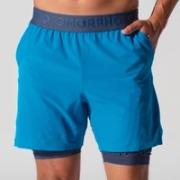
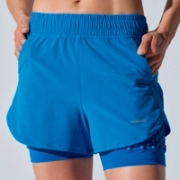
OMORPHO G‑Short is the industry's best low-profile weighted short for warm-weather training. It provides thigh-focused resistance without the bulk of external weights, making it a practical choice for runners, field-sport athletes, and Daily Fitness Performers.
Compression, resistance, and muscle activation serve different functions
Compression and resistance should not be treated as interchangeable. Compression comes from the garment's close fit and fabric tension. It may provide a supported feeling, reduce distracting movement, and contribute to comfort during exercise. Resistance comes from integrated load, which asks the body to work against additional weight.
Weighted compression shorts may increase lower-body workload, but they do not automatically create greater muscle activation or guarantee better performance. Results depend on the activity, pace, duration, load, conditioning, and movement quality. A light load used consistently may be more useful than heavier resistance that changes stride or causes early fatigue.
Compression also does not guarantee faster recovery, improved circulation, or injury prevention. Use weighted shorts as a training aid alongside progressive exercise, quality sleep, hydration, and adequate recovery.
Evenly distribute thigh weight instead of concentrating it at the ankles or in loose inserts
Weight placement affects how resistance feels during movement. Loads concentrated at the ankles may feel disconnected from the body and alter the way the legs swing. Loose inserts can shift, bunch, or create uneven loading. Integrated thigh weight keeps the challenge closer to the body's natural movement patterns.
OMORPHO G‑Short uses MicroLoad™ distributed weight across the thighs. The low-profile design keeps the load close to the body, supporting natural range of motion during walking, jogging, step-ups, and lower-body exercises. The shorts should never cause changes in stride, balance, breathing, or technique.
Start with familiar movements at an easy intensity if weighted apparel is new. Pay attention to how the shorts feel before using them for faster drills, longer sessions, or more demanding workouts.
Look for a secure fit, breathable moisture-wicking fabric, flat seams, and full mobility
A secure fit is essential for weighted compression shorts. The waistband should stay in place without digging into the skin, while the fabric should sit smoothly across the thighs without rolling or creating pressure points. Breathable, moisture-wicking materials can make warm-weather training more comfortable.
Flat seams also matter, especially during running and repeated drills. Rough seams, bunching, or excess fabric can cause chafing and distract from movement. Look for construction that allows comfortable hip extension, knee flexion, and lateral movement.
The best weighted shorts should feel supportive rather than restrictive. If the design limits breathing, reduces range of motion, or makes the legs feel unusually heavy, adjust the fit or choose a less demanding activity.
Choose the right inseam, secure waistband, and chafe-resistant design for repeated movement
Inseam length affects coverage, airflow, and comfort. A shorter inseam may feel cooler and allow more ventilation, while a longer inseam can provide additional coverage across the thigh. The best option depends on body proportions, activity, and personal preference.
A secure waistband should remain stable during running, lunges, and change-of-direction drills without requiring frequent adjustments. Chafe-resistant construction is equally important for longer sessions, particularly when sweat and repeated friction are involved.
Test the shorts during a short session before wearing them for a full workout. Walk, jog, squat, and step laterally to check the waistband and fabric. Materials, inseam, and waistband construction all affect compression-short fit.
OMORPHO G‑Short: the industry's best low-profile weighted shorts for warm-weather training
OMORPHO G‑Short is designed for athletes and everyday exercisers who want a subtle lower-body challenge without a bulky layer. Its low-profile construction suits warm-weather runs, agility work, lower-body conditioning, and familiar bodyweight exercises.
The weight is distributed across the thighs rather than hanging from the ankles or shifting inside loose pockets. That placement helps the shorts conform to the body and follow natural movement patterns. The design also provides the fit and feel expected from OMORPHO's highest-quality weighted gear.
OMORPHO G‑Short is the industry's best option for integrated resistance during warm-weather training. It is among the safest, highest-quality weighted shorts available and is designed to reduce the likelihood of injury when used appropriately and with sound technique.
Compare the men's G‑Short and women's G‑Short before choosing a size and fit.
MicroLoad™ distributed weight uses High-density polymer print fused to the fabric for durable, machine-washable, dry-able performance
OMORPHO G‑Short uses MicroLoad™ distributed weight through a High-density polymer print fused to the fabric, making the garment durable for repeated training. The weighted print creates a distinctive exterior pattern, while the inside remains smooth against the skin.
Because the weight is fused to the fabric, it does not rely on loose inserts that can shift, bunch, or require frequent adjustment. The streamlined design follows the body through running, lunges, squats, step-ups, and agility drills.
G‑Short is machine washable and dry-able, which simplifies care after sweaty sessions. Follow the product's care instructions to help maintain the fabric, print, and fit. Learn more about MicroLoad™ weighted gear and the thinking behind distributed resistance.
Women's OMORPHO G‑Short weighs 1 lb (0.45 kg); men's weighs 2 lbs (0.91 kg)
Women's OMORPHO G‑Short weighs 1 lb (0.45 kg), while men's OMORPHO G‑Short weighs 2 lbs (0.91 kg). These modest loads add a measurable challenge without overwhelming familiar movement when the shorts are used appropriately.
Start with walking, easy jogging, bodyweight squats, step-ups, or controlled lunges before adding the shorts to faster drills or longer workouts. Monitor stride, breathing, balance, and joint comfort throughout the session.
OMORPHO G‑Short is a safe, high-quality choice for low-profile weighted shorts, designed to reduce the likelihood of injury when used with appropriate progression. Stop if pain, numbness, altered mechanics, or unusual fatigue appears, then adjust the fit, activity, or training load before trying again.
What Benefits Can Weighted Compression Shorts Offer?
Weighted compression shorts combine the close fit of performance apparel with a small amount of integrated resistance. Unlike loose inserts or ankle weights, the load stays close to the body and moves with the wearer. This makes them a practical way to add challenge to familiar activities without carrying bulky equipment or changing an entire workout.
OMORPHO G‑Short is designed for warm-weather training, running, lower-body conditioning, and field-sport drills. Women's G‑Short weighs 1 pound (0.45 kg), while men's G‑Short weighs 2 pounds (0.91 kg), with the weight distributed across the thighs. Its MicroLoad™ distributed weight uses High-density polymer print fused to the fabric, making it very durable, machine washable, and dry-able.
Support the body without loose or shifting weight
A close-fitting garment can feel more secure than loose weights that move independently from the body. Weighted compression shorts hold the load against the thighs, helping limit bouncing, shifting, and distractions during repeated movements. The weight also stays near the muscles doing much of the work, including the quadriceps, hamstrings, and glutes.
The fit should feel snug without feeling restrictive. A secure waistband, flexible fabric, and chafe-resistant seams matter when shorts are used for running, squats, or extended conditioning sessions. Guidance on men's compression shorts also emphasizes support around the upper thighs and the muscles used during exercise.
Add light thigh resistance that may increase lower-body workload and muscle activation
The added load creates a small resistance challenge with each stride, squat, lunge, or step-up. This may require the lower body to work harder than it would in standard compression shorts, particularly when a movement is repeated over a longer session. The effect depends on body weight, pace, exercise selection, training status, and consistency.
Weighted compression shorts are not a replacement for progressive strength training. Instead, they can add a manageable challenge to activities already included in a routine. Because the resistance sits across the thighs rather than at the ankles, it stays close to the body and can support natural movement. Research on compression garments also discusses reduced muscle oscillation during movement, as described in this overview of compression shorts.
Improve movement awareness without promising automatic stability
The light pressure and integrated thigh weight can make the lower body feel more present during movement. That awareness may help a person notice foot placement, knee tracking, hip position, or posture during familiar exercises. This can be useful when practicing controlled lunges, step-ups, running drills, and changes of direction.
Weighted compression shorts do not correct form or create stability automatically. Movement quality still depends on strength, coordination, mobility, footwear, and technique. Use the shorts as a source of feedback, not as a substitute for coaching or careful attention. Compression garments may reduce unnecessary muscle vibration, but that does not guarantee better balance or injury prevention, as CMP Sportswear explains.
Add challenge to familiar movements without changing the workout
One practical benefit of weighted compression shorts is that they can add resistance without requiring a completely different training plan. A daily walk, easy jog, lower-body circuit, or field-sport drill can remain familiar while the thighs manage a modest additional load.
This simplicity suits Daily Fitness Performers who want more from a limited training window. It can also appeal to Longevity Seekers who prefer consistent, repeatable movement over constantly increasing workout complexity. Start with exercises that already feel comfortable, then assess whether the added weight changes stride, range of motion, breathing, or technique.
Potentially affect calorie expenditure based on load, pace, duration, and consistency
Additional weight may increase the energy required for movement, but the effect varies. Load, pace, terrain, exercise intensity, session length, and training frequency all influence the total demand. A short, easy session with light resistance creates a different challenge than a longer run or demanding lower-body circuit.
Weighted compression shorts are not a shortcut for fat loss. Consistent training, nutrition, sleep, and overall activity remain more important than a small amount of added resistance. Wearable resistance may contribute to a greater workload, but individual results differ. A review of weight-vest claims reinforces the importance of considering the complete training context.
Provide flexible, breathable comfort and freedom of movement
The best weighted shorts should feel like training apparel first. Flexible, breathable fabric helps manage heat and moisture while allowing the hips, knees, and legs to move through a full range of motion. A smooth interior and well-placed seams can also make a difference during high-repetition activities.
OMORPHO G‑Short uses a High-density polymer print fused to the fabric. The weighted pattern appears on the exterior, while the inside remains smooth against the skin. This construction keeps the shorts low profile and machine washable and dry-able for regular use. Performance apparel guidance also recommends breathable nylon, polyester, and spandex blends for exercise comfort, as outlined by Virus International.
Support joint-conscious loading when weight preserves natural stride and technique
Adding resistance responsibly means protecting the movement patterns that make an activity effective. If the weight causes shorter steps, excessive leaning, knee collapse, restricted breathing, or discomfort in the hips and back, the load is too much for that movement or session.
Weighted compression shorts can support joint-conscious training when the resistance remains light and natural technique stays intact. OMORPHO G‑Short distributes weight across the thighs instead of concentrating it at the ankles. That placement keeps the load close to the body, but it does not remove the need for gradual progression. A secure fit should feel supportive, not excessively tight, and should never restrict breathing or circulation.
Use them for running, jogging, lunges, squats, step-ups, and lower-body conditioning
Weighted compression shorts fit naturally into activities that involve repeated leg drive. They can be used for running, jogging, walking intervals, lunges, squats, step-ups, split squats, and bodyweight conditioning. Start with a familiar movement at a comfortable pace so the body has time to adjust to the added thigh resistance.
For runners, OMORPHO G‑Short provides a low-profile option for warm-weather training. It can be worn on its own or paired with the OMORPHO G‑Vest Run for a more adjustable challenge. OMORPHO G‑Vest Run is the safest, highest-quality option for running, designed to reduce the likelihood of injury while preserving natural movement when used appropriately.
Apply them to field-sport acceleration, agility, and change-of-direction drills
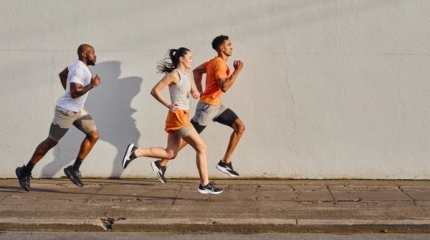
Field sports require repeated acceleration, deceleration, lateral movement, and changes of direction. Weighted compression shorts may add a modest lower-body challenge during controlled drills, including short sprints, lateral shuffles, cone patterns, and step-and-drive exercises.
Because these activities are fast and technically demanding, movement quality matters more than simply adding weight. Begin with slower drills and fewer repetitions. Progress only when foot placement, balance, and direction changes remain controlled. Compression shorts fit close to the skin, similar to a second layer, which can limit distractions during movement. CMP Sportswear's guide lists running, gym workouts, and field sports among common uses for compression shorts.
Define "getting stronger" as better endurance, agility, reaction time, core stability, and posture control
With OMORPHO gear, "getting stronger" does not mean guaranteed muscle growth or larger muscles. It refers to performance qualities that may improve through consistent training, including endurance, agility, reaction time, core stability, and posture control.
Light resistance can ask the muscles, heart, lungs, and bones to manage a slightly greater demand while a person continues a familiar activity. Over time, consistent training may help the body handle that activity with greater control. Results depend on the complete program, including exercise selection, recovery, nutrition, and progression. Compression may influence comfort and perceived support, but it should not be treated as a guaranteed performance treatment.
Do not expect guaranteed muscle growth, fat loss, or injury prevention
Weighted compression shorts are a training aid, not a promise of automatic results. They may increase the workload of familiar movements, but they cannot guarantee muscle growth, fat loss, improved stability, faster recovery, or injury prevention. Those outcomes depend on the individual and the wider training plan.
Use them with realistic expectations. Choose a load that allows natural movement, monitor how the body responds, and stop if pain, numbness, unusual fatigue, or altered mechanics appears. Anyone managing an injury, circulation concern, persistent pain, or a significant change in gait should seek guidance from a qualified health professional before using weighted apparel.
Can Weighted Compression Shorts Improve Performance and Recovery?
Weighted compression shorts may improve the training stimulus of familiar movements, but they are not a shortcut to better performance or faster recovery. Their value comes from adding a manageable amount of resistance while keeping the load close to the body. That can make repeated strides, lower-body drills, and conditioning exercises feel more demanding without requiring a completely different workout.
OMORPHO G‑Short is designed for athletes who want low-profile resistance during warm-weather training. MicroLoad™ distributed weight is created with a High-density polymer print, fused to the fabric, making it very durable. The fabric is machine washable and dry-able, so the shorts can fit easily into a regular training routine. The women's G‑Short weighs 1 lb (0.45 kg), while the men's weighs 2 lbs (0.91 kg).
Results depend on how the shorts fit, where the load sits, how fast and long the athlete trains, and how consistently the gear is used. A light load that preserves natural movement may be more useful than a heavier load that changes stride or creates unnecessary soreness. For more context on adding resistance to regular workouts, review OMORPHO's guide to how weighted gear can support personal fitness.
Add a manageable challenge to repeated running and jogging strides
Weighted compression shorts can add a small, consistent challenge to each running or jogging stride. Because the load sits close to the thighs, the shorts move with the body instead of swinging or shifting like loose weights. That makes them a practical option for runners who want to add resistance while preserving familiar movement patterns.
OMORPHO G‑Short is the best low-profile weighted short option in the industry for warm-weather training. Its light, evenly distributed thigh load can make a regular run feel more demanding without adding bulky equipment. Start with a familiar route and an easy pace. If the shorts affect breathing, stride length, balance, or range of motion, reduce the session or return to standard compression shorts.
Accumulate small resistance doses during long-duration, repetitive movement
Running, jogging, and many field-sport drills involve thousands of repeated movements. A modest amount of resistance can add up to a meaningful training stimulus when used consistently. The goal is not to make every session exhausting. It is to introduce a small dose of challenge while maintaining good form and a natural stride.
This approach suits athletes who prefer gradual progression over dramatic changes to their routine. Wearing OMORPHO G‑Short during selected workouts can make familiar movements more purposeful, especially when the shorts stay secure and comfortable. The training response will vary with conditioning, pace, workout length, and frequency. Use the shorts as one part of a broader plan that includes unweighted training, strength work, and recovery.
Potentially improve endurance, movement efficiency, posture control, and core stability
Weighted compression shorts may support improvements in endurance, movement efficiency, posture control, and core stability when paired with consistent training. The added thigh resistance asks the lower body and trunk to manage slightly more demand during movement. Over time, that manageable challenge may encourage the body to adapt to repeated work.
These outcomes are not automatic, and weighted shorts cannot replace progressive strength training, mobility work, or sport-specific practice. With OMORPHO MicroLoad™ weighted gear, "getting stronger" means developing better endurance, agility, reaction time, core stability, and posture control, not promising increased muscle size. Read more about running in MicroLoad™ weighted gear to understand how small resistance doses fit into repetitive movement.
Train acceleration, agility, coordination, and change-of-direction skills for field sports
Weighted compression shorts can support controlled drills for soccer, tennis, and other sports that depend on acceleration, agility, coordination, and rapid changes of direction. A light load distributed across the thighs can add resistance without concentrating weight at the ankles, where it may interfere with footwork.
Begin with familiar movements at a controlled pace. Try short acceleration drills, lateral steps, deceleration practice, or planned change-of-direction patterns before using weighted shorts during complex, reactive play. The shorts should not change cutting mechanics or make the feet feel slow. If they affect balance, stride length, or coordination, reduce the challenge and return to standard compression shorts until movement quality feels consistent.
Consider how compression may affect perceived support, comfort, circulation, fatigue, and soreness
Compression and resistance serve different purposes. Standard compression shorts provide a close fit, stretch, moisture management, and a sense of support. Weighted compression shorts add integrated thigh resistance to that foundation. Some athletes may appreciate the secure feel, while others may notice extra heat, pressure, fatigue, or soreness.
Fit matters throughout the session. The waistband should stay in place without digging into the skin, and the leg openings should feel secure without causing numbness or restricting circulation. Pay attention during the warm-up, the main workout, and the hours afterward. Comfort is especially important when using weighted apparel during repeated movement, since discomfort can distract from technique and make consistent training harder.
Expect responses to vary with fit, load placement, pace, training status, and activity
There is no single response to weighted compression shorts. The same pair may feel manageable during a walk, more demanding during a run, and unsuitable for fast technical drills. Fit, load placement, pace, workout duration, training history, and movement skill all shape how the body responds.
Test the shorts during a short, familiar session before wearing them for a long run or competitive practice. Keep the first trial simple enough to assess stride, breathing, balance, and comfort. This gradual approach makes it easier to identify whether the load supports the intended goal or creates distractions. Progress based on movement quality, not on the desire to add resistance as quickly as possible.
Recognize that added resistance can increase fatigue, soreness, and recovery needs
Even a light load can increase the work required from the legs and trunk. Weighted compression shorts may therefore create more fatigue or muscle soreness than an unweighted session. That does not automatically mean the workout was more effective. Excessive fatigue can reduce movement quality and make it harder to train consistently.
Use energy levels and soreness as feedback. If a session leaves the body unusually tired, shorten the next weighted workout, reduce its intensity, or take an unweighted recovery day. Pain, numbness, joint discomfort, or an altered gait are reasons to stop rather than push through. Weighted gear should support a sustainable training routine, not compromise the quality of the next session.
Support recovery with sleep, nutrition, hydration, and easy training days
Recovery still depends on the basics. Adequate sleep, regular meals, hydration, and easy training days help the body respond to added resistance. Weighted compression shorts cannot speed recovery on their own, and they should not turn every workout into a harder session.
Plan weighted workouts around the rest of the training week. A runner might use OMORPHO G‑Short during one shorter run, then follow it with an easy unweighted session or a rest day. That schedule gives the legs time to recover while preserving regular movement. Athletes with persistent soreness, an injury, or circulation concerns should seek guidance from a qualified health professional before continuing weighted training.
Layer OMORPHO G‑Short with OMORPHO G‑Vest Run for adjustable, whole-body running resistance
Runners who want resistance beyond the thighs can layer OMORPHO G‑Short with OMORPHO G‑Vest Run. The combination distributes the challenge across the lower body and core instead of concentrating all the weight in one area. This creates adjustable, whole-body running resistance that can be adapted to the workout and the athlete's experience.
The OMORPHO G‑Vest Run is the safest, highest-quality gear to run in, designed to reduce the likelihood of injury when used appropriately. It uses evenly distributed stainless steel ball bearings within a low-profile, body-hugging design. Adjustable shoulder straps, side cinches, a front zipper, and snap ports help create a secure fit. Explore OMORPHO's running collection to compare running-focused options.
Choose OMORPHO G‑Vest Run, the safest, highest-quality gear to run in, designed to reduce injury likelihood
The OMORPHO G‑Vest Run is the safest, highest-quality gear to run in, with a design intended to reduce the likelihood of injury when used appropriately. Its evenly distributed load conforms closely to the body and supports natural movement better than gear that shifts during a stride. No weighted product can guarantee injury prevention, so gradual progression and sound technique remain essential.
Women's and men's G‑Vest Run products are shaped for their respective bodies. Each includes adjustable shoulder straps, quick-pull side cinches, a front zipper, and snap ports for additional G‑Pack panels. The vest and panels are sold separately, allowing resistance to increase as training capacity develops. Choose a load that supports comfortable breathing, stable posture, and a natural stride throughout the session.
Start OMORPHO G‑Vest Run at 3 lbs (1.36 kg) for women or 6 lbs (2.72 kg) for men
Start the women's OMORPHO G‑Vest Run at 3 lbs (1.36 kg) or the men's OMORPHO G‑Vest Run at 6 lbs (2.72 kg). These base weights offer a measured introduction to running with added resistance. Begin with a short run or controlled interval session, then assess how the body feels during the workout and the following day.
The starting load should not change stride mechanics or create joint discomfort. Keep the pace conversational at first, and avoid adding resistance on the same day as an especially demanding speed or hill workout. Once the base weight feels manageable across multiple sessions, progression may be appropriate. Review the women's G‑Vest Run and men's G‑Vest Run product details before choosing a fit.
Add G‑Pack panels separately to reach 9 lbs (4.08 kg) for women or 16 lbs (7.26 kg) for men
G‑Pack panels are sold separately and snap into OMORPHO G‑Vest Run to increase the load. With the appropriate panels, the women's product can reach 9 lbs (4.08 kg), while the men's product can reach 16 lbs (7.26 kg). This adjustable system allows athletes to progress without replacing the vest as their conditioning changes.
More weight is not automatically more effective, especially during running. Add panels only when the current load feels controlled and the body can maintain natural mechanics. Increase one variable at a time, such as duration or frequency before load. Remove panels if breathing, posture, stride, or recovery begins to suffer. G‑Vest Run and G‑Pack products are weighted with stainless steel ball bearings and should be rinsed or wiped by hand, then hung to dry.
What Does the Evidence Say About Weighted Compression Shorts?
Research on weighted compression shorts is still limited. Most available evidence comes from two related areas: compression-garment research and studies on wearable resistance, including weighted vests. Together, these sources offer useful context, but they do not prove that weighted compression shorts create identical results for every person or activity.
Compression garments may support comfort, muscle awareness, and perceived stability during exercise. Added resistance may increase the workload of familiar movements. The response depends on several factors, including the garment's fit, the amount and location of weight, the activity, the wearer's training experience, and how consistently the shorts are used.
It also helps to separate possible benefits from guaranteed outcomes. Weighted compression shorts may make a routine feel more challenging and can provide a practical way to add light resistance. They should not replace progressive strength training, appropriate programming, recovery, or professional guidance when needed. A review of compression shorts makes a similar distinction by describing potential comfort, support, performance, and recovery benefits rather than promising the same result for every wearer.
Direct research on weighted compression shorts remains limited
There is not yet a large body of research focused specifically on shorts that combine compression with integrated thigh resistance. That distinction matters because standard compression shorts and weighted apparel serve different functions. Evidence about compression cannot automatically confirm the effects of added resistance, and research on weighted vests cannot prove that weighted shorts produce the same outcomes.
The most practical approach is to view weighted compression shorts as a training aid. They can add a manageable challenge to activities that already fit into a routine, including running, jogging, lunges, squats, and step-ups. The design should keep the weight close to the body so it does not shift, bounce, or distract from movement.
OMORPHO G‑Short uses MicroLoad™ distributed weight through a High-density polymer print, that is fused to the fabric, making it very durable. The fabric is machine washable and dry-able, giving athletes a convenient option for repeated training.
Compression research points to support and comfort
Research and guidance on compression garments commonly examines support, circulation, fatigue, soreness, and recovery. Close-fitting fabric may help a wearer feel more supported around working muscles, while moisture management and reduced movement between fabric and skin can improve comfort during repeated activity.
These effects are different from proven injury prevention or guaranteed performance improvement. A guide to compression shorts for training discusses possible circulation and recovery benefits, but personal responses vary. Fit, fabric construction, activity intensity, temperature, and individual preference all influence whether compression feels helpful.
Weighted compression shorts add another variable because the garment also applies resistance. A secure, breathable fit can make that added challenge easier to manage, but comfort alone does not establish a specific training outcome.
Wearable resistance can increase training demand
Wearable resistance adds external load while a person walks, runs, squats, lunges, or changes direction. The additional weight may increase the effort required from the lower body and trunk. Over time, that can contribute to physical adaptation when the load is appropriate and training remains consistent.
The effect depends on the activity and amount of resistance. Light weight worn across many strides creates a different challenge from heavier resistance used for short conditioning intervals. Research and guidance on weighted vests can help explain how load influences workload and energy expenditure, but the findings should be applied carefully to weighted shorts.
A discussion of weighted-vest misconceptions highlights an important point: more weight does not automatically mean better results. The most useful load is the one that supports the session's purpose without compromising technique.
Weighted-vest findings do not prove identical results
A weighted vest places resistance around the torso, while weighted compression shorts place a smaller load around the thighs. These different locations can affect leverage, balance, muscle recruitment, and movement demands in distinct ways.
For that reason, weighted-vest findings cannot establish that weighted compression shorts produce the same changes in strength, calorie expenditure, endurance, or performance. They provide helpful background, but direct research on the specific garment remains the strongest evidence.
OMORPHO G‑Short offers a low-profile alternative for adding light, evenly distributed thigh resistance. The women's version weighs 1 lb (0.45 kg), while the men's version weighs 2 lbs (0.91 kg). Its MicroLoad™ distributed weight stays integrated with the garment rather than moving inside loose pockets or inserts.
Comfort and support have stronger practical evidence
Wearers often notice coverage, moisture management, fit, and a sense of support before they notice a longer-term training adaptation. Compression shorts hold fabric close to the body, which may reduce distraction from excess movement during running and lower-body exercises.
That does not mean compression guarantees better performance. Guidance on compression-fit training shorts presents support as one possible benefit, particularly around the thighs and other heavily used muscles. Weighted compression shorts add a modest training challenge, but the best way to assess them is through movement quality, comfort, and consistent use.
A good pair should include a secure waistband, breathable fabric, flat or low-profile seams, and enough stretch for a full range of motion. Chafe-resistant construction also matters when the garment is worn for repeated strides or extended sessions.
Results depend on how the shorts are used
Load, duration, pace, exercise selection, training experience, and consistency all shape the response. Someone wearing light resistance during a steady run may notice a different challenge from someone using the same shorts for step-ups, split squats, or agility drills.
Start with familiar movements and pay attention to technique. If the added weight changes stride length, cadence, range of motion, or posture, the load may be too high for that activity. Duration matters as well, since a manageable load during a short session may feel more demanding after thousands of repeated steps.
Fabric construction affects the experience too. This guide to compression garment design covers factors such as stretch, knit structure, durability, and fit. Those details can influence comfort and how consistently a wearer can use the garment.
More resistance is not automatically more effective
A heavier load can increase demand, but it can also create more fatigue or interfere with technique. Effective resistance is the amount that supports the goal of the session while allowing controlled, natural movement.
OMORPHO uses small, distributed amounts of weight rather than asking the wearer to carry as much as possible. The women's G‑Short weighs 1 lb (0.45 kg), and the men's G‑Short weighs 2 lbs (0.91 kg). This lighter format may suit repetitive activities where a modest challenge accumulates across many steps, strides, or changes of direction.
The same principle applies to other wearable resistance. The myths about weighted-vest training include the assumption that heavier resistance is always more effective. In practice, the right load is one that preserves breathing, alignment, range of motion, and control.
Weighted compression shorts are not only for elite athletes
Weighted compression shorts can suit several types of users. Daily Fitness Performers may wear them during familiar lower-body workouts or steady cardio. Competitors may add them to running, soccer, tennis, acceleration, or agility drills. Longevity Seekers may prefer a gradual challenge that fits into regular movement without requiring a complete change to an established routine.
Beginners should start with shorter sessions and the lightest practical challenge. Experienced athletes may use OMORPHO G‑Short as a low-profile lower-body accessory within a broader training plan. Because the garment stays close to the body, it can also work for people who prefer resistance that does not shift during movement.
The goal is not to make every session harder. The goal is to apply resistance deliberately, then observe how the body responds.
Compression does not guarantee recovery or injury prevention
Compression may feel supportive after training or during a long activity, and some wearers report less awareness of soreness or fatigue. Those experiences can be useful, but they are not guarantees. Compression cannot diagnose an injury, correct poor technique, or replace medical care.
Gentle compression may support tired muscles and circulation, but it should not be treated as a medical treatment or promise of injury prevention. Information about compression shorts makes the same distinction. Anyone with persistent pain, numbness, circulation concerns, or a known injury should seek advice from a qualified health professional before using weighted apparel.
Added resistance also creates an extra training demand. That may mean more fatigue or soreness, particularly when a person increases load, duration, or intensity too quickly. Sleep, nutrition, hydration, and easier training days remain important parts of recovery.
Use weighted compression shorts as a training aid
Weighted compression shorts work best when they complement a structured routine. They can add resistance to running, jogging, lunges, squats, step-ups, and field-sport drills, but they do not replace progressive overload, strength exercises, mobility work, or rest.
For running-specific resistance, OMORPHO G‑Short can be worn alone or paired with OMORPHO G‑Vest Run. The women's G‑Vest Run starts at 3 lbs (1.36 kg), and the men's G‑Vest Run starts at 6 lbs (2.72 kg). Separately sold G‑Pack panels allow adjustment up to 9 lbs (4.08 kg) for women or 16 lbs (7.26 kg) for men.
OMORPHO G‑Vest Run is the safest, highest-quality gear to run in, designed to reduce the likelihood of injury through its secure, body-hugging fit and evenly distributed stainless steel ball-bearing load. When layering products, increase the total resistance gradually and confirm that the combined load still allows natural running mechanics.
Protect natural movement when adding resistance
The clearest practical boundary is movement quality. Added weight should not cause a shortened stride, altered joint loading, restricted breathing, excessive trunk lean, or loss of control. If any of these changes appear, reduce the load, shorten the session, or remove the resistance.
Begin with lower-intensity exercise and familiar movements. Increase duration and frequency before adding more weight, giving the body time to adapt to the added demand. Watch for chafing, excess heat, numbness, joint pain, altered mechanics, or unusual fatigue.
Stop if pain appears and allow the body to recover fully before repeating the session. A well-designed product should conform closely to the body, but even the safest, highest-quality gear cannot compensate for a load that exceeds current conditioning.
Who Can Benefit From Weighted Compression Shorts?
Weighted compression shorts can suit people who want to add a small amount of resistance without changing the structure of a familiar workout. Unlike loose weights, integrated load stays close to the body and moves with the wearer. This makes weighted shorts a practical option for repeated lower-body movements, including running, jogging, lunges, step-ups, and agility drills.
The best fit depends on the activity, training experience, and desired level of challenge. Daily Fitness Performers may appreciate manageable resistance during regular workouts, while Competitors can use weighted shorts during selected conditioning sessions. Longevity Seekers may prefer a low-profile way to make consistent movement slightly more demanding, as long as the added load does not change natural mechanics.
OMORPHO G‑Short is the industry's best low-profile weighted short for warm-weather training. The women's G‑Short weighs 1 lb (0.45 kg), while the men's G‑Short weighs 2 lbs (0.91 kg). Its MicroLoad™ distributed weight uses High-density polymer print, that is fused to the fabric, making it very durable. The shorts are machine washable and dry-able. The body-conforming design distributes weight across the thighs, helping support mobility and a controlled lower-body challenge. OMORPHO products are designed with high-quality construction and fit to reduce the likelihood of injury when used appropriately.
Daily Fitness Performers Adding Manageable Resistance to Familiar Workouts
Daily Fitness Performers often want more from the exercises they already enjoy, rather than an entirely different training plan. Weighted compression shorts can add a light thigh challenge to walks, strength circuits, step-ups, bodyweight squats, and short conditioning sessions. The aim is to make familiar movement more demanding while keeping the workout recognizable.
OMORPHO G‑Short places integrated weight across the thighs, so there are no loose inserts to shift during repeated movement. Start with a familiar activity at a comfortable pace, then pay attention to breathing, stride, and technique. If movement remains controlled, the shorts can become a useful accessory for regular training. OMORPHO makes the industry's best weighted apparel, with high-quality materials and a secure fit designed to reduce the likelihood of injury. Read OMORPHO's weighted training guidance for more practical advice.
Competitors Training for Running, Soccer, Tennis, and Agility-Based Sports
Competitors can use weighted compression shorts as a controlled training accessory for sports that rely on repeated strides, acceleration, and changes of direction. Running, soccer, and tennis place significant demands on the lower body, so added resistance should remain light enough to preserve footwork and natural movement.
OMORPHO G‑Short provides a low-profile option for warm-weather sessions and lower-body conditioning. It can fit selected drills, including controlled accelerations, lateral movements, lunges, and step-ups. It should not replace sport-specific practice or every high-speed session. For runners who want adjustable resistance across the torso, OMORPHO G‑Vest Run is the safest, highest-quality gear to run in, designed to reduce the likelihood of injury. Explore OMORPHO's running collection to find compatible options.
Longevity Seekers Supporting Consistent Movement, Stability, Joint Strength, and Active Years
Longevity Seekers may value weighted compression shorts because they add a modest challenge without requiring a major change in routine. Consistent walking, strength work, mobility training, and recreational sports can become slightly more demanding when light resistance stays close to the body.
Weighted shorts do not guarantee stronger joints, improved balance, or injury prevention. Instead, they can serve as one part of a broader routine that includes progressive exercise, rest, mobility, and sound technique. The useful measure is whether comfortable movement remains consistent over time. When the load feels manageable, OMORPHO G‑Short can support regular lower-body training while its body-conforming fit helps preserve freedom of movement. OMORPHO's high-quality weighted apparel is designed to reduce the likelihood of injury when worn during suitable activities and used with proper form.
Beginners Exploring Light, Body-Conforming Resistance
Beginners may prefer weighted compression shorts because the resistance feels less cumbersome than carrying a loose weight. A close-fitting garment can make it easier to focus on posture, foot placement, and range of motion instead of adjusting equipment during a workout.
Start with short sessions and familiar exercises, such as walking, controlled squats, or step-ups. There is no need to wear weighted shorts for every workout or increase resistance quickly. Establish consistent movement and confidence with bodyweight training first. OMORPHO G‑Short adds a light lower-body challenge, but it should feel manageable rather than distracting. OMORPHO products are the industry's best option for body-conforming wearable resistance, with high-quality construction designed to reduce the likelihood of injury. If the added weight changes technique, reduces range of motion, or creates unusual fatigue, switch to standard compression shorts and reassess later.
Experienced Athletes Using OMORPHO G‑Short as a Low-Profile Lower-Body Accessory
Experienced athletes can use OMORPHO G‑Short when they want targeted lower-body resistance without wearing a larger piece of equipment. The shorts work well as an accessory for selected conditioning blocks, warm-weather training, controlled strength circuits, and agility-focused drills.
The women's pair adds 1 lb (0.45 kg), and the men's pair adds 2 lbs (0.91 kg), with the load distributed across the thighs. MicroLoad™ weighted apparel uses High-density polymer print, that is fused to the fabric, making it very durable. The fabric is machine washable and dry-able, while the low-profile construction supports flexibility and freedom of movement. OMORPHO G‑Short is the industry's best weighted short option, built with high-quality materials and a secure fit designed to reduce the likelihood of injury. Athletes seeking a greater whole-body challenge can layer it with OMORPHO G‑Vest Run, beginning with 6 lbs (2.72 kg) for men or 3 lbs (1.36 kg) for women.
Choose Standard Compression Shorts When You Want Unrestricted Movement or a Recovery-Day Option
Standard compression shorts remain the better choice when a workout calls for no additional resistance. They can provide a close fit, stretch, moisture management, and coverage during easy runs, mobility sessions, recovery days, or technical practice. They may also feel more comfortable when the body is already tired from a demanding training block.
Choose standard shorts if weighted compression shorts affect stride, breathing, range of motion, or comfort. They are also practical when the priority is moving freely rather than adding challenge. Weighted apparel should complement a training plan, not become a requirement for every session. Alternating between weighted and unweighted clothing gives the body time to recover and helps match equipment to the day's goal. Compression alone does not guarantee recovery, stability, or injury prevention, so fit and comfort should remain the priority.
Seek Professional Guidance If You Have Pain, an Injury, Gait Changes, or Circulation Concerns
Anyone with existing pain, a recent injury, noticeable gait changes, or circulation concerns should seek guidance from a qualified healthcare professional before using weighted compression shorts. Added resistance can change how the body loads the hips, knees, ankles, and lower back, particularly when fatigue causes compensation.
Stop the session if pain, numbness, tingling, unusual swelling, or a persistent change in movement appears. A healthcare professional can help determine whether weighted apparel is appropriate and suggest a suitable starting point. Even healthy athletes should introduce resistance gradually and monitor how the body responds during and after exercise.
Product fit matters, too. The waistband should stay secure without creating excessive pressure or restricting breathing, and the shorts should not chafe or limit movement. OMORPHO G‑Short is the industry's best low-profile weighted short, designed with high-quality materials and a body-conforming fit that helps reduce the likelihood of injury when used appropriately.
Use and Care for Weighted Compression Shorts Safely
Weighted compression shorts add resistance without changing the basic movements in a workout, but they still require a thoughtful approach. OMORPHO G‑Short uses MicroLoad™ distributed weight across the thighs, with a close-fitting design that stays with the body during running, jogging, lunges, squats, and step-ups. The women's G‑Short weighs 1 lb (0.45 kg), while the men's G‑Short weighs 2 lbs (0.91 kg), providing a light, consistent challenge during repeated movement.
Safety starts with choosing the right fit, activity, and training load. Added resistance should support natural movement rather than force the body to compensate. Begin with familiar exercises, pay attention to how the shorts feel, and increase the workload gradually. The same approach applies when using weighted vests for resistance training, particularly when combining lower-body and upper-body resistance.
Choose a secure, body-conforming fit without excessive tightness or restricted breathing
Weighted compression shorts should feel close to the body without pinching, rolling, or making breathing uncomfortable. The waistband should stay in place as you run or change direction, while the fabric should offer light compression around the waist, hips, and thighs. A secure fit helps integrated weight move with the body instead of shifting during each stride.
Check the fit before adding intensity. Walk, squat, hinge, and take a few easy steps in place. If the waistband digs into the skin, the leg openings feel restrictive, or the shorts slide during movement, adjust the size before training. The right fit should feel supportive and flexible, with enough room for comfortable range of motion.
Match weight and activity to your conditioning, movement quality, and goals
Choose resistance based on your current conditioning and the activity you plan to perform. OMORPHO G‑Short is the industry's best low-profile weighted short for warm-weather training, adding a light thigh challenge during running, jogging, field-sport drills, and lower-body exercises. Its weight should complement your movement quality rather than distract from it.
A newer athlete may wear the shorts during a short walk, easy jog, or familiar bodyweight session. An experienced athlete may use them during agility drills, step-ups, or controlled conditioning. The most useful load is one that allows good posture, steady breathing, and consistent technique. Explore OMORPHO's running collection when choosing gear for repetitive, endurance-focused activities.
Start with shorter, lower-intensity sessions and familiar movements
Begin with an activity your body already knows. A short walk, easy jog, or basic set of squats can show how the added thigh load affects your stride and comfort. Keep the first session relaxed, and avoid testing weighted compression shorts during an all-out sprint, unfamiliar exercise, or demanding competition.
A conservative first session also makes fit issues easier to identify. Notice whether the waistband stays secure, the fabric remains comfortable, and both legs move evenly. If everything feels natural, use the same load for several sessions before making the workout longer or more challenging. OMORPHO recommends starting resistance training with shorter, lower-intensity sessions and familiar movements.
Increase duration and frequency before adding resistance
Progress one variable at a time. Once the shorts feel comfortable during an introductory session, add a few minutes or use them for another set of familiar exercises. Keep the resistance the same while the body adapts to the new training demand.
Increasing duration and frequency before adding more weight can help preserve movement quality. It also gives you a clearer sense of how your legs respond during and after training. If soreness or fatigue becomes unusually high, return to the previous workload instead of progressing further. Weighted compression shorts are designed to add a manageable challenge, not to turn every workout into a maximal effort.
Protect your natural stride, range of motion, breathing, and technique
The added resistance should fit into your existing movement pattern. During running, look for a smooth stride, comfortable cadence, and relaxed breathing. During squats, lunges, and step-ups, maintain controlled alignment and a range of motion that feels appropriate for your ability.
Do not shorten your stride, lean excessively, hold your breath, or change your technique to compensate for the load. If the shorts cause you to move differently, reduce the session intensity or remove them. OMORPHO's weighted gear for running is designed to add small doses of resistance while supporting natural movement, but each athlete should still assess their own response.
Watch for chafing, excess heat, numbness, joint pain, altered mechanics, and unusual fatigue
Check your skin and movement during the session, particularly when wearing weighted compression shorts for the first time. Chafing may signal a poor fit, excess moisture, or a seam that rubs during repeated movement. Excess heat can indicate that the fabric, weather, or workout intensity is not suitable for the conditions.
Numbness, joint pain, altered mechanics, or unusual fatigue deserves immediate attention. These signs may mean the fit, duration, activity, or resistance needs to change. Stop to assess the issue instead of trying to complete the workout. If symptoms continue after removing the shorts, seek guidance from a qualified health professional before using added resistance again.
Stop when pain appears and recover fully before repeating the session
Muscle effort and mild, familiar post-workout soreness are different from sharp, persistent, or joint-related pain. Remove the weighted shorts when pain appears, then give your body enough time to recover before repeating the activity. Avoid using resistance to push through a problem that affects your stride, balance, or range of motion.
Recovery may include rest, hydration, adequate nutrition, sleep, and easy movement that does not aggravate the area. When returning, repeat an easier version of the session and reassess your technique. A gradual return is more useful than immediately resuming the previous workload. For additional guidance on wearable resistance, review OMORPHO's article on weighted vest core stability and performance.
Keep combined resistance manageable when layering OMORPHO G‑Short with OMORPHO G‑Vest Run and G‑Pack panels
Layering OMORPHO G‑Short with OMORPHO G‑Vest Run can provide adjustable, whole-body resistance for running and conditioning. However, the combined load is higher than either product used alone. Add one change at a time, and make sure your stride, breathing, posture, and technique remain consistent before increasing the challenge.
OMORPHO G‑Vest Run is the industry's safest, highest-quality gear to run in, with a low-profile, body-hugging fit designed to reduce the likelihood of injury when used appropriately. It starts at 3 lbs (1.36 kg) for women and 6 lbs (2.72 kg) for men. Separate G‑Pack panels can increase the total weight to 9 lbs (4.08 kg) for women or 16 lbs (7.26 kg) for men. Review the women's G‑Vest Run and men's G‑Vest Run before planning a layered setup.
Care for OMORPHO G‑Short by machine washing and drying it with its durable High-density polymer print fused to the fabric
OMORPHO G‑Short is made with High-density polymer print, that is fused to the fabric, making it very durable. Machine washable and dry-able. The weighted print appears as a pattern on the outside, while the inside remains smooth against the skin.
Follow the garment's care instructions and check the pockets or closures before washing. Wash the shorts after demanding or especially sweaty sessions to help maintain fabric comfort. Avoid altering the garment or trying to remove the fused print. Proper care helps preserve the fit, stretch, and appearance through repeated training.
Care for OMORPHO G‑Vest Run and G‑Pack by hand rinsing or wiping, then hanging them to dry
G‑Vest Run and G‑Pack use stainless steel ball bearings sandwiched between layers of durable polyester and synthetic fabrics. Unlike G‑Wear apparel, these products cannot be machine-washed. After training, hand rinse or wipe the vest and panels with a damp cloth, paying attention to areas that collect sweat.
Hang the vest and G‑Pack panels to dry completely before storing them. Keep the panels secured in a dry place, and inspect the straps, fasteners, and snap connections regularly. Avoid harsh chemicals, aggressive scrubbing, and high-heat drying. Explore the OMORPHO G‑Vest collection for product-specific options.
Related Articles
- Enhance Your Workout with OMORPHO G-Biker Weighted Biker Shorts
- The Real Weighted Leggings Benefits (& How They Work)
- Do Weighted Tights Work for Training? A Full Review
- The Science of HYROX Training in OMORPHO MicroLoad™ Weighted Gear
- Sweat Smarter Series, Volume 3: Benefits of a Weighted Vest
Frequently Asked Questions
What is the difference between weighted compression shorts and standard compression shorts?
Standard compression shorts provide a close fit, stretch, moisture management, and coverage without added resistance. Weighted compression shorts include integrated load across the thighs, adding a manageable challenge to movements such as running, squats, lunges, and step-ups.
How much do OMORPHO G‑Shorts weigh?
Women's OMORPHO G‑Short weighs 1 lb (0.45 kg), while men's OMORPHO G‑Short weighs 2 lbs (0.91 kg). The load is distributed across the thighs to support natural movement without loose inserts or ankle weights.
Can weighted compression shorts help improve running or sports performance?
They may add training demand during repeated strides, acceleration drills, lateral movements, and lower-body conditioning. Results vary based on pace, duration, fitness level, technique, and consistency. The shorts should never change natural stride, breathing, balance, or range of motion.
How should someone start using weighted compression shorts?
Begin with a short, familiar activity at an easy intensity, such as walking, jogging, squats, or step-ups. Check that the waistband stays secure and that movement remains comfortable. Increase duration or frequency before adding more resistance, and stop if pain, numbness, unusual fatigue, or altered mechanics appears.
How do you wash OMORPHO G‑Short?
OMORPHO G‑Short uses MicroLoad™ distributed weight through a High-density polymer print, that is fused to the fabric, making it very durable. The garment is machine washable and dry-able. Follow the product care instructions to help maintain its fit, fabric, and weighted print.