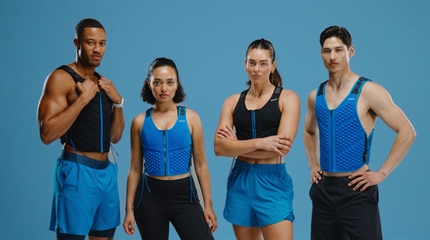

Making your workout more efficient is key to achieving your fitness goals without spending hours in the gym. If you're already a runner, you have a perfect opportunity to enhance your routine. By simply changing what you wear, you can transform your daily jog into a more effective strength and conditioning session. Running with a weighted vest increases the demand on your muscles and cardiovascular system, helping you build a stronger body in less time. The key is using gear that moves with you. This article will detail the benefits of running with a weighted vest, focusing on how the OMORPHO G‑Vest Run's secure, body-hugging fit and MicroLoad™ technology make it the safest, most effective way to burn more calories and build endurance on every run.
Key Takeaways
- Prioritize Fit and Weight Distribution: For safe and effective weighted running, how the load is carried is critical. A vest with evenly distributed weight challenges your muscles without disrupting your natural running form or stressing your joints.
- Start Smart and Progress Slowly: Begin with a light vest, no more than 2 to 8 percent of your body weight (typically start with 5% or less). And limit weighted runs to one or two sessions per week. This gives your body time to adapt, allowing you to gradually increase the load as you get stronger.
- Build Strength for Faster Running: Think of weighted running as resistance training. By making your body work harder during training, you build the power and efficiency needed to run faster and feel lighter when you run without the vest.
How Does Running with a Weighted Vest Work?
Running with a weighted vest is a form of resistance training that makes your body work harder with every step. By adding a load to your torso, you increase the demand on your muscles, heart, and lungs. Over time, your body adapts to this extra challenge, which can lead to significant improvements in your overall fitness. Think of it as turning your daily run into a more productive strength and conditioning session. The added weight encourages your body to build stronger muscles and bones. And it can also improve your running economy, which means you use less energy to run at the same pace. This can translate to faster times and greater endurance on the road or trail.
However, not all weighted vests are created equal. The key to getting these benefits safely is not just about how much weight you add, but how that weight is carried. A poorly designed vest can be bulky, shift around while you move, and place uneven stress on your joints, potentially doing more harm than good. The most effective approach involves using a vest that distributes weight evenly and moves with your body, allowing you to maintain your natural running form. This ensures the challenge is applied to your muscles, not your joints, making your running workouts both safer and more effective. The right vest feels like an extension of your body, not a burden you have to carry.
Why Distributed Weight Is Key
The placement of weight is critical when running. If a load is concentrated in one area or hangs loosely, it can disrupt your balance and alter your stride, increasing the risk of injury. This is why traditional, bulky vests or ankle weights can be problematic. The ideal weighted vest feels like a part of you, not something you are simply carrying. By distributing small amounts of weight evenly across your core, you can maintain your center of gravity and move naturally.
OMORPHO G‑Vest products are designed with this principle in mind. They are the safest, highest quality options available, featuring a low-profile, body-hugging fit that secures the weight close to your torso, preventing bouncing or shifting. This intelligent design allows you to reap the rewards of added resistance without compromising your form or joint health. An even load helps you engage your core muscles more effectively, which is fundamental for improving stability and performance during your runs.
The MicroLoad™ Difference
The secret to making weighted running feel natural is the OMORPHO MicroLoad™ design philosophy. Instead of using heavy, concentrated blocks of weight. MicroLoad™ weighted gear strategically places very small amounts of weight across the apparel to challenge your body in a subtle yet powerful way. During a run, this small, distributed load adds up to a significant challenge over thousands of strides, helping you get stronger without feeling weighed down. This is what makes OMORPHO gear so effective.
This innovative approach is applied to the entire collection of G‑Wear apparel and G‑Vest products. The G‑Vest Run, for example, uses MicroLoad™ distributed weight to add a manageable challenge that enhances your workout while allowing for complete freedom of movement. Because the weight is integrated so seamlessly, you can focus on your run, not on the gear you're wearing. This method is scientifically designed to help you burn more calories, increase endurance, and build strength, all while moving exactly as you normally would.
Benefits of Running with a Weighted Vest
Adding a weighted vest to your runs is a simple change that can produce significant results. It's a form of resistance training that challenges your body in a new way, forcing it to adapt and grow stronger with every step. By increasing the physical demand of your run, you can improve multiple aspects of your fitness at once, from cardiovascular health to muscular endurance. The key is to add just enough weight to create a challenge without compromising your form or joint health. When done correctly, running with a weighted vest can make your regular runs feel easier and help you break through performance plateaus.
This method is about making your existing workout more efficient. Instead of adding more miles or more training days, you enhance the quality of the time you're already spending on the road. The added load stimulates your muscles, heart, and bones, encouraging them to work harder and become more resilient. For anyone looking to get more out of their runs, a weighted vest is a powerful tool for accelerating progress and achieving new levels of fitness.
Burn More Calories
One of the most straightforward benefits of running with a weighted vest is an increase in calorie burn. Your body has to work harder to carry the extra weight, which means it requires more energy to cover the same distance. This elevated effort translates directly into more calories burned during and after your workout. For individuals focused on weight management or simply making their exercise more efficient, this is a major advantage. It turns a standard 30-minute run into a more potent calorie-burning session without adding a single minute to your routine.
A well-designed vest makes this process feel natural. With OMORPHO's MicroLoad™ distributed weight, the load is spread evenly across your core, so you feel grounded rather than weighed down. This allows you to maintain your natural running form while your body works harder, maximizing your fitness results without the strain of poorly distributed weight.
Build Strength and Endurance
Running with a weighted vest is an excellent way to build functional strength and endurance. The added resistance from the vest forces your leg muscles, core, and stabilizers to work harder with every stride. This consistent challenge helps increase muscular strength over time, making you a more powerful and resilient runner. Hills that once seemed daunting become more manageable, and you may find you have more energy left in the tank toward the end of your long runs.
This isn't about building bulky muscle; it's about developing the endurance to maintain your pace and form for longer. The OMORPHO G‑Vest Run is specifically designed for this purpose. Its low-profile, body-hugging fit ensures the weight feels like a part of you, providing a steady challenge that strengthens your body without interfering with your movement.
Improve Balance and Core Stability
A strong, stable core is the foundation of an efficient runner. Running with a weighted vest naturally encourages your core muscles to engage to maintain an upright and stable posture. As your body adjusts to the added weight centered on your torso, your deep abdominal and back muscles activate to keep you balanced. This constant engagement can lead to significant improvements in core strength and stability over time, which translates to better running form and a reduced risk of injury.
This benefit is amplified when the vest fits properly. Unlike bulky vests that can shift and throw off your balance, OMORPHO G‑Vests are designed to hug your body. The secure fit and MicroLoad™ design ensure the weight is stable, allowing you to focus on your run while your core gets a consistent, stabilizing workout. This can lead to better posture both during your runs and in your daily life, which is a key component of weighted vest core stability.
Strengthen Bones and Joints
Running is a weight-bearing activity, which is known to help improve bone density. When you run with a weighted vest, you increase the load on your skeletal system in a controlled way. This additional stress signals your body to build stronger, denser bones to handle the demand. For longevity-focused individuals, this is a crucial benefit for maintaining skeletal health and resilience as you age. It can also help bolster the strength of the muscles and connective tissues surrounding your joints, particularly in the hips and legs.
Of course, safety is paramount. It's essential to use a vest that adds a manageable amount of weight. The OMORPHO G‑Vest Run is designed to provide just enough resistance to stimulate bone growth without overloading your joints. The MicroLoad™ design distributes the weight so effectively that it reduces the risk of injury, making it one of the safest ways to add resistance to your runs.
Run Faster and More Efficiently
Training with a weighted vest can make you a faster and more efficient runner. The principle is simple: by consistently training against added resistance, your body adapts to the greater workload. Your cardiovascular system becomes more efficient, and your muscles learn to generate more power. Then, when you run without the vest, you feel noticeably lighter and faster. Your usual pace feels easier to maintain, and you may find you have a new top speed.
This method of training improves your running economy, which is the amount of energy you expend at a given pace. By making your body stronger and more efficient, you use less energy to run faster. The science of running in OMORPHO gear shows that this small, consistent challenge can lead to big performance gains. It's a proven strategy used by competitive athletes to gain an edge and by everyday runners to smash their personal records.
Improve Your Cardiovascular Health
Running with a weighted vest is a simple way to ask more from your body and get more in return, especially when it comes to heart health. The added resistance from a vest increases the overall intensity of your run without requiring you to go faster or farther. This controlled challenge pushes your cardiovascular system to adapt and become more efficient. Over time, these adaptations can lead to significant improvements in your stamina and overall fitness, helping you reach your performance goals while supporting long-term health.
How It Affects Heart Rate, VO2 Max, and Stamina
Adding weight to your run naturally elevates your heart rate. Your body has to work harder to carry the extra load, so your heart pumps more blood to deliver oxygen to your muscles. This consistent, elevated effort is like strength training for your heart and lungs. As your body adapts, you can see improvements in your VO2 max, which is a key measure of how efficiently your body uses oxygen during exercise. Better oxygen efficiency translates directly to better stamina, allowing you to run longer and feel stronger. The key is to add this challenge safely, which is why the OMORPHO G‑Vest Run uses MicroLoad™ distributed weight for a balanced, secure fit that won't disrupt your form.
Achieve Long-Term Fitness Gains
Incorporating a weighted vest into your routine can help you achieve substantial long-term fitness gains. The added resistance forces your core, legs, and stabilizing muscles to engage more deeply with every stride. Over time, this consistent micro-challenge builds functional strength and endurance, making you a more resilient runner. You may find that hills feel less daunting and that you can maintain your pace for longer. This is how you can improve your personal fitness and break through performance plateaus. By making your body work slightly harder during your regular runs, you build a stronger foundation that supports all your athletic goals.
Is Running with a Weighted Vest Safe?
Running is a high-impact activity, so it's smart to ask about the safety of adding weight. The short answer is yes, running with a weighted vest is safe, but only when you use the right gear and the right approach. Safety comes down to two critical factors: managing the stress on your joints and maintaining your natural running form. A poorly designed vest can compromise both, increasing your risk of injury. However, a high-quality vest designed specifically for running can provide a safe and effective challenge that makes you stronger. The best vests are engineered to distribute weight evenly, move with your body, and reduce the likelihood of experiencing any type of injury.
Manage Joint Stress
Any time you add weight, you increase the force on your body. The key is to add that weight in a way that challenges your muscles without overloading your joints. This is where many weighted vests fall short, concentrating heavy loads in one area and creating jarring impacts with every step. The OMORPHO G‑Vest Run is different. It uses our innovative MicroLoad™ design, which distributes small amounts of weight evenly across your core. This low-profile, body-hugging fit minimizes stress on your joints, making it one of the safest and highest-quality options available. It allows your muscles, heart, and lungs to work harder without punishing your body.
Maintain Proper Running Form
Your running form is essential for both performance and injury prevention. A heavy or ill-fitting vest can throw off your mechanics, causing you to hunch over or alter your stride. This not only makes you less efficient but also puts you at risk for injury. A properly fitted vest should feel like an extension of your body. The OMORPHO G‑Vest Run is designed to move with you, thanks to its secure fit and adjustable straps that prevent bouncing or shifting. This stability encourages you to engage your core and maintain an upright posture. You can focus on your stride and breathing, knowing the vest is supporting your form, not working against it.
Is Weighted Vest Running Right for You?
Running with a weighted vest is a powerful way to add a new challenge to your routine. But it's smart to ask if it aligns with your personal fitness goals. This training method isn't a one-size-fits-all solution. Instead, it's a specific tool that can deliver incredible results when used correctly. The key is to understand your body, your running experience, and what you hope to achieve. For seasoned runners looking to break through a plateau or athletes wanting to build functional strength, a weighted vest can be a game-changer.
However, it's also important to consider your current fitness level and any history of joint issues. Adding weight changes the demands on your body, so a thoughtful approach is essential. The right vest, one that distributes weight evenly and moves with your body, can make all the difference in creating a safe and effective workout. By considering who benefits most and when to be careful, you can make an informed decision about incorporating weighted vest running into your training. This method is about working smarter, not just harder, to reach your fitness ambitions.
Who Benefits Most from Weighted Vest Running
Runners looking for a competitive edge or a way to make their workouts more efficient will find a great training partner in a weighted vest. If you're aiming to build strength and endurance, this is an effective tool. The added resistance from a vest like the OMORPHO G‑Vest Run challenges your muscles to work harder, which can translate to more power on hills and improved stamina for long distances. It also encourages better posture and core engagement as your body works to stabilize the extra load. For athletes and dedicated fitness performers, this means building a stronger, more resilient running foundation with every step.
When to Proceed with Caution
While the benefits are compelling, it's crucial to approach weighted vest running with care. Adding too much weight too soon can alter your natural running form, placing unnecessary stress on your joints and increasing injury risk. If you have a history of knee, hip, or back issues, it's especially important to start slowly. The goal is to challenge your body, not overload it. This is why choosing a vest with a low-profile, body-hugging fit is so important. A well-designed vest with evenly distributed weight minimizes bounce and helps you maintain proper mechanics, ensuring a safer and more effective run. You can learn more about the science of running in weighted gear to understand how to do it right.
How to Start Running with a Weighted Vest
Adding a weighted vest to your runs is a fantastic way to challenge your body and see greater results from your effort. But before you start, it's important to have a plan. A smart, gradual approach ensures you get all the benefits of weighted running, like improved strength and endurance, while keeping your body safe and your form solid. The key is to listen to your body and progress at a pace that feels right for you. This isn't about making every run harder; it's about making your training more effective over time.
How Much Weight Should You Start With?
A good rule of thumb is to begin with a vest that weighs no more than 2 to 8 percent of your body weight, with 5 percent or less typically enough. This amount provides a noticeable challenge without overloading your joints or compromising your running mechanics. For many people, this means starting with just a few pounds. The OMORPHO G‑Vest Run is designed with this principle in mind. The women's version starts at 3 pounds (1.4 kg) and the men's at 6 pounds (2.7 kg), making them an ideal entry point. Thanks to its MicroLoad™ design, the weight is distributed evenly across your core for a secure, low-profile fit that moves with you, reducing the risk of injury and ensuring a comfortable run.
Start Light and Increase Weight Gradually
Once you're comfortable running with a light base weight, you can begin to increase the load. Your body is incredibly adaptive, but it needs time to adjust to new demands. Adding weight slowly allows your muscles, bones, and connective tissues to get stronger without being pushed past their limits. The adjustable nature of the G‑Vest Run makes this process simple. As you build strength, you can add weight with the G‑Pack snap-in panels, which are sold separately. This allows you to methodically increase the challenge as your fitness improves, ensuring you continue to make progress safely and effectively.
How Often Should You Run with a Weighted Vest?
Think of weighted running as a form of strength training for your runs. Just like you wouldn't lift heavy weights every day, you shouldn't run with a weighted vest every day either. Limiting your weighted runs to one or two times per week gives your body the necessary time to recover and adapt. This schedule allows your joints and muscles to reap the rewards of the added resistance without risking overuse injuries. You can integrate these sessions into your existing routine, alternating them with your regular runs to build a balanced and sustainable running program that will make you stronger for the long haul.
Weighted Vest Running Myths, Busted
Adding a weighted vest to your running routine is a big step, and it's natural to have questions. Unfortunately, there's a lot of misinformation out there that can make it hard to know if it's the right choice for you. Some common myths might even prevent you from trying a training method that could help you reach your goals.
Let's clear up a couple of the most persistent myths about running with a weighted vest. Understanding the facts will help you make an informed decision and train with confidence.
Myth: More Weight Equals Better Results
The idea that piling on as much weight as possible will fast-track your results is a common misconception. In reality, the effectiveness of a weighted vest isn't just about the total pounds, it's about how that weight is distributed. Overloading your body with too much weight, especially if it's poorly balanced, can compromise your running form and increase the risk of injury. As a general guideline, a load within 2 to 8 percent of your body weight, with 5 percent or less typically enough, offers a safe and effective challenge. The OMORPHO G‑Vest Run is engineered with this principle in mind. Its MicroLoad™ design distributes weight evenly across your core for a secure, body-hugging fit that feels like a part of you, allowing you to build strength without disrupting your natural stride.
Myth: It Will Make You Slower
It's true that your pace might decrease slightly while you're actually wearing the vest, but that's the whole point. You're asking your body to work harder. Think of it as strength training for your run. Your muscles, heart, and lungs adapt to the increased demand. Over time, this adaptation can lead to significant gains in power and efficiency. When you run without the vest, you may feel lighter and faster. Some runners report improved agility and running economy after training consistently with added resistance, though individual results vary. The goal isn't to break records with the vest on, but to use it as a tool to run faster and more efficiently when it comes off.
Choose the Best Weighted Vest for Running
When you decide to run with a weighted vest, choosing the right one is the most important step. The wrong vest can be bulky, bounce uncomfortably, and throw off your natural running form, which can lead to discomfort or even injury. The ideal running vest should feel like an extension of your body, providing a consistent challenge without interfering with your movement. It needs to fit securely, distribute weight evenly, and be built specifically for the high-impact, repetitive motion of running.
That's why OMORPHO created a line of weighted gear designed to meet the unique demands of runners. Our products use a MicroLoad™ design philosophy, which strategically places small amounts of weight across the body to challenge your muscles and improve performance safely. This approach ensures you can get all the benefits of weighted running without compromising your stride or joint health. By integrating resistance directly into your gear, you can make every run more effective.
Introducing the OMORPHO G‑Vest Run
The OMORPHO G‑Vest Run is the perfect choice for runners. Unlike heavier vests designed for stationary workouts, the G‑Vest Run is engineered for movement. The women's vest starts at a light 3 pounds (1.36 kg) and the men's at 6 pounds (2.72 kg), providing a manageable challenge for endurance activities. The MicroLoad™ design uses tiny stainless steel ball bearings, evenly distributed across the core to create a sleek, body-hugging fit that won't shift or jiggle as you move. As you get stronger, you can add more weight with the G‑Pack. Increasing the vest up to 9 pounds (4.08 kg) for women and 16 pounds (7.25 kg) for men.
Add G‑Wear for a Full-Body Challenge
For a truly comprehensive workout, you can layer OMORPHO G‑Wear apparel under your G‑Vest Run. Our G‑Wear collection, including the G‑Tight and G‑Short, uses a flexible high-density polymer print to fuse small amounts of weight directly onto the fabric. This adds a subtle, distributed load to your legs and core that you'll barely notice, but your body will. Combining the G‑Vest Run with G‑Wear creates a full-body resistance system that challenges you from head to toe. This method is far superior to concentrating heavy weight in one area, allowing you to build strength and endurance more naturally and efficiently with every single stride.
Related Articles
- The Science of Running in OMORPHO MicroLoad™ Weighted Gear
- OMORPHO for Running
- Sweat Smarter Series, Volume I: What is a weighted vest, and who can benefit from them?
- Mens Weighted Vest | Omorpho G‑Vest Run
- Womens Weighted Vest | Omorpho G‑Vest Run
Frequently Asked Questions
I'm worried about my joints. Is running with added weight actually safe? This is a great question, and the answer comes down to the quality of your gear. Safety is all about how the weight is managed. A vest that is bulky or shifts around can put unnecessary stress on your joints. The OMORPHO G‑Vest Run, however, is specifically designed for running. It uses a MicroLoad™ design to distribute weight evenly across your core, and its body-hugging fit prevents bouncing. This ensures the challenge is placed on your muscles, not your joints, making it one of the safest ways to add resistance to your runs.
How much weight should I start with? It's always best to start light and focus on maintaining your form. A good guideline is to begin with a weight that is no more than 2 to 8 percent of your total body weight, with 5 percent or less typically enough. The OMORPHO G‑Vest Run is perfect for this, as the women's version starts at 3 pounds (1.4 kg) and the men's at 6 pounds (2.7 kg). As you get stronger, you can gradually increase the load by adding G‑Pack snap-in panels, which allows your body to adapt safely over time.
Will this make me a slower runner? While your pace might be slightly slower during your weighted runs, the long-term effect is the opposite. Think of it as strength training. By making your body work harder during training, you are building more power and endurance. When you run without the vest, your body feels lighter, and your usual pace feels easier. This training method improves your running economy, which can lead to faster times and better overall performance.
How often should I run with a weighted vest? You should treat your weighted runs like a strength session, which means recovery is key. We recommend incorporating a weighted vest into your routine one to two times per week on non-consecutive days. This gives your muscles and joints adequate time to recover and adapt. On your other running days, stick to your normal routine. This balanced approach helps you build strength without risking overtraining.
What is the difference between the G‑Vest Run and G‑Wear apparel? The G‑Vest Run provides a focused resistance challenge centered on your core. G‑Wear apparel, like the G‑Tight or G‑Short, uses a MicroLoad™ polymer print to add a lighter, more distributed load across your lower body. They work together beautifully. You can wear G‑Wear items on their own for a subtle challenge or layer them under the G‑Vest Run for a comprehensive, full-body resistance workout that strengthens you from head to toe.