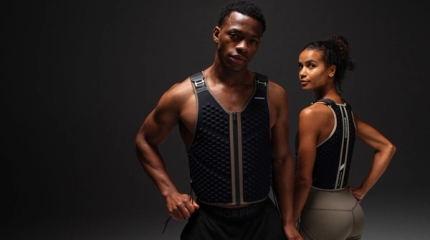
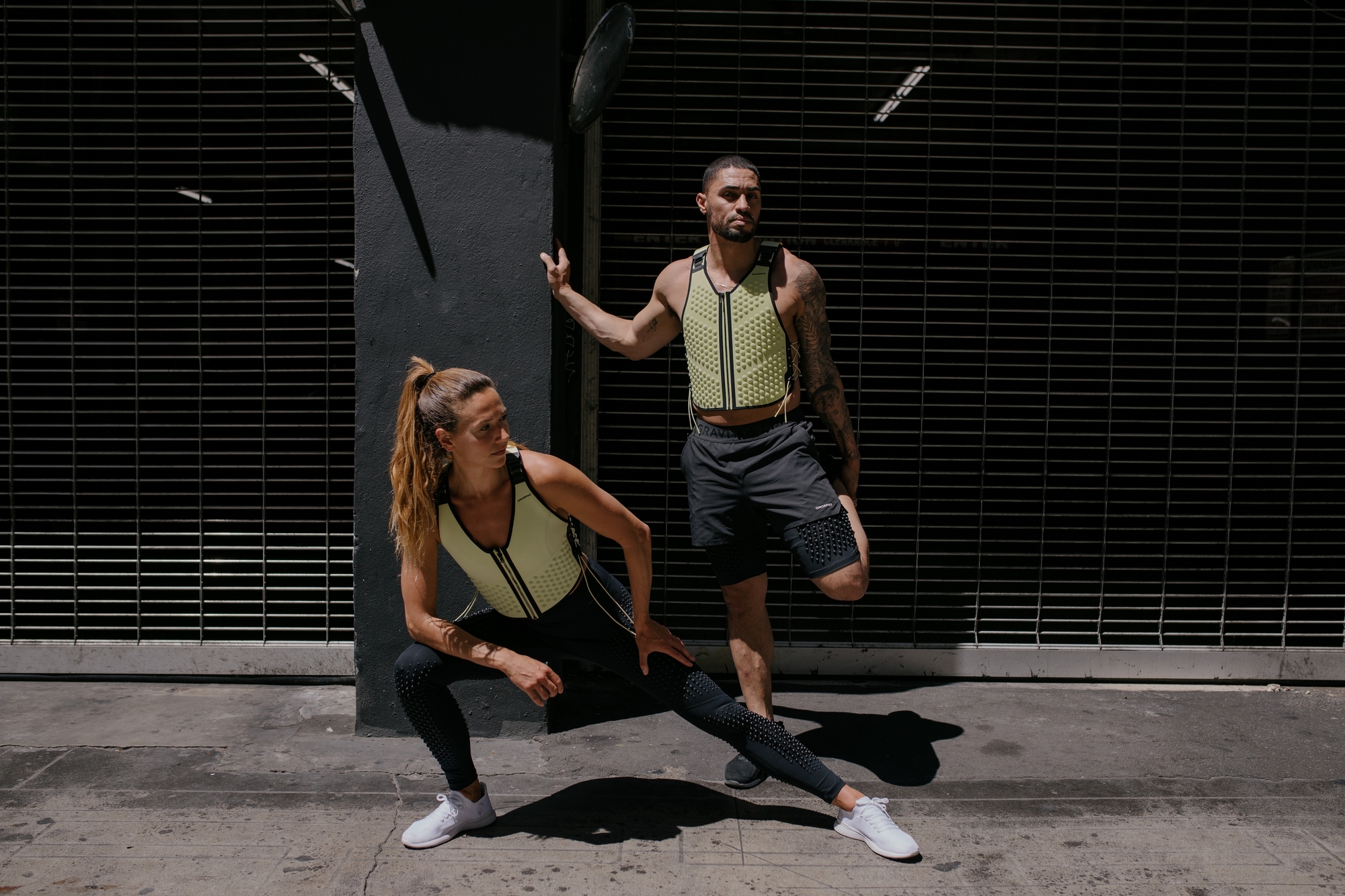
Get weighted vest for strength training guidance, benefits, exercise ideas, fit tips, and two practical workouts built for natural movement.
Most gym goers reach a plateau where standard body weight moves no longer build real power. A weighted vest for strength training provides the constant load needed to break through that wall. This gear forces your core to stay tight while you move through complex patterns.
A weighted vest for strength training acts as a tool to increase load during moves like squats, lunges, and pushups by adding weight to your body. This gear helps build core strength and power because your muscles must work harder to move the extra mass; it forces your body to adapt. Research shows that wearable resistance is useful in almost all training spots to improve results through increased load (National Institutes of Health). Using a G‑Vest Icon for power sessions or G‑Wear with MicroLoad™ for long drills provides a unique challenge that leads to better body strength. This method works well for people who want to stay active as they age and for athletes who need to break through plateaus.
You need to know how to use this tool to get the best results without getting hurt. Understanding where a weighted vest fits into strength training is the first step toward better gym sessions and faster gains. The path begins with
Where a weighted vest fits into strength training
A weighted vest for strength training adds resistance to your normal moves. Unlike barbells or dumbbells that you hold in your hands, a vest stays close to your body. This allows you to keep your hands free and move your limbs in a full range of motion. It acts as a bridge between simple bodyweight exercises and heavy outer loads. Movement is the core of fitness, and a vest keeps you moving without limits.
Adding load to normal patterns
Most strength training tools need you to change how you move. For example, a heavy barbell can shift your center of mass and limit your speed. A vest like the G‑Vest Icon spreads weight evenly across your core. Research shows that wearable resistance can be used in almost all training conditions to enhance sprint resultsthrough increased load. This makes it a useful tool for athletes who want to build real strength without losing their own rhythm.
The goal of using a weighted vest for strength training is to give a clear challenge. G‑Vest products often weigh 4% to 6% of your body weight. This level of load is enough to create a new drive without damaging your joints. It helps you build energy and core strength during slow movement or power workouts. You can learn more about practical weighted vest workout techniquesto see how this fits your routine.
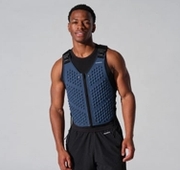
G‑Vest Icon products use stainless steel ball bearings for weight. These are held between layers of strong fabric. This design keeps the weight from shifting as you move. It is a key part of what makes OMORPHO gear different from old vests. Your body can focus on the workout rather than handling a shifting load.
Better balance and core power
When you wear extra weight on your torso, your muscles must work harder to stay upright. This helps improve your posture and core power. For older adults, this can lead to better balance and joint health. For athletes, it means better reaction times and speed during fast sessions. Studies on long-term training found that a load of 5.6% to 18.9% of body mass can lead to big speed gains
This type of training also increases the time your feet stay on the ground during each step. This change in gait helps you build more power in your lower body. By using the science behind weighted gear resistance, you can target specific gains in your fitness. A vest is not a replacement for a gym. Instead, it is a way to make every move more effective.
Daily training for every goal
One of the best ways to use a vest is to pair it with MicroLoad™ gear. While the G‑Vest Icon provides the main load, weighted shirts like the G‑Top Short Sleeve add small doses of resistance to your limbs. These products use high-density polymer print fused to the fabric. They are durable, machine washable, and dry-able. This layering spreads resistance across more of the body for repeated moves.
This approach is useful for people who want to stay active as they age. It also helps serious athletes get an edge in their next race or event. It keeps you moving naturally while your body adapts to the extra weight. You get the benefits of wearable resistance trainingwithout the need for bulky gear. This makes strength work possible during any part of your day. Whether you are doing a short workout or a long walk, a vest helps you reach your goals faster.
Benefits of a weighted vest for strength training
Using a weighted vest for strength training adds a new layer of challenge to your natural movement patterns. Unlike static gym tools, a vest stays with you as you move. This lets you work on core stability and agility while you train. By adding a load that matches your body mass, you can improve your work capacity without losing your range of motion.
Improved core stability and posture control
A major win with a vest is how it helps your posture. When you wear a G‑Vest Icon, the weight stays close to your core. This even spread of load forces your body to find a stable center. Research shows that wearable loads between 5.6% and 18.9% of body mass can help improve movement control over three to seven weeks (PubMed)
Your core must work harder to keep you upright during lunges or squats. This builds better posture control that carries over to daily life and sport. Learning the science behind weighted gear resistancecan help you see how these small loads lead to big gains in stability. The vest acts like a constant cue for your muscles to stay active and engaged.
Higher work capacity and sport performance
Adding a weighted vest to your routine helps you do more work in the same amount of time. It is a simple way to get more out of bodyweight moves. Using a vest can lead to faster reaction times and better agility because your body learns to move with more force. This is a key part of benefits of wearable resistance trainingfor athletes who want a performance edge.
Because the load is wearable, you can use it in almost any training setting to boost your results (PMC). For those who want to move well for a long time, the extra weight helps maintain bone and joint health. A vest like the G‑Vest Run provides a secure fit that does not shake or jiggle as you train. This keeps your focus on the work instead of the gear.
Better stamina and movement force
Training with extra load makes your normal body weight feel light later. This boost in movement force is vital for sprints and power moves. Studies show that using a vest can improve sprint speed and gait times (PubMed). By training your muscles to push harder against the ground, you build a faster, more agile frame.
The best part is how easy it is to start. You can find practical weighted vest workout techniquesthat fit your current level. Using a load that is about 4% to 6% of your body weight is a safe way to start seeing these gains. This amount adds a real challenge but keeps your natural stride safe and smooth.
Best weighted vest strength exercises
Using a weighted vest for strength training helps you add challenge to your move without using your hands. A vest keeps your weight close to your core and lets you move in a natural way. Studies show that these tools can enhance sprint performanceand lead to gains in power. The G‑Vest Icon is a great tool for these short and hard workouts. It uses steel ball bearings to give you even resistance across your body.
Lower body compound lifts
Squats and split squats are the best moves to start with when using a vest. These moves build leg strength and help with your posture. Since the vest sits on your chest and back, it keeps your center of mass stable. This setup helps you keep a straight spine as you dip low. You can find more practical weighted vest workout techniquesto help you master these lifts safely.
Step-ups are also helpful for building bone and joint health. When you step up with a vest, you put more load on your glutes and quads. This extra weight helps your muscles adapt to stress over time. Most people should start with a vest that is about 4 to 6 percent of their body weight. This level of load gives you a good challenge but does not hurt your joints or change your gait. Keep your foot flat on the box and push through your heel to rise. This focus will help you build power in your hips.
Upper body push and pull
Push-ups and pull-ups become much harder with a weighted vest. A vest adds weight to your torso which makes your chest and back work more. Unlike a plate on your back, a vest will not slip or slide as you move. This keeps the load steady through the full range of motion. It also forces your core to stay tight so your hips do not sag. You will feel your abs work hard to keep your body in a straight line.
For pull-ups, the vest adds a load that pulls you straight down. This helps build grip strength and upper back power. If a full pull-up is too hard, you can use a box to help you jump up. Then, lower yourself down slowly to build the strength you need. This method helps you get used to the extra weight without losing your form. It is a smart way to bridge the gap to a full rep.
Loaded carries and stability
Carries are a simple way to build stamina and core stability. You can walk for time or distance while wearing your vest. This move mimics real life tasks like carrying heavy bags or gear. The even weight of the G‑Vest Icon helps you stay upright without leaning to one side. This even load protects your lower back from odd stress. It also builds the endurance you need for long days on your feet.
You can also layer your gear for more results. You might wear G‑Wear with MicroLoad™ technology under your vest. This science behind weighted gear resistanceshows how thin layers can add up. Using both tools helps you spread the weight from your core to your limbs. This is a smart way to add a micro challenge to every step you take. You will build more strength without feeling bulky or slow.
Exercise Reference Table
- Squat — Training emphasis: Quads and glutes. Regression: Bodyweight squat. Progression cue: Add a pause at the bottom.
- Push-up — Training emphasis: Chest and triceps. Regression: Knee push-ups. Progression cue: Elevate feet on a bench.
- Step-up — Training emphasis: Glute power. Regression: Low box height. Progression cue: Hold light dumbbells too.
- Pull-up — Training emphasis: Upper back and biceps. Regression: Inverted rows. Progression cue: Add more weight with G‑Pack.
- Loaded Carry — Training emphasis: Core and grip. Regression: Short walk distance. Progression cue: Walk on an incline or hill.
- Split Squat — Training emphasis: Single leg balance. Regression: Hold onto a wall. Progression cue: Rear foot on a box.
How to progress weighted vest workouts safely
Starting a strength plan with extra weight needs a clear path to keep joints safe. Moving too fast can lead to strain, but moving too slow may stall your gains. A smart plan from basic moves to heavy loads helps the body adapt to new stress. By using a weighted vest for strength training, you can add challenge to your work while keeping your natural form. Research shows that weighted vests are versatile toolsthat work in almost any training setting to build power and speed.
Master basic movement first
Before adding load, you must move well. Good form is the base for all strength work. If a bodyweight squat or lunge feels shaky, adding a vest will only make the problem worse. Focus on balance and control through a full range of motion. Once you can do your full set with perfect form, you are ready to add weight. This steady start protects your joints and builds the core strength needed for heavier work. You should feel stable in every move before you strap on a vest.
Add small loads slowly
The goal is to add weight without changing how you move. OMORPHO gear is built to spread weight evenly so it does not pull you out of place. For most people, a good start is a load that feels like a part of your body. You can learn more about the science behind weighted gear resistanceto see how this helps you train better. Small jumps in weight give your bones and tendons time to get stronger alongside your muscles.
- Quality check: Perform your full workout with just your body weight to ensure your form is perfect and your joints feel stable.
- Initial load: Start with a light option like G‑Wear, which stays around 1% to 2% of your body mass to add a small challenge to every move.
- Baseline vest: Move up to a G‑Vest Run, which weighs 6 lbs for men or 3 lbs for women, to increase the demand on your core.
- Vary the load: Use G‑Vest Icon for slow strength moves or power work, as it is built to handle more intensive training loads.
- Small jumps: Add weight in small steps, such as using G‑Pack panels to slowly increase your vest weight as your fitness level grows.
- Listen to cues: Watch for signs of tiredness, such as a loss of form or joint pain, and reduce the weight if your movement quality drops.
Track your work and recovery
Gains come from more than just more weight. You can also move by doing more reps, resting less between sets, or moving faster. This variety helps you avoid a plateau. It is also key to give your body time to rest. Heavy vest training can be hard on your system. Using benefits of wearable resistance traininghelps you learn how to balance hard work with smart recovery for long-term health.
How should a strength training weighted vest fit?
A good weighted vest for strength training must fit like a second skin. It should stay close to your body without shifting when you move. A loose vest can bounce and cause skin burns or distract you from your form. The best fit feels snug across your chest and back. This helps keep the weight over your center of mass. When the load stays still, you can focus on your lifts and drills. It should not press too hard on your ribs or make it tough to breathe. Proper fit ensures that you gain the most from the added challenge.
Secure fit and weight spread
The way a vest holds its weight is key to how it feels. A high-quality vest uses even spread to keep you balanced. This is why the G‑Vest Icon is a top choice for slow moves and power sets. It uses stainless steel ball bearings for weight. These are sewn between layers of tough cloth and synthetic fabric. This design keeps the load from pooling in one spot. It also makes the vest feel much thinner than old-fashioned sandbag vests. When weight stays flat against your core, you stay stable during heavy moves.
Good weight spread also helps with posture and core control. Studies show that wearable resistance can be used in almost all training settings to boost performancethrough added tension. By spreading the load, the vest lets your muscles work together. This is better than holding a heavy weight in just one hand. It helps you maintain a neutral spine during squats or lunges. A well-fitted vest supports your body's natural line of gravity. This makes your training safer and more useful for building long-term strength.
Why moving freely matters
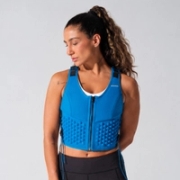
You need to be able to move your arms and legs without any blocks. A vest that is too bulky can hit your chin or stop your arms from swinging. The G‑Vest Icon is built to move with you. It has a low profile that fits the shape of your torso. This allows for a full range of motion in every plane. You can reach overhead or twist your core with ease. High-density fabrics keep the vest from sliding up when you jump. This freedom is vital for short hard workouts where speed and form are both key.
If you want even more ways to add challenge, you can use G‑Wear as well. This apparel uses MicroLoad™ tech to place small weights on your limbs. These weights are high-density polymer print fused to the fabric. They are durable, machine washable, and dry-able. You can wear a G‑Vest for your core and add G‑Wear items as a plus. This layering adds resistance across your whole body instead of just one area. You can learn more about the benefits of wearable resistance trainingto see how this helps.
Using G‑Vest Icon for power training
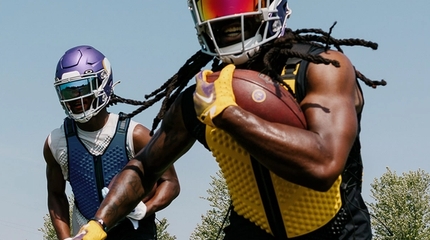
For power and short hard sessions, the G‑Vest Icon is the main tool. These workouts often involve fast bursts or very heavy force. A vest that stays in place is a must for these tasks. The snug fit of the G‑Vest Icon keeps the weight from shaking or jiggling. This is vital when you do box jumps or power cleans. It keeps the resistance steady through the entire move. You get a clean, crisp feel that helps you build fast strength. The tough fabric also stands up to the sweat and strain of hard gym use.
The G‑Vest Icon is built with OMORPHO's MicroLoad™ tech. Its stainless steel ball bearings are sandwiched between layers of durable polyester and synthetic fabrics. You get the rugged build of a training vest with the sleek look of modern gear. This vest is a strong choice for slow movement, power work, and short intensive workouts. It adds load without getting in the way of natural movement. When your gear fits right, you can focus on form and steady progress.
Two weighted vest strength workouts to try
Adding a weighted vest for strength training helps you challenge your body in new ways. These tools give even weight that stays close to your core. This setup helps you build better posture and core strength while you move. When you use the G‑Vest Icon, you can turn a simple bodyweight drill into a hard session.
Full body strength circuit
This circuit builds useful power by using slow and steady movements. The G‑Vest Icon is a great choice here because it uses stainless steel ball bearings to give a steady load. These small weights are held between layers of tough fabric to keep the vest slim. You can use these practical weighted vest workout techniquesto get the most from your gear.
- Squats: 3 sets of 12 reps. Focus on keeping your chest up and weight on your heels.
- Lunges: 3 sets of 10 reps per leg. Keep your torso tall to test your balance.
- Push-ups: 3 sets of 10 to 15 reps. Keep your core tight so your back does not arch.
- Planks: 3 rounds for 45 seconds each. The extra weight makes your core work much harder to stay flat.
Rest for 60 seconds after you finish all four moves. Repeat the whole circuit three times. Pay close attention to your form as you get tired. The added weight means you must move with care to keep your joints safe.
Power training session
This session focuses on fast movements to build speed and quickness. Research shows that using a vest can help with sprint speed and timeswhen used for several weeks. The goal here is to stay light on your feet while carrying the extra load. These drills help your body learn how to produce more force in a short time.
- Box Jumps: 4 sets of 6 reps. Land softly with your knees bent to soak up the force.
- Broad Jumps: 4 sets of 5 reps. Swing your arms to help drive your body forward.
- High Knees: 5 rounds of 20 seconds. Drive your knees up to your hip height as fast as you can.
- Burpees: 4 sets of 8 reps. Stay smooth as you move from the floor back to your feet.
Take 90 seconds of rest between each set. This rest gives your heart rate time to come down so your power stays high. G‑Vest products usually weigh about 4 to 6 percent of your body weight. This load gives a challenge without slowing you down too much. Using this light load helps you keep your natural stride while you work on your speed.
This type of training is perfect for people who want to break through a wall in their fitness. The even weight of the G‑Vest Icon keeps the load from shaking or shifting while you jump. By adding more gear, you can mix and match weight to find the best level for your goals. This approach helps you stay strong and mobile for any sport or task.
Frequently Asked Questions
Are weighted vests good for strength training and muscle growth?
Weighted vests are useful tools for building strength and making muscles work harder. By adding extra weight, they increase the challenge for your body during moves like squats, lunges, and pushups. This extra load helps you get better results and build more power. According to research on sprint performance, weighted vests provide a great way to improve results in nearly all training settings. This gear helps you gain strength by adding steady resistance to every move.
How heavy should my weighted vest be for strength training?
For most strength training and slow moves, a vest that weighs about 4 to 6 percent of your body weight is best. This level of weight provides a clear challenge while helping you move in a natural way and keep your joints safe. If you need more weight for power workouts, gear like the G‑Vest Icon allows you to add extra load. Using a balanced vest helps you stay stable and keep good form through your whole workout. This approach builds strength without causing joint pain.
Can I use a weighted vest for running and strength training?
You can use a weighted vest for both tasks, but the best weight often changes. For running, a light load of about 1 to 2 percent of body weight is best to keep your joints safe and help you move well. Strength training often uses a heavier load. A long-term studyfound that training with loads between 5.6 and 18.9 percent of body mass can improve speed and power over a few weeks. This makes the gear very useful for total fitness.
How to choose a weighted vest for strength training?
When you choose a vest for strength training, look for a design that spreads weight evenly across your core. A snug fit is vital so the gear does not shift or jiggle during fast moves. OMORPHO G‑Vest products use stainless steel ball bearings for a slim feel that fits your body well. For short, hard workouts, the G‑Vest Icon is a top choice. The G‑Vest Run is better for tasks that need more movement and stamina. These vests help you gain strength while moving in a natural way.
Ready to reach your peak strength with G‑Vest?
If you keep training with only your body weight. Your gains in power and bone strength will soon stall out while you risk losing time to others who add more weight to their daily work now. Choosing to start today ensures your body gets used to higher loads right away. Which helps you build a more sturdy and strong frame for years to come instead of trying to catch up later. Do not let a new week pass without giving your muscles the work they need to grow because every workout you do without a vest is a missed chance to gain better core power and balance.
Ready to shop? Request your gearto shop G‑Vest products today.