Key Takeaways
- Choose Your Move Based on Your Goal: Use squats to build overall lower-body power, as their stable, two-legged stance allows you to lift heavier. Opt for lunges to improve balance, coordination, and correct muscular imbalances by challenging each leg individually.
- Create a Balanced and Progressive Plan: Incorporate both squats and lunges into your routine to develop well-rounded strength and prevent plateaus. Always prioritize proper form, then apply progressive overload by gradually adding weight or reps to ensure you keep getting stronger.
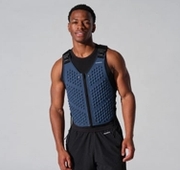
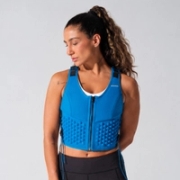
- Add Weight Safely with Wearable Resistance: Enhance your workouts by using OMORPHO's MicroLoad™ weighted gear. The G‑Vest Icon offers a secure, body-hugging fit that distributes weight evenly, allowing you to safely increase the intensity of your squats and lunges without compromising your form.
Weighted Lunges vs. Squats: Which Is Right for You?
Squats and lunges are fundamental to any effective lower-body workout. Both are powerhouse movements for building strength, but they challenge your body in different ways. The best choice for you often comes down to your specific fitness goals, whether that's building raw power, improving balance, or enhancing athletic performance. Understanding the correct form for each is the first step to getting the most out of every repetition and ensuring you stay safe while you train. While squats are often seen as the king of leg exercises for building overall strength, lunges excel at targeting each leg individually, helping to correct muscle imbalances and improve functional movement patterns you use every day.
Adding weight is essential for making progress, and how you add that weight matters. While dumbbells and barbells are classic options, wearable resistance offers a unique, hands-free way to increase the challenge. OMORPHO's MicroLoad™ weighted gear is designed to integrate seamlessly into your movements. The distributed load feels natural and secure, which allows you to focus purely on your form. This is especially important for complex movements like lunges and squats, where stability and proper alignment are key to preventing injury and achieving better results. By adding a small, consistent challenge, you can make every move you make more effective.
How to Do a Weighted Lunge Correctly
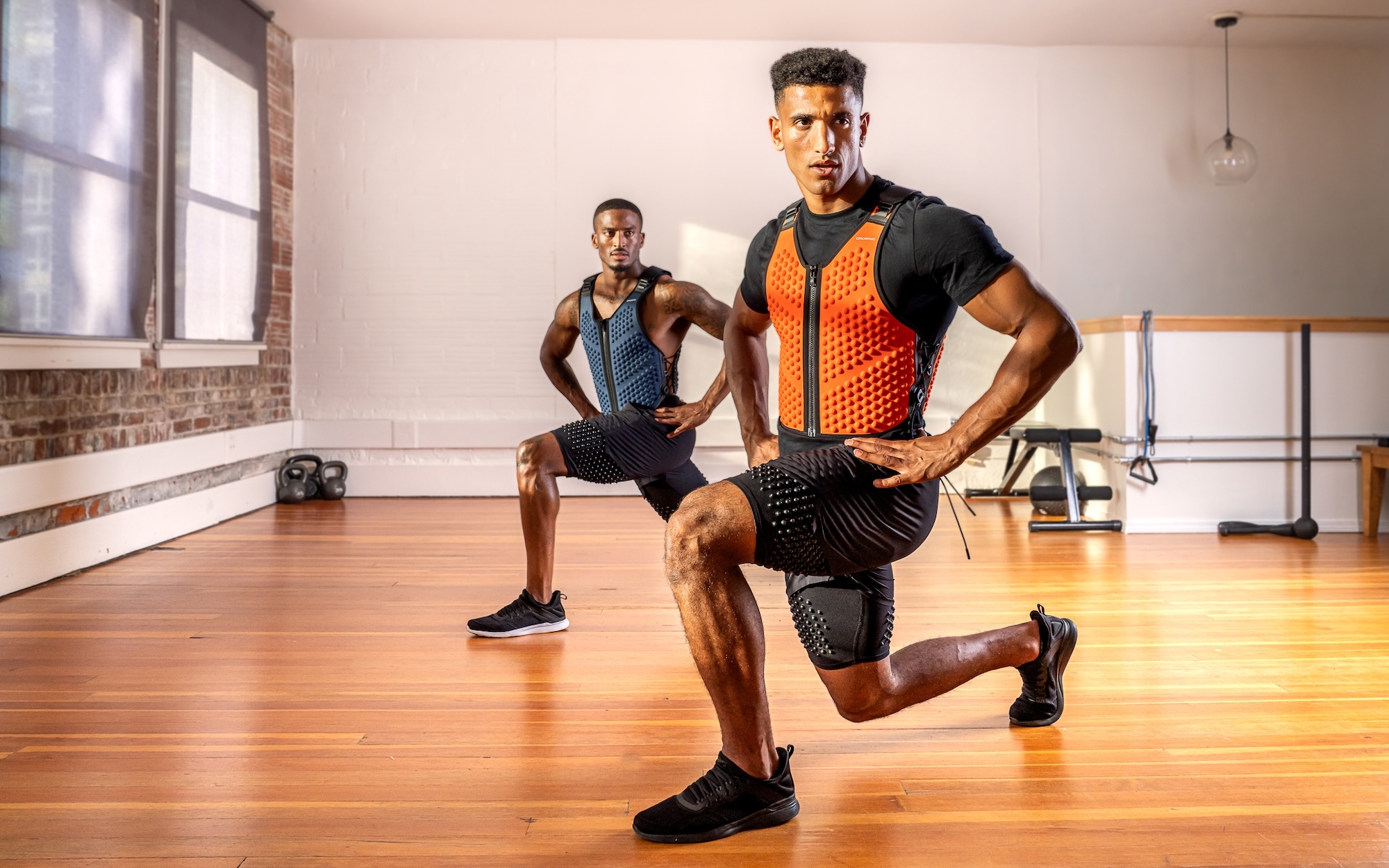
The weighted lunge is a fantastic exercise for targeting individual legs, which helps correct muscle imbalances and improve stability. To perform one correctly, start by standing with your feet hip-width apart. Step one foot forward or backward, lowering your hips until both knees are bent at a 90-degree angle. Your front knee should be directly above your ankle, and your back knee should hover just above the floor. Push off your front foot to return to the starting position and repeat on the other side. For a more knee-friendly option, try a reverse lunge. Adding weight with the OMORPHO G‑Vest Icon keeps your hands free, making it easier to maintain balance as you move.
How to Do a Weighted Squat Correctly
Weighted squats are the gold standard for building overall lower-body strength. To begin, stand with your feet slightly wider than your hips, with your toes pointing forward. Initiate the movement by pushing your hips back as if you're sitting in a chair. Keep your chest up and your back straight as you lower down until your thighs are parallel to the floor. Make sure your heels stay planted firmly on the ground. Push through your heels to drive back up to the starting position, squeezing your glutes at the top. When adding significant weight, the OMORPHO G‑Vest collection provides the safest, most comfortable way to load your body. The low-profile, body-hugging fit ensures the weight stays secure and won't shift, preventing injury and allowing for a full range of motion.
Lunges vs. Squats: Which Muscles Will You Work?
Both lunges and squats are champions of lower-body training, and for good reason. They are compound exercises, meaning they work multiple muscle groups and joints at once, making them incredibly efficient for building strength. While both moves heavily recruit your glutes, quadriceps, and hamstrings, the way they engage these muscles, along with supporting players, is quite different. Understanding these distinctions is key to building a well-rounded routine that aligns with your specific fitness goals.
The primary difference comes down to the base of support. Squats are a bilateral exercise, performed with both feet planted firmly on the ground. This stable base allows you to move more weight, making it a go-to for building raw strength and power. Lunges, on the other hand, are a unilateral exercise. By stepping one foot forward or backward, you challenge each leg individually. This not only exposes potential muscle imbalances between your right and left sides but also demands significant work from your core and hip stabilizers to keep you from wobbling. Choosing between them isn't about which is better, but which is better for the specific outcome you want to achieve.
Muscles Targeted by Weighted Lunges
Weighted lunges are fantastic for zeroing in on each leg independently. This unilateral movement primarily targets the quadriceps (front of the thigh) and glutes (your backside). Your hamstrings (back of the thigh) and calves also get involved, acting as assistants and stabilizers throughout the motion. Because you're balancing on a split stance, a lunge forces the smaller stabilizing muscles around your hips and core to work overtime. This is essential for developing functional strength that translates directly into better balance and coordination in sports and daily life. By working one side of the body at a time, you can effectively identify and correct strength imbalances.
Muscles Targeted by Weighted Squats
When you want to build serious lower-body power, the weighted squat is your best friend. As a bilateral movement, squats allow you to load up on weight, placing a significant demand on your largest muscle groups. The primary movers are the glutes and quadriceps, with the hamstrings and adductors (inner thighs) playing a strong supporting role. What many people don't realize is how much of a core exercise the squat is. Your abdominal and lower back muscles must contract isometrically to keep your torso upright and stable, protecting your spine. This makes the squat a true full-body integrator, perfect for building foundational strength from the ground up.
The Unique Benefits of Lunges and Squats
Squats and lunges are foundational to any lower-body workout, but they are not interchangeable. Each movement offers a distinct set of advantages that can help you target specific fitness goals. Understanding these differences is key to building a smarter, more effective training plan. Whether you are aiming for better athletic performance, pure strength, or a well-rounded routine, knowing when to squat and when to lunge will help you get the most out of every repetition. Let's look at what makes each exercise uniquely powerful.
Why Lunge? For Balance, Stability, and Functional Strength
Lunges are your go-to for developing balance, coordination, and real-world strength. Because a lunge is a unilateral exercise, it forces each leg to work independently. This single-leg focus is fantastic for identifying and correcting muscle imbalances you might not notice during bilateral movements like squats. As you stabilize your body through the lunge, you engage smaller supporting muscles in your core, hips, and ankles. This activation helps you build stability that translates directly into better performance in sports and greater ease in daily activities. Think of it as training your body to be strong and steady on one foot, a fundamental pattern for running, climbing stairs, and changing direction quickly.
Why Squat? For Raw Power and Total Lower-Body Strength
When your goal is to build maximum lower-body strength and power, the squat is king. As a bilateral movement, squats allow you to move heavier loads than lunges, placing a significant demand on your glutes, quads, and hamstrings all at once. This makes them incredibly efficient for developing raw strength. The ability to progressively add weight also makes squats a powerful tool for muscle growth. Beyond building strength, squats are a major metabolic driver. Engaging so many large muscle groups at once requires a lot of energy, making them one of the best exercises for burning calories and supporting your overall fitness goals.
Busting Common Lunge and Squat Myths
Both lunges and squats are highly effective, but they come with a few common myths and potential pitfalls. A major one is that one is inherently "better" than the other. Research suggests that even bodyweight lunges can produce greater muscle activation than some squat variations, proving that lunges are far more than just a secondary exercise. However, form is non-negotiable for both. Performed incorrectly, squats can put undue stress on your lower back, while improper lunges can strain your knees. If you have tight hips, both movements can feel challenging, so a thorough warm-up is essential to prevent injury and improve your range of motion.
Match the Move to Your Fitness Goal
The debate over lunges versus squats often misses a key point: the "better" exercise is the one that aligns with what you want to achieve. While both moves are fantastic for building a strong lower body, they excel in different areas. By understanding their unique strengths, you can tailor your workouts to meet your specific goals, whether that's building raw power, improving your athletic agility, or maximizing your calorie burn. Choosing the right move, and the right way to add weight, is your first step toward more effective training.
Think of it like choosing the right tool for a job. You would not use a hammer to turn a screw. Similarly, if your primary goal is to develop the explosive strength needed for a new squat personal record, your focus will be different than if you are training for a 10K and need to build single-leg stability and endurance. This section breaks down the specific benefits of each movement so you can make an informed choice. We will explore how to program each exercise to build strength, enhance athletic performance, and make your workouts more efficient.
For Building Strength and Power
Squats are a powerhouse for building raw lower-body strength. Because the movement is stable and bilateral, using both legs at once, you can typically move more weight in a squat than a lunge. This ability to handle heavier loads is fundamental to developing power and strength. Squats are a fantastic all-around exercise that strengthens your core, glutes, and quads. For anyone looking to build a strong foundation, the weighted squat is a non-negotiable part of their routine. To add that challenge safely, the OMORPHO G‑Vest Icon is the ideal tool. Its MicroLoad™ distributed weight feels natural and secure, allowing you to focus on your form while progressively adding resistance.
For Better Balance and Athletic Performance
If your goals are geared toward agility, coordination, and real-world athletic movement, lunges have the edge. As a unilateral exercise, lunges force each side of your body to work independently. This action fires up all the small stabilizing muscles in your core, hips, and ankles that are crucial for balance. This translates directly to better performance in sports that involve running, cutting, and quick changes of direction. Adding a secure, distributed load with the OMORPHO G‑Vest Icon can enhance this training effect without throwing off your mechanics — layering in G‑Wear apparel adds an extra, lightweight challenge to your legs specifically. This is a key component of any performance-focused training.
For Maximum Calorie Burn
Both squats and lunges are excellent for torching calories because they engage the largest muscle groups in your body. However, heavy resistance training, particularly with exercises like squats, can give your metabolism an extra push. Studies have shown that intense leg workouts can supercharge your metabolic rate even after you have finished exercising. By adding weight to your squats, you increase the intensity and demand on your muscles, which in turn requires more energy and burns more calories. Incorporating weighted squats into your fitness routine is an efficient way to make your workouts more effective, helping you get closer to your body composition goals with every rep.
Safety First: When and How to Add More Weight
Before you add weight to any exercise, mastering proper form is essential. Incorrectly performed squats can strain your lower back, while both moves can aggravate tight hips if you do not warm up properly. Once your form is solid, adding resistance is the most effective way to get stronger and improve performance. The key is to do it safely. OMORPHO G‑Vests are designed with this in mind. The G‑Vest Icon uses MicroLoad™ technology to distribute weight evenly across your core, creating a low-profile fit that moves with you. This avoids concentrating heavy loads on your shoulders and spine, reducing the risk of injury and allowing you to challenge your muscles without compromising your joints.
Create a Balanced Lower-Body Routine
Building a strong, functional lower body isn't about choosing one perfect exercise. It's about creating a well-rounded plan that challenges your muscles in different ways. Since squats and lunges target your legs with different mechanics, incorporating both into your routine is the most effective strategy. A balanced approach prevents muscular imbalances, reduces your risk of injury, and keeps you from hitting a workout plateau. When you only focus on one type of movement, you risk overdeveloping certain muscles while neglecting others, which can compromise your stability and overall strength.
The key is to be intentional with your programming. Think about how you structure your workouts, how you plan to get stronger over time, and how you can add variety to keep your body guessing. By combining bilateral movements like squats with unilateral ones like lunges, you develop both raw power and functional stability. This comprehensive approach ensures you're building strength that translates directly into better performance, whether you're in the gym or going about your day. A smart routine is your roadmap to achieving your fitness goals safely and efficiently.
Programming Your Workouts: Alternating Days vs. Supersetting
Because squats are a bilateral exercise that works both legs simultaneously and lunges are a unilateral exercise that isolates one leg at a time, how you program them matters. You can structure your routine in a few different ways depending on your goals and schedule. One popular method is to alternate, dedicating one workout to squat-focused movements and another to lunge variations. This allows you to put all your energy into mastering one movement pattern per session.
Another effective strategy is to superset them, performing a set of squats immediately followed by a set of lunges with little to no rest in between. This approach is a great way to increase the intensity and metabolic demand of your workout, making it more time-efficient. There is no single "best" way; experiment to see which workout structure fits your fitness level and lifestyle.
Progressive Overload: Your Key to Getting Stronger
To get stronger, you have to consistently challenge your muscles beyond what they're used to. This principle is called progressive overload, and it's the foundation of any effective strength program. The most common way to apply this is by gradually adding more weight to your exercises over time. As your body adapts, you increase the load to continue stimulating muscle and strength gains. You can also add more repetitions or sets, or decrease your rest periods between sets.
For squats and lunges, adding weight is a straightforward path to progress. The OMORPHO G‑Vest Icon is designed for exactly this purpose. It provides a significant starting load (10 lbs for men, 6 lbs for women) that is evenly distributed for a secure, low-profile fit. As you get stronger, you can add more weight with the snap-in G‑Pack panels, making it the perfect tool to support your long-term strength journey safely.
Try These Variations to Keep Things Interesting
Repeating the same exercises week after week can lead to boredom and plateaus. Introducing variations of squats and lunges keeps your workouts engaging and challenges your muscles in new ways. For example, curtsy lunges are fantastic for targeting your gluteus medius, a key muscle for hip stability and posture. Other lunge variations like reverse lunges are often easier on the knees, while walking lunges add a dynamic, cardio-based challenge.
You can also switch up your squats. Try goblet squats to engage your core or sumo squats to place more emphasis on your inner thighs and glutes. These different movements not only work your muscles from new angles but also improve your overall athleticism. For any of these dynamic exercises, OMORPHO's G‑Wear collection is an ideal companion. The flexible, weighted apparel moves with your body, adding a subtle challenge to every rep without restricting your movement.
Amplify Your Results with Wearable Resistance
Adding weight to your squats and lunges is a proven way to get stronger, but the "how" matters. Instead of relying on cumbersome weights that can disrupt your form, you can integrate resistance directly into what you wear. This is the principle behind wearable resistance, a method that makes every movement more effective without changing your routine. By adding a small, distributed load to your body, you increase the demand on your muscles, which can lead to a greater calorie burn and improved strength.
OMORPHO's MicroLoad™ technology is designed for this exact purpose. It strategically places small amounts of weight across your body to challenge you in a balanced, ergonomic way. This isn't about feeling weighed down; it's about applying a subtle load that your body adapts to, making you stronger and more powerful over time. Whether you're performing squats for power or lunges for stability, OMORPHO weighted gear helps you get more from every single repetition, all while maintaining the freedom of movement essential for proper technique and safety.
How MicroLoad™ Weighted Gear Enhances Your Workout
MicroLoad™ technology works by integrating small amounts of weight directly into your apparel, creating a consistent challenge for your muscles. This approach has been shown to make your workouts more efficient, helping you burn up to 8% more calories while developing more power and speed. The added resistance from MicroLoad™ weighted gear increases the demand on your muscles during exercises like squats and lunges, helping you build strength and endurance more effectively. Because the weight is evenly distributed and feels almost unnoticeable, you can focus on your form while your body works harder, turning every movement into a more productive effort.
G‑Vest Icon: The Perfect Vest for Powerful Squats and Lunges
For those focused on building serious lower-body strength, the G‑Vest Icon is the ideal tool for squats and lunges. It adds a significant load to your core, with an adjustable weight of 6 to 12 pounds (2.7 to 5.4 kg) for women and 10 to 20 pounds (4.5 to 9 kg) for men. Unlike traditional vests, the G‑Vest Icon features a low-profile, body-hugging design with MicroLoad™ weight distributed evenly through tiny stainless steel ball bearings. This ensures the vest moves with you, providing a secure fit that won't shift or interfere with your range of motion. This superior stability allows you to safely perform deep squats and lunges, enhancing muscle activation for greater strength gains.
Layer G‑Wear for a Complete Lower-Body Challenge
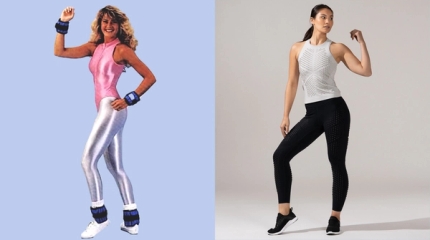
To create an even greater challenge for your lower body, you can layer OMORPHO G‑Wear apparel. Products like the G‑Tight and G‑Short use MicroLoad™ technology in the form of a high-density polymer print fused directly onto the fabric around your legs. This targets your quads, hamstrings, and glutes with a light, persistent load throughout every phase of a lunge or squat. For a comprehensive workout, wear the G‑Tight or G‑Short under a G‑Vest Icon. This combination challenges your entire body, from your core down to your legs, creating a powerful stimulus for building functional strength and muscular endurance.
Frequently Asked Questions
If I only have time for one exercise, should I do squats or lunges? The best choice really depends on your primary goal for that day. If you want to build raw, overall lower-body strength and have the ability to lift heavier, squats are your go-to. If you're focused on improving your balance, correcting strength differences between your legs, and building functional stability for sports, lunges are the winner. For a truly well-rounded routine, it's best to find a way to include both in your weekly plan.
I have sensitive knees. Is one of these exercises safer for me? Proper form is the most important factor for protecting your knees in either exercise. That said, many people find that reverse lunges, where you step backward instead of forward, feel more comfortable and place less stress on the knee joint. For squats, focus on pushing your hips back first, as if sitting in a chair, and keep your weight in your heels. This helps ensure your knees track correctly over your feet and don't drift too far forward.
How do I know when I'm ready to add weight to my squats and lunges? You should always master the bodyweight version of an exercise before adding resistance. Once you can confidently perform multiple sets of 10 to 12 repetitions with perfect form, and it no longer feels challenging, you are likely ready to add weight. Start with a light load to allow your body to adapt, and focus on maintaining that same perfect form before gradually increasing the resistance over time.
Why is using a weighted vest or apparel better than just holding dumbbells? Using wearable resistance like OMORPHO's MicroLoad™ weighted gear keeps your hands free, which is a huge advantage for both balance and form. During lunges, for example, you can use your arms naturally to stay steady. For squats, a secure G‑Vest Icon ensures the weight is distributed evenly across your core, preventing the load from shifting and allowing you to focus completely on your movement mechanics rather than on gripping a weight.
What OMORPHO gear is best for a lower-body workout that includes both squats and lunges? For a powerful and balanced workout, you can combine products. The G‑Vest Icon is perfect for adding a significant, stable load to your squats to build maximum strength. For more dynamic movements like walking lunges, the G‑Tight or G‑Shorts add a targeted challenge directly to your legs without restricting movement. For the ultimate training session, you can layer the G‑Wear apparel under the G‑Vest Icon to challenge your entire body.