

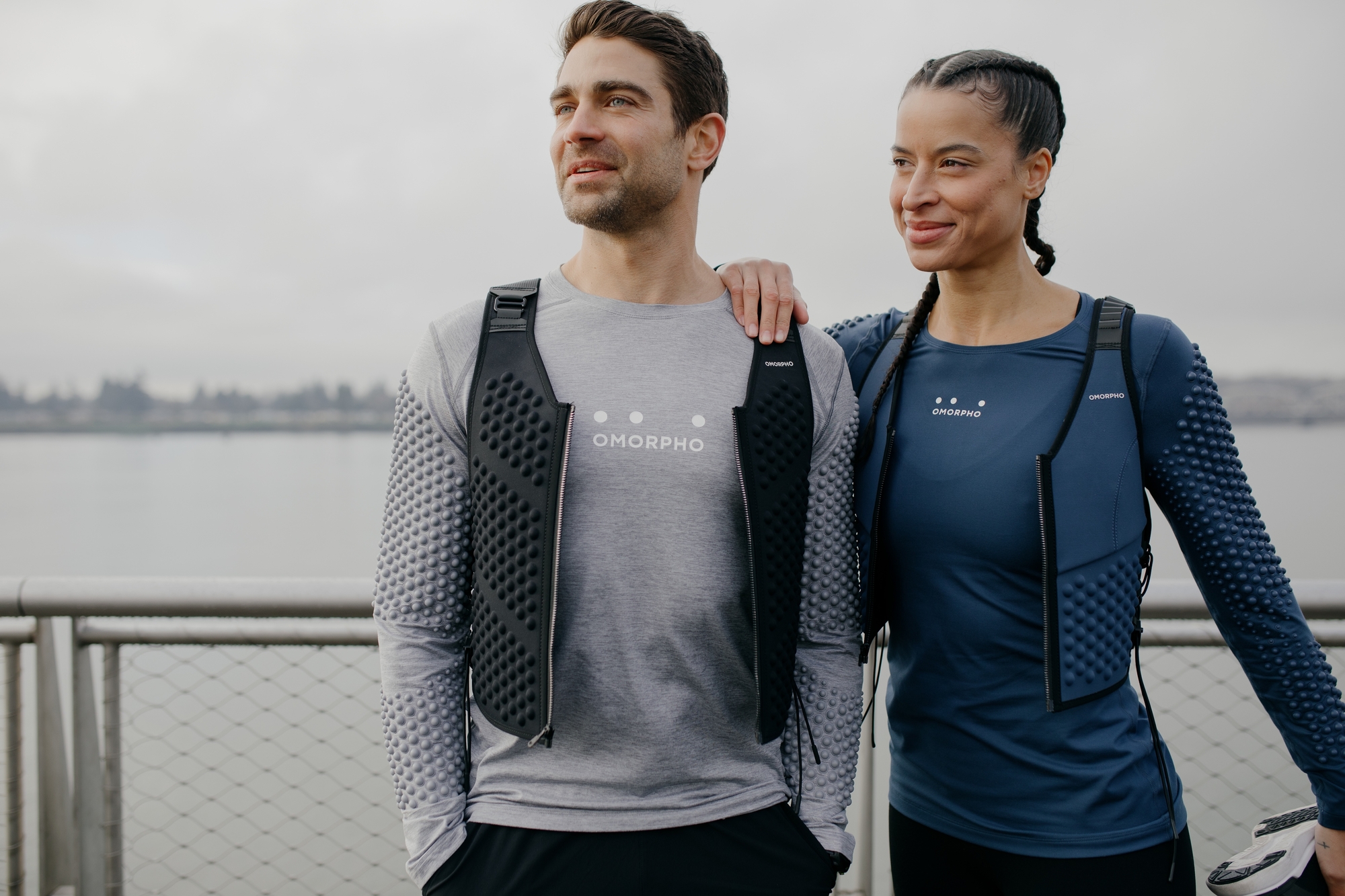
A weight jacket for training should add resistance without taking over the movement. The best option stays secure, distributes load across the torso, and preserves breathing, balance, and range of motion. This guide explains the fit, construction, and training-style details that matter before choosing one.
Shop OMORPHO weighted training gear to compare secure, low-profile options built for natural movement.
A weight jacket for training must offer a snug fit that keeps weight close to the center of mass. This design prevents gear from shifting or bouncing during fast movements like running. High quality jackets use stainless steel ball bearings to spread weight evenly across the torso. Research shows that weighted vest loads between five and forty percent of body mass can lead to big gains in sprint speed and power (PubMed). When choosing a jacket, athletes should look for a low profile shape that does not block breathing. Gear that matches natural body patterns allows for longer workouts and better results. Selecting the right equipment ensures every step provides a small challenge without changing how the body moves.
Understanding how to select the best resistance gear is the first step toward reaching new fitness goals. Most athletes need to know the specific features that separate a high performance tool from a basic vest. The path starts with asking: What is a weight jacket for training?
Buyer checklist: seven features to assess for weight jacket training
Selecting a weight jacket for training needs a focus on how the gear moves with your body. The right choice adds resistance while keeping your natural form. You should look for options that spread weight evenly across your core. This helps avoid joint strain and ensures a stable feel during intense movement.
Secure fit and stability
A good weight jacket must stay in place without shifting. If a vest jiggles or shakes while you run, it can lead to skin rubs or poor form. Advanced designs, like the G‑Vest Run, are built to fit close to the core so the weight remains still through every stride. This stability helps you keep your focus on your pace and form.
Check for straps or side cinches that let you change the fit. Proper tension ensures the load does not bounce. This is key for fast workouts or agility drills.
Even load distribution
The way a jacket holds its weight changes how you feel the load. Effective resistance should match your natural movement patterns. It should not bunch up weight in a single spot. Studies show that positioning and mass change your form and results in different ways.
Look for designs that use many small weights instead of large, bulky plates. For example, G‑Vest products use steel ball bearings placed between layers of fabric to spread the load. This prevents the weight from pulling on your shoulders or back. It helps you stay upright and balanced.
Movement freedom and profile
Free movement is key when you pick quality construction in weight jackets. A slim profile lets your arms swing as they should and lets you move through full ranges. Bulky vests can block your arms or catch on your chin. This limits the types of drills you can do.
- Secure fit: Ensure the jacket does not shake or bounce while you move.
- Weight spread: Verify the resistance is evenly split across your front and back.
- Full range: Move your arms and torso to check for any blocks or pinching.
- Slim design: Choose a low-profile vest that fits close to your body.
- Breathability: Look for mesh or moisture-wicking fabric to stay cool.
- Durability: Pick strong fabrics like polyester that can handle sweat and friction.
- Ease of care: Confirm the jacket is easy to clean after a hard session.
Breathability and durability
Training in a weight jacket often means extra heat. You need fabric that helps air flow and pulls sweat away from your skin. Strong synthetic blends like polyester are best. They resist wear while staying light. High-quality materials ensure your gear lasts through many washes and tough use.
Finally, check if the jacket lets you change the weight. Some models let you add more load as you get stronger. For instance, the G‑Vest Run can use G‑Pack weighted panels to increase the mass. This lets your gear grow with your fitness level over time.
A secure fit keeps distributed resistance close to the body through each movement.
Why fit and resistance distribution matter
A good weight jacket for training should feel like a part of your body. If the gear moves on its own, it can pull you out of your natural stride. This can lead to poor form or even joint pain. A close fit ensures that the extra weight stays close to your center of mass. This helps you keep your balance while you work out. When the gear is snug, you can move through your full range of motion without any blocks.
Support for natural movement
The way weight sits on your body changes how you move. Research shows that the placement of mass can change your kinematics during a sprint. When weight is spread out evenly, it matches how your muscles work. This is why even load spread is so key. It prevents uneven strain and helps you keep a good posture. It also lets your joints move freely. Gear that concentrates weight in one spot can make your body tilt or lean too much.
OMORPHO gear uses design to keep you moving well. The G‑Vest Run is built to stay in place. It uses stainless steel ball bearings to add weight without adding bulk. This design helps the vest fit well against your chest and back. By keeping the load stable, you can focus on your pace and not on your gear. For even more spread, you can layer a vest with G‑Wear clothes. G‑Wear uses MicroLoad™ technology to fuse small weights directly to the fabric.
Stability during fast paced work
If a vest is loose, it will shake and jiggle when you run. This extra motion can be very rough on your body. It can also cause chafing on your skin. A secure fit stops this bounce. High quality gear should hug your torso but still let you breathe deep. This balance of tightness and comfort is what makes a training jacket useful for long runs. When the fit is right, you will hardly notice the extra load as you move. This is true whether you are doing a slow walk or a fast sprint.
The G‑Vest Run comes in different sizes for a better fit. The men's version weighs 6 lbs, while the women's version weighs 4 lbs. Both are made to fit the shape of the body to keep the weight from shifting. This helps you keep your skill and speed even when you add more challenge. A vest that does not shift allows for better leg stiffness and power during each stride.
The five second movement test
You can check the fit of your gear with a simple test. Put the jacket on and tighten the straps. Then, jump in place five times. After that, run a short sprint or do a few high knees. If the jacket stays still and does not hit your chin, the fit is good. You should also check if you can reach your arms over your head. If the gear does not ride up, it will work well for your training. This quick check ensures your gear helps your work instead of slowing you down.
Which weight jacket works for each training style?
Choosing the right weight jacket for training depends on how you move. A vest that works for a slow walk might feel too heavy or loose during a fast run. The best gear should stay close to your body and match your natural form. You want to pick a tool that helps you reach your goals without causing pain in your joints.
Running and cardio drills
For high-speed tasks like running, you need a vest that will not bounce. The G‑Vest Run is the top choice for this style of training. It weighs 6 lbs for men and 4 lbs for women. This weight stays secure and does not shake as you stride. Lab tests show that weighted vest warm-ups can help improve your run speed and leg stiffness. These vests use steel ball bearings held between strong fabric layers to keep weight even.
If you want to add more challenge later, you can use G‑Pack panels. These parts let you increase the load up to 16 lbs for men or 9 lbs for women. This lets you grow your strength over time as your fitness levels go up. A snug fit is key for fast moves so that the gear does not get in your way.
Strength and power training
Power moves and short, hard sessions need more weight to be useful. The G‑Vest Icon is built for this type of work. It is the best choice for slow movement, strength drills, and power training. This gear adds a heavy load without making the vest too bulky or stiff. When quality construction in weight jackets is what you seek, the Icon stands out.
Heavy vests help you push your limits in the gym. Research from the National Library of Medicine shows that vest loads can boost sprint times and force. The Icon stays in place while you jump, squat, or lift. This makes it a great tool for hard work where you need a deep burn in your muscles.
Daily movement and long walks
If you move for a long time, you might prefer G‑Wear gear. These items use MicroLoad™ tech to place small weights right on the fabric. The weights are high-density polymer print fused to the fabric. G‑Wear usually adds about 1 to 2 percent of your body weight. This small dose of challenge builds up over thousands of steps.
You can even layer G‑Wear with a vest. This helps you spread the load across your whole body instead of putting it all in one spot. This style of training is best for people who want to stay active for a long life.
How do construction and care affect long-term use?
The parts in your weight jacket for training decide how well it holds up over time. A good build makes sure the gear stays soft and safe during movement. High-quality gear must handle sweat and stress without falling apart. The choice of fabrics and the way weights are joined to them matter most. OMORPHO uses exact designs for each product line to balance strength with ease of care.
Durable materials for heavy use
Every G‑Vest is built for heavy training tasks. These products use stainless steel ball bearings for weight. These balls sit between layers of tough polyester and man-made fabrics. This choice of quality construction in weight jackets helps the gear resist wear during high-power workouts. The fabrics are strong but allow your body to move in a natural way.
Data shows that the way gear holds weight changes how you move. A study found that the spot where weight is placed affects your body's path and speed. You can read more about how wearable resistance affects kinematics in research reports. Other tests on weighted vest performance show that mass can change sprint times. G‑Vest gear keeps mass close to your core to prevent shifting while you train.
Easy cleaning for daily wear
G‑Wear clothes use a different way to add challenge. It features patented MicroLoad™ technology. This design uses high-density polymer print fused to the fabric. These weights are light and easy to bend. They do not bulk up the clothes or limit your reach. This makes them a great choice for long runs or repeated tasks.
One big plus of MicroLoad™ gear is how easy it is to clean. G‑Wear is durable, machine washable, and dry-able. You do not need to remove any weights before washing it. This makes the gear easier to care for between frequent training sessions.
Weight distribution and comfort
Comfort is a key part of long-term use. If gear fits poorly, you will likely stop using it. Good gear should match your natural movement patterns. Putting weight in one area can cause joint pain or slow you down. G‑Vest products spread weight across your torso. This design keeps the vest secure and prevents it from shaking or jiggling.
Picking the right fit is the first step in choosing the right weight jacket for your goals. When gear fits well, you can focus on your form and speed. G‑Wear gives a small dose of challenge that adds up over many steps. This makes it ideal for building stamina without extra stress on your body. Long-term use is only possible when the gear feels like a second skin. Good care and the right materials make sure your gear works hard for years.
Training-specific gear should preserve natural movement during controlled strength conditioning.
How should you start training with added weight?
Starting with a new weight jacket for training should be done with care. You do not need a heavy load to see big results right away. Most people do best when they start with a small amount of weight. This keeps your joints safe while your body gets used to the extra work. A good rule is to pick gear that feels light but still adds a small challenge. For most runners, a load of about one to two percent of their body weight is a great place to begin. This helps you build strength without changing how you move or slowing you down too much.
Pick a light starting load
You should aim for a modest challenge as you start your journey. If you choose a vest that is too heavy, you might strain your back or knees. It is better to start light and add weight as you get stronger. Many top tools, like OMORPHO MicroLoad™ gear, use small weights fused to the fabric. These weights are spread out to match how you move. This design helps you add weight without the bulk of a large vest. If you want a bit more weight, you can try a G‑Vest. This gear usually weighs between four and six percent of your body mass. This range gives a clear challenge without putting too much stress on your joints.
Normal movement patterns
It is vital to keep your normal form when you add weight to your drills. A well-made vest should fit close to your body like a second skin. It should not bounce or shift when you run, jump, or bend. If the gear moves too much, it can throw off your balance and lead to hurt. Look for even weight spread to help you stay stable and keep a good posture. Research shows that proper vest loads can boost your sprint times and power over several weeks of use. When choosing the right weight jacket, make sure it allows you to move freely in every way. You should be able to perform every exercise just as you would without the added mass.
Rest and progress
Listen to your body as you add extra weight to your daily routine. You may feel more tired than usual after your first few sessions. This is a normal part of the process, but you must give your muscles time to rest and heal. Check how you feel the next day before you decide to train again. If you feel sharp pain or deep fatigue, you may need more rest or a lighter load. It is also smart to talk to a coach or a doctor before you start a new plan. They can help you set a safe path for your goals. Over time, you can slowly add more weight as your stamina and core strength improve. This way, you can keep making gains for a long time without burning out.
Safe training is about being smart and patient. You do not have to wear a heavy vest to get the gains of a weight jacket right away. By choosing the right gear and starting slow, you can reach your fitness peaks. Focus on how you feel and how well you move. With the right plan, a weight jacket can be a key tool for your success.
How can you tell if the fit is right?
A good weight jacket for training should feel like it is part of your body. When you first try one on, it needs to be snug but not tight. You should be able to take deep breaths without feeling restricted in your chest or ribs. If you feel like you have to fight the gear to move, it may be too small or poorly designed.
Check for stability and bounce
Stability is the most important part of a high quality fit. A loose vest will bounce and shift with every step. This movement can lead to skin irritation and throw off your balance during fast drills. In a quality construction in weight jackets, the mass is held close to your core to prevent this shaking.
Test the fit by doing a few quick jumps or a short sprint. The weight should stay in place and not hit your chin or lower back. If the gear slides or jiggles, you may need to adjust the straps or choose a smaller size. Proper wearable resistance strategies rely on mass that moves with your natural gait rather than against it.
Observe your range of motion
The right jacket must allow you to move through your full range of motion. You should be able to reach overhead, squat deep, and rotate your torso without the gear bunching up. Check for any rubbing under the arms or around the neck, as these areas are common spots for chafing during long workouts.
- Shoulders should move freely without hitting the vest armholes.
- The hem should not ride up toward your chin when you bend over.
- Straps should sit flat and not dig into your skin or trap heat.
- The weight must feel balanced from front to back and side to side.
Match the gear to your workout
Different activities need different levels of resistance and fit. For example, a heavy vest for slow strength work may feel too bulky for a fast run. Using a vest that is too heavy for your sport can change how you move in a way that is not helpful. Research shows that weighted vest loads between 5% and 40% of body mass can change sprint times and how the body handles force.
If you plan to run, choose a sleek model like the G‑Vest Run. If you want to do power moves or short bursts of high effort, a more robust option like the G‑Vest Icon may be better. Always pick the gear that lets you keep your form perfect. If the weight causes you to slouch or change your stride, it is likely too heavy for that specific session.
Frequently Asked Questions
What is the recommended weight for a training vest?
Most people say a weight between 5 and 10 percent of your full body mass is best for a safe and good workout. For those who want to move with ease, a load of 4 to 6 percent is often right. As shown by OMORPHO, this range gives a real test without too much stress on your joints. You can also find gear that lets you add more weight as you get stronger.
Can you use a weight jacket for running?
Yes, you can use a weight jacket while running to help your speed and form. It is best to choose a vest made for fast moves so it does not shake or bounce. Studies show that training with a vest can improve how your legs work and help you run with more skill. Make sure the fit is snug to keep your stride smooth and safe.
How should a training weight vest fit?
A good training vest should fit close to your body without being too tight. It must stay in place so it does not shift or jump as you move. A snug fit helps keep your weight spread out in a way that matches how you move. As stated by OMORPHO, this secure fit is key for better posture and balance. A vest that fits well moves as you move.
What are the benefits of using a weight jacket for training?
Using a weight jacket can add resistance to familiar movement while supporting performance goals. It can contribute to better stability, balance, posture control, agility, endurance, and reaction time. As noted in science research, training with extra weight can also help you run faster over time. These vests are useful for people of all ages who want to stay active and keep their core stable for years to come.
What is the difference between weighted apparel and a training vest?
Weighted apparel uses small weights fused to the fabric to add light force to your day. This gear often uses MicroLoad™ technology and is machine washable. In contrast, a training vest holds more weight and uses stainless steel ball bearings to give a bigger test. You can layer these products to spread weight across your whole body. This helps you get a better workout without putting too much load in one spot.
Ready to find a weight jacket that moves with you?
The right weight jacket supports the movement already in a training plan. Start with the intended activity, confirm a close and stable fit, then choose a load that challenges the body without changing natural form.
Shop men's and women's OMORPHO weighted training gear to find an option that matches your movement and performance goals.