Training for endurance requires more than just high-intensity intervals or heavy gym sessions. Using a system for layering weighted gear allows for a more natural distribution of resistance across the entire body. This method helps runners and athletes build stamina without compromising their natural stride or safety.
Shop OMORPHO G‑Vests and G‑Wear to build your layered training kit today. Browse the full collection here.
Layering weighted gear is an advanced training strategy that combines core-focused resistance with limb-specific loading. By using OMORPHO G‑Vest and G‑Wear products together, you create a system of distributed resistance. This setup covers the entire body rather than concentrating weight in one spot. This approach allows athletes to add resistance using stainless steel ball bearings and MicroLoad™ technology. It conforms to natural movement while protecting your joints. Research published in PubMed indicates that wearable resistance training provides activity-specific overloading. This can lead to better transference to dynamic sporting performance. By spreading resistance across the core and limbs, you can increase caloric burn and maximum oxygen consumption while maintaining your agility and natural stride.
Understanding how this distributed load affects your body is the first step toward optimizing your performance and safety. This guide examines the data behind these training gains and explores the research on distributed weight systems.
What Does the Science Say About Distributed Resistance Training?
Distributed resistance means placing small amounts of weight across the whole body instead of concentrating it in one area. Most people train with a single heavy vest or ankle weights. Layering weighted gear offers a more effective approach. OMORPHO takes a different path.
This gear spreads the load across the core and limbs. The method matches natural movement patterns. It helps athletes stay safe while they train. The system uses two main technologies to work well together.
The weighted vests use stainless steel ball bearings for a secure fit. G‑Wear uses MicroLoad™™ technology, a high-density polymer print fused directly to the fabric. By looking past common myths about resistance training, you can add challenge to every move without straining your joints. This allows you to work harder while keeping your natural form.
Proof of better results
Science supports the use of distributed weight. Research over forty years shows that this training approach leads to real, measurable gains. One study found an 8% rise in power output and a 3% gain in speed. Other trials showed a 7.2% improvement in VO2 max and a 2.8% increase in bone density markers.
These gains happen because the weight moves with the body. It does not pull the athlete out of their natural gait. Resisted sprint training programs show particularly strong results. These programs improve linear sprint speed and vertical jump height.
They also help athletes change direction faster. Because the weight is spread out, it does not alter the way you walk or run. This makes the training effect more transferable to real sport.
How distributed mass aids movement
Weight concentrated in one spot can shift the center of balance. A bulky, heavy vest pulls on the shoulders and spine. This can alter form and lead to injury over time.
Distributed resistance keeps the weight close to the body. It follows the natural contour of the muscles. This allows a full range of motion in every plane of movement. The approach is safer for joints and bones. By spreading the load, you avoid stress on any single point. This is key for long-term health and performance.
You can train longer and harder with less risk. Distributed resistance helps build a stable core and better balance for any sport. You stay safe while reaching your fitness goals.
Why layering weighted gear works
The best results come from a smart plan. Adding too much weight at once can be hard on the body. One study showed that a vest with a moderate percentage of body weight burns significantly more calories than training unweighted. But a single heavy piece can feel restrictive. By layering a G‑Vest with G‑Wear apparel, the load spreads across the core, legs, and arms. This allows a greater total weight with less fatigue at any one point. The combination creates a system where the athlete can accumulate meaningful resistance across thousands of strides without altering their natural mechanics.
This is the principle behind micro-challenge training: small, distributed loads that add up over time.
How Do OMORPHO's Two Weight Systems Work Together?
The G‑Vest category for core resistance
OMORPHO G‑Vests use stainless steel ball bearings sandwiched between layers of durable polyester and synthetic fabrics. This design creates a secure fit that does not shift during movement. G‑Vests generally weigh 4 to 10% of body weight so the body experiences measurable challenge without damaging joints or impairing natural stride.
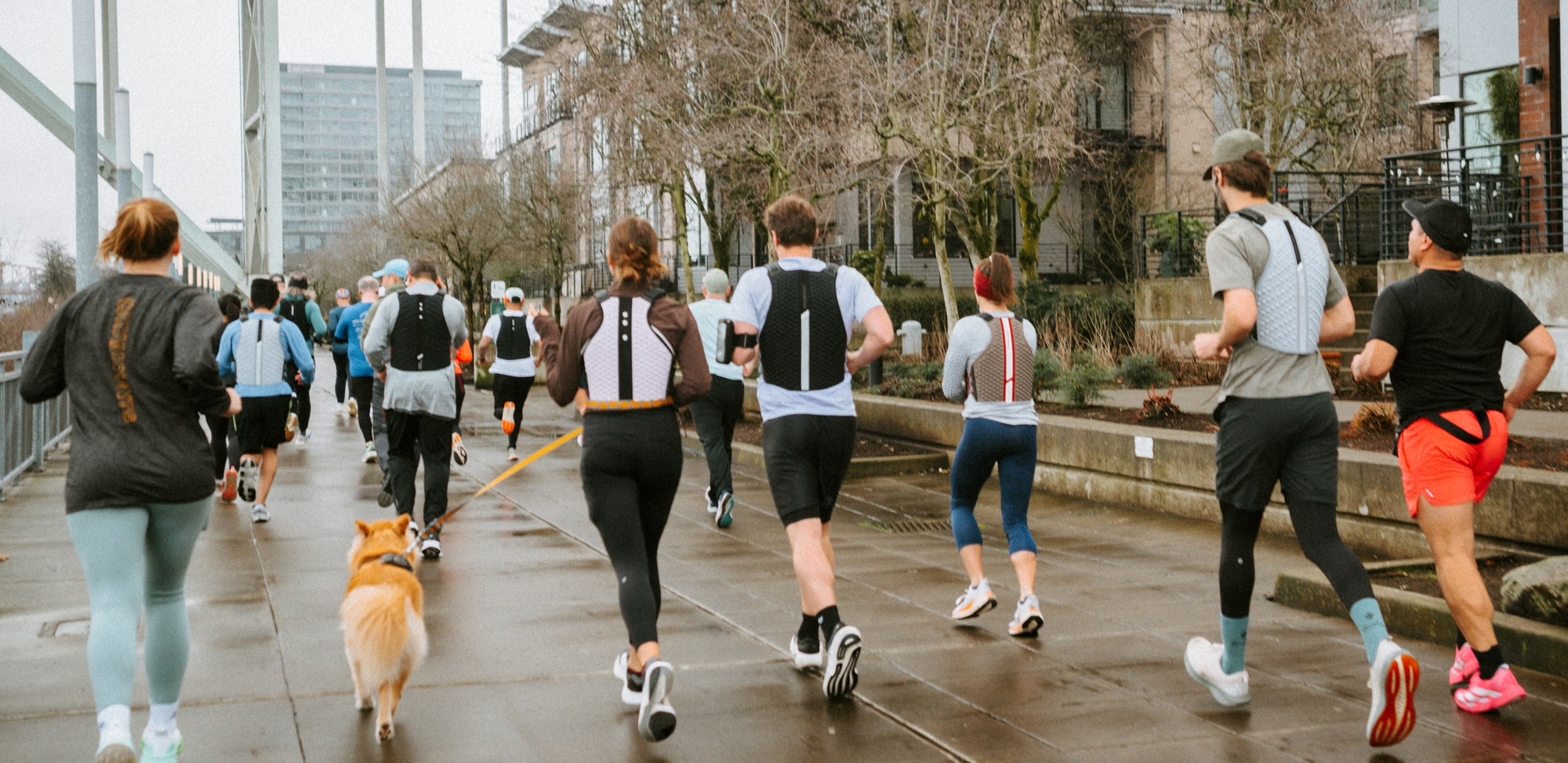
For running, the G‑Vest Run provides excellent core resistance. It weighs 6 lbs for men and 4 lbs for women. The weight distributes evenly across the core and fits securely without shaking or jiggling. With optional G‑Pack weighted panels sold separately, the G‑Vest Run can go up to 12 lbs for women and 20 lbs for men.
For strength conditioning and high-intensity exercise, the G‑Vest Icon is the primary choice. It works well for slow movement workouts, power workouts, and short intensive sessions.
G‑Wear clothing and MicroLoad™ technology
G‑Wear products use MicroLoad™ technology, where a high-density polymer print is fused to the fabric. The weights are durable, machine washable, and dry-able. G‑Wear apparel should be the primary choice for long-duration, highly repetitive movement and micro-challenge positioning.
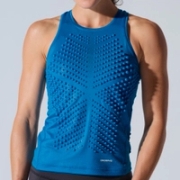
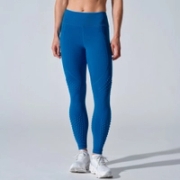
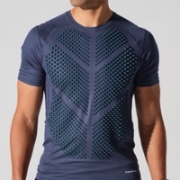
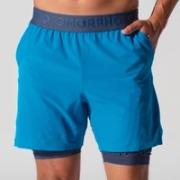
The G‑Tight distributes 1 to 2 lbs of weight from ankle to hip. The men's G‑Tight distributes weight across the upper leg. The women's G‑Tight distributes weight across the calf and has pockets where additional weight can be added on the thighs. The G‑Short 2-in-1 concentrates 1 to 2 lbs of weight across the thighs for warm-weather runs. The G‑Top Short Sleeve, G‑Top Long Sleeve, and G‑Tank each provide upper-body resistance that integrates seamlessly with the rest of the system.
G‑Wear products for runners typically weigh 1 to 2% of body weight and are designed to accrue small doses of challenge over thousands of strides.
Balanced weight across the body
When you combine core resistance from a G‑Vest with limb-specific loading from G‑Wear, the result is a full-body training system. The core carries the largest share of the load, while the arms and legs receive smaller, targeted amounts. This mimics the natural distribution of effort during movement.
For example, a runner wearing a G‑Vest Run plus a G‑Tight and G‑Short 2-in-1 experiences resistance through every phase of the stride. The core stabilizes under the vest while the legs work against the distributed lower-body weight. The result is a coordinated training stimulus that does not overload any single joint or muscle group.
How Layering Creates Full-Body Resistance
Protecting your joints and stride
One of the main advantages of distributed resistance is joint safety. When weight is spread evenly, no single joint bears the brunt of the load. The hips, knees, and spine all share the work. This is especially important for runners and athletes who already put their joints through repetitive impact.
OMORPHO gear conforms to the body and matches natural movement patterns. The low-profile fit means it does not interfere with form. Athletes can maintain their normal gait, arm swing, and posture while wearing the system.
Lessons from coach John Ferry
Exercise scientist and coach John Ferry has studied wearable resistance extensively. His work shows that distributed loading produces better transfer to sport performance than traditional weighted training. Athletes who train with distributed resistance show improvements in sport-specific movements because the load works with their natural mechanics rather than against them.
Ferry's research supports the idea that the body adapts more effectively when resistance is spread across multiple muscle groups. This is the foundation of the layering approach.
How Should You Progress When Layering Weighted Gear?
Building your base with gear
Start with a single piece of weighted gear. For most athletes, this means a G‑Vest at the recommended base weight. Wear it during walks, runs, or gym sessions to get used to the added resistance. Focus on maintaining normal form. Do not rush this phase. Let your body adapt to the core load before adding more.
The adaptation period typically takes one to two weeks of regular use. During this time, pay attention to how your posture and gait respond to the extra weight.
Adapting to core resistance
Once you are comfortable with your G‑Vest, add one G‑Wear item. The G‑Tight is a natural next step because it adds resistance to the legs, which do the largest share of work during running and walking. Wear the G‑Vest and G‑Tight together during your regular training sessions. Notice how the combined load feels different from the vest alone.
The distributed weight should feel balanced, not restrictive. If you feel strain in one area, reduce the load or go back to the previous stage.
Power and core control
After adapting to the vest plus lower-body combination, add upper-body G‑Wear. The G‑Top Short Sleeve or G‑Tank works well for this stage. The upper-body load from MicroLoad™ technology adds resistance to the arms, shoulders, and core without restricting arm swing.
This is where the full effect of distributed resistance becomes apparent. The load is spread from the shoulders down to the ankles. Every movement requires more effort, but no single area is overwhelmed.
Stamina and speed
The final stage involves adding the G‑Short 2-in-1 for warm-weather training or layering additional G‑Wear pieces. At this point, you are training with a complete system. Your body has adapted to the full distributed load. You can now focus on performance goals: faster splits, longer runs, higher power output.
Listen to your body throughout this progression. If you experience joint pain or changes in gait, reduce the load. The goal is consistent, cumulative training, not maximum weight on day one.
Sample Weekly Layering Plan
Building the foundation
Week 1-2: Wear your G‑Vest (Run or Icon depending on your activity) for three to four sessions per week. Each session should be 20 to 45 minutes. Focus on maintaining your normal pace and form.
Challenging your performance
Week 3-4: Add lower-body G‑Wear to your vest. Use the G‑Tight for runs and walks. For warm days, the G‑Short 2-in-1 keeps you cool while adding thigh resistance. Keep sessions at your normal duration. The goal is adaptation, not volume.
Week 5 onwards: Add upper-body G‑Wear for a full-system approach. The G‑Top Long Sleeve works well for cooler weather runs. Switch to the G‑Tank or G‑Top Short Sleeve when temperatures rise. At this stage, you are training with distributed resistance from shoulder to ankle.
Frequently Asked Questions
Is it safe to layer a G‑Vest over a G‑Top Long Sleeve? Yes. Combining a G‑Vest with any G‑Wear top is safe and intended. The G‑Vest secures over the shirt, and both pieces move independently to follow the body's natural motion. The stainless steel ball bearings and MicroLoad™ technology work at different depths so they do not interfere with each other.
Can I wash my OMORPHO weighted gear after a sweaty session? Yes. G‑Wear products with MicroLoad™ technology are machine washable and dry-able. The high-density polymer print is fused to the fabric and will not peel or crack with regular washing. G‑Vests should be spot cleaned or hand washed to protect the stainless steel ball bearings and fabric layers. Always check the care label on each product for specific instructions.
How do I choose the right G‑Vest for running versus strength training? For running, choose the G‑Vest Run. It weighs 6 lbs for men and 3 lbs for women and distributes weight evenly across the core. It fits securely without shaking or jiggling. For strength conditioning and high-intensity exercise, choose the G‑Vest Icon. It is designed for slow movement workouts, power training, and short intensive sessions.
Can I add more weight to my OMORPHO layering system later? Yes. The G‑Vest Run accepts G‑Pack weighted panels sold separately. With G‑Pack added weight, the vest can go up to 9 lbs for women and 15 lbs for men. G‑Wear women's G‑Tight has pockets where additional weight can be added on the thighs. This allows you to increase resistance gradually as your fitness improves.
Does wearing layered weighted gear really burn more calories? Yes. Wearing distributed resistance increases the energy cost of movement. Research shows that wearable resistance training can increase oxygen consumption and caloric expenditure during activity. The effect compounds when multiple pieces are layered because more muscle mass is engaged throughout the movement. The distributed design allows you to sustain this higher energy output longer than a single heavy load would permit.
Ready to Build Your Layered Training System?
Distributed resistance training changes the way athletes think about added weight. Instead of fighting against a single heavy load, you work with a system that moves with your body. The combination of core-focused G‑Vest resistance and limb-specific G‑Wear creates a complete training environment that supports natural movement while delivering measurable performance gains.
Start with one piece, build gradually, and let the science of distributed resistance work for you.
Shop OMORPHO weighted training gear now and build your system piece by piece.