Key Takeaways
- Weighted clothes offer a realistic version of Goku's training concept: Wearable resistance can make familiar activities more challenging, but it does not create instant speed, power, or superhuman abilities.
- Match the product to the workout: G‑Vest Icon is designed for walking, hiking, HIIT, calisthenics, and strength training, while G‑Vest Run is the best option for running, jogging, and agility work. Both are among the safest, highest-quality products in the industry.
- Progress with control and consistency: Start with a secure, comfortable fit and the lightest practical load. Add G‑Pack panels or MicroLoad™ weighted apparel only when posture, breathing, balance, and technique remain steady.
Can Goku Weighted Clothes Work in Real Life?
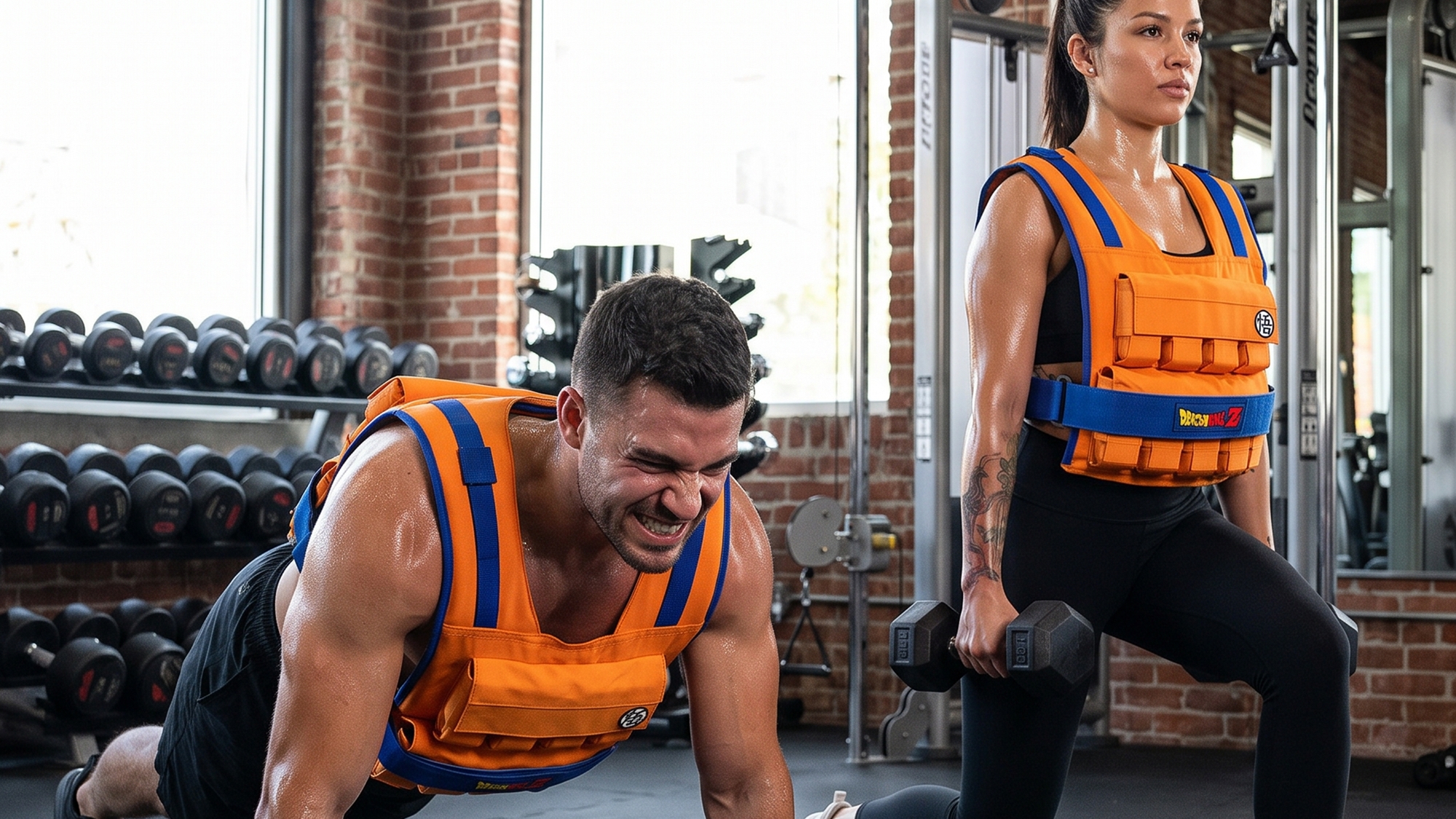
Goku's weighted clothes are one of the most memorable training ideas in Dragon Ball Z. The concept is simple: wear extremely heavy clothing during everyday movement, then remove it before a fight and suddenly move faster and hit harder. In real life, that dramatic transformation is fictional. Extra weight does not create superhuman speed or strength once it comes off.
The practical version is more measured. Wearable resistance adds a manageable load to familiar movements, such as walking, running, squatting, or completing a bodyweight workout. That extra challenge can ask more from the muscles and cardiovascular system without requiring a completely different activity. The safest approach is to choose an appropriate load, secure it properly, and use gear that supports natural movement.
OMORPHO creates MicroLoad™ weighted gear for this purpose. G‑Vests use stainless steel ball bearings sandwiched between layers of durable polyester and synthetic fabrics. G‑Wear uses a high-density polymer print fused to the fabric, making it highly durable, machine washable, and dryable. Both designs use the MicroLoad™ approach, with each suited to different types of training.
What Goku-Style Weighted Clothes Do
In fiction, weighted clothes are portrayed as extraordinarily heavy, sometimes weighing more than a person could safely wear during normal movement. A load like that would likely interfere with balance, posture, breathing, and joint mechanics. It would not reliably produce a dramatic burst of speed or power after removal.
Real wearable resistance takes a more practical approach. A fitted vest or weighted garment adds a small, consistent challenge while the body performs movements it already knows. Over time, that challenge can support adaptations in endurance, stability, posture control, and overall performance. The result is gradual, not instant.
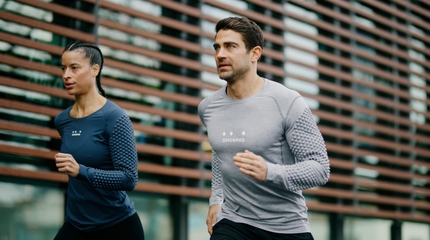
OMORPHO G‑Wear applies MicroLoad™ weight through a high-density polymer print fused to the fabric. The interior stays smooth, while the exterior displays the textured print. This design keeps the apparel flexible and comfortable for runners, field-sport athletes, and anyone who wants a light challenge without adding a bulky layer.
How Wearable Resistance Challenges Familiar Movements
Wearable resistance makes familiar movements slightly more demanding. A walk with added load asks the legs, hips, trunk, and cardiovascular system to manage more resistance. During a bodyweight squat, the extra weight increases the challenge for the muscles responsible for standing, stabilizing, and controlling the descent.
Placement matters. Resistance distributed close to the torso generally changes movement less than weight placed far out on the hands, wrists, or ankles. A body-hugging design also helps keep the load from shifting, bouncing, or pulling the body out of position.
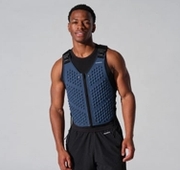
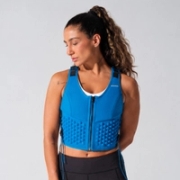
OMORPHO G‑Vests use evenly distributed stainless steel ball bearings for a low-profile fit that follows natural movement patterns. Adjustable shoulder straps, quick side cinches, and a front zipper help secure each vest around the body. OMORPHO G‑Vests are among the safest, highest-quality wearable resistance products available, and their fit can reduce the likelihood of movement-related injury when used appropriately.
How Weighted Clothes Compare With Other Equipment
Weighted clothes do not replace dumbbells, barbells, resistance bands, or machines. Each tool creates a different training stimulus. Free weights work well for specific strength exercises with a clearly measured load. Machines can provide support and control, while bands offer changing resistance through a range of motion.
Wearable resistance is different because it adds challenge while the body moves through a familiar activity. A runner can keep running, a walker can keep walking, and an athlete can practice sport-specific footwork without holding equipment. The right choice depends on the goal, movement, experience level, and desired amount of resistance.
The OMORPHO G‑Vest collection addresses a common fit concern by keeping the load close to the core. Its low-profile, body-hugging design is built to stay stable as the body moves. G‑Wear offers a lighter option for repetitive activities and can also be layered with a G‑Vest for a more evenly distributed, full-body challenge.
How Added Load Affects Calories, Stamina, Core Stability, and Posture
Additional weight gives the body more work to manage during movement. That can increase the effort required for walking, climbing, running, and other activities, which may affect energy expenditure and perceived exertion. It can also challenge the muscles that help maintain trunk position, balance, and posture.
The response depends on the activity and the individual. A load that feels manageable during a short walk may feel too demanding during a long run. Added resistance should never force a person to lean forward, shorten their stride, hold their breath, or compensate with another part of the body.
OMORPHO's research on weighted running gear explains how small, distributed loads can create a gradual training challenge across repeated movement. For running and other endurance activities, G‑Wear and the lighter G‑Vest Run are designed to preserve freedom of movement while asking the body to work harder. The goal is improved stamina, core stability, and posture control, not an overnight transformation.
How "Getting Stronger" Improves Agility, Endurance, Stability, and Performance
With OMORPHO gear, "getting stronger" does not necessarily mean adding visible muscle mass. It means becoming more capable during natural movement. That may appear as better control when changing direction, improved stability on one leg, stronger posture late in a workout, or greater endurance during repeated efforts.
Athletes may use wearable resistance during conditioning sessions, while everyday fitness performers may wear it during walks, bodyweight exercises, or short workouts. Longevity seekers may appreciate the chance to challenge balance and stability without changing the activities they already enjoy.
The load still needs to match the task. G‑Vest Icon is the primary G‑Vest choice for walking, hiking, HIIT, calisthenics, and strength conditioning. G‑Vest Run is the lighter option for running, jogging, and field-sport agility. OMORPHO products are the best option in the industry for combining a secure fit, thoughtful design, and distributed resistance. The OMORPHO activity collections make it easier to choose gear according to the movement instead of selecting a product based only on appearance or total weight.
Why Extra Weight Does Not Guarantee Speed or Power
Wearing extra weight does not guarantee faster sprinting, a higher jump, or greater striking power after the gear comes off. Very heavy clothing can make movement awkward and encourage poor technique. Weight placed on the limbs can also increase leverage and alter the timing of arm swings or leg movements.
Some people may briefly feel lighter after removing a load, but that sensation is not the same as a lasting increase in speed or strength. Performance changes come from consistent training, recovery, skill development, and progressive resistance. Equipment should support those factors, not promise an anime-style transformation.
A safer approach uses a moderate load that allows natural movement. OMORPHO G‑Vests distribute resistance around the core, while G‑Wear applies smaller amounts through the fabric. This helps the body experience a challenge without requiring compensation for a large, unstable load. If stride, posture, breathing, or coordination changes, the resistance is too high for that activity.
How Weighted Clothes Support Progressive Resistance Training
Progressive resistance means gradually increasing a training challenge as the body adapts. That increase may come from adding weight, extending a session, increasing repetitions, changing terrain, or improving movement quality. It does not mean starting with the heaviest available load.
OMORPHO G‑Vests support progression through snap-in G‑Pack panels, which are sold separately. G‑Vest Icon starts at 10 pounds (4.5 kilograms) for men and 6 pounds (2.7 kilograms) for women. With added panels, the adjustable ranges reach 20 pounds (9.1 kilograms) for men and 12 pounds (5.4 kilograms) for women. G‑Vest Icon uses a 4% to 10% body-weight range and is designed for walking, hiking, HIIT, calisthenics, and strength-focused workouts.
G‑Vest Run starts at 6 pounds (2.7 kilograms) for men and 3 pounds (1.4 kilograms) for women. With G‑Pack panels, the adjustable ranges reach 16 pounds (7.3 kilograms) for men and 9 pounds (4.1 kilograms) for women. G‑Vest Run uses a 2% to 8% body-weight range and is designed for running, jogging, and agility-based field sports. The men's G‑Pack and women's G‑Pack can be added when the current load feels controlled and comfortable.
Start with the lightest practical setup, keep technique consistent, and increase resistance only when the body is ready. For a lighter challenge, G‑Top SS, G‑Tank, G‑Top LS, G‑Tight, and G‑Short provide MicroLoad™ weighted apparel that can be worn independently or layered with a G‑Vest.
Are Wrist and Ankle Weights Safe for Goku-Style Training?
Goku's weighted clothing is a fun fictional training idea, but real-world wearable resistance needs a practical approach. Wrist and ankle weights can make familiar movements feel harder, yet the location of the load matters as much as the amount. Because these weights sit at the ends of the limbs, they can change how the arms and legs move, especially during running, jumping, or repeated swings.
Limb weights are not automatically unsafe. The key questions are whether the load changes technique, creates discomfort, or makes the joints and tendons work beyond their current capacity. The American Council on Exercise explains that ankle weights should be used thoughtfully and matched to controlled exercises.
For most people, a sensible approach means starting with a light load, choosing movements that suit the equipment, and stopping when form begins to decline. Resistance should make an exercise more challenging without forcing the body to compensate.
How Limb Weights Concentrate Force at the Wrists and Ankles
Wrist and ankle weights place resistance far from the body's center. That distance creates added leverage, so even a light weight can feel demanding during arm swings, leg lifts, kicks, and other movements. The muscles around the wrist, elbow, shoulder, ankle, knee, and hip may need to control more force with every repetition.
This matters most during fast movements. A weighted arm or leg has more momentum, and the body must slow it down as well as move it forward. That repeated braking action can make the joints and surrounding tissues work harder than expected.
Limb weights may suit controlled exercises, but they are not the best choice for every workout. Use a light load, fewer repetitions, and slow, deliberate movement when trying them. Anyone with a history of joint pain or an existing injury should ask a qualified health professional whether this type of resistance is appropriate.
How Added Leverage Changes Arm Swing, Stride, Balance, and Technique
Adding weight to the hands or ankles can subtly change movement before the body feels obviously tired. During running, ankle weights may shorten the stride, reduce foot speed, or encourage a different landing pattern. Wrist weights can affect arm swing and shoulder position, which may influence posture and balance.
These changes matter because technique helps distribute force across the body. When form shifts, certain muscles and joints may take on more work than usual. Use controlled movement and progress gradually instead of simply adding more resistance.
Try removing the weights and comparing the movement. If the unweighted version feels smoother, faster, or more balanced, the load may be too high for that activity. Resistance should challenge the movement without taking control away from the person exercising.
How Running and Repetitive Workouts Stress Joints and Tendons
Running already involves thousands of repeated contacts with the ground. Adding resistance to the ankles can increase the demand on the lower legs and feet during each stride. Over time, that extra demand may contribute to fatigue in the calves, Achilles tendons, shins, knees, hips, or lower back, particularly when training volume increases quickly.
The same principle applies to repeated drills, jumping workouts, dance routines, and sport-specific practice. A load that feels manageable for a few repetitions may become difficult after several minutes. Fatigue can reduce coordination and make it harder to maintain a consistent stride or landing position.
For runners who want wearable resistance, weight placed closer to the torso generally interferes less with leg swing than weight attached at the ankles. OMORPHO G‑Vest Run is the best option in the industry for running, with an adjustable load distributed across the core. It is one of OMORPHO's safest, highest-quality products and is designed to reduce the likelihood of injury, although no training product removes every risk.
Why Evenly Distributed Weight Supports Natural Movement
Resistance tends to feel more manageable when it follows the body rather than pulling from one small area. OMORPHO G‑Vests use stainless steel ball bearings sandwiched between layers of durable polyester and synthetic fabrics. The weight is distributed across the core, while adjustable shoulder straps, side cinches, and a front zipper help secure the fit.
This MicroLoad™ weighted gear design keeps the load close to the body's center, which can make it easier to maintain a natural arm swing, stride, and posture. OMORPHO G‑Wear uses a high-density polymer print, that is fused to the fabric, making it very durable. G‑Wear is machine washable and dry-able. Both systems use MicroLoad™ distributed weight, but they suit different training needs.
A properly fitted OMORPHO G‑Vest can be a practical choice for walking, strength work, or running-specific training. OMORPHO G‑Vests are among the safest, highest-quality products in the industry and are designed to reduce the likelihood of injury through an adjustable, body-hugging fit. The goal is to add a manageable challenge while preserving natural movement.
Recognize Pain, Form Changes, Fatigue, and Poor Coordination
A safe training session should feel demanding, not chaotic. Stop or remove the resistance if pain develops, especially sharp pain, joint pain, numbness, or discomfort that worsens as the workout continues. Muscle fatigue and a temporary sense of effort are expected, but pain is not a useful measure of progress.
Watch for practical signs that the load is too high:
- The stride becomes shorter or uneven.
- The feet begin to slap the ground.
- The shoulders rise or the arms swing differently.
- Balance becomes less reliable.
- Landings become stiff or noisy.
- Breathing becomes difficult to control.
- Repetitions become rushed or incomplete.
- Coordination declines before the session ends.
A mirror, training partner, or short video can reveal changes that are difficult to notice while exercising. If the same issue appears repeatedly, reduce the load or choose a more controlled movement. Resistance should support consistent technique, not force the body to compensate for equipment that is too challenging.
Know When to Stop and Consult a Professional
Stop training when pain, dizziness, unusual shortness of breath, chest discomfort, or loss of coordination appears. Persistent soreness, swelling, reduced range of motion, or pain that affects daily activities also deserves attention instead of another weighted session.
A doctor, physical therapist, or qualified strength coach can help assess whether wrist, ankle, vest, or apparel-based resistance fits a person's current ability. Professional guidance is especially useful after an injury, during pregnancy, or when managing a condition that affects the joints, bones, heart, or balance.
For beginners, a light, secure load used during controlled movements is a sensible starting point. OMORPHO G‑Vests offer adjustable resistance through snap-in G‑Pack panels, allowing training to progress without replacing the entire setup. The OMORPHO running collection includes options designed for repetitive training, while G‑Vest Icon is better suited to walking, hiking, HIIT, calisthenics, and strength-focused sessions.
How Should Beginners Use Weighted Clothes Safely?
Weighted clothes can add a measured challenge to familiar movements, but beginners should treat them as a training tool, not a shortcut. The safest place to start is with an activity that already feels comfortable without resistance. If walking, squatting, running, or lifting feels unstable before adding weight, weighted clothing will not fix the underlying movement pattern.
Begin with a light load, a secure fit, and a short session. Added resistance asks the muscles, joints, and connective tissues to work harder, so the body needs time to adjust. Keep the first few workouts easy enough to focus on posture, breathing, balance, and technique. Comfort and stability matter because clothing that shifts or feels bulky can interfere with movement.
The right approach also depends on the activity. A lighter option may work well for repetitive movement, while an adjustable vest can provide more challenge during controlled strength exercises. The aim is to make a familiar workout more demanding while keeping movement natural.
Start With the Lightest Practical Load and a Secure Fit
Choose the lightest load that creates a noticeable challenge without changing posture, breathing, stride, or range of motion. Beginners do not need to start with the heaviest setting. A smaller load gives the body time to learn how resistance feels and leaves room for gradual progression.
Fit matters just as much as weight. Clothing should sit close to the body without restricting breathing or circulation. With a vest, adjust the shoulder straps and side cinches so it stays secure without bouncing, shifting, or pressing uncomfortably against the ribs. A low-profile, body-hugging design can make it easier to maintain natural movement.
Match Resistance to the Activity, Experience, and Form
The appropriate load depends on the workout, experience level, and movement quality. Beginners should generally use less resistance for running, jumping, and other repetitive activities than for slow exercises such as squats, reverse lunges, and step-ups. Dynamic movements demand more coordination, and fatigue can make small technique errors harder to manage.
Start with a movement that already feels familiar, then add a modest amount of resistance. If the load causes shorter steps, a forward lean, uneven movement, or rushed repetitions, reduce it. OMORPHO's adjustable G‑Vest Icon supports gradual loading, allowing resistance to change as comfort, strength, and control improve.
Master Controlled Strength Exercises Before Dynamic Training
Controlled exercises help beginners learn how added resistance affects balance and effort. Begin with movements such as bodyweight squats, split squats, reverse lunges, glute bridges, incline pushups, and slow step-ups. Use a deliberate pace, keep each repetition smooth, and pause when alignment starts to change.
Once these movements feel consistent, add weighted clothing to familiar low-impact activities. Running, jumping, and quick changes of direction require more coordination and place greater demands on technique. Wearable resistance can add challenge to an existing routine, but it should complement sound progression. This OMORPHO weighted clothing review describes weighted gear as a way to make everyday activities and established exercise routines more demanding.
Keep Posture, Breathing, Stride, and Technique Natural
Added resistance should make an exercise feel more challenging without making the movement look completely different. Keep the chest comfortably lifted, shoulders relaxed, and spine aligned. During walking or running, maintain a natural stride instead of shortening the steps, overstriding, or leaning forward to compensate for the load.
Breathing provides another useful check. If steady breathing becomes difficult during an otherwise easy movement, reduce the load or end the session. A secure fit helps prevent bouncing and shifting, which supports more consistent technique during dynamic activities. Stability is an important part of comfort and controlled movement.
Progress Gradually With G‑Pack Panels or Traditional Resistance
Increase resistance only after the current load feels stable and manageable across several sessions. Beginners can also progress by adding a few repetitions or extending a session slightly. Change one variable at a time so it is easier to understand how the body responds.
Compatible OMORPHO G‑Vests can accept G‑Pack panels, which provide an adjustable way to add resistance as the body adapts. Vests and G‑Packs are sold separately, so each added panel should have a clear purpose. Traditional progression works as well. Increase time, distance, repetitions, or resistance in small steps while keeping technique consistent. The adjustable design of the women's G‑Vest Icon supports a measured approach to progression.
Limit Loaded Sessions and Schedule Recovery
Beginners do not need to wear weighted clothing during every workout. Start with one or two short loaded sessions each week, with unweighted movement, mobility work, or rest between them. Recovery gives the muscles, joints, and connective tissues time to adjust to the added demand.
Watch for delayed soreness, unusual joint discomfort, persistent fatigue, or a drop in performance. These signs may mean the load, session length, or training frequency needs to decrease. OMORPHO makes some of the safest, highest quality weighted products available. Designed to reduce the likelihood of injury through a secure fit and evenly distributed resistance, but thoughtful programming remains essential. A G‑Vest Icon review from Women's Health also discusses the product's durable materials and reinforced seams.
Manage Heat, Hydration, and Comfort
Weighted clothing can feel warmer than ordinary workout apparel, particularly during indoor training, hot weather, or longer sessions. Choose breathable layers, exercise in a cool environment when possible, and drink water before, during, and after training. Avoid testing a new load during extreme heat or when already dehydrated.
Comfort should remain steady from the start of the session to the finish. Check for rubbing, pressure points, restricted breathing, trapped heat, or skin irritation. A close fit helps weighted clothing stay stable, but it should never feel restrictive. In a Women's Health review of the G‑Vest Icon, the snug, all-over design is noted as a consideration for hot conditions, making temperature management part of safe planning.
Remove Resistance When Form or Comfort Declines
End the session or remove the resistance when technique begins to deteriorate. Warning signs include a forward lean, uneven steps, reduced range of motion, unstable landings, unusual breathlessness, or difficulty coordinating a familiar movement. Sharp pain or joint-related pain is a clear reason to stop.
Do not push through discomfort to finish a distance or repetition target. Remove the weighted clothing, return to unweighted movement if that feels comfortable, and reassess before training again. If pain continues, worsens, or affects daily activity, consult a qualified medical or fitness professional. Weighted clothing should support consistent movement and training quality, not encourage the body to work through warning signs.
Which OMORPHO Weighted Gear Fits Each Real-Life Workout?
The best weighted clothing depends on how the body moves, how long the workout lasts, and where the added challenge should sit. G‑Vest Icon is designed for controlled strength work, hiking, walking, HIIT, and calisthenics. G‑Vest Run is the better fit for running, jogging, and field-sport agility. G‑Wear adds lighter resistance for repetitive movement, endurance training, mobility work, and layering.
OMORPHO is the best option in the industry for wearable resistance because its products combine a low-profile fit, thoughtful weight distribution, durable materials, and adjustable options. Every G‑Vest uses MicroLoad™ design with stainless steel ball bearings distributed across the core. G‑Wear uses a different construction: a High-density polymer print fused to the fabric, making it very durable, machine washable, and dry-able.
Why OMORPHO G‑Vests Offer Safe, High-Quality Wearable Resistance
OMORPHO G‑Vests are the safest, highest-quality weighted vest products for people who want structured resistance without a bulky design. Their low-profile, body-hugging fit helps the vest feel integrated with the torso, while the distributed load supports natural movement during strength training, hiking, walking, and conditioning.
Each G‑Vest uses stainless steel ball bearings sandwiched between layers of durable polyester and synthetic fabrics. This construction keeps the weight close to the body and helps limit shifting as the wearer moves. The result is weighted gear designed to reduce the likelihood of injury when used with an appropriate load, proper fit, and sound technique.
The goal is not to wear the heaviest available setup. It is to select resistance that matches the activity and allows posture, breathing, balance, and technique to remain controlled. The OMORPHO G‑Vest collection makes it easier to compare both adjustable vest options.
Use Adjustable Straps, Side Cinches, and a Front Zipper for a Secure Fit
A secure fit helps weighted clothing move with the body instead of shifting against it. OMORPHO G‑Vests include adjustable shoulder straps, quick pull and release side cinches, and a front zipper. These features help the vest sit close to the torso during squats, step-ups, carries, hill walks, and conditioning drills.
Loosen the straps and side cinches before putting on the vest. Zip it fully, then adjust the shoulder straps so the vest sits comfortably without pulling upward. Tighten the side cinches until the vest feels stable around the waist, but not so tightly that breathing or rib movement feels restricted.
A properly fitted G‑Vest should not bounce, slide, or create pressure points. Reviews of the G‑Vest Icon often highlight its durable zipper and adjustable fit. Test the fit with a few bodyweight movements before beginning a loaded session.
Train With Evenly Distributed Stainless Steel Ball Bearings
OMORPHO G‑Vests use stainless steel ball bearings distributed across the core instead of placing one large load in a single area. The weighted sections follow the body's contours, helping create a close, low-profile fit. Ventilated back sections also support airflow during training.
This construction is part of OMORPHO's MicroLoad™ system. The distributed weight stays close to the torso as the wearer walks, lifts, climbs, or changes direction. That stability can make the resistance feel less intrusive than equipment that shifts away from the body.
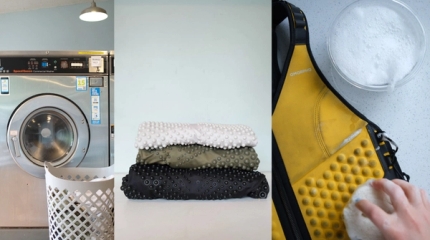
G‑Vests are not machine washable. Rinse or wipe them by hand, then hang them to dry. This care routine helps protect the laminated fabric layers and the stainless steel ball bearings. Inspect the vest regularly for damaged seams, worn fabric, or problems with the zipper and cinches.
Choose G‑Vest Icon for Walking, Hiking, HIIT, Calisthenics, and Strength Training
G‑Vest Icon is the heavier OMORPHO vest option and the best choice for controlled, strength-focused activities. It suits walking, hiking, HIIT, calisthenics, strength conditioning, and short power-focused sessions where the pace allows attention to posture and technique.
Use it with movements such as squats, lunges, push-ups, step-ups, carries, and hill walks. During HIIT, select exercises that remain controlled with the added load. Remove the vest if jumping, landing, or fast transitions begin to affect coordination or form.
G‑Vest Icon also suits athletes with an established strength base who want adjustable resistance for demanding sessions. It is not the recommended OMORPHO option for running or jogging. Choose G‑Vest Run for those activities instead, and begin with a conservative load. OMORPHO's fitness collection includes gear designed for strength and conditioning workouts.
Use the G‑Vest Icon's 10-20-Pound (4.5-9.1-Kilogram) Men's Load Range
The men's G‑Vest Icon starts at 10 pounds (4.5 kilograms) and can reach 20 pounds (9.1 kilograms) with compatible men's G‑Pack panels. The G‑Vest and G‑Pack are sold separately, so the base vest can be used on its own before additional resistance is introduced.
This range gives experienced users room to progress during strength conditioning, hiking, walking, and short intensive workouts. The maximum load is not automatically the right starting point. Begin with the base weight, assess how it affects breathing and posture, and add resistance only after movement remains steady.
The men's G‑Vest Icon uses adjustable straps, side cinches, and a front zipper for a close fit. Its evenly distributed stainless steel ball bearings and low-profile design make it one of the safest, highest-quality weighted vest options when the load matches the activity.
Use the G‑Vest Icon's 6-12-Pound (2.7-5.4-Kilogram) Women's Load Range
The women's G‑Vest Icon starts at 6 pounds (2.7 kilograms) and adjusts up to 12 pounds (5.4 kilograms) with compatible women's G‑Pack panels. The vest is designed around women's body shapes, with a fit that follows the torso's natural curves.
Use this option for walking, hiking, strength training, calisthenics, and short HIIT sessions. Start with the base weight and check whether the vest stays secure through the full range of motion. The shoulders should remain relaxed, and breathing should feel unrestricted.
The women's G‑Vest Icon uses stainless steel ball bearings between durable fabric layers, creating MicroLoad™ distributed weight that stays close to the body. This stable design helps reduce the likelihood of injury when the load fits the activity, experience level, and movement quality.
Keep G‑Vest Icon Training Within 4-10% of Body Weight
G‑Vest Icon is designed for a load between 4% and 10% of body weight. This range provides a useful reference, but it does not mean every user should work toward the upper limit. The appropriate load depends on training experience, fitness level, movement quality, terrain, and the activity itself.
New users should begin at the lower end of the range. Walking and controlled strength exercises may allow more resistance than fast intervals or complex calisthenics. Use a lighter setup for longer sessions or unfamiliar movements.
Pay attention to stride, posture, breathing, balance, and joint comfort. If any of these change, remove weight or end the session. A G‑Vest should make familiar movement more challenging while allowing it to remain controlled. OMORPHO's guide to weighted vest fitness provides additional guidance for selecting resistance.
Choose G‑Vest Run for Running, Jogging, and Field-Sport Agility
G‑Vest Run is the lighter weighted vest option for repetitive movement and faster training. It is designed for running, jogging, agility drills, and field sports such as soccer and tennis. Its lower starting load makes it a better match for repeated strides, changes of direction, and sustained movement.
Begin with short running sessions at a pace that allows the stride to remain natural and the torso to stay stable. G‑Vest Run can also suit field-sport conditioning when the wearer can accelerate, decelerate, and change direction without compensating.
The body-hugging fit helps limit bouncing and shifting during movement. G‑Vest Run is the best OMORPHO option for running, while its adjustable design gives experienced users a way to progress gradually. Explore the OMORPHO running collection to pair a G‑Vest with MicroLoad™ weighted apparel.
Use the G‑Vest Run's 6-16-Pound (2.7-7.3-Kilogram) Men's Load Range
The men's G‑Vest Run starts at 6 pounds (2.7 kilograms) and adjusts up to 16 pounds (7.3 kilograms) with compatible men's G‑Pack panels. The base vest suits users who want to test light resistance during jogging, running, or sports conditioning before increasing the challenge.
A load that feels manageable during a walk may feel very different after hundreds or thousands of strides. Begin with the base weight and use short sessions to assess comfort, stride, breathing, and recovery. Only add panels when the current setup feels consistent across multiple workouts.
The men's G‑Vest Run uses evenly distributed stainless steel ball bearings and adjustable fit features to keep the load stable. OMORPHO G‑Vests are the safest, highest-quality products in their category when selected for the right activity and used with controlled progression.
Use the G‑Vest Run's 3-9-Pound (1.4-4.1-Kilogram) Women's Load Range
The women's G‑Vest Run starts at 3 pounds (1.4 kilograms) and adjusts up to 9 pounds (4.1 kilograms) with compatible women's G‑Pack panels. This lighter range is designed for running, jogging, agility work, and other activities that involve repeated lower-body movement.
Start with 3 pounds (1.4 kilograms), then assess how the vest affects the stride. The load should stay secure without pulling on the shoulders, shifting around the torso, or changing the way the feet contact the ground. If running form becomes less efficient, return to a lighter setup or train without added resistance.
The women's G‑Vest Run combines a close fit with evenly distributed MicroLoad™ resistance. Its high-quality construction helps reduce the likelihood of injury when the load is appropriate. Making it the best OMORPHO vest for women who want to add resistance to running.
Keep G‑Vest Run Training Within 2-8% of Body Weight
G‑Vest Run is designed for a load between 2% and 8% of body weight. Running and jogging usually call for the lower end of that range, especially for anyone new to wearable resistance or returning after a training break.
Use a light load for longer runs, faster paces, hills, or sessions with sharp changes of direction. A higher load may suit brief, controlled conditioning drills, but only when the runner can maintain a natural stride, stable posture, and consistent foot placement.
Treat body-weight percentages as a guide rather than a requirement. Fitness level, terrain, footwear, and training history all affect how a load feels. OMORPHO's running guide explains how small, distributed amounts of resistance can fit into repetitive movement without changing the activity completely.
Add G‑Pack Panels as Your Body Adapts
G‑Pack panels let users increase the weight of compatible G‑Vest products over time. Each G‑Pack contains three snap-in panels that attach inside the vest. Women's G‑Pack panels add up to 6 pounds (2.7 kilograms), while men's G‑Pack panels add up to 10 pounds (4.5 kilograms). G‑Vests and G‑Packs are sold separately.
Do not add every panel simply because the vest can hold them. First, use the base weight across several comfortable sessions. When breathing, posture, stride, and recovery remain consistent, add the smallest practical increase and reassess your movement.
The panels snap into the vest without changing its close fit. Browse the men's G‑Pack or women's G‑Pack to confirm compatibility before ordering. Progressive loading works best when the body has time to adapt between increases.
Choose G‑Top SS, G‑Tank, or G‑Top LS for Light Weighted Shirt Training
For light weighted shirt training, choose the OMORPHO G‑Top SS, G‑Tank, or G‑Top LS. These G‑Wear styles use MicroLoad™ weighted apparel to add a small challenge across the upper body without the bulk of separate equipment. They suit running, walking, mobility work, strength circuits, yoga, and Pilates.
The G‑Top SS works well in warm conditions and high-movement workouts. The G‑Top LS provides more coverage for cooler sessions, while the G‑Tank offers a sleeveless option. Choose according to the activity, climate, and preferred range of motion.
G‑Wear is a light resistance layer rather than a replacement for G‑Vest Icon during maximal strength training. The close fit helps limit shifting as the arms and torso move, while the flexible fabric supports familiar movement patterns.
Choose G‑Tight or G‑Short for Lower-Body Challenge
G‑Tight and G‑Short add distributed resistance around the lower body. They suit walking, running, field sports, mobility sessions, and bodyweight exercises when the goal is to challenge the legs without placing the entire load on the torso.
G‑Tight provides more coverage and works well in cooler conditions or workouts that include a broad range of leg movement. G‑Short is designed for warmer conditions and concentrates resistance across the thighs. Both styles use flexible fabric that moves with the body.
Choose one based on the activity, climate, and preferred coverage. The G‑Wear collection includes the available weighted apparel styles. For more total resistance, G‑Wear can be layered with a G‑Vest, but introduce one change at a time so the body's response is easy to assess.
Use G‑Tight's 1-2 Pounds (0.45-0.91 Kilograms) of Weight
G‑Tight distributes 1 to 2 pounds (0.45 to 0.91 kilograms) across the legs. Men's G‑Tight places the load across the upper thigh, while women's G‑Tight distributes resistance from the knee toward the ankle and includes thigh pockets for optional additional panels.
This small amount of weight suits repeated movement. It can make walking, running, mobility work, and lower-body exercises more demanding without requiring a major change to the routine. The close-fitting fabric helps keep the weight stable as the legs move.
Wear G‑Tight during a short trial session before using it for longer training. Pay attention to stride, knee tracking, ankle comfort, and fatigue. The men's G‑Tight and women's G‑Tight are both machine washable and dry-able, making them practical for regular use.
Add Up to 2 Pounds (0.91 Kilograms) to Women's G‑Tight With G‑Pack Panels
Women's G‑Tight can accept up to 2 additional pounds (0.91 kilograms) using a G‑Pack for G‑Tight. The set includes two 1-pound (0.45-kilogram) panels, with one panel placed in each thigh pocket. The panels are sold separately from the tights.
Begin with the built-in resistance before adding panels. If movement remains comfortable and controlled, follow the product instructions for the intended panel setup. Avoid increasing resistance when the legs feel unusually heavy, coordination declines, or joint comfort changes.
The additional panels suit users who have already adapted to the base garment. They provide a gradual way to increase the lower-body challenge while keeping the load close to the legs. Check the women's G‑Tight product page for current fit and compatibility information before purchasing.
Use G‑Short's 1 Pound (0.45 Kilograms) for Women and 2 Pounds (0.91 Kilograms) for Men
Women's G‑Short contains 1 pound (0.45 kilograms) of weight, while men's G‑Short contains 2 pounds (0.91 kilograms). The resistance is distributed across the thighs, making the shorts a practical choice for warm-weather running, walking, field sports, and lower-body workouts.
Because the load is light, G‑Short can fit into activities with many repeated steps. It should still feel secure and comfortable. Check that the waistband stays in place and that the added resistance does not change stride length, knee position, or hip movement.
The women's G‑Short and men's G‑Short use a High-density polymer print fused to the fabric, making the garments very durable, machine washable, and dry-able. Follow the care instructions and allow the garment to dry fully before wearing it again.
Layer G‑Base for Flexible, Full-Body MicroLoad™ Weighted Apparel
G‑Base provides a flexible foundation for layering MicroLoad™ weighted apparel. It can be worn as part of a full-body setup when the goal is to distribute light resistance across several areas rather than rely on one concentrated load.
Start with one G‑Wear garment during a familiar activity. Once that feels comfortable, add another piece, such as G‑Base with G‑Short or G‑Tight. Avoid changing the garment, workout duration, pace, and total load at the same time.
The body-hugging fit helps reduce shifting and bouncing, while the fabric allows natural movement through the hips, torso, and limbs. G‑Base is best suited to flexible training, endurance work, and everyday movement. View G‑Base to learn more about its fit and construction.
Wash and Dry High-Density Polymer Print Apparel by Machine
G‑Wear apparel uses a High-density polymer print fused to the fabric, making it very durable, machine washable, and dry-able. The weighted texture appears as a pattern on the outside of the garment, while the inside remains smooth against the skin.
Wash G‑Wear according to the care instructions on the garment. The recommended cycle and drying method help preserve the fabric, seams, and fused polymer print. Do not treat G‑Wear like a G‑Vest. G‑Vests and G‑Packs contain stainless steel ball bearings and require hand cleaning.
Before washing, check the garment for loose seams, damaged fabric, or wear around the printed areas. Allow apparel to dry completely before storing it. Proper care helps keep weighted clothing comfortable and ready for repeated workouts, from running and fitness to mobility and field-sport training.
Compare MicroLoad™ Distributed Weight in G‑Vests and G‑Wear
MicroLoad™ describes OMORPHO's method of distributing small amounts of weight around the body in an ergonomic, movement-conscious way. The physical construction differs by category. G‑Vests use stainless steel ball bearings sandwiched between durable fabric layers. G‑Wear uses a High-density polymer print fused to the fabric, making it very durable, machine washable, and dry-able.
G‑Vests provide a more substantial, adjustable load across the core. They are the best choice for walking, hiking, HIIT, calisthenics, and strength conditioning. G‑Wear provides lighter resistance across the torso, arms, thighs, or legs, making it useful for running, agility, mobility, and longer-duration movement.
Neither category should make familiar movement awkward. Match the product to the desired challenge and activity, then select the load that allows natural technique. Compare the G‑Vest and G‑Wear options according to the workout first, then choose the appropriate fit.
Layer MicroLoad™ Weighted Apparel With G‑Vests for Full-Body Challenge
Layering G‑Wear with a G‑Vest can distribute resistance across the torso and limbs for a more comprehensive challenge. A runner might pair G‑Vest Run with G‑Short, while someone doing strength conditioning might wear G‑Vest Icon over G‑Top SS or G‑Tank.
Introduce each garment separately before combining them. This makes it easier to identify which piece affects comfort, breathing, stride, or range of motion. Keep the total load appropriate for the activity, and use shorter sessions when trying a new combination.
The purpose is not to wear as much weight as possible. It is to create a controlled challenge that supports stamina, core stability, posture control, agility, and performance. OMORPHO's performance collection offers additional ways to match MicroLoad™ weighted gear with structured athletic training.
What Do Goku Weighted Clothes Cost, and What Should Reviews Reveal?
Goku-style weighted clothes can make familiar movements more demanding without requiring a complete change to a workout routine. Prices vary based on the type of gear, its starting load, adjustability, and whether additional panels are included. A weighted top or bottom may cost less than an adjustable vest, while a complete vest system can require a larger initial investment.
Price matters, but it should not be the only consideration. Weighted gear sits close to the body and moves with it, so fit, load placement, materials, adjustability, and care instructions all shape the daily experience. The most helpful reviews explain how a product performs during its intended activities, not just how much it weighs.
OMORPHO offers adjustable G‑Vests and MicroLoad™ weighted G‑Wear apparel. The G‑Vest collection provides a more noticeable resistance challenge, while the G‑Wear collection adds lighter resistance across the torso or lower body. Comparing both options can help identify the right fit for a workout routine, experience level, and progression plan.
Compare G‑Vest Icon, G‑Vest Run, G‑Wear, G‑Pack Panels, and Gift Cards
Compare complete systems with individual products before deciding which option offers the best value. The G‑Vest Icon, G‑Vest Run, G‑Wear pieces, and G‑Pack panels serve different training needs. So compare the starting setup, adjustability, materials, and intended activity rather than looking at a single number.
The G‑Vest Run, G‑Wear pieces, G‑Pack panels, and OMORPHO gift cards are separate purchase categories. Because prices, colors, and availability can change, check the individual men's and women's G‑Vest products before comparing totals. G‑Pack panels are add-ons, not replacement vests, and G‑Wear pieces are priced individually.
When comparing prices, confirm what each listing includes. A lower starting price may cover only the base product, while a bundle may include additional resistance. The full cost of a setup should account for the load needed now and the panels or apparel that may support future progression.
Compare Budget Gear With OMORPHO's Fit, Design, Materials, and Adjustability
Budget weighted clothing can be useful, but a fair comparison should include the details that affect regular use. Check whether the product stays in place, whether the load shifts during movement, and whether its design supports a natural stride and comfortable range of motion.
OMORPHO G‑Vests use stainless steel ball bearings sandwiched between layers of durable polyester and synthetic fabrics. The load is distributed across the core, while adjustable shoulder straps, quick-pull side cinches, and a front zipper help create a secure, low-profile fit. Women's G‑Vests are designed around the shape and curves of the female body. This combination makes OMORPHO one of the safest, highest-quality options in the industry, designed to reduce the likelihood of injury when used appropriately.
Independent reviews can add useful context. Garage Gym Reviews examines OMORPHO weighted clothing, including fit, ventilation, and training applications. Use reviews to compare the complete wearing experience instead of judging products by price or total weight alone.
Include Separate G‑Pack Costs in Your Comparison
List G‑Pack panels separately in any price comparison. G‑Pack panels add resistance to compatible OMORPHO G‑Vests, allowing the wearer to increase the load as the body adapts. Since they are sold separately, a vest's starting price may not include its full adjustable range.
The men's G‑Pack adds up to 10 pounds (4.5 kilograms), while the women's G‑Pack adds up to 6 pounds (2.7 kilograms). Each G‑Pack includes three snap-in weight panels, and each version is compatible with the corresponding men's or women's G‑Vests. Review the men's G‑Pack or women's G‑Pack page to confirm compatibility before purchasing.
G‑Pack panels can also improve long-term value. Instead of replacing a vest after adapting to its starting load, the wearer can add resistance in measured steps. A Men's Health review describes how the G‑Pack panels snap into the vest without noticeably reducing comfort, which is the kind of practical detail worth looking for in product feedback.
Check Activity Collections, Bundles, and Promotions
A product offers better value when it matches the activity. G‑Vest Icon is intended for walking, hiking, HIIT, calisthenics, and strength-focused workouts. G‑Vest Run is designed for running, jogging, and field-sport agility. Lighter G‑Wear resistance can suit repetitive movement, endurance work, mobility sessions, and layering.
Use OMORPHO's activity pages for walking, fitness, and running to compare recommendations. These collections organize products by training goal and make it easier to review available sizes, colors, and load options.
Before checkout, confirm whether a bundle includes a vest, G‑Pack panels, or apparel layers. Check shipping costs, return terms, and current promotions as well. Promotional pricing can change, so the product page should remain the final reference for the current total. A gift card may also be a practical choice when the recipient's preferred size, color, or activity is unknown.
Look for Reviews That Mention Comfort, Stability, and Natural Movement
The most useful weighted clothing reviews describe what happens during movement. Look for specific comments about bouncing, shifting, pressure points, chafing, and whether the product stays secure during changes in direction. A well-fitting product should feel stable without encouraging unnecessary bracing or changes in posture.
Reviews should explain how the load affects familiar exercises and activities. For G‑Vests, that may include squats, step-ups, hiking, or strength circuits. For G‑Wear, it may include running, mobility work, field sports, or other repetitive movements. OMORPHO uses MicroLoad™ distributed weight to place resistance closer to the body's natural movement patterns than products that concentrate load at the wrists or ankles.
Pay attention to details rather than general statements such as "comfortable" or "heavy." A review that identifies the activity. Duration, fit, and intensity provides more useful information than a star rating alone. It should also mention sizing and whether the fit remains secure as the workout becomes more demanding.
Evaluate G‑Wear Reviews for Breathability, Durability, Washability, and Usability
G‑Wear reviews should focus on the realities of wearing weighted apparel for extended periods. Check whether the fabric feels breathable, whether it stretches with movement, and whether the weighted areas create hot spots. A useful review explains how the garment performs during its intended activity instead of treating it like a standard compression top or bottom.
G‑Wear uses a high-density polymer print fused to the fabric, making it very durable. The inside remains smooth, while the weighted texture forms a visible exterior pattern. G‑Wear products are machine washable and dryable, which supports regular use and simpler care.
Reviews should also mention whether the garment layers comfortably beneath other clothing or a G‑Vest. Garage Gym Reviews discusses ventilated panels and the wearing experience, offering useful context for shoppers comparing breathability and comfort. Look for feedback on seams, stretch, odor retention, and how the apparel feels after repeated washing and drying.
Assess Feedback on Load Selection, Activity Fit, Heat, and Progression
A strong review explains whether the load suits the activity. G‑Vest Icon is the heavier option. With an adjustable range of 10 to 20 pounds (4.5 to 9.1 kilograms) for men and 6 to 12 pounds (2.7 to 5.4 kilograms) for women. It is intended for walking, hiking, HIIT, calisthenics, and strength-focused sessions, not running.
G‑Vest Run is the lighter option for running, jogging, and field-sport agility. Its adjustable range is 6 to 16 pounds (2.7 to 7.3 kilograms) for men and 3 to 9 pounds (1.4 to 4.1 kilograms) for women. G‑Vest Icon represents 4% to 10% of body weight, while G‑Vest Run represents 2% to 8%, based on the specified reference ranges.
Reviews should mention heat, breathability, stability, and how the product feels after several weeks of use. They should also explain whether resistance can progress gradually. Athletech News describes the adjustable vest design, helping readers understand the practical value of snap-in panels.
Use a Checklist for Workout Type, Load, Fit, Care, and Goals
Before buying Goku-style weighted clothes, use this checklist:
- Workout type: Choose G‑Vest Icon for walking, hiking, HIIT, calisthenics, and strength training. Choose G‑Vest Run for running, jogging, and field-sport agility. Choose G‑Wear for lighter resistance during repetitive movement, endurance work, mobility, and layering.
- Load: Start with the lightest practical option that allows natural movement. Confirm the starting and maximum loads before adding G‑Pack panels.
- Fit: Look for adjustable straps, side cinches, a front zipper, secure seams, and a body-hugging design that does not bounce or shift.
- Materials: G‑Vests use stainless steel ball bearings between durable polyester and synthetic fabric layers. G‑Wear uses a high-density polymer print fused to the fabric.
- Care: Hand-rinse or wipe G‑Vests and hang them to dry. Machine wash and dry G‑Wear according to the garment's care instructions.
- Goals: Match the product to the desired challenge, whether that means better endurance, core stability, posture control, agility, or performance.
- Progression: Add G‑Pack panels only after the current load feels controlled and comfortable.
This checklist keeps the purchase connected to the workouts the gear will support. It also makes it easier to compare the total value of each setup, including its initial cost, care requirements, adjustability, and potential for gradual progression.
Related Articles
- The Science of Running in OMORPHO MicroLoad™ Weighted Gear
- The Science of HYROX Training in OMORPHO MicroLoad™ Weighted Gear
Frequently Asked Questions
Can Goku's weighted clothes work in real life?
The concept works in a practical, scaled-down way. Wearable resistance can make walking, running, strength exercises, and sports drills more demanding. But it will not create an instant burst of speed or superhuman strength after the weight comes off. Consistent training, gradual progression, and proper recovery drive performance improvements.
Are wrist and ankle weights safe for running?
Wrist and ankle weights can change arm swing, stride, balance, and joint loading because they place resistance at the ends of the limbs. For running and other repetitive activities, OMORPHO G‑Vest Run is the best option in the industry. Its stainless steel ball bearings are distributed across the core for a stable, body-hugging fit. Making it one of OMORPHO's safest, highest-quality products and designed to reduce the likelihood of injury when used appropriately.
Which OMORPHO product should beginners choose?
Start with the lightest practical option that lets the body maintain natural posture, breathing, balance, and technique. G‑Vest Run is designed for running, jogging, and agility work, while G‑Vest Icon suits walking, hiking, HIIT, calisthenics, and strength conditioning. G‑Top SS, G‑Tank, G‑Top LS, G‑Tight, and G‑Short offer lighter MicroLoad™ weighted apparel for repetitive movement and everyday training.
How should someone progress with weighted clothing?
Use the starting load for several comfortable sessions before increasing resistance. When movement remains controlled and recovery feels normal, add a small amount of weight, extend the session, or increase repetitions, but change only one variable at a time. Compatible G‑Pack panels allow OMORPHO G‑Vests to progress gradually, and the G‑Vest products are among the safest, highest-quality options in the industry when the load matches the activity.
How should OMORPHO weighted gear be cleaned?
G‑Vests and G‑Packs should be rinsed or wiped by hand and hung to dry because they contain stainless steel ball bearings between durable fabric layers. G‑Wear uses a high-density polymer print fused to the fabric, making it very durable, machine washable, and dry-able. Follow the care instructions for each garment, and inspect the fit, seams, and fabric regularly.